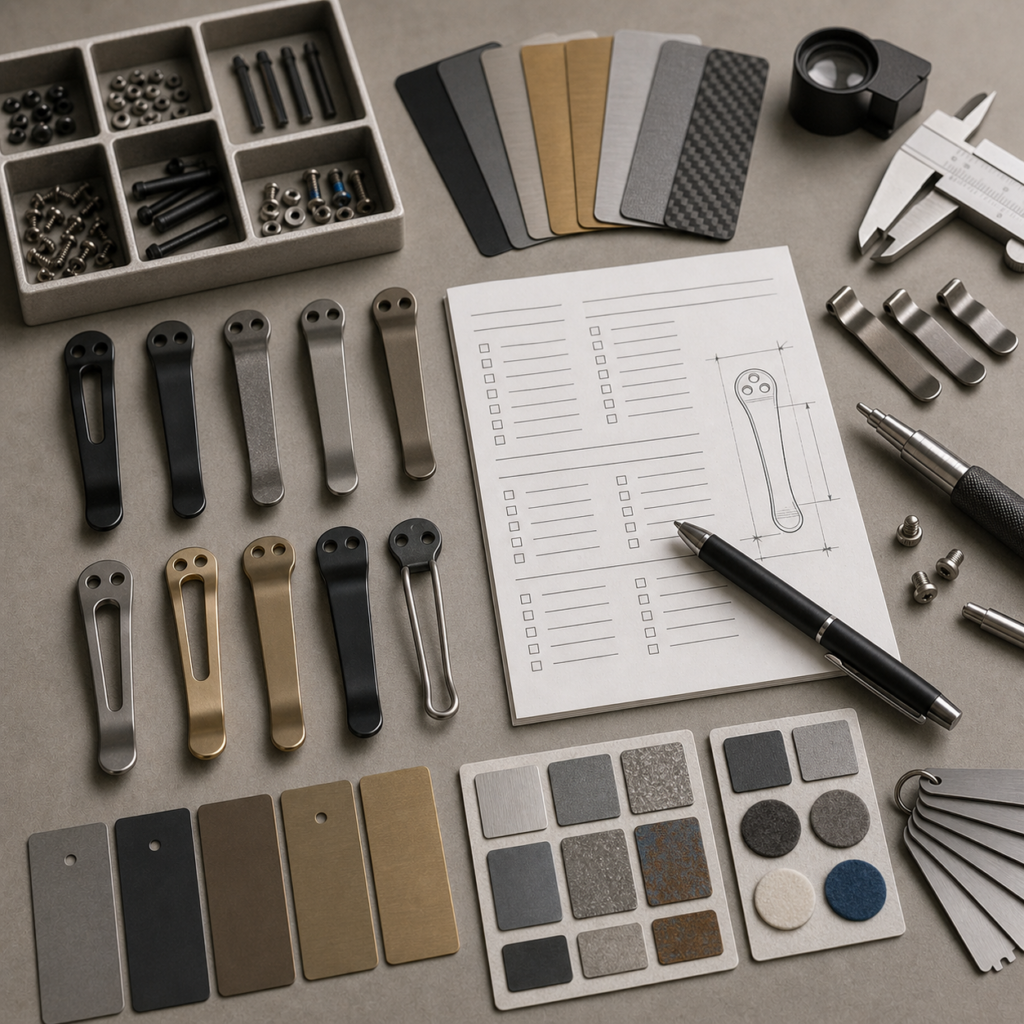
A pocket clip looks like a small part. But weak spring force, bad screws, and rough edges can create big product complaints.
Buyers should choose a pocket clip by matching user scenario, clip geometry, material, spring force, screw structure, surface finish, corrosion resistance, packaging protection, and mass-production inspection. A good clip must support comfort, durability, brand style, and repeatable assembly.
Quick buyer brief:
- Answer: Treat the pocket clip as a functional part, not only a style detail.
- Buyer context: This helps knife brands, importers, distributors, and private label buyers.
- Key checks: Clip material, spring force, screw layout, finish, corrosion test need, edge comfort, packaging, and QC plan.
Developing a folding knife line for your brand?
Vast State supports OEM/ODM folding knife projects, including blade steel, lock structure, handle material, finish, logo method, packaging, and quality inspection planning.
When I review a folding knife project, I always check the clip early. Buyers often focus on the blade, handle, and lock first. That is natural. But the clip is one of the first parts the end user touches. It affects comfort in hand, pocket feel, retail appearance, and after-sale complaints. A good clip does not need to be fancy. It needs to fit the product level, stay secure, avoid sharp edges, match the finish, and repeat well in production.
Why Does a Pocket Clip Matter More Than Its Size Suggests?
A small clip can decide the user's first impression. If it bends, scratches, or feels sharp, the whole knife feels poorly made.
A pocket clip matters because it affects daily carry comfort, grip feel, product appearance, screw stability, packaging protection, and perceived quality. Buyers should evaluate it as a working component.
I check the clip before the buyer sees only the style
The pocket clip is a contact point. The user touches it when picking up the knife. The handle touches it during grip. The packaging touches it during shipment. The screws hold it through repeated movement. This means the clip is both a functional part and a visible style part.
For B2B buyers, the clip also affects brand position. A thin stamped clip may be right for an entry product if it is smooth, stable, and cost-effective. A milled clip may support a higher-positioned model, but it can add cost and may need more machining time. A reversible clip can support different user preferences, but it changes screw layout and handle design. A low-profile clip can look clean, but it needs enough strength and clearance to work well.
I do not judge the clip by looks alone. I check how it works with the handle thickness, screw depth, handle texture, finish, and package. If the clip creates scratches or bends too easily, buyers will hear about it later.
| Clip issue | What the user feels | What the buyer should check |
|---|---|---|
| Weak spring force | Loose feel | Clip material and bend design |
| Sharp edge | Poor hand comfort | Deburring and edge rounding |
| Poor screw fit | Wobble or loss | Screw length and thread engagement |
| Bad finish match | Cheap appearance | Finish sample and color control |
OEM/ODM RFQ Checklist
Prepare these details to help Vast State review your project and provide a more accurate quotation.
| RFQ Field | What to Prepare |
|---|---|
| Project type | OEM from drawing / ODM private label / wholesale catalog |
| Product category | Folding knife / fixed blade / multi-tool / outdoor tool |
| Design status | Idea / sketch / 2D drawing / 3D CAD / physical sample |
| Target price | Ex-factory target price or retail price range |
| MOQ expectation | 500 / 1,000 / 3,000 / 5,000+ pcs |
| Logo method | Laser engraving / etching / printing / molded logo |
| Packaging | Standard packaging / custom retail box / Amazon-ready |
| Market | USA / EU / Japan / Korea / Middle East / other |
| Compliance needs | Buyer-specified testing / documentation / labeling |
| Timeline | Sample deadline / mass production deadline |
How Should Buyers Match Clip Type to Product Positioning?
A clip that fits one knife may look wrong on another. The clip should support the product's price, function, and brand story.
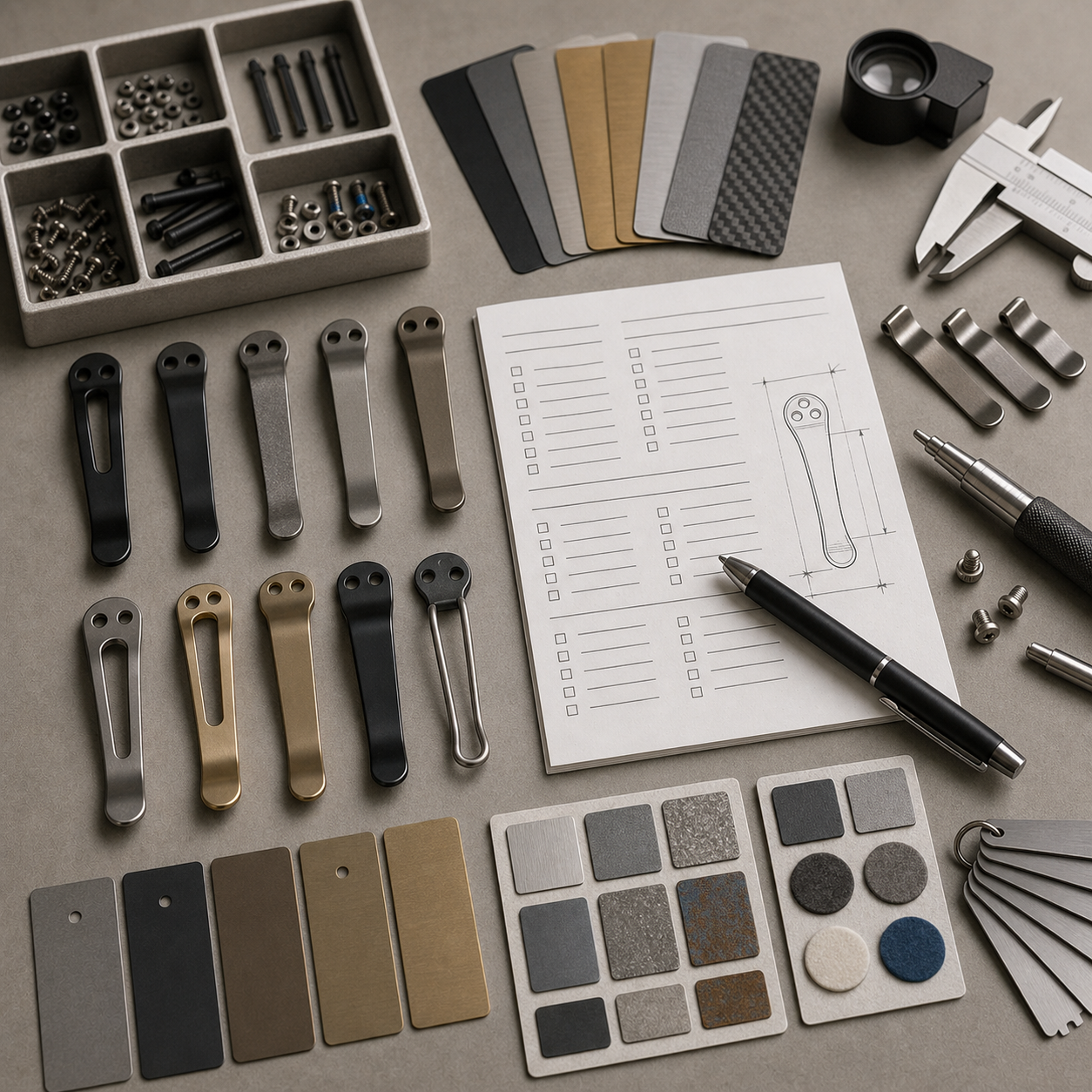
Buyers should match clip type to product positioning by comparing stamped clips, bent wire clips, milled clips, reversible clips, and low-profile clips against target price, user expectation, and production complexity.
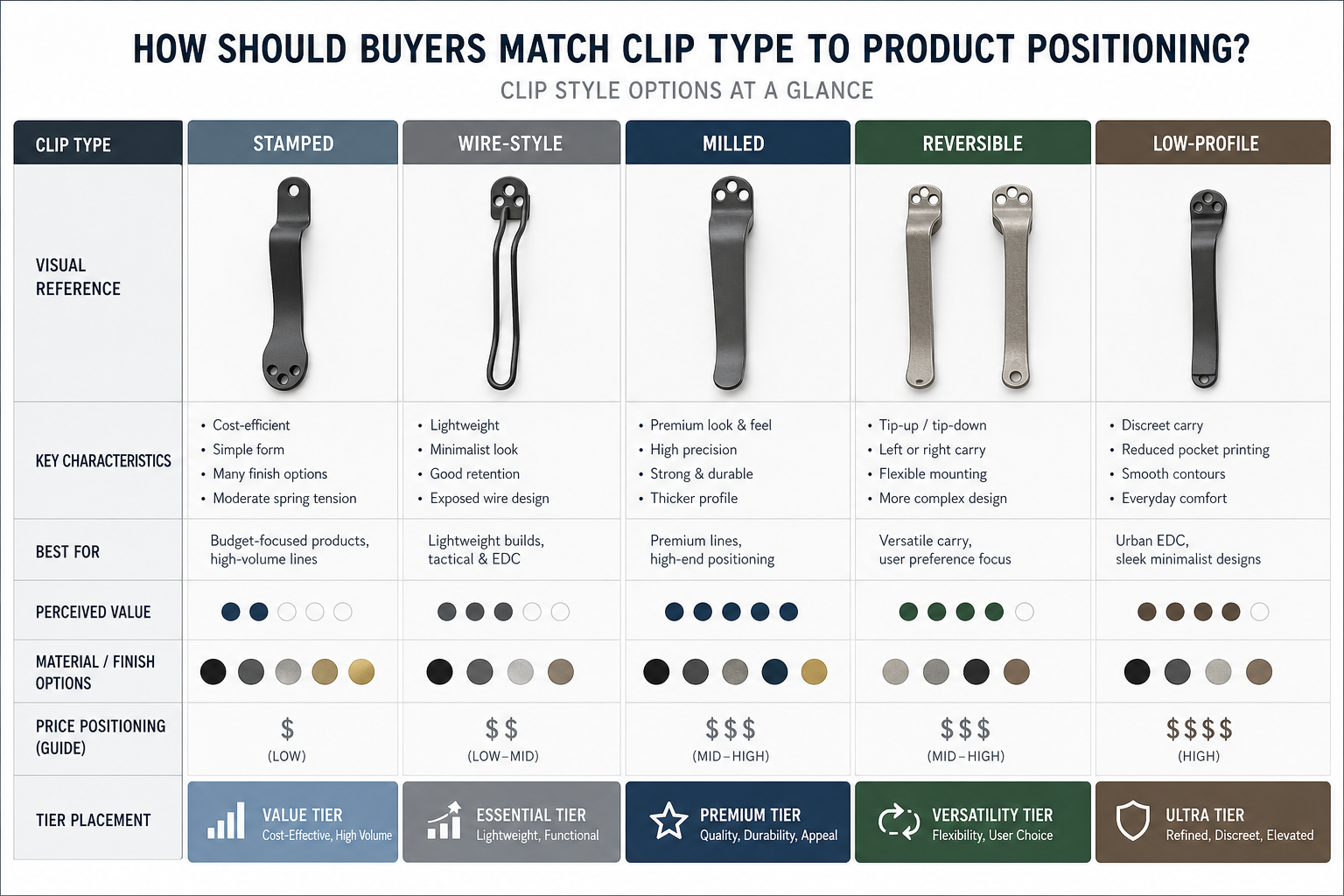
I choose clip type after I know the market level
The best clip is not always the most expensive clip. A simple stamped clip can work well for a practical EDC knife if the material, bending, edge treatment, and screws are controlled. A bent wire clip can reduce weight and improve pocket feel, but it needs good shape control. A milled clip can look solid and support a higher price point, but it may cost more and require tighter machining.
The buyer should decide the product level before choosing the clip. If the knife is a budget private label item, the clip should be strong enough, smooth enough, and easy to assemble. If the knife is a brand-building SKU, the clip can carry more design value. It may include a special shape, matching finish, or custom logo position. But every design choice must still pass production logic.
I also ask about right-hand and left-hand needs, tip-up or tip-down preference, and whether the buyer wants reversible mounting. More mounting options can improve market appeal, but they add holes, screws, and inspection points. The handle design must allow it from the start.
| Clip type | Best fit | Production concern |
|---|---|---|
| Stamped clip | Practical volume products | Edge finishing and spring force |
| Wire clip | Lightweight designs | Shape consistency |
| Milled clip | Higher-positioned products | Machining cost and tolerance |
| Reversible clip | Broader user preference | Hole layout and screw control |
What Materials Work Best for Knife Pocket Clips?
Material choice can look simple. But the clip must flex, resist corrosion, accept finish, and stay stable after assembly.
Pocket clip materials should be chosen for spring force, corrosion resistance, formability, finish compatibility, cost, and product position. Stainless spring steel, titanium, and some machined metals can all work when matched correctly.
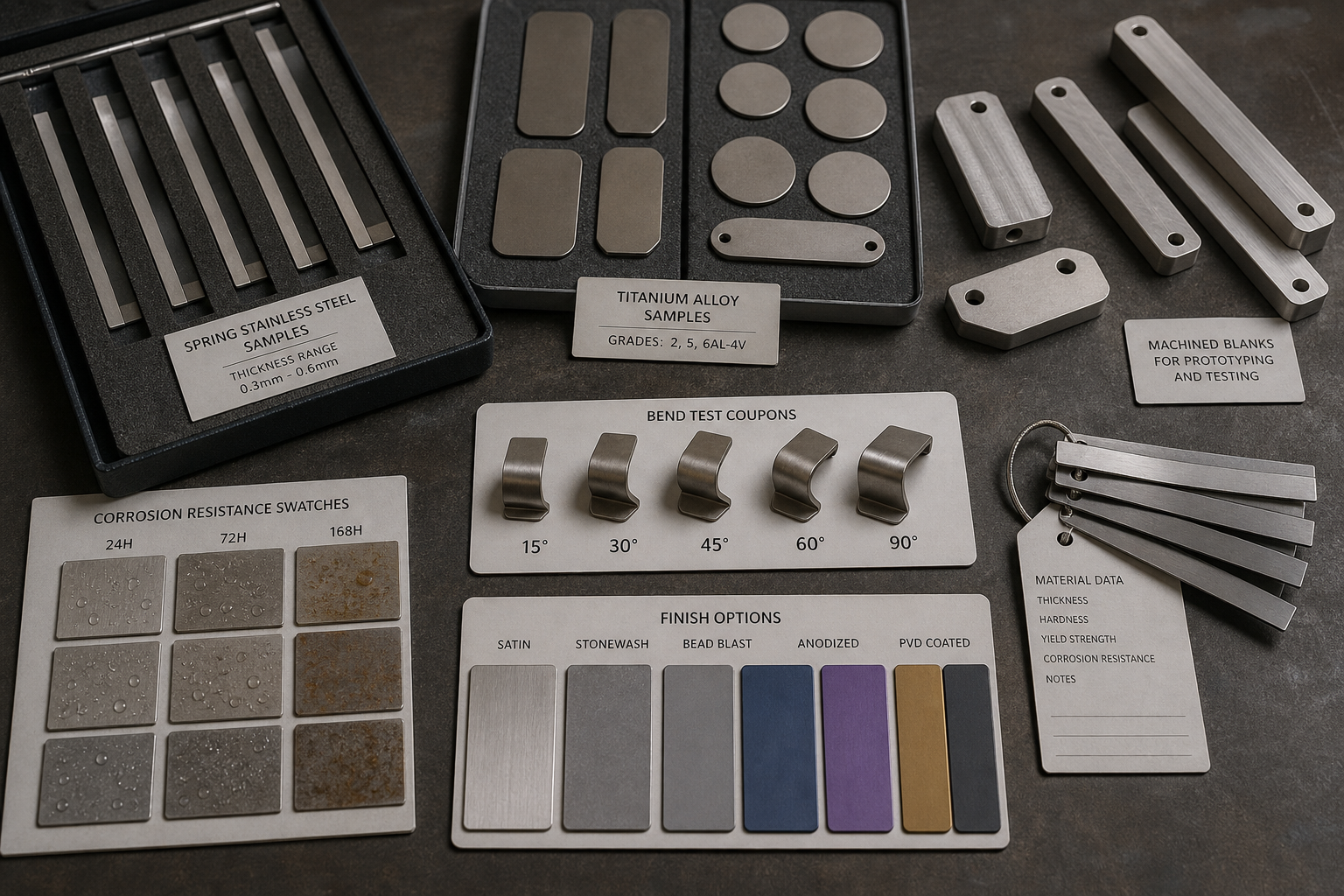
I treat the clip as a spring part
A pocket clip is not only a metal decoration. It works like a small spring. It needs to flex, return, and hold shape. That is why material matters. Stainless spring steel is often practical because it can provide strength, elasticity, and corrosion resistance. Alleima describes spring steel as needing spring force, long service life, environmental performance, and formability. Those same ideas apply to knife clips.
Titanium can support a higher-positioned product because it is lightweight and has a strong material story. But titanium clips can feel different from steel clips, and the bending design needs care. Aluminum is usually more common for handles than clips because it is softer. Machined stainless or titanium clips can look strong, but the shape must still provide the right flex.
I usually ask the buyer to approve clip feel on real samples. A material may look good on paper but feel too stiff, too loose, or too aggressive on the pocket seam. The clip should fit the buyer's target market, not only the product photo.
| Material option | Main benefit | Buyer watch point |
|---|---|---|
| Stainless spring steel | Good strength and corrosion balance | Needs controlled bending and finish |
| Titanium | Lightweight and higher-positioned feel | Cost and spring feel must be checked |
| Machined stainless | Solid appearance | Weight and machining cost |
| Coated steel | Color and style options | Coating wear and edge finish |
How Do Spring Force and Clip Geometry Affect User Experience?
A clip can be too tight or too loose. Either problem can make a good knife feel wrong in daily use.
Spring force and clip geometry affect how easily the knife attaches, how stable it feels, how the handle feels in hand, and whether the clip keeps its shape after repeated use.
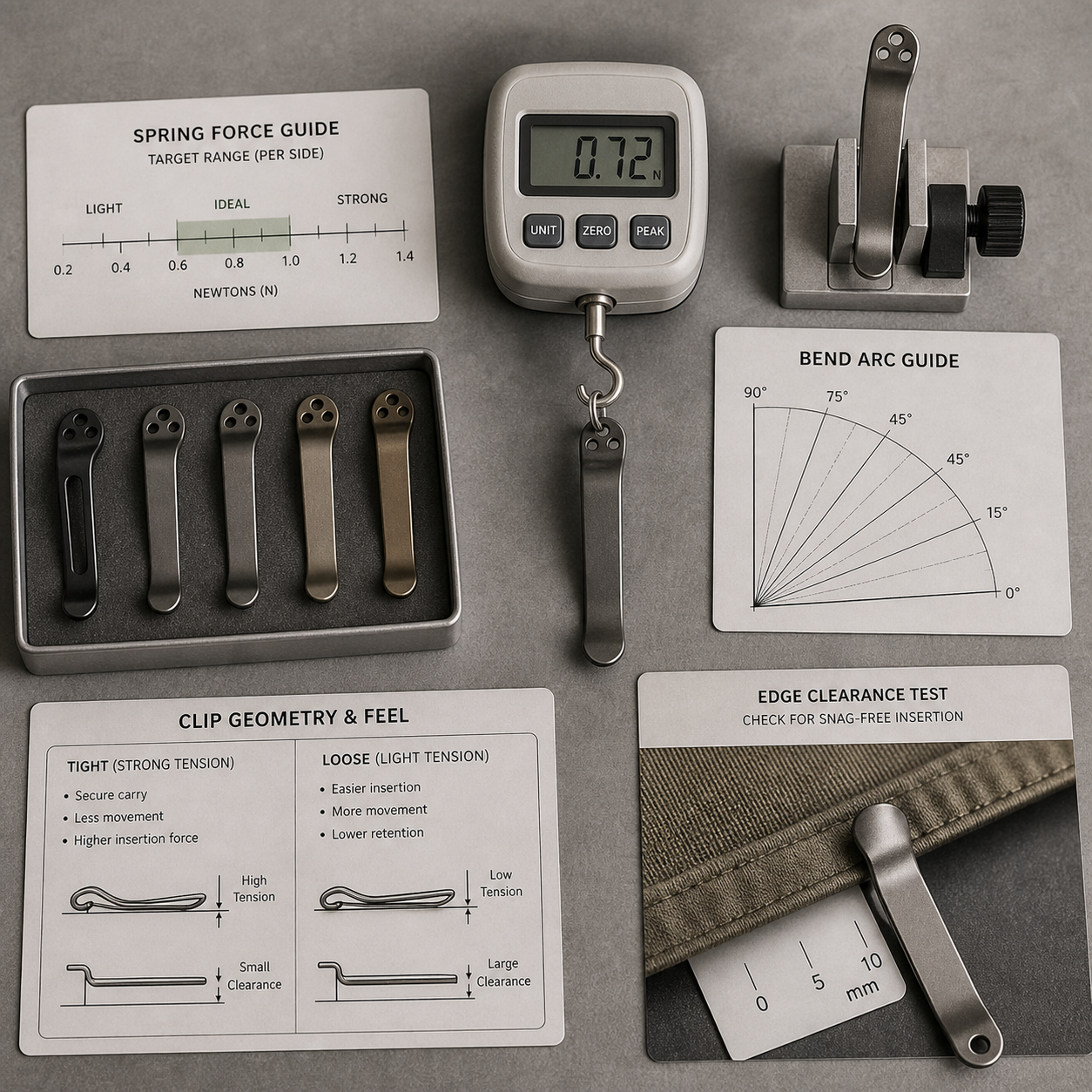
I test the bend, not only the drawing
The clip drawing is only the start. The real result depends on bend radius, material thickness, heat condition, screw position, clip height, handle texture, and finish. If the bend is too flat, the clip may not hold well. If the bend is too aggressive, it may feel difficult to use or may scratch fabric. If the clip sits too high, it can catch on packaging or feel uncomfortable in hand.
The geometry also affects hand comfort. Some clips press into the palm. Some have a sharp end. Some block the grip area. For a work-focused utility knife, comfort may matter more than a dramatic look. For a compact EDC knife, pocket feel and handle fit may matter more. I ask buyers to handle the sample repeatedly and check whether the clip edge or screws create a pressure point.
Cycle testing is useful when the order volume is meaningful. A clip should be opened and released repeatedly to see whether the force changes too much. Even a simple internal test can catch weak designs early.
| Geometry factor | What it affects | Practical check |
|---|---|---|
| Bend radius | Spring feel and durability | Compare sample force |
| Clip height | Pocket clearance and snag risk | Check with real pocket seam sample |
| Clip end shape | Comfort and fabric contact | Deburr and round edges |
| Screw position | Stability and handle strength | Check thread depth and spacing |
Why Are Screws and Mounting Points Critical for Clip Reliability?
A strong clip can still fail if the screws are weak. Small hardware mistakes create movement, rattling, and repair claims.
Screws and mounting points are critical because they control clip stability, handle strength, assembly repeatability, and after-sale durability. Buyers should check screw length, thread engagement, countersink fit, and torque process.
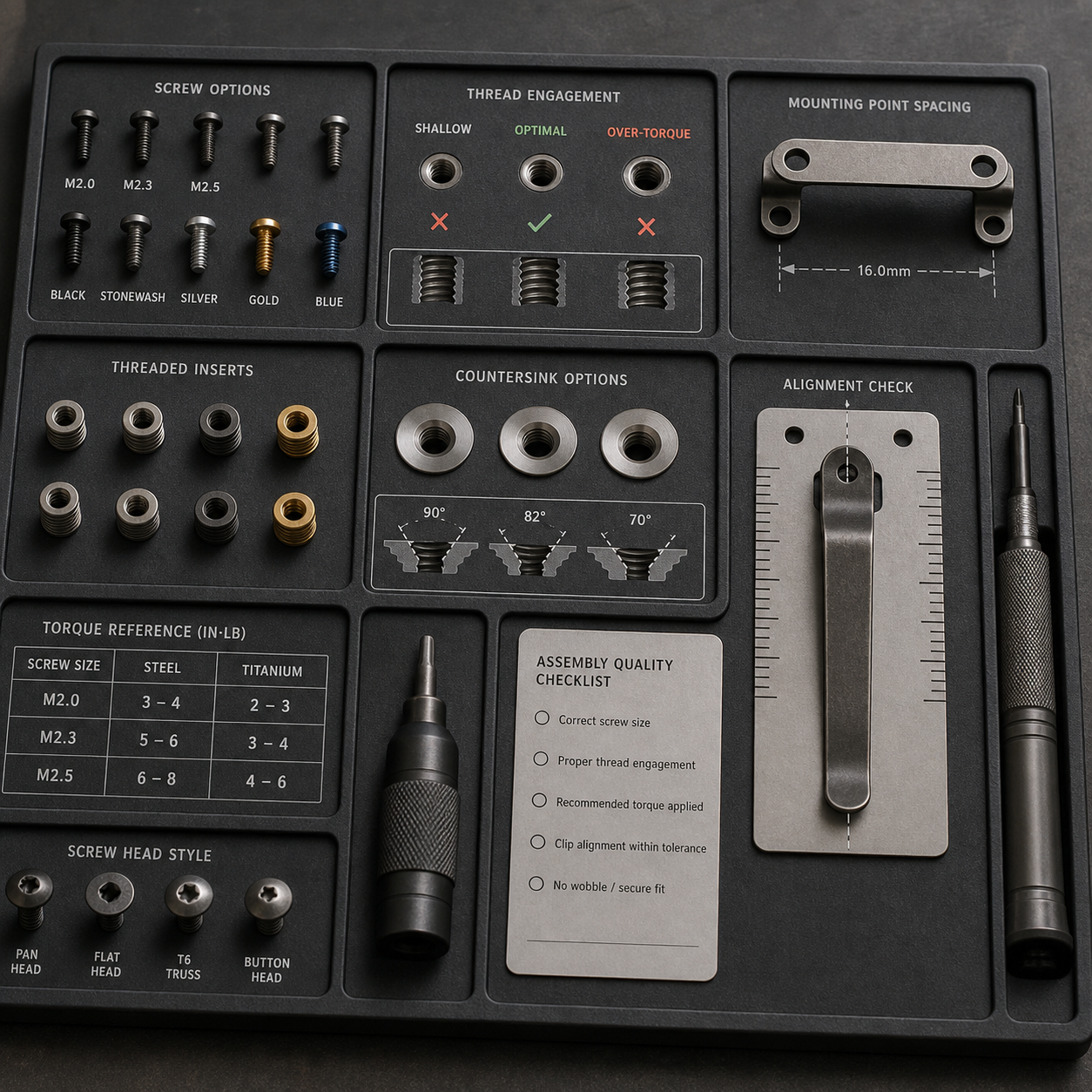
I do not let small screws become a big complaint
Pocket clip screws are small, but they carry repeated stress. If the screw is too short, the clip may loosen. If the screw is too long, it may interfere with internal parts or create assembly problems. If the countersink does not match the screw head, the clip may sit unevenly. If the thread engagement is poor, the buyer may see loose clips after use.
Fastener standards show why hardware should be treated seriously. ISO 898-1 covers mechanical and physical properties for bolts, screws, and studs made of carbon steel and alloy steel. A pocket knife clip screw is a small consumer-product fastener, but the same sourcing lesson applies. Buyers should define screw material, size, coating, head style, and assembly expectations.
In production, I like to see controlled torque and thread-locking decisions when appropriate. The goal is not to overcomplicate the knife. The goal is to avoid random assembly. If one worker tightens too lightly and another over-tightens, the final product can vary. A clear process protects repeat quality.
| Hardware detail | Risk if ignored | Buyer request |
|---|---|---|
| Screw length | Loose clip or internal interference | Confirm with assembly sample |
| Head fit | Uneven clip contact | Check countersink and surface seating |
| Thread engagement | Weak holding strength | Define thread depth and hole quality |
| Torque process | Variation in assembly | Set practical assembly control |
How Should Finish, Coating, and Corrosion Resistance Be Checked?
A black clip can look clean in photos. But poor coating, rust spots, or edge wear can hurt the product after shipping.
Buyers should check clip finish by reviewing coating adhesion, color match, edge wear, corrosion resistance, scratch risk, and packaging contact. The required test level should match the target market and price.
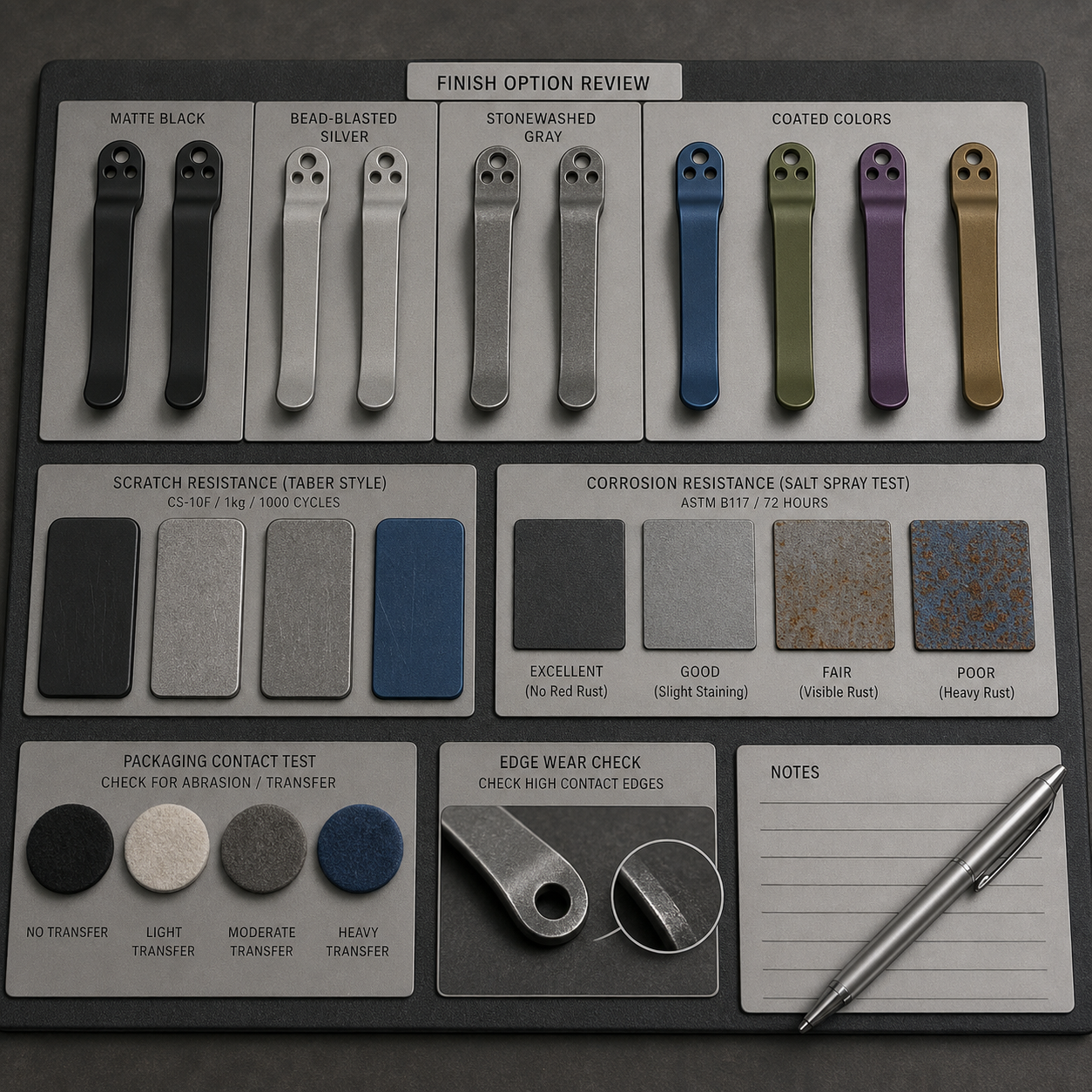
I test the finish where the clip actually wears
Pocket clips get rubbed by pockets, cartons, inserts, and hands. This makes finish choice important. Stonewashed stainless may hide light wear better. Black-coated clips can look good, but the buyer should check edge wear and screw-head contact. Bead-blasted or satin clips may match the blade or handle, but color and texture must be consistent.
Corrosion expectations should match the market. A basic indoor retail product does not need the same check as a fishing or humid-climate product. If the buyer needs corrosion evidence, ISO 9227 salt spray tests provide a standard approach for testing corrosion resistance of metallic materials and coatings in artificial atmospheres. The standard also notes that product specifications should define specimen details, exposure time, and result interpretation.
Coatings should not be treated as magic. NIST's publication on coatings for corrosion protection is useful background because it frames coatings as corrosion-control systems that need proper selection and evaluation. For pocket clips, I care most about finish consistency, edge coverage, and real contact points.
| Finish factor | What to check | Why it matters |
|---|---|---|
| Color match | Clip, screws, handle, and blade tone | Supports product appearance |
| Edge coverage | Clip tip and side edges | Prevents early wear complaints |
| Corrosion resistance | Market-specific exposure | Reduces rust-related issues |
| Packaging contact | Clip rubbing in box | Prevents shipment scratches |
How Can Pocket Clip Design Support Branding and Customization?
Branding can make the clip more useful. But too much decoration can weaken function, delay production, or raise cost.
Pocket clip design supports branding through shape, finish, logo placement, color, mounting direction, and packaging presentation. Buyers should protect function before adding decorative details.
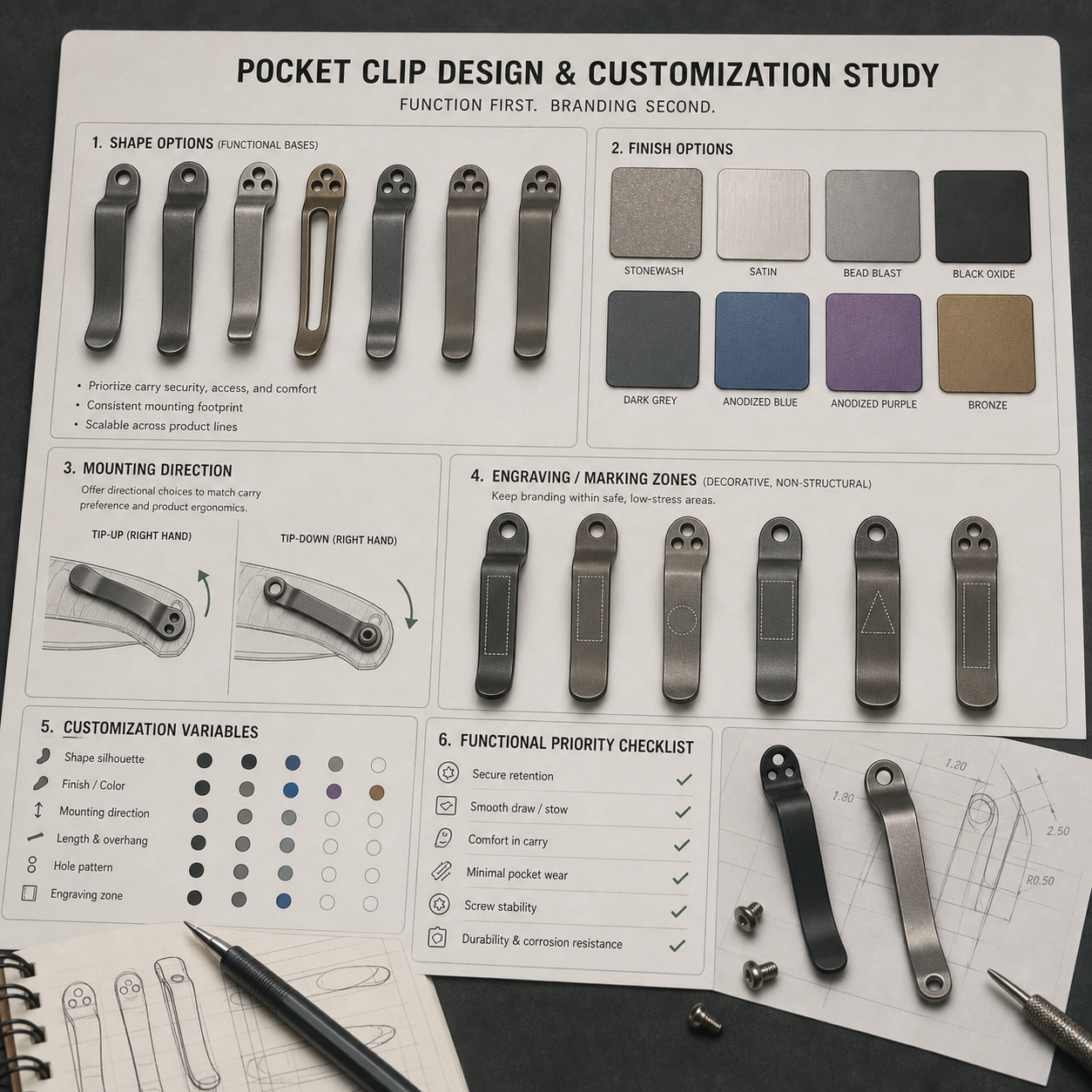
I keep branding clear but controlled
The clip can carry part of the product identity. A custom shape can make the knife recognizable. A matching finish can make the design feel complete. A small logo can help brand recall. But every branding choice must respect the clip's function. A cutout can reduce strength. A large logo can make the surface uneven. A sharp decorative corner can become uncomfortable.
For OEM/ODM buyers, the clip is also a cost-control item. A standard clip with a custom finish may be enough for many projects. A new stamped clip may need tooling. A machined clip may need more CNC time. A special coating may require minimum quantities or longer lead time. I prefer to discuss these choices before prototype approval, not after the buyer has already built the marketing story.
The clip should also match packaging. If the clip is the first visible detail in the box, it should not arrive scratched. Inserts, sleeves, polybags, and carton pressure can all affect the clip finish. I check packaging contact early because it is easier to fix before production.
| Branding choice | Benefit | Production caution |
|---|---|---|
| Custom shape | Stronger product identity | May need tooling or CNC time |
| Logo on clip | More visible brand cue | Must not weaken or roughen surface |
| Color finish | Better SKU separation | Needs color and wear control |
| Matching screws | Cleaner appearance | Adds sourcing and inventory control |
What Should Buyers Put in a Pocket Clip RFQ?
A vague RFQ turns the clip into an afterthought. Then the supplier guesses the material, finish, screws, and quality level.
Buyers should include clip type, material, thickness, finish, mounting direction, screw details, logo need, sample test, corrosion expectation, packaging contact, target price, MOQ, and inspection requirements in the RFQ.
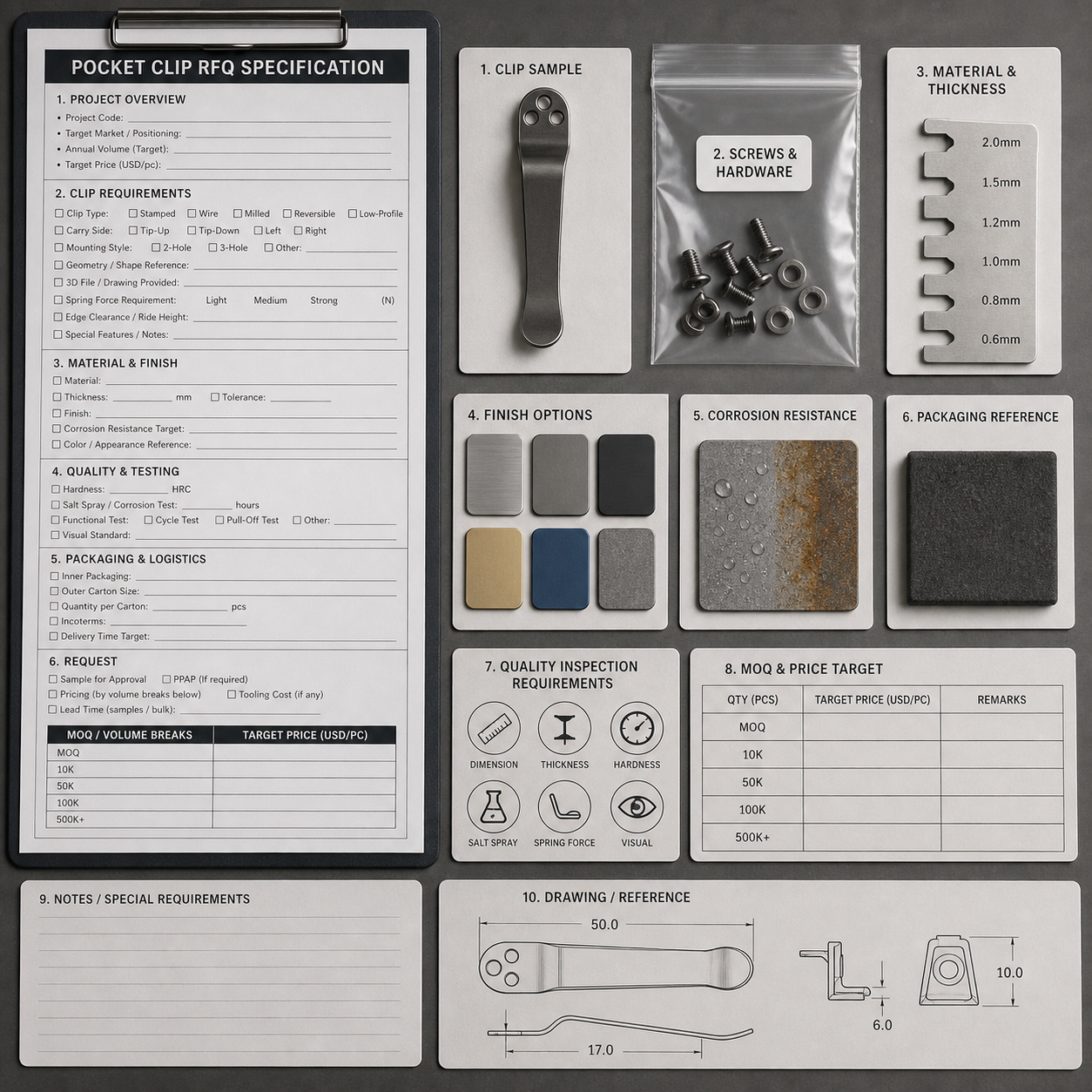
I ask for enough detail to avoid guessing
The RFQ should make the clip decision clear. I ask buyers to define the knife type, handle material, target market, product tier, and expected use pattern. Then I ask for clip details. These include clip type, material, thickness, mounting side, screw quantity, screw size, finish, color, logo, packaging method, and inspection expectation.
If the buyer is not sure, I suggest two or three options. One can be a cost-effective stamped clip. One can be a stronger or better-finished clip. One can be a custom clip for a higher-positioned SKU. This gives the buyer a practical comparison instead of a blind choice.
At Vast State, I also connect the clip to the whole product. The clip must work with the handle scale, liner, screw depth, lock structure, and packaging. I do not want the buyer to approve a beautiful clip that creates assembly trouble. A useful RFQ helps the supplier give real engineering feedback.
| RFQ field | What to specify | Why it helps |
|---|---|---|
| Clip type | Stamped, wire, milled, reversible, low-profile | Defines structure and cost |
| Material and finish | Stainless, titanium, coating, stonewash, satin | Controls feel and appearance |
| Screw details | Quantity, size, head style, thread depth | Protects assembly |
| QC expectation | Force, fit, finish, packaging check | Makes approval measurable |
Turn this article into a folding knife project.
Share your blade type, lock direction, steel preference, handle material, quantity, target market, and packaging needs. Vast State can prepare OEM/ODM options.
Conclusion
I choose a pocket clip by balancing function, comfort, durability, finish, screws, packaging, and repeatable production control.
Source Notes
- Alleima spring steel supports the point that spring parts need force, elasticity, long service life, corrosion resistance, and formability.
- ISO 9227 supports corrosion testing context for metallic materials and coatings.
- ISO 898-1 supports the importance of defined mechanical properties for screws and studs.
- NIST coatings for corrosion protection provides context for treating coatings as corrosion-control systems.
- ISO 9001 supply chain guidance supports clear product requirements and supplier verification.