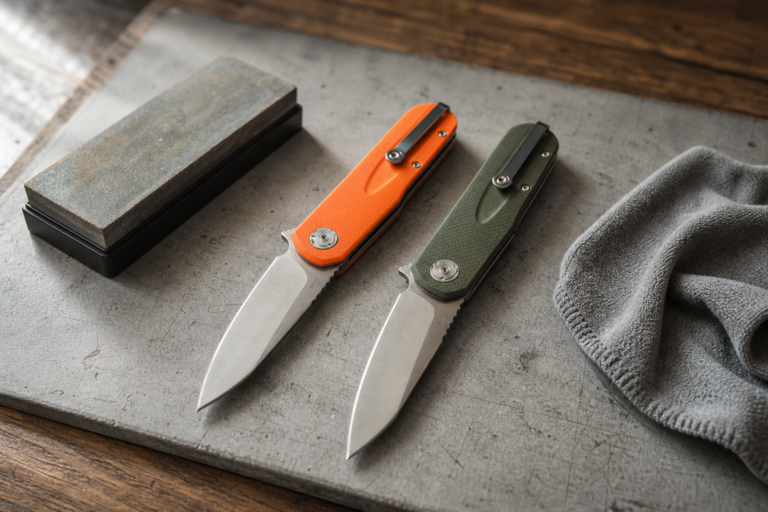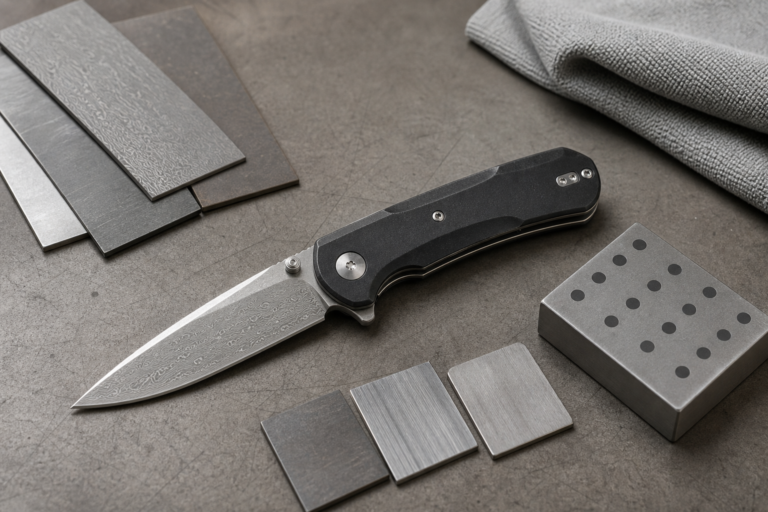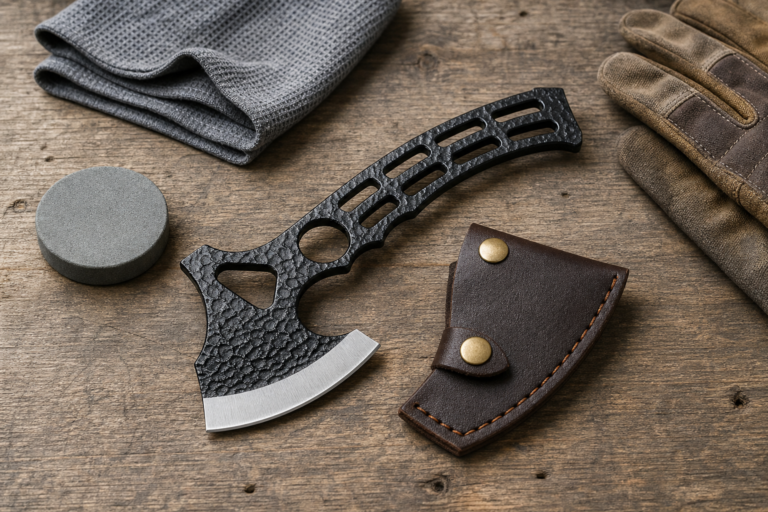
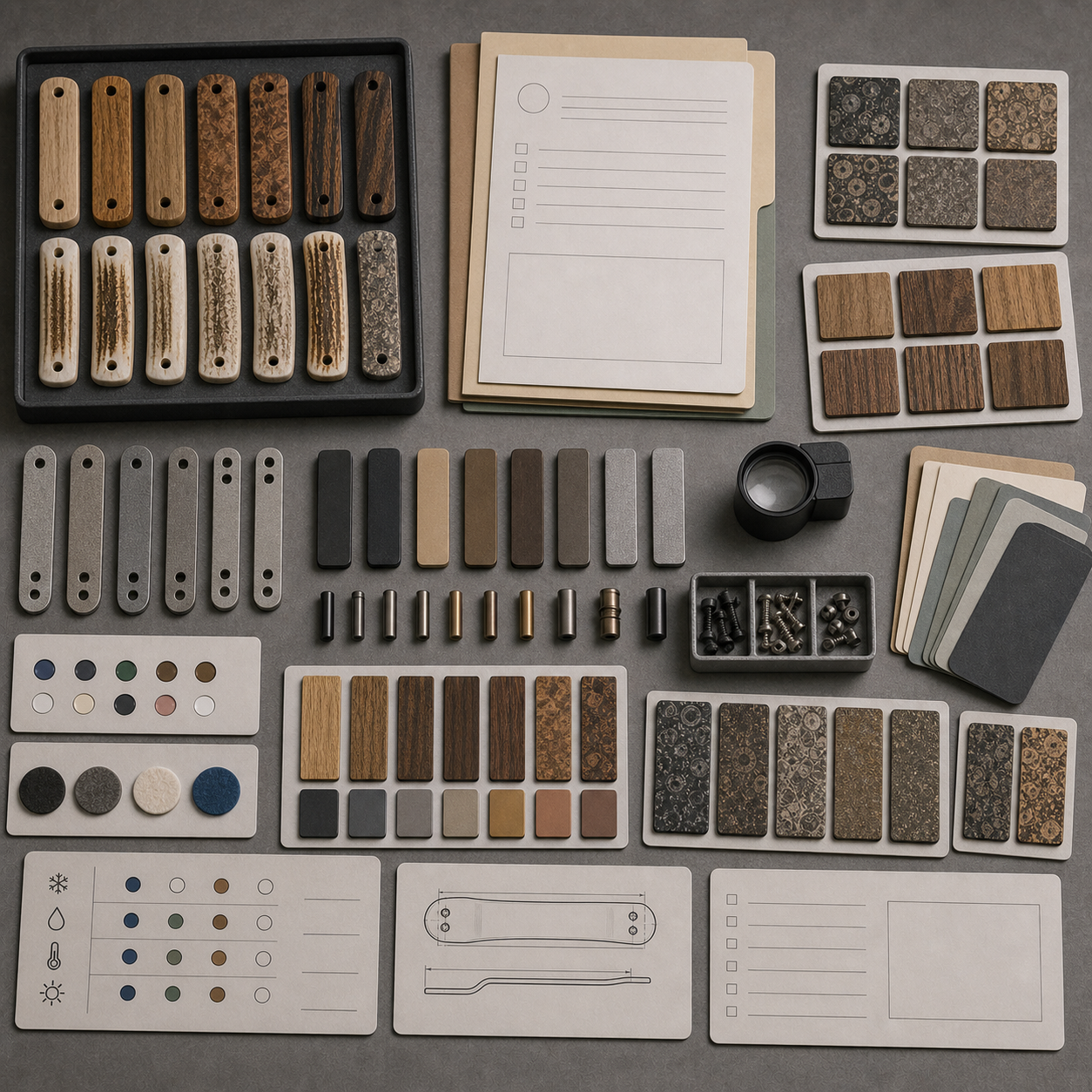
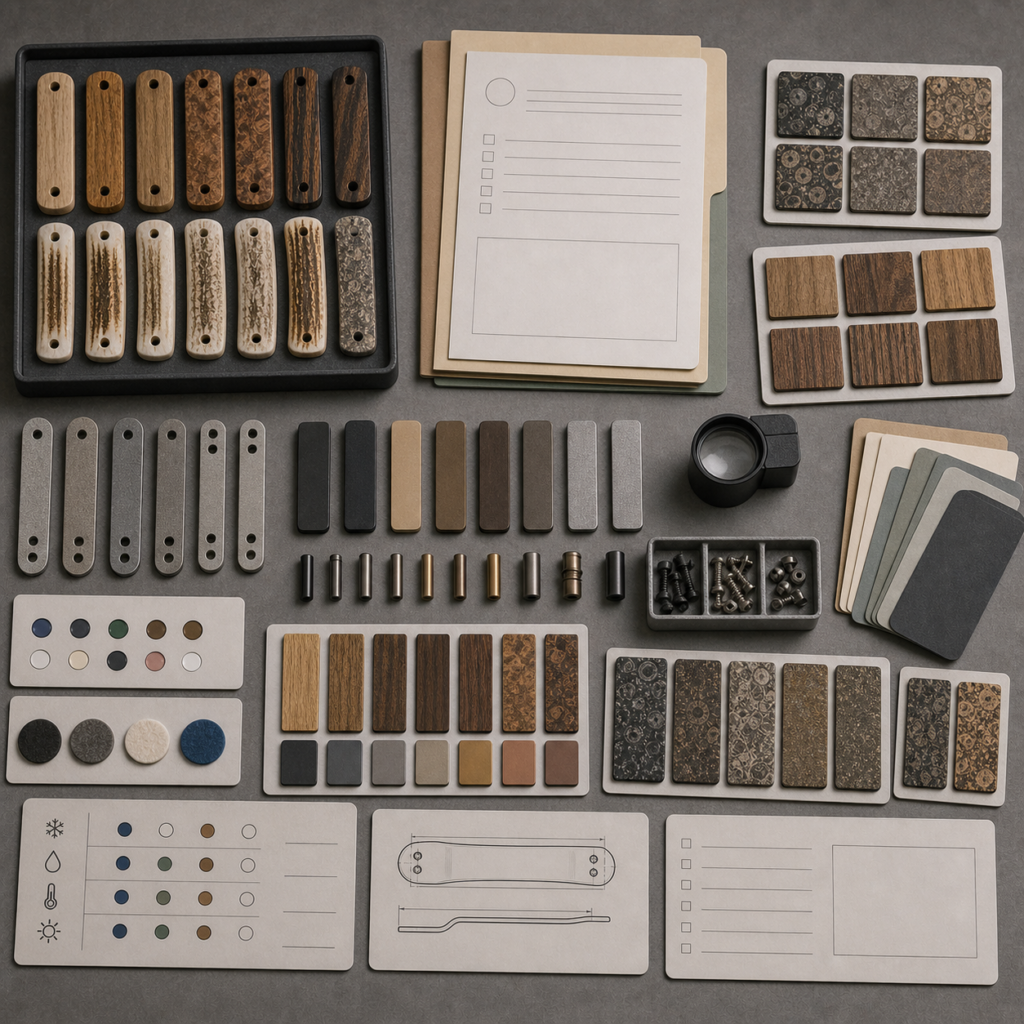
Natural knife handles can look valuable. But winter dryness can expose cracks, gaps, warping, and compliance problems. Better material planning prevents that.
Buyers should choose natural knife handle materials for cold and dry markets by checking moisture movement, material source, stabilization, construction method, finish, packaging, compliance records, and after-sales guidance before approving wood, antler, or fossil tooth materials.
Quick buyer brief:
- Answer: Treat natural handle materials as living-risk materials that need climate, construction, finish, and documentation control.
- Buyer context: This helps knife brands, outdoor brands, importers, wholesalers, distributors, and private label buyers.
- Key checks: Moisture, cracking, source documents, stabilizing, adhesive, liners, finish, packaging, compliance, target market.
Have a knife or multi-tool project in mind?
Send your sketch, CAD file, sample photo, or product idea. Vast State can review manufacturability, suggest materials, estimate MOQ, and prepare a quote for your OEM/ODM project.
When a buyer asks me about wood, antler, or mammoth tooth style handle materials, I do not only think about appearance. I think about winter air, dry warehouses, long shipping routes, and customer complaints. Natural materials can make a knife feel warmer and more distinctive than plastic or metal. They can also move, shrink, crack, or raise compliance questions if the project is not planned correctly. For OEM/ODM buyers, the safest path is not to avoid all natural materials. It is to match the material, construction, finish, packaging, and documentation to the market where the knife will be sold.
Why Should Natural Handle Projects Start With Climate and Market Use?
A handle material can pass sampling in one season and fail in another. Cold, dry air can reveal hidden material risk.
Natural handle projects should start with climate and market use because winter humidity, storage conditions, product price, user expectations, and after-sales risk decide whether wood, antler, or fossil tooth materials are suitable.
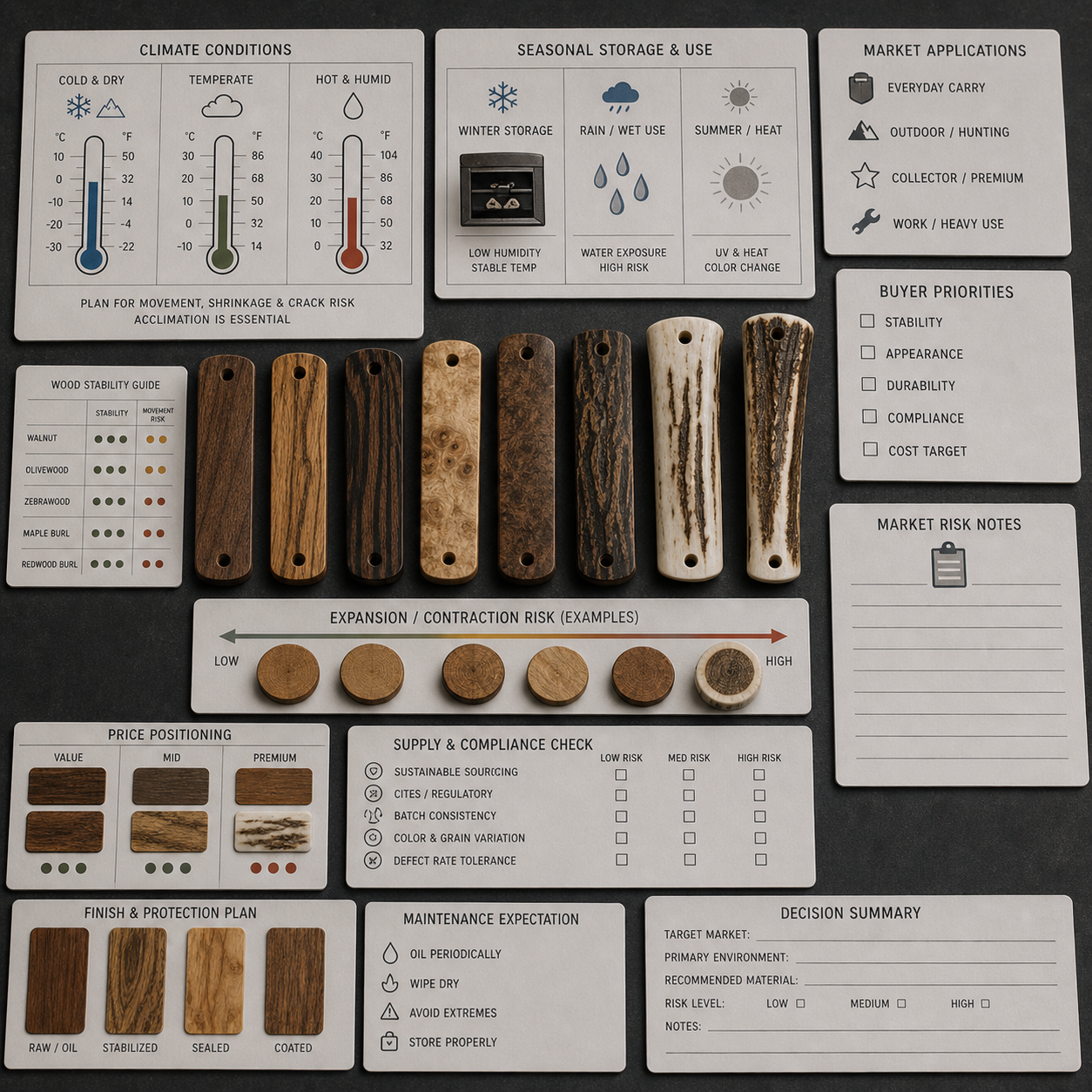
I choose the material after I know the selling environment
I first ask where the knife will be sold and stored. A natural handle going to a dry winter market needs different planning from a knife sold mainly in a humid coastal market. Warehouses, retail shelves, homes, and shipping cartons may all have different humidity conditions. A handle can look stable during sample approval, then change after weeks in dry indoor heating. That is why I connect the material choice with the target market before I discuss beauty.
The buyer also needs to define the product level. A small natural movement may be accepted on a handcrafted collector-style item, but it may create complaints on a high-volume retail line. A distributor may prefer a more stable engineered material. A brand may accept a higher cost for stabilized wood or carefully selected antler if the product story supports it. In my work, I treat natural materials as project-specific choices, not universal upgrades. They need a clear reason, a clear inspection method, and clear customer communication.
| Planning point | What I ask | Why it matters |
|---|---|---|
| Target climate | Cold, dry, humid, mixed, seasonal | Predicts shrinkage and cracking risk |
| Sales channel | Retail, distributor, online, gift, collector | Sets customer tolerance and packaging need |
| Product level | Value, mid-range, higher-positioned | Controls material selection and finish cost |
| After-sales risk | Return policy and user expectation | Decides how much documentation is needed |
OEM/ODM RFQ Checklist
Prepare these details to help Vast State review your project and provide a more accurate quotation.
| RFQ Field | What to Prepare |
|---|---|
| Project type | OEM from drawing / ODM private label / wholesale catalog |
| Product category | Folding knife / fixed blade / multi-tool / outdoor tool |
| Design status | Idea / sketch / 2D drawing / 3D CAD / physical sample |
| Target price | Ex-factory target price or retail price range |
| MOQ expectation | 500 / 1,000 / 3,000 / 5,000+ pcs |
| Logo method | Laser engraving / etching / printing / molded logo |
| Packaging | Standard packaging / custom retail box / Amazon-ready |
| Market | USA / EU / Japan / Korea / Middle East / other |
| Compliance needs | Buyer-specified testing / documentation / labeling |
| Timeline | Sample deadline / mass production deadline |
How Does Wood React to Winter Dryness in Knife Handles?
Wood can make a handle warm and attractive. But dry air can shrink it, open gaps, or create small cracks.
Wood reacts to winter dryness by losing moisture and changing dimension. Buyers should control wood species, moisture content, stabilization, grain direction, liners, adhesive, finish, and packaging humidity.
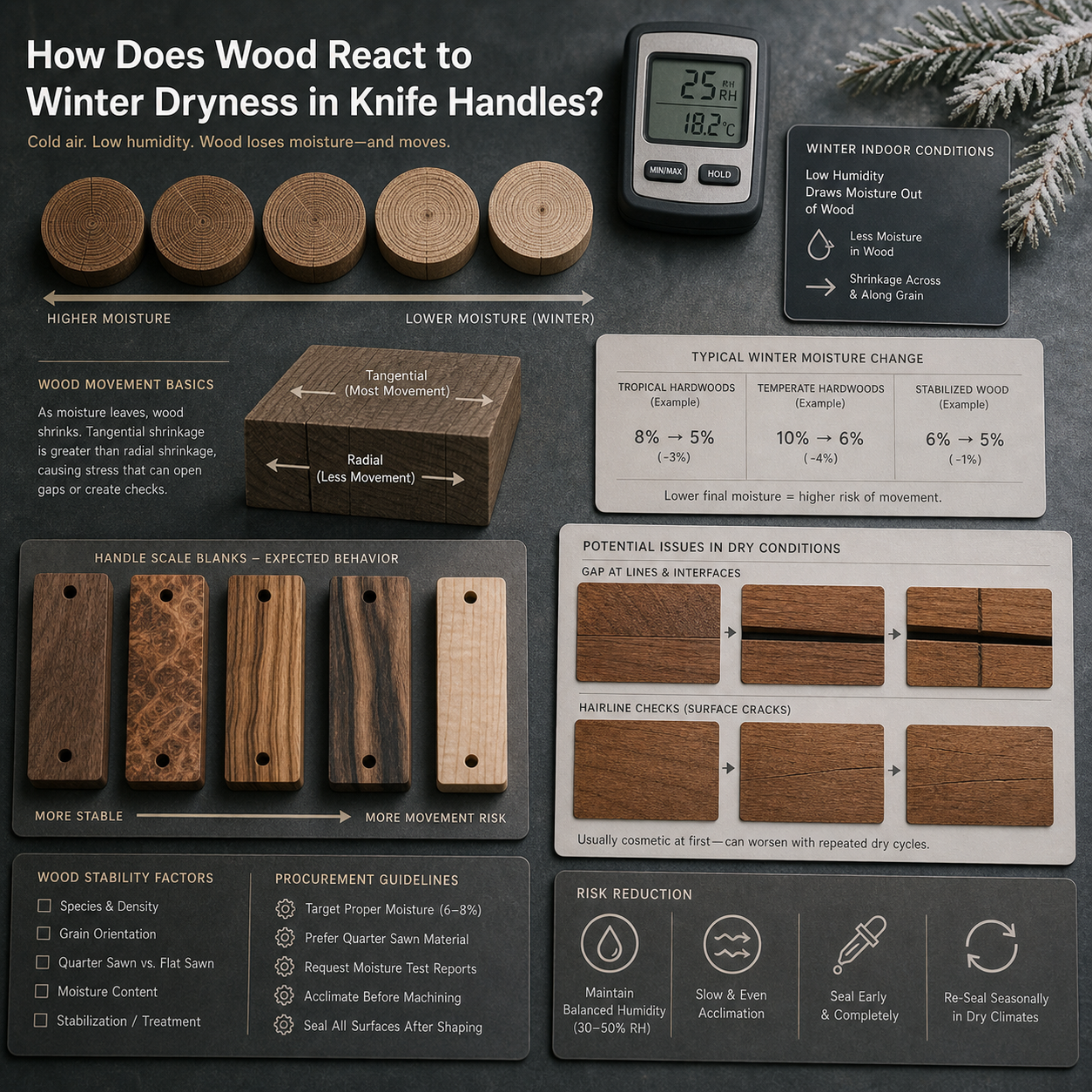
I treat wood as a moisture-sensitive material
Wood is beautiful because it has grain, color, and natural variation. Those same features also make it sensitive. The USDA Forest Products Laboratory Wood Handbook covers wood moisture, drying, dimensional changes, and finishing as core topics. That matters for knife handles because a small handle scale is still wood. It can respond to moisture changes even after machining.
For a B2B project, I usually discuss three options. The first is traditional natural wood, which may be suitable for low-volume or higher-story products if the buyer accepts variation. The second is stabilized wood, which can reduce movement but still needs correct machining and finish. The third is wood-look engineered material, which may be better for high-volume programs that need fewer complaints. I also check grain direction, scale thickness, liners, screw spacing, and adhesive area. A thin wooden scale fixed on a metal liner will respond differently from a thicker full handle. The finish should slow moisture exchange and protect the surface, but it cannot make poor material selection disappear. The buyer should approve samples after considering the climate, not only the grain pattern.
| Wood decision | What I check | Practical buyer note |
|---|---|---|
| Species or grade | Density, grain, defect risk | Avoid unstable or weak blanks |
| Moisture control | Drying, storage, sample condition | Reduce winter shrinkage surprises |
| Stabilization | Resin process and machining result | Improve consistency where suitable |
| Construction | Liners, pins, screws, adhesive area | Reduce gap and movement complaints |
What Makes Antler Handles Different From Wood Handles?
Antler looks natural and strong, but it does not behave like wood. It has its own structure, pores, and sourcing questions.
Antler handles are different because antler is bone-like material, not wood. Buyers should check density, inner core, cracking, color variation, surface sealing, legal source, and batch consistency.
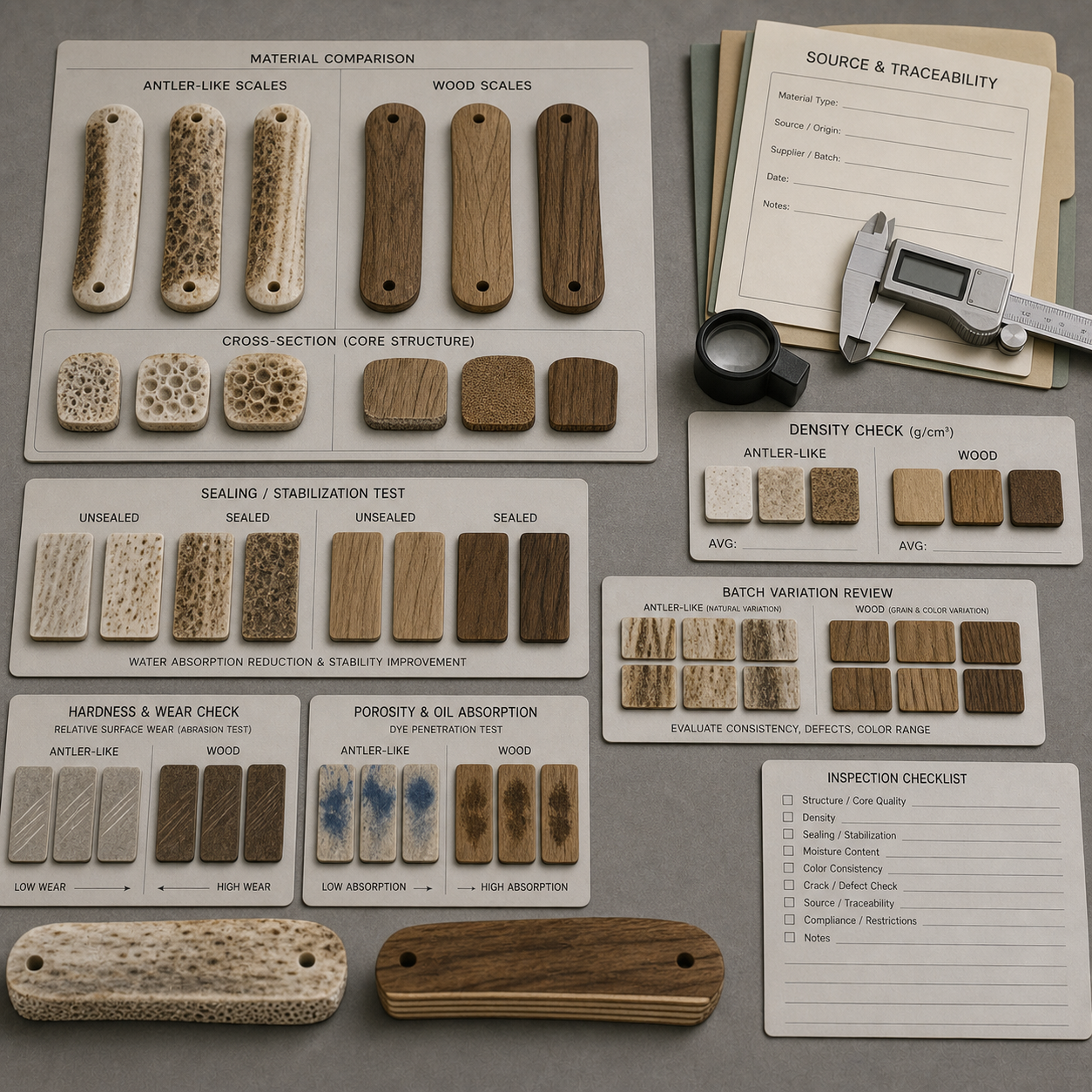
I inspect antler for structure before appearance
Antler is often selected for its rustic look. But in production, I first look at structure. The U.S. Fish and Wildlife Service explains that antlers are made of bone and are different from horns, which have keratin on the outside and live bone on the inner core. That difference matters because antler handles can have a dense outer area and a more porous inner area. If the blank is cut from the wrong section, the handle may not machine or finish evenly.
The buyer should also expect variation. Color, texture, curve, density, and pore structure can change from piece to piece. This can be part of the product story, but it must match the sales channel. A collector-style model may welcome natural variation. A large distributor program may not. I usually recommend clear grading and sample limits. The factory should define what level of pore, crack, color change, and texture is acceptable. Surface sealing also matters because open pores can absorb moisture or dirt. Antler can be attractive, but it needs inspection discipline. I do not treat it as a simple replacement for synthetic handle material.
| Antler factor | What I inspect | Why it matters |
|---|---|---|
| Outer density | Hard surface area | Supports machining and finish |
| Inner core | Pores and weak areas | Controls rejection rate |
| Natural variation | Color, curve, texture | Sets buyer approval standard |
| Source records | Supplier and material origin | Reduces sourcing risk |
Why Do Mammoth Tooth and Fossil Materials Need Extra Compliance Care?
Fossil materials can create a strong story. They can also create documentation, identification, and market-entry problems.
Mammoth tooth and fossil materials need extra compliance care because rules vary by market, identification can be sensitive, and buyers may need source documents, species confirmation, permits, or alternative materials.
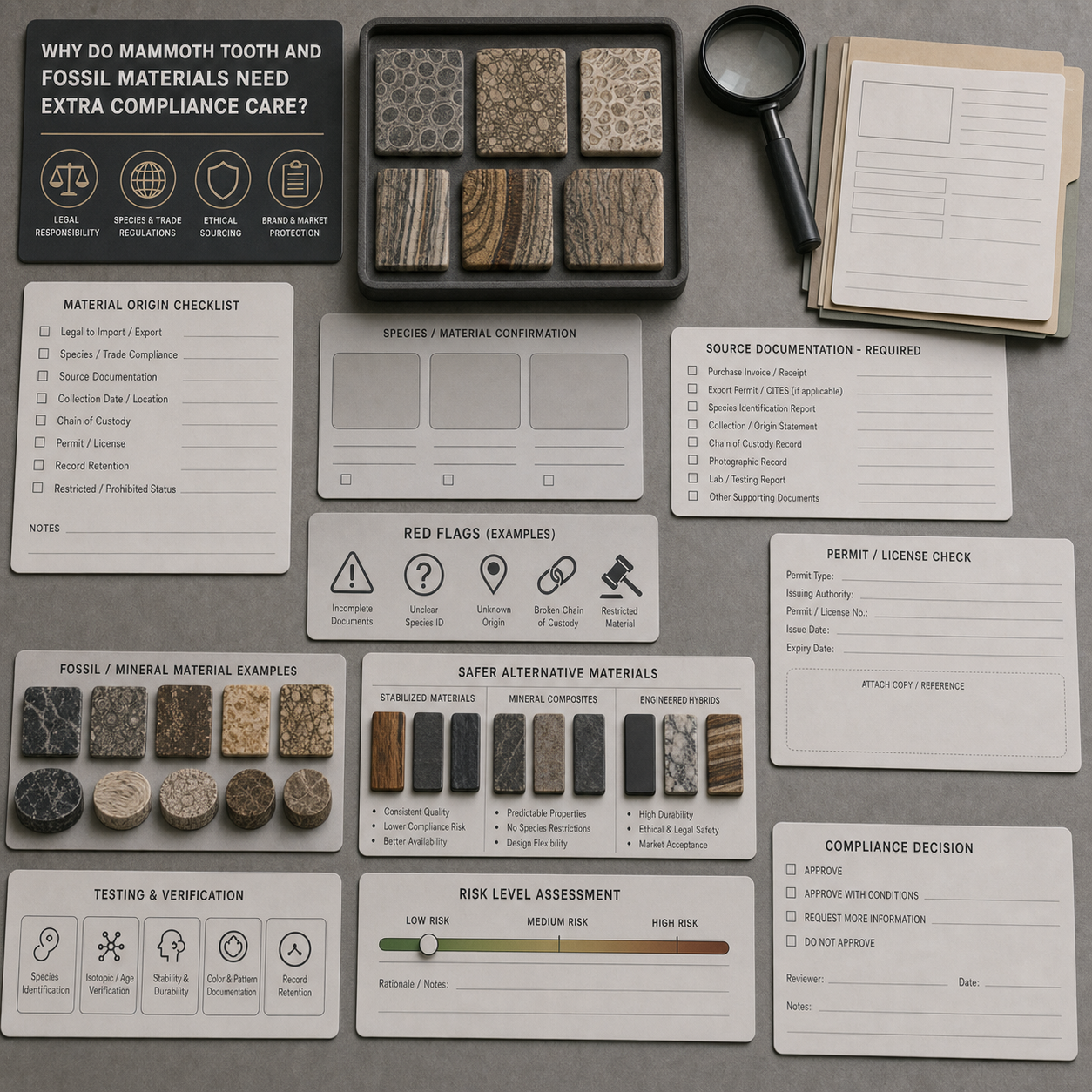
I separate material story from legal assumption
This section is practical sourcing guidance, not legal advice. When a buyer asks about mammoth tooth, mammoth ivory, or fossil-style material, I do not assume the material is easy to sell everywhere. I ask the buyer to confirm the destination market, sales channel, online platform rules, and documentation needs. Even when a material comes from an extinct species or fossil source, some regions may regulate sale, purchase, or documentation differently.
New York State, for example, has a page covering the sale of elephant and mammoth ivory or rhinoceros horn, and it says buyers of articles containing elephant or mammoth ivory in the state must receive a copy of the seller's permit and keep it with the articles. That does not mean every market follows the same rule. It does show why B2B buyers should not treat fossil tooth materials as a casual decorative option. The buyer should ask for source documents, identification support, and written confirmation of what the material is. If the project targets broad retail or multiple countries, I often suggest alternative materials that give a similar visual effect with lower compliance burden. A good product story should not create avoidable customs, platform, or resale risk.
| Compliance point | What to ask for | Buyer benefit |
|---|---|---|
| Destination market | Country, state, platform, distributor rule | Avoids wrong material selection |
| Source evidence | Supplier document and material description | Supports buyer records |
| Identification | Species or fossil material confirmation | Reduces mislabeling risk |
| Alternative option | Synthetic or stabilized visual substitute | Lowers launch risk |
How Should Finishing and Sealing Be Specified for Natural Handles?
A good material can still fail if the finish is weak. Dry air, sweat, and storage can expose the surface quickly.
Finishing and sealing should be specified by material type, target feel, surface porosity, color requirement, moisture exposure, cleaning expectation, and approved sample standard.
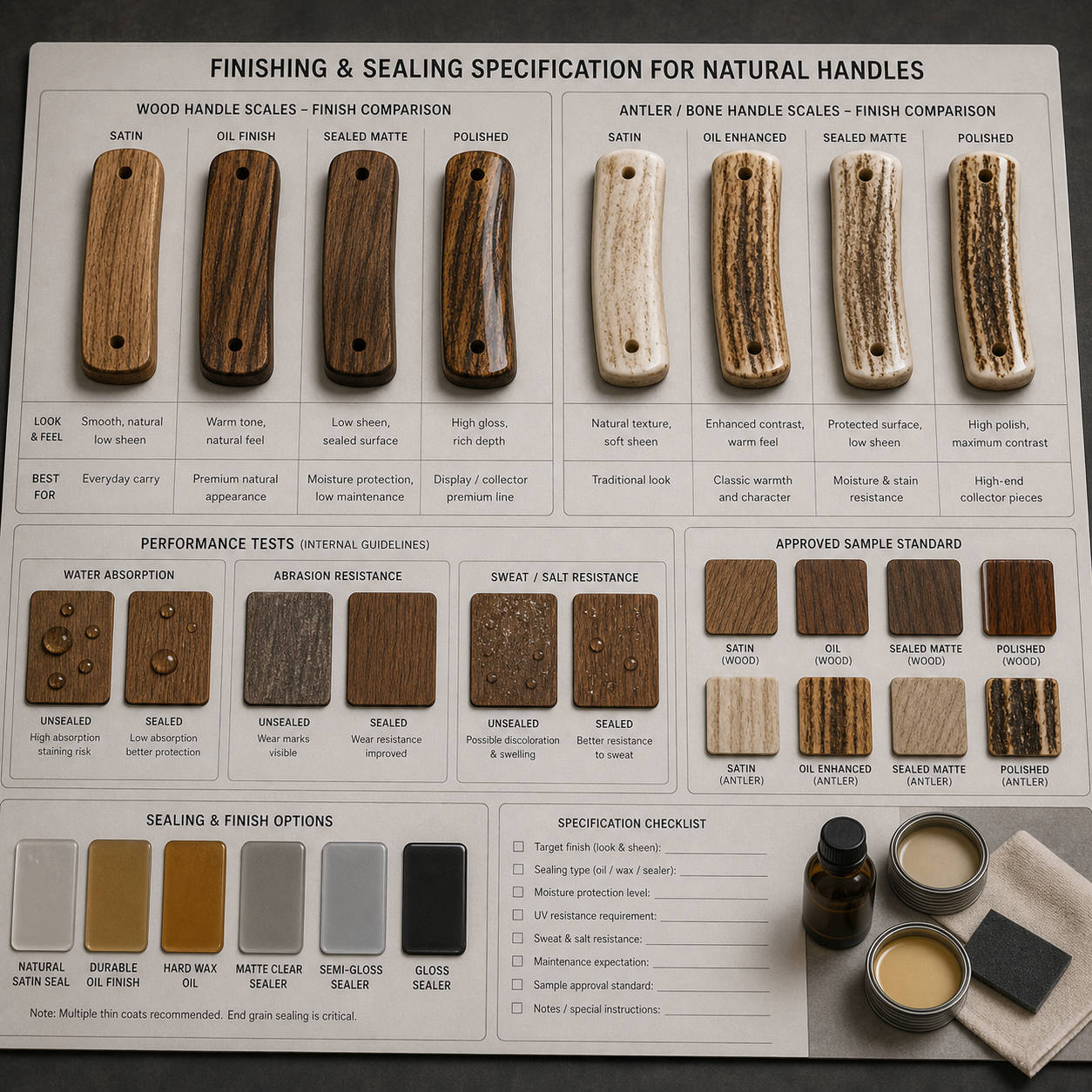
I define finish as a functional choice
Many buyers think about finish as a visual decision. I see it as both visual and functional. Wood may need a finish that slows moisture exchange and protects the grain. Antler may need sealing around pores and cut edges. Fossil tooth-style materials may need surface protection to reduce chipping or staining, depending on the exact material and construction. The finish must match the material, the price point, and the customer's use expectation.
I prefer to define finishing with an approved sample and a defect list. The sample should show gloss level, color, texture, edge radius, and acceptable natural variation. The defect list should define what is not acceptable, such as open cracks, sharp edges, loose filled areas, major color mismatch, or obvious finish bubbles. The buyer should also decide whether the product needs care instructions. Natural handle materials often need more honest communication than synthetic materials. I do not like packaging that makes natural material sound maintenance-free. Better wording helps reduce after-sales friction. In OEM/ODM production, the finish standard is part of the product specification, not a late decoration step.
| Finish decision | What to define | Why it matters |
|---|---|---|
| Surface feel | Matte, satin, polished, textured | Matches brand and user expectation |
| Edge treatment | Radius and sealed cut edges | Reduces chipping and discomfort |
| Color standard | Approved range and variation | Prevents batch disputes |
| Care message | Storage and cleaning guidance | Reduces after-sales complaints |
How Should Construction Support Natural Handle Stability?
Natural materials can move or vary. Poor construction makes those changes more visible and harder to repair.
Construction should support stability through liners, pin or screw layout, adhesive area, handle thickness, relief design, spacer choice, and controlled assembly pressure.
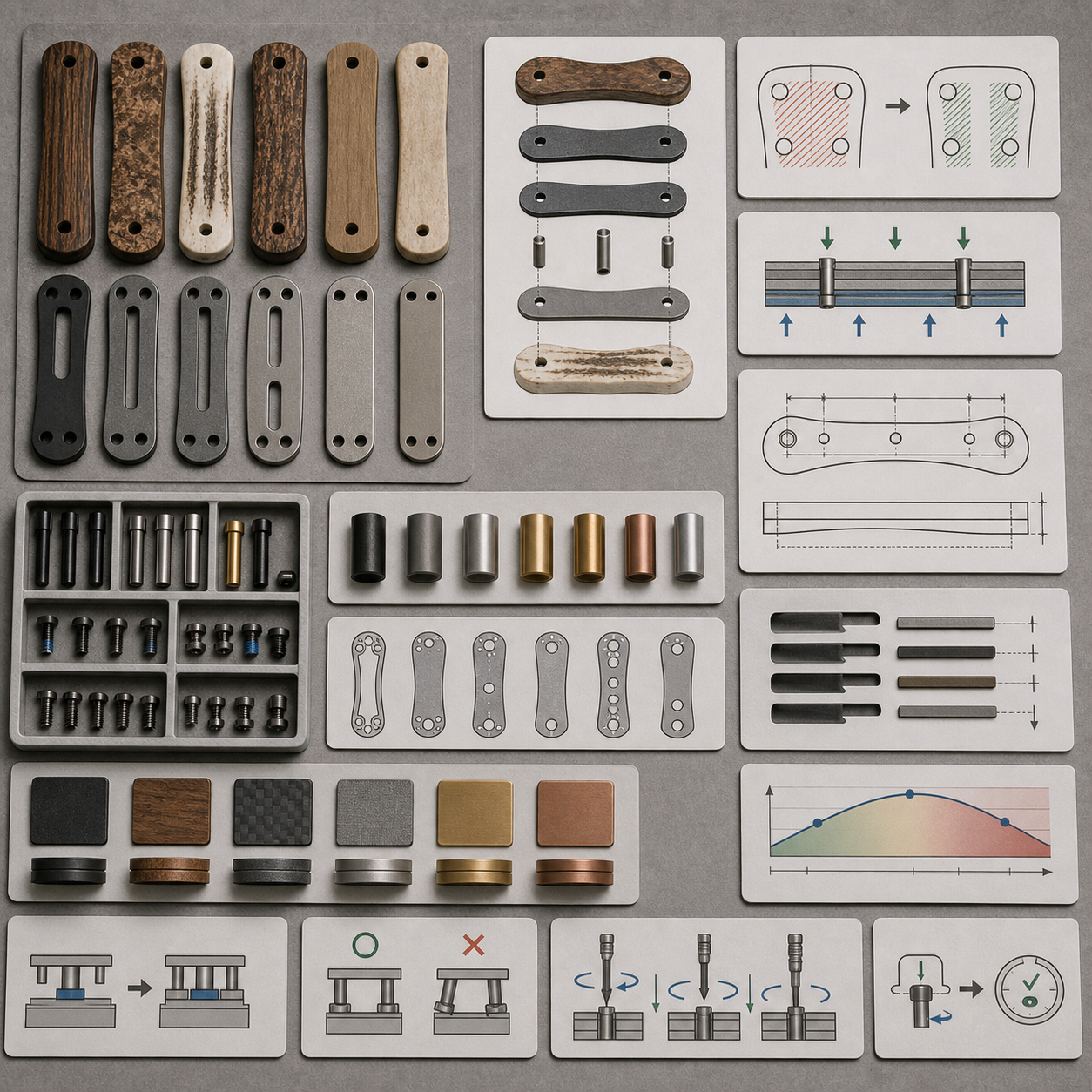
I design the structure around the material
A natural handle scale should not be forced into a structure designed for a very stable synthetic material unless the project has been tested. Wood, antler, and fossil tooth-style materials can vary in density and movement. I look at liner support, screw spacing, pin layout, adhesive area, and handle thickness. I also think about stress points. Sharp inside corners, thin edges, and over-tightened screws can create cracks. If the material is brittle or porous, the construction should reduce stress.
Assembly control matters too. Screw tightening should be consistent, especially when natural handle material sits against metal liners. The ISO page for ISO 6789-1 covers hand torque tools used for controlled tightening of screws and nuts. I do not apply a heavy standard to every knife order, but the principle is useful. Repeatable assembly needs repeatable control. If a buyer wants natural handles on a repeat production model, I want the supplier to test the construction before mass production. The goal is to let the natural material look good without asking it to carry stress it cannot handle.
| Construction detail | What I check | Practical reason |
|---|---|---|
| Liner support | Flatness and contact area | Reduces bending stress |
| Screw or pin layout | Distance from edges and stress points | Lowers cracking risk |
| Adhesive area | Bond surface and material preparation | Improves long-term fit |
| Assembly pressure | Tool control and final check | Prevents over-tightening damage |
What Testing and Packaging Protect Natural Handles in Winter Shipments?
Sampling at room conditions is not enough. Long shipping, dry storage, and retail display can change the handle after approval.
Testing and packaging should protect natural handles through sample aging, humidity observation, fit checks, protective inserts, moisture indicators, carton control, and clear storage guidance.
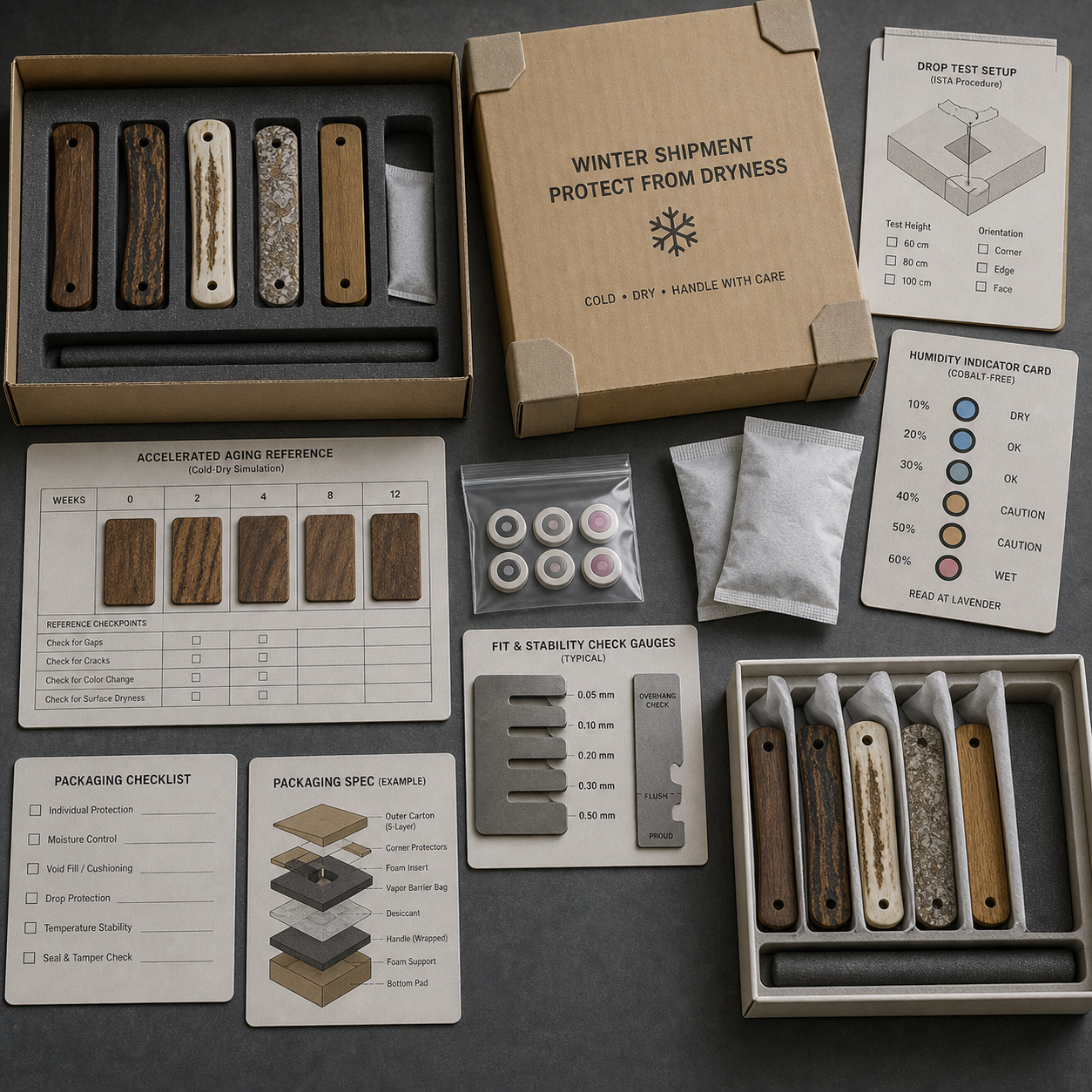
I test the shipment condition, not only the sample
For natural handle materials, the approved sample is only one part of the story. I also want to know how the knife behaves after storage and shipment. If the buyer's market has dry winters, the sample should be observed under drier conditions before mass production when possible. The factory can check for gaps, cracks, raised edges, loose scales, finish changes, and screw tension changes after a short aging period. This does not replace full laboratory testing, but it gives useful practical information.
Packaging also matters. A natural handle should not rub directly against hard packaging. Inserts should support the knife without stressing the handle. Cartons should protect against compression and sudden temperature or humidity changes as much as practical. For some products, a simple care card can help the end customer understand storage better. For example, the buyer may want to advise customers to avoid extreme heat, direct sunlight, soaked conditions, or very dry storage. The exact wording should match the market and product. I prefer honest guidance over exaggerated promises. A natural handle can be a strength if the buyer sets the right expectation.
| Protection step | What to review | Why it helps |
|---|---|---|
| Sample aging | Fit after dry storage | Finds early movement risk |
| Packaging insert | Contact points and pressure | Prevents shipping marks |
| Carton control | Compression and handling protection | Reduces transit damage |
| Care guidance | Storage and cleaning message | Lowers customer confusion |
What RFQ Details Should Buyers Provide for Natural Handle Projects?
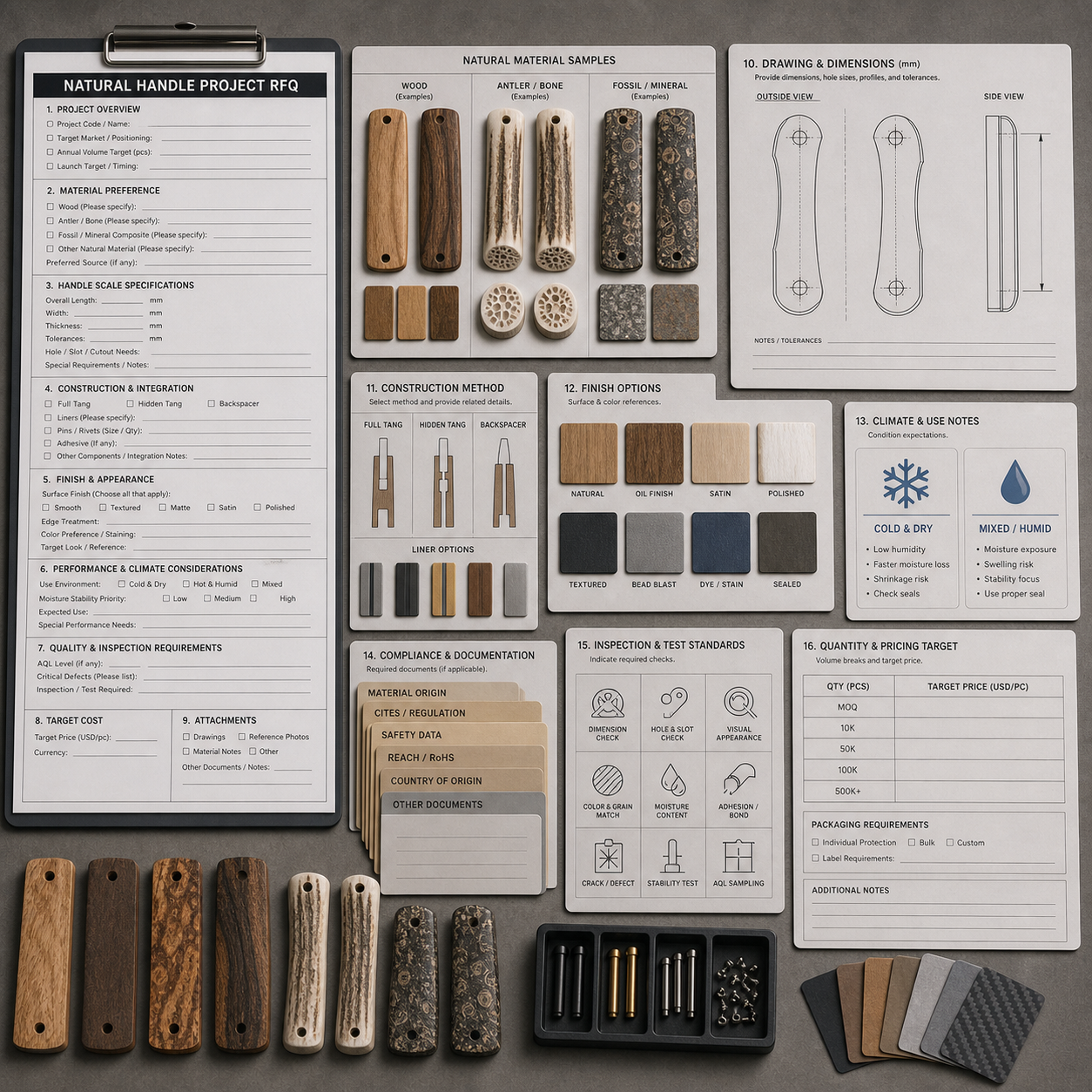
Natural handle projects cannot be quoted accurately from a photo. Missing details create wrong samples, hidden cost, and later disputes.
Buyers should provide target market, climate, material preference, source requirements, quantity, target price, drawings, construction method, finish, packaging, compliance needs, and inspection standards in the RFQ.
I need the buyer's risk tolerance before I quote
When a buyer asks for natural handle materials, I need more than the material name. I need to know the target market, climate, sales channel, quantity, target price, and acceptable variation. I also need to know whether the buyer requires source documents, species or material identification, special packaging, care cards, or compliance review. This is especially important for antler and fossil materials. The buyer should confirm market rules with qualified local advisers when compliance is involved. Again, this is not legal advice.
For wood projects, the RFQ should state whether the buyer wants natural wood, stabilized wood, or a wood-look engineered option. For antler projects, it should define grading, acceptable pores, and color variation. For mammoth tooth or fossil-style materials, it should define documentation expectations and destination market. Trade terms also matter. ICC explains that Incoterms rules clarify tasks, costs, and risks between sellers and buyers. A quote based on EXW, FOB, CIF, or DDP can look very different. A clear RFQ helps Vast State give practical options instead of guessing.
| RFQ item | What to include | Why it improves quoting |
|---|---|---|
| Material choice | Wood, stabilized wood, antler, fossil material, substitute | Controls source and process |
| Market conditions | Climate, destination, sales channel | Predicts stability and compliance needs |
| Construction | Full handle, scales, liners, pins, screws | Defines manufacturing risk |
| Quality standard | Variation limits, cracks, pores, finish defects | Prevents approval disputes |
| Trade terms | Incoterms rule and destination | Makes quotations comparable |
Turn your idea into a quote-ready knife project.
Share your drawing, sample photo, target quantity, market, and packaging needs. Vast State will review manufacturability and prepare OEM/ODM options.
Conclusion
Natural knife handles work best when buyers match material, climate, construction, finish, packaging, and documentation before OEM/ODM production.
Source Notes
- USDA Wood Handbook supports the need to consider wood moisture, drying, dimensional change, and finishing.
- U.S. Fish and Wildlife Service antler facts supports the point that antlers are bone and differ from horns.
- Deer NZ antler biology provides additional technical context on mature antler composition and mineralization.
- NYSDEC ivory and horn sale page shows that some markets require permits and buyer records for mammoth ivory articles.
- ISO 6789-1 supports controlled tightening requirements for hand torque tools.
- ICC Incoterms rules supports clear task, cost, and risk allocation in delivery terms.
- WIPO industrial design guidance gives context for product appearance and brand value.