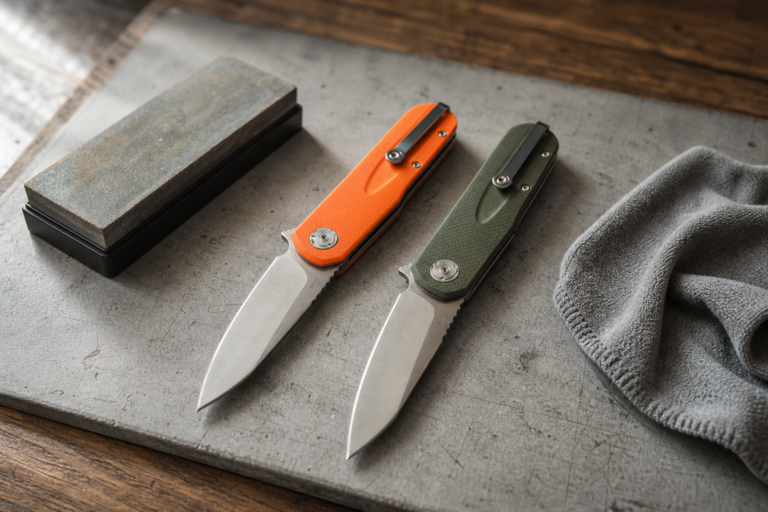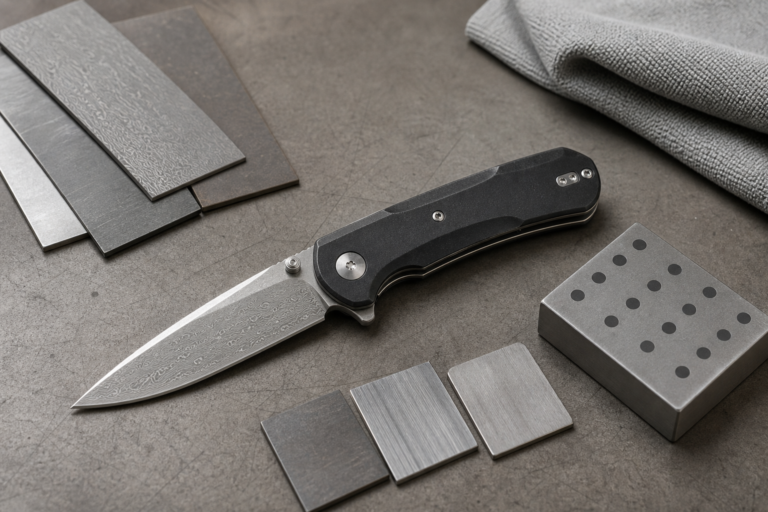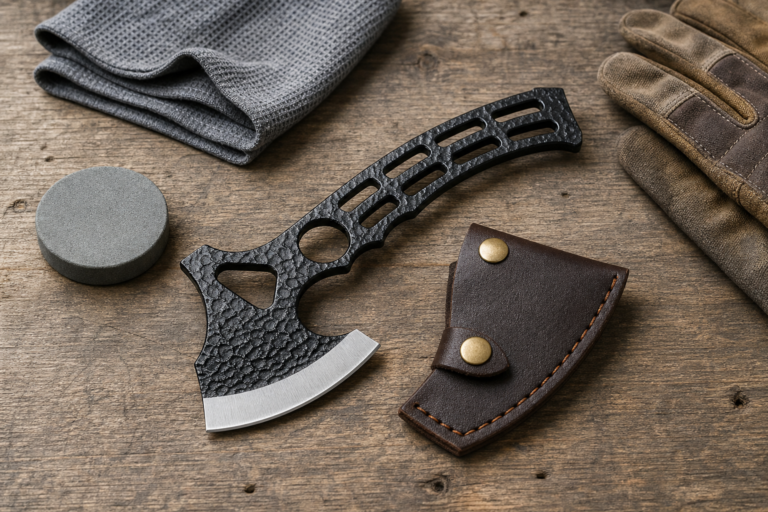
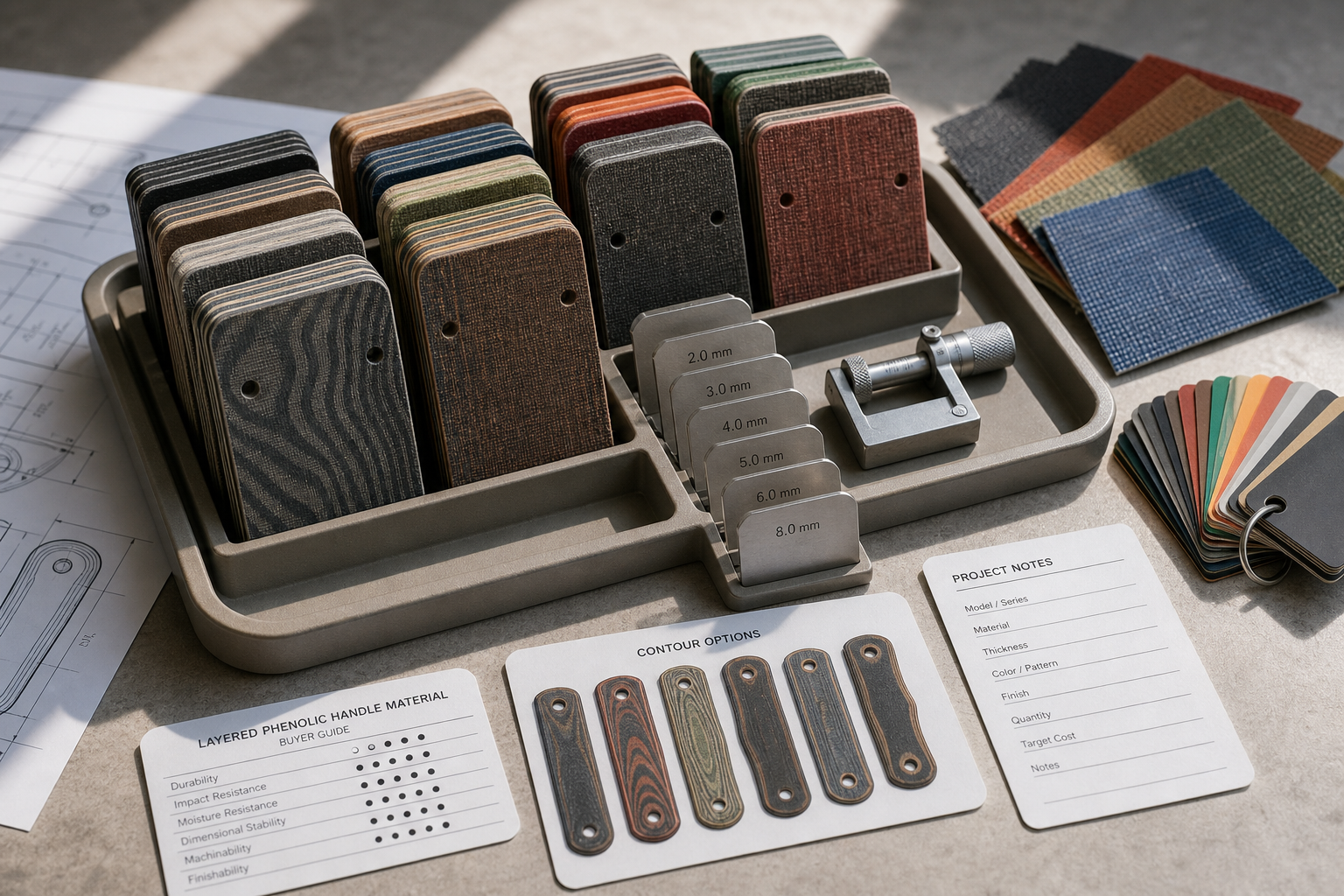
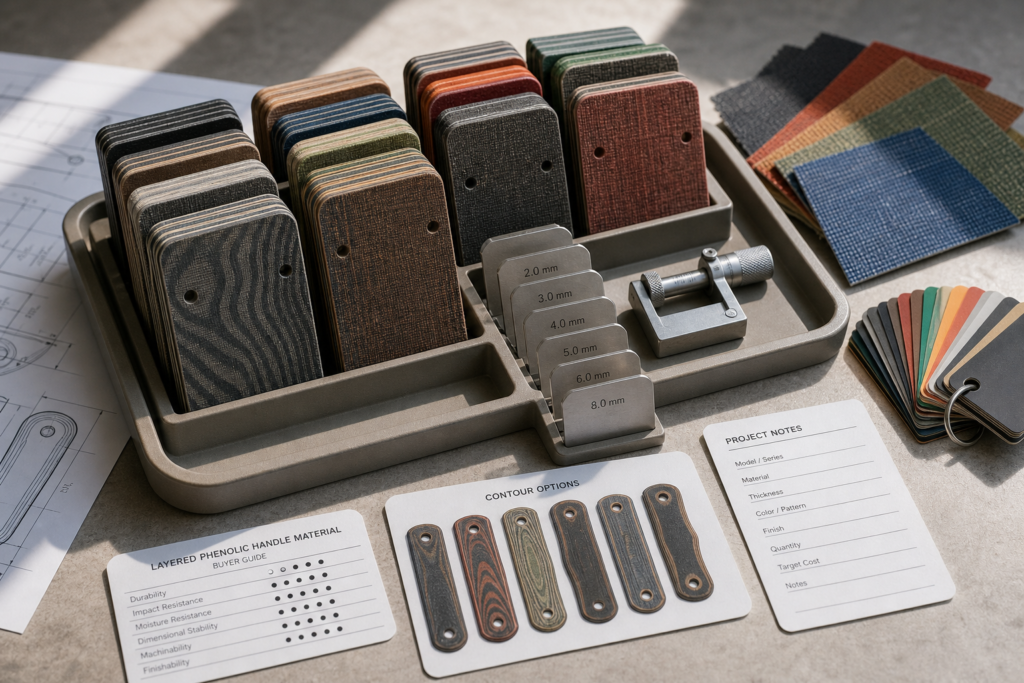
A handle material can look famous and still fit the wrong project. Micarta works well when buyers match grade, texture, cost, and production needs.
Micarta can be a very useful knife handle material for OEM/ODM projects because it offers layered texture, stable machining, strong brand appeal, and practical grip options. It is not universal for every knife, so buyers should define grade, finish, color, thickness, texture, and QC rules before production.
Quick buyer brief:
- Answer: Micarta is practical for many knife handles, but it must match the product level and target market.
- Buyer context: This helps knife brands, outdoor brands, importers, wholesalers, and private label buyers choose handle materials.
- Key checks: Grade, color, sheet thickness, machining detail, texture, moisture exposure, finish, screw fit, and QC standard.
Have a knife or multi-tool project in mind?
Send your sketch, CAD file, sample photo, or product idea. Vast State can review manufacturability, suggest materials, estimate MOQ, and prepare a quote for your OEM/ODM project.
When a buyer asks me whether Micarta is a universal handle material, I usually answer with care. It is popular for good reasons. It can feel warm, practical, and serious. It can also make a knife look more developed than a basic plastic handle. But a material name alone does not solve the project. A coarse canvas laminate, a fine linen laminate, and a paper-based laminate can behave differently in machining, texture, cost, and visual result. For OEM and ODM work, I need to connect the material to the knife type, target user, price range, and production method.
What Is Micarta in Knife Handle Sourcing?
The word Micarta is often used loosely. That can cause wrong quotes, wrong samples, and different expectations between buyer and supplier.
In knife handle sourcing, Micarta usually means a Micarta-style phenolic laminate made from layered fabric or paper reinforcement and resin. Buyers should confirm the exact grade, reinforcement, color, thickness, and supplier specification.
I Start by Defining the Material, Not the Name
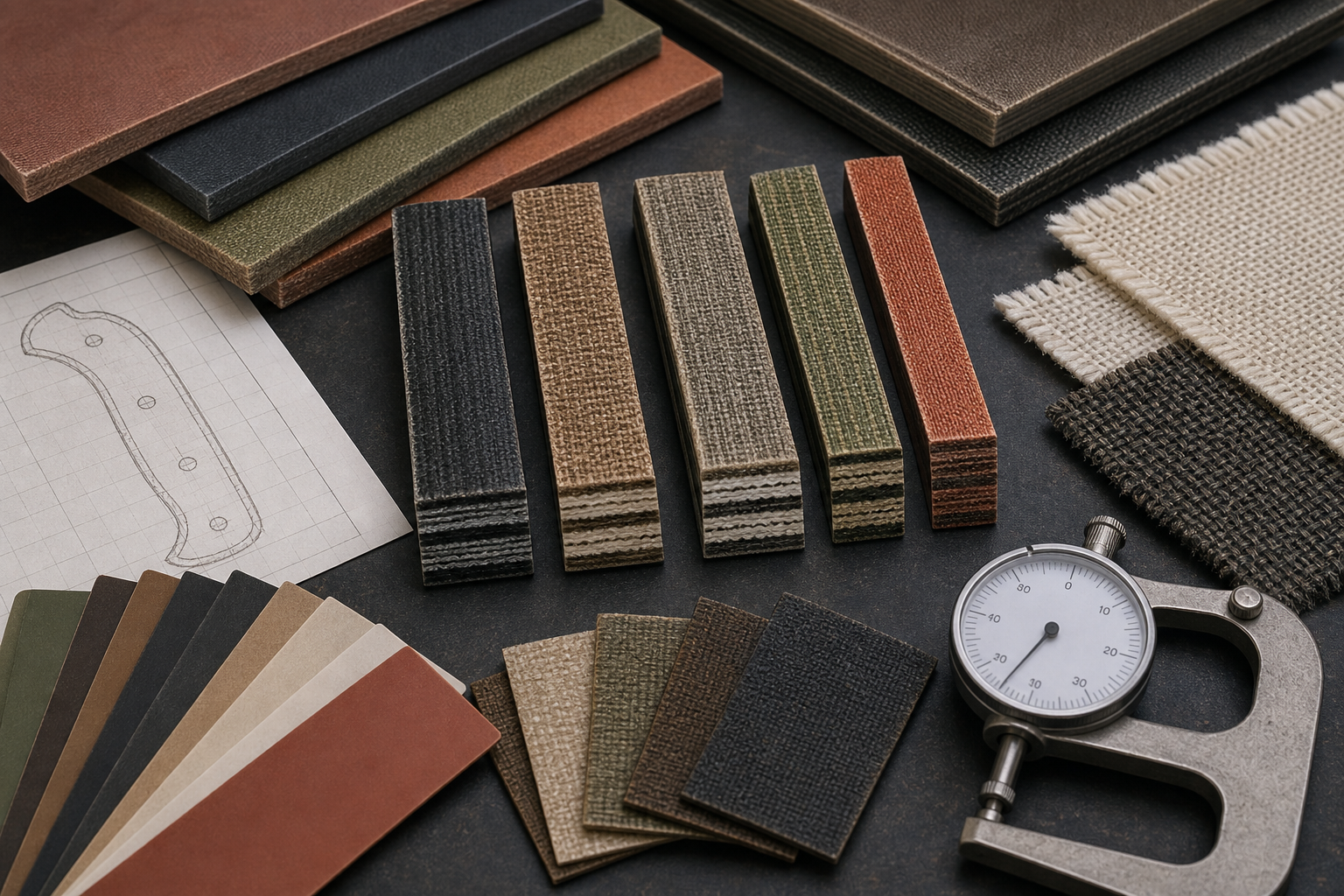
In many knife conversations, people say Micarta as if it is one fixed material. In real production, I treat it as a family of laminated materials. The original brand name matters, and many buyers also use the word to describe Micarta-style phenolic laminates. This is why I ask for a material sample or a clear specification before I quote. If a buyer only writes "Micarta handle," the supplier may choose a different fabric base, color tone, sheet thickness, or surface finish than the buyer expects.
Official Norplex-Micarta product pages show why the details matter. For example, NP310HT is described as a phenolic cotton/linen sheet using cotton canvas fabric with phenolic resin. Another Norplex-Micarta grade, MC320LE, uses a fine-weave cotton fabric and phenolic resin and is described with excellent machining characteristics and low moisture absorption. These are industrial material descriptions, not knife-only marketing words. For knife handles, the practical question is simple: which grade gives the right look, machining detail, grip, price, and production stability?
| Sourcing term | What it may mean | What I confirm |
|---|---|---|
| Micarta | Brand material or generic market term | Exact supplier and grade |
| Canvas phenolic | Coarser fabric reinforcement | Texture, machining detail, and cost |
| Linen phenolic | Finer fabric reinforcement | Small features and cleaner finish |
| Paper phenolic | Paper-based laminate | Cost, appearance, and moisture use |
OEM/ODM RFQ Checklist
Prepare these details to help Vast State review your project and provide a more accurate quotation.
| RFQ Field | What to Prepare |
|---|---|
| Project type | OEM from drawing / ODM private label / wholesale catalog |
| Product category | Folding knife / fixed blade / multi-tool / outdoor tool |
| Design status | Idea / sketch / 2D drawing / 3D CAD / physical sample |
| Target price | Ex-factory target price or retail price range |
| MOQ expectation | 500 / 1,000 / 3,000 / 5,000+ pcs |
| Logo method | Laser engraving / etching / printing / molded logo |
| Packaging | Standard packaging / custom retail box / Amazon-ready |
| Market | USA / EU / Japan / Korea / Middle East / other |
| Compliance needs | Buyer-specified testing / documentation / labeling |
| Timeline | Sample deadline / mass production deadline |
Why Do Buyers Like Micarta for Outdoor and EDC Handles?
Some handle materials feel too cold, too smooth, or too generic. Buyers often want a material that gives the knife more character.
Buyers like Micarta because it can offer a warm hand feel, layered appearance, practical texture, good machinability, and strong perceived value for outdoor, EDC, camping, and utility knife projects.
I Use Micarta When the Handle Must Feel More Developed
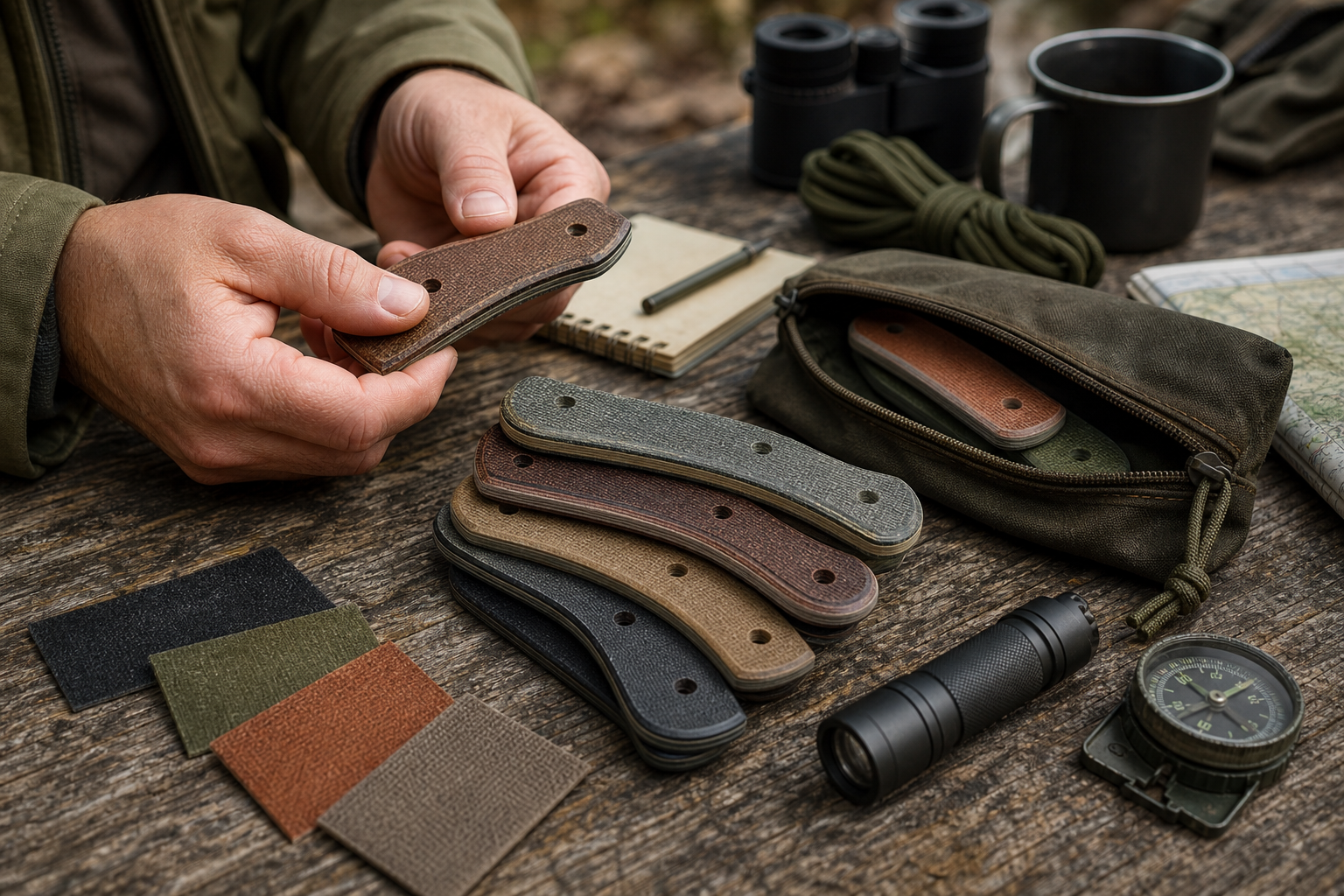
Micarta often gives a knife a more serious product feeling than a basic molded plastic handle. That does not mean it is always better. It means it can support a certain market position. For outdoor knives, camping knives, and EDC-style knives, the layered look can help the product feel practical and less decorative. For fixed blade knives, Micarta scales can create a strong, classic handle identity. For folding knives, Micarta inlays or scales can add texture without making the design too flashy.
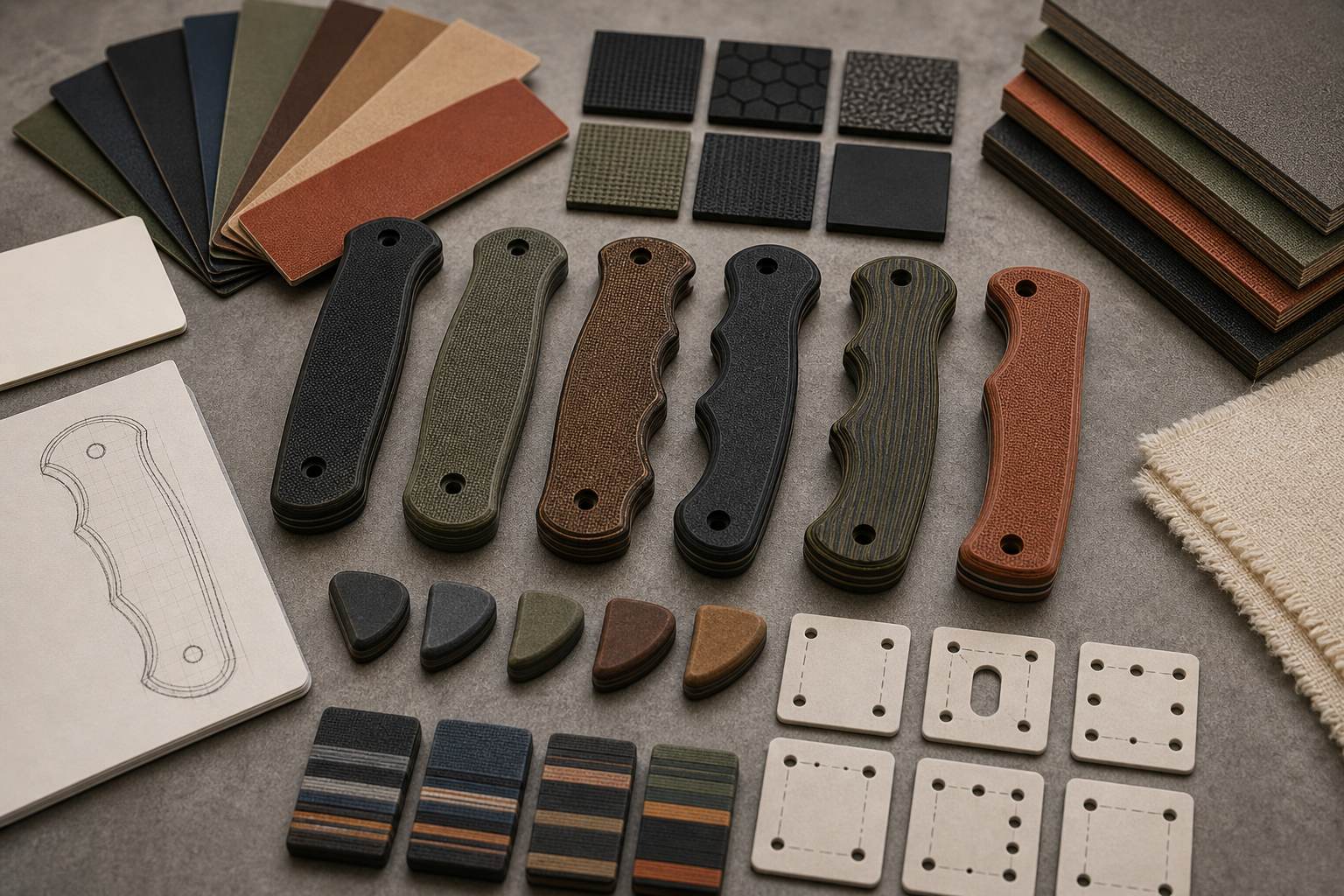
I also like Micarta because it gives designers room to adjust the feeling. A bead-blasted or matte surface can feel different from a polished surface. A coarser canvas pattern can feel more rugged. A fine linen pattern can feel cleaner and more controlled. Curbell describes CE canvas phenolic as strong, stiff, dimensionally stable, and machinable. In knife projects, I translate those material ideas into practical questions. Can we machine the scale cleanly? Can we keep screw holes consistent? Can we create enough texture without rough edges? Can we repeat the approved sample in mass production?
| Buyer goal | Why Micarta may help | What I still check |
|---|---|---|
| Outdoor look | Layered material feels practical | Color and texture match the brand |
| Better grip feel | Matte or textured surface can help | Edge comfort and cleaning |
| Product value | Looks more developed than basic plastic | Cost and MOQ impact |
| Custom identity | Color layers can support branding | Batch consistency |
How Do Canvas, Linen, and Paper Phenolic Options Differ?
One buyer may want rugged texture. Another may want clean detail. One word cannot cover every Micarta-style option.
Canvas, linen, and paper phenolic options differ in fabric structure, machining detail, surface appearance, cost, and moisture behavior. Buyers should choose the option that fits the knife design and price position.
I Match the Reinforcement to the Detail Level
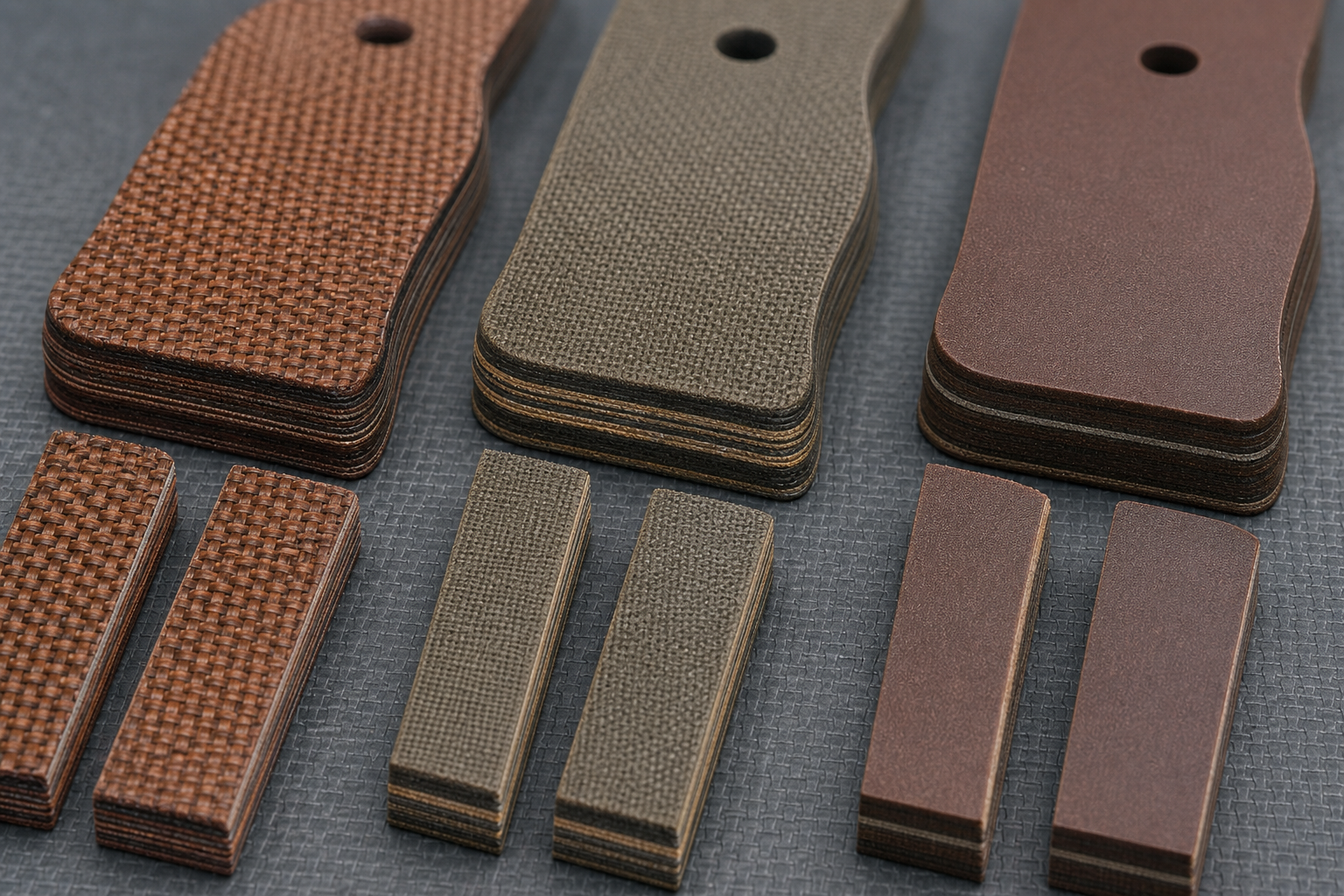
Canvas phenolic is often chosen when the buyer wants a more rugged surface and a practical outdoor look. The weave can be more visible, and the finished part can feel less polished. Linen phenolic can support smaller details and a cleaner surface because the fabric is finer. Curbell notes that canvas uses a relatively coarse woven fabric, while linen uses a finer woven cloth that can support small geometric features. That difference matters when a handle has tight screw areas, grooves, chamfers, inlays, or fine contours.
Paper phenolic can be useful for some industrial parts, but I am careful with it for knife handles. It may not give the same fabric-layer feel that buyers often expect when they ask for Micarta. It may also create a different market impression. For knives, the material decision is not only technical. It is visual and commercial. If the buyer's product needs a rugged outdoor feeling, canvas may fit. If the product needs clean shaping and tighter detail, linen may fit better. If the project is price-sensitive, I compare all options with the target price before sample development starts.
| Option | Typical handle impression | Production concern |
|---|---|---|
| Canvas phenolic | More rugged and textured | Coarse weave may limit fine details |
| Linen phenolic | Cleaner and tighter look | Usually higher material cost |
| Paper phenolic | Simpler layered look | May not match buyer's Micarta expectation |
| Custom color laminate | Strong brand identity | Color and MOQ must be confirmed early |
What Design Choices Affect Grip, Texture, and Brand Feel?
Micarta does not create good grip by itself. Poor contouring or wrong finishing can make a good material feel average.
Grip and brand feel depend on handle thickness, contour, edge radius, surface finish, texture depth, color layer direction, screw placement, and how the material works with the blade design.
I Treat the Handle as the User's First Contact Point
The handle is where the buyer's customer touches the product first. A Micarta scale can look good in photos but feel too flat, too sharp, too slick, or too thick in hand. This is why I review shape and finish together. The same material can feel very different after polishing, bead blasting, tumbling, oiling, or texturing. A coarse texture may look strong, but it may feel uncomfortable if the edges are not softened. A polished finish may look clean, but it may reduce the dry grip feeling that some outdoor buyers expect.
General ergonomic guidance is useful here. The NIOSH guide to selecting non-powered hand tools explains that tool selection and design affect hand position, force, and comfort. A knife handle is a specific product, so I do not treat that guide as a knife standard. I use it as a reminder that the handle must fit the task and the hand. In OEM work, I ask buyers to review handle thickness, palm swell, edge radius, screw position, balance, and whether the texture supports the product story.
| Design choice | What it changes | Buyer decision |
|---|---|---|
| Surface finish | Smoothness and perceived quality | Matte, polished, blasted, or textured |
| Contour | Palm comfort and control | Flat scale or 3D-shaped scale |
| Layer direction | Visual pattern on edges | Horizontal, vertical, or custom layout |
| Edge radius | Comfort and finish cleanliness | Softened edge or sharper style line |
How Should Micarta Be Machined and Finished for Stable Production?
Micarta can machine well, but it still needs process control. Dust, tool wear, and edge quality can affect the result.
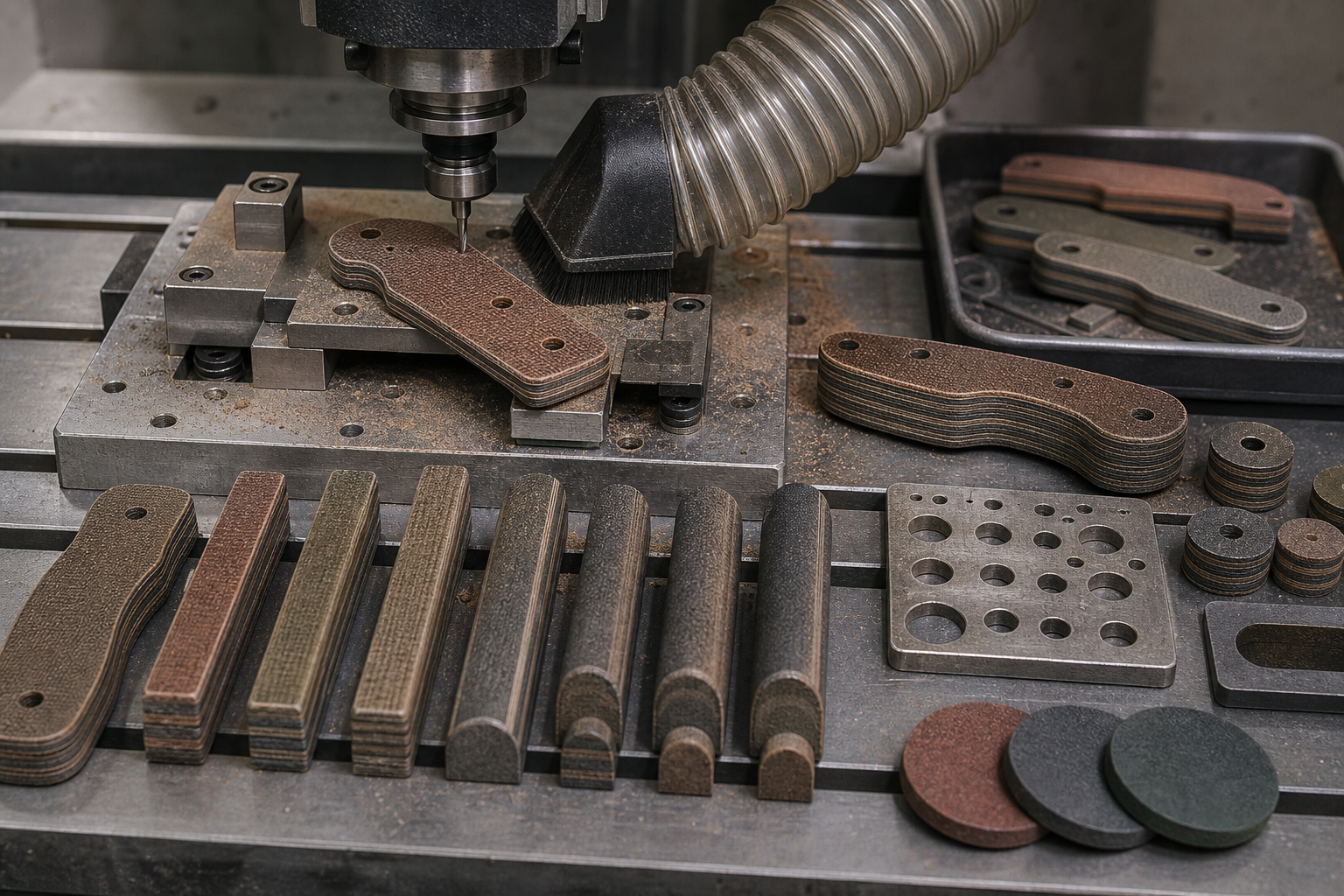
Micarta production should define CNC fixtures, cutting tools, feed control, dust collection, hole tolerances, contour finishing, surface texture, and final cleaning before mass production starts.
I Plan the Process Before I Promise the Surface
Micarta handle work usually involves cutting sheets, CNC machining profiles, drilling screw holes, shaping contours, sanding edges, and applying a final surface finish. A simple flat scale is not the same as a fully contoured handle. A handle with nested liners, inlays, tight screw pockets, or lanyard holes needs more precise machining. If the buyer wants a very clean premium look, we must plan extra finishing time. If the buyer wants a rugged outdoor texture, we must still control edge comfort and part-to-part consistency.
Machining also creates practical workshop concerns. Curbell notes that CE canvas phenolic can be machined, drilled, punched, sanded, tapped, turned, milled, sheared, and cut. It also notes that dust can be irritating during machining. In factory planning, this means dust extraction, tool selection, operator protection, and cleaning must be part of the process. I also check whether the material chips at holes, whether the layers expose cleanly, and whether the surface changes color after finishing. Good production is not only about making one beautiful sample. It is about repeating the same surface, hole fit, and contour across the order.
| Production step | Key control point | What can go wrong |
|---|---|---|
| Sheet cutting | Grain direction and oversize allowance | Pattern mismatch or waste |
| CNC machining | Fixture, tool, and hole position | Chipping or tolerance drift |
| Edge finishing | Radius and sanding sequence | Sharp edges or uneven color |
| Final cleaning | Dust removal and surface consistency | Dirty packaging or poor feel |
What QC Checks Should Buyers Define for Micarta Handles?
One approved sample does not protect a full order. Micarta parts need clear visual and dimensional rules.
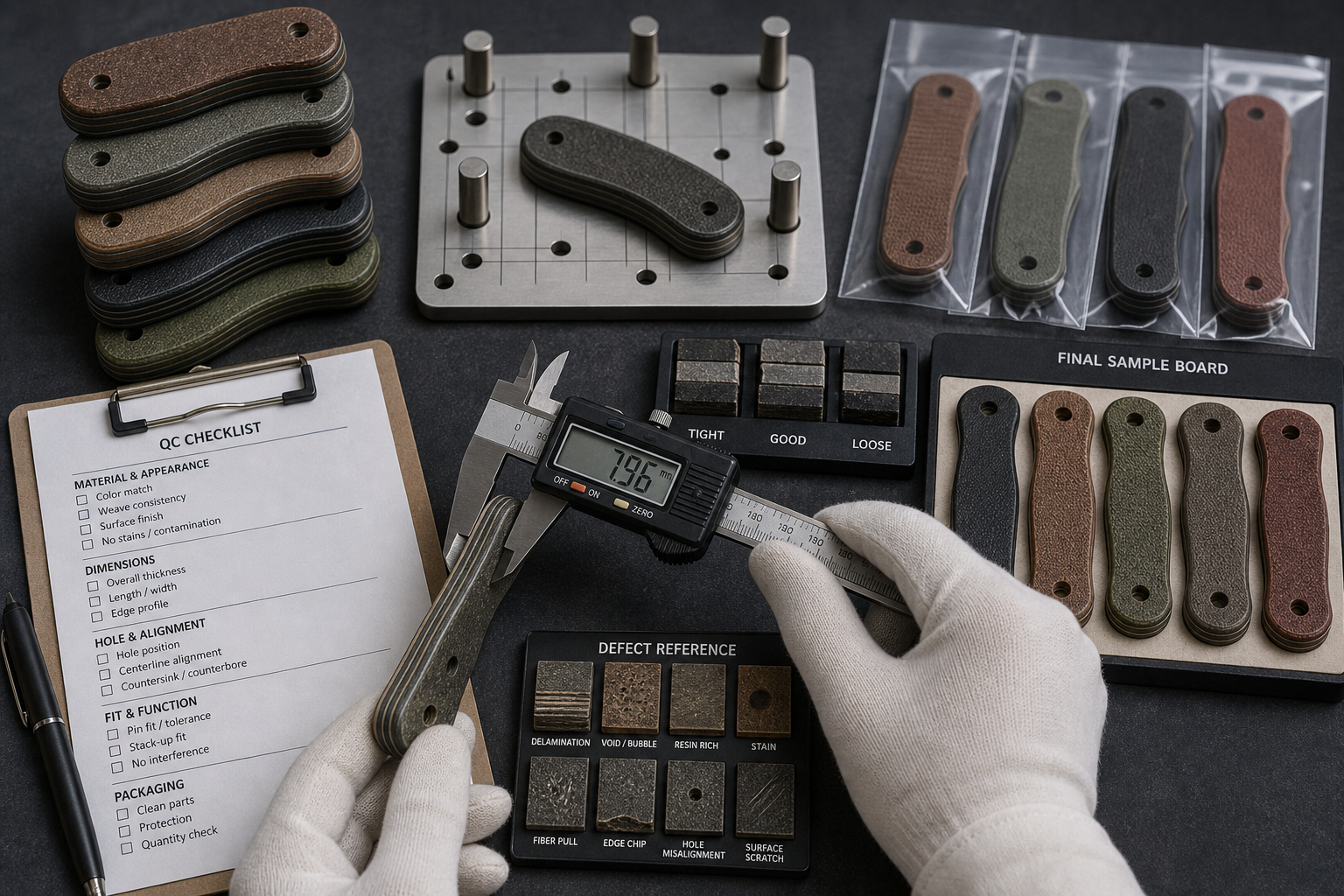
Buyers should define Micarta QC checks for color, layer pattern, thickness, hole position, scale fit, gap control, edge finish, surface defects, screw seating, packaging condition, and final sample matching.
I Turn Subjective Feel Into Inspectable Points
Micarta can vary visually because it is layered material. Some variation can be normal and even attractive. But buyers and suppliers must agree on the limit. If the buyer expects perfect color matching across every piece, that may not be realistic for some laminated materials or color batches. If the buyer accepts natural layer variation, the supplier still needs clear boundaries for stains, delamination, cracks, chips, gaps, and wrong texture.
For OEM and ODM knife orders, I usually create a handle inspection checklist. It includes material grade, thickness, length and width, hole diameter, hole position, countersink quality, screw seating, fit to liner or tang, surface texture, edge radius, color range, and final cleaning. If the handle is assembled to a fixed blade tang, I also check scale alignment and bonding or fastener fit. If the handle is used on a folding knife, I check whether the scale affects pivot movement, liner fit, clip installation, and screw torque. For lot inspection, ISO 2859-1 gives context for sampling inspection by attributes. The practical lesson is that acceptance rules should be written before shipment.
| QC item | What I inspect | Acceptance idea |
|---|---|---|
| Color and layer pattern | Batch tone and visible layers | Match approved range |
| Hole and screw fit | Diameter, countersink, and seating | No loose or raised screws |
| Edge finish | Radius, sanding, and chips | Smooth and consistent |
| Assembly fit | Gap to liner, tang, or bolster | No visible unwanted gaps |
How Does Micarta Compare With G10, Wood, Aluminum, and Molded Plastic?
No handle material wins every project. The best choice depends on market level, price, feel, weight, and production route.
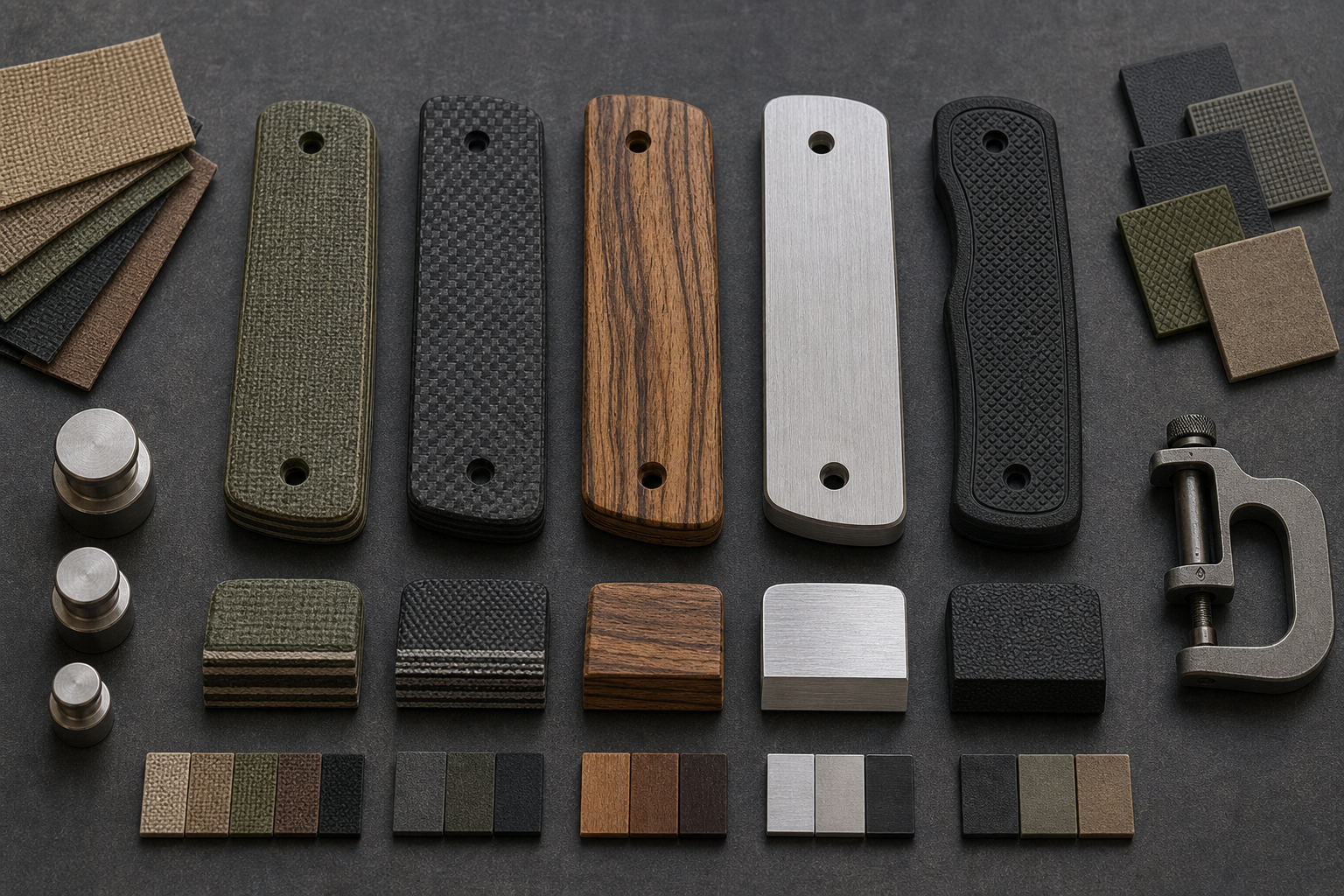
Micarta often sits between natural-feeling materials and engineered plastics. Compared with G10, wood, aluminum, and molded plastic, it offers a distinct layered feel but needs careful finish and cost control.
I Choose Material by Market Position, Not Habit
When a buyer asks whether Micarta is better than G10, wood, aluminum, or molded plastic, I do not give a simple yes. Each material supports a different product story. G10 can be very practical for textured synthetic handles and can support strong color options. Wood can feel warmer and more classic, but it can bring more natural variation and moisture concerns. Aluminum can look modern and precise, but it can feel colder and may need anodizing or other surface control. Molded plastic can be cost-effective for large orders, but tooling cost and perceived value must be considered.
Micarta is useful when the buyer wants a material that feels more crafted than basic plastic but more stable than many natural materials. It can also help a product avoid looking too industrial. However, it is not always the lowest cost choice. It may require sheet cutting, CNC time, sanding, dust control, and careful visual matching. That cost can be worthwhile for the right market. It can be unnecessary for a low-price utility knife where molded plastic already meets the customer need. I always connect material choice with target price, MOQ, design details, and the buyer's brand positioning.
| Material | Strength in knife projects | Main tradeoff |
|---|---|---|
| Micarta-style phenolic | Layered feel and outdoor identity | Finishing and batch control |
| G10 | Strong synthetic handle option | Can feel more technical |
| Wood | Warm natural appearance | Variation and moisture care |
| Aluminum | Precise modern look | Surface treatment and cold feel |
| Molded plastic | Cost control for volume | Tooling and lower perceived value |
What RFQ Details Help a Supplier Quote Micarta Handle Projects?
A vague RFQ can create slow quotes and wrong samples. Micarta projects need material and finish details early.
For a Micarta handle RFQ, buyers should provide knife type, handle shape, material grade, color, thickness, texture, surface finish, screw structure, target price, MOQ, packaging, and inspection requirements.
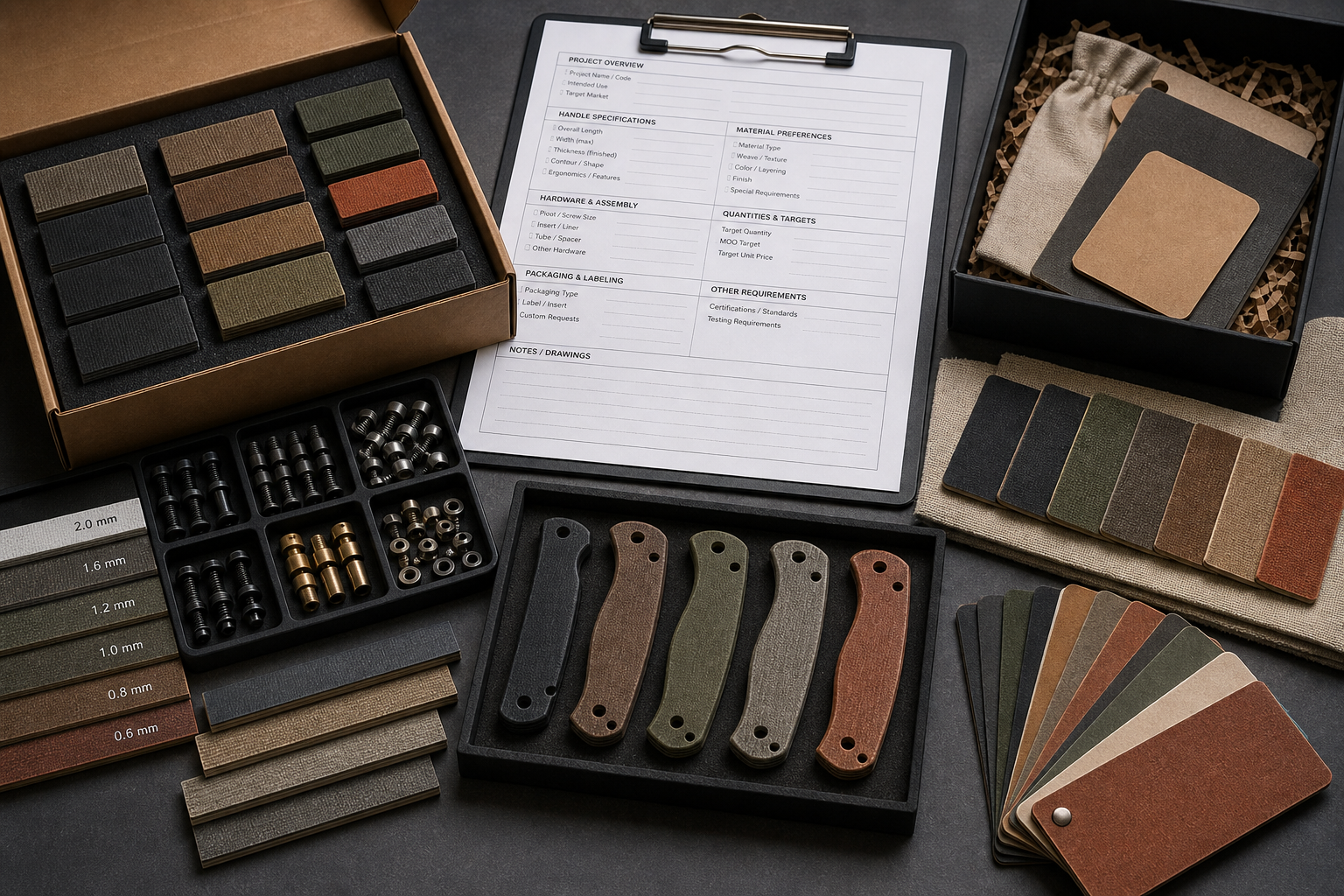
I Quote Faster When the Buyer Defines the Handle Clearly
When I receive a Micarta handle inquiry, I can move faster if the buyer gives practical information. I need the knife type, blade size, handle length, handle thickness, scale shape, screw and pin structure, surface texture, color, and whether the material should be canvas, linen, paper, or a specific supplier grade. If the buyer has a target price, I need to know it early. Micarta can support many product levels, but the cost changes with material grade, thickness, CNC time, finishing time, and order quantity.
Packaging also matters. A matte Micarta handle can collect dust if the final cleaning and packaging are weak. A finished sample can look good, then arrive with rubbing marks if the packaging is poor. ISO 4180 gives general context for performance test schedules for transport packages, and ISO 9001 gives context for quality management systems. In practical sourcing, I turn these ideas into simple RFQ questions. What market will the knife sell into? What level of finish is needed? What inspection records does the buyer need? What packaging will protect the handle surface? The clearer the RFQ, the better the sample.
| RFQ detail | Why I need it | Better buyer input |
|---|---|---|
| Material grade | Controls appearance and machining | Canvas, linen, paper, or supplier spec |
| Handle structure | Controls CNC and assembly cost | Drawing, sample, or 3D file |
| Surface finish | Controls hand feel and labor | Matte, polished, textured, or blasted |
| QC requirement | Controls inspection plan | Color range, gap limit, hole tolerance |
Turn your idea into a quote-ready knife project.
Share your drawing, sample photo, target quantity, market, and packaging needs. Vast State will review manufacturability and prepare OEM/ODM options.
Conclusion
I choose Micarta when its grade, texture, cost, and production process match the knife's market position and repeat-production needs.
Source Notes
- Norplex-Micarta NP310HT supports the description of canvas phenolic sheet composition, machinability, and dimensional aging control.
- Norplex-Micarta MC320LE supports the distinction between fine-weave linen-style phenolic material, machining characteristics, and low moisture absorption.
- Curbell CE Canvas Phenolic supports the practical comparison of canvas phenolic strength, stiffness, machinability, dimensional stability, and machining cautions.
- NIOSH hand tool guidance provides general context for handle comfort and ergonomic thinking, not knife-specific rules.
- ISO 2859-1, ISO 4180, and ISO 9001 support sampling inspection, packaging test planning, and quality-system thinking.