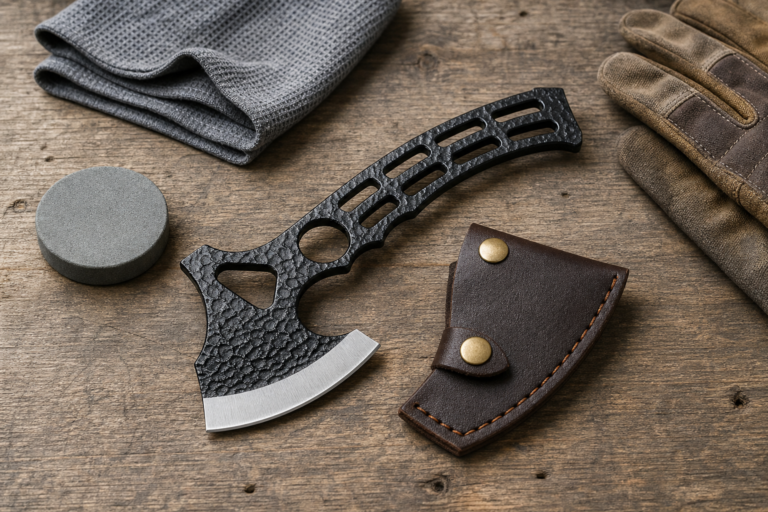
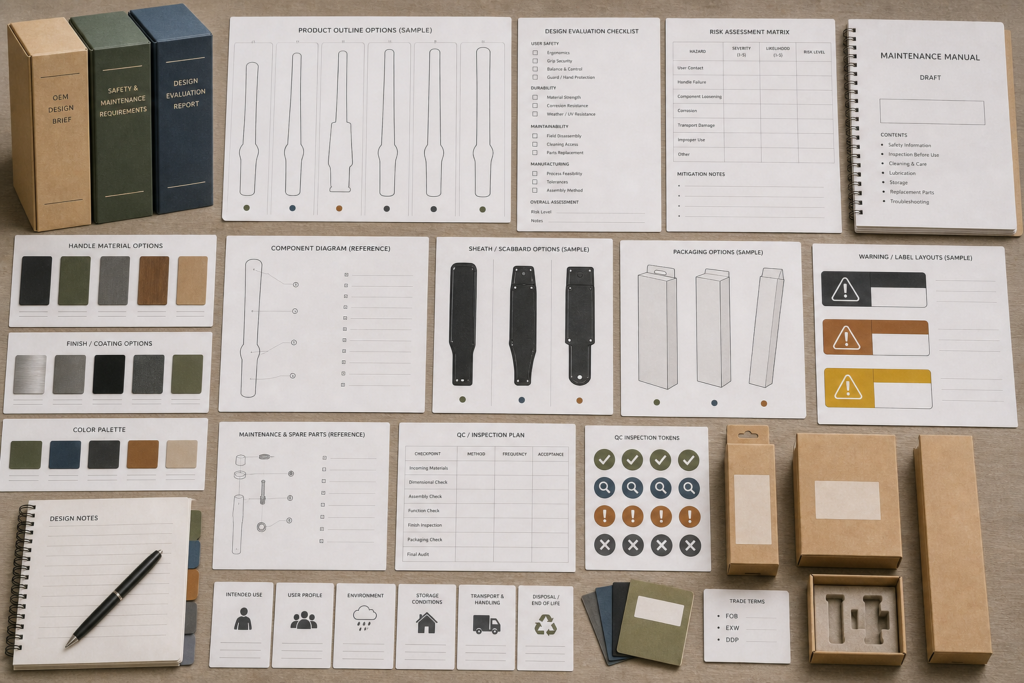
A machete looks simple. But poor balance, weak sheath design, vague warnings, or uneven heat treatment can damage an entire product line.
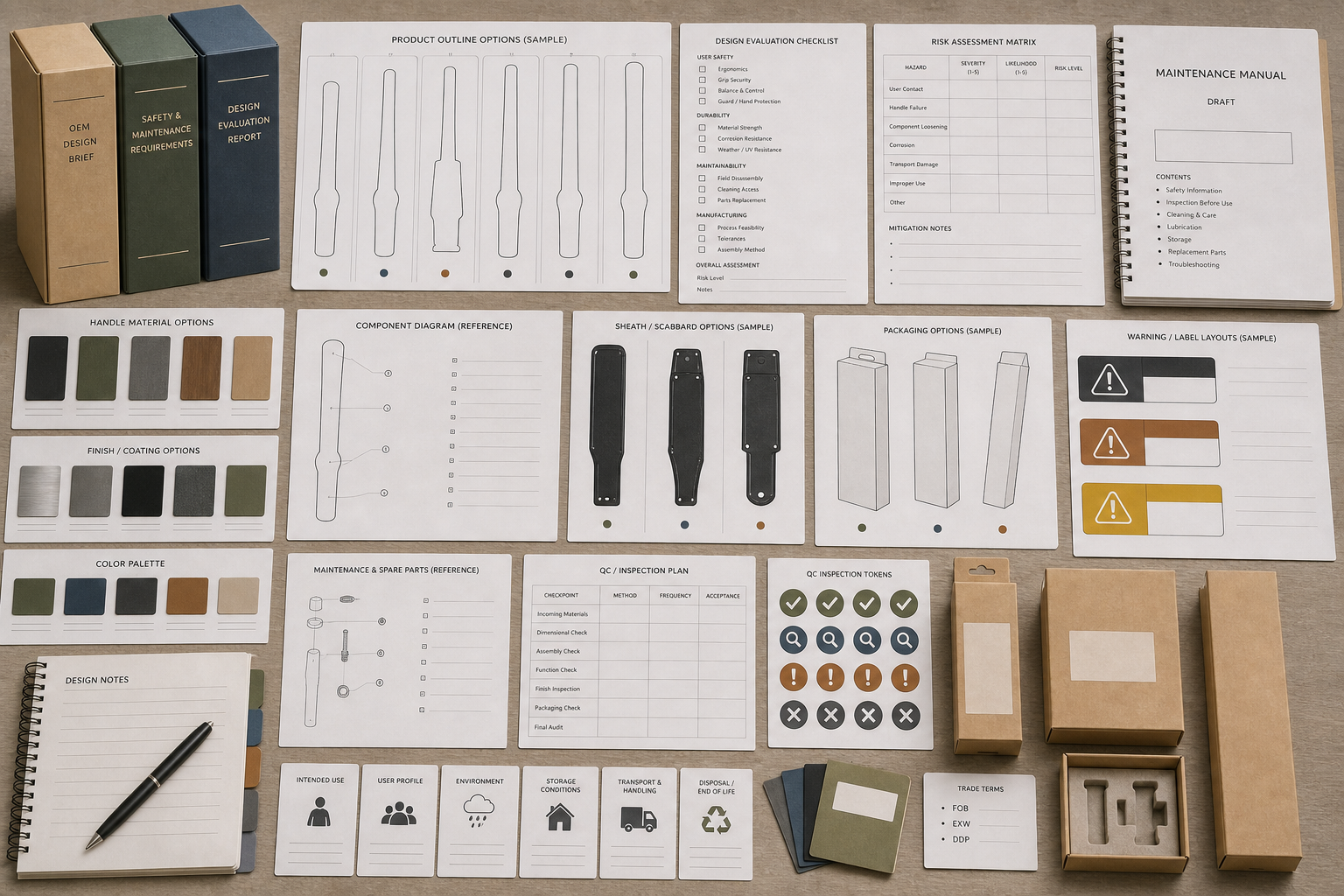
B2B buyers should evaluate a machete by its target task, blade geometry, handle security, sheath design, maintenance guidance, heat treatment, labeling, packaging, and RFQ controls. A good OEM/ODM machete project must be safe to sell, practical to maintain, and consistent in production.
Quick buyer brief:
- Answer: Evaluate the machete as a complete product system.
- Buyer context: Useful for outdoor brands, farm tool buyers, importers, wholesalers, and private label programs.
- Key checks: Blade design, handle grip, sheath retention, maintenance notes, QC records, packaging, and channel fit.
Planning a fixed blade or outdoor knife project?
Share your target use, blade size, steel preference, handle direction, sheath needs, quantity range, and packaging plan. Vast State can help turn it into a quote-ready specification.
When I review a machete project for a B2B buyer, I do not write a field-use lesson. I review whether the product can be manufactured, packed, sold, maintained, and repeated with fewer surprises. The blade may be long and simple, but the buying decision is not simple. The steel, temper, edge angle, handle texture, sheath, warning label, carton, and target channel all affect the final product. For OEM/ODM buyers, the safest path is to define the real use case first, then turn that use case into drawings, samples, inspection points, and clear product materials.
What Should Buyers Decide Before Developing a Machete SKU?
A vague machete brief creates risky samples. The product may become too heavy, too thin, too sharp, or poorly matched to the market.
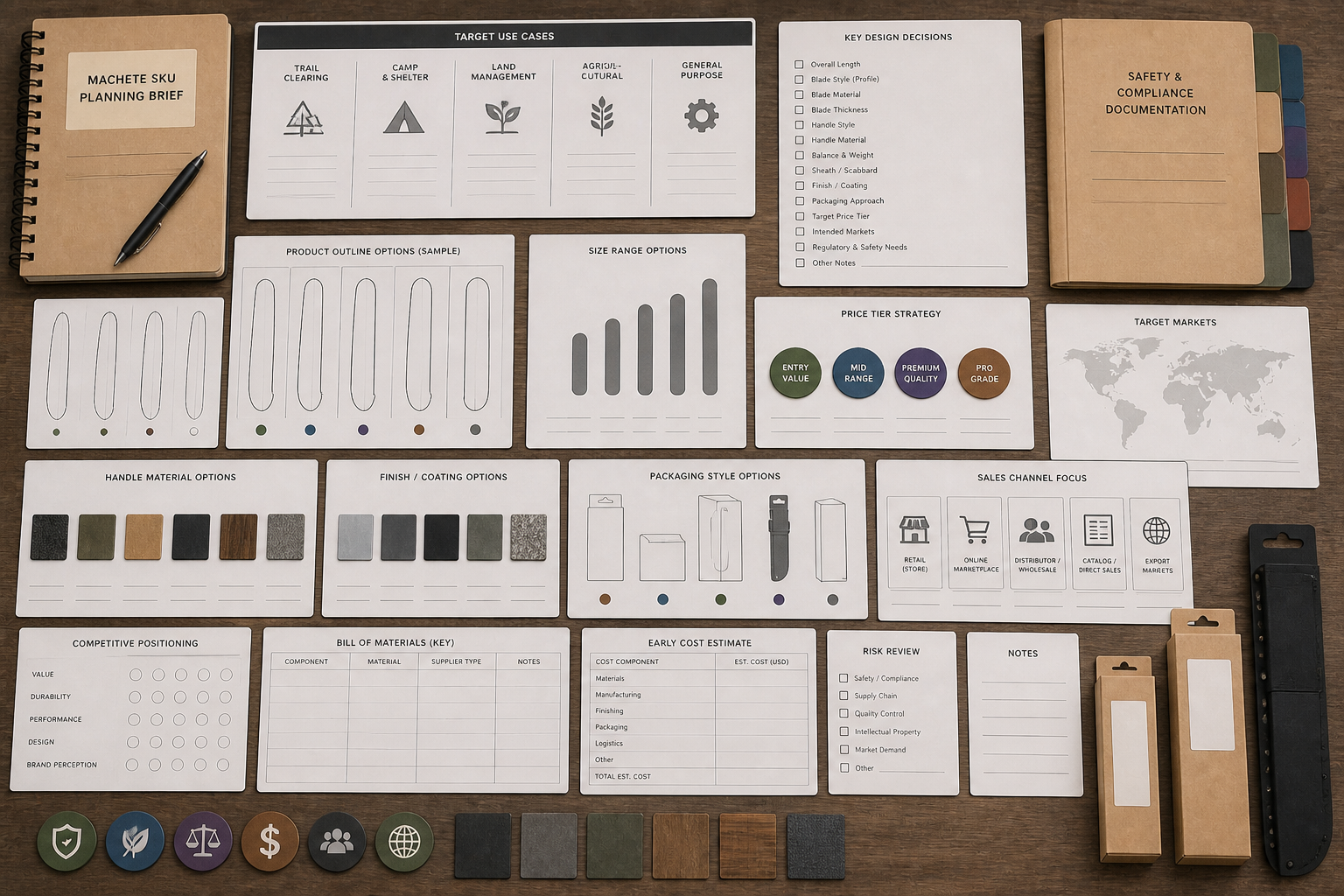
Buyers should define the machete's target user, clearing task, blade length range, price level, channel, packaging style, and safety-documentation needs before sample development starts.
I Start With the Job, Not the Catalog Name
The word machete can mean different products in different markets. Some buyers need a light brush-clearing tool for outdoor retail. Some need a heavy agricultural tool. Some need a camping or garden SKU with private label packaging. Some only need a low-cost promotional item. These are not the same product. If the buyer gives me only a picture and target price, I still need to ask practical questions before quoting. What will the end customer expect? What blade length feels acceptable for the channel? What sheath style is required? What warning or maintenance note does the buyer want? Will the product ship to a market with extra retail rules?
The USDA Forest Service handtools guide places machetes among brushing tools and also covers safe trail work and maintenance. I use that as a reminder that a machete is a working hand tool, not just a blade profile. The buyer should decide whether the SKU is for brush, weeds, vines, light farm work, camping support, or outdoor utility. Then the factory can match blade thickness, handle material, edge finish, and package design to that job.
| Buyer decision | What I ask | Why it matters |
|---|---|---|
| Target task | Brush, garden, farm, camping, or utility | It guides blade geometry and weight |
| Target channel | Outdoor retail, farm supply, distributor, or online | It affects packaging and warnings |
| Product level | Budget, mid-range, or branded private label | It affects material and finish choices |
| Documentation need | Manual, warning insert, QR page, or carton note | It reduces downstream confusion |
OEM/ODM RFQ Checklist
Prepare these details to help Vast State review your project and provide a more accurate quotation.
| RFQ Field | What to Prepare |
|---|---|
| Project type | OEM from drawing / ODM private label / wholesale catalog |
| Product category | Folding knife / fixed blade / multi-tool / outdoor tool |
| Design status | Idea / sketch / 2D drawing / 3D CAD / physical sample |
| Target price | Ex-factory target price or retail price range |
| MOQ expectation | 500 / 1,000 / 3,000 / 5,000+ pcs |
| Logo method | Laser engraving / etching / printing / molded logo |
| Packaging | Standard packaging / custom retail box / Amazon-ready |
| Market | USA / EU / Japan / Korea / Middle East / other |
| Compliance needs | Buyer-specified testing / documentation / labeling |
| Timeline | Sample deadline / mass production deadline |
How Should Blade Shape and Length Match the Target Market?
A long blade can look impressive. But if the length, thickness, and weight are wrong, the user experience suffers.
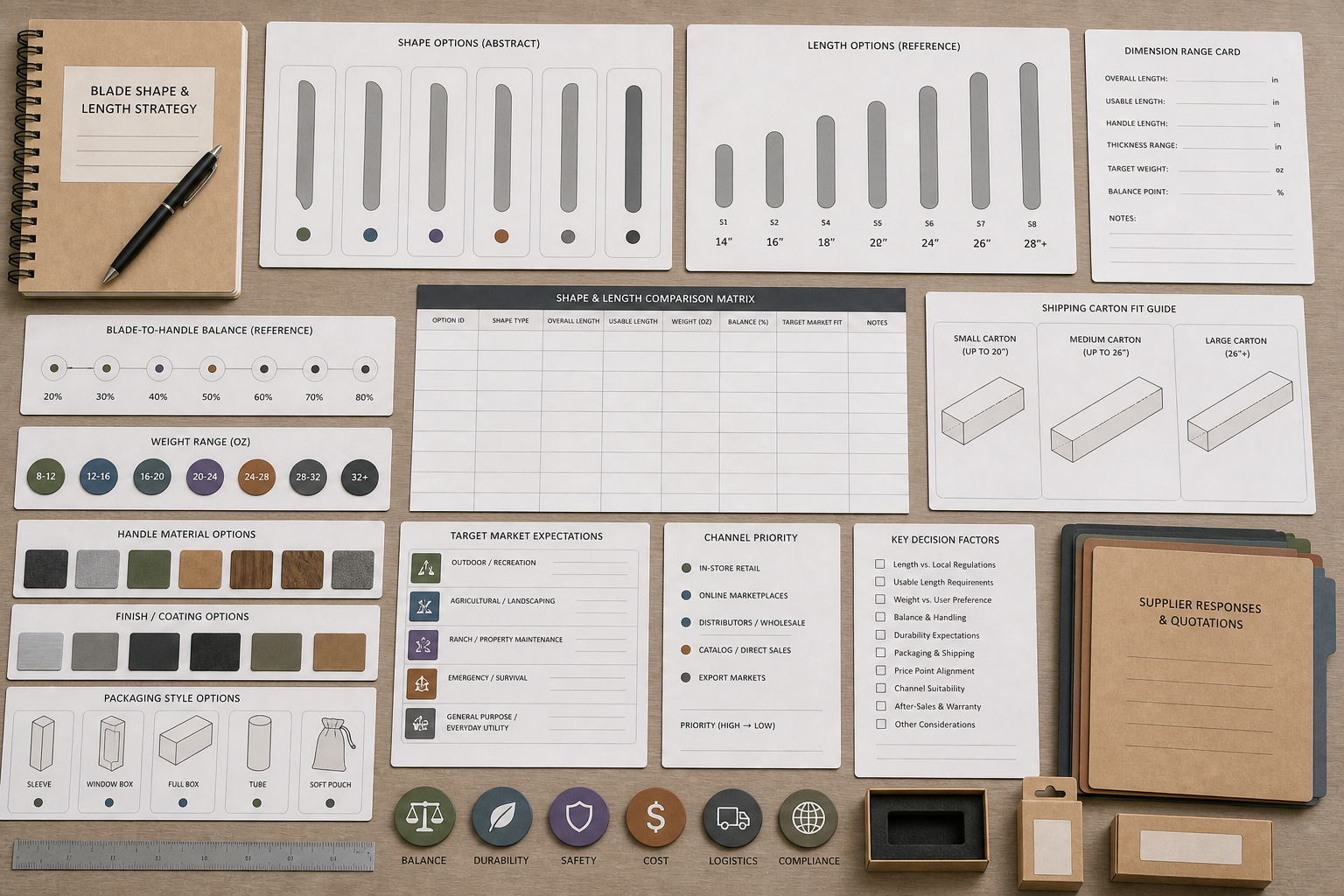
Blade shape and length should match the intended clearing task, buyer price range, shipping plan, and channel expectations. Buyers should approve drawings before tooling or mass production.
I Match Geometry to the Real Product Promise
Blade geometry is where buyers often lose control. A machete may have a straight blade, bolo-style front weight, broad tip, narrow profile, sawback feature, or utility shape. Every choice affects weight, balance, grinding time, packaging size, and perceived safety. A blade that is too light may feel weak. A blade that is too heavy may feel tiring. A blade that is too thin may deform. A blade that is too thick may cut poorly for the intended task. This is why I prefer a drawing and sample review instead of approving a product from a photo.
The USDA Forest Service page on machetes and similar brushing tools gives useful context: machetes are used for vegetation clearing and commonly have long blades. That does not mean every buyer should choose the longest option. B2B buyers should consider shelf space, carton size, shipping weight, retailer comfort, and target price. A machete sold through an outdoor brand may need a cleaner finish and stronger sheath. A farm tool buyer may care more about durability and cost.
| Blade factor | Product effect | Buyer check |
|---|---|---|
| Length | Reach, weight, carton size | Confirm target range and market fit |
| Thickness | Strength, weight, grinding cost | Set tolerance on drawing |
| Profile | Balance and field utility | Match to real task |
| Edge geometry | Cutting feel and maintenance | Approve sample edge and QC method |
Which Handle and Guard Details Affect Safe Product Experience?
A blade may pass inspection while the handle fails the user. Poor grip, weak rivets, or rough edges create avoidable complaints.
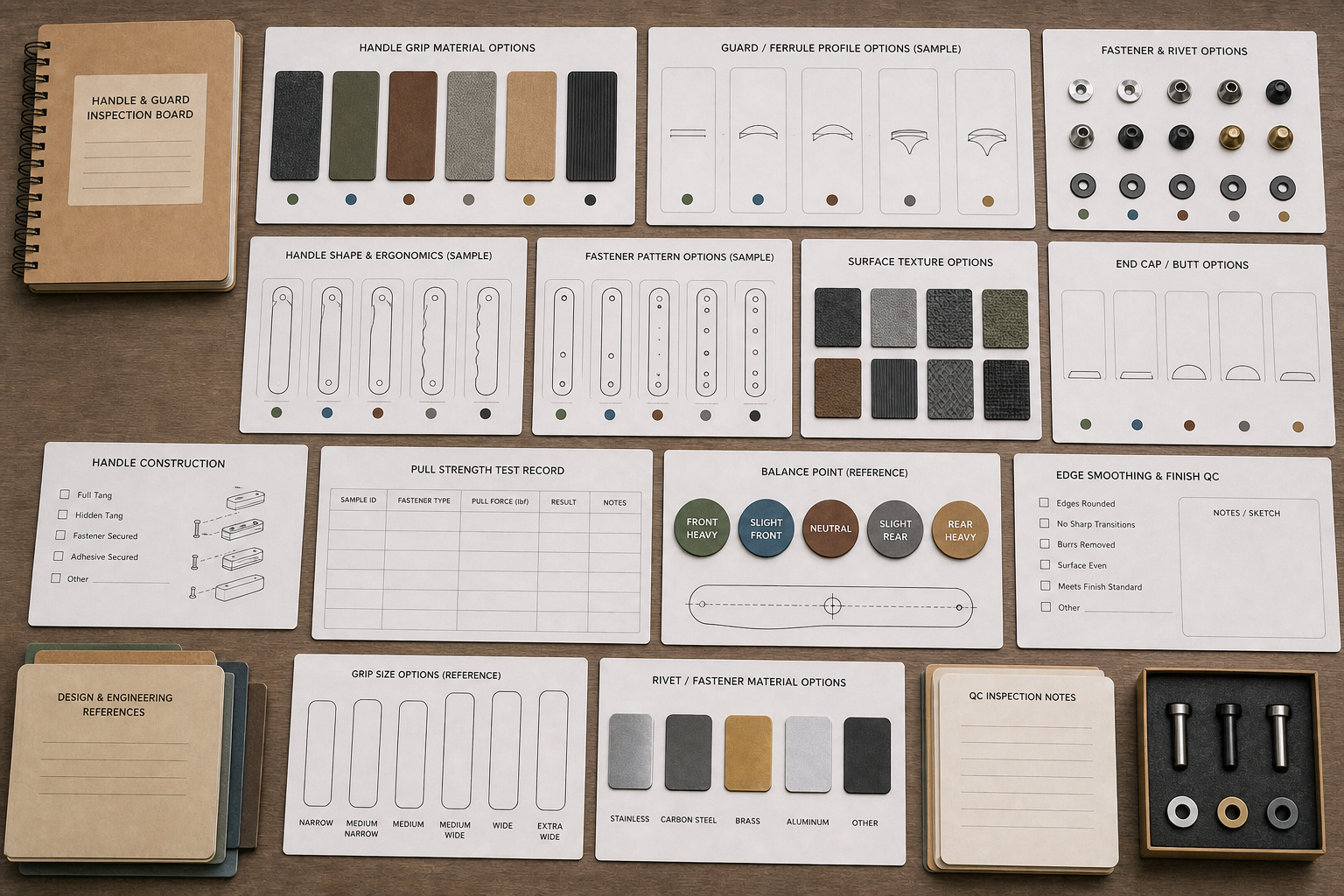
Buyers should check handle material, texture, palm shape, fasteners, guard shape, balance, edge smoothing, and pull strength before approving a machete sample.
I Treat the Handle as a Safety Component
The handle is not only decoration. It is the user's connection to a long working blade. For OEM/ODM buyers, handle review should include grip feel, edge smoothing, palm swell, guard design, fastener security, material stability, and cleaning. A handle that feels fine in one dry sample may become slippery in humid outdoor conditions. A handle with sharp mold edges may create returns even if the blade is acceptable. A riveted handle may need pull testing or torque checks. An overmolded handle may need mold-flow review and surface consistency checks.
OSHA's general industry guidance says employers are responsible for the safe condition of tools and that hand tools should be kept in serviceable condition, with handles and guards tight and free from hazardous defects. I use that principle as a product-development lens. If a buyer wants a machete for outdoor retail, the handle should help the product feel controlled and durable. If the buyer wants a low-cost farm tool, the handle still cannot be an afterthought. The handle design should be included in the drawing, sample approval, and incoming material control.
| Handle detail | What I inspect | Why it matters |
|---|---|---|
| Material | PP, TPR, rubber, wood, or composite | It affects grip, cost, and durability |
| Texture | Molded pattern or surface finish | It affects wet and dry hand feel |
| Fastening | Rivets, screws, tang fit, or overmold bond | It affects product stability |
| Edge smoothing | Mold lines, burrs, and corners | It affects comfort and return risk |
How Should Buyers Evaluate Sheath and Packaging Design?
A good blade with a weak sheath is still a poor product. Retailers and users notice storage and transport problems quickly.
Buyers should evaluate sheath retention, edge coverage, belt or hanging options, material thickness, packaging protection, barcode needs, and carton layout before mass production.
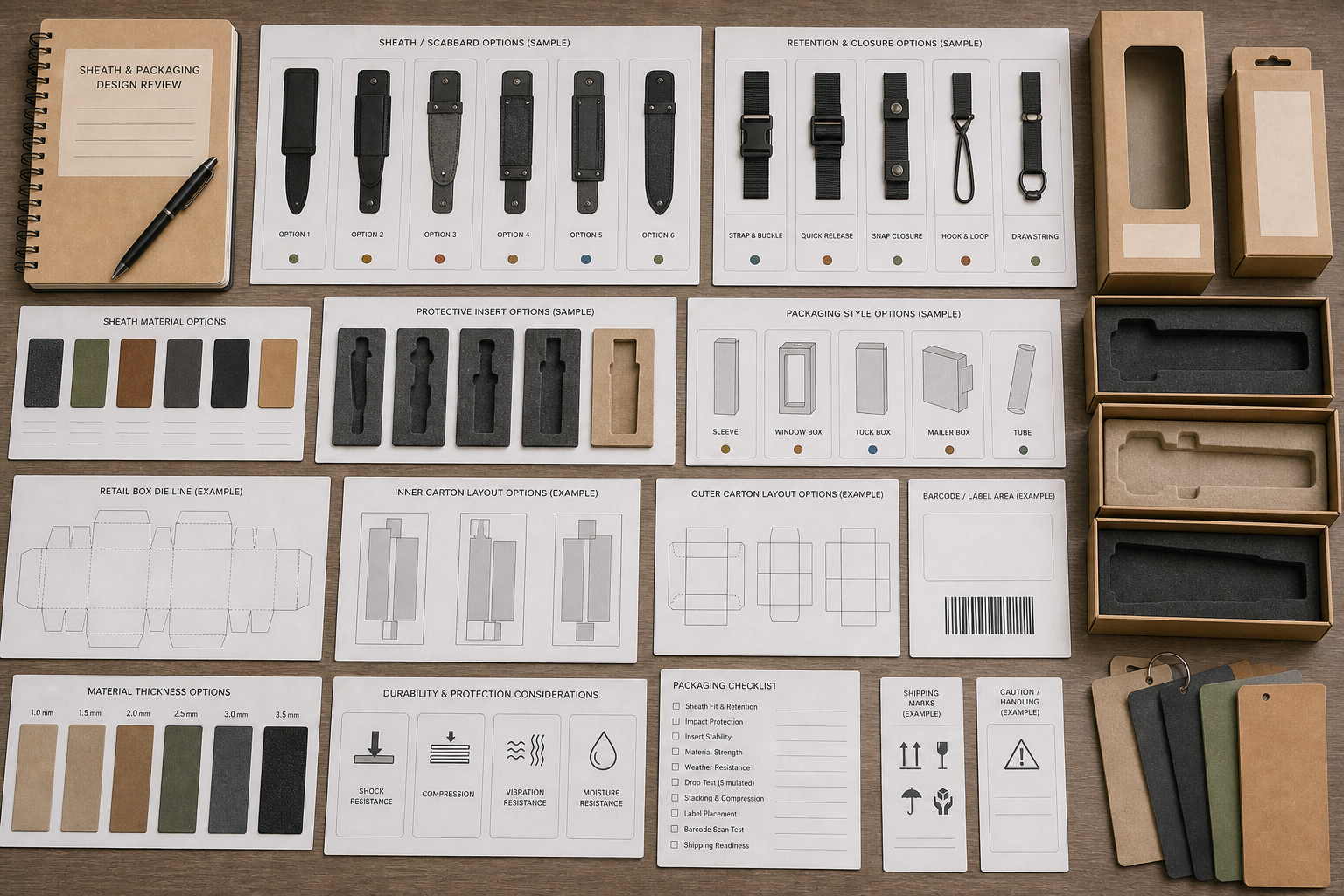
I Review the Sheath Before I Review the Final Box
For a long blade product, sheath design is part of the product, not an accessory. A sheath must cover the edge, hold the blade securely, survive shipping, and match the retail channel. The USDA Forest Service handtools guide notes that these tools can come with belt sheaths that make them easier and safer to carry. In B2B sourcing, I translate that into a list of design controls. Does the sheath cover the edge fully? Does the tip stay protected? Does the retention strap close smoothly? Does the sheath material resist cracking? Does the package prevent the blade from moving inside the carton?
Packaging also affects sales. A farm-supply channel may prefer a simple sleeve and bulk carton. An outdoor brand may need a printed box, hang card, insert, and branded sheath. Online sales may need stronger carton protection because a long blade can damage weak packaging during transit. I want the buyer to approve the sheath and package at the same time as the blade. If these are approved separately, the final product can feel unfinished.
| Sheath or package item | What to test | B2B reason |
|---|---|---|
| Edge coverage | Blade does not contact carton or user-facing package area | Protects product presentation |
| Retention | Sheath holds product during normal handling | Reduces transit and retail issues |
| Material | Nylon, plastic, leather, or composite | Affects cost and perceived value |
| Carton layout | Product does not shift or cut packaging | Supports export and distribution |
What Maintenance Information Should the Product Manual Include?
Maintenance copy is often too generic. If buyers ignore it, the product may be blamed for normal wear or poor storage.
The manual should explain safe inspection, cleaning, drying, oiling where suitable, edge care by qualified users, sheath storage, corrosion prevention, and when to stop using damaged tools.
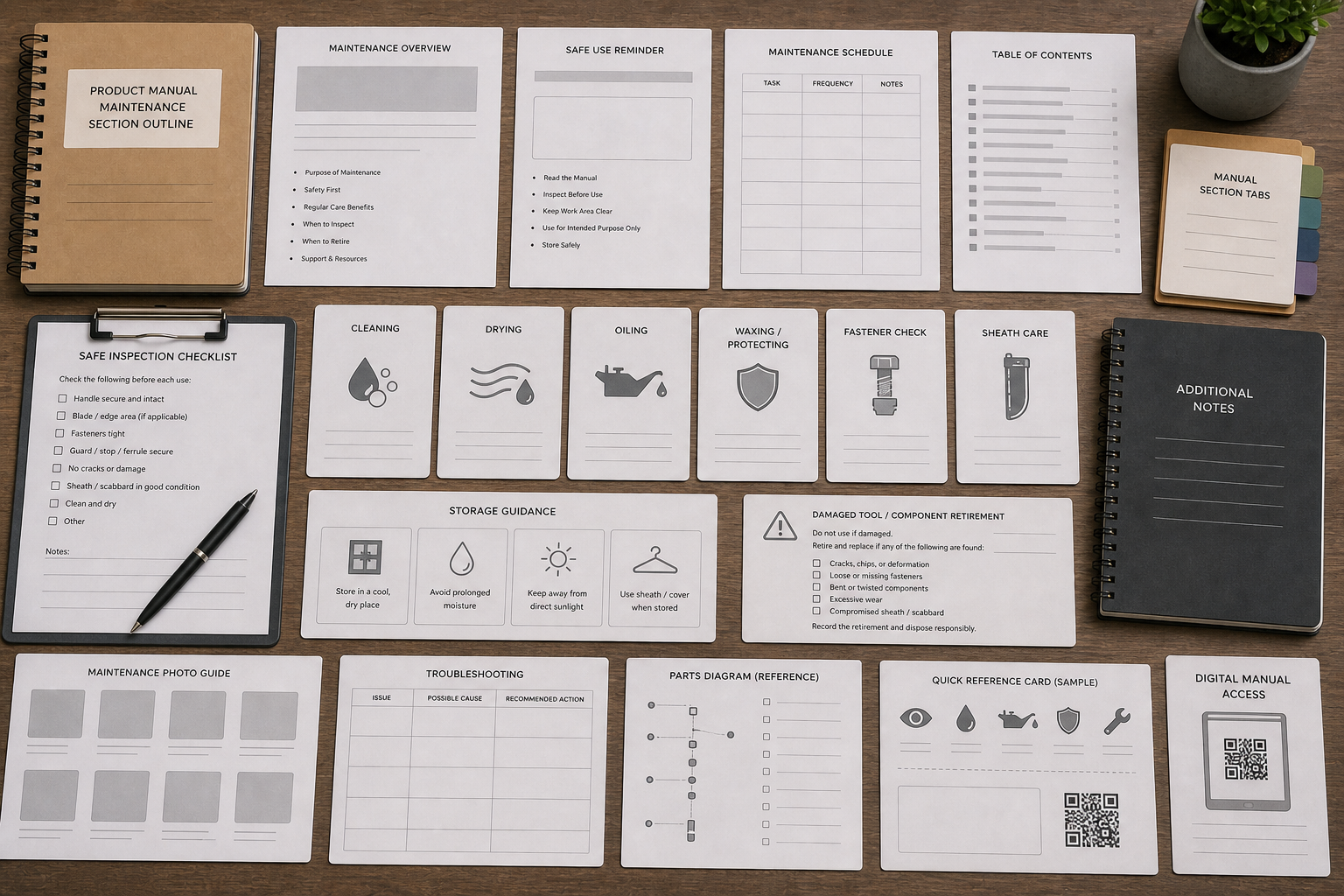
I Write Maintenance Notes as Risk Control
The original search intent around machete maintenance can easily become a how-to article. For a B2B buyer, I prefer a safer product-information approach. The manual should tell customers to inspect the tool before work, keep the edge protected in storage, dry the blade after wet conditions, apply appropriate rust prevention when needed, and stop using the product if the blade, handle, or sheath is damaged. It can also tell users to follow local safety rules and get proper training for work tasks. It should not promise that one tool fits every job.
The USDA Forest Service sharpening section supports the idea that dull tools can be dangerous and that sharpening should maintain the correct bevel while protecting the worker. OSHA guidance also supports keeping hand tools in serviceable condition. I use those sources to shape buyer-facing requirements. The final wording should be reviewed by the brand owner, but the factory can help create a maintenance insert, QR page, icon set, and multilingual layout. Clear maintenance information can reduce avoidable returns and protect brand trust.
| Manual topic | What it should cover | Buyer benefit |
|---|---|---|
| Inspection | Check blade, handle, sheath, and fasteners | Encourages responsible product care |
| Cleaning | Remove dirt and moisture after work | Helps reduce corrosion risk |
| Edge care | Use qualified sharpening and protect the edge | Avoids unsafe improvisation |
| Retirement | Stop using cracked, loose, or badly damaged tools | Reduces complaint risk |
How Should Factories Control Heat Treatment, Hardness, and Edge Consistency?
Machetes can fail quietly before they fail visibly. Poor temper, uneven grinding, or weak QC can hide inside a clean finish.
Factories should control steel selection, heat treatment, hardness checks, blade straightness, edge geometry, corrosion resistance, and batch inspection records for each machete order.
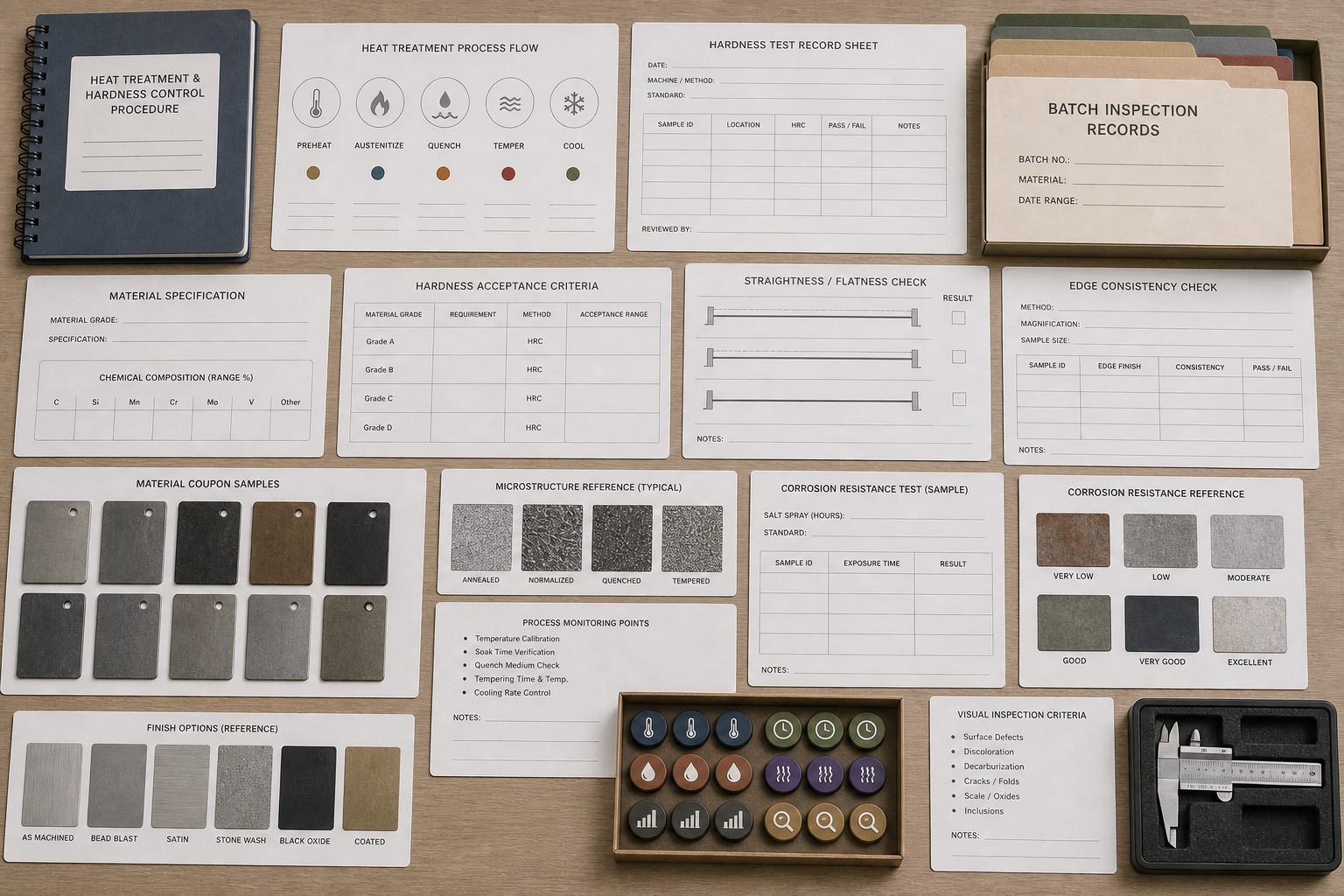
I Use QC to Protect Repeat Orders
A machete does not need the same heat treatment target as a small folding knife. It needs the right balance for its task. If the blade is too soft, it may deform or lose performance too quickly. If it is too hard, it may chip or become brittle. If grinding overheats the edge, the sample may pass visual inspection but perform poorly later. This is why I prefer controlled heat treatment, hardness checks, blade straightness checks, and edge inspection for batch production.
The NIST Rockwell hardness guide explains why good practice matters in hardness measurement and why measurement variability should be controlled. I use that as a reminder that hardness is not just a number in a catalog. It needs method, equipment, calibration, and batch discipline. For B2B buyers, the RFQ should ask for steel grade, target hardness range, heat treatment method, edge angle target, coating or polish, corrosion expectations, and QC record format. That makes quality visible before shipment.
| QC point | Factory control | Buyer question |
|---|---|---|
| Steel grade | Confirm material and thickness | Does it fit task and price? |
| Heat treatment | Control temperature, time, and tempering | What range will be inspected? |
| Hardness | Use consistent testing method | What record will be shared? |
| Edge geometry | Maintain sample-approved bevel | How will edge variation be controlled? |
What Safety, Labeling, and Channel Checks Should Buyers Prepare?
Retail risk is not only about the blade. It also includes labels, claims, marketplace rules, and product responsibility.
Buyers should prepare warning labels, age or channel policy where relevant, retailer requirements, product photos, country-of-origin marking, HS code review, and post-sale support notes.
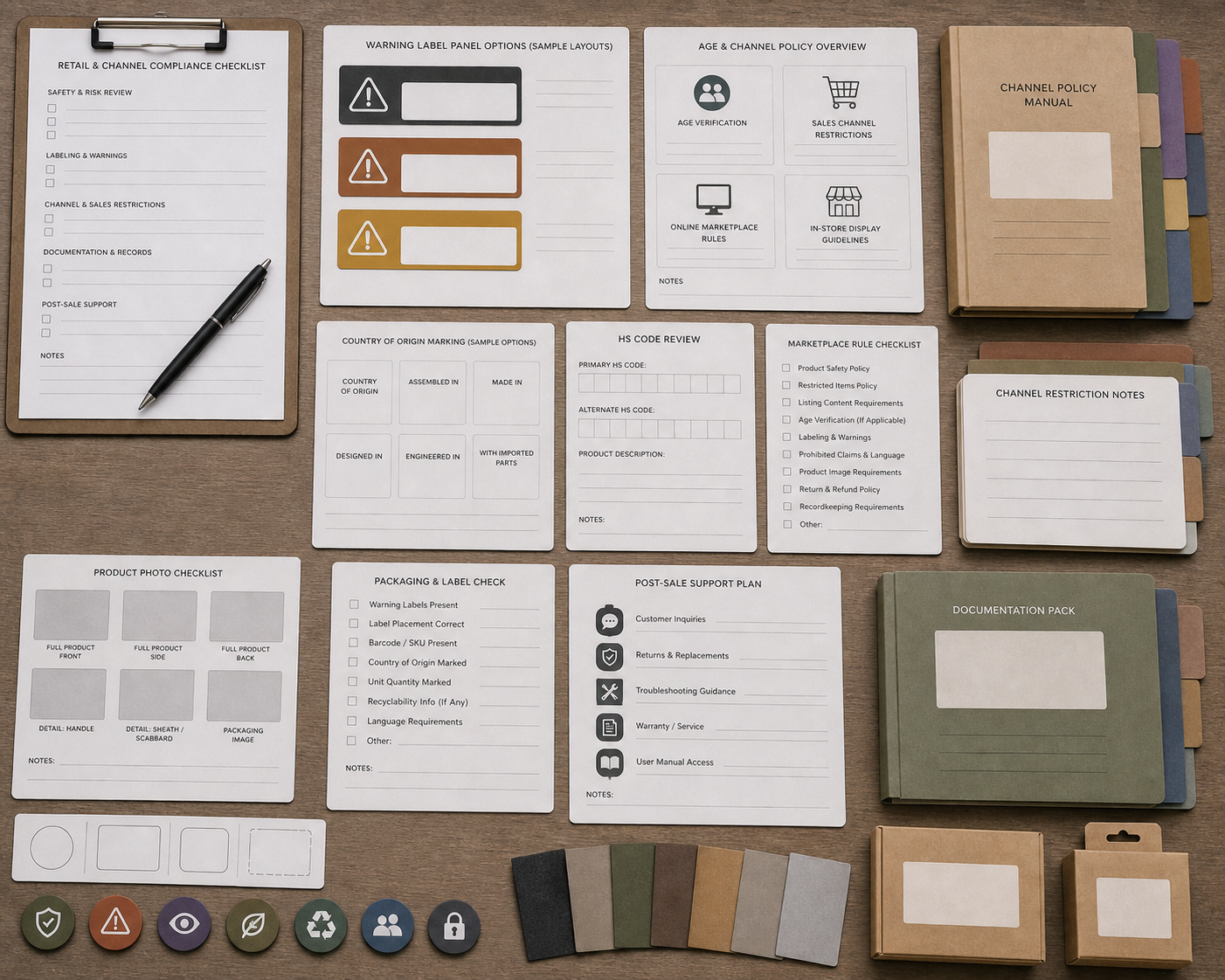
I Keep Claims Practical and Verifiable
Machete labels should be clear, factual, and channel-friendly. I avoid exaggerated claims. The product page should describe material, blade length, handle material, sheath type, finish, intended tool category, and care notes. It should not promise safe results in every environment. It should not imply that the tool replaces training, PPE, or local workplace rules. If the buyer sells through online marketplaces, the channel may have its own blade, image, packaging, or age policy. Those rules should be checked before artwork is printed.
For U.S. import and export work, Trade.gov explains that HS codes are used to classify goods and support shipping documents, duties, and trade reporting. That means product descriptions need to match the real item. A vague invoice description can create trouble for the buyer or broker. For brands selling consumer goods, I also treat the CPSC regulations and standards page as a reminder to check whether any product-specific safety rule, recall issue, or reporting concern applies. This is practical sourcing discipline, not legal advice.
| Check area | What to prepare | Why it matters |
|---|---|---|
| Labeling | Material, origin, SKU, care note, warning note | Supports retail and import files |
| Channel rules | Marketplace and distributor requirements | Prevents late listing problems |
| Product claims | Factual, supportable descriptions | Reduces complaint risk |
| Support notes | Manual, QR page, replacement policy | Helps after-sale service |
What Should a Machete OEM/ODM RFQ Include?
A short RFQ creates long email chains. Missing details slow sampling and make quotation less accurate.
A machete RFQ should include target task, blade length, steel, thickness, hardness range, handle material, sheath type, finish, packaging, quantity, target price, channel, and inspection needs.
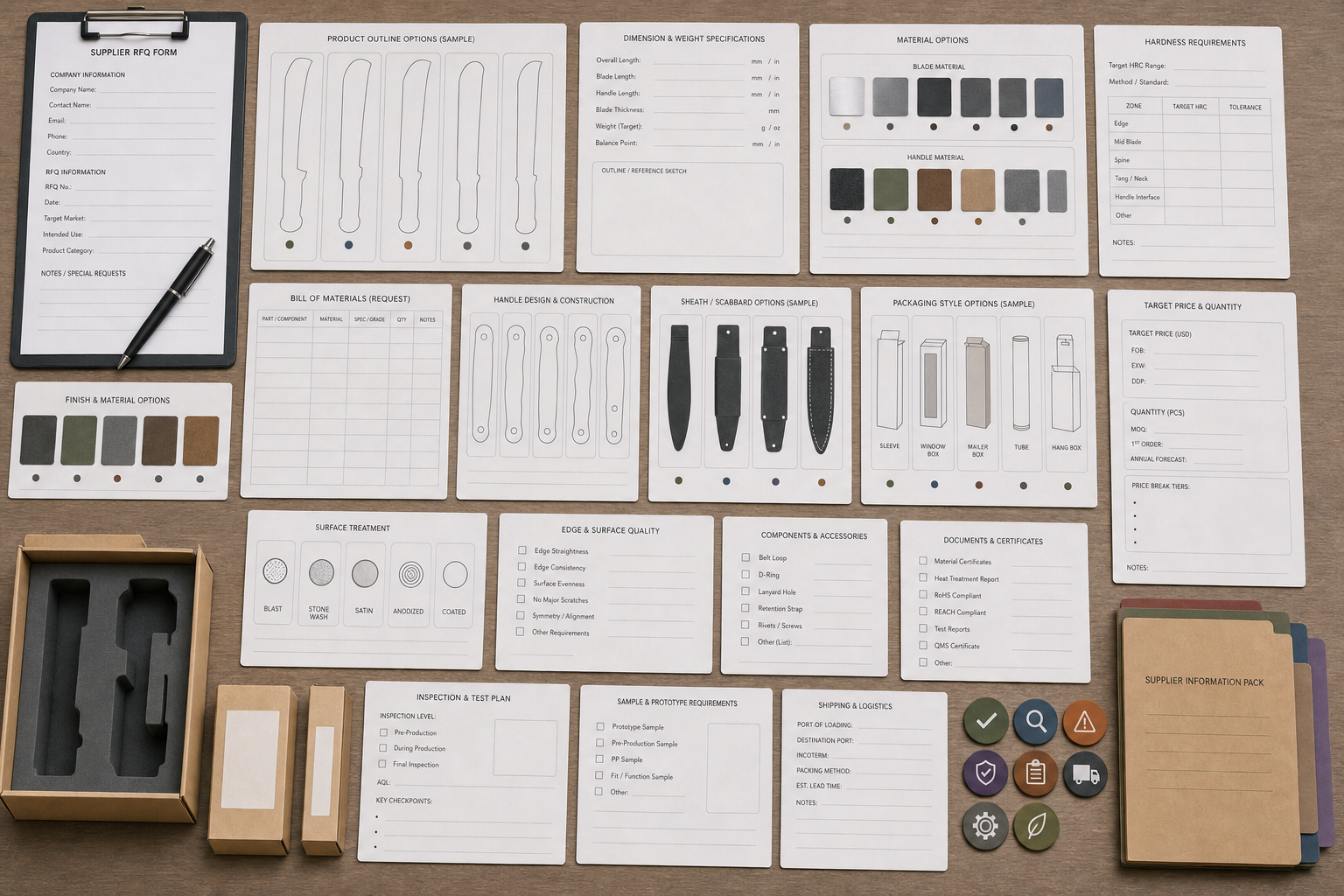
I Need the Buying Context Before I Quote
When a buyer asks Vast State for a machete quotation, I want to know more than size and price. I want to know the target market, user expectation, sales channel, packaging style, and inspection standard. A farm tool distributor may accept a different finish than a branded outdoor product. A private label brand may need printed packaging, a sheath logo, a hang card, and a clear care insert. An importer may need product photos, material details, country-of-origin marking support, and carton information for broker review.
A good RFQ also helps the factory give practical suggestions. If the buyer's target price is tight, we can recommend a simpler finish, standard handle mold, existing sheath type, or more efficient packaging. If the buyer needs a higher-end outdoor SKU, we may focus on better handle texture, cleaner coating, stronger sheath, and improved QC records. ISO says ISO 9001 can help organizations improve quality management, meet customer and applicable requirements, and improve satisfaction. In a machete project, that means cost control should cut waste, not critical control points. The goal is not only to make a machete. The goal is to make a product that fits the buyer's market, margin, and repeat-order plan.
| RFQ field | Why I need it | Buyer benefit |
|---|---|---|
| Target task and market | It defines product level | Better design direction |
| Blade and steel specs | It controls performance and cost | More accurate quotation |
| Handle and sheath | It affects safety and retail value | Fewer sample revisions |
| Packaging and inspection | It affects launch readiness | Smoother production follow-up |
Turn this article into a fixed blade project.
Send your target use, blade size, steel, handle direction, sheath needs, quantity, and packaging plan. Vast State can help shape it into a quote-ready project.
Conclusion
I evaluate a machete project by the whole system: blade, handle, sheath, maintenance, QC, packaging, channel, and RFQ clarity.
Source Notes
- USDA Forest Service Handtools for Trail Work supports the article's framing of machetes as field hand tools within brushing and trail-work contexts.
- USDA Forest Service Safe Trail Work supports the need for tool inspection, sound handles, sharp cutting edges, PPE, and safe storage.
- USDA Forest Service Tools for Sharpening supports the article's maintenance and edge-care discussion.
- OSHA General Industry Digest supports the principle that hand tools should be kept in safe, serviceable condition.
- NIST Rockwell hardness guide supports the importance of good hardness measurement practice.
- ISO 9001 supports quality management, customer requirements, and process control.
- Trade.gov HS code guidance supports the import and classification discussion for traded goods.