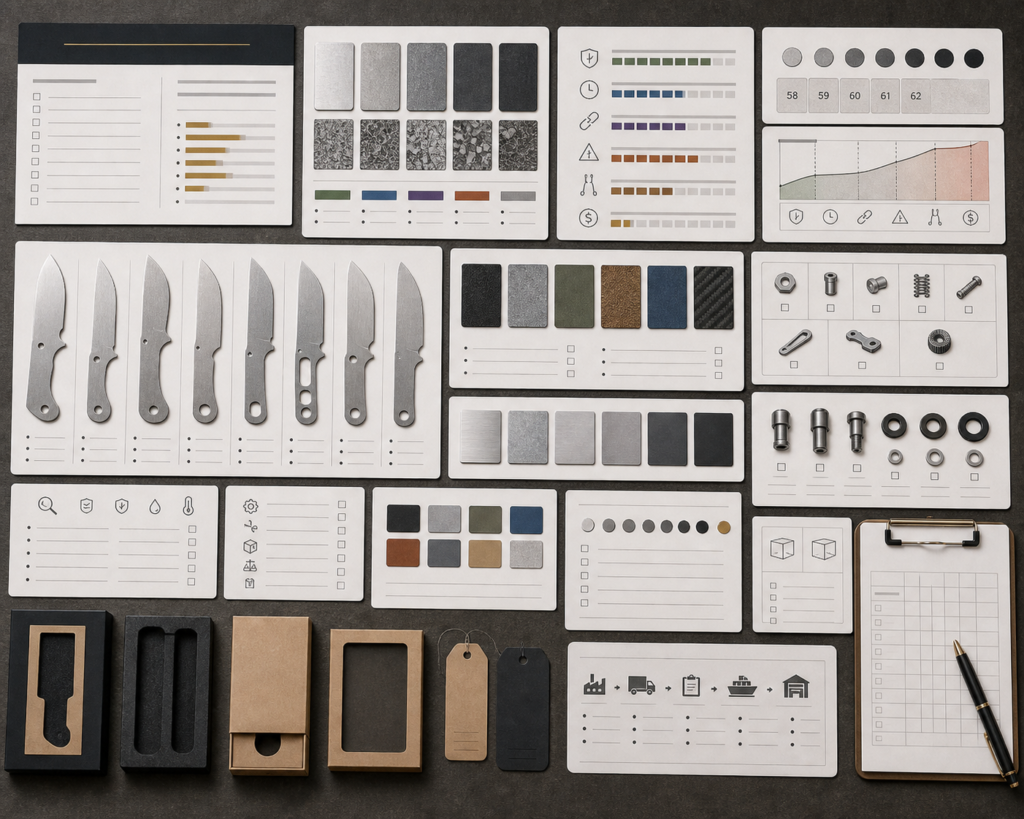
A steel name can sell a knife. But a wrong steel decision can hurt margin, lead time, and repeat quality. I treat MagnaCut carefully.
MagnaCut is a practical choice for premium OEM and ODM knife projects when the buyer needs strong corrosion resistance, high toughness, stable edge performance, and a clear marketing upgrade. It is not the best choice for every price range, so buyers must confirm supply, heat treatment, hardness, certification, and final product positioning.
Quick buyer brief:
- Answer: MagnaCut works best for higher-positioned EDC, outdoor, and utility knives.
- Buyer context: It helps brands that can sell material value, not only appearance.
- Key checks: Confirm source, thickness, HRC range, heat treatment, finish, MOQ, and QC plan.
Planning a knife project with this steel?
Send us your target market, MOQ, price range, and blade type. Vast State can help you choose the right steel, HRC range, finish, handle material, and QC requirements for OEM/ODM production.
When I look at MagnaCut for a customer project, I do not start with hype. I start with the product plan. Who will buy the knife? What price point must it hit? Will the buyer explain the steel story to the market? Can the production plan support the steel without delay? MagnaCut can be excellent, but only when the whole project is built around it. A good steel cannot fix a weak lock, bad grinding, loose assembly, or unclear sourcing plan. For OEM and ODM buyers, the real question is not whether MagnaCut is famous. The real question is whether it fits the knife, the market, the budget, and the supplier's process control.
What Is MagnaCut Steel in OEM and ODM Knife Sourcing?
Steel names can sound simple. But if a buyer only reads the name, the specification may become vague and risky during sourcing.
MagnaCut is a powder metallurgy stainless knife steel designed for a strong balance of toughness, corrosion resistance, and edge performance. In OEM sourcing, buyers should treat it as a controlled material specification, not just a marketing word.
I Treat MagnaCut as a Material System
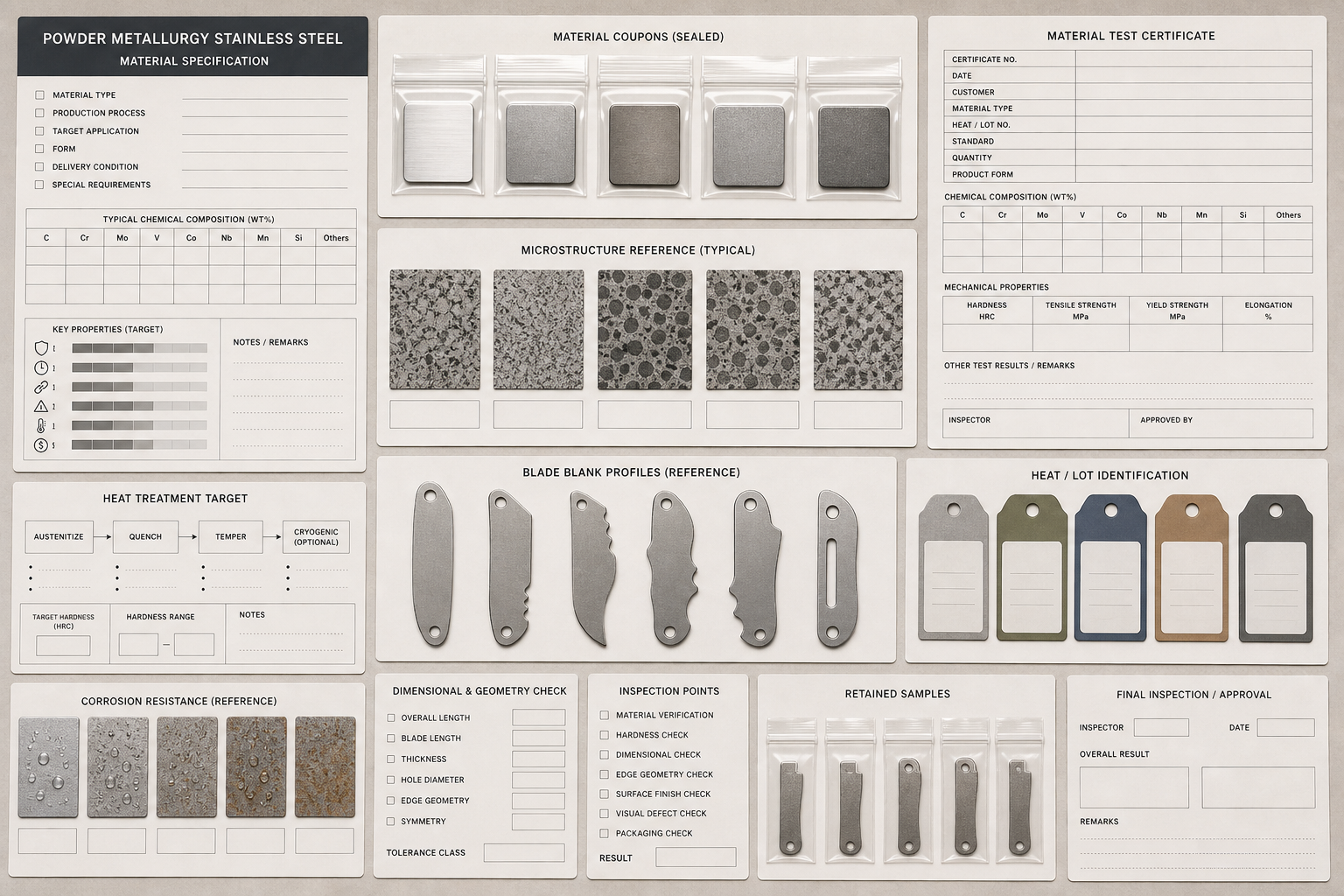
MagnaCut is often discussed as a modern high-performance knife steel, but I prefer to explain it in practical sourcing language. It is a powder metallurgy stainless tool steel. The Crucible data sheet describes MagnaCut as a steel designed to avoid chromium carbides in the heat-treated structure, using small vanadium and niobium carbides instead. That design goal matters because it is connected to the balance buyers care about: toughness, corrosion resistance, and usable edge performance. Knife Steel Nerds also explains the same core idea: the steel was designed to improve the old trade-off between stainless corrosion resistance and toughness.
For OEM and ODM work, I do not let the material name stand alone. I ask for steel grade, source, thickness, certificate, heat treatment target, blade geometry, finish, and inspection plan. A buyer may request MagnaCut because the market recognizes the name. That is understandable. But if the order does not control the details, the final knife may not deliver the value the buyer expects. I also remind customers that MagnaCut normally belongs to a higher product position. It should be used when the brand can explain the material benefit and the selling price can support the cost.
| Sourcing point | What I check | Why it matters |
|---|---|---|
| Material name | MagnaCut or CPM MagnaCut equivalent specification | Prevents vague steel substitution |
| Source | Steel supplier, certificate, batch record | Supports trust and traceability |
| Thickness | Blade design and available stock size | Affects cost, grinding, and lead time |
| Project fit | Price point, market, user need | Keeps the steel choice commercially realistic |
Quote-ready RFQ Checklist for This Steel
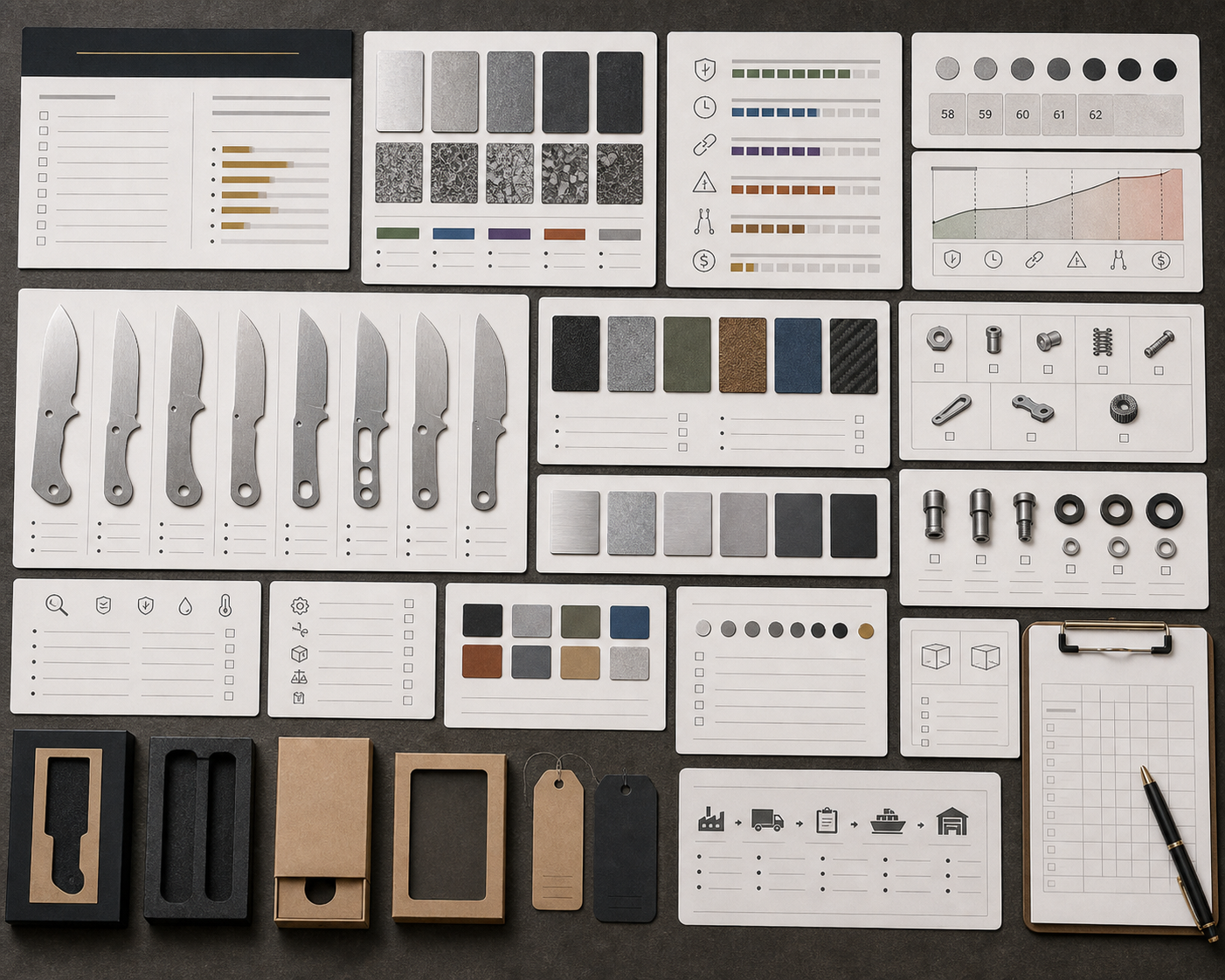
To get an accurate OEM/ODM quote, prepare these details before contacting a knife manufacturer.
| RFQ Field | What to Prepare |
|---|---|
| Product type | Folding knife / fixed blade / multi-tool / kitchen knife |
| Target market | US / EU / outdoor retail / promotional / tactical / EDC |
| Steel option | 4116 / 14C28N / D2 / N690 / Nitro-V |
| Target HRC | Example: 55-57 HRC, 58-60 HRC |
| Blade finish | Satin / stonewash / black coating / bead blast |
| Handle material | G10 / micarta / aluminum / stainless steel / wood |
| Lock or structure | Liner lock / frame lock / slip joint / full tang |
| Estimated quantity | 500 / 1,000 / 3,000 / 5,000+ pcs |
| Packaging | White box / color box / blister / pouch / gift box |
| Required documents | Drawing / sample photo / logo file / packaging artwork |
Why Does MagnaCut Matter for Everyday Folding Knife Performance?
A folding knife may use a famous steel but still disappoint users. Poor geometry, wrong hardness, or bad assembly can hide the steel's benefit.
MagnaCut matters because it can combine corrosion resistance, toughness, and stable cutting performance better than many older stainless options. The benefit becomes real only when heat treatment, grinding, sharpening, and assembly are controlled.
I Look for Balance, Not One Number
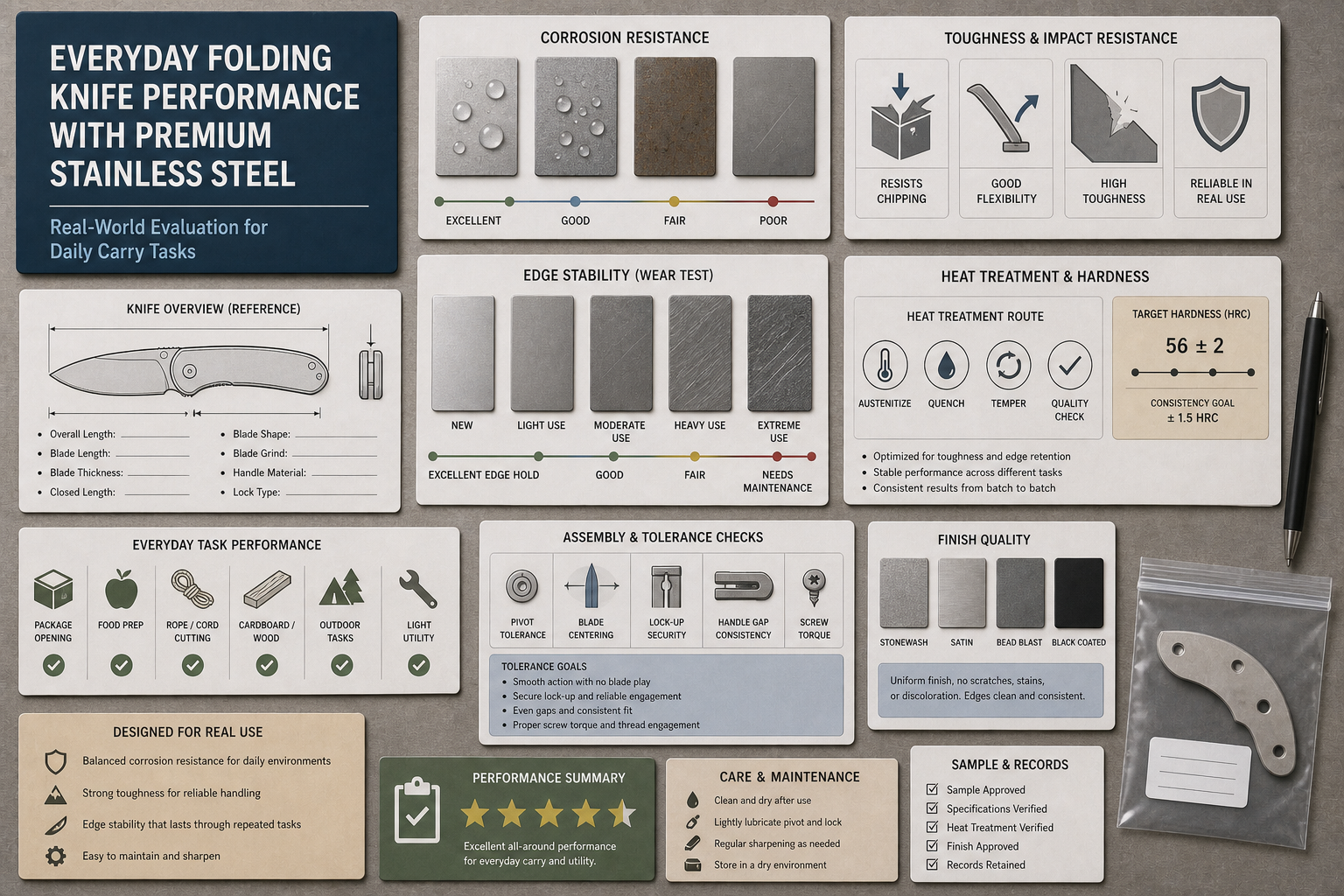
Many buyers ask one narrow question: Is MagnaCut sharp? I usually redirect the question. Sharpness comes from edge geometry and sharpening quality. Steel mainly supports how long the edge stays useful, how it reacts to stress, and how it resists corrosion. The MagnaCut data sheet reports a toughness comparison at blade-relevant hardness levels, and Knife Steel Nerds explains that MagnaCut's design can allow thinner edges with less risk of chipping when the edge is tuned correctly. This is useful for everyday folding knives because many users want a clean cutter that does not feel fragile.
For B2B customers, this balance can become a sales advantage. A brand can position the knife as a practical high-performance EDC or outdoor tool. But the factory still needs to build the rest of the knife correctly. The pivot must be smooth. The lock must engage safely. The handle must fit the target user. The edge must be consistent. If the buyer spends the budget on steel and ignores the mechanism, the product may feel uneven. I see MagnaCut as a strong material choice, but I never treat it as a shortcut around good design.
| Performance area | What MagnaCut can support | What production must still control |
|---|---|---|
| Corrosion resistance | Better fit for wet or outdoor use | Surface finish and cleaning |
| Toughness | Lower chipping risk than many hard stainless steels | Edge thickness and heat treatment |
| Edge performance | Stable working edge when geometry is right | Grinding angle and sharpening quality |
| User confidence | Strong material story for higher-positioned products | Fit, lockup, and final inspection |
Which Knife Projects Are a Good Fit for MagnaCut?
MagnaCut can raise product value. But if the buyer cannot recover the cost in the market, the upgrade can weaken margin.
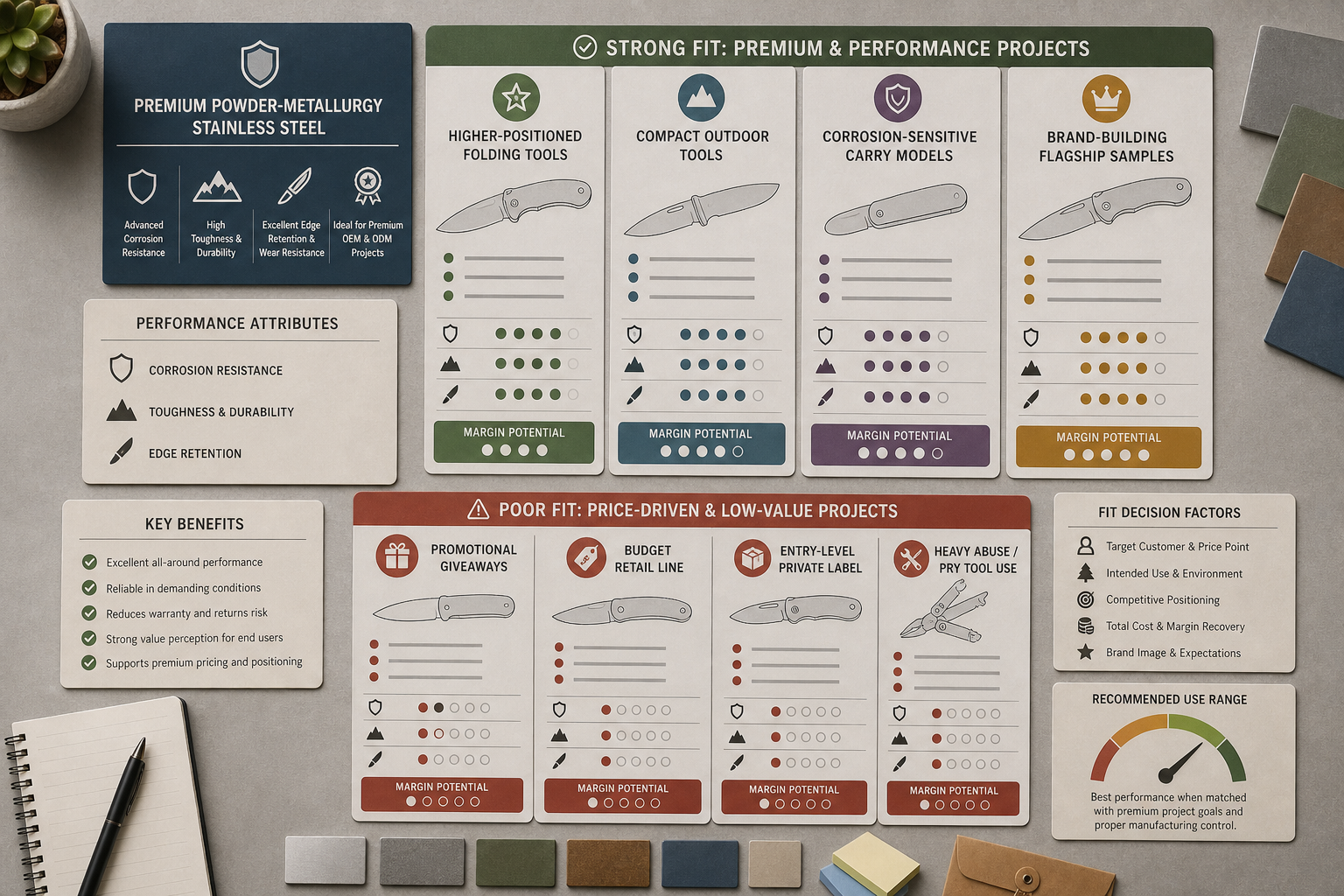
MagnaCut fits higher-positioned folding knives, compact outdoor knives, corrosion-sensitive EDC models, and brand-building projects. It is usually not ideal for low-cost promotional knives or price-first mass orders.
I Match Steel to the Sales Channel
The best MagnaCut projects usually have a clear reason for using the steel. A brand may want a higher-end EDC folder for customers who read steel specifications. An outdoor brand may need corrosion resistance and toughness in a compact fixed blade. A distributor may want a flagship model that improves brand perception. These are stronger reasons than simply saying, "The market likes MagnaCut."
I also think about the complete bill of materials. If a knife uses MagnaCut but pairs it with weak hardware, rough action, or low-grade packaging, the product message becomes confused. The steel says high-positioned. The rest of the product says budget. That mismatch can make the buyer's market harder to understand. For OEM and ODM projects, I prefer to design the full knife around the material level. That may include G10, micarta, titanium, aluminum, or carbon fiber style handle options depending on price and brand direction. The lock and pivot should also match the customer's expected user experience. MagnaCut is most useful when it supports a coherent product story.
| Project type | MagnaCut fit | My sourcing comment |
|---|---|---|
| Premium EDC folder | Strong fit | Buyers can explain the steel value |
| Outdoor utility knife | Strong fit | Corrosion resistance and toughness matter |
| Budget private label knife | Weak fit | Cost may exceed the channel's price tolerance |
| Flagship brand model | Strong fit | Material story can support brand positioning |
What Heat Treatment Questions Should Buyers Ask Before Production?
A steel upgrade can fail during heat treatment. If the hardness target is vague, the buyer may receive uneven performance.
Buyers should ask for the target HRC range, heat treatment route, cold treatment plan, tempering target, hardness testing method, and batch records. MagnaCut needs controlled heat treatment to show its value.
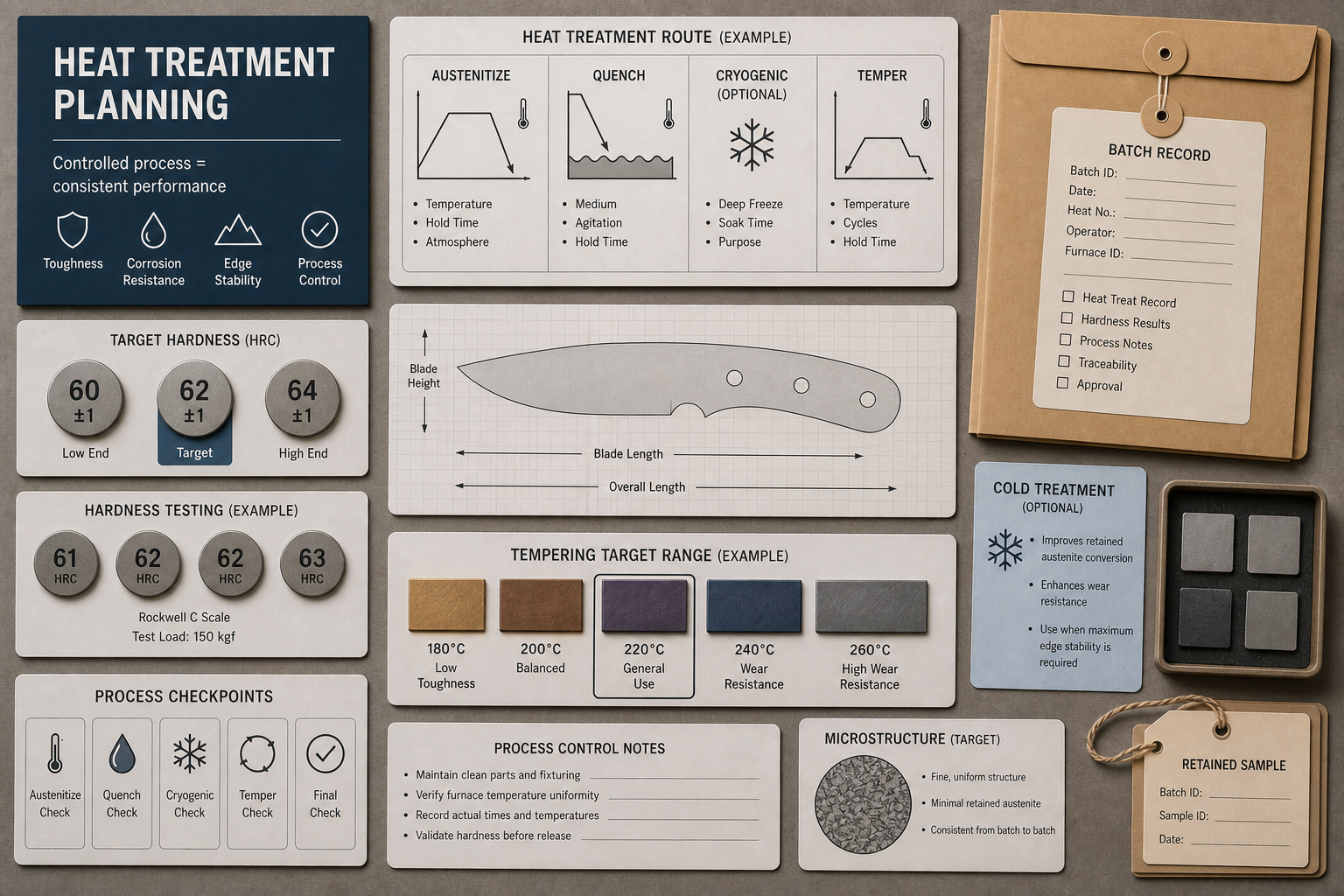
I Make HRC a Controlled Specification
MagnaCut has room for different hardness targets, but that does not mean every target fits every knife. The Knife Steel Nerds MagnaCut article discusses common targets around the low-to-mid 60s HRC and also explains how cold treatment can affect hardness. The Crucible data sheet gives an aim hardness of 60-63 HRC and shows toughness values at different hardness levels. For buyers, the practical point is simple: agree on the HRC range before production and connect it to the knife's purpose.
I also want the measurement method to be credible. A number written on a report is not enough. The NIST Rockwell hardness guide explains why good practice matters for reducing hardness measurement errors. In factory work, this means the test surface must be prepared properly, the tester must be checked, and samples must be taken from each relevant batch. For an OEM buyer, I would not ask only, "Can you make MagnaCut?" I would ask, "What hardness range will you control, how will you test it, and what record can I receive?"
| Heat treatment question | Why I ask it | Practical buyer request |
|---|---|---|
| Target HRC range | Controls edge stability and toughness balance | Confirm range before sampling |
| Cold treatment | Can affect final hardness and retained austenite | Ask whether it is included |
| Batch testing | Prevents uneven production lots | Request HRC records |
| Final geometry | Connects heat treatment to cutting performance | Confirm edge thickness and sharpening angle |
How Should Buyers Compare MagnaCut With S35VN, M390, D2, and 14C28N?
Steel comparison can become confusing fast. A buyer may overpay for one feature while ignoring the feature their market needs most.
Buyers should compare MagnaCut with S35VN, M390, D2, and 14C28N by product position, corrosion need, toughness need, edge target, supply stability, and price tolerance. MagnaCut is balanced, but not always the most cost-effective answer.
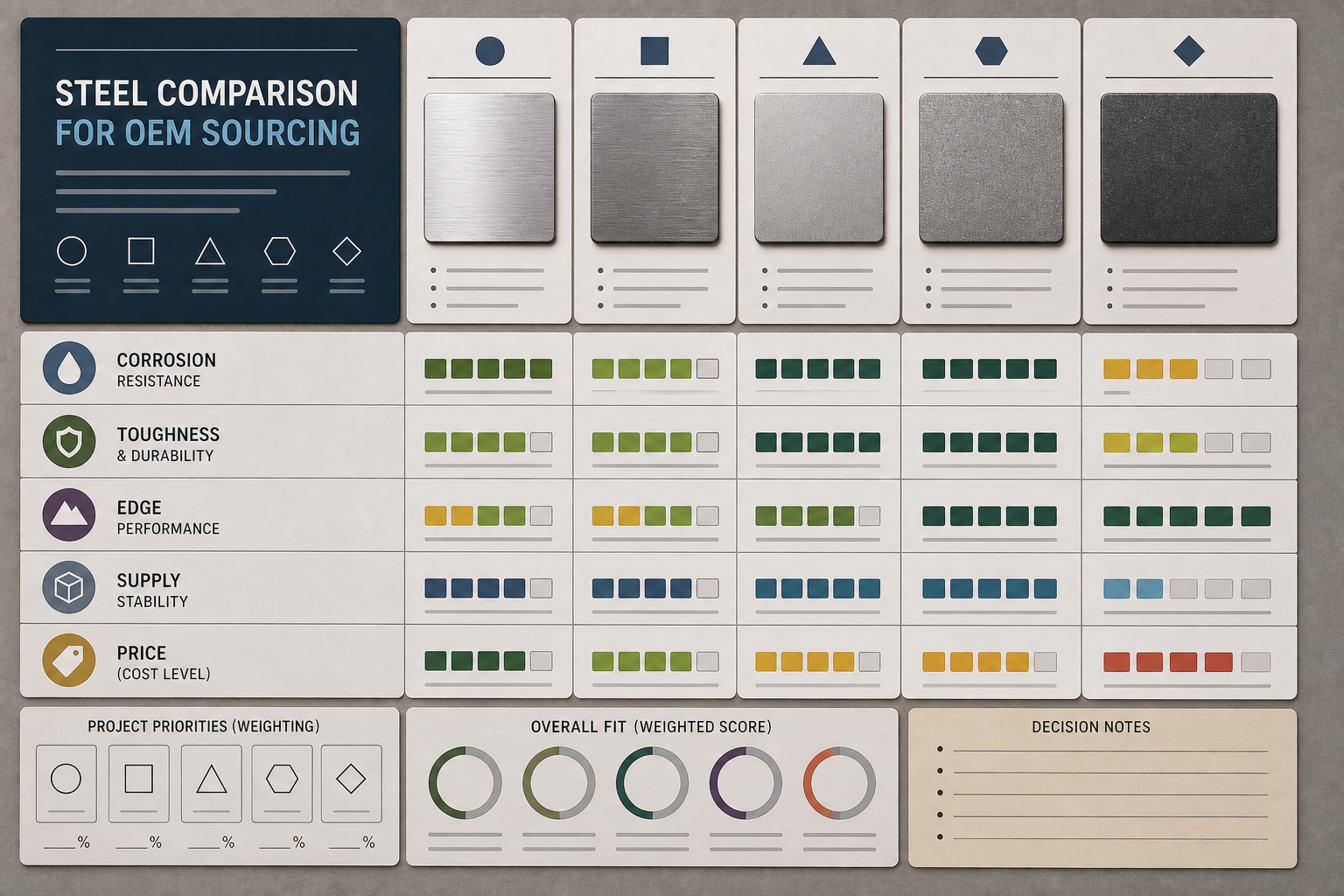
I Compare by Business Use, Not Internet Ranking
MagnaCut often looks attractive because it balances several properties at once. But a B2B buyer should not choose steel by online ranking alone. S35VN can still make sense for a stable premium folding knife line. M390 or 20CV may suit buyers who want strong wear resistance and already have a price point that supports it. D2 can work for cost-sensitive performance products if the buyer accepts lower corrosion resistance. 14C28N can be a very practical stainless choice when the goal is sharpness, corrosion resistance, and reasonable cost.
The comparison should start with the customer and the sales channel. If the knife is sold to informed EDC buyers, MagnaCut can help the listing. If the knife is sold through a price-sensitive wholesale channel, the material cost may not come back through sales. If the buyer needs a wet-environment outdoor model, MagnaCut may be easier to justify. If the buyer needs a simple entry-level pocket knife, a lower-cost stainless steel may be smarter. I do not see this as a steel contest. I see it as a positioning decision.
| Steel option | Better fit | Buyer caution |
|---|---|---|
| MagnaCut | Balanced high-positioned EDC and outdoor knives | Confirm source, cost, heat treatment, and marketing value |
| S35VN | Established premium folders | May feel less exciting to steel-focused buyers |
| M390 or 20CV | Wear-focused premium products | Can trade off toughness and grinding cost |
| D2 | Budget performance knives | Corrosion resistance needs buyer education |
| 14C28N | Practical stainless value knives | Less prestige than MagnaCut in some markets |
What Supply and Cost Risks Should Buyers Check?
MagnaCut demand can create sourcing pressure. If a buyer ignores supply details, sampling and delivery plans can slip.
Buyers should check current steel source, available thickness, certificate records, MOQ, price changes, production lead time, and whether the supplier can prove genuine material. Supply planning matters as much as material selection.
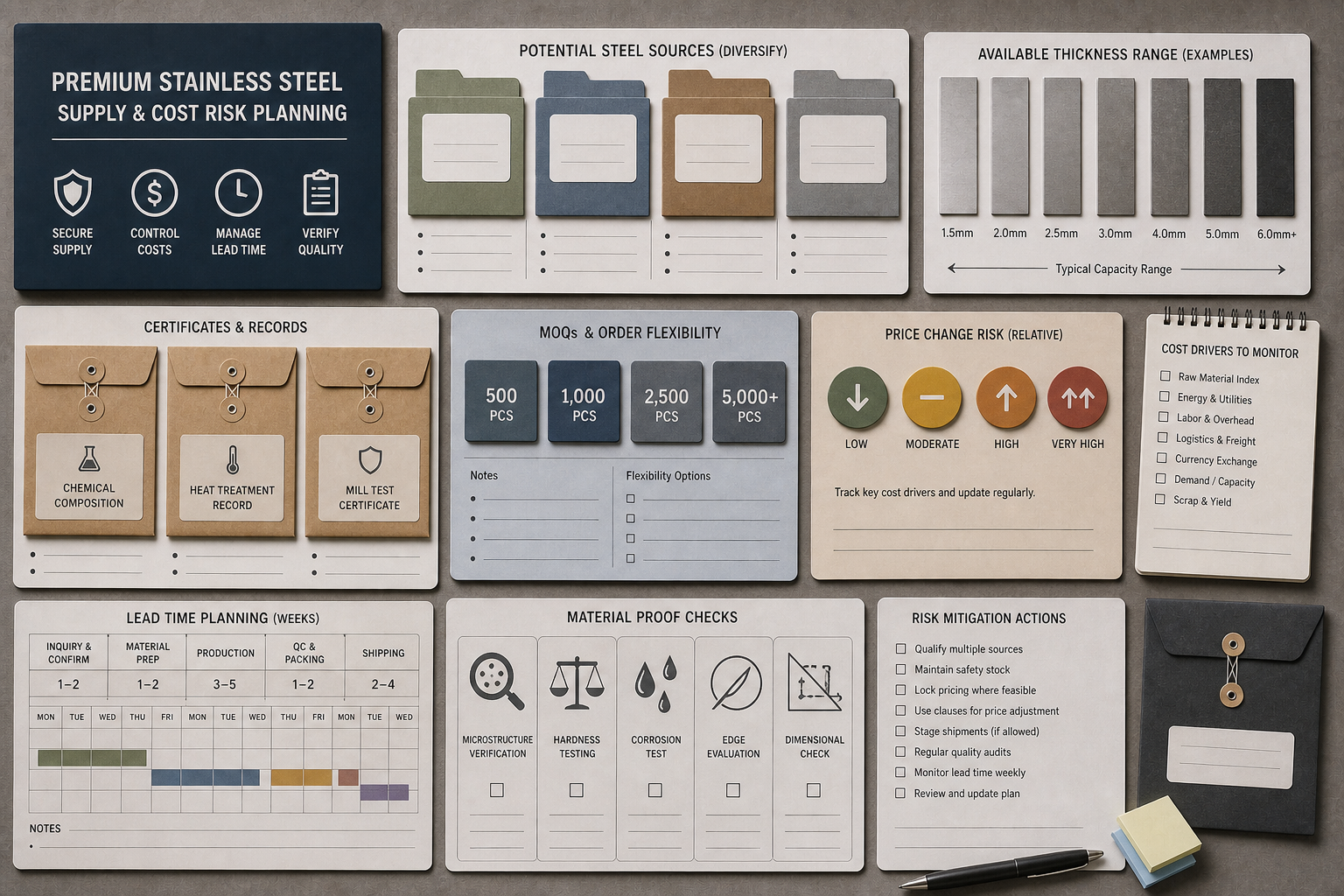
I Ask About Availability Before I Promise a Launch Date
MagnaCut supply has changed since the steel first entered the market. Knife Steel Nerds originally described production and distribution through Crucible and Niagara Specialty Metals in 2021. More recent Niagara information says MagnaCut production has transitioned to Erasteel while Niagara continues rolling, finishing, and distribution support. Niagara's current product page also lists CPM MagnaCut PM stainless knife steel with available thickness and width options. For buyers, the lesson is not to panic. The lesson is to verify the supply chain at the time of the order.
This is important for OEM and ODM projects because steel is only one part of the schedule. A buyer may need prototypes, logo samples, packaging samples, pre-production approval, mass production, inspection, and shipment. If the steel thickness is not available, the blade design may need adjustment. If the supplier cannot show a material certificate, the buyer may face trust issues later. If the cost changes after quotation, margin may be affected. I suggest treating MagnaCut as a planned sourcing item, not a last-minute upgrade. A serious RFQ should ask for certificate support, batch traceability, stock confirmation, and timing.
| Supply risk | What can happen | How I reduce it |
|---|---|---|
| Thickness not available | Blade design or grinding plan changes | Check stock before final design |
| Unclear source | Buyer cannot support steel claim | Request certificate and batch record |
| Cost movement | Margin becomes weaker | Quote with validity period |
| Lead time pressure | Launch schedule slips | Confirm material before sample timeline |
What Manufacturing Details Affect MagnaCut Knife Quality?
Good steel can still become a poor knife. Grinding, finishing, lock fitting, and sharpening decide what users actually feel.
MagnaCut knife quality depends on controlled blade processing, heat treatment, grinding temperature, edge geometry, surface finish, lock fitting, assembly, and final inspection. The steel helps, but manufacturing turns it into a sellable product.
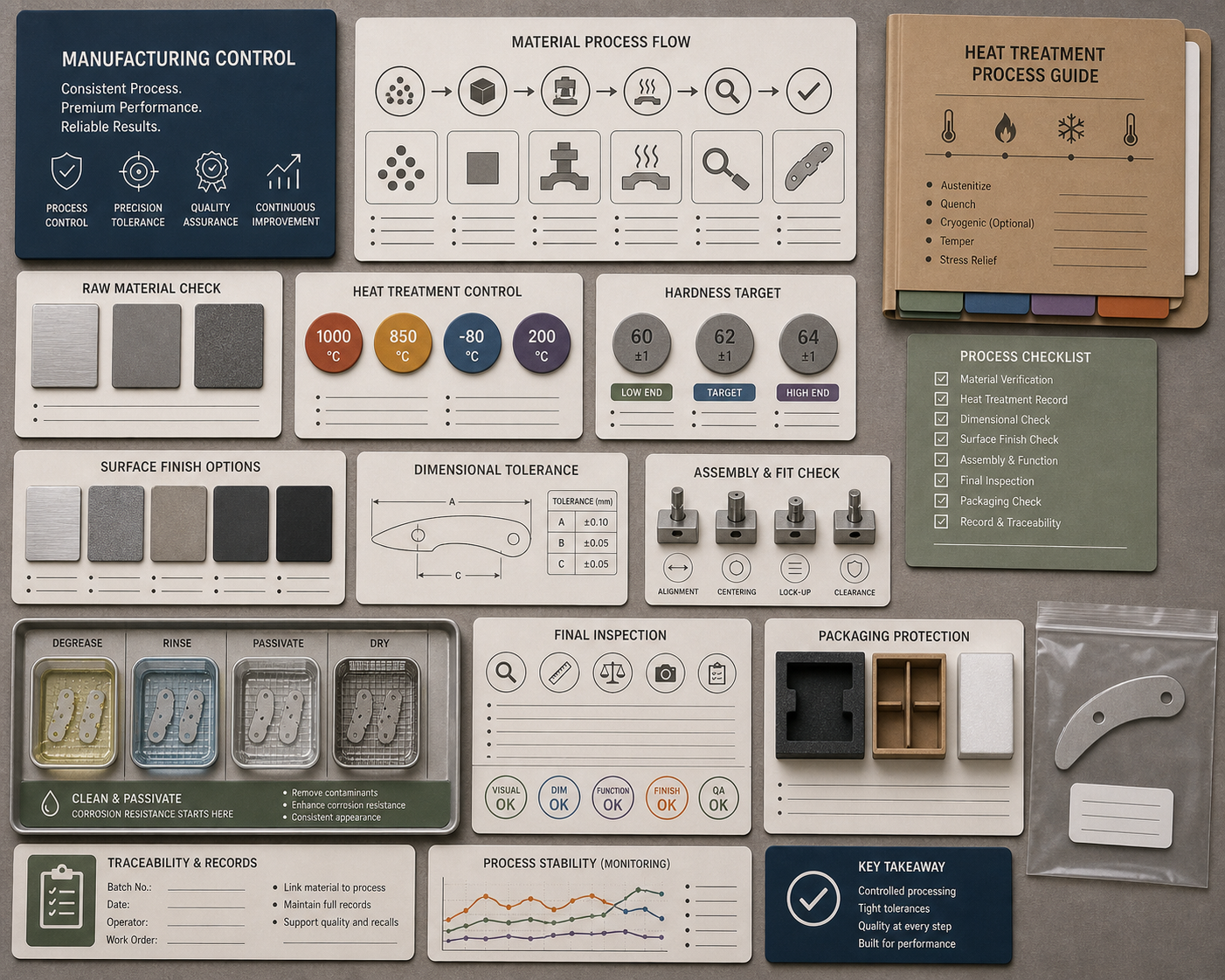
I Protect the Steel From Bad Process Choices
MagnaCut is not difficult in the same way every steel is difficult, but it still needs process respect. Blade blanks must be cut accurately. Pivot holes and lock surfaces must be controlled. Grinding should avoid overheating the edge. Sharpening must be consistent. If the blade gets a coating, stonewash, bead blast, satin finish, or polish, the finish must match the corrosion and appearance goal. A strong steel does not excuse poor surface preparation.
For folding knives, I pay special attention to the moving structure. A MagnaCut blade with blade play, poor centering, rough action, or weak lock engagement will not feel like a high-value product. The customer may blame the steel choice, but the problem is often mechanical. I also look at handle material. Titanium, G10, aluminum, micarta, carbon fiber style laminate, and stainless liners can all work, but the total product should match the price point. If the customer wants a high-positioned EDC folder, the material package and assembly feel should support the blade steel. The final result should feel coherent.
| Manufacturing detail | What I control | Buyer benefit |
|---|---|---|
| Blade cutting | Profile, pivot, stop area, tang | Better fit and smoother assembly |
| Grinding | Bevel symmetry and heat control | Stable cutting edge |
| Lock fitting | Engagement, centering, side play | Safer user experience |
| Finish | Surface consistency and corrosion goal | Better appearance and easier selling |
What Should Buyers Put in a MagnaCut Knife RFQ?
A weak RFQ creates weak quotations. Suppliers may quote different assumptions, so price comparisons become misleading.
A MagnaCut RFQ should include knife type, target market, target price, blade thickness, hardness range, finish, handle material, lock type, logo, packaging, MOQ, inspection requirements, certificate needs, and delivery plan.
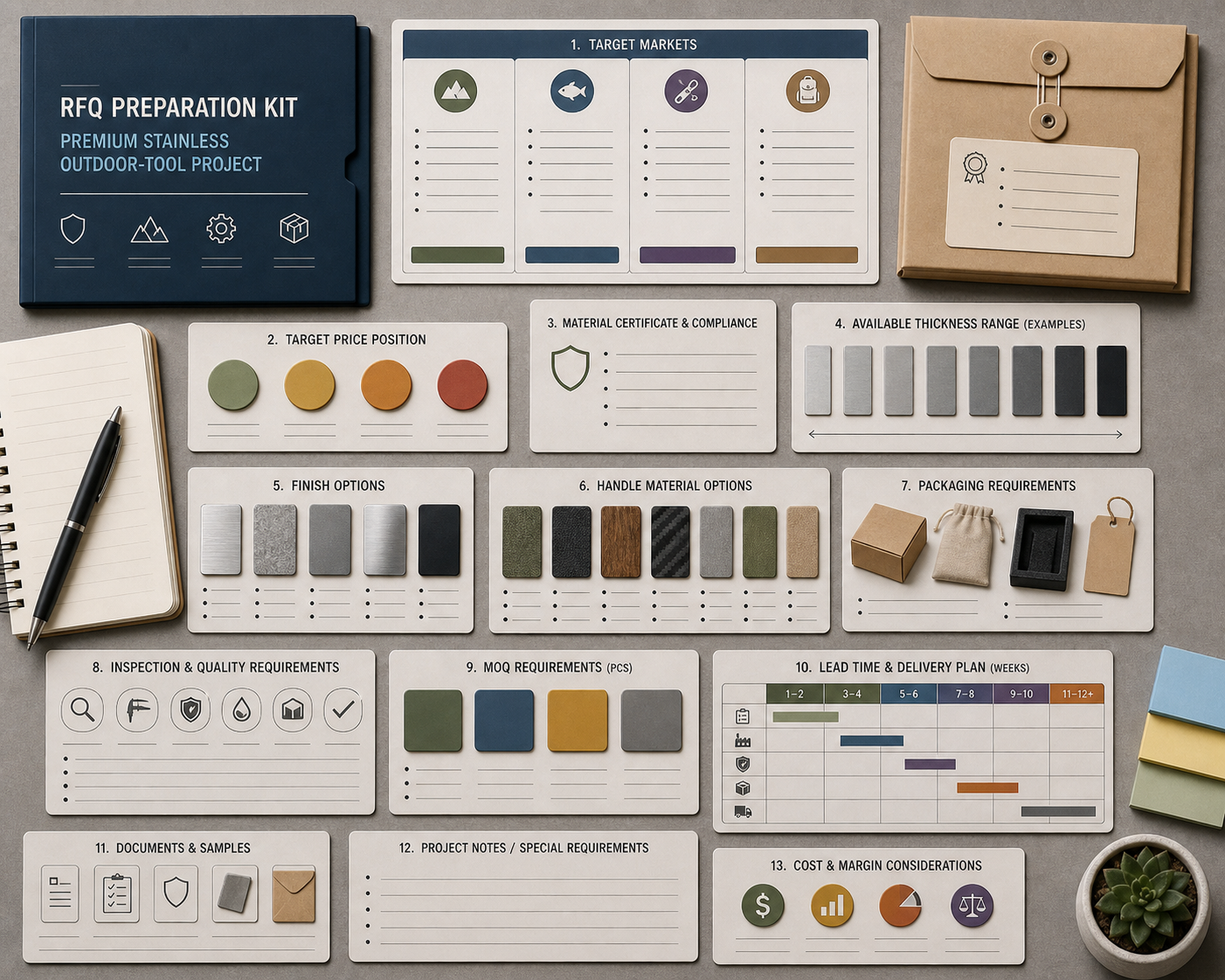
I Use the RFQ to Prevent Rework
When a buyer asks for a MagnaCut quotation, I want enough detail to understand the real product. A simple message like "quote a MagnaCut folding knife" is not enough. I need the blade length, thickness, finish, handle material, lock type, opening style, clip, screws, target market, packaging, logo method, expected MOQ, target price, and inspection level. If the buyer already has a drawing, I check manufacturability. If the buyer only has a concept, I help narrow the options before making a sample.
I also suggest that buyers separate required features from flexible features. MagnaCut may be required, but handle material may be flexible. Or the lock type may be required, but finish may be open. This helps the supplier give practical alternatives when cost, lead time, or manufacturing risk needs adjustment. In my experience, the best RFQ is not only a request for price. It is a working brief that lets the supplier protect the buyer's market goal. MagnaCut can be an excellent upgrade, but it needs a clear product plan behind it.
For repeat orders, I connect the RFQ with the inspection plan. The ISO document on quality management principles explains that quality systems should help organizations meet customer and requirement needs. In a MagnaCut knife order, that idea becomes practical through material certificates, HRC records, dimensional checks, lock function checks, edge inspection, finish review, packaging checks, and final inspection. A higher-positioned steel claim should have stronger documentation behind it.
| RFQ field | What to include | Why it helps |
|---|---|---|
| Blade specification | MagnaCut, thickness, finish, HRC range | Aligns material and process |
| Structure | Lock type, pivot, clip, hardware | Clarifies assembly complexity |
| Branding | Logo, color, packaging, inserts | Supports private label planning |
| Quality requirements | Certificate, HRC report, AQL, photos | Creates shared inspection standards |
Ready to use this material in your next knife line?
Vast State can help you compare blade steels, heat treatment ranges, handle materials, finishes, packaging options, and QC requirements based on your target market and quantity.
Conclusion
I choose MagnaCut when the market, budget, heat treatment, supply plan, and quality controls all support a higher-positioned knife.
Source Notes
- The Crucible MagnaCut data sheet supports composition, carbide design, toughness comparisons, and aim hardness context.
- Knife Steel Nerds supports the design logic behind MagnaCut's balance of toughness, corrosion resistance, hardness, and edge stability.
- Niagara Specialty Metals supports current stock-format, processing, and product-position information for CPM MagnaCut PM stainless knife steel.
- Niagara's 2026 MagnaCut production update supports the current production transition and continuity discussion.
- The NIST Rockwell hardness guide supports why hardness measurement practice matters.
- The ISO quality management document supports the need for process-based quality control and customer requirement control.