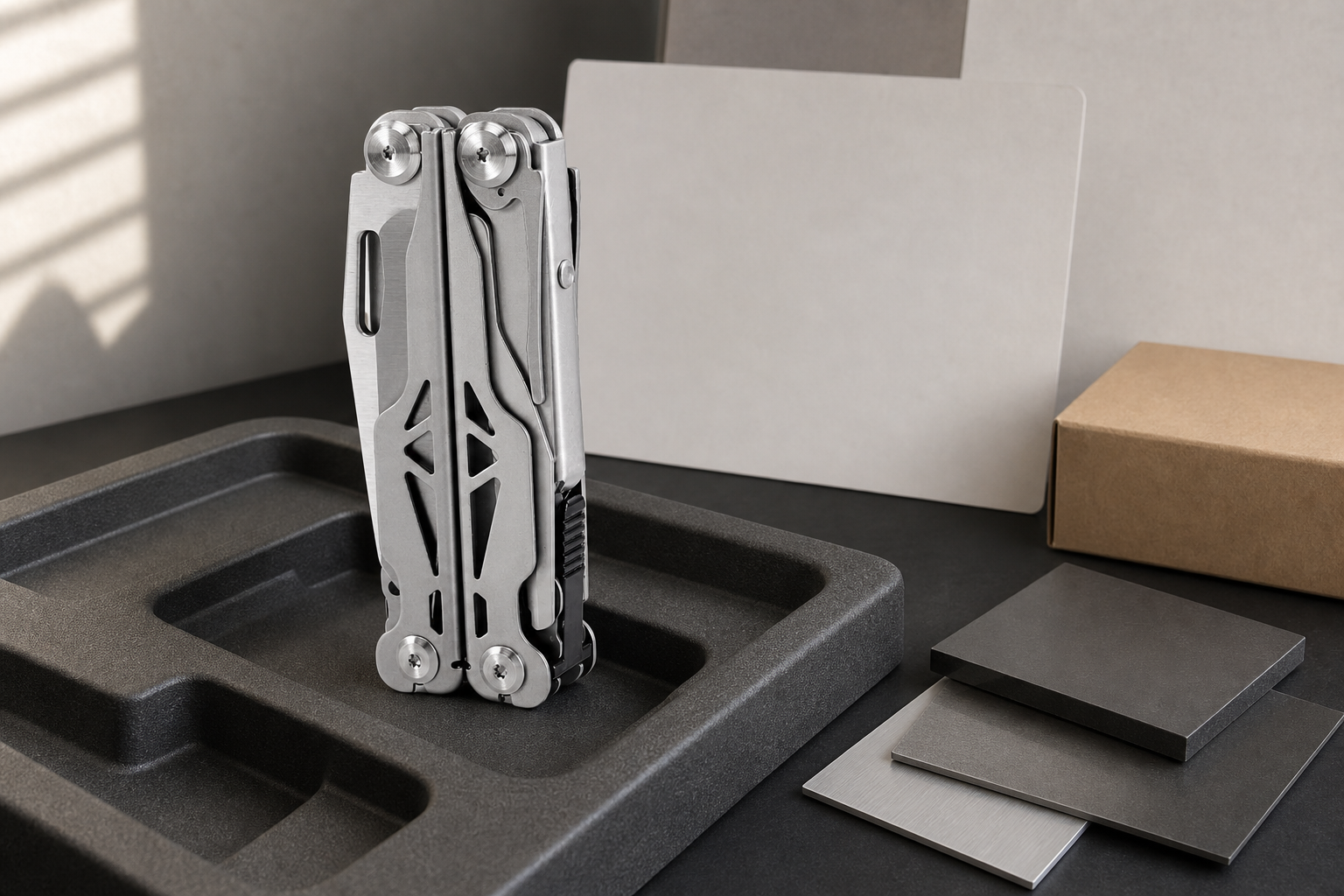
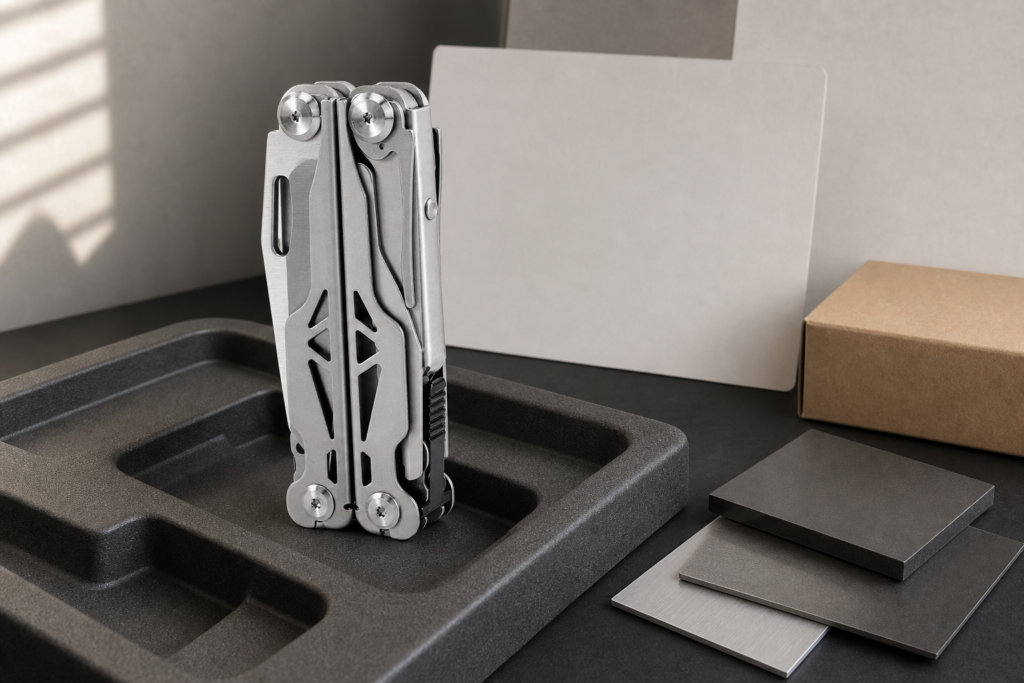
A multi-tool with too many features can look impressive but feel weak, bulky, and confusing. Feature count alone does not create value.
The most important multi-tool features are the ones that match the target user, daily tasks, size limit, safety need, price range, and production stability. OEM/ODM buyers should choose functions by use case, not by adding every possible tool into one product.
Quick buyer brief:
- Answer: Core features often include pliers, knife blade, scissors, screwdrivers, bit driver, bottle opener, can opener, file, saw, awl, ruler, pocket clip, lanyard hole, and locking or slip-joint control, but the right set depends on the market.
- Buyer context: This guide is for outdoor brands, EDC brands, tool brands, importers, wholesalers, distributors, private label buyers, and sourcing managers.
- Key checks: Target user, main tasks, tool count, folded size, weight, lock method, opening access, steel, handle material, pivot tolerance, spring tension, edge safety, corrosion resistance, packaging, instructions, QC checklist, MOQ, target price, and after-sale expectations.
Planning a custom multi-tool project?
Send your function list, reference photo, target quantity, and budget range. Vast State can review materials, tooling, assembly, inspection, and packaging options.
When I review a multi-tool project, I first ask what the buyer wants the user to do with it. A camping multi-tool, a daily pocket tool, a rescue-style utility tool, and a promotional tool should not share the same feature list. More functions can help sales photos, but they can also increase thickness, weight, assembly time, tolerance risk, and customer complaints. A better multi-tool is not the one with the longest feature list. It is the one where each feature has a clear job and works reliably in production.
Why Should Buyers Start With the User Instead of the Feature Count?
Feature lists can grow quickly. If the buyer starts there, the product may become bulky before the real use case is clear.
Buyers should start with the user because multi-tool value depends on task fit, carry comfort, ease of use, safety, price, and reliability, not only the number of tools.
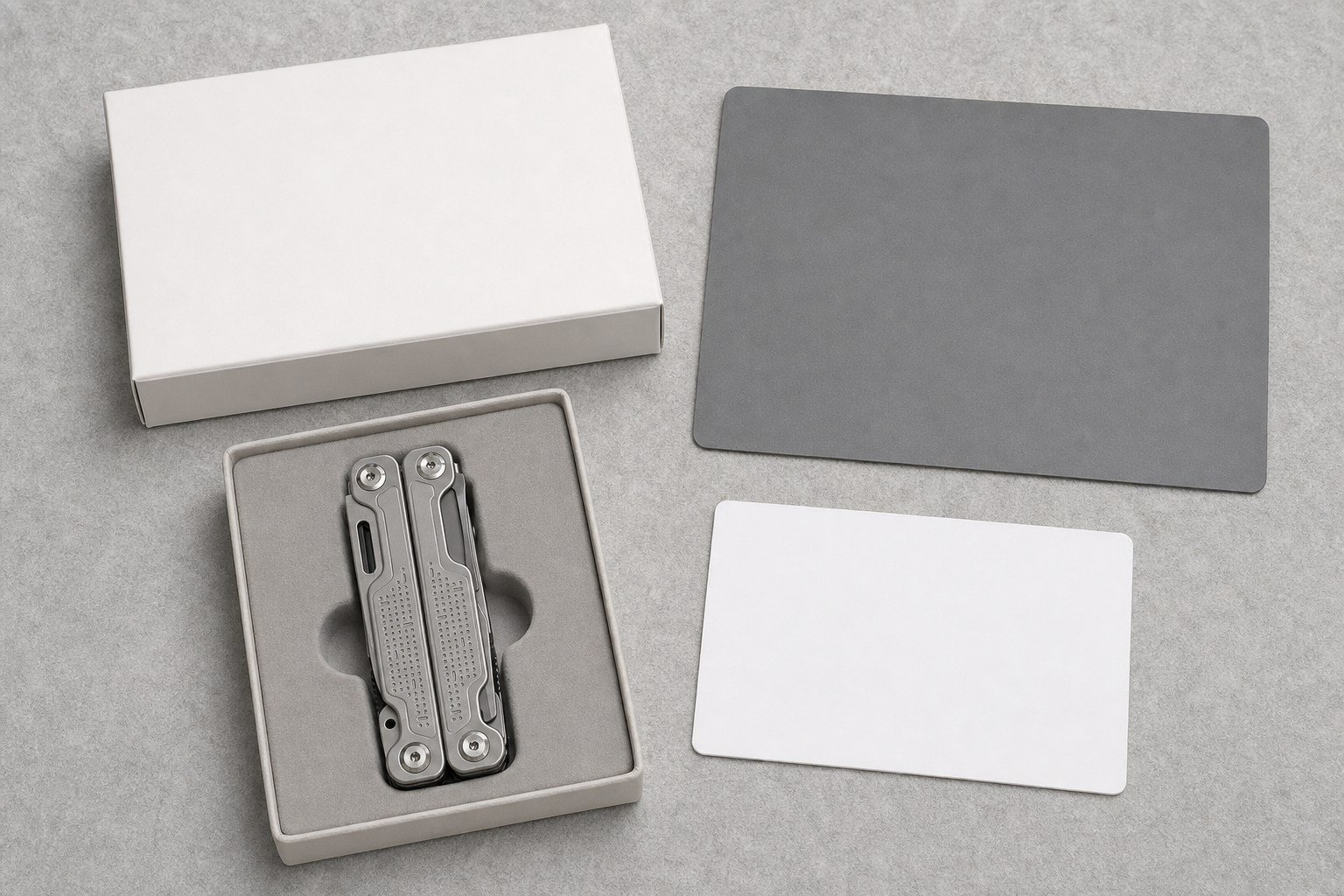
I Define the Tool Around Real Tasks
The first decision is not pliers or scissors. The first decision is the user. A warehouse worker, camper, car emergency kit buyer, EDC customer, and gift buyer all expect different things. If a buyer wants a compact pocket tool, I avoid adding too many thick internal tools. If the buyer wants an outdoor multi-tool, I check pliers, blade, saw, file, and opener functions more carefully. If the buyer wants a low-cost promotional item, I simplify the function set so the product still works at the price point.
The ISO page for ISO 9241-11:2018 describes usability as a framework that can apply to products and services. I use that idea in a practical way. A multi-tool should be judged by specified users, specified goals, and the real context of use. A feature that looks good in a listing can be useless if the user cannot access it easily or if it makes the tool too heavy to carry.
This is why I prefer a task map before a feature list. The buyer should identify the top three tasks, the acceptable size, the target price, and the sales channel. Then I can recommend a realistic function set. This saves sampling time and reduces arguments later.
| Buyer question | Why it matters | Practical result |
|---|---|---|
| Who will carry it? | Controls size and weight | Better feature selection |
| What tasks are common? | Controls function priority | Less feature waste |
| What price range is needed? | Controls materials and complexity | More realistic quote |
| Where will it sell? | Controls packaging and safety wording | Better market fit |
OEM/ODM RFQ Checklist
Prepare these details to help Vast State review your project and provide a more accurate quotation.
| RFQ Field | What to Prepare |
|---|---|
| Project type | OEM from drawing / ODM private label / wholesale catalog |
| Product category | Folding knife / fixed blade / multi-tool / outdoor tool |
| Design status | Idea / sketch / 2D drawing / 3D CAD / physical sample |
| Target price | Ex-factory target price or retail price range |
| MOQ expectation | 500 / 1,000 / 3,000 / 5,000+ pcs |
| Logo method | Laser engraving / etching / printing / molded logo |
| Packaging | Standard packaging / custom retail box / Amazon-ready |
| Market | USA / EU / Japan / Korea / Middle East / other |
| Compliance needs | Buyer-specified testing / documentation / labeling |
| Timeline | Sample deadline / mass production deadline |
Which Core Multi-Tool Functions Should Buyers Compare?
Some functions are useful across many products. Others are only useful when the target task justifies them.
Buyers should compare pliers, knife blade, scissors, saw, screwdrivers, bit driver, file, awl, openers, ruler, pocket clip, lanyard hole, and locking functions by usefulness, size, cost, and reliability.
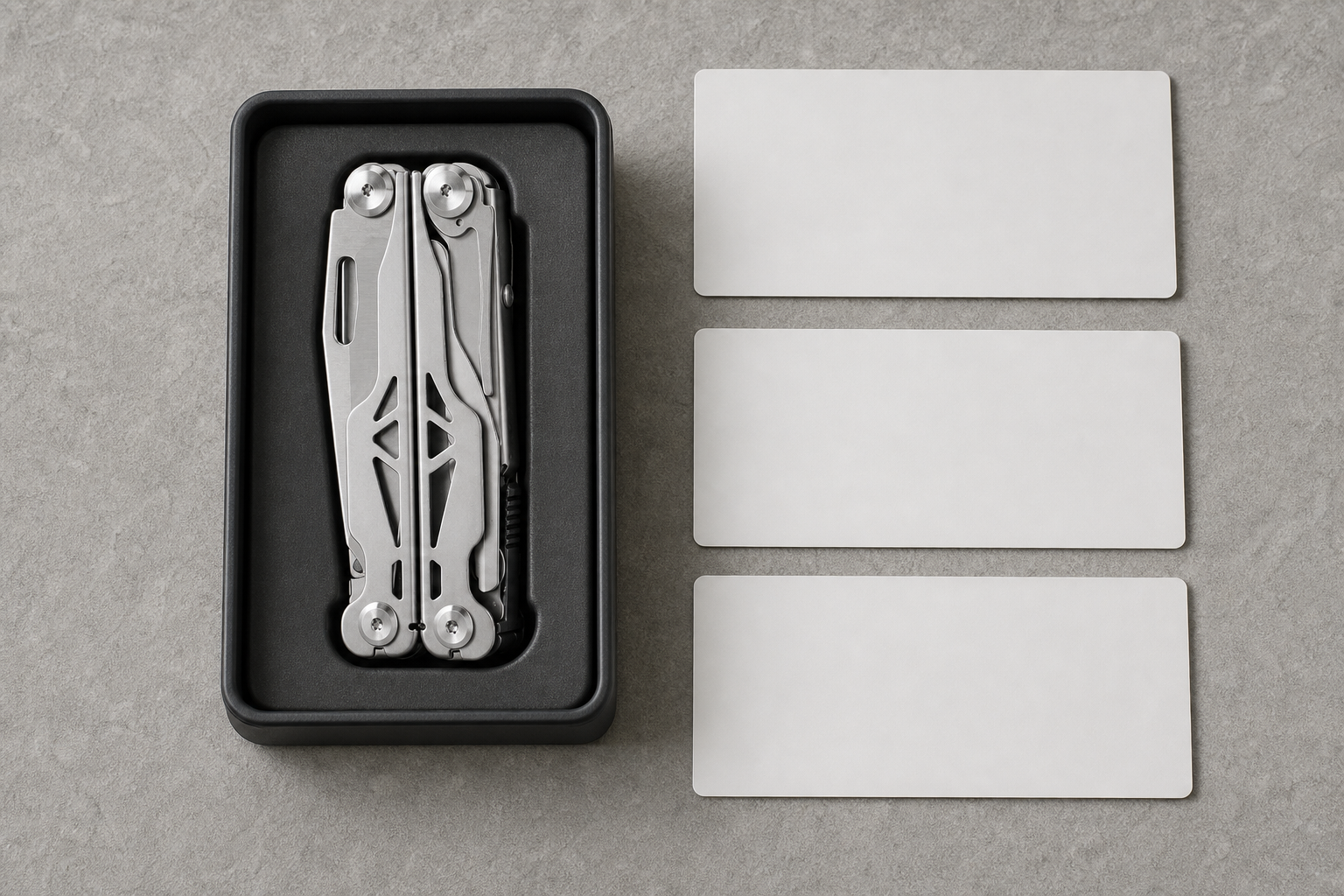
I Separate Must-Have Features From Nice-to-Have Features
A multi-tool usually needs one main reason to exist. If that reason is pliers, the plier head should be strong, aligned, and comfortable. If that reason is compact EDC, the tool should be slim enough for daily carry. If that reason is camping utility, the blade, saw, scissors, and openers may matter more. If that reason is a repair kit, screwdrivers, bits, and pliers may matter most.
I divide functions into three groups. The first group is core functions. These are the functions the buyer will show in marketing and the user will expect to work well. The second group is support functions. These add convenience but should not weaken the product. The third group is decorative or low-use functions. These may look good in a feature count but can create cost and complexity without enough value.
The CCOHS hand tool guidance on general hand tool operation says users should choose the right tool, use tools correctly, inspect tools, and maintain them. That principle matters for feature selection. A weak tool that exists only to raise feature count can encourage poor use. A smaller set of stronger functions is often better for the buyer's brand.
| Function group | Examples | Buyer decision |
|---|---|---|
| Core | Pliers, blade, scissors, drivers | Invest in quality and access |
| Support | File, openers, awl, ruler | Add when task supports them |
| Carry features | Clip, lanyard hole, sheath | Match channel and user habit |
| Risk features | Thin tools with weak pivots | Avoid if they reduce reliability |
How Should Buyers Evaluate Pliers and Wire-Cutting Functions?
Pliers often define a full-size multi-tool. If the plier head feels weak, the whole product feels cheap.
Buyers should evaluate pliers by jaw alignment, tip precision, wire cutter material, pivot strength, handle comfort, closing clearance, spring option, and real task fit.
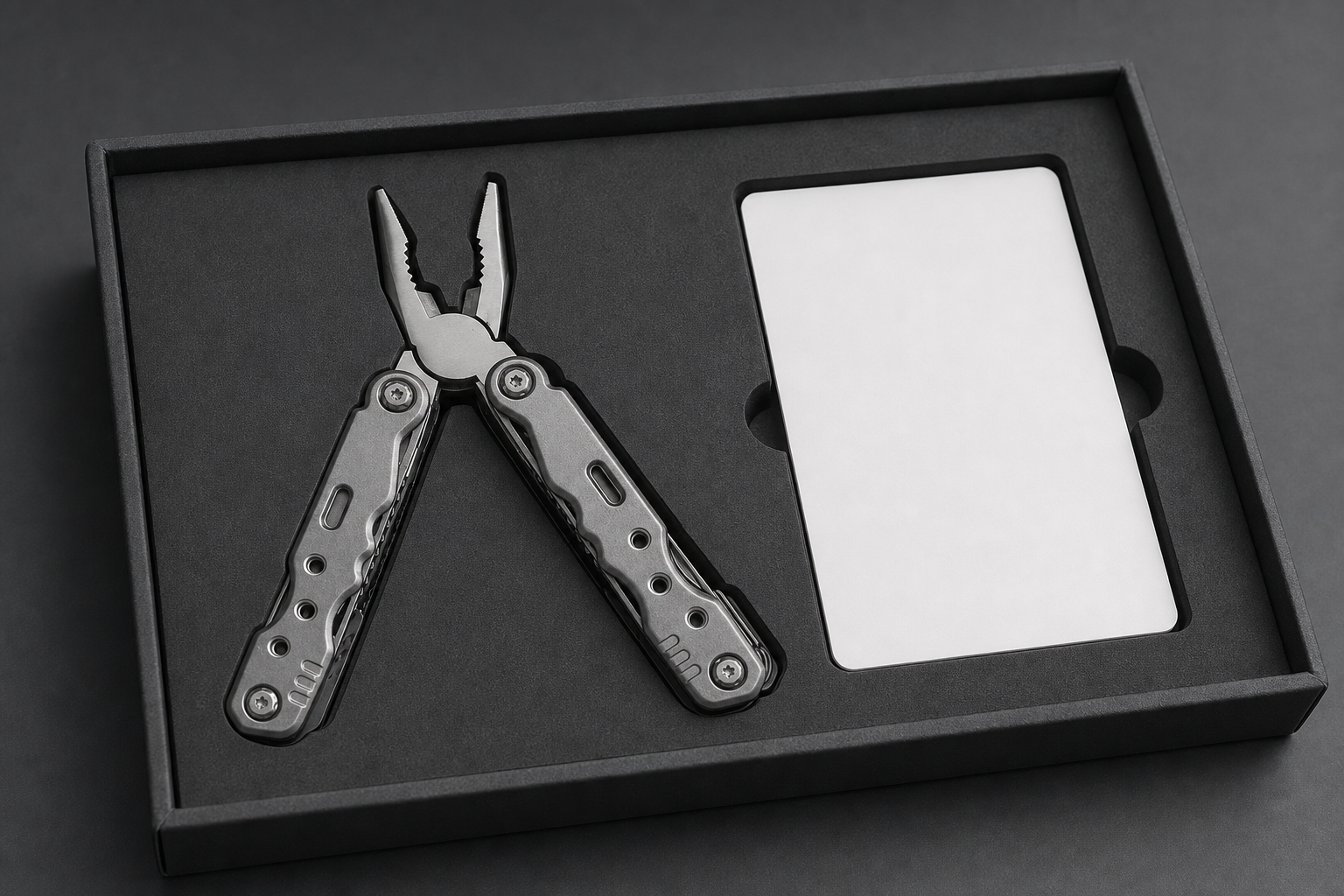
I Check the Jaw Before the Feature List
For plier-based multi-tools, the jaw is the heart of the product. The tips should meet properly. The teeth should be clean. The pivot should not feel loose. The handles should not pinch the user under reasonable pressure. If wire cutters are included, the buyer should decide whether they need light-duty cutting, replaceable cutter inserts, or only basic utility cutting. These choices change cost.
Needle-nose pliers are useful for precision tasks. Regular pliers can feel stronger for general grip. A combination jaw can support more tasks, but it must still be aligned. Spring-assisted pliers can improve one-hand convenience, but they add parts and QC points. A very compact plier head may look attractive, but it may not create enough grip for the target user.
The plier head also affects handle design. A stronger plier head usually needs a larger frame. A larger frame increases weight. If the buyer wants a pocket-size tool, we may need to reduce plier size or use a different product concept. This is where engineering and market positioning must meet.
I recommend testing pliers with realistic materials, not extreme claims. The tool should match its intended category.
| Pliers detail | What I check | Why it matters |
|---|---|---|
| Jaw alignment | Tip contact and tooth fit | Improves grip and precision |
| Pivot | Smooth movement and stability | Reduces wobble complaints |
| Wire cutter | Edge quality and material fit | Controls user expectation |
| Handle pressure | Pinch and comfort | Affects perceived quality |
How Should Buyers Specify Blades and Scissors Responsibly?
Blades and scissors are useful, but they create safety and quality expectations. Weak specification leads to complaints.
Buyers should specify blades and scissors by intended task, steel, edge geometry, opening access, lock or slip-joint control, sharpening expectation, safety wording, and QC standard.
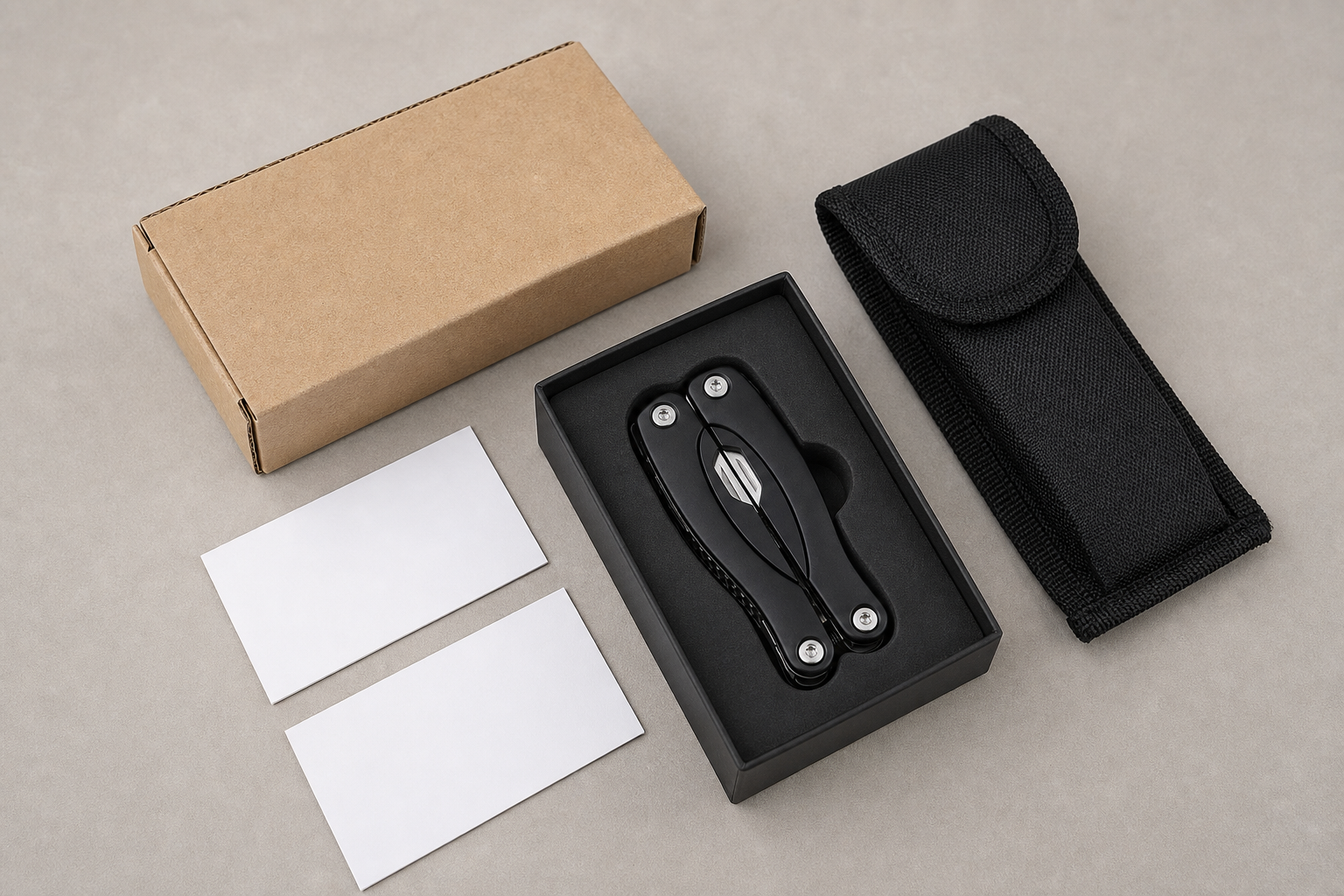
I Keep Cutting Tools Practical and Clear
The blade in a multi-tool should match the product purpose. A small utility blade may be enough for EDC packages, cord, and light cutting. An outdoor multi-tool may need a longer blade or saw, but the buyer should still avoid overstating the product. A multi-tool blade is usually a compact utility blade, not a replacement for every fixed blade, saw, axe, or workshop tool.
Scissors can be very valuable when they are well-made. They can cut paper, thread, fishing line, tape, and light packaging. But scissors add spring tension, pivot alignment, edge contact, and fatigue risk. Poor scissors damage the whole product impression. If scissors are a core feature, I check the pivot, spring, blade overlap, opening feel, and closed clearance.
Sharp tools need clear instructions. CCOHS sharp-blade guidance explains that users should use the right tool, keep blades sharp, use stable surfaces, and avoid using knives for jobs they were not designed for. I turn that into product language by keeping blade claims practical. The packaging should explain basic safe use without turning the article into legal advice.
For B2B buyers, the cutting tools deserve more attention than decorative functions because users notice them quickly.
| Cutting feature | Specification point | Buyer risk |
|---|---|---|
| Knife blade | Steel, edge, lock, access | Dull edge or unsafe wording |
| Scissors | Spring, pivot, overlap | Weak cutting or loose action |
| Saw | Tooth pattern and thickness | Binding or poor material fit |
| Safety wording | Intended use and storage | Misuse and complaints |
How Should Drivers, Bits, Files, and Openers Be Selected?
Small tools can make the product useful, but they also take space. Buyers should avoid filler functions.
Drivers, bits, files, and openers should be selected by the target repair task, tool reach, material strength, handle leverage, corrosion resistance, and whether the user can access them easily.
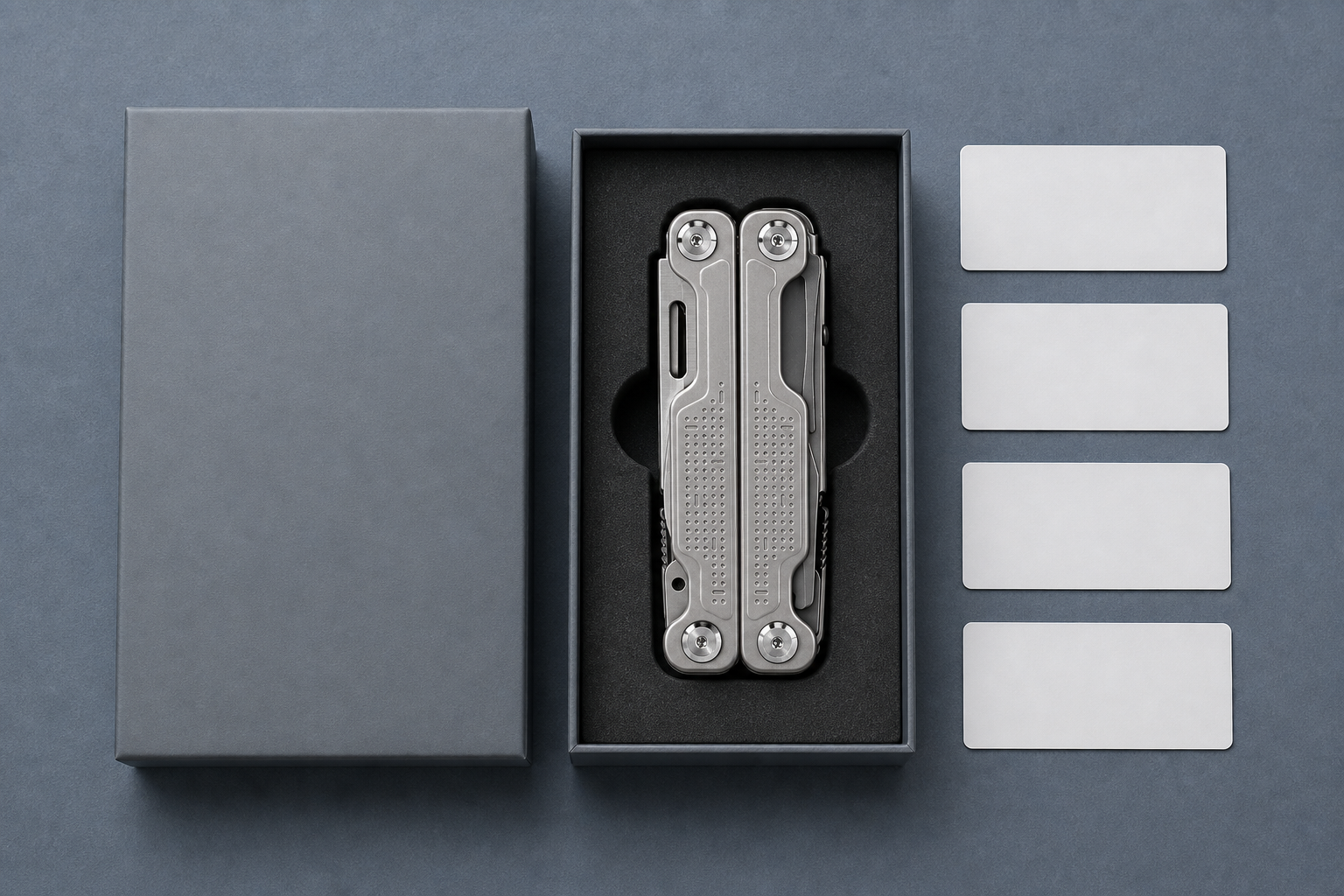
I Check Access and Leverage
Screwdrivers are easy to list but not always easy to use. A driver can be too short, too soft, too thick, or placed at an awkward angle. If the user cannot reach a screw, the feature becomes less valuable. A bit driver can add flexibility, but it needs a secure holder and enough handle leverage. Bits can also increase packaging cost and create missing-part complaints if not retained properly.
Files are useful for light shaping, deburring, and nail-care style tasks depending on the product. But file teeth must be clean and suitable for the intended material. A file that looks good but cuts poorly will disappoint users. Bottle openers and can openers are common support functions. They are simple, but they still need correct geometry and edge finishing.
The buyer should consider how often each function will be used. A tool that is rarely used but consumes a thick layer may not be worth it. If the buyer needs a slim product, I may recommend fewer drivers or a separate bit kit. If the product is for a repair kit, I may recommend a stronger driver system and fewer outdoor-specific features.
| Function | Useful when | Watch point |
|---|---|---|
| Flat driver | Simple repair tasks | Tip strength and reach |
| Bit driver | More screw types | Bit retention and packaging |
| File | Light finishing tasks | Tooth quality and material fit |
| Opener | Camping and utility sets | Smooth edges and correct geometry |
How Do Locks, Handles, and Ergonomics Change Multi-Tool Usability?
A multi-tool can have good functions but still feel awkward. Usability decides whether people keep carrying it.
Locks, handles, and ergonomics affect access, safety, grip comfort, one-hand or two-hand use, pocket carry, fatigue, and perceived quality.
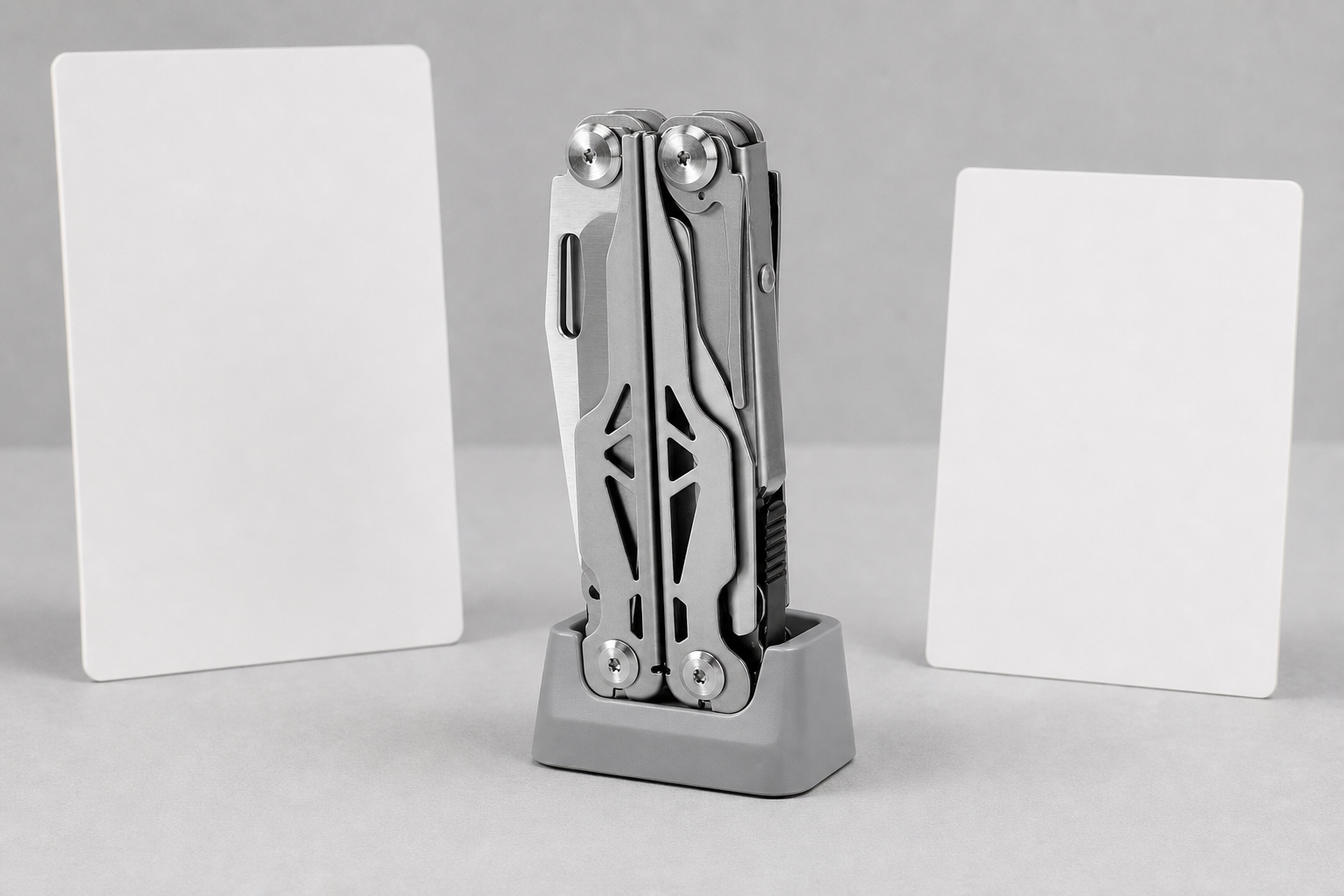
I Care About How the Tool Feels in the Hand
Usability is where many multi-tool projects succeed or fail. If the handle edges are sharp, the tool feels uncomfortable under plier pressure. If the tools are hard to access, users stop using them. If the lock is unclear, users may feel unsafe. If the product is too heavy, users may leave it at home. Every feature must live inside the same frame, so each added function changes the hand feel.
Locking tools can improve confidence for some functions, especially blades and saws. But locks add parts, assembly time, and sometimes market restrictions. Slip-joint tools may be simpler and thinner, but they require clear user expectations. The buyer should check the target market before choosing lock type and opening method.
Handle texture also matters. Stainless handles can look clean but may feel slippery. Aluminum can reduce weight. G10 or textured inserts can improve grip but add machining and assembly cost. The best handle is not only attractive. It must support the main task.
For private label buyers, I recommend handling real samples before final approval. Photos cannot show pinch points, stiffness, or spring tension.
| Usability factor | User-facing result | Buyer check |
|---|---|---|
| Lock type | Confidence and safety | Market fit and assembly stability |
| Tool access | Ease of use | Nail nick, tab, or outside access |
| Handle edge | Comfort under pressure | Chamfer and finish control |
| Weight | Carry habit | Match size to target user |
How Do Materials and Surface Finishes Affect Durability?
Multi-tools have many moving parts. Material choices affect corrosion, wear, edge quality, and long-term feel.
Materials and finishes affect durability through blade steel, plier steel, handle material, pivot hardware, springs, coatings, corrosion resistance, wear resistance, and cleaning needs.
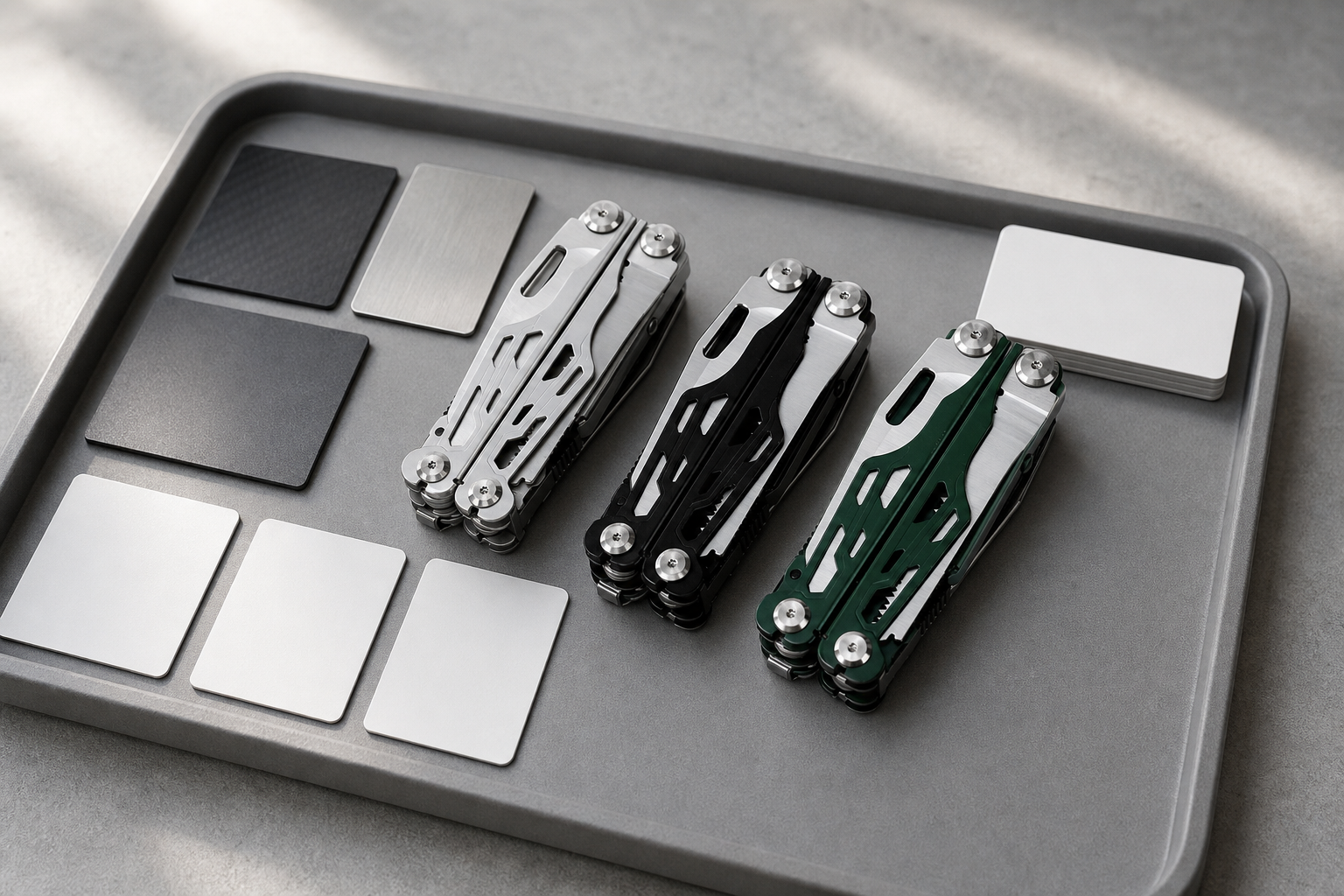
I Match Material to Function, Not Only Price
A multi-tool is not one material decision. The blade may need better edge performance. The pliers may need strength and toughness. The drivers may need tip wear resistance. The springs need fatigue resistance. The handles need comfort and corrosion resistance. If the buyer uses one material logic for every part, the product may fail in small but important ways.
Stainless steel is common because corrosion resistance matters for pocket and outdoor tools. But stainless steel still needs correct heat treatment, surface finishing, and maintenance guidance. Coatings can create a tactical or premium look, but they can wear at contact points. Stonewash can hide scratches. Satin can look cleaner. Polishing can look premium but may show fingerprints. The finish should match the target market.
For cutting tools, steel and geometry work together. A premium steel will not help if the edge is too thick or heat treatment is unstable. A practical steel can perform well when the geometry and process are controlled. Buyers should request material grade, hardness target, finish, and any corrosion expectations clearly.
| Component | Material focus | Buyer concern |
|---|---|---|
| Blade | Edge and corrosion balance | Steel, hardness, grind |
| Pliers | Strength and alignment | Jaw material and heat treatment |
| Drivers | Tip wear resistance | Soft tips cause complaints |
| Handles | Grip and corrosion | Texture, finish, and weight |
What Manufacturing Risks Appear When Too Many Features Are Added?
A crowded multi-tool is harder to assemble and inspect. Every extra part creates another tolerance relationship.
More features can increase thickness, weight, pivot stack complexity, spring tuning, lock adjustment, part interference, assembly time, defect rate, MOQ pressure, and cost.
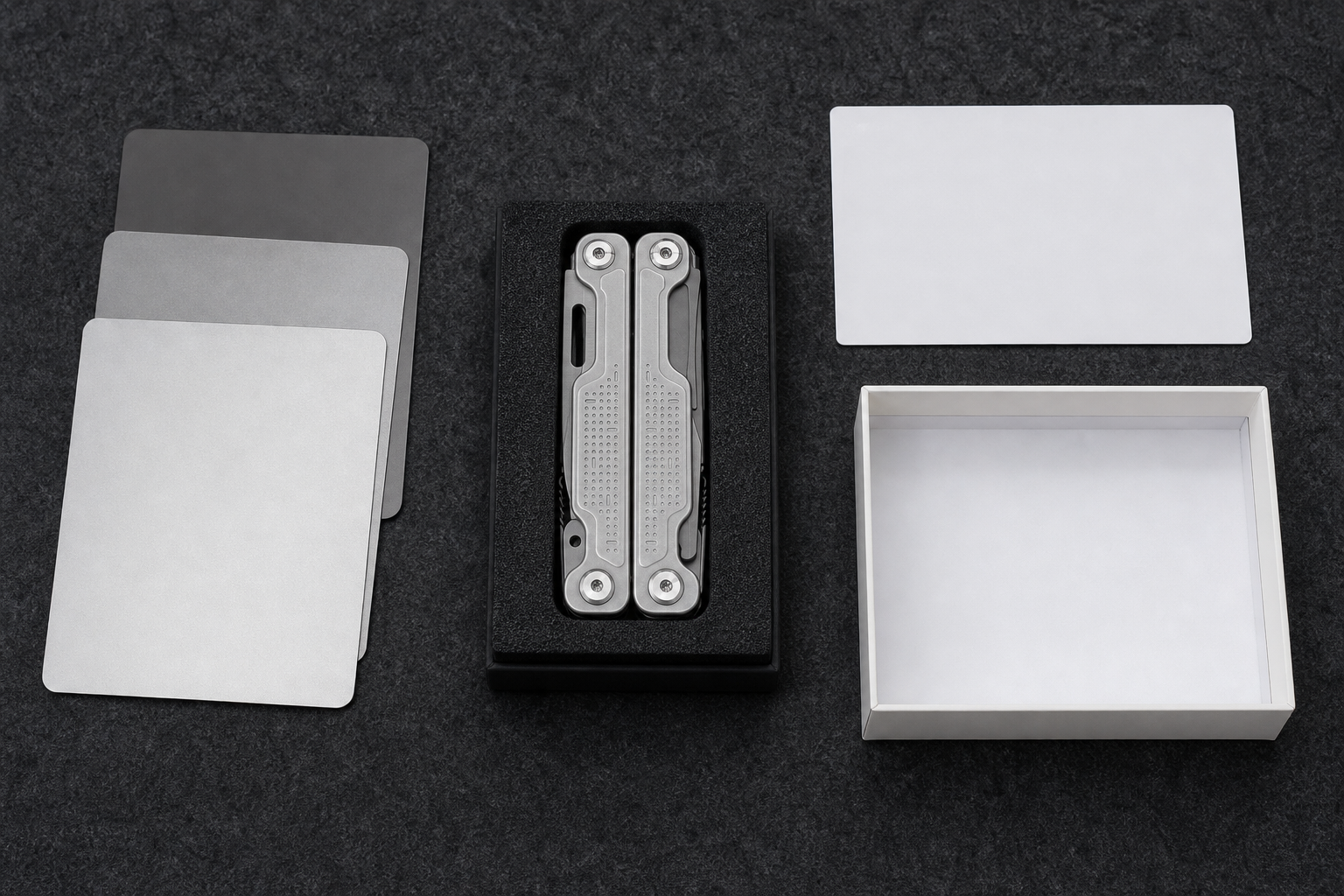
I Watch the Pivot Stack Closely
The pivot stack is one of the hardest parts of multi-tool design. Each layer has thickness. Each washer, spring, spacer, and tool must fit. If one layer is too thick, tools may rub. If one spring is too strong, access becomes difficult. If one tool is too loose, the buyer gets a quality complaint. If the frame is too narrow, the product may bind after finishing.
Dimensional control matters because multi-tools are compact mechanical assemblies. The NIST page on dimensional metrology connects measurement with manufacturing improvement and detailed part information. In multi-tool manufacturing, measurement discipline helps control pivot holes, tool thickness, spacer height, handle alignment, and closed-tool clearance.
Feature count also affects inspection. A 12-function tool may have many more test points than a 6-function tool. The buyer should budget time and cost for those checks. If the target price is tight, a simpler tool may deliver better value.
I always ask whether each feature earns its place. If not, it may be better to remove it and improve the core functions.
| Manufacturing risk | Cause | Buyer response |
|---|---|---|
| Tool rubbing | Poor stack control | Define thickness tolerance |
| Loose action | Pivot or spring variation | Inspect movement and play |
| Heavy product | Too many layers | Reduce low-value tools |
| Higher reject rate | More interaction points | Simplify or raise QC budget |
What Safety, Packaging, and Compliance Wording Should Buyers Plan?
Good functions still need responsible instructions. Buyers should not wait until shipment to think about wording.
Buyers should plan safety wording, age or market warnings where applicable, proper-use limits, edge protection, packaging retention, care instructions, and target-market compliance review before mass production.
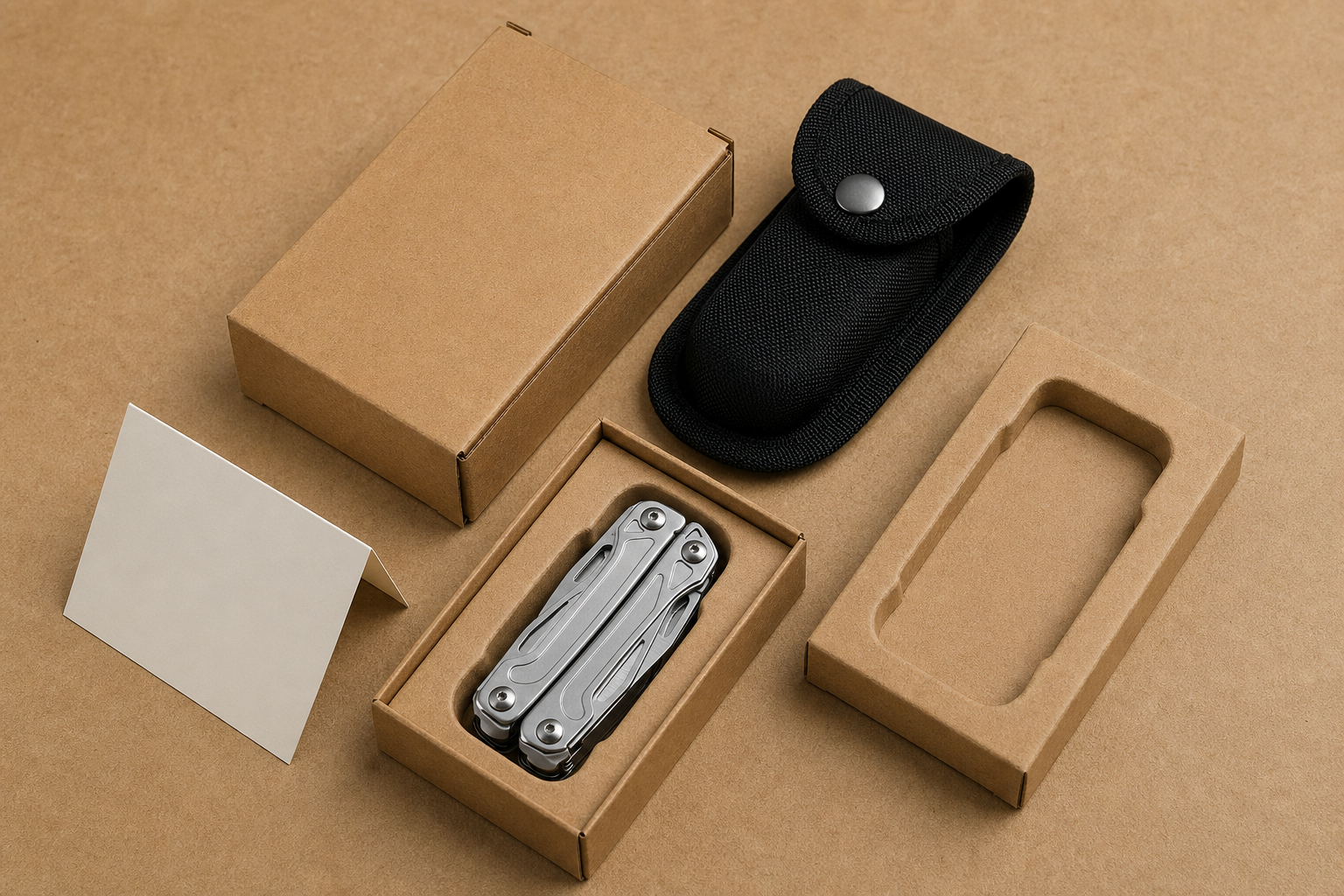
I Keep the Product Promise Responsible
Multi-tools should be positioned as practical tools. Product copy should explain utility tasks, outdoor use, repair use, camping use, or EDC convenience without making unsafe or exaggerated claims. If the tool includes a blade, saw, or awl, packaging should include basic safe-use and storage language. If the tool is sold in multiple markets, the buyer should review local requirements before confirming blade length, lock type, opening method, and labeling.
OSHA's hand and power tool overview says tools can cause severe injuries when used or maintained improperly. CCOHS also recommends choosing the right tool and maintaining tools carefully. I use these ideas to keep packaging language clear. The user should know the tool has sharp edges. The user should inspect it before use. The user should store it closed. The user should not use it for tasks beyond its design.
Packaging should also protect the product. Tools should not open inside the box. The blade should not cut the insert. Bits should not fall out. The product should not rub against a printed card or blister in a way that scratches the finish. For retail, the buyer should also consider how the customer will understand the feature set from the package.
| Packaging topic | What to control | Why it matters |
|---|---|---|
| Safety wording | Sharp edges and proper use | Reduces misunderstanding |
| Product retention | Tool closed during shipping | Protects product and user |
| Accessory storage | Bits and small parts secure | Reduces missing-part complaints |
| Market review | Local rules and labeling | Supports responsible launch |
What QC Checks Protect Multi-Tool Repeat Production?
A multi-tool may pass visual inspection but fail in action. Buyers need functional checks, not only appearance checks.
QC should check tool access, lockup, spring tension, blade sharpness, scissors cutting, plier alignment, driver tips, pivot play, corrosion marks, finish consistency, packaging, and sample conformity.
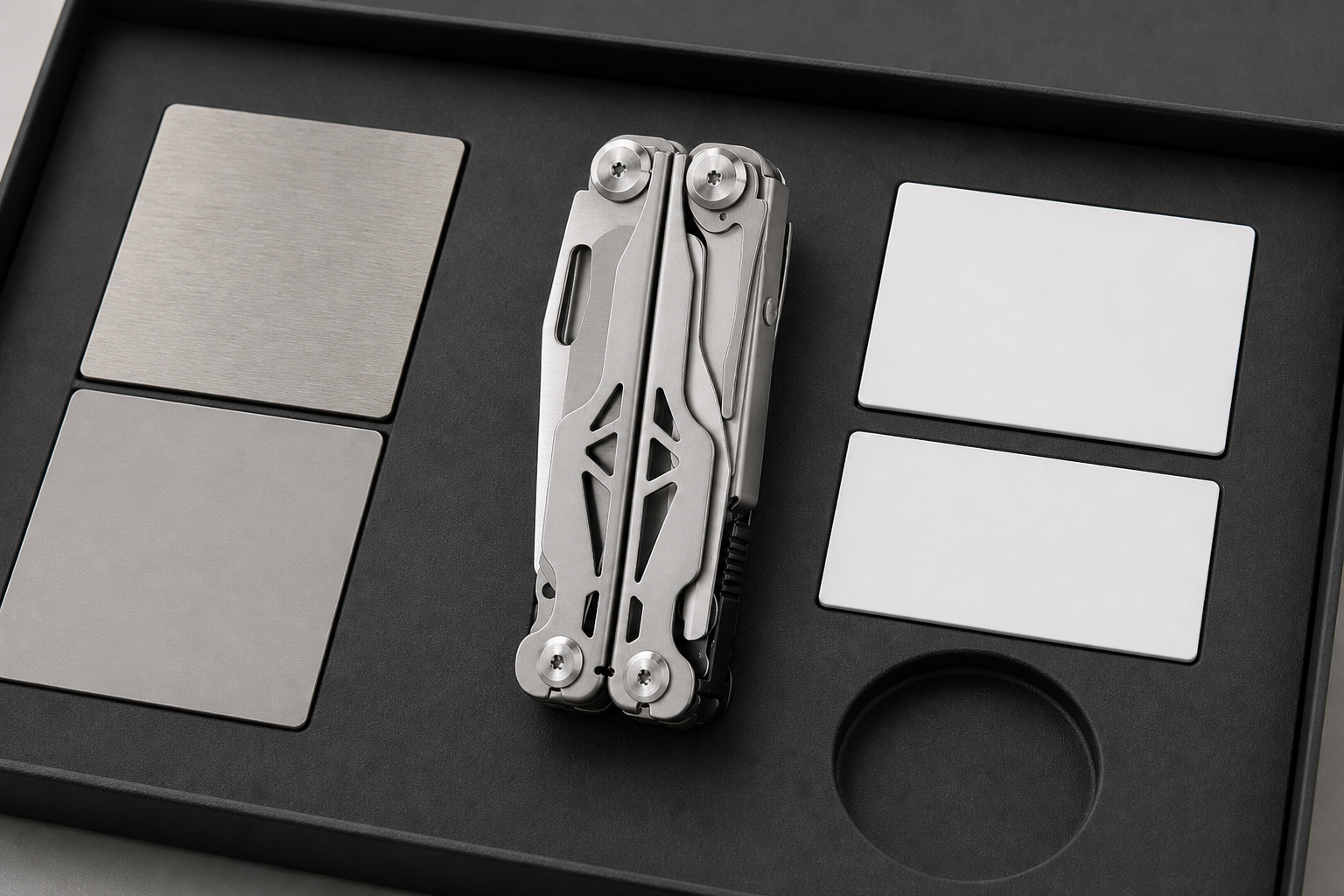
I Inspect Function by Function
Final inspection should follow the feature list. If the tool has pliers, check alignment and movement. If it has scissors, check spring action and cutting. If it has a blade, check sharpness, edge symmetry, and lock or slip-joint behavior. If it has drivers, check tip shape and hardness expectation. If it has a bit holder, check retention. If it has a clip, check screw tightness and alignment.
ISO describes ISO 9001 as a quality management standard that helps organizations meet customer expectations and maintain a quality management system. This process thinking is useful for multi-tools because final inspection alone cannot fix unstable components. Incoming material checks, part checks, assembly checks, and final function checks all matter.
Boundary samples are very helpful. The buyer and factory should agree on acceptable and unacceptable tool play, spring stiffness, finish marks, lock feel, plier alignment, and packaging condition. Without boundary samples, inspection becomes subjective.
For repeat orders, I compare production pieces with the approved sample. A good multi-tool should feel consistent across the batch. The user should not feel that one tool is smooth and the next one is rough.
| QC area | What to check | Buyer protection |
|---|---|---|
| Pliers | Alignment, grip, cutter | Protects main function |
| Blades and scissors | Sharpness and movement | Protects user experience |
| Drivers and bits | Tip fit and retention | Reduces repair complaints |
| Overall assembly | Play, rub, lock, finish | Supports repeat quality |
What Should Buyers Put in a Multi-Tool RFQ?
A vague RFQ creates guesses. Multi-tools need clear function priorities before the supplier can quote well.
Buyers should include target user, main tasks, function list, size, weight target, materials, lock type, finish, packaging, accessories, MOQ, target price, market, and QC expectations.
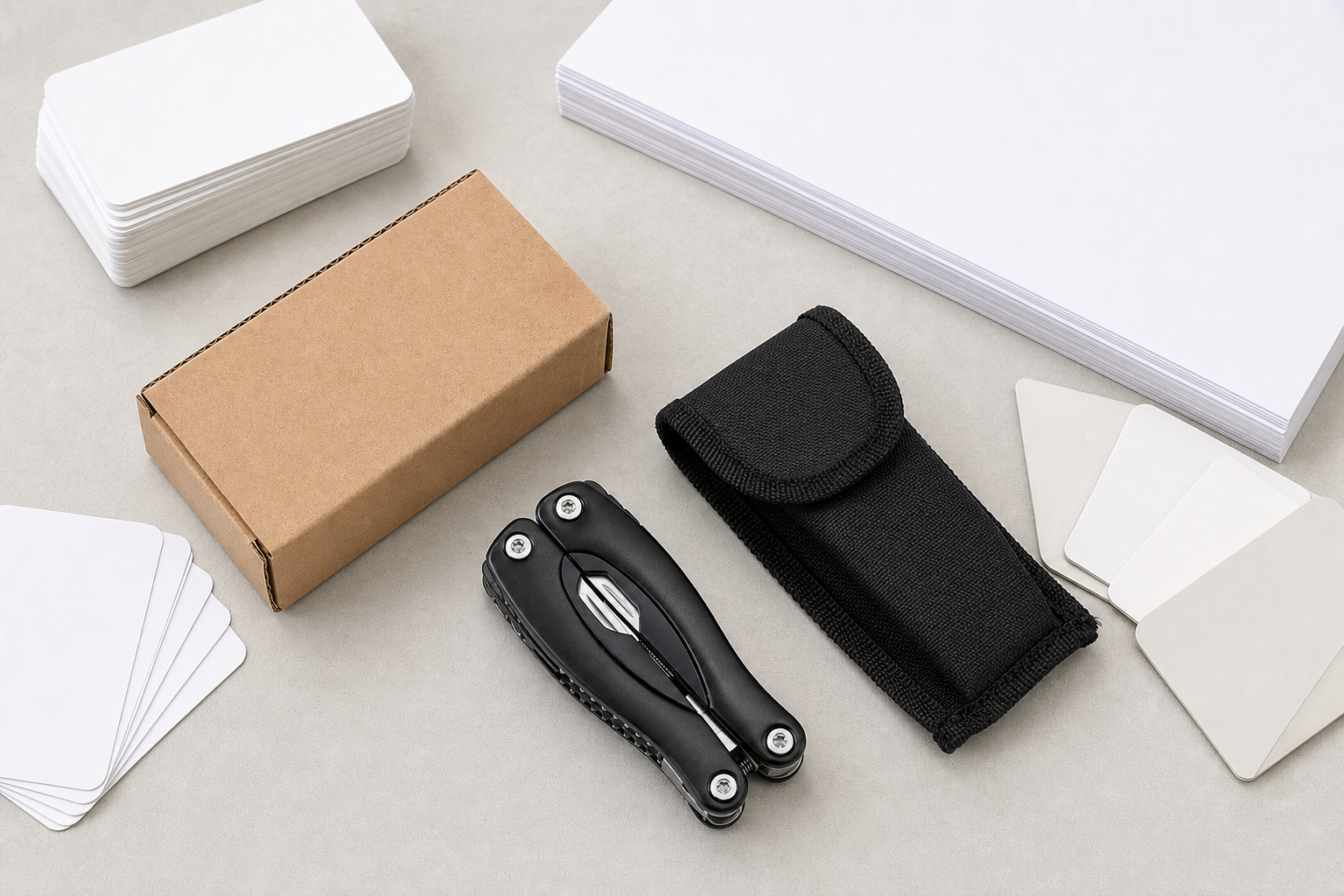
I Ask Buyers to Rank the Functions
The most useful RFQ does not only say "multi-tool with many functions." It tells me which functions matter most. If pliers are the main function, I focus on the plier head and handle frame. If scissors are important, I focus on the spring and blade overlap. If drivers are important, I review bit options and torque expectations. If compact carry is the priority, I reduce the function list.
The RFQ should include the target market, product tier, estimated order quantity, target price, preferred materials, finish, size range, weight limit, required functions, optional functions, lock or non-lock preference, packaging style, logo method, and any compliance or instruction needs. It should also include reference files if available.
I also like to know the buyer's problem. Is the buyer trying to reduce cost? Improve quality? Develop a new private label line? Replace a current supplier? Improve packaging? Speed up sampling? These details help me give practical suggestions instead of only a price.
For ODM projects, a clear RFQ lets the factory propose a better feature set. Sometimes the right solution is fewer functions with better quality.
| RFQ detail | What to include | Why it helps |
|---|---|---|
| Function priority | Core and optional tools | Prevents feature overload |
| Size and weight | Folded dimensions and target weight | Supports carry comfort |
| Materials | Steel, handle, hardware | Controls performance and cost |
| Commercial target | MOQ, price, market, packaging | Keeps project practical |
How Can Vast State Support Multi-Tool Feature Development?
Multi-tool projects need practical engineering support. Copying a feature list is not enough for stable production.
Vast State supports multi-tool development through OEM/ODM review, function planning, prototype development, material selection, structure suggestions, packaging customization, production follow-up, and practical quality control.
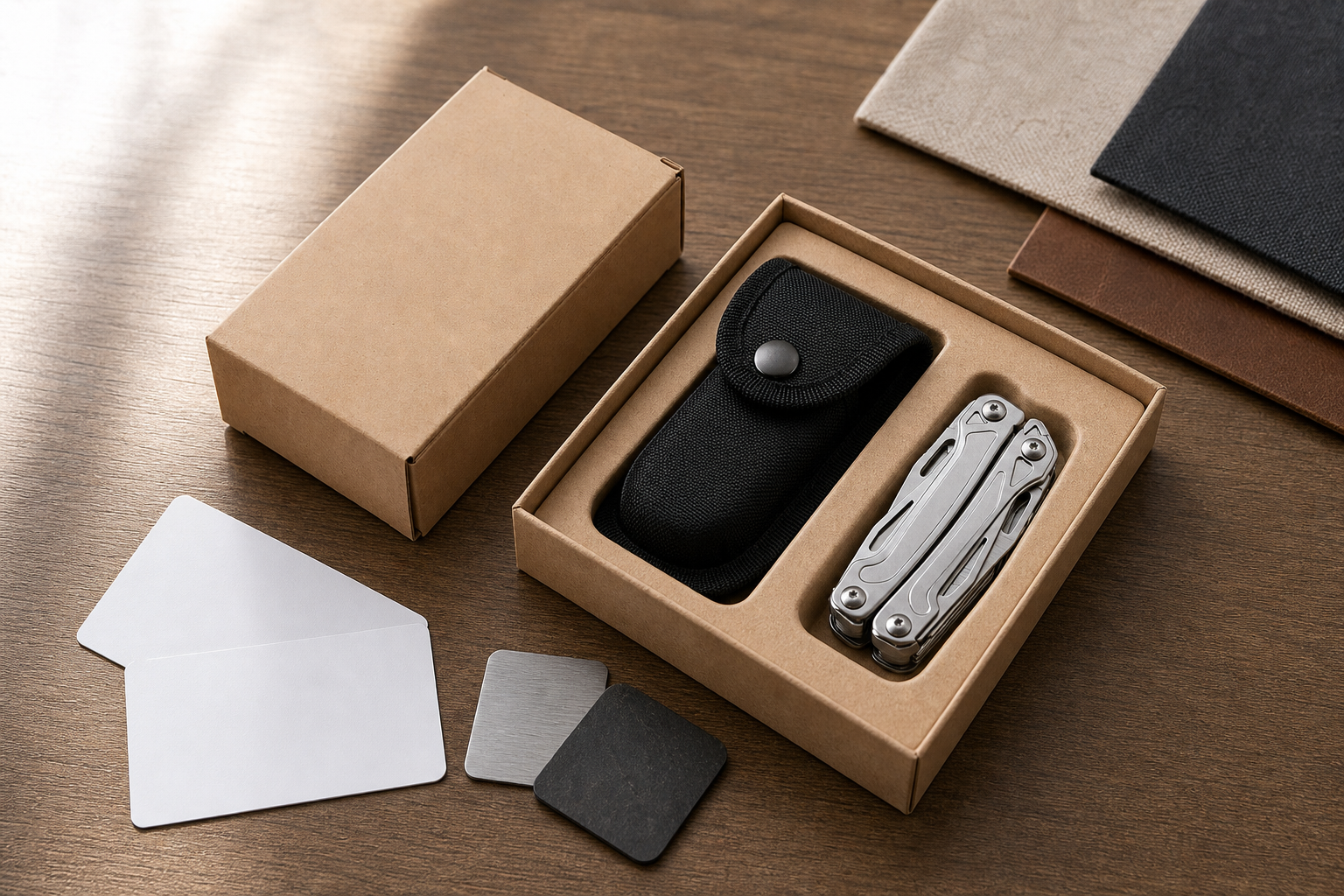
I Help Buyers Choose Features That Can Be Built Well
At Vast State, I support buyers from concept to production. For multi-tools, that means I review the function set, structure, material plan, handle frame, tool access, spring tension, locking needs, packaging, and inspection plan. I do not want customers to add functions that create cost without real value. I want the product to fit the buyer's market and repeat well in production.
Some customers already have a design. I review whether the feature stack is realistic, whether the parts can be assembled smoothly, and whether the cost matches the target price. Some customers only have a market direction. I help turn that direction into a manufacturable feature plan. This may include reducing the function count, improving pliers, changing handle material, choosing a better finish, or adjusting packaging.
For B2B customers, communication matters as much as production. Buyers need clear suggestions about cost, lead time, MOQ, sample risk, and repeat-order stability. A multi-tool project has many small parts, so small misunderstandings can become real production [TRUNCATED: see Source Markdown File for full content]
Ready to develop a custom multi-tool?
Send your function list, reference photo, target quantity, and budget range. Vast State can help turn it into a manufacturable OEM/ODM specification.