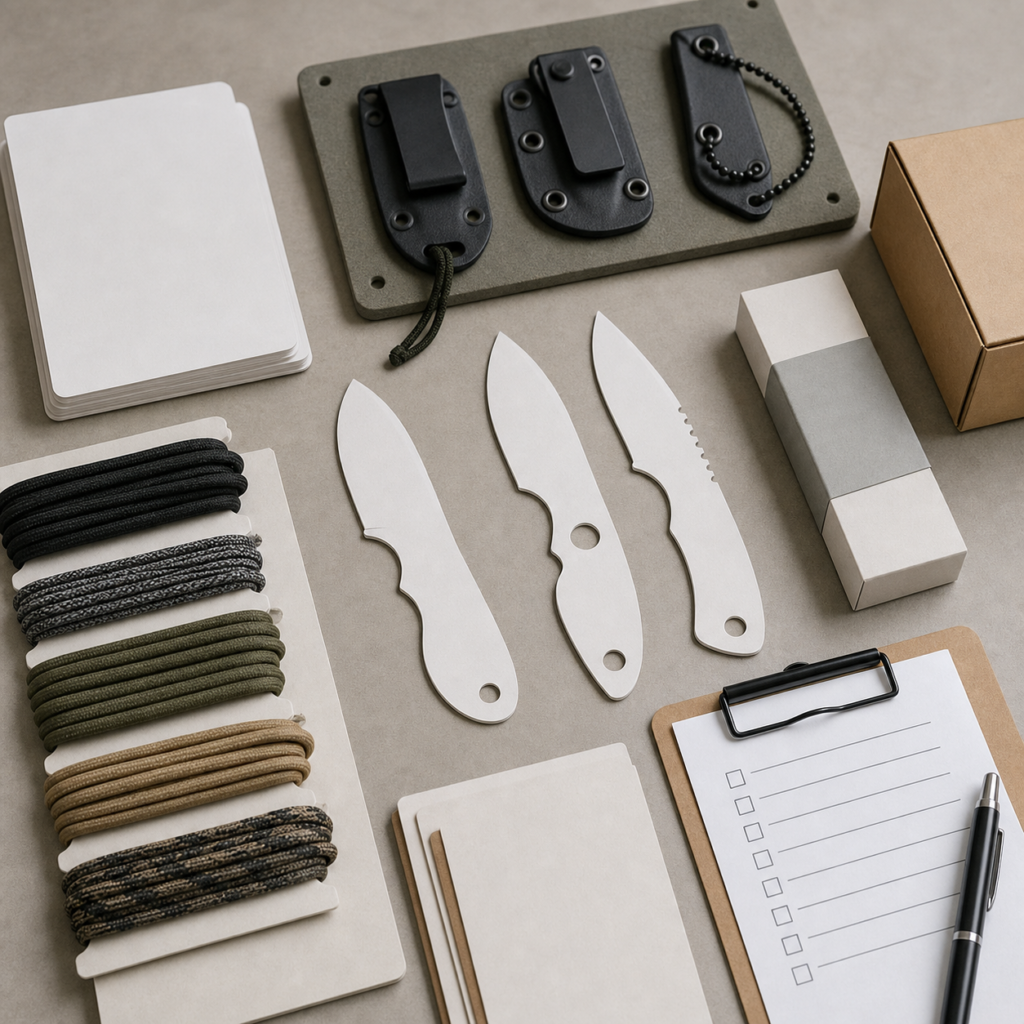
A neck knife can look easy to source. But poor wording, weak sheath retention, or a risky cord design can create real sales problems.
B2B buyers should check fixed-blade classification, target-market rules, sheath retention, neck cord safety, product copy, age and channel policies, import documents, and QC records before selling neck knives. This article is sourcing guidance, not legal advice or user technique instruction.
Quick buyer brief:
- Answer: Treat a neck knife as a product-safety, compliance, and packaging project.
- Buyer context: Useful for knife brands, outdoor brands, importers, wholesalers, distributors, and private label buyers.
- Key checks: Fixed-blade specs, sheath lock, neck cord, warning copy, channel policy, QC, and RFQ details.
Planning a private-label knife line for this market?
Use this article as an early planning reference, then prepare your target market, product category, labeling needs, and buyer-specified compliance requirements before production.
When I review a neck knife project, I remove the drama first. The buyer may have seen search demand around personal safety, outdoor utility, or compact fixed blades. But a manufacturer should not build the product around technique claims. I look at the physical product and the sales channel. The blade, sheath, cord, clip, warning note, carton, and target market all matter. A good B2B article should help the buyer avoid avoidable mistakes before sample development, packaging approval, or mass production.
Why Should Buyers Avoid Technique-Based Neck Knife Marketing?
Technique-focused content may bring traffic. It can also create unsafe expectations, channel rejections, and legal review problems.
Buyers should position neck knives as compact fixed-blade tools only where lawful and suitable, and avoid instructions, aggressive claims, or promises about personal protection outcomes.
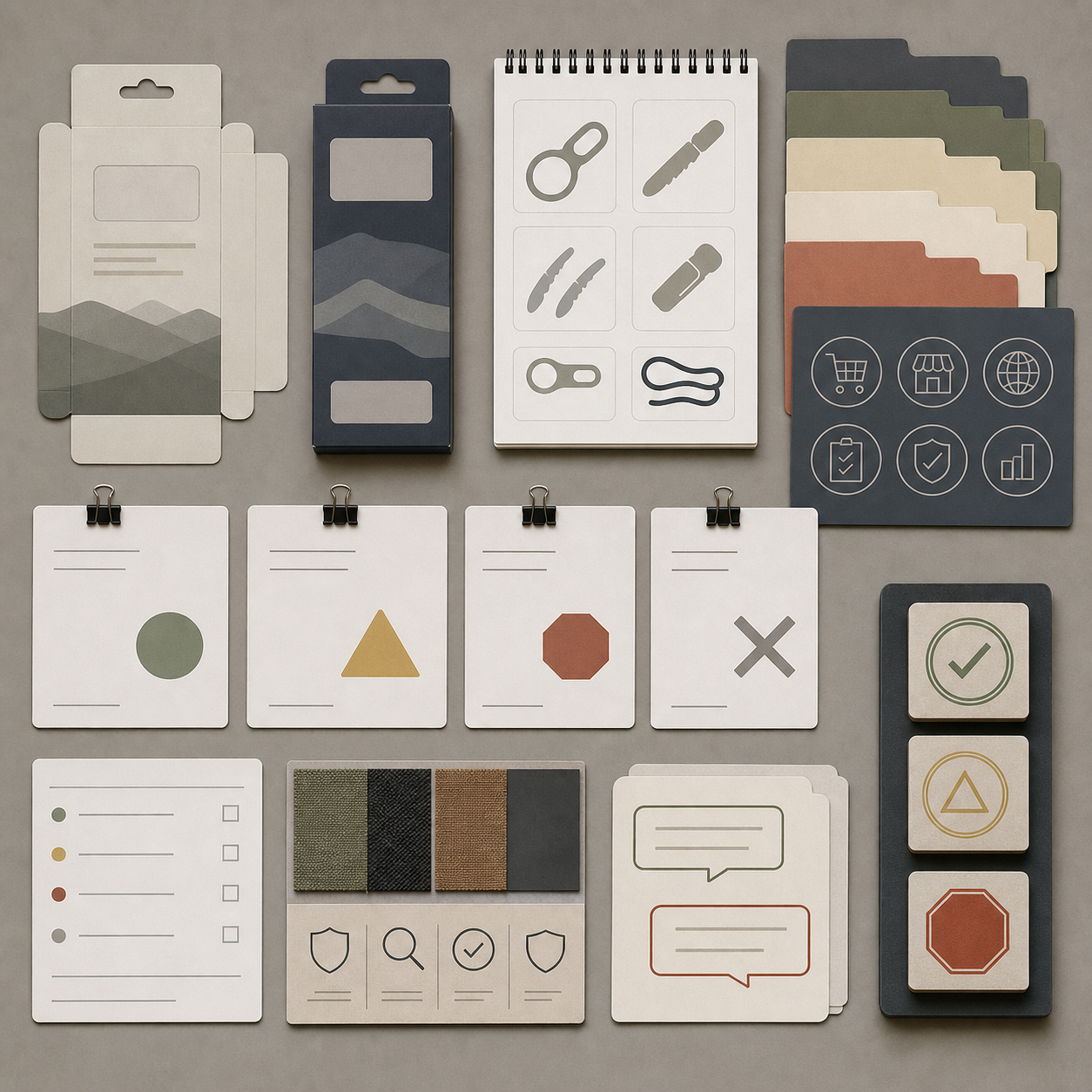
I Keep the Product Language Practical
The original topic mentions techniques and legal considerations. I would not write or publish technique content for a knife brand. It can be unsafe, and it can also make a retailer or marketplace uncomfortable. For B2B buyers, the better angle is product review. What is the intended lawful market? Is the product a compact outdoor fixed blade, a utility SKU, a fishing tool, or a small camp accessory? Does the sales channel allow this format? Does the product page avoid claims that the buyer cannot support?
I prefer simple language. A neck knife can be described by blade length, steel, handle material, sheath type, retention, cord type, weight, finish, and care instructions. I avoid promises about how a person should use it in conflict. I also avoid emotional names and images that create a poor brand signal. If a buyer needs legal wording, counsel should review it. The factory can support neutral packaging, clear specifications, safer cord choices, and consistent QC records.
| Marketing choice | Safer B2B approach | Why it matters |
|---|---|---|
| Product name | Compact fixed blade or outdoor neck knife | Keeps language factual |
| Product photos | Product-only images and packaging views | Reduces risky impression |
| Product copy | Specs, material, sheath, care, channel note | Supports retail review |
| Claims | Avoid outcome promises | Reduces unsupported messaging |
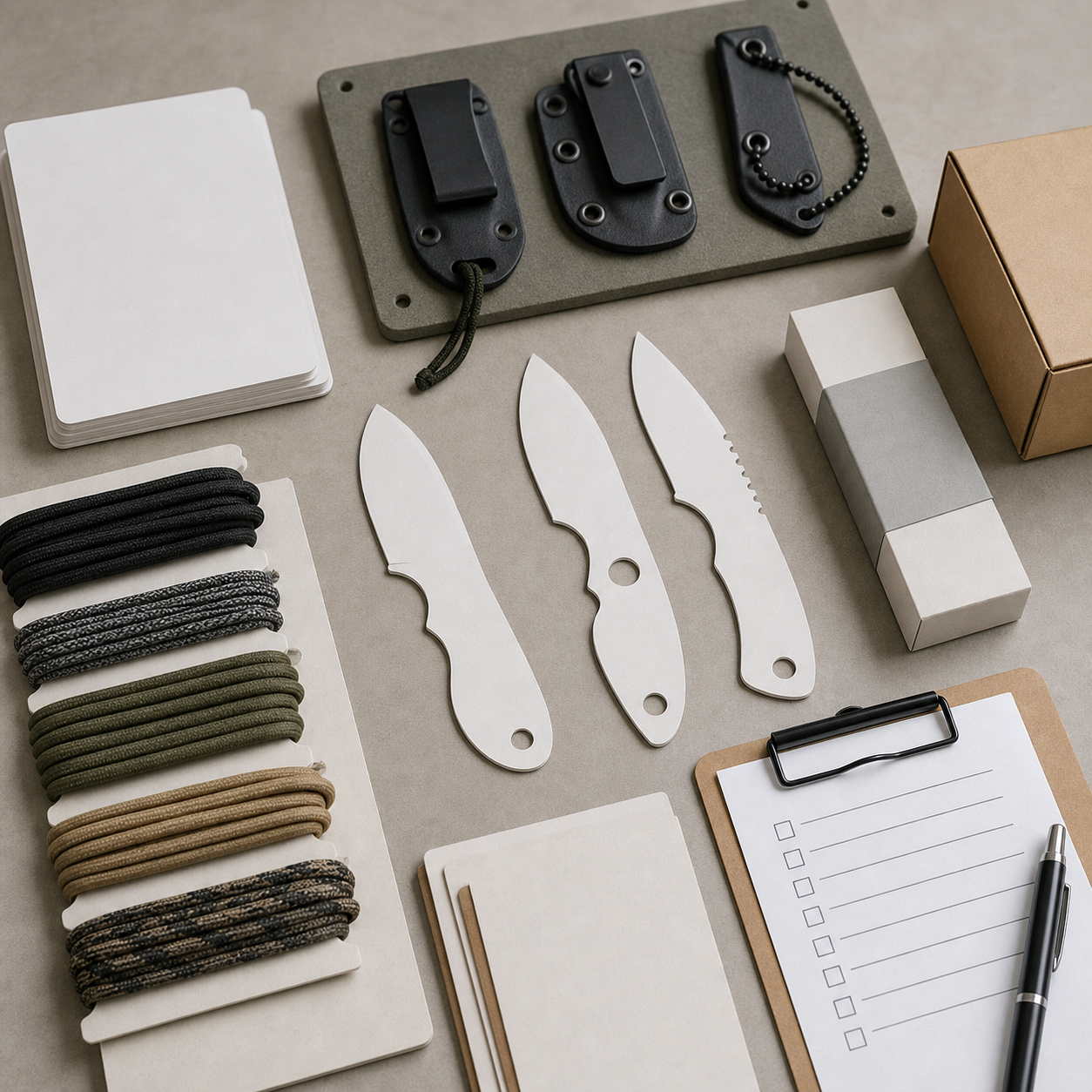
Private-label Planning Checklist
Before starting production, prepare the market and product details your importer or compliance advisor needs to review.
| RFQ Field | What to Prepare |
|---|---|
| Target market | Country, state, region, or sales channel |
| Product category | Folding knife / fixed blade / multi-tool / outdoor tool |
| Intended use | EDC / camping / kitchen / hunting / rescue / promotional |
| Buyer requirements | Testing, labeling, documentation, or packaging rules |
| Blade and lock details | Blade length, opening method, lock type, edge style |
| Packaging text | Warnings, claims, care notes, language requirements |
| Documents | Drawing, sample photo, logo file, packaging artwork |
| Review owner | Importer, legal advisor, testing lab, or internal compliance team |
Which Target-Market Rules Should Buyers Review First?
Knife rules change by country, state, city, channel, and transport setting. A generic legal paragraph cannot protect a SKU.
Buyers should review the target market's fixed-blade rules, blade length limits, wearing method rules, age rules, retailer terms, marketplace policy, travel restrictions, and import requirements.

I Do Not Treat One Market as Every Market
For legal and channel review, I always ask the buyer to name the target market. A neck knife sold in one U.S. state may not fit another state, city, marketplace, or retail chain. A product sold in the EU may also need product-safety documentation, traceability information, and local language warnings. A product sold through outdoor retail may be reviewed differently from a product sold through general marketplaces. The buyer should confirm final legal and channel rules before ordering.
For the U.S., the Federal Switchblade Act is relevant if a buyer adds any automatic, gravity-related, or spring-assisted mechanism to a project. A neck knife is usually a fixed blade, but the buyer should still avoid mixing mechanisms without review. For travel-channel copy, the DHS page on TSA "What Can I Bring?" reminds buyers to point consumers to official TSA guidance instead of making broad travel promises. For EU-facing products, the EU General Product Safety Regulation highlights product safety, risk analysis, technical documentation, online sales information, and traceability.
| Rule area | Buyer should check | Factory support |
|---|---|---|
| Fixed-blade legality | Market and local rules | Product specs and drawings |
| Sales channel | Retailer and marketplace terms | Packaging and product data |
| Travel and transport | Official traveler guidance | Neutral packaging copy |
| Import documents | HS or HTS review, invoice wording | Material details and photos |
How Should Blade Size, Shape, and Steel Be Specified?
A small fixed blade still needs precise specs. Vague blade design causes cost, compliance, and production problems.
Buyers should specify blade length, thickness, steel, hardness range, grind, finish, edge type, tip profile, handle length, and approved tolerance before sampling.
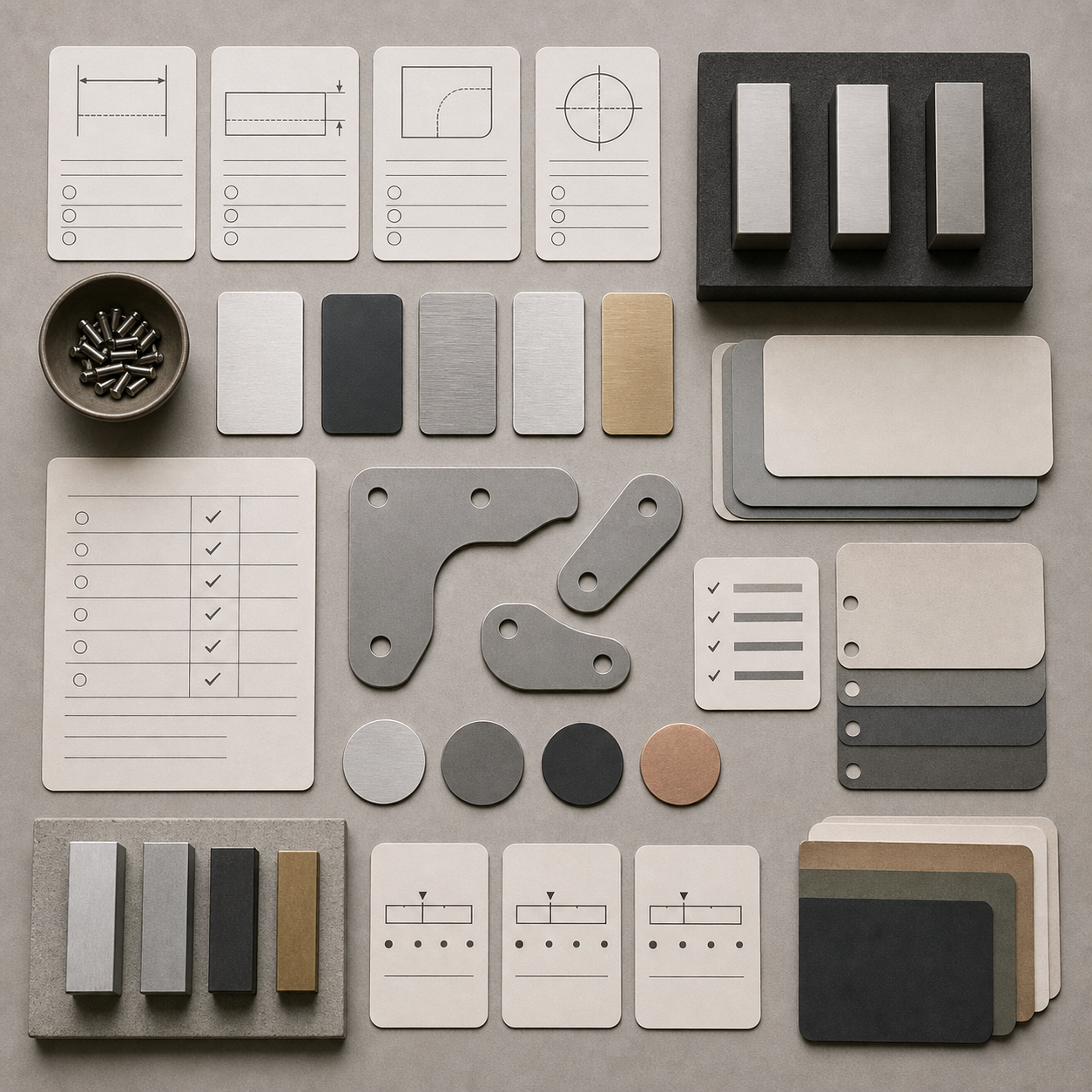
I Turn a Small Blade Into a Controlled Drawing
Neck knives are compact, so every dimension matters. If the blade is too long, the product may move into a different legal or channel review category. If the handle is too short, the product may feel unstable. If the blade is too thick, it may become heavy and expensive. If it is too thin, it may feel weak. If the grind is not controlled, the finished pieces can look inconsistent across a batch.
Steel choice should match the buyer's market. A budget outdoor SKU may use a practical stainless or carbon steel with clear care notes. A higher-end SKU may use a better stainless grade, improved finish, or more detailed QC. The buyer should not choose steel only by internet popularity. I ask for target use, price range, corrosion expectation, sharpening expectation, and packaging claim. Then I connect steel choice with heat treatment, surface finish, MOQ, and inspection. A neck knife is small, but it still needs disciplined manufacturing.
| Specification | What I ask | Why it matters |
|---|---|---|
| Blade length | Target and maximum length | Affects legality and channel review |
| Steel grade | Stainless, carbon, or upgraded steel | Affects cost and care notes |
| Hardness range | Buyer-approved target | Affects edge and toughness balance |
| Finish | Satin, stonewash, coating, or polish | Affects appearance and corrosion claims |
What Neck Cord and Attachment Details Need Safety Review?
The cord can be more sensitive than the blade. A poor cord choice can create product-safety and channel concerns.
Buyers should review cord length, breakaway option, material, adjustability, knots, sliders, bead parts, attachment holes, age policy, and whether the product should be kept out of children's channels.
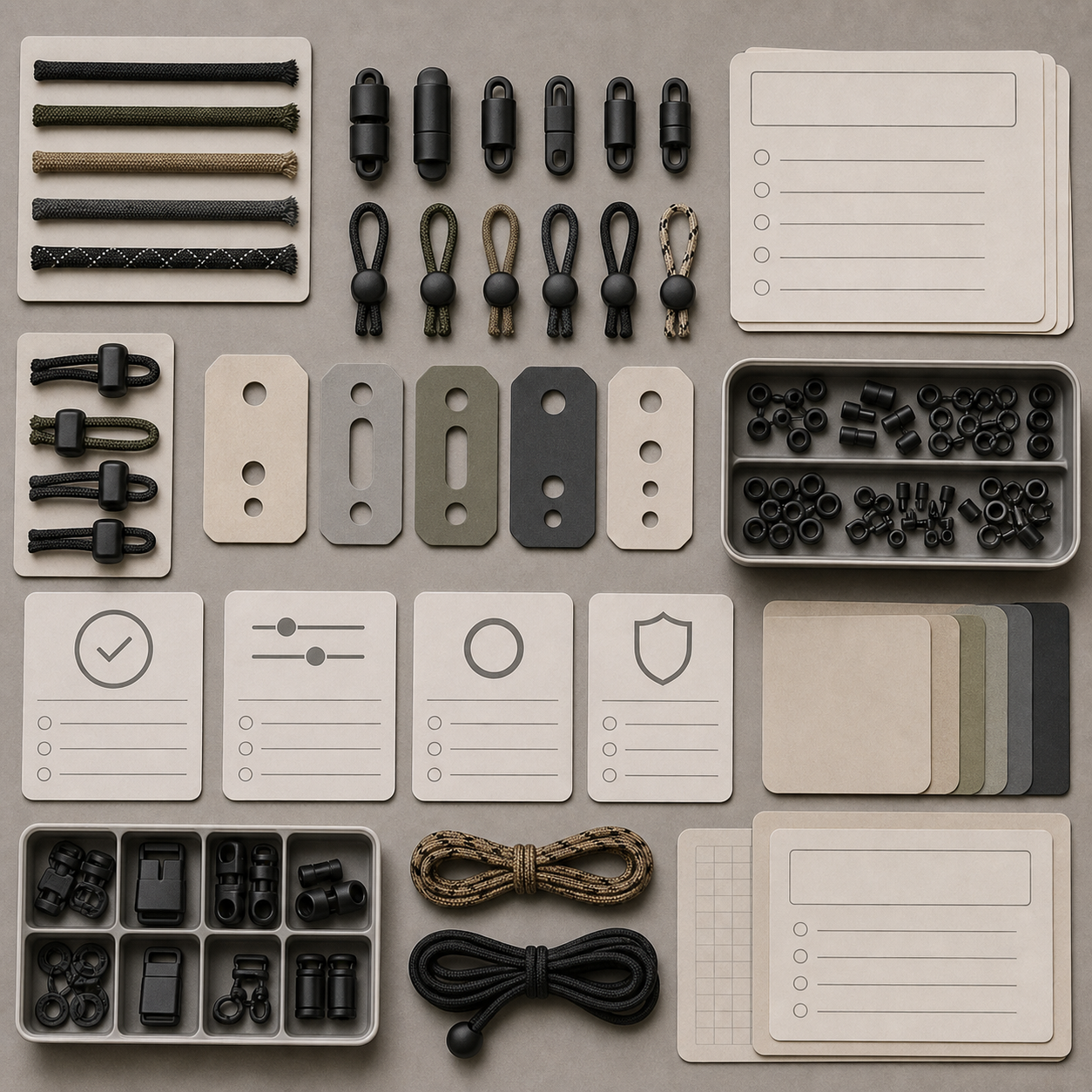
I Treat the Cord as a Safety Component
Many buyers focus on blade steel and forget the neck cord. I do not. The cord touches the user's body, affects wearing comfort, and can create safety concerns. For most B2B projects, I recommend that the buyer review a breakaway option, cord length, cord thickness, knot position, slider shape, and bead or hardware parts. If the product may enter a family retail channel, the buyer should be very careful with small parts, long cords, and any suggestion that the product is suitable for children. I would not position a neck knife as a children's product.
The CPSC drawstring guidelines are clothing-specific and are not a neck-knife standard. Still, they show why neck-area cords can raise safety concerns, especially around children. I use that as a product-development warning, not as a direct legal rule for knives. The buyer's legal team should decide final requirements. The factory can support safer engineering choices: breakaway connector samples, cord alternatives, clean attachment holes, smooth edges, and packaging notes that keep the product in the right channel.
| Cord detail | What to review | Buyer reason |
|---|---|---|
| Breakaway connector | Opens under defined force | Reduces neck-cord concern |
| Cord length | Adult fit and package claim | Avoids sloppy universal claims |
| Small parts | Beads, sliders, clips, and knots | Supports age and channel review |
| Attachment hole | Smooth edge and proper radius | Prevents cord wear |
How Should Sheath Retention Be Tested?
A neck knife is only as good as its sheath. Loose retention can damage confidence and create returns.
Buyers should test sheath hold, release force, rattle, edge coverage, drain holes, clip or cord attachment, material strength, and repeat removal before approving production.
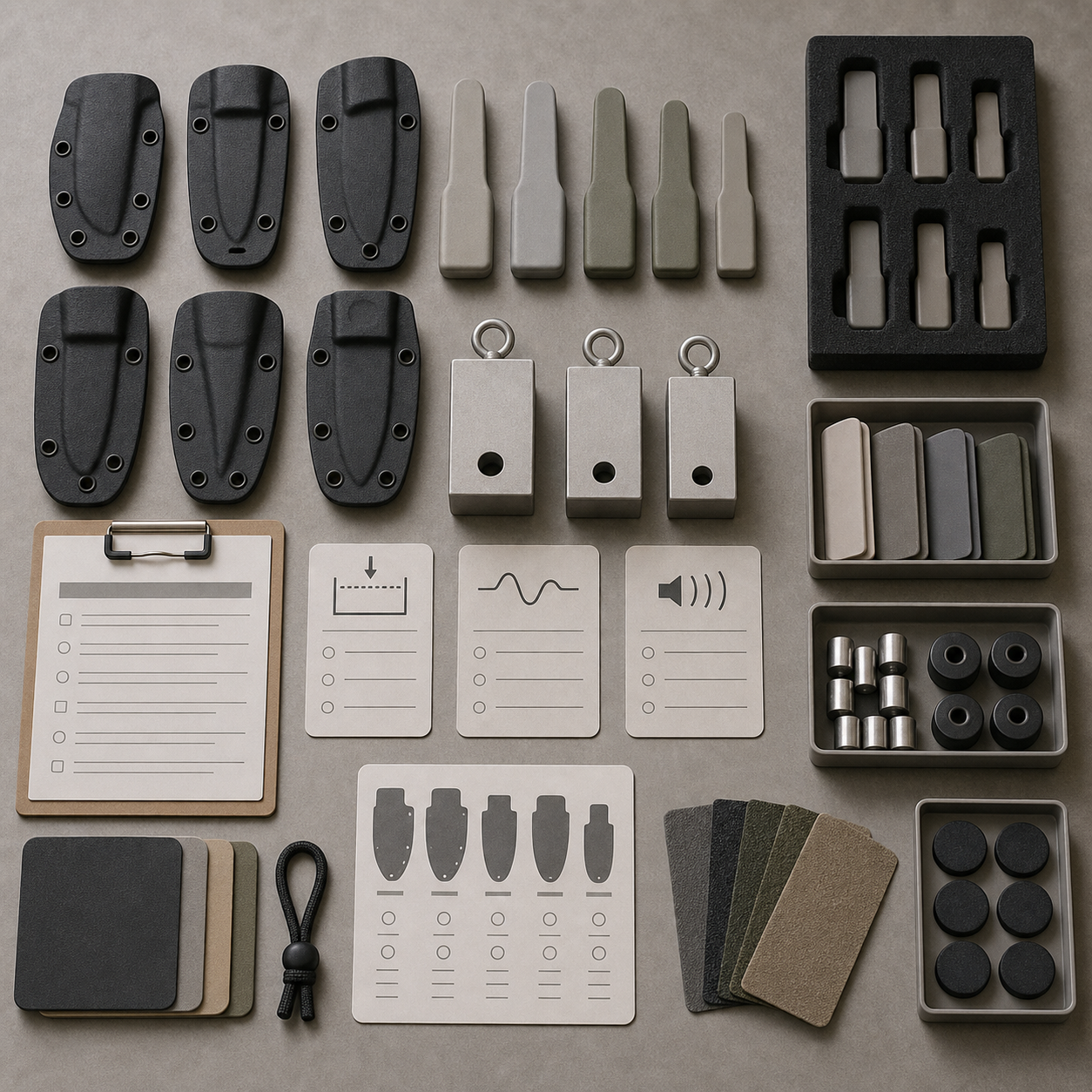
I Review the Sheath Like a Mechanical Part
For a neck knife, the sheath is not just a cover. It holds the blade near the body during normal wearing and storage. The sheath must hold securely, release predictably, cover the edge fully, resist cracking, and avoid sharp molded edges. If the sheath is too loose, the product can feel unsafe. If it is too tight, the buyer may receive complaints about difficult removal. If the sheath material is weak, shipping and retail handling can expose problems before the consumer even uses the product.
Sheath testing should be practical. I like to check sample fit, shake retention, repeated removal, cord attachment strength, drainage, rattle, finish wear, and packaging fit. For molded plastic sheaths, the tooling must control retention consistently across batches. For leather or nylon sheaths, stitching and edge protection matter. The buyer should approve both the blade and sheath together, because small changes to blade thickness or coating can change retention. This is why I include sheath control in the RFQ and QC plan.
| Sheath check | What I inspect | Why it matters |
|---|---|---|
| Retention | Hold and release consistency | Controls product confidence |
| Edge coverage | Full cutting edge protection | Supports safer storage |
| Attachment | Cord hole, clip, or loop strength | Supports wearing method |
| Material | Plastic, leather, Kydex-style, or nylon | Affects cost and durability |
What Packaging and Product Copy Should Buyers Use?
Packaging can solve problems or create them. Overstated claims make a small knife harder to sell responsibly.
Buyers should use factual product copy that explains knife type, blade length, materials, sheath, care, market limits, and warning notes without technique claims or broad legal promises.
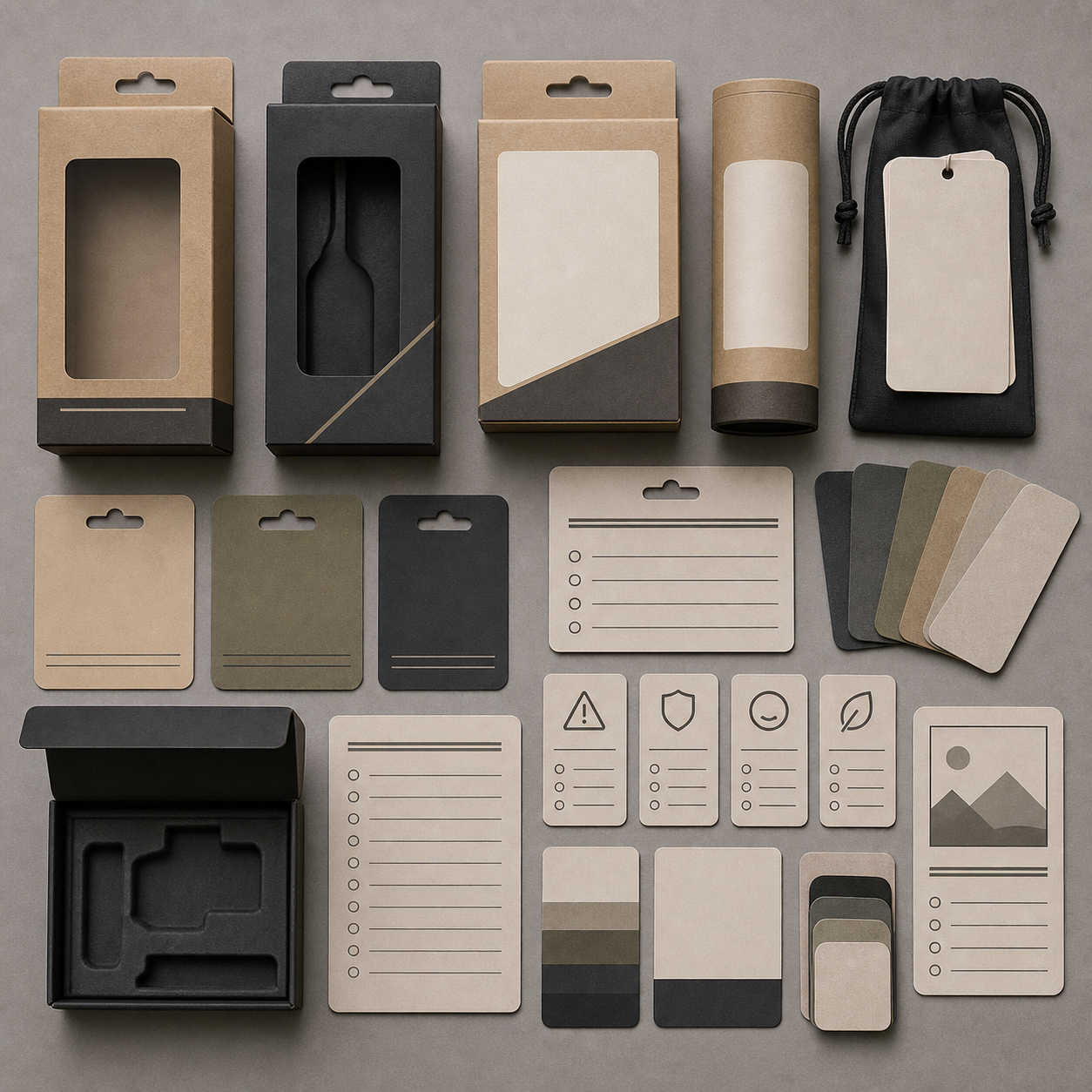
I Keep the Public Message Narrow and Verifiable
Neck knife product copy should be calm and specific. I would describe the blade steel, blade length, handle material, sheath material, cord type, finish, weight, and care instructions. I would avoid technique instructions, aggressive phrases, unsupported legal statements, and travel promises. A buyer can say that consumers should check local laws and official travel guidance, but the package should not claim that a knife is allowed everywhere.
For U.S. product safety review, the CPSC regulations, laws, and standards page is useful because it reminds businesses that consumer products can involve statutes, mandatory standards, bans, voluntary standards, recalls, and warning obligations depending on product type. For EU online sales, GPSR requires product identification and safety information in distance sales offers where applicable. In practice, the buyer should prepare the product page, package, insert, and distributor data at the same time. The factory can help execute printing and packaging structure, but the buyer owns final wording.
| Copy item | Better wording focus | Avoid |
|---|---|---|
| Product description | Compact fixed blade, material, sheath | Aggressive positioning |
| Legal note | Check target-market laws | Universal legality claims |
| Travel note | Refer to official guidance | Broad permission claims |
| Safety note | Adult product, inspect before use, store safely | Technique instructions |
How Should Materials, Heat Treatment, and QC Be Controlled?
Small knives still fail if the process is weak. A clean sample does not guarantee consistent production.
Buyers should define steel grade, heat treatment, hardness range, edge finish, handle bonding, sheath retention, cord attachment, coating quality, packaging inspection, and batch records.
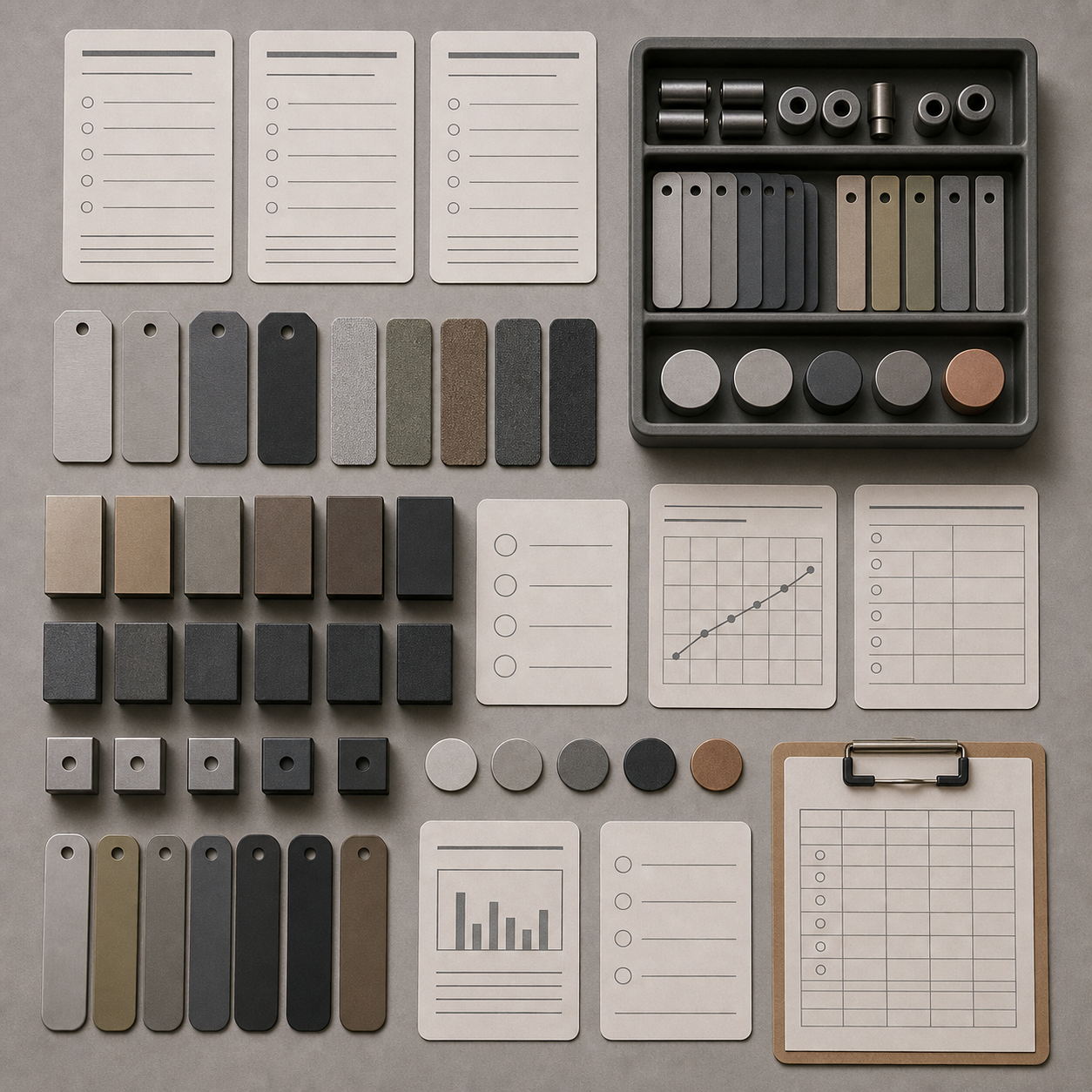
I Make Quality Visible Before Shipment
For neck knives, QC must connect the blade, handle, sheath, and cord. The steel must match the approved material. The heat treatment must support the target hardness and toughness. The edge finish must be consistent. The handle must stay secure. The sheath must hold the blade correctly. The cord attachment must be smooth and durable. Packaging must match the approved version. These are not separate details. They form one product system.
The NIST Rockwell hardness guide supports the idea that hardness measurement needs controlled practice and attention to variation. ISO says ISO 9001 supports quality management and meeting customer requirements. I use those ideas in a practical way. I ask buyers to define what they want recorded. That may include blade dimensions, hardness, coating appearance, handle fit, sheath retention, cord attachment, packaging version, and final AQL inspection.
| QC item | Factory control | Buyer question |
|---|---|---|
| Blade dimensions | Length, thickness, grind, finish | Does it match the approved drawing? |
| Hardness | Target range and test method | What record will be shared? |
| Sheath retention | Hold and release consistency | Is batch fit stable? |
| Cord attachment | Hole finish and connector sample | Is it safe for the intended channel? |
What Should a Neck Knife OEM/ODM RFQ Include?
A short RFQ creates long delays. Neck knife projects need details about product, channel, safety, and packaging.
A neck knife RFQ should include target market, fixed-blade specs, steel, handle, sheath, cord, breakaway option, packaging, warning copy, quantity, target price, and inspection needs.
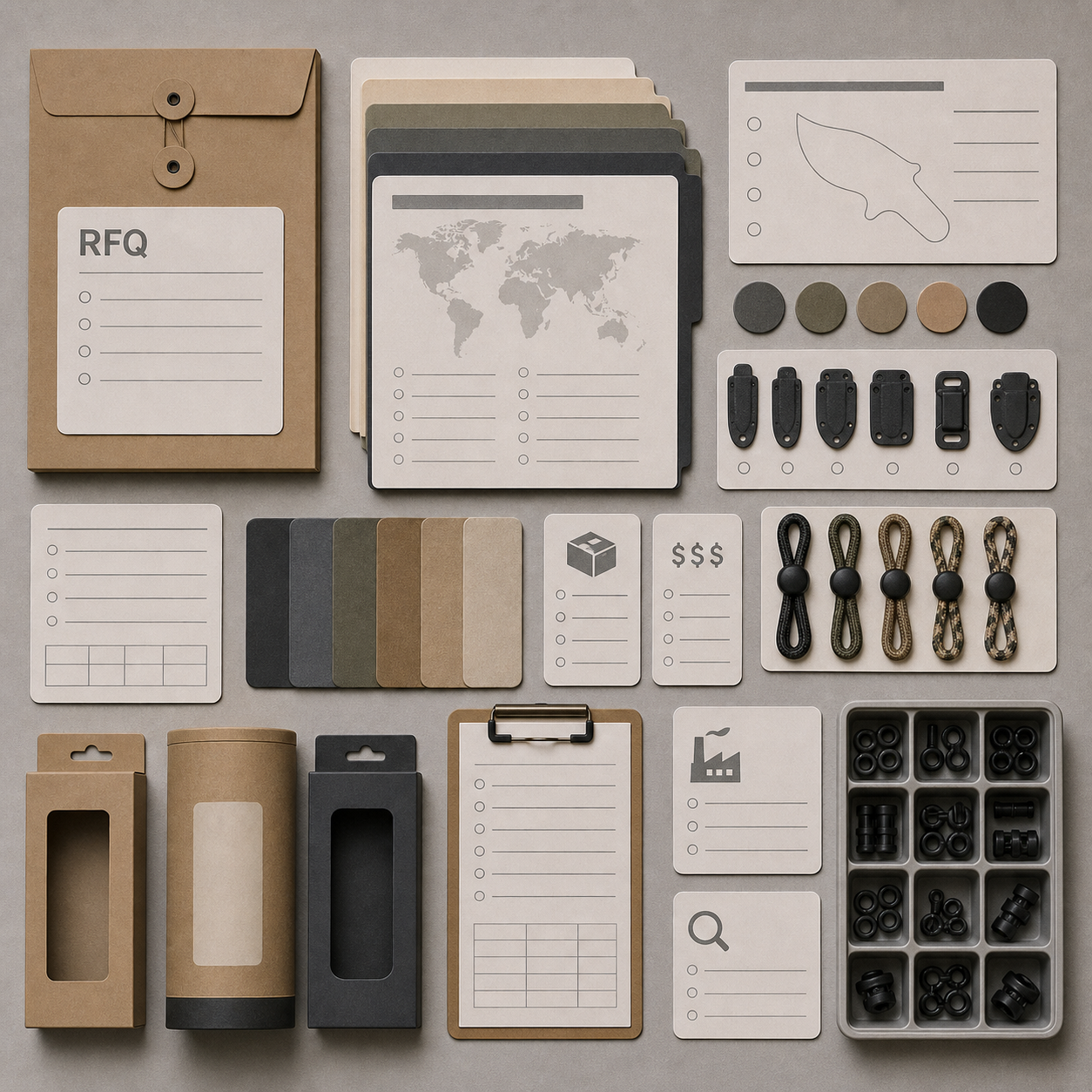
I Need the Sales Context Before I Quote
When a buyer asks Vast State for a neck knife quote, I first ask where and how the product will be sold. Is it for outdoor retail, EDC accessory channels, fishing, camping, distributor private label, or a marketplace listing? Then I ask for blade length, maximum blade length, steel, hardness, handle material, finish, sheath type, retention target, cord material, breakaway option, packaging type, warning insert, MOQ expectation, target price, and inspection standard. I also ask what import documents, HS or HTS review, origin marking, commercial invoice wording, product photos, channel approvals, and distributor data the buyer needs. Trade.gov explains that HS codes are used to classify traded products and support shipping documents, duties, and trade reporting. If the buyer has legal or channel limits, I need those before sampling.
This helps the factory avoid guessing. A buyer who wants a low-cost SKU may use a standard blade profile, standard sheath, simple cord, and basic insert. A buyer who wants a stronger brand product may need better steel, cleaner finish, more secure sheath, improved cord connector, and detailed QC records. The best RFQ does not only ask for price. It explains the market, the safety expectations, and the product limits. That is how a compact fixed blade becomes a responsible OEM/ODM project.
| RFQ field | Why I need it | Buyer benefit |
|---|---|---|
| Target market | Determines legal and channel review | Fewer late changes |
| Blade and steel | Controls size, cost, and QC | More accurate quote |
| Sheath and cord | Controls product safety perception | Better sample approval |
| Packaging and warning | Supports retail and distributor readiness | Smoother launch |
Planning a private-label knife line for this market?
Use this article as a planning reference, then confirm local requirements with your importer or compliance advisor before OEM/ODM production.
Conclusion
I handle neck knife projects as compliance-sensitive compact fixed blades: product design, cord, sheath, copy, QC, documents, and RFQ must align.
Source Notes
- 15 U.S.C. 1241-1245 supports the mechanism review point for automatic, gravity-related, and assisted-opening designs.
- DHS travel guidance page supports the need to reference official TSA guidance instead of making broad travel claims.
- CPSC drawstring guidelines provide clothing-specific context for neck-area cord hazards, but they are not a neck-knife standard.
- CPSC regulations, laws, and standards supports the product-safety and warning-review discussion for consumer goods.
- EU General Product Safety Regulation supports the article's EU product safety, technical documentation, online-offer information, and traceability points.
- Trade.gov HS code guidance supports the import classification and documentation discussion.
- NIST Rockwell hardness guide supports hardness measurement and QC control.
- ISO 9001 supports the process-control and customer-requirement framing.