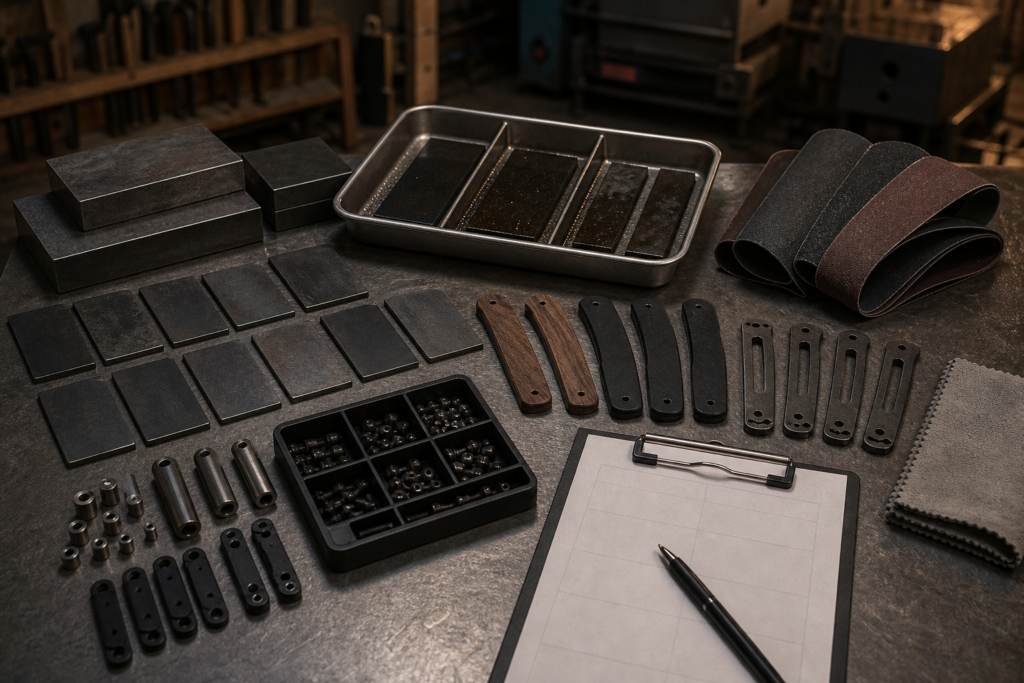
O1 can sound old-fashioned beside powder steels. But many buyers still need predictable cutting performance, easy sharpening, and practical cost control.
O1 tool steel is a high-carbon, oil-hardening cold-work steel that can work well for traditional fixed blades, bushcraft knives, workshop knives, and value-driven custom projects. It is reliable when heat treatment, edge geometry, rust prevention, and product positioning are controlled.
Quick buyer brief:
- Answer: O1 is reliable for non-stainless working knives when the buyer accepts rust care and controls heat treatment.
- Buyer context: This helps knife brands, outdoor brands, importers, wholesalers, distributors, and private label buyers compare traditional tool steel options.
- Key checks: Knife type, target use, rust expectation, HRC target, oil-quench process, blade thickness, edge geometry, finish, sheath or packaging, MOQ, and inspection plan.
Planning a knife project with this steel?
Send us your target market, MOQ, price range, and blade type. Vast State can help you choose the right steel, HRC range, finish, handle material, and QC requirements for OEM/ODM production.
When I talk with buyers about O1, I usually slow the conversation down. O1 is not a modern stainless super steel. It is not the right answer for every product line. But it has a clear place. It can take a fine edge, it can be heat treated with predictable practice, and it can fit traditional working knives where users understand carbon steel care. For B2B projects, I see O1 as a practical material choice when the brand wants a reliable old-school tool steel story rather than a high-alloy stainless marketing story.
What Is O1 Tool Steel in Practical Knife Manufacturing?
Some buyers only know O1 as a classic knife steel. That is not enough for sourcing, costing, or quality control.
O1 is an oil-hardening cold-work tool steel with high carbon, manganese, chromium, tungsten, and small alloy additions. In knife manufacturing, it is a non-stainless steel used for practical working blades that need fine edges, controlled hardness, and reasonable machinability.
I See O1 as a Working Steel, Not a Trend Steel
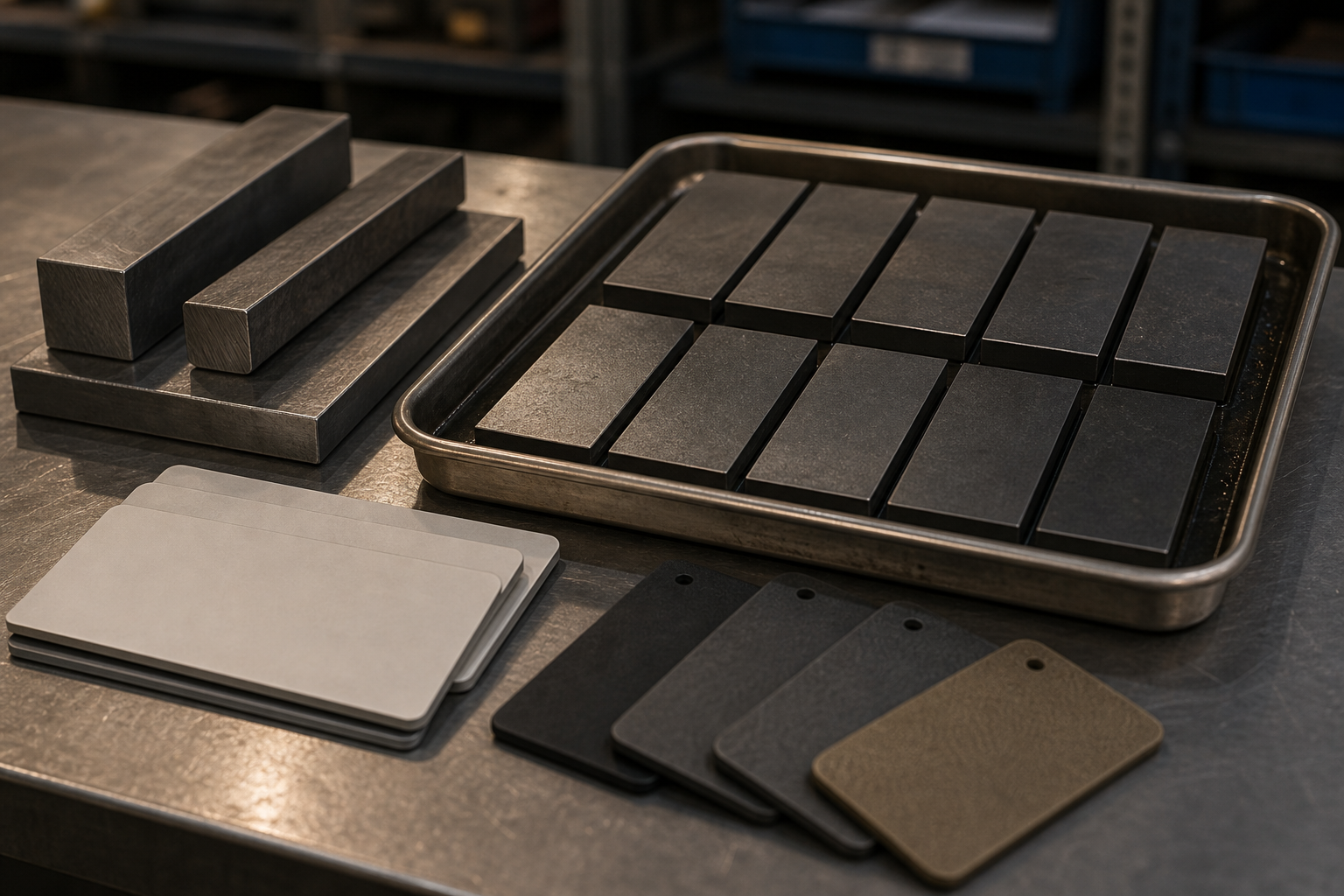
O1 belongs to the traditional tool steel world. The Hudson Tool Steel O1 technical data describes it as the original oil-hardening, non-shrinking tool steel and a general-purpose tool steel used where hardness, strength, and wear resistance are needed. Hudson lists a typical composition with about 0.94 carbon, 1.20 manganese, 0.30 silicon, 0.50 chromium, and 0.50 tungsten. This chemistry explains the basic character of O1: it is hardenable, fine-edged, and practical, but it is not stainless.
Bohler's K460 page also helps buyers understand the grade. Bohler K460 corresponds to 1.2510, 100MnCrW4, UNS T31501, and AISI O1. Bohler describes it as having simple heat treatment with low hardening temperatures and single tempering, with good hardening response but only moderate through hardenability.
For knife buyers, this means O1 should be treated as a controlled working material. It can be a good choice for fixed blades, outdoor utility knives, workshop knives, and traditional product lines. But it should not be sold like stainless steel. The buyer must plan surface finish, oiling advice, packaging, sheath moisture control, and customer education.
| O1 factor | Practical meaning | Buyer takeaway |
|---|---|---|
| Oil-hardening grade | Quenched in oil after austenitizing | Heat treatment must be controlled |
| High carbon | Can reach useful knife hardness | Rust care is required |
| Low chromium | Not stainless | Do not market as low-maintenance |
| Tungsten and manganese | Support wear resistance and hardening response | Useful for traditional working blades |
Quote-ready RFQ Checklist for This Steel
To get an accurate OEM/ODM quote, prepare these details before contacting a knife manufacturer.
| RFQ Field | What to Prepare |
|---|---|
| Product type | Folding knife / fixed blade / multi-tool / kitchen knife |
| Target market | US / EU / outdoor retail / promotional / tactical / EDC |
| Steel option | 4116 / 14C28N / D2 / N690 / Nitro-V |
| Target HRC | Example: 55-57 HRC, 58-60 HRC |
| Blade finish | Satin / stonewash / black coating / bead blast |
| Handle material | G10 / micarta / aluminum / stainless steel / wood |
| Lock or structure | Liner lock / frame lock / slip joint / full tang |
| Estimated quantity | 500 / 1,000 / 3,000 / 5,000+ pcs |
| Packaging | White box / color box / blister / pouch / gift box |
| Required documents | Drawing / sample photo / logo file / packaging artwork |
Why Do Some Buyers Still Call O1 Reliable?
Modern steel names can be exciting. But excitement does not always create stable production or clear user expectations.
Buyers call O1 reliable because it has a long history, simple alloy design, good machinability, fine-edge potential, and predictable heat-treatment behavior when handled correctly. Its reliability depends on process control, not on being maintenance free.
I Connect Reliability With Repeatability
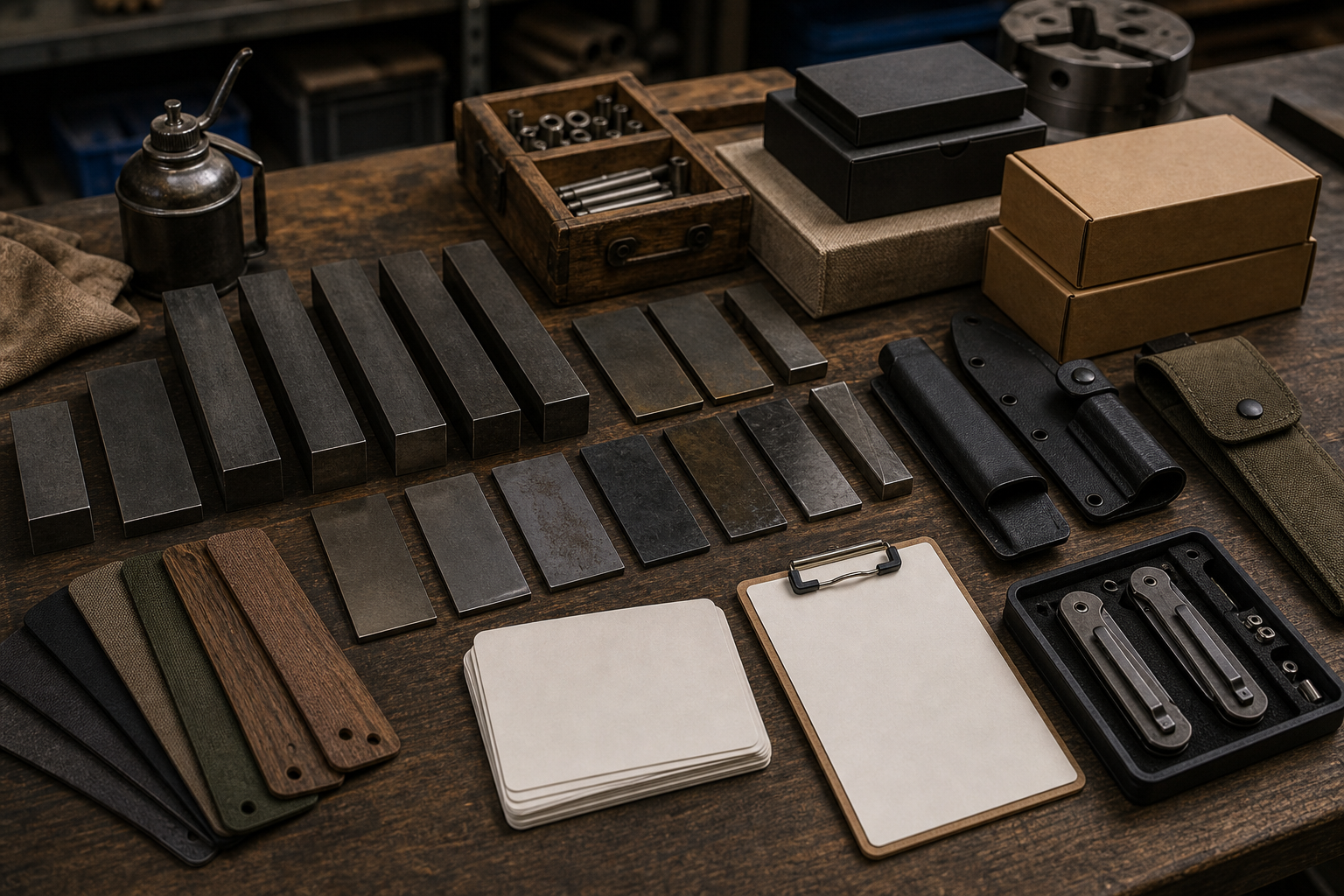
When a buyer says "reliable," I ask what they mean. Some mean the knife cuts well. Some mean the steel is easy to sharpen. Some mean the factory can repeat the result. Some mean the buyer can position the product without explaining a complicated powder metallurgy story. O1 can support these goals if the product is designed honestly.
Bohler lists K460 property features such as high toughness and ductility, good wear resistance, very high compressive strength, good dimensional stability, and high grindability. This does not mean every O1 knife will be excellent. It means the steel gives a practical foundation when the knife design fits the material. Hudson also notes good machinability relative to a 1 percent carbon steel. For OEM production, machinability and grindability matter because they affect cost, finishing time, edge consistency, and delivery stability.
The reliability story also comes from user expectation. A customer who buys an O1 bushcraft-style knife may accept patina, oiling, and sharpening. A customer who buys a beach, fishing, or kitchen-adjacent knife may not. This is why I do not recommend O1 only because it is classic. I recommend it when the target customer understands carbon steel and the brand can explain care clearly.
| Reliability question | O1 answer | What I check |
|---|---|---|
| Can it take a fine edge? | Yes, with good heat treatment and geometry | Edge angle and sharpening process |
| Is it easy to process? | More practical than many high-alloy steels | Grinding, finishing, and deburring |
| Is it low maintenance? | No | Rust care and packaging |
| Can it repeat in production? | Yes, if heat treatment is controlled | HRC sampling and process records |
What Are the Main Strengths and Limits of O1 for Knife Products?
O1 can be a good knife steel, but it can also be misused. The biggest mistake is ignoring corrosion and heat-treatment risk.
O1's strengths are fine edge potential, good machinability, practical wear resistance, and traditional working-knife appeal. Its limits are low corrosion resistance, quench-cracking risk, moderate through hardenability, and weaker high-wear performance than higher-alloy steels.
I Do Not Sell O1 as Stainless
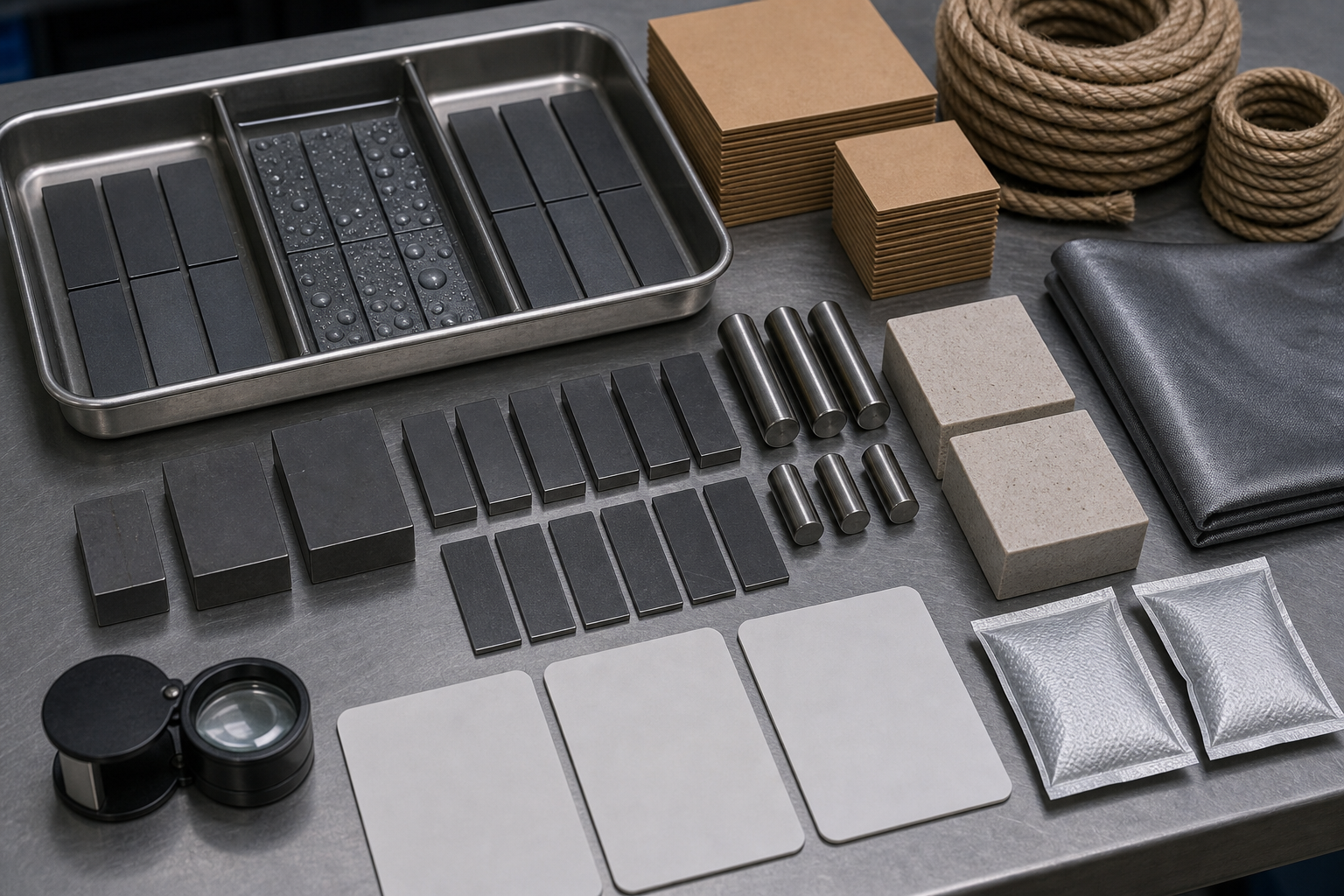
O1 has about 0.50 chromium in Hudson's typical composition and about 0.55 chromium in Bohler's average K460 composition. That is far below the common stainless threshold. The British Stainless Steel Association explains that stainless steel is an iron alloy with a minimum of 10.5 percent chromium. So an O1 knife needs care. It can rust if it is stored wet, touched with salty sweat, packed in damp material, or used in corrosive conditions without cleaning.
That limit does not make O1 bad. It makes O1 specific. It can be excellent for buyers who want a traditional carbon tool steel feel, easy sharpening, and a practical workshop or outdoor product. It can also fit small-batch or heritage-style lines. But I would be careful with O1 for fishing knives, coastal markets, humid storage, low-maintenance EDC users, or products where the customer expects stainless behavior.
Knife Steel Nerds gives a useful general warning in its steel rating article: no single property makes a steel better, and heat treatment and edge geometry should match the knife and use. I use the same thinking with O1. It is not a universal winner. It is a good material when the brand accepts the tradeoff.
| Strength or limit | What it means for buyers | Product decision |
|---|---|---|
| Fine edge potential | Can feel sharp and easy to maintain | Good for working knives |
| Practical processing | Easier than many high-wear steels | Helps cost and repeatability |
| Low corrosion resistance | Needs oiling and dry storage | Avoid wet-use claims |
| Quench sensitivity | Needs careful heat treatment | Avoid sharp internal corners |
How Should Heat Treatment and Hardness Be Controlled for O1?
O1 is predictable only when the process is controlled. Poor quenching, delayed tempering, or bad geometry can ruin the advantage.
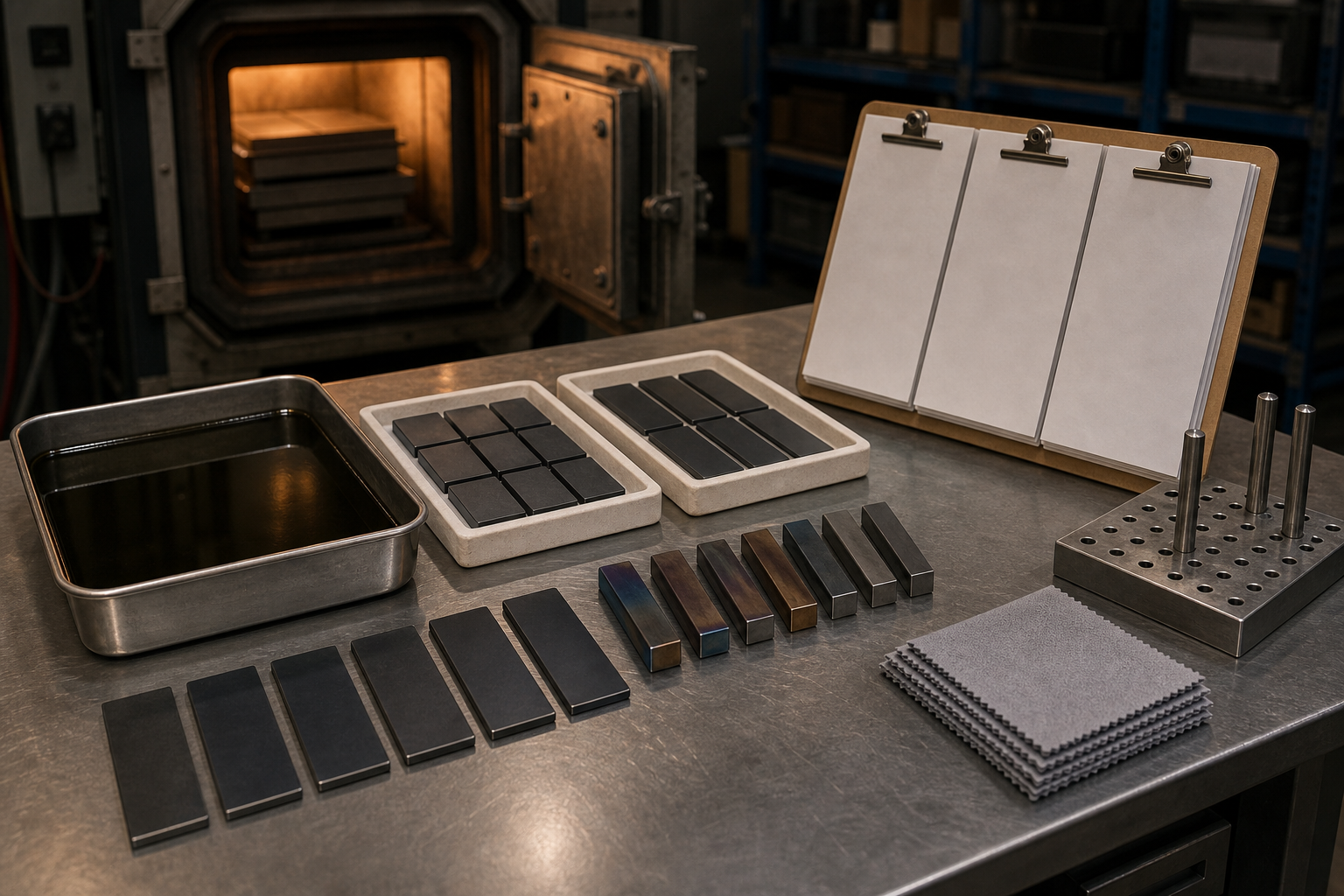
Buyers should define a target HRC range, austenitizing practice, oil quench method, immediate tempering, sample testing, and blade geometry. O1 can reach high hardness, but stable knife performance needs controlled heat treatment and inspection.
I Treat O1 Heat Treatment as the Product Core
Hudson's O1 instructions give the practical direction: preheat, austenitize around 1475-1500°F, oil quench, and temper immediately after quenching. Hudson also warns that O1 is somewhat prone to quench cracking, especially when there are major section-thickness changes and sharp internal corners. For knife buyers, that warning matters. A blade with abrupt transitions, thin tips, sharp shoulders, or uneven grinding can create more risk during quench.
I usually ask buyers to specify a realistic hardness range rather than only saying "make it hard." A high HRC can improve edge stability in some designs, but it can also reduce toughness if the geometry is wrong. The exact target depends on knife type, blade thickness, edge angle, and target user. A small carving knife and a larger outdoor knife should not be treated as the same project.
Hardness testing also needs a standard method. The NIST Rockwell hardness measurement guide supports the idea that measurement practice affects reliability. In production, I want to know where the blade is tested, how many samples are tested, and what happens if a batch falls outside the agreed range. This turns O1 from a material name into a controlled manufacturing plan.
| Heat-treatment control | What to define | Why it matters |
|---|---|---|
| Austenitizing | Temperature and soak practice | Controls hardness and structure |
| Oil quench | Oil type, temperature, and handling | Reduces cracking and distortion risk |
| Tempering | Immediate temper and target range | Balances hardness and toughness |
| Hardness check | HRC range and sample method | Supports repeat production |
Which Knife Product Lines Fit O1 Tool Steel Best?
O1 should not be forced into every catalog. It works best when the product story and user care match the material.
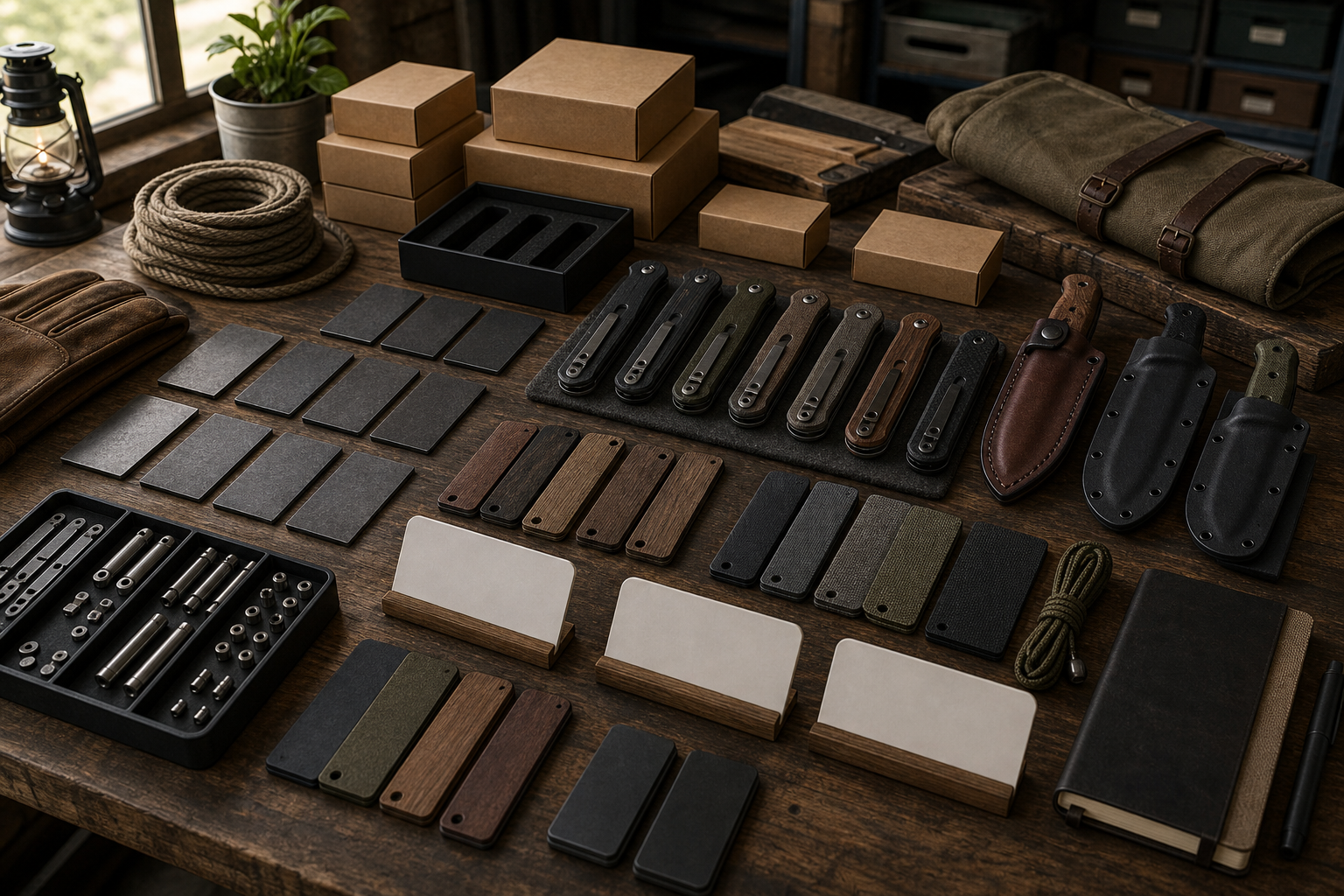
O1 fits traditional fixed blades, bushcraft knives, carving knives, workshop knives, leather or craft knives, and heritage-style outdoor tools. It is less suitable for low-maintenance EDC, fishing, coastal, rescue, and humid-market products.
I Match O1 With Honest Use Cases
For OEM and ODM buyers, I would place O1 in a product line where the customer appreciates traditional steel. A bushcraft-style fixed blade is a natural fit because users often understand sharpening, patina, and care. A workshop knife, carving knife, or leather knife can also fit because the buyer values fine-edge behavior and simple maintenance. A heritage outdoor product can use O1 as part of its story if the packaging and care instructions are clear.
I would be more careful with folding knives. O1 can be used in folders, but folders have pivots, liners, screws, backspacers, and enclosed areas where moisture can stay. If the user expects pocket-carry convenience without maintenance, a stainless steel may be safer. O1 can also be risky for fishing, rescue, or coastal products because those users often meet sweat, salt, water, and storage problems.
This is why I see O1 as a targeted material, not a default material. It can help a brand build a traditional working-knife line. It can also help control cost compared with many powder steels. But the buyer should not hide its care needs. Clear communication protects the brand, the distributor, and the end user.
| Product line | O1 fit | Reason |
|---|---|---|
| Bushcraft fixed blade | Strong fit | Users often accept carbon steel care |
| Workshop or craft knife | Strong fit | Fine edge and sharpening matter |
| Low-maintenance EDC folder | Weak fit | Moisture and pocket carry increase rust risk |
| Fishing or coastal knife | Weak fit | Stainless options are usually safer |
What Should Buyers Include in an O1 Knife RFQ?
An O1 RFQ can look simple. But missing details create heat-treatment, rust, packaging, and after-sales problems.
An O1 knife RFQ should include knife type, blade thickness, target HRC, heat-treatment expectation, edge geometry, finish, handle material, sheath or packaging, rust-care requirements, MOQ, target price, market, and inspection plan.
I Ask for Rust Care and Packaging Early
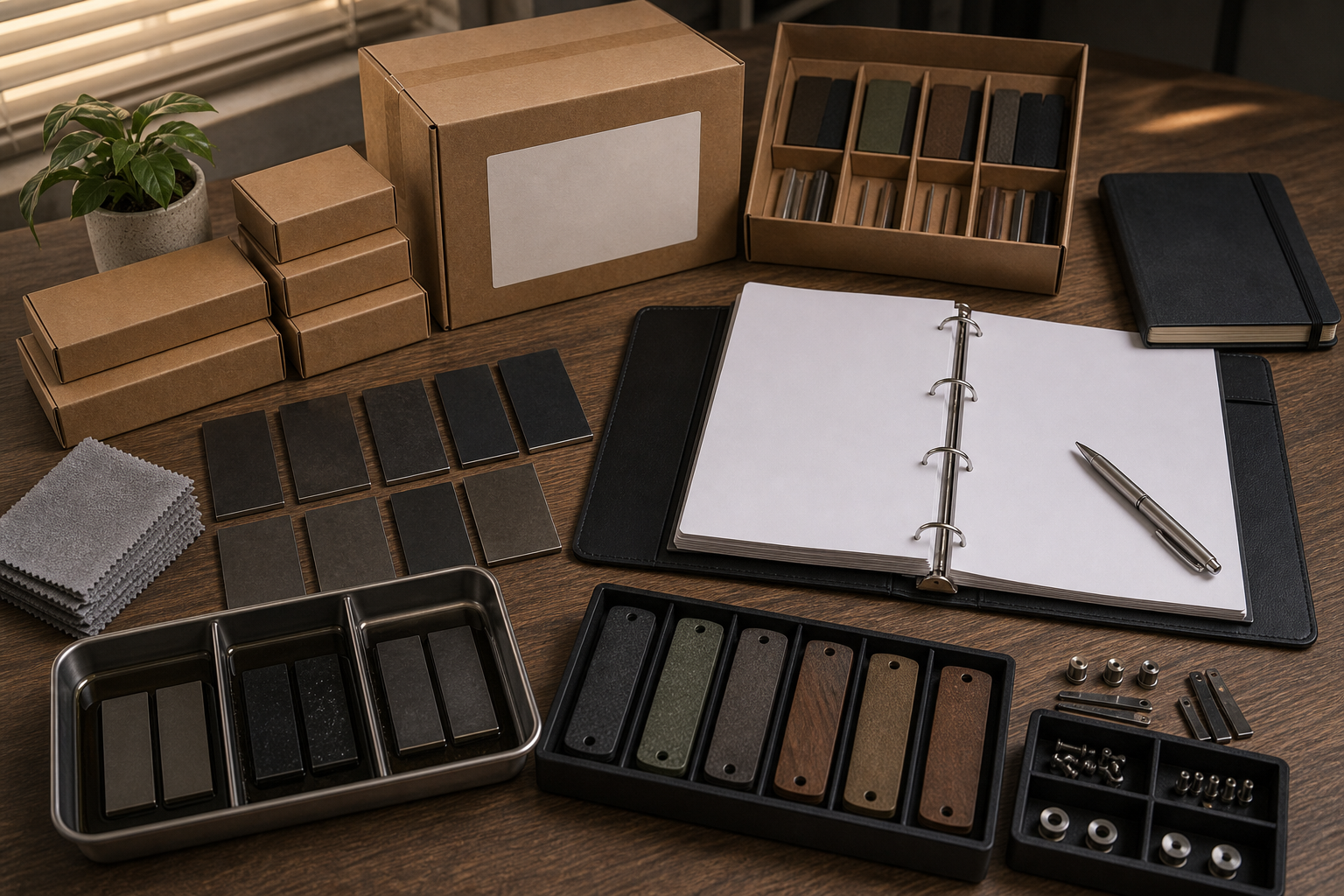
For O1, the RFQ should not stop at steel grade and quantity. I ask the buyer to confirm the market first. Is the knife for dry workshop use, outdoor camping, bushcraft, general utility, or a humid region? Then I ask for the blade length, thickness, finish, edge angle, handle material, sheath material, logo method, packaging, and care information. If the product ships with a leather sheath or absorbent packaging, moisture control becomes important.
I also ask about the commercial side. The buyer should state MOQ, target price, expected sample quantity, delivery term, and inspection needs. Trade terms matter because they affect landed cost and responsibility. The U.S. International Trade Administration explains that Incoterms define tasks, costs, and risks between buyer and seller in export transactions.
Quality planning should also be part of the RFQ. An ISO 9001 quality-management approach is useful because buyers need stable processes, not only one good sample. For O1, I would include incoming material confirmation, heat-treatment records, hardness checks, blade straightness, edge inspection, finish inspection, rust-prevention method, sheath fit, packaging check, and final appearance standard. This makes the project easier to quote and easier to repeat.
| RFQ item | What the buyer should provide | Why it affects O1 |
|---|---|---|
| Use case | Bushcraft, craft, workshop, outdoor, or EDC | Decides whether O1 is suitable |
| Heat treatment | Target HRC and sample checks | Controls reliability |
| Finish and care | Coating, oiling, care card, packaging | Reduces rust complaints |
| Commercial terms | MOQ, target price, Incoterm, delivery need | Makes quotes comparable |
Ready to use this material in your next knife line?
Vast State can help you compare blade steels, heat treatment ranges, handle materials, finishes, packaging options, and QC requirements based on your target market and quantity.
Conclusion
I use O1 when the buyer wants a traditional working steel and accepts controlled heat treatment, rust care, and honest product positioning.
Source Notes
- Hudson Tool Steel O1 data supports O1 composition, oil-hardening character, machinability, heat-treatment steps, and quench-cracking caution.
- Bohler K460 supports O1 equivalent names, standards, simple heat treatment, property features, moderate through hardenability, and applications.
- BSSA stainless steel definition supports the point that O1 is not stainless because its chromium content is far below 10.5 percent.
- Knife Steel Nerds steel ratings supports the caution that steel choice must consider toughness, edge retention, corrosion resistance, heat treatment, geometry, and use case.
- NIST Rockwell hardness guide supports the need for careful hardness measurement practice.
- Trade.gov Incoterms page supports RFQ advice about clarifying trade responsibilities, costs, and risks.
- ISO 9001:2015 page supports quality-management context, but it does not prove any supplier certification.