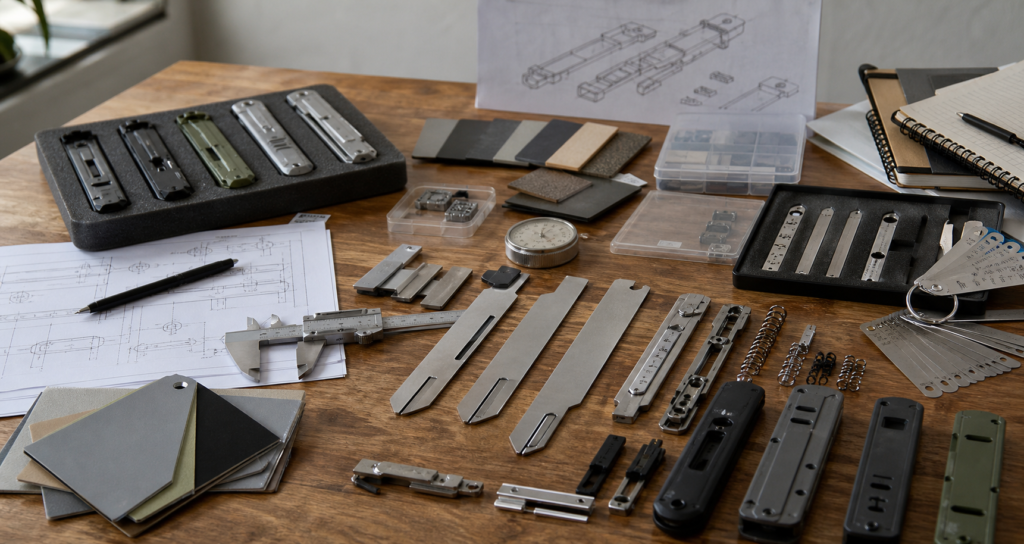
An OTF knife looks impressive, but it is not a simple sourcing item. Weak specs can create mechanism failures, compliance risk, and costly rework.
B2B buyers should evaluate an OTF knife by structure, action type, market legality, blade steel, handle material, internal fit, spring system, assembly control, quality testing, packaging, and after-sales expectations before starting OEM or ODM sourcing.
Quick buyer brief:
- Answer: Check structure, legality, mechanism repeatability, materials, QC, packaging, and sales channel before quoting.
- Buyer context: This helps knife brands, importers, wholesalers, and private label buyers avoid risky OTF projects.
- Key checks: Single-action or double-action type, blade play, deployment consistency, lockup, steel, handle, legal review, and RFQ detail.
Have a knife or multi-tool project in mind?
Send your sketch, CAD file, sample photo, or product idea. Vast State can review manufacturability, suggest materials, estimate MOQ, and prepare a quote for your OEM/ODM project.
When I discuss OTF knife projects with buyers, I do not start with appearance. I start with the product risk. An OTF knife moves the blade straight through the front of the handle. That makes the structure different from a side-opening folder. It also makes tolerance, internal cleanliness, spring consistency, track fit, and product classification more sensitive. I am not a lawyer, and this article is not legal advice. But as a manufacturer, I know that an OTF project needs clearer planning than a standard manual folder.
What Is an OTF Knife and Why Does Its Structure Matter?
Many buyers treat OTF as a style name only. That is risky because the front-opening structure changes the whole development process.
An OTF knife is an out-the-front knife where the blade moves forward and backward through the front of the handle. Its structure affects mechanism design, handle space, blade fit, safety checks, assembly time, and compliance review.
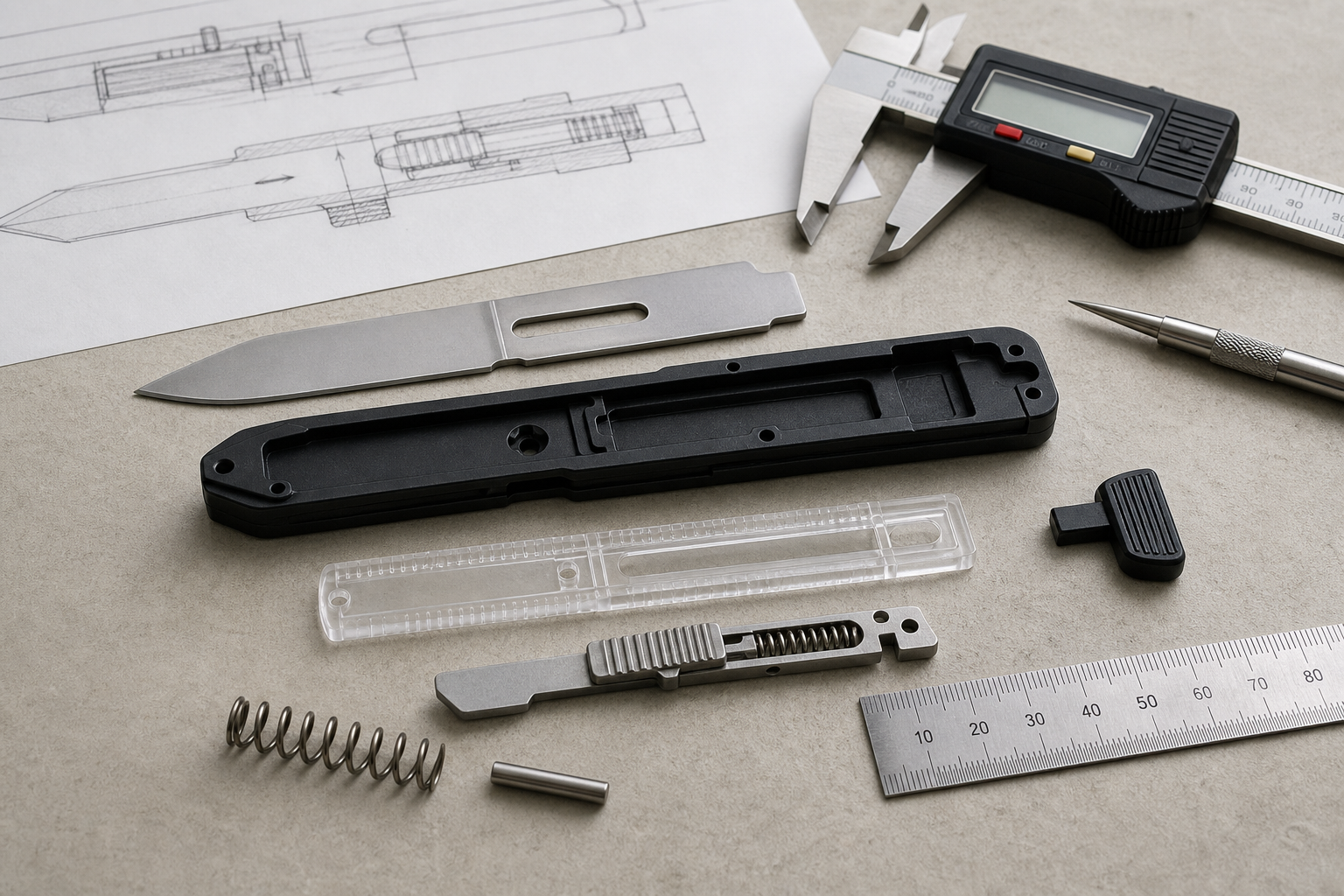
I Look at the Blade Path First
In a normal folding knife, the blade rotates around a pivot. In an OTF knife, the blade moves in a straight path through the handle front. This changes the engineering question. The handle must create enough internal space for the blade, carrier, spring system, slider, lock surfaces, and guide track. The blade must move without rubbing too much, but it also cannot feel loose or uncontrolled. That balance is not easy to reach if the buyer only sends a photo.
For OEM sourcing, I ask whether the buyer wants a true OTF automatic design, a manual sliding structure, a rescue-style concept, or a product that only visually references OTF styling. These are not the same project. The first option may carry more legal and production sensitivity. The second may be easier in some markets but may not match the buyer's expected user feel. The third may be a safer design direction if the target market or channel is strict. A good sourcing process starts by defining the structure before talking about price.
| Structure point | Why it matters | Buyer decision |
|---|---|---|
| Blade path | Controls internal layout and movement | Confirm true OTF or OTF-style design |
| Handle space | Limits blade thickness and mechanism size | Define target size and grip feel |
| Internal guide | Affects smoothness and blade play | Request sample function checks |
| Product category | May affect sales and import review | Confirm destination-market rules |
OEM/ODM RFQ Checklist
Prepare these details to help Vast State review your project and provide a more accurate quotation.
| RFQ Field | What to Prepare |
|---|---|
| Project type | OEM from drawing / ODM private label / wholesale catalog |
| Product category | Folding knife / fixed blade / multi-tool / outdoor tool |
| Design status | Idea / sketch / 2D drawing / 3D CAD / physical sample |
| Target price | Ex-factory target price or retail price range |
| MOQ expectation | 500 / 1,000 / 3,000 / 5,000+ pcs |
| Logo method | Laser engraving / etching / printing / molded logo |
| Packaging | Standard packaging / custom retail box / Amazon-ready |
| Market | USA / EU / Japan / Korea / Middle East / other |
| Compliance needs | Buyer-specified testing / documentation / labeling |
| Timeline | Sample deadline / mass production deadline |
How Do Single-Action and Double-Action OTF Concepts Affect OEM Planning?
OTF buyers often ask for "the common version" without knowing the action type. That creates quoting and sampling confusion.
Single-action and double-action OTF concepts differ in reset method, internal complexity, assembly time, user feel, cost, and QC needs. Buyers should define the action type before quotation.
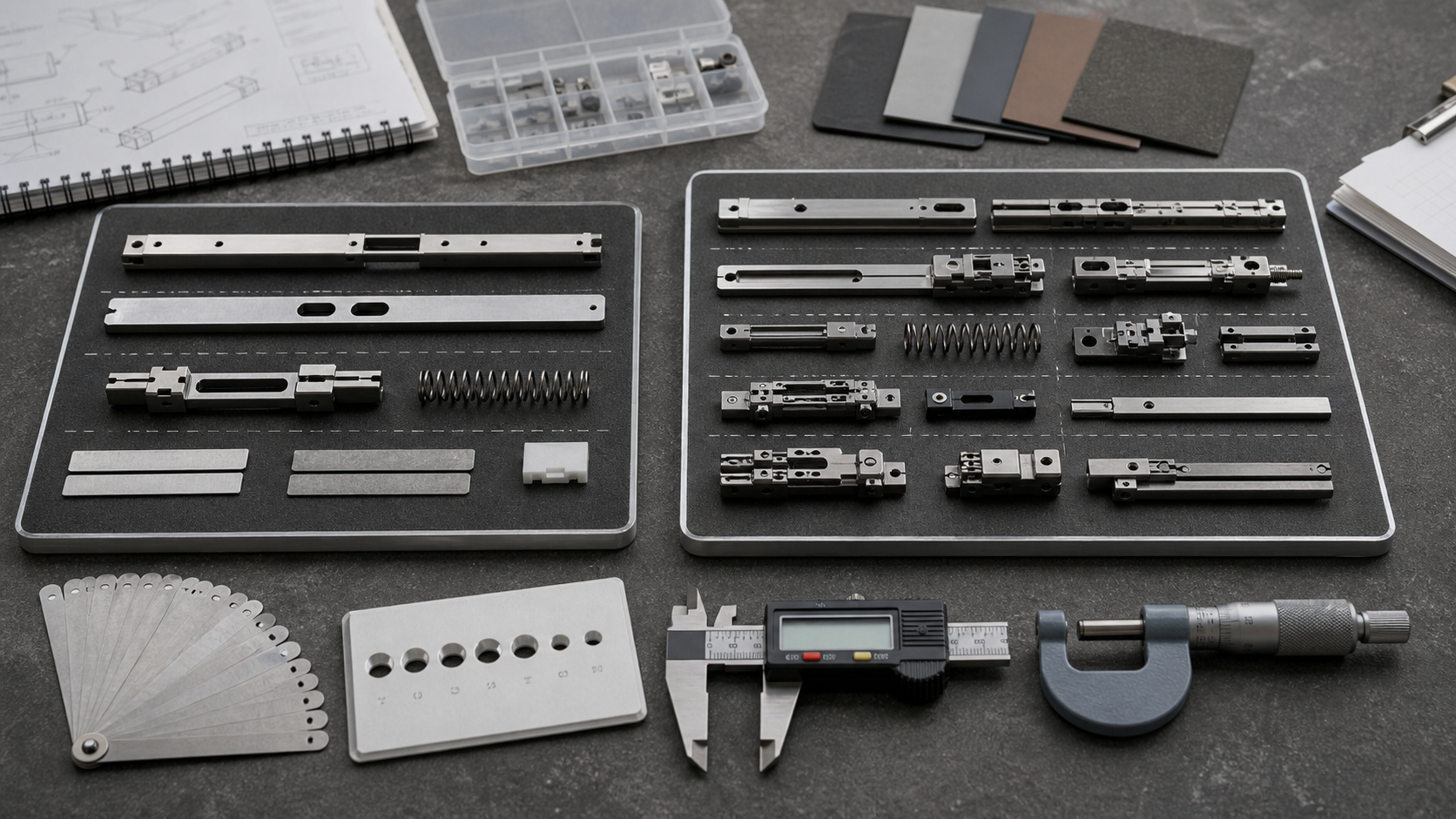
I Define the Action Type Before I Estimate Cost
In simple sourcing language, an OTF knife can be discussed as single-action or double-action. A single-action concept usually drives the blade in one direction automatically and requires a separate reset step. A double-action concept usually controls both opening and closing through the same slider or control. I keep the explanation high level because buyers do not need a mechanism lesson to write a better RFQ. They need to know that the two choices create different cost, part count, assembly, and testing needs.
Double-action OTF projects usually require more attention to internal fit, spring consistency, slider feel, lock engagement, and debris sensitivity. Single-action projects may be simpler in some ways, but they still need clear function checks. Both types can be more demanding than a normal folding knife because the blade must move inside a narrow handle path. If a buyer only wants the look of an OTF but does not need that action, I may suggest another design direction. A manual folder, button lock folder, or sliding utility concept may better match cost, MOQ, and market rules.
| Action concept | Sourcing impact | What I ask the buyer |
|---|---|---|
| Single-action OTF | Fewer user steps in one direction, separate reset | Is the reset method acceptable for the market? |
| Double-action OTF | More convenient feel, more internal complexity | Can the target price support tighter QC? |
| Manual sliding concept | Lower mechanism sensitivity in some projects | Does it meet the product positioning? |
| OTF-style folder | Visual reference without full OTF structure | Is the buyer open to a safer design route? |
What Legal and Market Checks Should Come Before Quoting an OTF Knife?
OTF projects can be blocked by market rules before production even starts. Ignoring this can waste sampling cost.
Buyers should check destination laws, import rules, sales platform rules, age controls, automatic-knife definitions, switchblade language, packaging needs, and local legal advice before quoting an OTF knife.
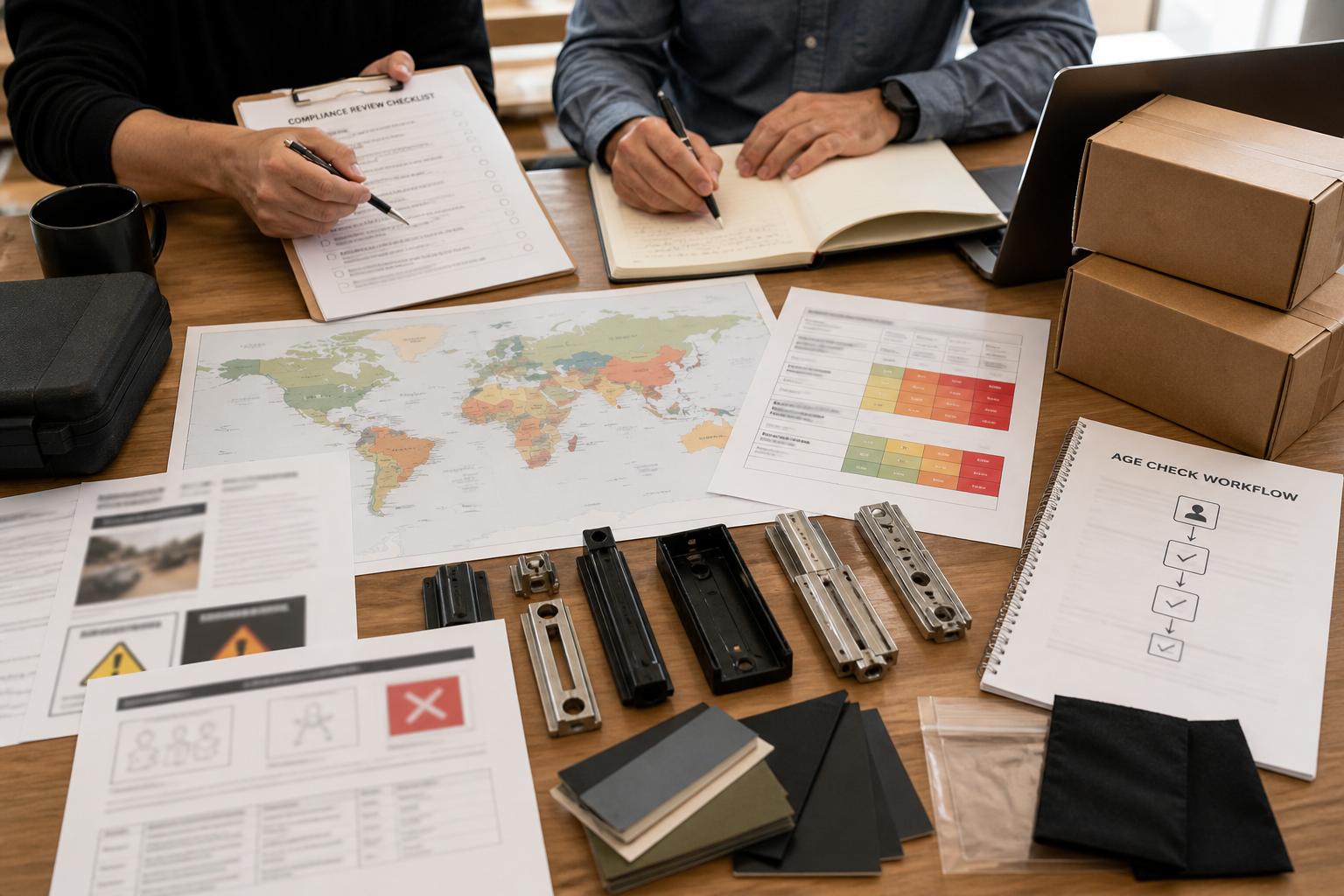
I Treat OTF as a Compliance-Sensitive Category
I do not tell buyers that an OTF knife is legal or illegal for a whole country without a specific review. Rules change by jurisdiction and sales channel. Still, OTF projects often need extra caution because many versions involve automatic movement or gravity-related language. In the United States, 15 USC Chapter 29 defines "switchblade knife" for federal purposes and includes language about automatic opening by a button or other device in the handle, or by inertia, gravity, or both. The same chapter also includes an exception for a spring, detent, or other mechanism designed to create a bias toward closure when manual force is required.
CBP guidance on personal knives and switchblades also warns that switchblade and other spring-loaded knives may be prohibited and that local rules can still apply. In the UK, the Offensive Weapons Act 2019 guidance discusses flick knives and gravity knives, including amended wording around automatic opening. These sources do not answer every buyer's situation, but they show why OTF RFQs should include legal review before sample approval.
| Compliance item | Why it matters | Buyer action |
|---|---|---|
| Destination market | Rules differ by country and region | Confirm target market before design |
| Mechanism type | Automatic or gravity language may matter | Describe the structure accurately |
| Import path | Customs may review restricted categories | Ask broker or counsel before shipment |
| Sales channel | Platforms may have their own rules | Check marketplace and distributor policies |
Which Blade, Handle, and Material Choices Matter Most?
Some buyers choose OTF materials like a normal folder. That can miss the needs of the sliding blade structure.
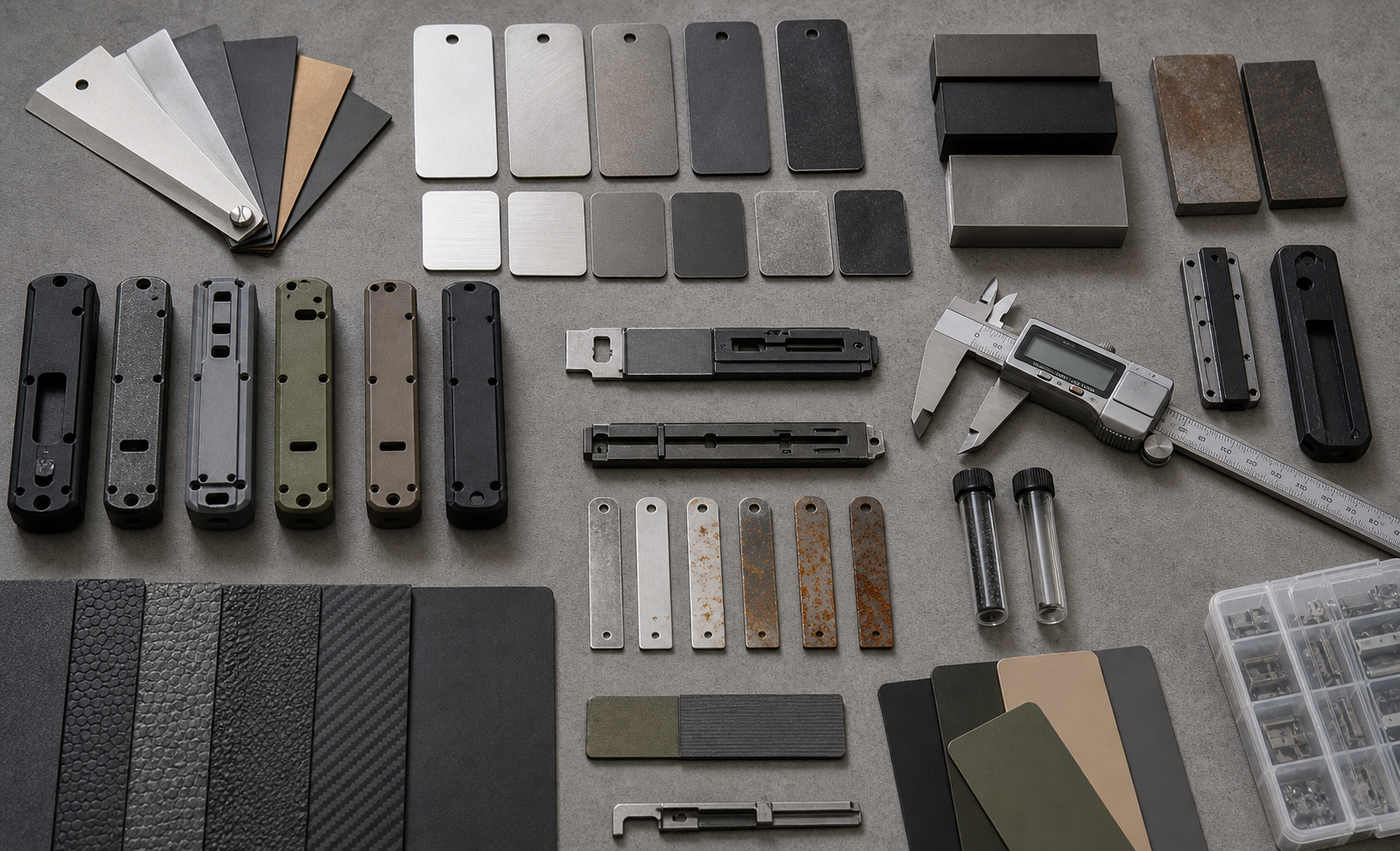
OTF material choices should balance blade steel, blade thickness, handle strength, machining accuracy, surface finish, weight, corrosion resistance, and internal wear control.
I Balance Blade Performance With Internal Movement
Blade steel matters in every knife, but an OTF knife also needs a blade that can move cleanly inside the handle. The blade thickness, tang area, surface finish, straightness, and heat treatment all affect the final action. If the blade is too thick for the handle channel, movement feels rough. If the blade is too thin for the product level, the buyer may feel the knife lacks substance. If the surface finish is inconsistent, the blade can show marks or create friction.
For steel discussion, I prefer practical choices that match the target market. A source such as Alleima 14C28N knife steel is useful because it describes a knife steel used for applications that need sharpness, edge stability, hardness, and corrosion resistance. But steel alone does not solve the product. Heat treatment, grinding, straightness, and surface finish must all be controlled. The handle material also matters. Aluminum can support a clean machined housing and lower weight. Stainless steel can feel solid but may become heavy. G10 or inserts can improve grip, but the internal structure still needs stable machining and assembly.
| Material choice | What it affects | Production focus |
|---|---|---|
| Blade steel | Edge performance, corrosion resistance, cost | Heat treatment and hardness check |
| Blade thickness | Movement, strength, handle space | Flatness and channel clearance |
| Aluminum handle | Weight and machined housing | Surface treatment consistency |
| Grip inserts | User feel and brand styling | Fit, adhesive or screw method, edge finish |
What Mechanism and Tolerance Controls Decide OTF Quality?
OTF quality problems often appear as blade play, rough sliding, weak return, or uneven lockup. Small tolerance errors can become visible fast.
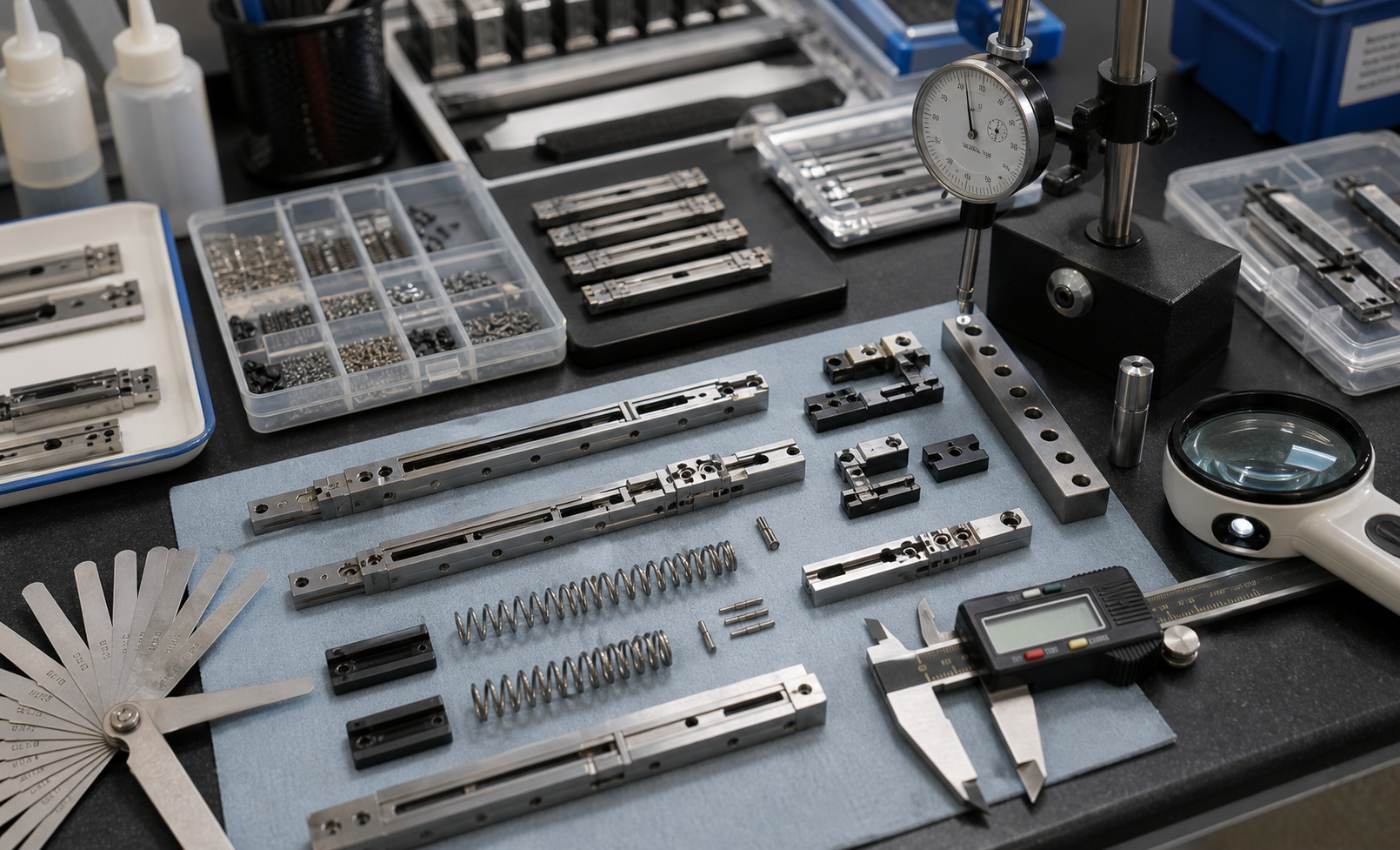
OTF quality depends on guide track accuracy, blade carrier fit, spring consistency, lock surface contact, slider feel, internal cleanliness, screw control, lubrication choice, and repeat assembly standards.
I Control the Small Relationships Inside the Handle
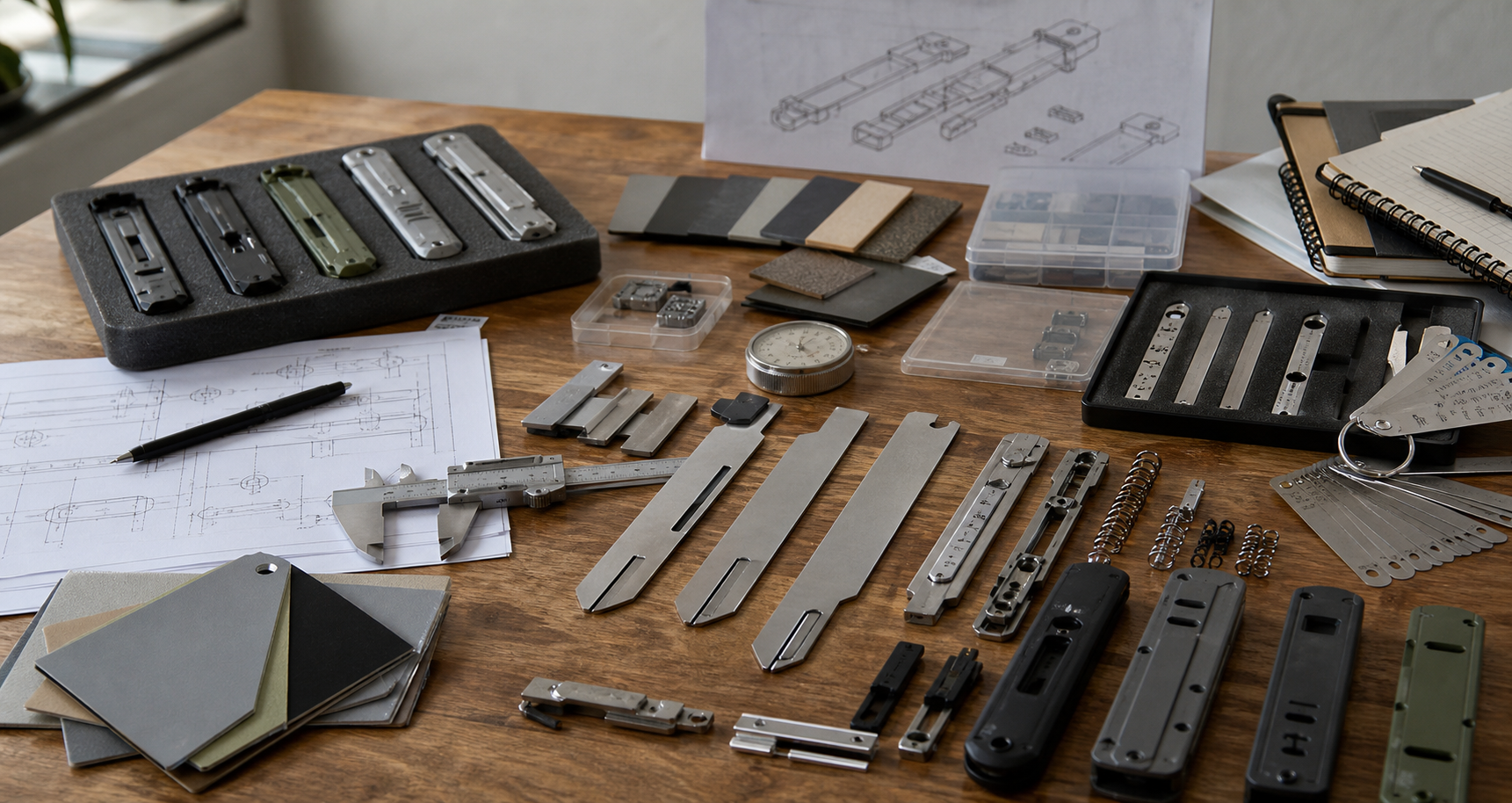
An OTF knife is sensitive because many internal parts must work together in a narrow space. I do not want the first sample to feel smooth only because one technician adjusted it by hand for a long time. I want the design to repeat. That means the guide track, blade carrier, lock points, slider, springs, screws, and handle body must be designed for stable assembly.
The most common buyer complaints in OTF projects are not always about blade steel. They are about action feel, blade movement, lock engagement, noise, inconsistency between samples, or function after dust enters the handle. This is why I ask for target tolerance level, sample test quantity, internal cleanliness standard, screw torque control, and function test requirements. A low-cost OTF project can become more expensive than expected if every unit needs too much hand tuning. A more realistic RFQ should include the expected product level. A basic promotional OTF-style product, a mid-range utility OTF, and a higher-positioned automatic OTF should not use the same internal expectations.
| Control point | What can go wrong | Inspection idea |
|---|---|---|
| Guide track | Rough movement or rubbing | Check channel dimension and surface |
| Lock contact | Inconsistent open or closed position | Inspect engagement surface |
| Spring consistency | Weak or uneven action | Test repeated function by sample lot |
| Internal cleanliness | Dust-related friction | Clean assembly process and final check |
How Should Buyers Test an OTF Sample Before Mass Production?
A single smooth sample can hide batch problems. OTF samples need repeated functional checks before mass production approval.
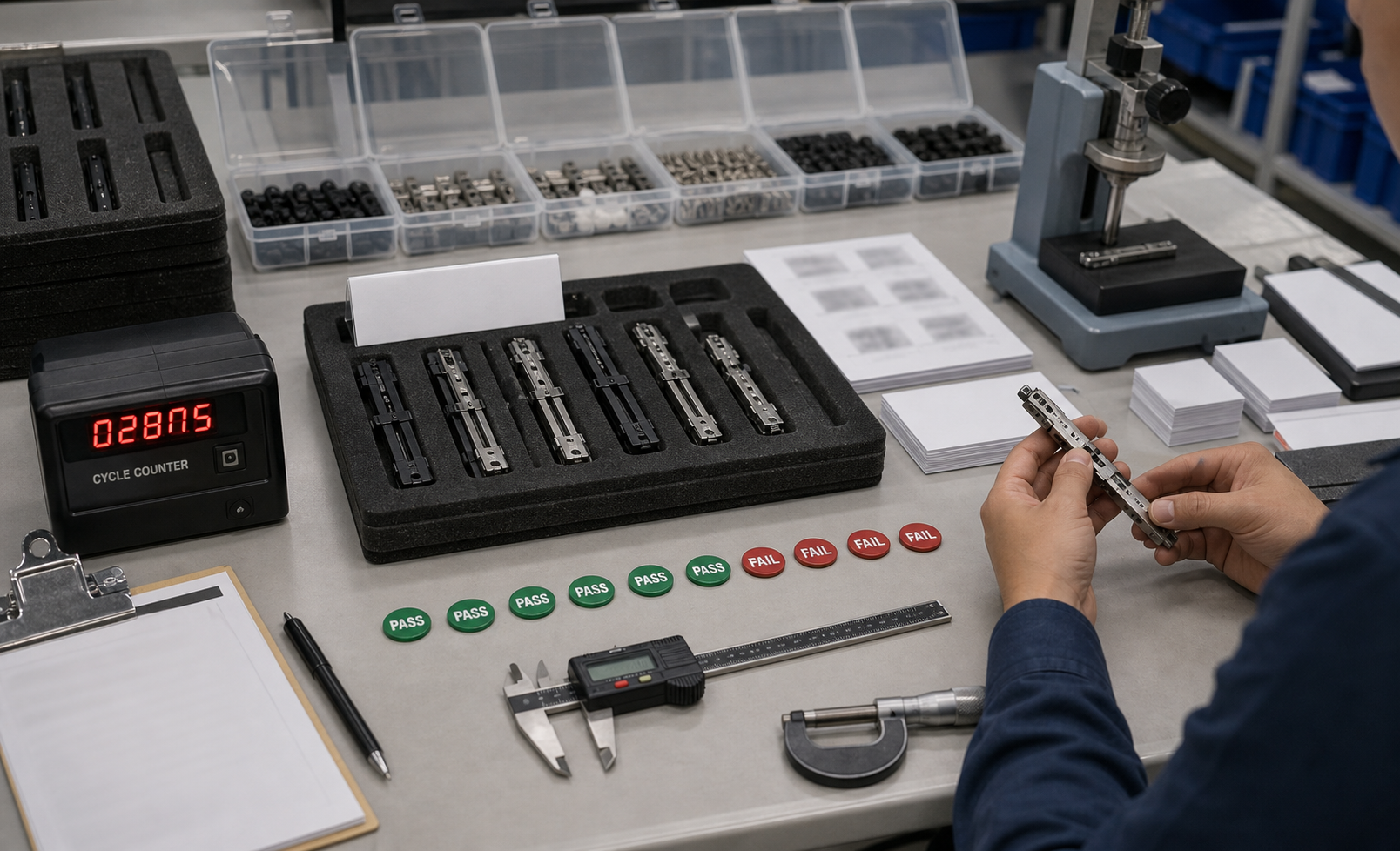
Buyers should test OTF samples for opening and closing consistency, blade play, lock engagement, slider force, edge quality, handle finish, screw stability, noise, internal cleanliness, and packaging match.
I Approve Function, Not Only Appearance
For a standard folding knife, I already check blade centering, opening feel, lockup, edge, finish, and packaging. For an OTF knife, I add more repeated function checks. The sample should open and close consistently. The blade should not feel uncontrolled in the handle. The slider should not feel too hard for the target customer. The lock should engage in both end positions when the design requires it. Screws should remain stable. The internal space should stay clean after assembly.
Hardness control also matters because the blade still needs cutting performance. The NIST Rockwell hardness measurement guide is useful background because hardness readings can vary if measurement practice is poor. For B2B orders, the buyer does not need to inspect every blade with an academic process. But the buyer should agree on a practical hardness check and record method. I also suggest testing more than one sample. If one sample works well and five others feel different, the design or assembly process is not ready.
| Test item | What to check | Why it matters |
|---|---|---|
| Repeated action | Consistent open and close function | Finds mechanism variation |
| Blade play | Movement at open and closed positions | Protects user feel |
| Slider force | Comfort and repeatability | Matches target customer expectation |
| Hardness and edge | HRC range and sharpened edge | Supports cutting performance |
What Packaging and Listing Choices Reduce OTF Project Risk?
OTF packaging is not only decoration. It can help buyers manage product classification, sales channel review, and customer expectations.
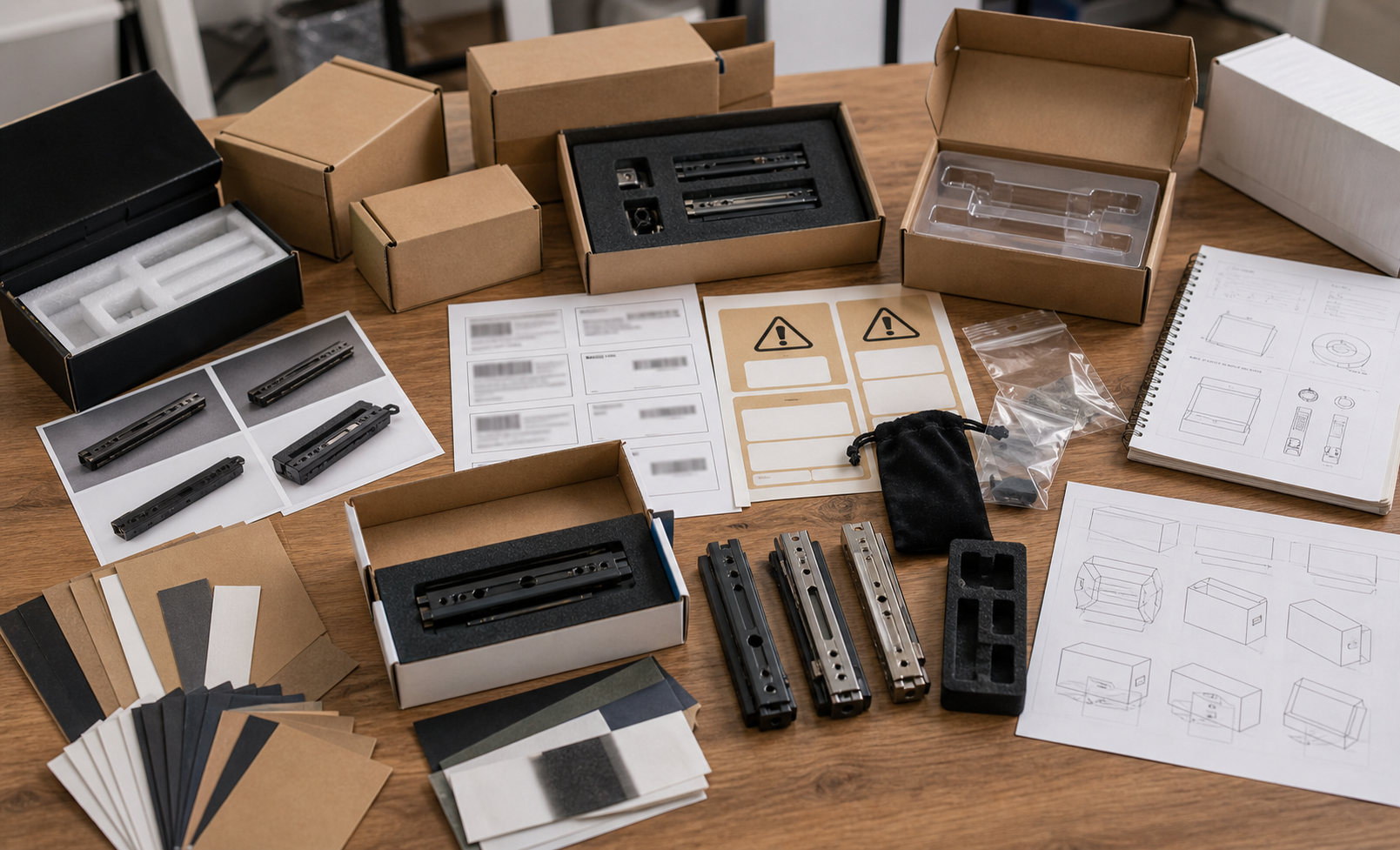
Packaging and listings should use accurate mechanism language, avoid broad legal claims, include buyer-approved warnings, support age-control workflows, and match the destination market and sales channel.
I Keep the Public Copy Conservative
OTF product copy should be factual. It should describe the structure, blade steel, handle material, size, finish, packaging, and intended market position. It should not make broad legal promises. I avoid phrases like "legal everywhere" or casual carry claims. I also avoid dramatic language that may make a platform reviewer or distributor uncomfortable. A practical product can sell on material, function, build quality, and brand design without risky wording.
Packaging should also support the buyer's sales channel. If the buyer sells through retail, online marketplaces, distributors, or controlled channels, the packaging may need label space, barcode area, warning text, carton marking, or special shipping notes. The supplier can prepare artwork space and consistent packaging. The buyer should provide the final legal and channel wording. This is especially important for OTF projects because some markets and platforms treat automatic or front-opening products more carefully than normal manual folders.
| Packaging or listing item | Better practice | Reason |
|---|---|---|
| Product name | Use accurate OTF and mechanism language | Reduces category confusion |
| Legal wording | Tell users to check local laws | Avoids broad claims |
| Warning area | Leave space for buyer-approved text | Supports market updates |
| Channel data | Match platform category requirements | Helps listing review |
What Should a Complete OTF Knife RFQ Include?
An OTF RFQ with only size and material is not enough. The supplier needs structure, market, QC, and packaging details.
A complete OTF RFQ should include action type, destination market, legal review status, blade steel, blade length, handle material, mechanism expectation, finish, logo, packaging, MOQ, target price, inspection plan, and after-sales needs.
I Want the Sensitive Questions Up Front
When a buyer sends a complete OTF RFQ, the project becomes easier to judge. I want to know the target market first. Then I want to know the action type, manual or automatic expectation, blade length, blade steel, handle material, finish, logo method, packaging format, target price, estimated order quantity, and inspection needs. If the buyer has legal review notes, broker comments, or platform rules, I want to see them before sampling.
This does not slow the project down. It saves time. If the target market cannot accept an automatic OTF, we should not spend weeks developing one. If the price target cannot support tight mechanism control, we should discuss another structure. If the buyer needs strong after-sales support, we should plan spare screws, packaging notes, and inspection records. A good RFQ also helps me suggest alternatives. Sometimes the right answer is a simpler manual folder, a button-lock folder, or a rescue-style tool instead of an OTF. Good manufacturing support is not only saying yes. It is helping the buyer choose a product that can actually sell and repeat.
| RFQ field | What to provide | Why it helps |
|---|---|---|
| Market and legality | Destination country, channel, review status | Prevents wrong product direction |
| Action type | Single-action, double-action, manual, or alternative | Clarifies mechanism and cost |
| Product specs | Steel, length, handle, finish, logo | Supports accurate quotation |
| QC and after-sales | Function tests, packaging, spare parts | Protects repeat orders |
When Is an OTF Project a Good Fit for ODM Development?
Not every buyer should start with OTF. A complex mechanism can be the wrong choice for price-sensitive or uncertain markets.
An OTF project fits ODM development when the buyer has a clear market, confirmed legal route, realistic price target, defined quality level, and enough volume to support mechanism development and testing.

I Use OTF Only When the Project Can Support It
An OTF knife can be a strong product when the buyer's market wants that structure and can support the cost. It can also become a difficult product if the buyer only wants a dramatic sample but has no channel approval, no legal review, no realistic price target, and no QC plan. I would rather have a hard discussion early than build a sample that cannot move into production.
For ODM development, I check four things. First, does the target market allow the product category and sales channel? Second, can the price target support the internal parts and inspection needed? Third, does the buyer's brand positioning match the complexity of the product? Fourth, can repeat orders be controlled without heavy hand adjustment? If the answer is yes, an OTF project can move forward with careful specification. If not, I suggest another tool design. Vast State's role is to help buyers make practical products, not only attractive samples.
| ODM fit factor | Good sign | Warning sign |
|---|---|---|
| Market review | Destination and channel checked | Buyer asks for generic legality answer |
| Price target | Budget supports mechanism QC | Target price fits only a simple folder |
| Product positioning | Brand can explain the structure | Product is chosen only for novelty |
| Repeatability | Design can be assembled consistently | Each unit needs too much adjustment |
Turn your idea into a quote-ready knife project.
Share your drawing, sample photo, target quantity, market, and packaging needs. Vast State will review manufacturability and prepare OEM/ODM options.
Conclusion
I evaluate OTF projects by structure, legality, materials, tolerance, QC, packaging, and RFQ clarity before moving into samples.
Source Notes
- AKTI approved knife definitions supports terminology around automatic knives, bias toward closure, and out-the-front gravity context.
- 15 USC Chapter 29 supports U.S. federal context for switchblade definitions and bias-toward-closure language.
- CBP personal knife guidance supports import and local-rule caution for switchblade and spring-loaded knife context.
- GOV.UK Offensive Weapons Act 2019 guidance supports caution around flick knives, gravity knives, age controls, and UK-specific restrictions.
- Alleima 14C28N knife steel supports the material discussion for stainless knife steel.
- NIST Rockwell hardness guidance supports the need for controlled hardness measurement practice.
- ISO 9001:2015 supports the quality management and process-control discussion.