Pocket knife rules are easy to oversimplify. One wrong listing claim can create customs, platform, retail, or buyer trust problems.
B2B knife sellers should treat pocket knife laws as market-specific compliance work. Before sales, ownership, or carry claims, they should verify destination rules, age limits, blade length, lock type, opening mechanism, packaging, delivery controls, and product wording with qualified legal or compliance support.
Quick buyer brief:
- Answer: Check laws by destination market, product mechanism, blade length, sales channel, and end-use wording.
- Buyer context: This helps brands, importers, wholesalers, and distributors avoid risky generic claims.
- Key checks: Age restriction, prohibited categories, opening mechanism, blade length, lock type, import rules, packaging, delivery, and listing language.
Planning a private-label knife line for this market?
Use this article as an early planning reference, then prepare your target market, product category, labeling needs, and buyer-specified compliance requirements before production.
I do not treat knife law topics as simple blog advice. I am not a lawyer, and this article is not legal advice. But in OEM and ODM knife manufacturing, I do see where projects become risky. The risk often starts before production. The buyer asks for a design, the listing team writes a broad claim, and nobody checks how sales, ownership, carry, import, and delivery rules work in the target market. A better process is simple: classify the product clearly, confirm the destination market, verify the rules, and keep the product wording practical.
Why Should B2B Buyers Treat Pocket Knife Laws as Market-Specific Work?
One pocket knife can be acceptable in one place and restricted in another. Generic compliance answers can mislead buyers and sellers.
B2B buyers should treat pocket knife laws as market-specific because sales, ownership, public carry, import, blade length, lock type, and opening mechanism rules differ by country, region, state, city, and sales channel.
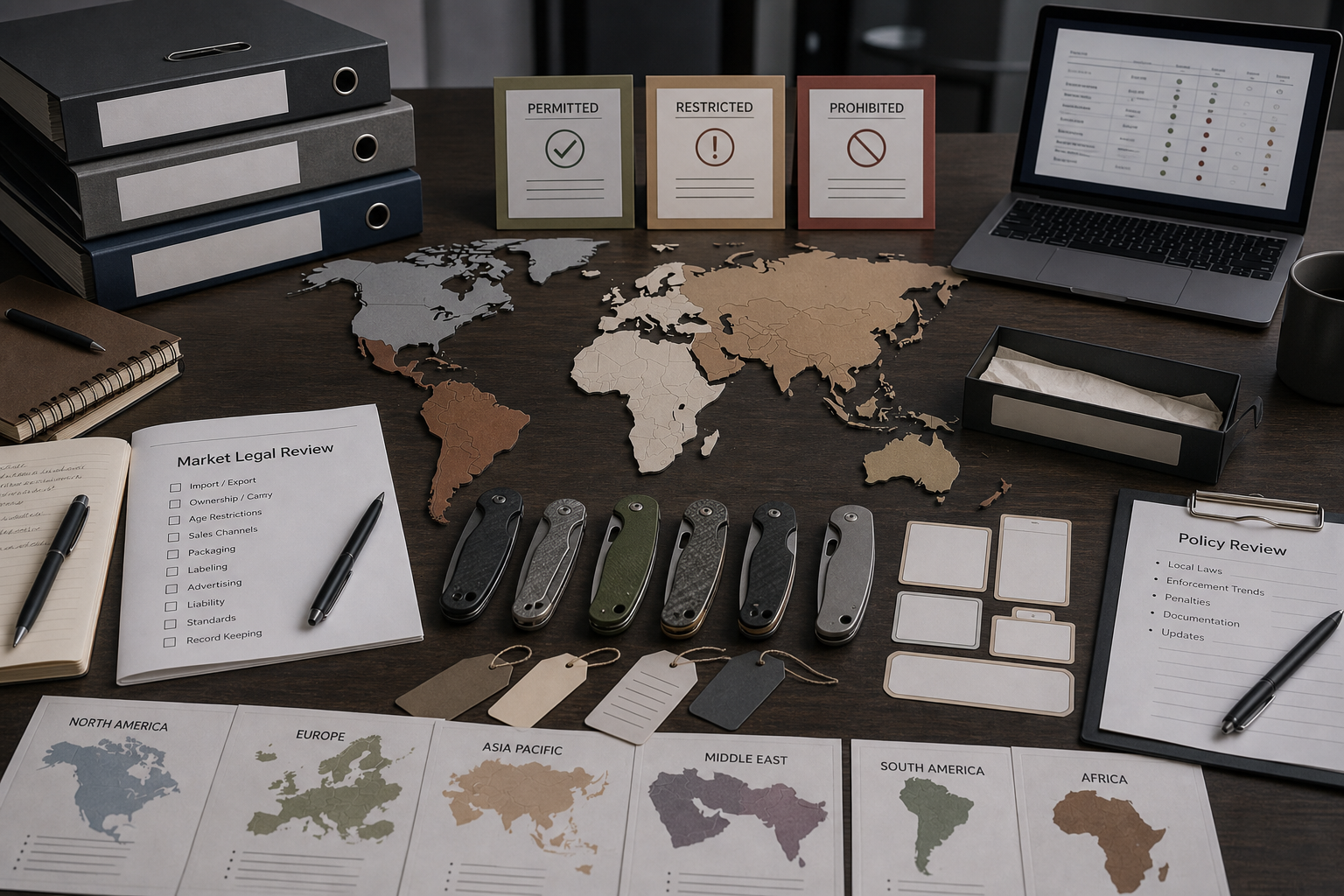
I Separate Product Design From Market Permission
When a buyer asks whether a pocket knife is "legal," I first slow the discussion down. The better question is: legal where, for whom, through which sales channel, and for what use claim? A product can be manufactured correctly but still face sales restrictions, shipping restrictions, listing limits, or carry limits in a destination market. A supplier can help clarify the structure, but the buyer still needs local legal or compliance review before making public claims.
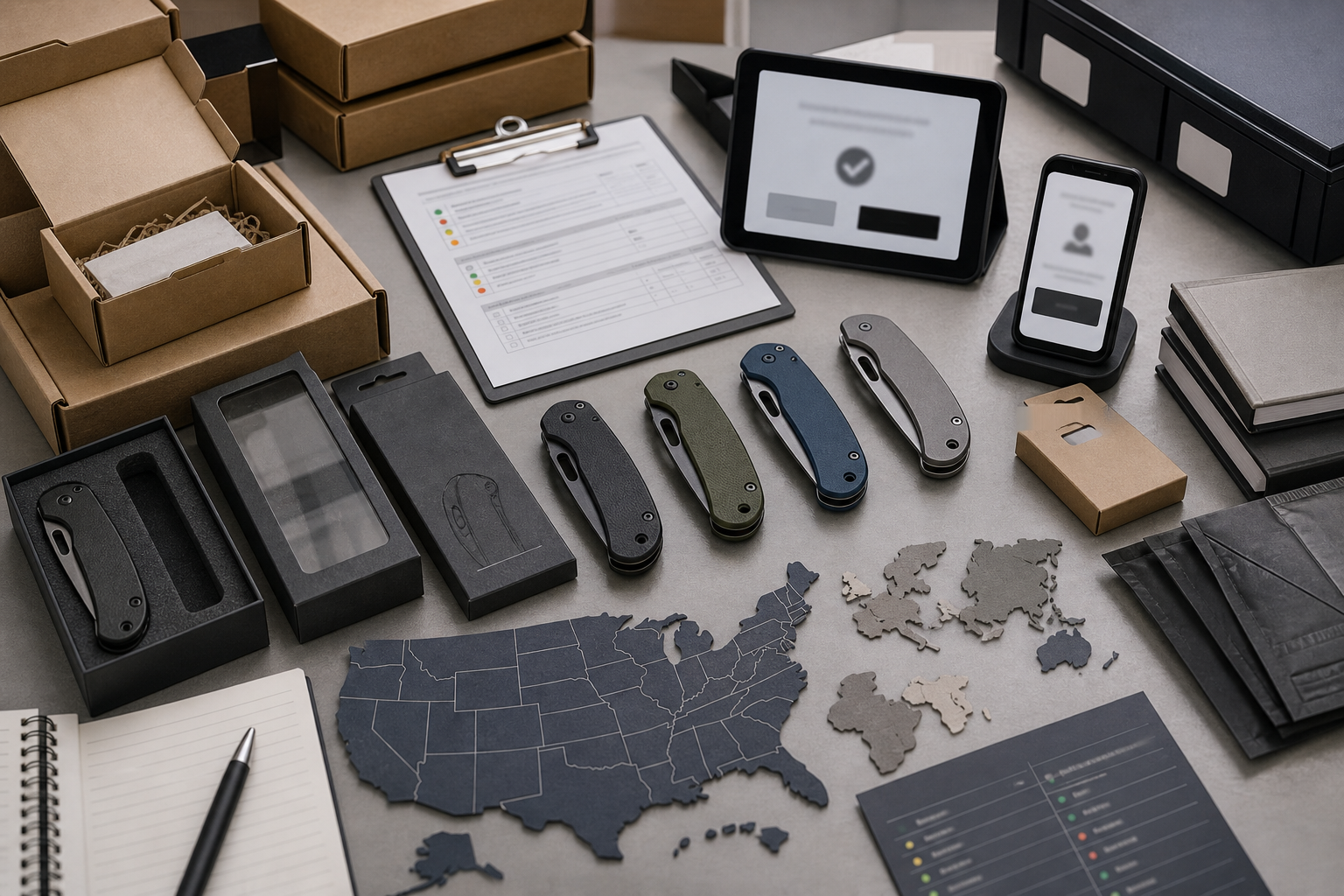
This matters for B2B projects because the same product may move through several steps. It may be made in China, imported by a distributor, sold through a retail platform, shipped to a consumer, and then used under local carry rules. Each step can involve different controls. The product specification should therefore include destination country, state or region if relevant, intended sales channel, buyer age control plan, product category, mechanism type, blade length, lock type, packaging requirement, and warning or labeling needs. I prefer to discuss these issues before tooling, not after the buyer has already approved a sample.
| Compliance question | Why it matters | Buyer action |
|---|---|---|
| Destination market | Rules differ by place | Identify country, region, and sales channel |
| Product category | Mechanism and blade design may matter | Define manual, assisted, automatic, lock, and blade length |
| Sales channel | Online and retail rules can differ | Check platform, age check, and delivery rules |
| Public wording | Claims can create risk | Avoid broad "legal to carry" statements without review |
Private-label Planning Checklist
Before starting production, prepare the market and product details your importer or compliance advisor needs to review.
| RFQ Field | What to Prepare |
|---|---|
| Target market | Country, state, region, or sales channel |
| Product category | Folding knife / fixed blade / multi-tool / outdoor tool |
| Intended use | EDC / camping / kitchen / hunting / rescue / promotional |
| Buyer requirements | Testing, labeling, documentation, or packaging rules |
| Blade and lock details | Blade length, opening method, lock type, edge style |
| Packaging text | Warnings, claims, care notes, language requirements |
| Documents | Drawing, sample photo, logo file, packaging artwork |
| Review owner | Importer, legal advisor, testing lab, or internal compliance team |
How Do Sales Rules Affect Pocket Knife Listings and Retail Channels?
A knife may be manufacturable, but sales rules can still block the channel. Online sales often need extra controls.
Sales rules can affect age checks, product categories, online verification, delivery handover, package marking, retail display, and platform approval. Buyers should plan these before product launch.
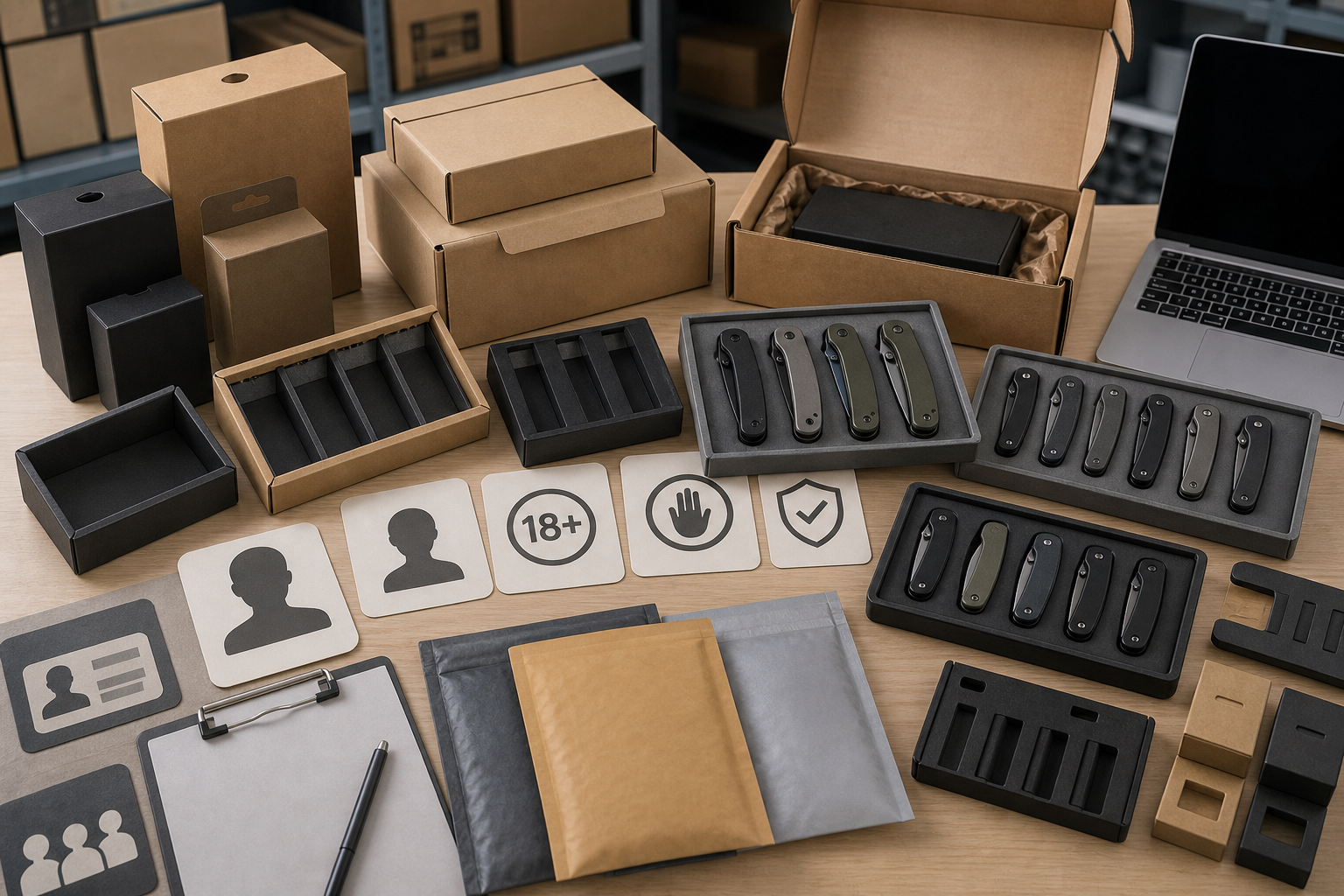
I Ask About the Sales Channel Before Packaging
In B2B knife projects, sales compliance is not only a legal department topic. It affects packaging, product descriptions, SKU setup, platform review, barcode labels, warehouse handling, and delivery partners. For example, UK official guidance on selling, buying and carrying knives says it is illegal to sell most knives or weapons to anyone under 18, with a limited exception for certain folding pocketknives. The UK statutory guidance for the Offensive Weapons Act 2019 also discusses remote sales such as online sales, mail order, and telephone sales.
That does not mean every market follows the UK model. It means a serious buyer should not wait until launch week to ask these questions. If a knife will be sold online, the buyer should check whether the platform allows the product, whether age verification is needed, whether delivery must be made to an adult, whether the package needs special marking, and whether any product type is prohibited. The supplier can support correct product details, packaging options, and technical descriptions. The buyer should confirm the actual sales obligation in the destination market.
| Sales issue | Practical effect | What to prepare |
|---|---|---|
| Age restriction | May limit retail and online sales | Age verification and sales policy |
| Remote sale | May require stronger checks | Online verification and delivery handover plan |
| Product listing | Platform may restrict categories | Accurate mechanism and blade description |
| Packaging | May need safe display or warning language | Retail box, insert, label, and shipment marking plan |
Why Do Ownership and Possession Rules Need Separate Review?
Buyers often mix up sales rules and ownership rules. A product that can be bought may still face possession limits in some places.
Ownership and possession rules should be checked separately from sales rules because some markets restrict certain knife categories, private possession, import, or possession in specific places.
I Keep "Can Sell" and "Can Own" in Different Columns
For a B2B seller, ownership and possession rules matter because customers may ask what they can do with the product after purchase. The safest public approach is usually to avoid making broad ownership or carry promises. Instead, the seller can provide product facts and tell buyers to check local laws. This is less exciting than a strong marketing claim, but it is much safer.
UK guidance gives a useful example of why categories matter. The same GOV.UK page lists banned knife and weapon categories and says listed items can be illegal to possess, bring into the UK, sell, hire, lend, or give to someone. The UK Offensive Weapons Act guidance also explains that some dangerous or offensive weapons have possession controls in private places. I would not use this to judge another country. I would use it to show buyers why product classification needs care.
For OEM work, this means we should define whether the product is a simple manual folding pocket knife, a locking folder, an automatic knife, a butterfly-style knife, a gravity-style mechanism, or another category. The buyer should then confirm whether that category is allowed for import, sale, ownership, and the intended channel.
| Rule area | What it may affect | B2B response |
|---|---|---|
| Ownership | Whether the end customer may possess the item | Avoid broad claims and check local law |
| Private possession | Some categories may be restricted | Confirm category before production |
| Import | Customs may review prohibited categories | Match product structure to import rules |
| Sales transfer | Lending, hiring, or giving may matter | Check channel and transaction type |
How Should Sellers Talk About Carry Rules Without Creating Risk?
Carry claims are tempting for marketing. But careless wording can create serious problems for buyers and end users.
Sellers should avoid universal carry claims. A safer approach is to state product facts, identify the target use, and tell customers to check local laws before carrying any knife in public.
I Prefer Product Facts Over Carry Promises
I do not like product pages that say "legal everywhere" or "carry without worry." Those statements are too broad. Carry rules can depend on place, blade length, lock type, public setting, reason, age, and product category. A seller may not know where the end user lives, travels, or carries the product. For this reason, B2B buyers should write conservative product copy.
GOV.UK gives a clear example. It says carrying most knives in public without a good reason is illegal, while certain folding pocketknives with a cutting edge no longer than 3 inches and no lock are treated differently. It also says a court decides whether a person had a good reason if charged. That kind of rule is hard to reduce into a simple sales slogan. In the U.S. context, rules can also vary below the federal level, so a national sales listing should be careful with carry wording.
For my manufacturing work, I help with factual details: blade length, locking or non-locking structure, opening mechanism, edge type, handle material, and packaging. The buyer should decide the legal wording with local counsel or compliance partners.
| Risky wording | Safer wording direction | Why it helps |
|---|---|---|
| Legal everywhere | Check local laws before carry | Avoids universal legal claim |
| No restrictions | See destination rules and product category | Keeps the buyer accurate |
| TSA approved knife | Check official travel rules before packing | Avoids travel confusion |
| Public carry ready | Designed for utility use where lawful | Focuses on product use, not legal promise |
How Do Blade Length, Lock Type, and Opening Mechanism Change Compliance Review?
Small design details can change classification. A few millimeters, a lock, or a spring mechanism may matter in some markets.
Blade length, lock type, and opening mechanism can affect whether a pocket knife is treated as a simple folding knife, lock knife, automatic knife, switchblade, gravity knife, or another regulated category.
I Make the Mechanism Clear Before Sampling
Blade length and mechanism language should be clear before a buyer approves a sample. In the U.S., 15 USC Chapter 29 defines a switchblade knife for federal purposes as a knife with a blade that opens automatically by hand pressure on a button or other device in the handle, or by inertia, gravity, or both. The same chapter also includes an exception for a knife with a spring, detent, or other mechanism designed to create a bias toward closure when hand, wrist, or arm force is required to open it.
Industry terminology is also useful. The AKTI approved knife definitions discuss terms such as automatic knife, ballistic knife, bias toward closure, butterfly knife, and gravity knife. I use these terms to keep drawings, samples, and buyer communication clear. I do not use them as a substitute for legal review.
For an RFQ, I ask buyers to specify blade length measurement method, locking or non-locking design, opening feature, spring or detent structure, and any destination-market requirement. This keeps the supplier from guessing.
| Design detail | Why it can matter | RFQ instruction |
|---|---|---|
| Blade length | Some rules use length thresholds | State measurement method and target length |
| Lock type | Locking and non-locking designs may differ | Define lock type clearly |
| Opening mechanism | Automatic, assisted, and manual terms matter | Describe the actual mechanism |
| Bias toward closure | May affect classification in some contexts | Confirm structure and legal review |
How Do Import, Customs, and Travel Rules Fit Into the Project?
Buyers may clear production but still face border or travel problems. Import and travel rules need a separate checklist.
Import, customs, and travel rules should be reviewed separately from general sales claims. Buyers should check destination customs rules, product category, shipping method, and official travel restrictions.

I Separate Import Clearance From Consumer Travel Advice
Import rules and travel rules are not the same. An importer cares about commercial entry, customs classification, product category, and whether a product is prohibited or restricted. A traveler cares about whether a knife can go in carry-on or checked baggage. These two questions should not be mixed on a product page.
For U.S. import and travel context, official sources show why a separate checklist matters. CBP states in its traveler guidance on personal knives and switchblades that switchblade knives and other spring-loaded knives are prohibited and may be subject to seizure, while local regulations for possession and transport can still apply. TSA's official knife page says knives are not allowed in carry-on bags, while checked bags are allowed for knives except certain rounded or blunt exceptions in carry-on; sharp objects in checked bags should be sheathed or securely wrapped.
For B2B buyers, this means product teams should not write travel claims casually. The supplier can provide product specs, carton details, and mechanism descriptions. The importer or seller should verify customs, carrier, air-travel, and local rules for the market.
| Logistics question | Why it matters | Buyer check |
|---|---|---|
| Import category | Customs may restrict product types | Confirm with broker or customs advisor |
| Product mechanism | Some mechanisms create higher risk | Provide accurate structure description |
| Shipping method | Carrier policies may differ | Confirm with logistics partner |
| Travel wording | Consumer rules are not sales rules | Link to official travel guidance instead of making claims |
What Packaging and Listing Details Help Reduce Compliance Confusion?
A good product can still fail review because packaging or listing text is careless. Words and labels matter.
Packaging and listing details should describe the product accurately, avoid unsafe claims, support age-control workflows, and match the verified product category, destination market, and sales channel.
I Make Packaging Support the Sales Process
Packaging is not only for branding. It can support a controlled sales process. UK official material on the sale of knives voluntary agreement by retailers says participating retailers follow principles to prevent sales to under 18s and ensure knives are safely displayed and packaged. This is a UK policy context, not a global rule, but it shows why packaging and display matter.
For OEM and ODM orders, packaging decisions should come early. A buyer may need a retail box, insert, age warning, barcode area, carton label, marketplace category data, or delivery label instruction. The exact wording should come from the buyer's compliance review. The factory can support layout space, material, printing, and consistency. I also suggest that buyers avoid aggressive product language. A pocket knife for EDC, camping, fishing, warehouse work, or general utility can be described by practical function, materials, and safety instructions. It does not need dramatic claims.
When the listing and package match the product facts, fewer people need to guess what the product is. That helps the buyer, platform, distributor, and end customer.
| Detail | Better practice | Reason |
|---|---|---|
| Product title | Use accurate category words | Reduces platform review confusion |
| Mechanism wording | Match the real structure | Avoids misclassification |
| Age-related text | Follow market rules | Supports retail and online workflows |
| Packaging design | Leave space for required labels | Makes compliance updates easier |
What Should Buyers Put in the RFQ for Legal and Compliance Review?
If the RFQ ignores compliance, the supplier cannot quote the real product risk. Missing details create later delays.
Buyers should include destination market, product category, blade length, lock type, opening mechanism, target sales channel, packaging needs, age-control expectations, import concerns, and required compliance documents in the RFQ.
I Ask for Compliance Fields Before Price Negotiation
Price matters, but price without compliance context is not complete. A supplier may quote a manual folder, while the buyer expects assisted opening. A buyer may ask for a short blade, but never define measurement method. A listing team may say the product is for one country, while the purchasing team sends it to several distributors. These gaps create rework.
For Vast State projects, I prefer to collect compliance-related RFQ fields at the same time as material and cost fields. The buyer should provide target market, sales channel, product category, blade length target, lock type, opening mechanism, intended packaging, any required warnings, age verification or delivery expectations, testing or inspection needs, and whether a local legal review has been completed. I do not need the buyer to solve every legal question before the first conversation. But I do need to know where the sensitive areas are.
This approach also helps ODM development. If a customer gives me only a rough idea, I can suggest a simpler manual structure, clearer product wording, or packaging space for market-specific labels. That saves time later.
| RFQ field | Example input | Why it helps |
|---|---|---|
| Destination market | United States, UK, EU country, or other market | Guides compliance review |
| Mechanism | Manual, assisted, automatic, lock type | Affects product category |
| Sales channel | Retail, online, distributor, wholesale | Affects packaging and listing needs |
| Compliance owner | Buyer counsel, broker, platform, distributor | Clarifies who confirms legality |
How Should Sellers Maintain Compliance Records After Production?
A launch is not the end of compliance work. Laws, platform rules, and buyer channels can change.
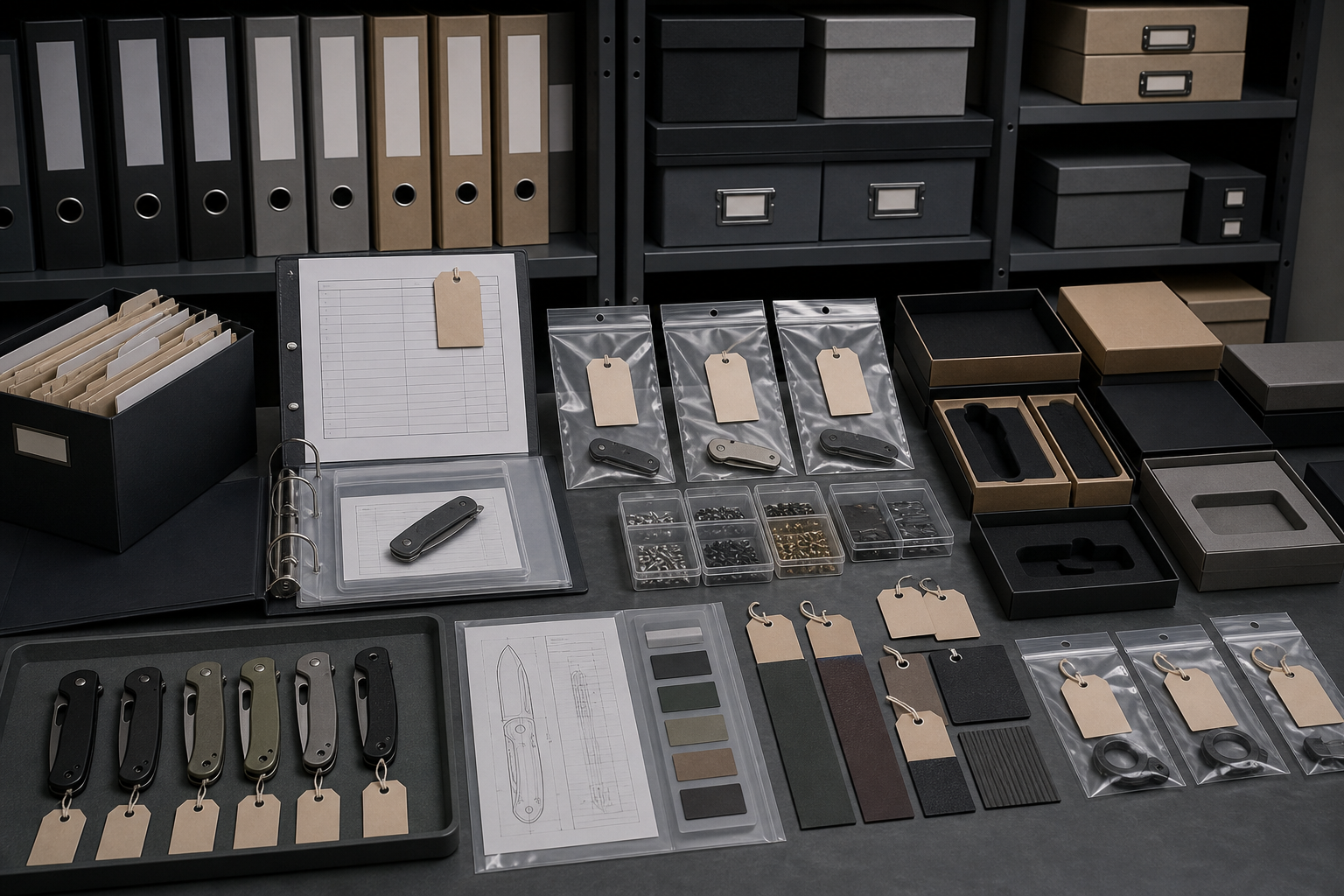
Sellers should keep product specifications, sample approvals, mechanism descriptions, packaging versions, legal review notes, age-control workflow records, inspection records, and market update logs.
I Treat Compliance as a Living File
For repeat production, I do not want the compliance knowledge to stay only in one person's memory. I want the buyer and supplier to keep a clear file. That file should include the approved drawing, sample photos, product specification, blade length measurement, mechanism description, lock type, packaging artwork version, carton label version, inspection records, and any buyer-provided legal or platform notes.
This is important because small changes can matter. A new lock type, a different opening feature, a longer blade, a new packaging claim, or a new destination market may require review again. Even if the product itself stays the same, laws or marketplace policies can change. A distributor may also ask for proof of product details. Good records make the answer faster.
From the supplier side, I can help by keeping production documents, QC records, approved samples, and packaging versions organized. From the buyer side, the legal review, import advice, sales policy, and platform rules should be maintained by the team responsible for the target market.
| Record type | What to keep | When to review |
|---|---|---|
| Product specification | Blade length, lock, mechanism, materials | Any design change |
| Packaging version | Artwork, warning area, carton labels | Any market or channel change |
| Sales policy | Age check, delivery, platform rules | Any channel change |
| Compliance notes | Legal review, customs advice, broker feedback | Before launch and repeat orders |
Planning a private-label knife line for this market?
Use this article as a planning reference, then confirm local requirements with your importer or compliance advisor before OEM/ODM production.
Conclusion
I handle pocket knife law topics by defining the product clearly, checking the target market, and avoiding broad legal claims.
Source Notes
- GOV.UK selling, buying and carrying knives supports UK examples on under-18 sales, public carry, and banned categories.
- GOV.UK Offensive Weapons Act 2019 guidance supports online sales, age verification, delivery, and package marking discussion for England and Wales.
- 15 USC Chapter 29 supports U.S. federal switchblade, ballistic knife, and bias-toward-closure context.
- CBP traveler guidance on personal knives supports import and local-rule caution for U.S. travel and entry context.
- TSA knives guidance supports the travel packing discussion.
- AKTI approved knife definitions supports mechanism terminology, but it is industry guidance, not legal advice.
- GOV.UK retailer voluntary agreement supports the packaging, display, and underage-sales prevention discussion.