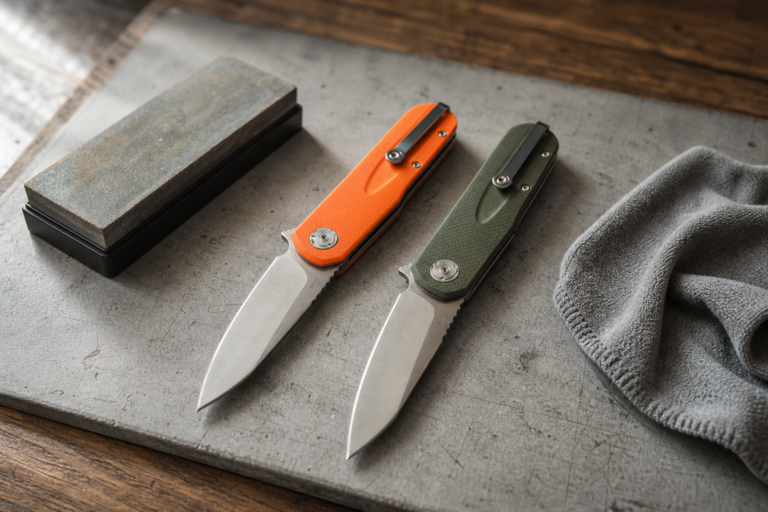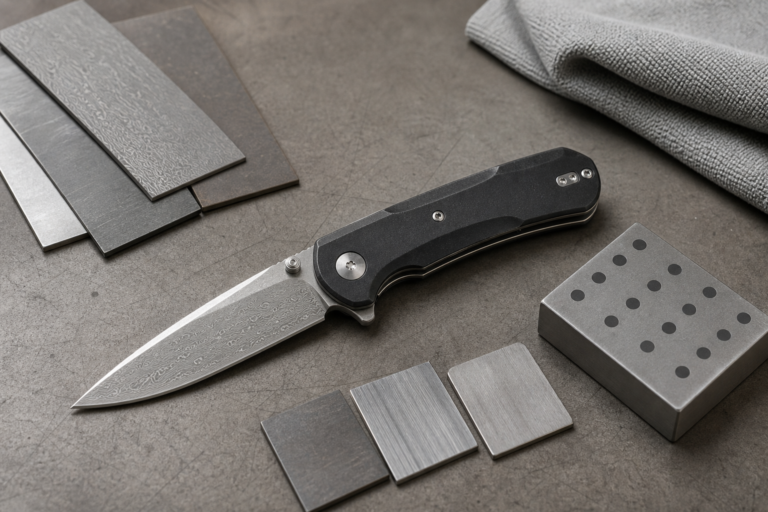
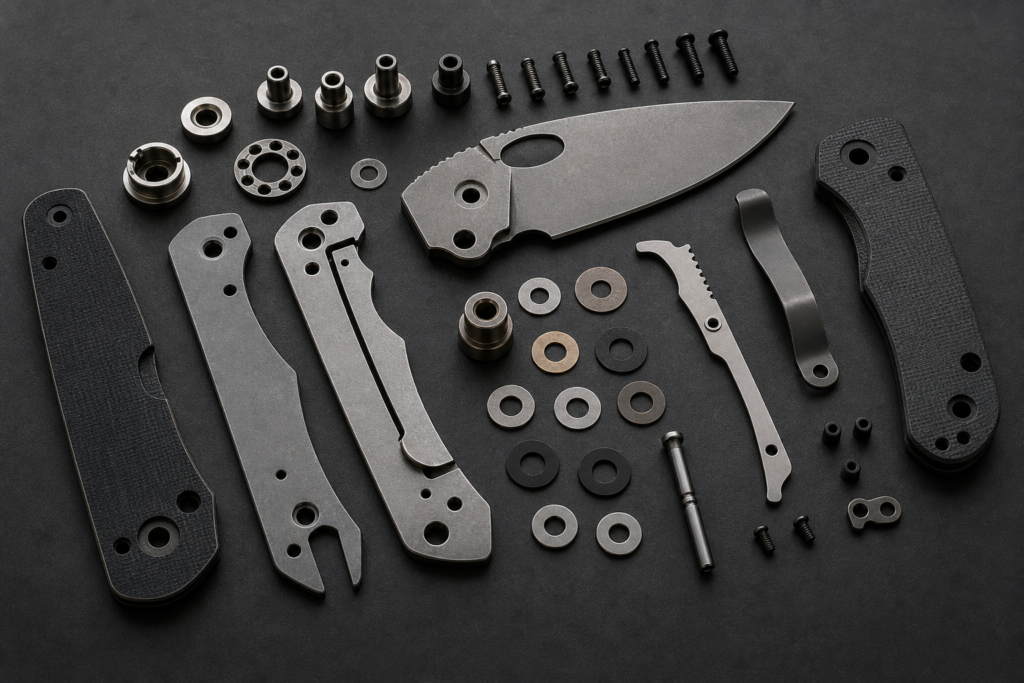
A pocket knife can look simple, but one weak part can ruin the project. Poor specs create loose pivots, rough action, and costly rework.
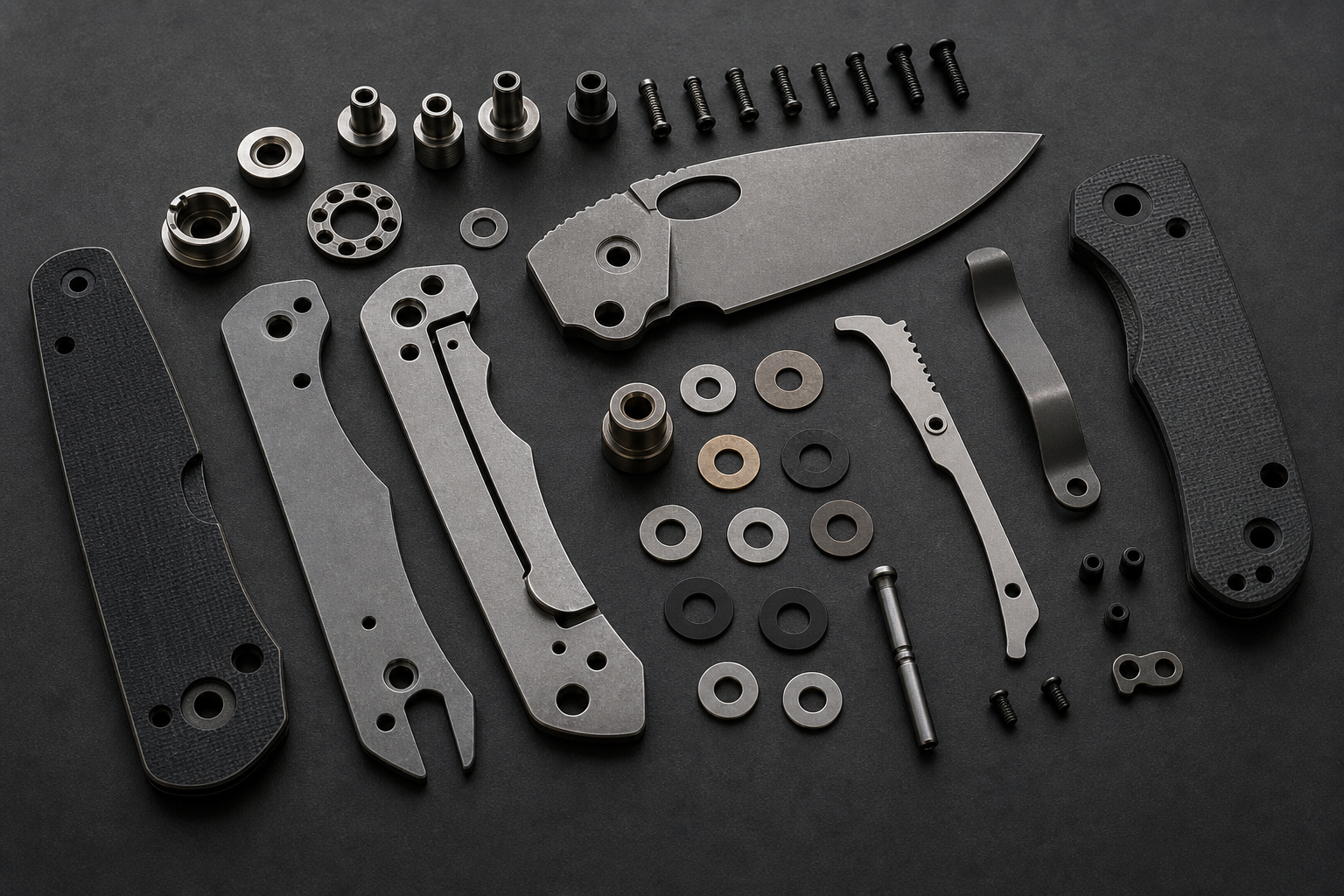
Buyers should specify each pocket knife part by function, material, tolerance need, finish, and inspection method. The key parts include the blade, pivot, washers or bearings, liners, lock, handle scales, backspacer, pocket clip, screws, and packaging-related accessories.
Quick buyer brief:
- Answer: Define every part by function, material, tolerance, finish, and inspection.
- Buyer context: This helps knife brands, importers, wholesalers, and private label buyers avoid vague RFQs.
- Key checks: Blade geometry, pivot fit, lock engagement, handle structure, hardware, action, sharpness, and final QC.
Developing a folding knife line for your brand?
Vast State supports OEM/ODM folding knife projects, including blade steel, lock structure, handle material, finish, logo method, packaging, and quality inspection planning.
When I review a pocket knife project, I do not treat the knife as one object only. I break it into working parts. Each part has a job. The blade cuts. The pivot controls motion. The lock controls safety. The handle controls grip and assembly stability. The screws hold the structure together. If the RFQ only says "pocket knife with stainless steel blade and G10 handle," too much is left open. A supplier may quote a low price, but the sample may not match the buyer's market. A clearer part-by-part specification makes the project easier to quote, prototype, inspect, and repeat.
Which Pocket Knife Parts Should Be Defined Before Quotation?
A vague RFQ invites vague pricing. If the supplier must guess each part, the first sample often misses the real target.
Buyers should define the blade, handle scales, liners, pivot system, washers or bearings, lock, backspacer or standoffs, screws, clip, finish, branding, packaging, and inspection needs before quotation.
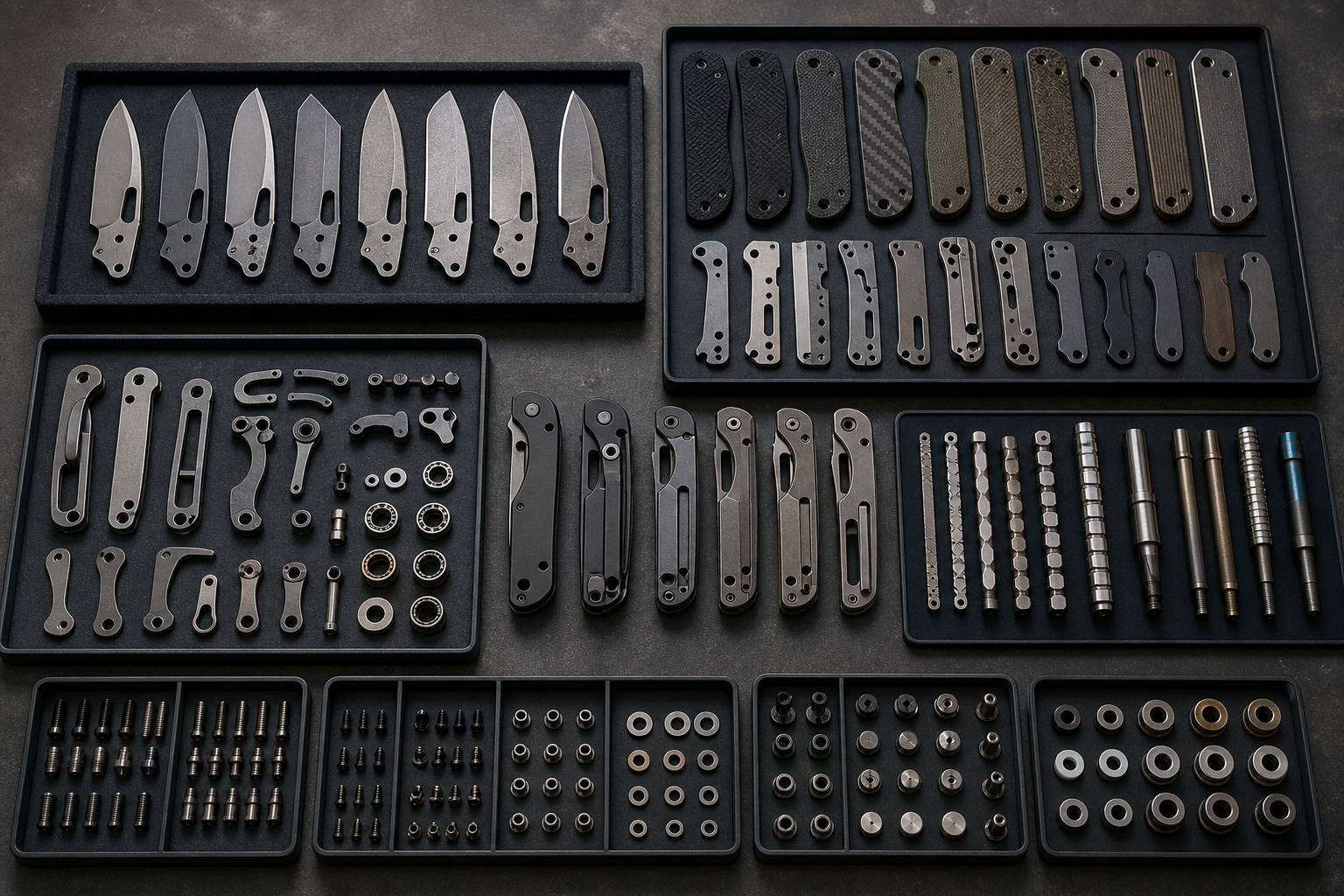
I Start With a Part Map, Not Only a Drawing
When I receive a pocket knife idea from a buyer, I first make a simple part map. This helps me see what must be quoted and what still needs a decision. A pocket knife has visible parts and hidden parts. The buyer may focus on blade shape and handle color, but the factory also needs pivot diameter, washer type, liner thickness, screw size, stop pin position, clip mounting, lock contact, and edge finish.
This is especially important for OEM and ODM projects. If a customer has a finished drawing, I check whether the structure can be made with stable machining and assembly. If the customer only has a reference idea, I help translate the idea into a manufacturable specification. I also ask about target price, MOQ, retail channel, target market, and packaging. These commercial details change the technical choices. A budget utility knife and a higher-positioned EDC knife can use similar part names, but they should not use the same material stack or inspection standard.
| Part group | What buyers should define | Why it matters |
|---|---|---|
| Blade | Steel, thickness, shape, grind, finish | Controls cutting function and cost |
| Handle | Scale material, liner, spacer, texture | Controls grip, weight, and assembly |
| Motion system | Pivot, washers, bearings, stop pin | Controls action and blade centering |
| Small hardware | Screws, clip, standoffs, branding | Controls repeat assembly and user feel |
OEM/ODM RFQ Checklist
Prepare these details to help Vast State review your project and provide a more accurate quotation.
| RFQ Field | What to Prepare |
|---|---|
| Project type | OEM from drawing / ODM private label / wholesale catalog |
| Product category | Folding knife / fixed blade / multi-tool / outdoor tool |
| Design status | Idea / sketch / 2D drawing / 3D CAD / physical sample |
| Target price | Ex-factory target price or retail price range |
| MOQ expectation | 500 / 1,000 / 3,000 / 5,000+ pcs |
| Logo method | Laser engraving / etching / printing / molded logo |
| Packaging | Standard packaging / custom retail box / Amazon-ready |
| Market | USA / EU / Japan / Korea / Middle East / other |
| Compliance needs | Buyer-specified testing / documentation / labeling |
| Timeline | Sample deadline / mass production deadline |
How Does the Blade Affect Cutting Function and Production Stability?
A blade is more than the visible profile. If geometry, steel, and heat treatment are wrong, the knife will not perform consistently.
The blade affects cutting function through steel choice, thickness, grind, edge angle, tip shape, surface finish, hardness, and heat treatment control. Buyers should specify these details together.
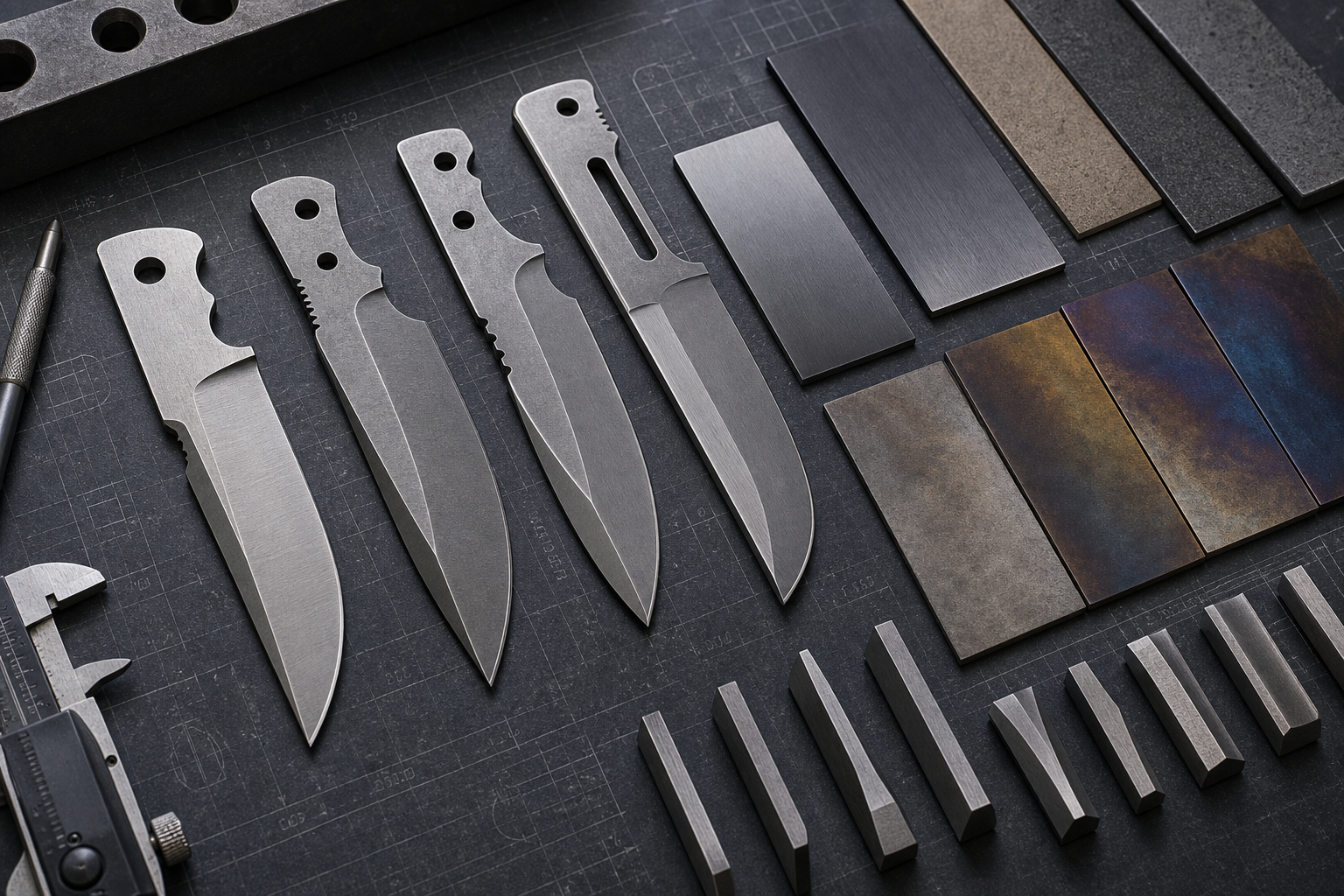
I Connect Blade Design With the Buyer Market
The blade is the first part most customers notice, but I look at it as a production system. Steel selection is one decision. Blade thickness is another. Grind height, edge angle, tip strength, surface finish, and hardness range must match the same product goal. For example, a slim daily-carry knife may need a thin cutting geometry and clean blade centering. A camping utility folder may need more tip strength and a handle that supports harder work. The buyer should not choose steel in isolation.
For steel discussion, I prefer to connect the material to the real order. A source such as Alleima 14C28N knife steel is useful because it explains why some stainless knife steels are valued for edge performance, hardness, and corrosion resistance. But even a good steel can disappoint if heat treatment and grinding are not controlled. This is why I ask for the target hardness range and inspection method. The NIST guide to Rockwell hardness measurement is a helpful reminder that hardness testing needs good practice to reduce measurement errors.
| Blade detail | Buyer decision | Production check |
|---|---|---|
| Steel grade | Cost, corrosion resistance, edge need | Material confirmation and heat treatment plan |
| Thickness | Strength, weight, cutting feel | Tolerance and flatness |
| Grind | Cutting geometry and appearance | Symmetry and heat control |
| Hardness | Edge holding and toughness balance | Rockwell test procedure and sample records |
Why Do the Pivot, Washers, and Bearings Decide the Opening Feel?
A knife can have a good blade but still feel poor. Rough action, blade play, or off-center closing often starts at the pivot.
The pivot system controls blade rotation, centering, side play, and opening feel. Buyers should define pivot size, washer or bearing type, screw structure, tolerance, lubrication, and assembly torque.
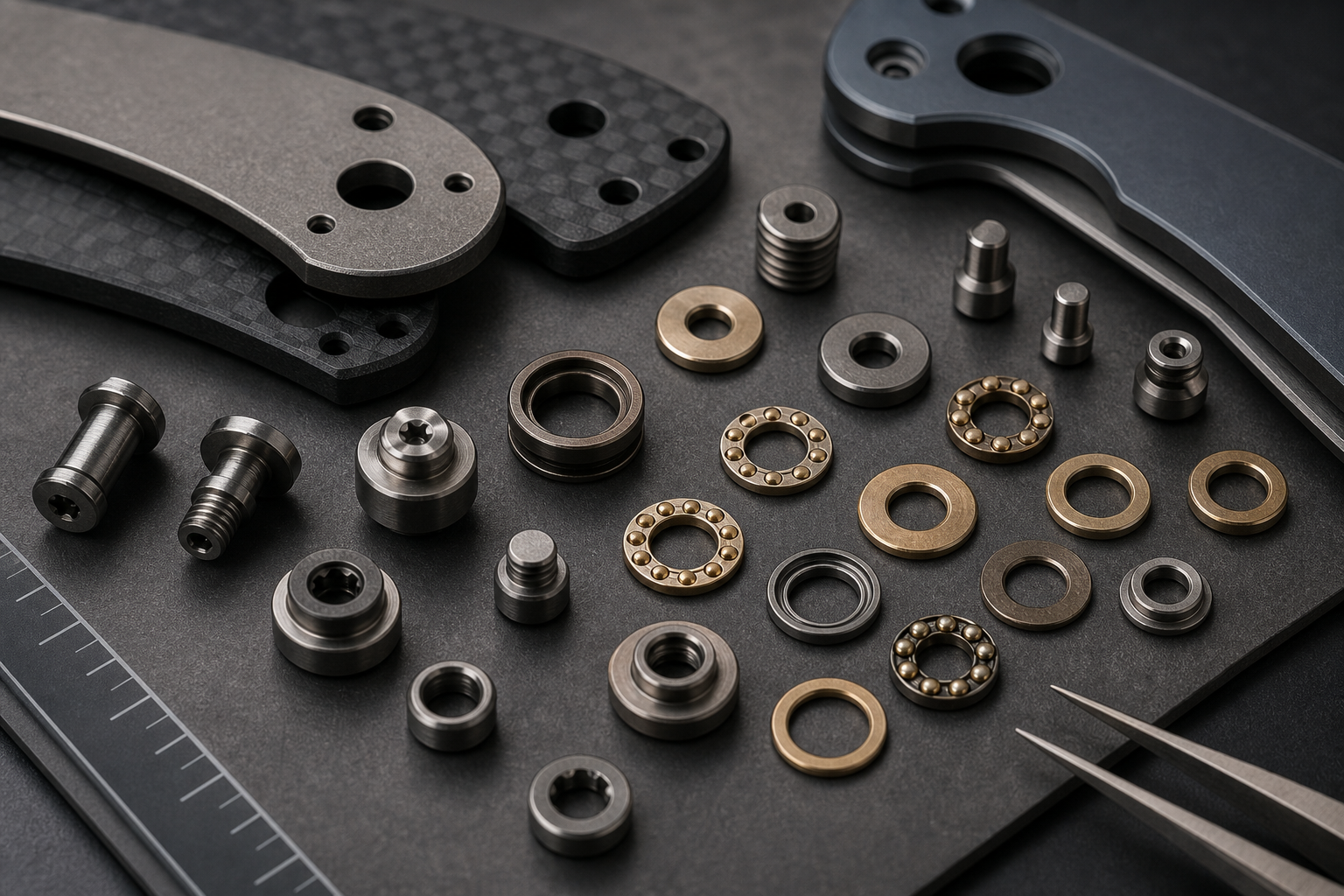
I Treat the Pivot as the Center of the User Experience
The pivot is a small part, but it controls a large part of the customer's first impression. When the blade opens, the buyer feels the pivot, washers or bearings, detent, stop pin, and lock relationship at the same time. If the pivot hole is not clean, the washer surface is uneven, or the screw tension is unstable, the knife may feel tight in one sample and loose in another. That is not a good foundation for repeat orders.
I usually ask buyers what type of opening feel they want before choosing the motion system. Phosphor bronze washers can feel controlled and durable. Nylon washers can reduce cost in some projects. Ball bearings can make the opening smoother, but they need cleaner machining, better assembly control, and more attention to debris during use. The right choice depends on product level, price target, and expected use. For many B2B orders, consistency matters more than a dramatic first sample. I would rather build a stable action that repeats across a batch than chase one sample that feels special but is hard to reproduce.
| Motion part | Function | What I inspect |
|---|---|---|
| Pivot barrel and screw | Holds blade rotation axis | Diameter, fit, thread, torque |
| Washers | Reduce friction and set spacing | Flatness, surface condition, thickness |
| Bearings | Improve smoothness in some designs | Clean seat, cage fit, contamination risk |
| Stop pin | Controls open and closed blade position | Position, hardness, contact surface |
How Should Buyers Choose Liners, Scales, and Handle Structure?
A handle can look attractive online but feel wrong in hand. Weak liners or poor scale fit can also cause assembly problems.
Buyers should choose handle structure by strength, weight, grip, finish, cost, screw layout, liner support, and brand positioning. The handle must support both the user and the mechanism.
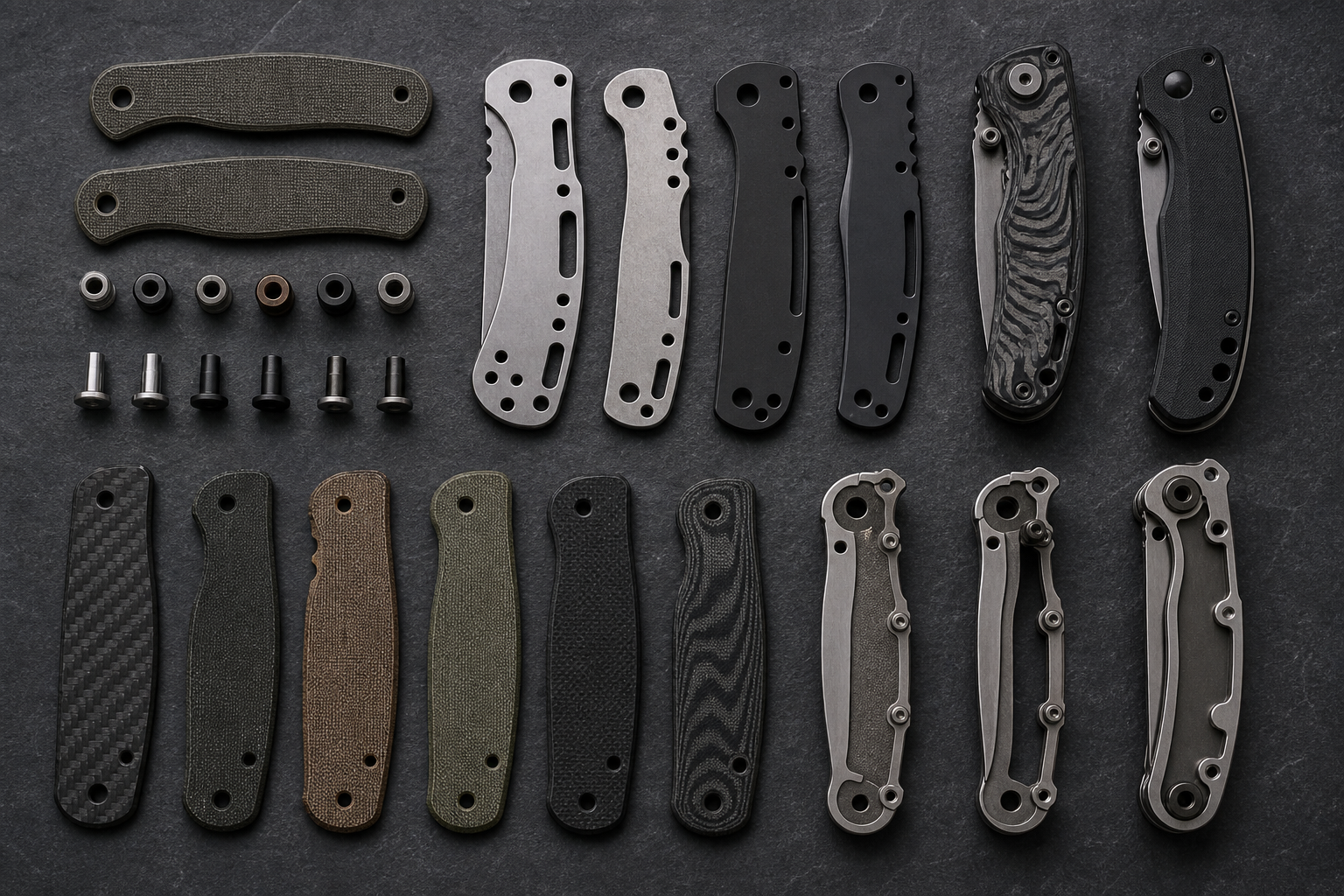
I Match Handle Choices to the Selling Position
The handle is where the buyer's brand identity and the factory's engineering work meet. A buyer may ask for G10, aluminum, stainless steel, wood, or micarta-style material because of appearance. I still need to check weight, machining time, surface texture, screw holding, liner support, and finish stability. A handle that looks good in a render may become too heavy, too expensive, or too hard to assemble.
Liners are easy to ignore because they are partly hidden. But they are important in many pocket knife structures. They support the scales, lock, pivot, stop pin, and screws. If the liner thickness is too low, the knife may feel weak. If the liner and scale holes do not align well, assembly time increases. If the surface finish is inconsistent, gaps and uneven edges become visible. I also look at chamfering. Sharp handle corners can make a knife feel cheap even when the material is good. For B2B customers, handle decisions should support the target user, retail price, and repeat production plan.
| Handle choice | Benefit | Risk to control |
|---|---|---|
| G10 scale | Good grip and stable feel | Dust control and edge finishing |
| Aluminum scale | Light and modern appearance | Surface treatment consistency |
| Stainless handle | Solid feel and strong structure | Weight and machining time |
| Liner-supported handle | Better mechanical support | Hole alignment and assembly fit |
What Does the Lock System Need to Control?
A lock is not just a selling feature. Poor engagement can create user complaints, uneven action, and more factory adjustment.
The lock system must control open-blade stability, release feel, contact surface, lock travel, blade centering, and closing behavior. Buyers should specify lock type and inspection criteria.
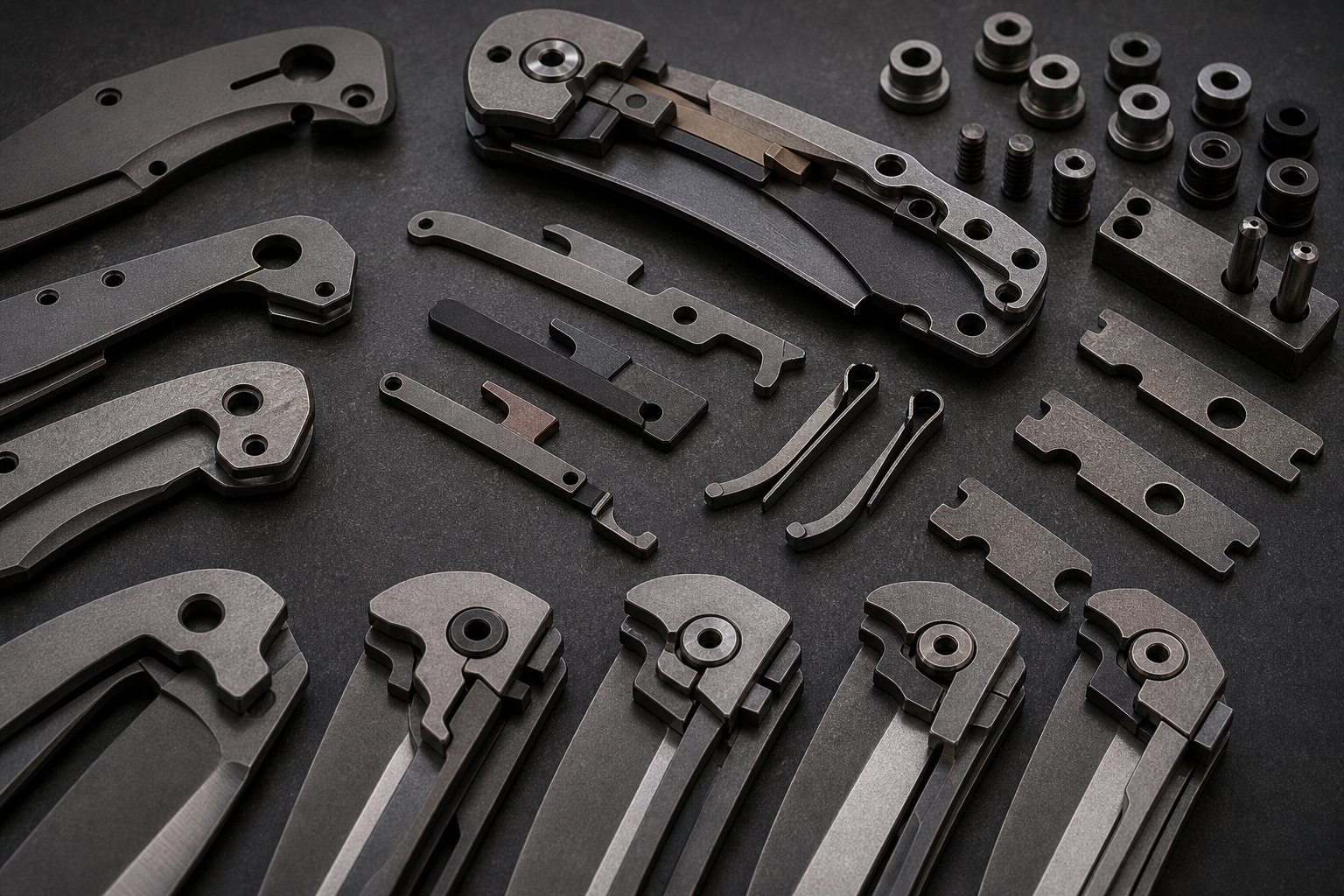
I Ask How the Lock Will Be Produced, Not Only What It Is Called
Many buyers ask for a lock type by name. That is useful, but it is not enough. A liner lock, frame lock, back lock, button lock, or crossbar-style lock each has a different production path. The lock face, blade tang, spring force, contact angle, and release feel must work together. If the geometry is slightly wrong, the knife may lock too early, travel too far, feel sticky, or develop side play.
Industry definitions also matter because function can affect classification. The AKTI approved knife definitions explain terms such as automatic knife, bias toward closure, gravity knife, and other categories. I do not use those definitions as legal advice, but they help buyers understand why mechanism language should be accurate. When I prepare an OEM project, I want the drawing, sample, product description, and sales wording to describe the same mechanism. This avoids confusion between the buyer, factory, freight partner, and customer market.
| Lock detail | What it controls | RFQ instruction |
|---|---|---|
| Lock type | User operation and structure | Name the required lock clearly |
| Contact surface | Stability and wear pattern | Define engagement check |
| Release feel | User comfort | Approve sample feel before tooling |
| Lock travel | Long-term function | Set acceptable visual range |
Why Do Screws, Spacers, Clips, and Small Hardware Deserve Attention?
Small hardware is easy to treat as standard. But loose screws, weak clips, and poor spacers can damage the whole product impression.
Small hardware controls assembly stability, serviceability, pocket carry, spacing, branding options, and batch consistency. Buyers should define screw type, finish, thread quality, clip position, and spare part needs.
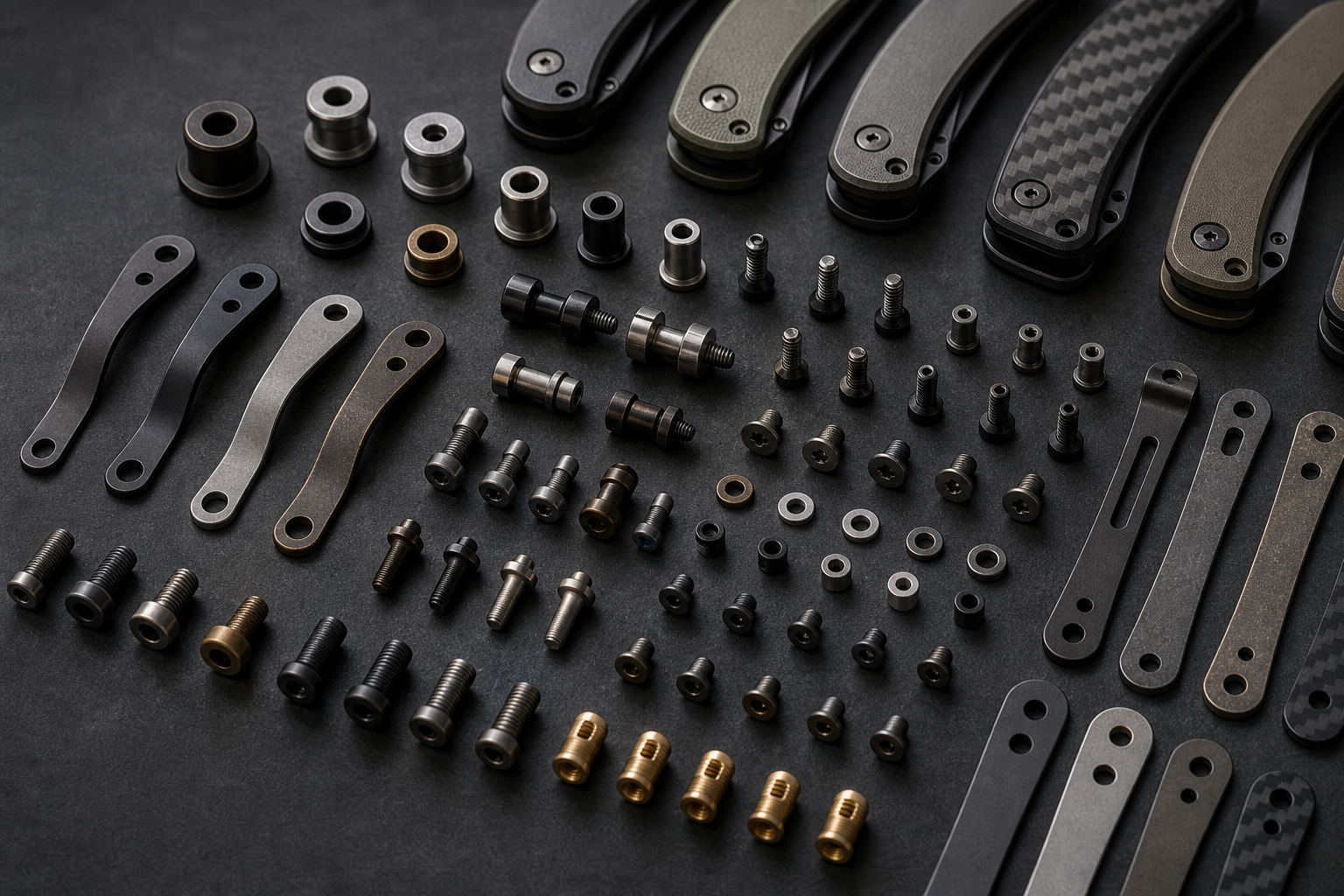
I Check the Parts That Buyers Often Notice Last
Small hardware often decides whether a pocket knife feels finished. A screw head that strips easily can frustrate users. A clip that is too thin can bend. A clip that is too stiff can feel hard to use. A backspacer that does not sit flush can create a visible gap. A standoff that is slightly short can change handle spacing and affect blade centering.
For OEM and private label orders, I ask buyers to define these details early. Do they want a deep-carry clip or standard clip? Tip-up or tip-down position? One-side mounting or reversible mounting? Black screws, satin screws, or color-matched screws? Do they need spare screws in after-sales packaging? These decisions affect machining, finishing, assembly time, and after-sales support. I also ask whether the buyer wants thread locker. If yes, we need to control the amount. Too little may loosen. Too much can create service problems. Good hardware is not exciting in a sales photo, but it helps the product feel stable after delivery.
| Hardware item | Function | Buyer check |
|---|---|---|
| Screws | Hold scales, clip, pivot, and spacers | Head type, finish, thread quality |
| Backspacer | Sets handle spacing and appearance | Fit, flushness, color, material |
| Standoffs | Create open-frame spacing | Length consistency and finish |
| Pocket clip | Supports carry and brand feel | Spring force, position, screw holding |
How Do Opening Features and Legal Categories Affect Sourcing?
Opening features can change more than user feel. They can affect product wording, destination checks, and buyer responsibility.
Buyers should define whether the knife is manual, assisted, automatic, or another mechanism type, then check destination rules and sales wording before production and export planning.
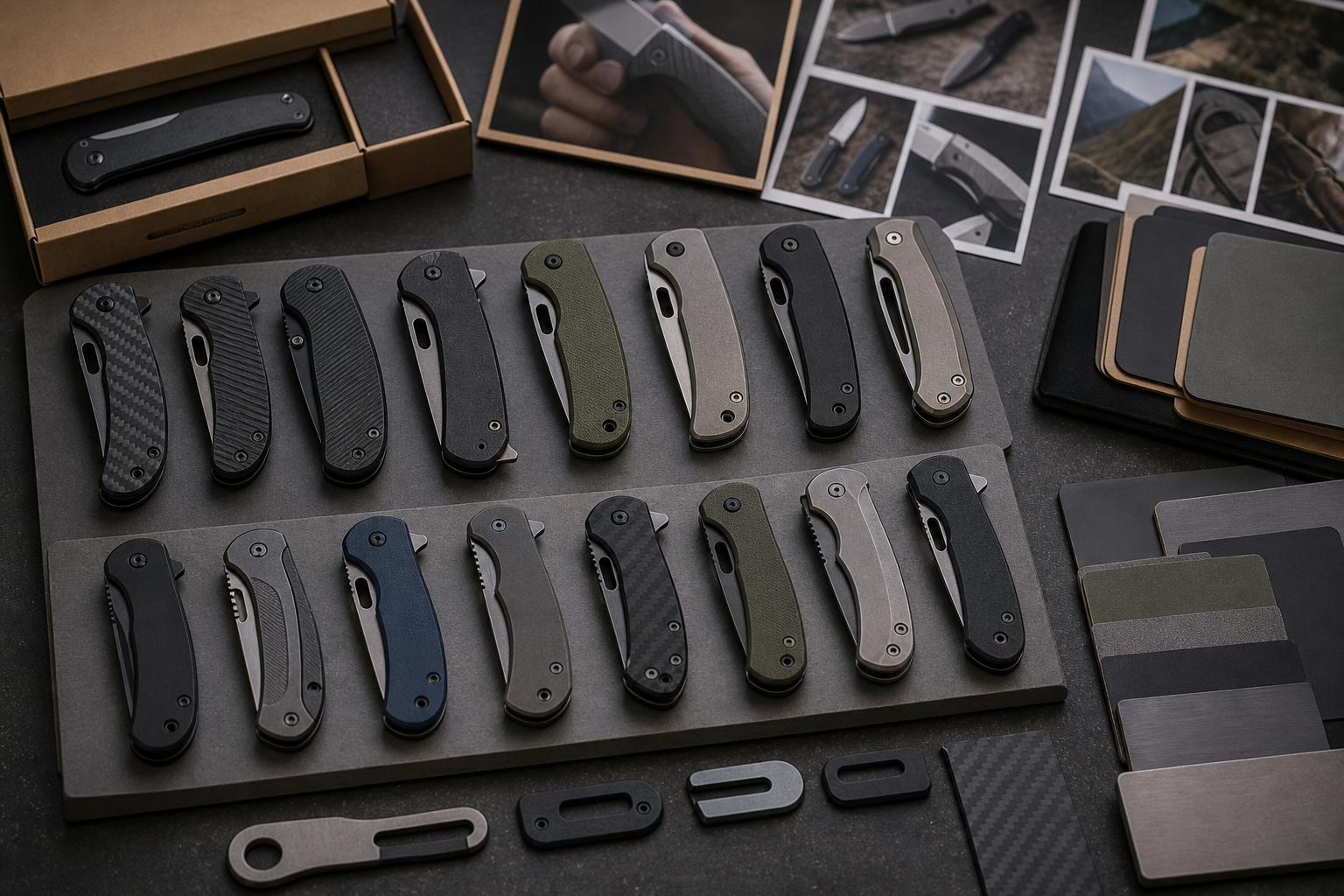
I Keep Mechanism Language Clear From the Beginning
Opening features should be defined before quotation because they affect structure, tooling, assembly, testing, and sometimes compliance review. A nail nick, thumb stud, thumb hole, front flipper, rear flipper, assisted mechanism, and automatic mechanism are not the same sourcing problem. They use different parts, different spring or detent relationships, and different inspection points.
I also remind buyers that laws differ by market. I am not a lawyer, and I do not replace local legal review. But I do want the product description and mechanism to be clear. In the United States, 15 USC Chapter 29 defines switchblade knives for federal purposes and also lists an exception for a knife with a spring, detent, or other mechanism designed to create a bias toward closure when manual force is required to open it. That kind of wording shows why buyers should not use casual mechanism labels. If a buyer sells into several markets, I suggest checking destination requirements before confirming the final structure.
| Opening feature | Production effect | Buyer action |
|---|---|---|
| Nail nick | Simple manual opening | Confirm blade access and ergonomics |
| Thumb stud | Extra hardware and assembly | Confirm position and screw strength |
| Flipper tab | Needs detent and pivot balance | Confirm opening feel and blade profile |
| Assisted or automatic mechanism | More compliance sensitivity | Confirm destination rules before RFQ |
What Inspection Points Should Buyers Add Before Mass Production?
A good sample does not guarantee a good batch. Without inspection points, small part variation becomes a repeat-order problem.
Buyers should inspect material, dimensions, hardness, blade centering, opening and closing feel, lock engagement, sharpness, surface finish, screw stability, clip strength, packaging, and AQL needs.
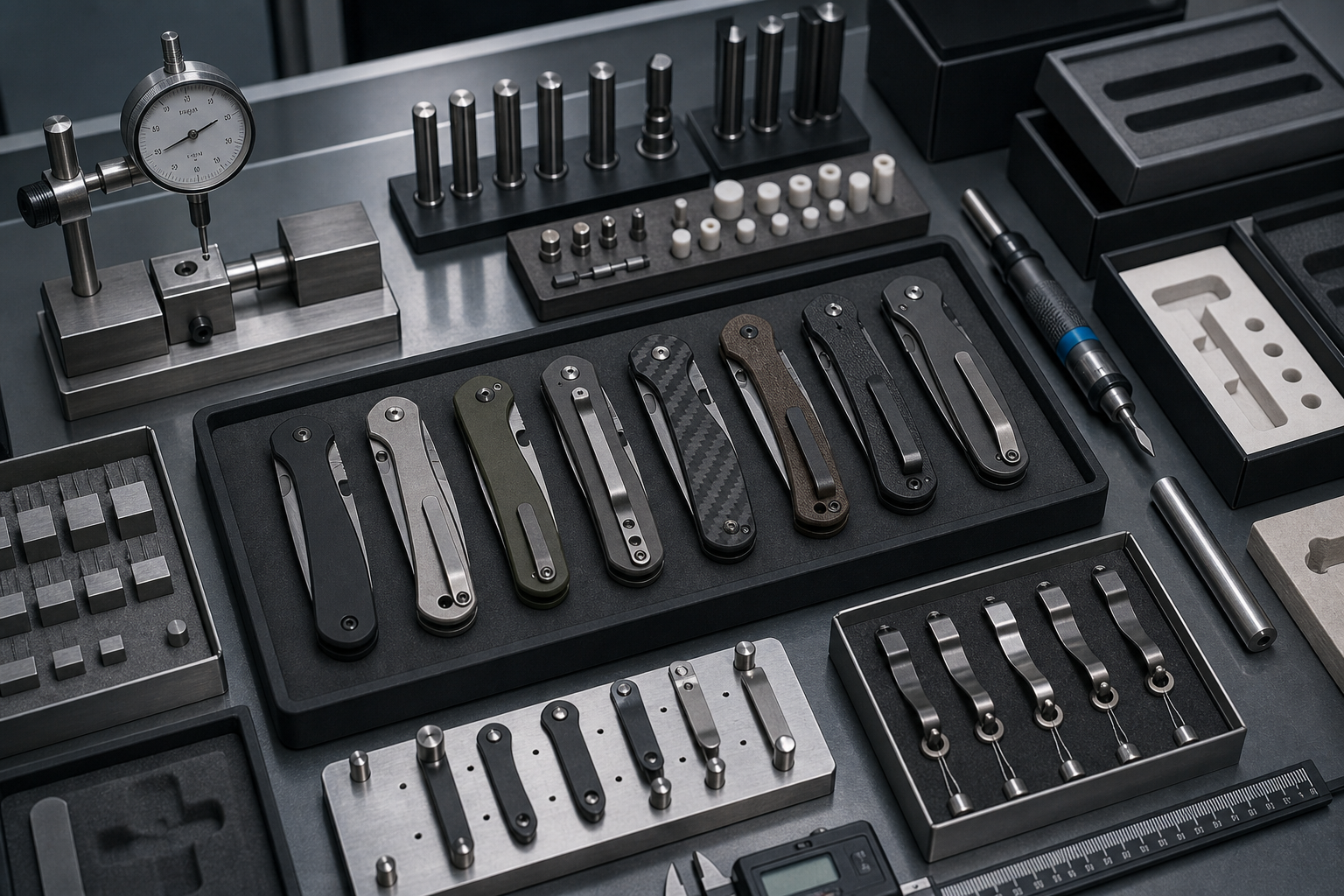
I Build QC Around Function, Not Only Appearance
Final inspection should not only look for scratches. Appearance matters, but a pocket knife is a moving product. I check whether the blade sits centered when closed, whether the action is smooth, whether the lock engages correctly, whether the edge is even, whether screws are secure, whether the clip is stable, and whether the packaging matches the approved sample.
For larger orders, I prefer a process-based approach. Incoming material inspection checks steel, handle material, and hardware. In-process inspection checks CNC dimensions, heat treatment records, grinding, finishing, and assembly fit. Final inspection checks function and sellable condition. A quality framework such as ISO 9001 is useful as a reference because it focuses on customer requirements, process control, performance evaluation, and improvement. This does not mean every order needs the same paperwork. It means the buyer and supplier should agree on what will be checked and how problems will be handled. For B2B buyers, that agreement protects both the first order and repeat production.
| Inspection area | What to check | Why it matters |
|---|---|---|
| Material and hardness | Steel, handle material, HRC range | Protects performance consistency |
| Assembly function | Action, centering, lockup, side play | Protects user experience |
| Finish and branding | Scratches, coating, logo, color | Protects retail presentation |
| Packaging | Box, insert, label, barcode need | Supports import and sales workflow |
Turn this article into a folding knife project.
Share your blade type, lock direction, steel preference, handle material, quantity, target market, and packaging needs. Vast State can prepare OEM/ODM options.
Conclusion
I specify pocket knife parts one by one so the final product can quote clearly, prototype smoothly, and repeat reliably in production.
Source Notes
- AKTI approved knife definitions support mechanism terminology such as automatic knife and bias toward closure.
- 15 USC Chapter 29 supports caution around switchblade definitions and mechanism wording for U.S. federal context.
- Alleima 14C28N knife steel supports the blade steel discussion with manufacturer material information.
- NIST Rockwell hardness guidance supports the need for controlled hardness measurement practice.
- ISO 9001:2015 supports the quality management and process-control discussion.