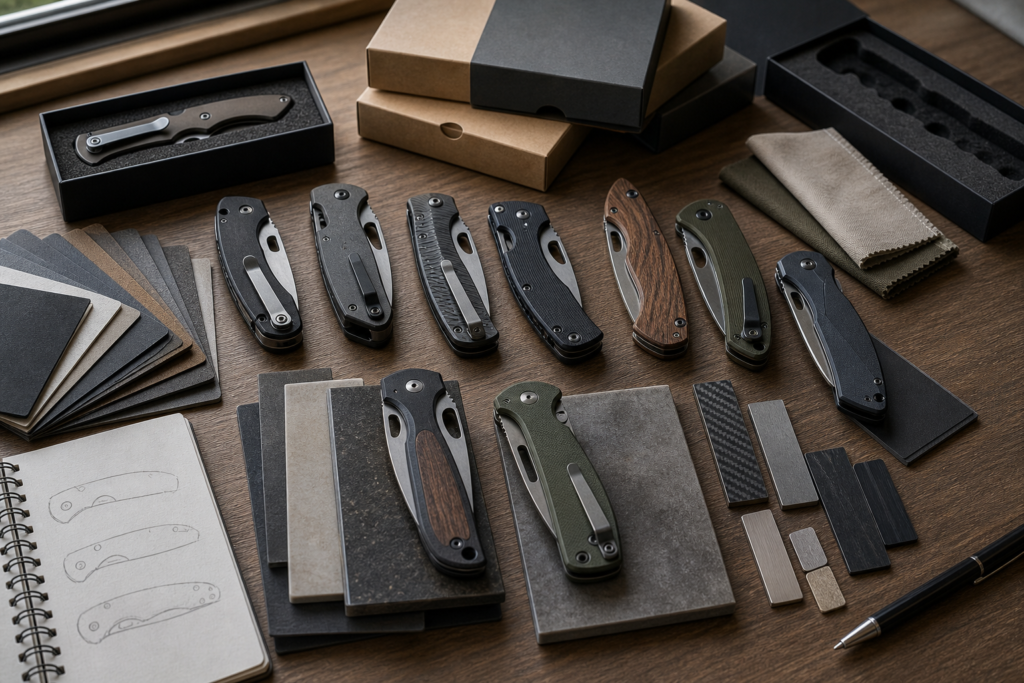
Pocket knife categories look simple until sourcing starts. A vague type can create wrong blades, wrong locks, wrong price, and compliance questions.
Buyers should specify pocket knife types by defining blade profile, target use, opening mechanism, lock type, size, blade steel, handle material, clip, packaging, compliance review, and QC requirements before asking an OEM/ODM supplier to quote.
Quick buyer brief:
- Answer: Classify pocket knives by blade shape, use case, opening method, lock structure, size, material, and market rules.
- Buyer context: This helps knife brands, outdoor brands, importers, wholesalers, distributors, and private label buyers prepare clearer RFQs.
- Key checks: Blade profile, opening mechanism, lock type, steel, handle material, blade length, clip, packaging, target price, MOQ, and QC plan.
Developing a folding knife line for your brand?
Vast State supports OEM/ODM folding knife projects, including blade steel, lock structure, handle material, finish, logo method, packaging, and quality inspection planning.
When a customer says "I need a pocket knife," I know the project is still too broad. A small traditional slip joint, a modern EDC folder, a work knife, a rescue-style folder, and a premium outdoor pocket knife can all fit under that phrase. But they need different steel, blade shape, lock structure, opening feel, handle material, price target, and packaging. At Vast State, I help buyers turn pocket knife categories into clear product decisions so sampling can move faster and production can repeat more consistently.
What Pocket Knife Categories Should Buyers Define First?
The word pocket knife covers too many products. If buyers do not narrow the category, suppliers have to guess.
Buyers should first define whether the pocket knife is traditional, EDC, outdoor, work, rescue-style, collection-oriented, private label, multi-function, manual, assisted, automatic, locking, or non-locking.
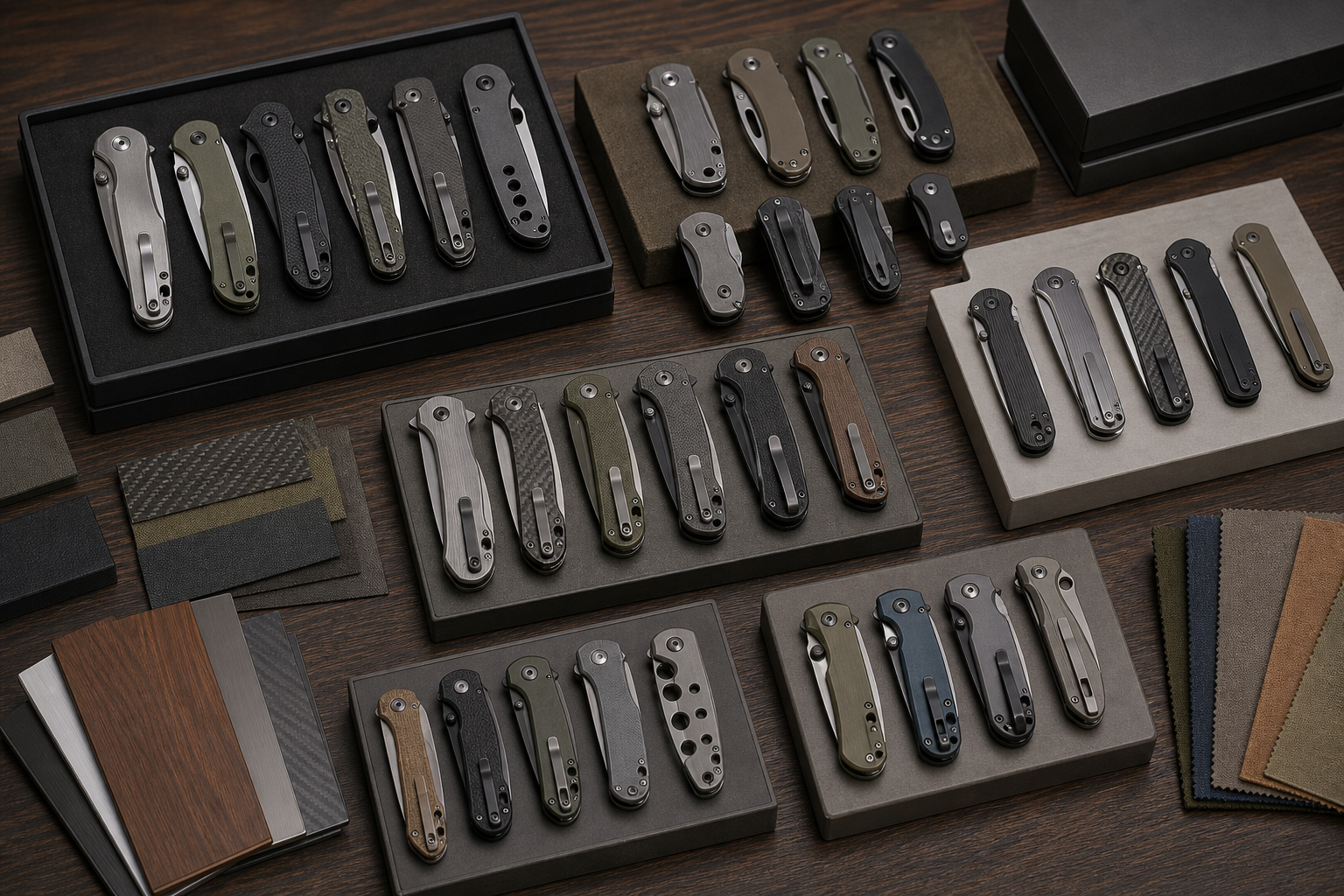
I Start With User, Channel, and Price
I usually begin with three questions. Who will buy the knife? Where will it be sold? What price range must the product fit? These answers decide the category better than a reference photo alone. A traditional pocket knife may use nail nick opening, non-locking slip joint action, and classic handle materials. A modern EDC knife may need a pocket clip, one-hand opening feature, stainless steel blade, and stronger lock. A work knife may need a tougher handle, easier cleaning, and simpler packaging. A private label gift knife may need better finish and box presentation.
This category decision also affects compliance review. The American Knife and Tool Institute's approved knife definitions show that terms such as automatic knife, gravity knife, butterfly knife, and switchblade can carry specific meaning. I do not want buyers to use casual names in RFQs when those names may be understood differently in a market or by a retailer.
For OEM projects, I prefer a category line that is practical: "manual EDC folding knife with liner lock," "traditional non-locking slip joint pocket knife," or "outdoor folding knife with back lock." That language is easier to quote and easier to inspect.
| Category question | Buyer decision | Why it matters |
|---|---|---|
| User | EDC, outdoor, work, gift, rescue-style | Guides blade and handle design |
| Channel | Retail, online, wholesale, brand catalog | Affects packaging and claims |
| Price range | Entry, mid-range, or higher-spec | Controls material and tolerance |
| Mechanism | Manual, assisted, automatic, non-locking, locking | Affects cost and compliance review |
OEM/ODM RFQ Checklist
Prepare these details to help Vast State review your project and provide a more accurate quotation.
| RFQ Field | What to Prepare |
|---|---|
| Project type | OEM from drawing / ODM private label / wholesale catalog |
| Product category | Folding knife / fixed blade / multi-tool / outdoor tool |
| Design status | Idea / sketch / 2D drawing / 3D CAD / physical sample |
| Target price | Ex-factory target price or retail price range |
| MOQ expectation | 500 / 1,000 / 3,000 / 5,000+ pcs |
| Logo method | Laser engraving / etching / printing / molded logo |
| Packaging | Standard packaging / custom retail box / Amazon-ready |
| Market | USA / EU / Japan / Korea / Middle East / other |
| Compliance needs | Buyer-specified testing / documentation / labeling |
| Timeline | Sample deadline / mass production deadline |
How Should Blade Profiles Match Pocket Knife Uses?
A blade shape is not only style. It decides how the knife cuts, looks, sharpens, and fits the user's task.
Blade profiles should match use: drop point for general EDC, clip point for fine tip work, sheepsfoot or wharncliffe for controlled utility cuts, tanto for strong tip styling, and spey or pen blades for traditional patterns.
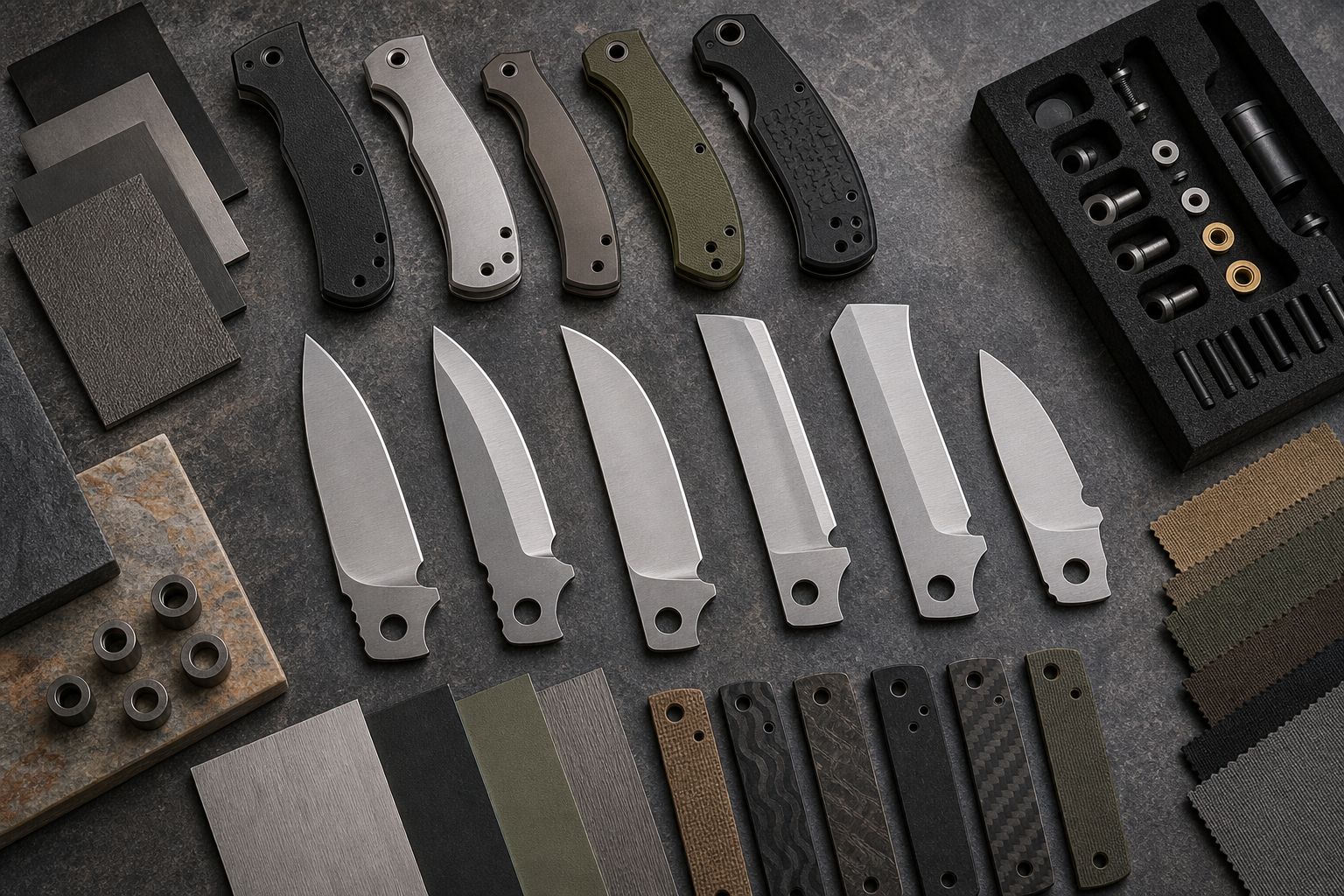
I Connect Blade Shape With Market Position
I do not choose blade shapes by trend alone. A drop point is often a safe starting point for EDC and outdoor buyers because it gives useful belly, controllable point, and broad market understanding. A clip point can look classic and give a finer tip, but the buyer should decide whether that tip suits the task. A sheepsfoot or wharncliffe can help with controlled straight cuts and work-style utility. A tanto can create a strong visual identity, but it may not be the easiest blade for all users to sharpen. A spey or pen blade may fit traditional multi-blade pocket knives.
The blade profile also changes the rest of the product. A tall blade may need more handle width. A long tip may need better centering control. A wide belly may need more grinding consistency. A thicker spine may look strong but can reduce slicing comfort. The buyer should define blade length, blade height, spine thickness, grind, edge type, and finish before the sample starts.
I also ask if the buyer needs plain edge, partial serration, or a special edge. An effective cutting edge can be plain or serrated depending on the job. AKTI's definitions discuss an effective cutting edge as one capable of ordinary cutting tasks. In OEM work, that means the edge should match actual use and quality checks, not only product page keywords.
| Blade profile | Common buyer goal | OEM check |
|---|---|---|
| Drop point | General EDC and outdoor use | Tip strength, belly, grind symmetry |
| Clip point | Classic style and finer point | Tip geometry and finish control |
| Sheepsfoot or wharncliffe | Utility cuts and controlled edge | Straight-edge sharpening consistency |
| Tanto | Strong styling and angular tip | Edge transition and sharpening plan |
How Do Opening Mechanisms Change Product Design?
Opening mechanism choices affect more than user feel. They also change cost, parts, assembly, packaging wording, and compliance review.
Opening mechanisms include nail nick, thumb stud, thumb hole, flipper tab, assisted opening, automatic opening, two-hand opening, and out-the-front styles. Buyers should define mechanism and legal review status clearly.
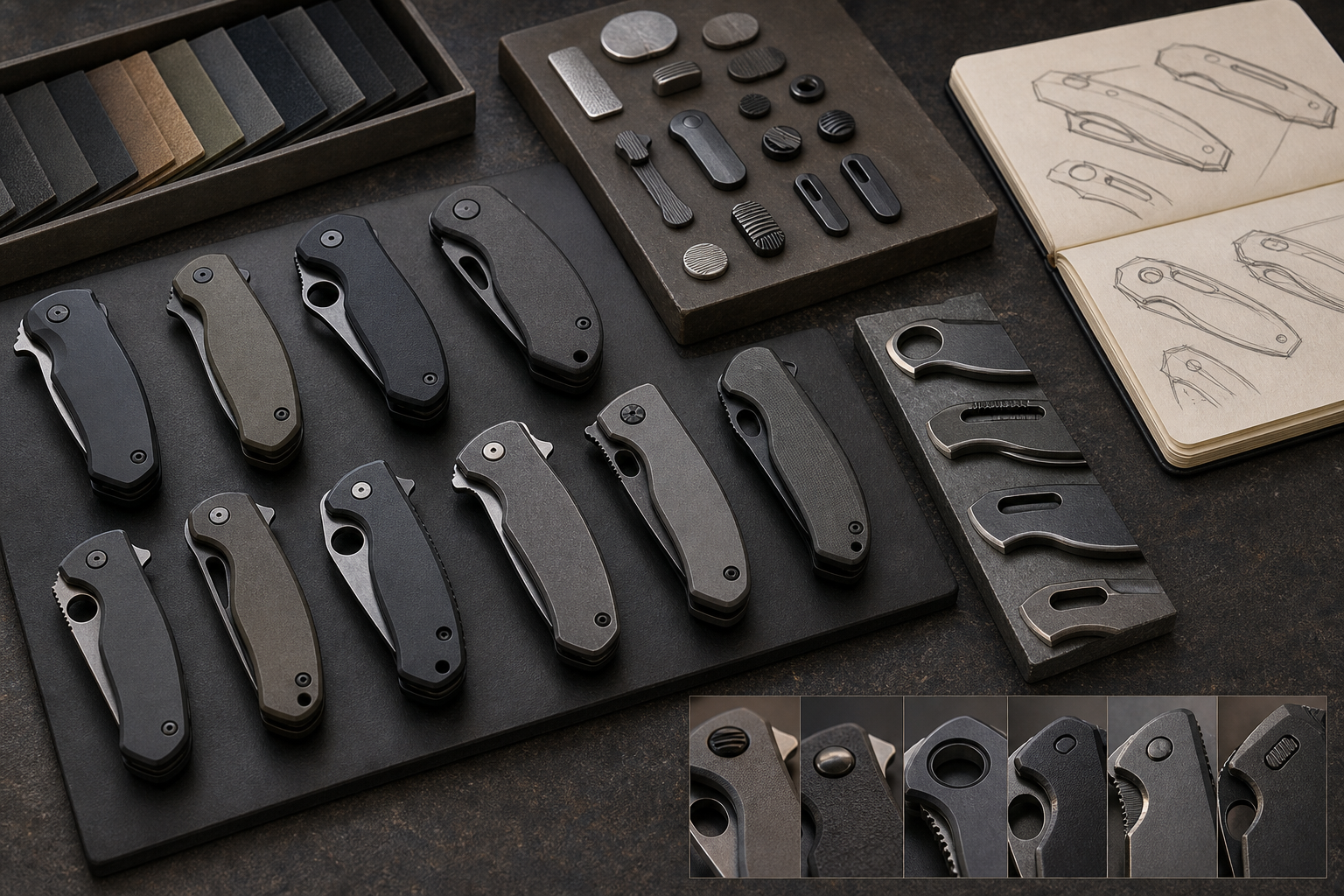
I Separate Opener, Mechanism, and Legal Category
Buyers often mix three ideas together: the opener, the internal mechanism, and the legal category. A thumb stud is an opener. A flipper tab is an opener. A nail nick is an opener. Assisted opening is a mechanism. Automatic opening is a mechanism and may be treated differently by law. A lock type is another separate decision. These details should not be combined into one vague phrase such as "quick open."
AKTI defines an automatic knife as one where the blade is moved from closed to open by stored energy after a release mechanism is activated. The official U.S. Code switchblade chapter also uses automatic opening language, including button, inertia, and gravity wording. This is why I ask buyers to review the destination market before choosing assisted or automatic mechanisms.
Manual opening is often simpler for broad OEM projects. Nail nick designs can fit traditional or compliance-sensitive products. Thumb studs and thumb holes can fit modern manual folders. Flipper tabs may need good detent, pivot tuning, and lock coordination. Assisted or automatic designs need stricter mechanism control and market review. OTF designs need a different internal structure and are not just normal folding knives with a different handle.
| Opening choice | What it changes | Buyer action |
|---|---|---|
| Nail nick | Traditional two-hand opening | Define blade pull and slip joint feel |
| Thumb stud or hole | Manual one-hand style | Check opener placement and hand clearance |
| Flipper tab | Detent and pivot feel | Define action target and lock type |
| Assisted or automatic | More parts and compliance review | Verify market rules before sampling |
Which Lock Types Should Buyers Specify?
A lock name sounds like a small detail, but it changes structure, safety feel, price, and inspection.
Buyers should specify liner lock, frame lock, back lock, button lock, crossbar lock, slip joint, friction folder, or no-lock structure based on user need, cost, market rules, and QC expectations.
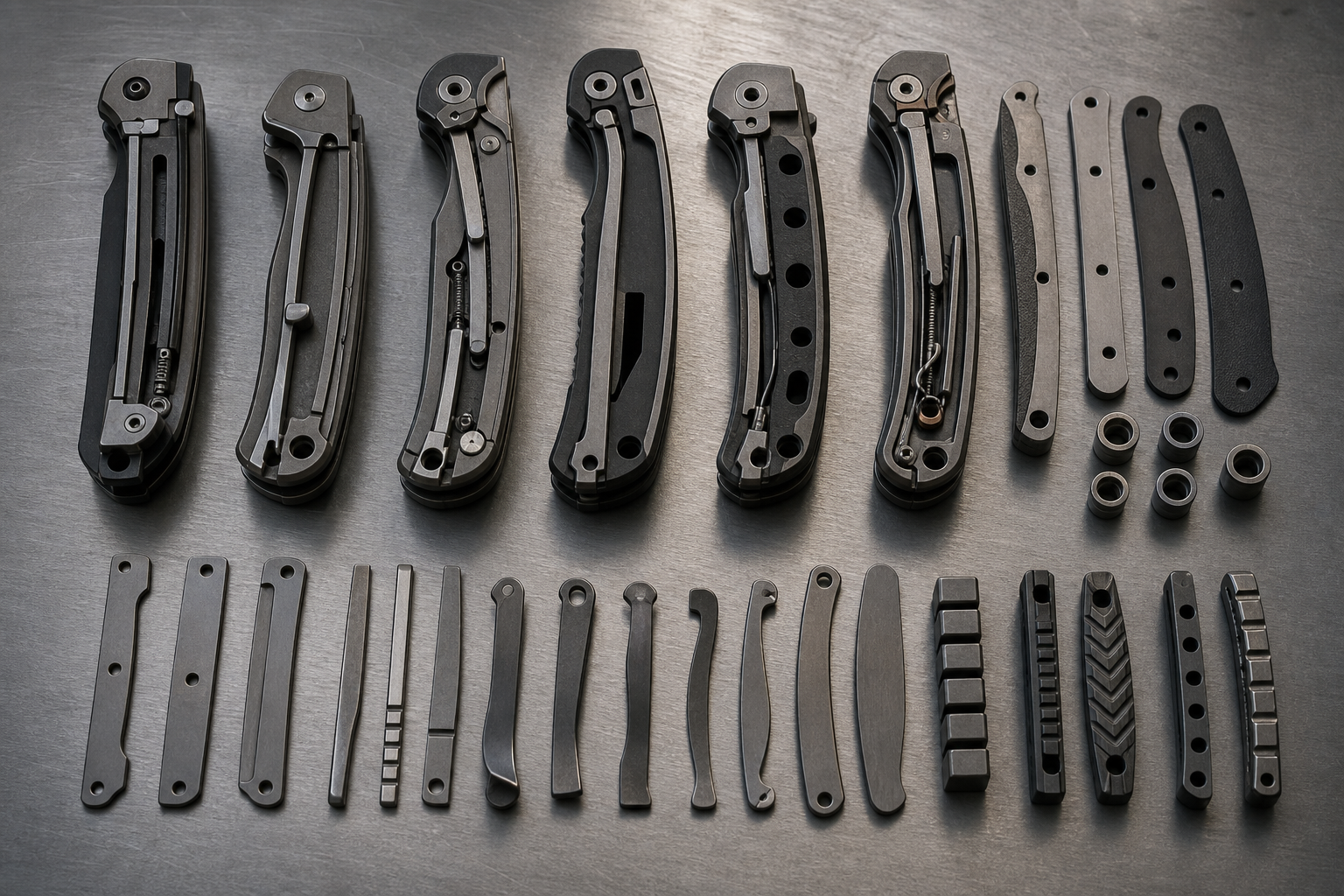
I Match Lock Type With Product Level
A pocket knife lock should be chosen for the product, not for fashion. A liner lock can be cost-effective and familiar. A frame lock can feel strong and simple but may require careful handle material and lock face control. A back lock can suit traditional and outdoor folders. A button lock can feel easy to operate but needs clean plunger fit and spring control. A crossbar lock can support ambidextrous use but needs bar, spring, and tang precision. A slip joint is non-locking and can fit traditional pocket knives or some markets that prefer simpler mechanisms.
The lock also affects inspection. A liner lock needs lockup position, lock face contact, and release feel checks. A back lock needs rocker fit, spring force, and vertical play checks. A button lock needs plunge engagement and return force checks. A crossbar lock needs bar movement, spring return, and blade play checks. A slip joint needs backspring tension and half-stop behavior if included.
The buyer should also understand that laws and retailer rules may treat locking and non-locking knives differently. For example, GOV.UK knife guidance gives an exception for certain small non-locking folding pocketknives and states that lock knives are outside that exception. That is UK-specific, but it shows why buyers should verify local rules before choosing the lock structure.
| Lock type | Typical fit | Key QC check |
|---|---|---|
| Liner lock | Modern EDC and work folders | Lockup position and side play |
| Back lock | Outdoor and classic folders | Rocker fit and vertical movement |
| Button lock | Easy-release modern folders | Plunger fit and spring return |
| Slip joint | Traditional non-locking pocket knives | Backspring tension and blade alignment |
How Should Size, Blade Length, and Compliance Be Managed?
A pocket knife that fits one market may be unsuitable in another. Size and mechanism should not be guessed.
Buyers should manage size and compliance by defining blade length, closed length, overall length, lock type, opening mechanism, destination market, packaging language, and buyer-side legal review before production.
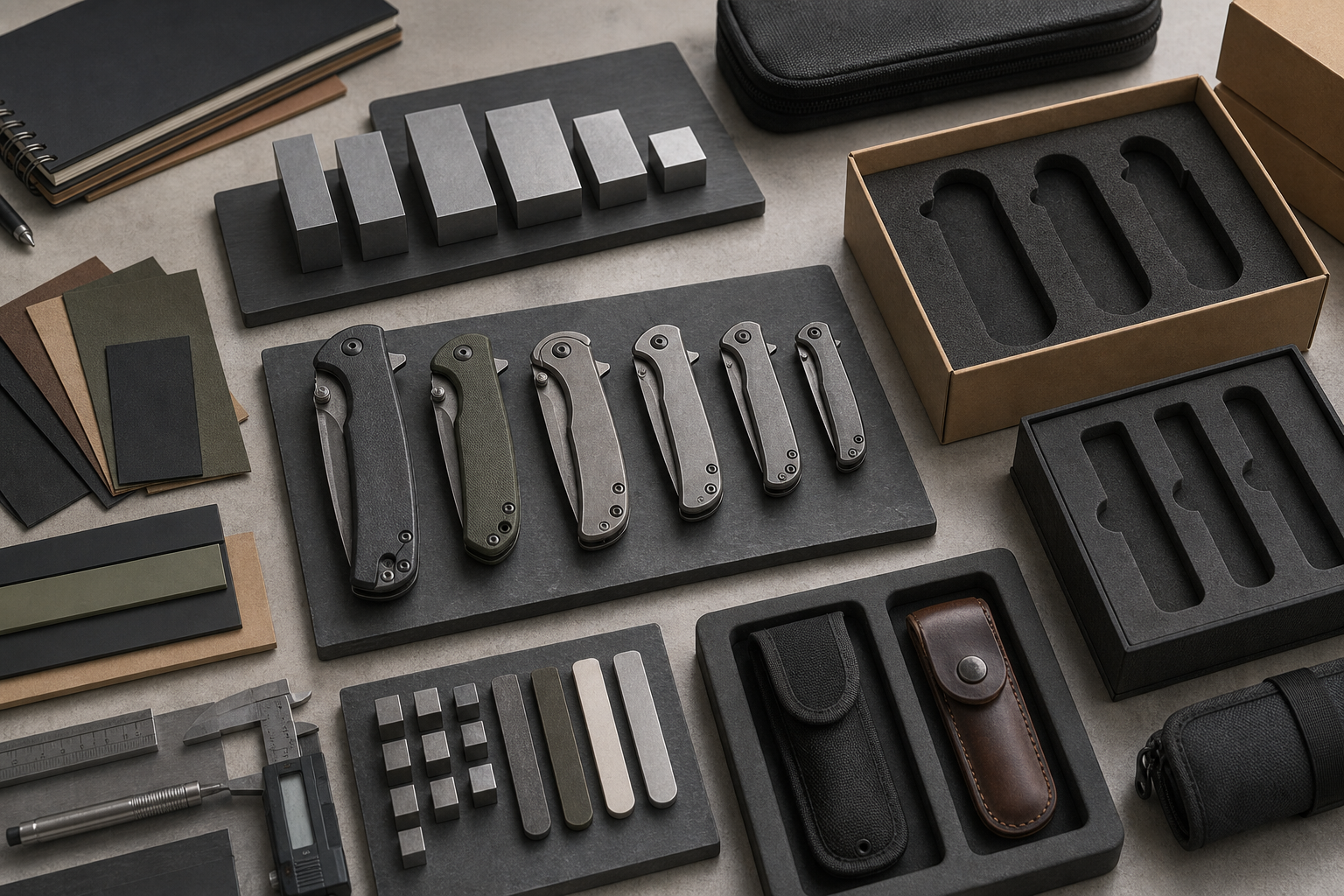
I Ask Buyers to Confirm the Market Before Locking the Design
Pocket knife rules vary by country, state, city, retailer, platform, and use context. I do not give legal advice as a manufacturer. I do ask buyers to verify the product category before sampling. This is especially important for automatic, assisted, OTF, double-edged, locking, long-blade, and specialty opening mechanisms.
Blade length is one example where clear measurement matters. The AKTI protocol for measuring knife blade length says that where a law or rule refers to blade length, the measurement should be a straight line from the blade tip to the forward-most aspect of the hilt or handle. A buyer should not assume every market uses the same method, but this source shows why standardized measurement language helps.
In the RFQ, I like to list blade length, closed length, overall open length, blade thickness, handle thickness, and weight target. I also ask the buyer to confirm if the product will be sold in a market with specific rules about blade length, locks, automatic opening, or pocket clips. Good compliance planning does not slow a project down. It prevents wasted samples.
| Size or rule item | What to define | Why it matters |
|---|---|---|
| Blade length | Measurement method and target | Supports product claims and market review |
| Closed length | Pocket carry and packaging fit | Affects user feel and carton design |
| Lock status | Locking or non-locking | Affects category and market review |
| Opening mechanism | Manual, assisted, automatic, OTF | Affects compliance and parts cost |
How Do Materials and Finishes Position Pocket Knife Types?
Two knives can share the same blade shape but sell to different buyers. Material choices create that difference.
Materials and finishes position pocket knives through blade steel, heat treatment, handle material, liners, hardware, coatings, clip finish, corrosion resistance, grip feel, weight, and packaging value.
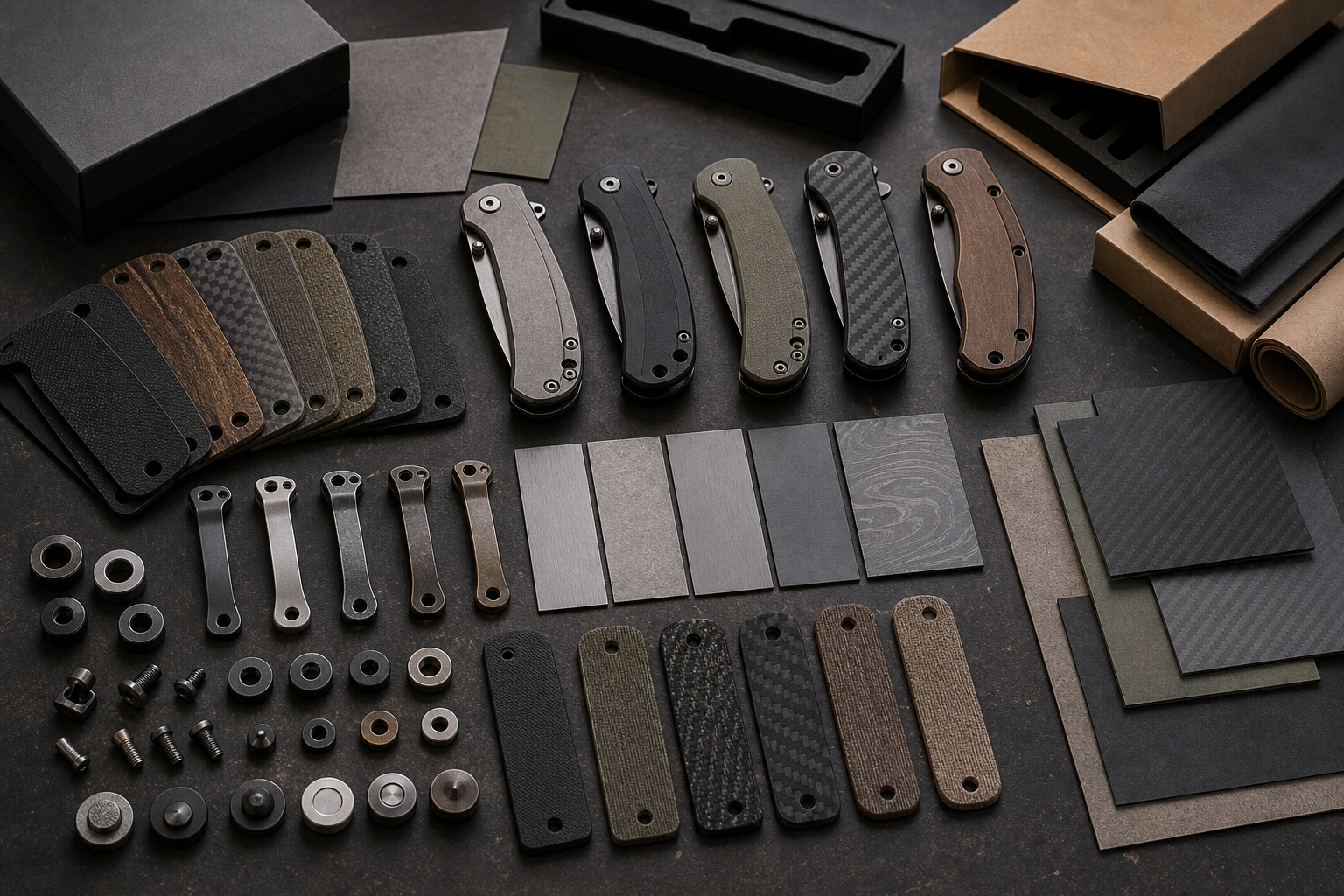
I Use Materials to Match Price and Brand Position
Blade steel should match the buyer's market. Entry products may need a steel that balances cost and acceptable performance. Mid-range EDC knives may need stronger corrosion resistance, cleaner finish, and better hardness control. Higher-positioned products may need more specific steel branding, tighter fit, and better packaging. The best choice is not always the most expensive steel. It is the steel that fits the user's expectations and the buyer's margin.
Alleima describes 14C28N knife steel as offering edge performance, hardness, and corrosion resistance for knife applications. I use it as an example of how steel choice can support positioning. But a buyer may also choose 8Cr, 9Cr, D2, 420 series, or another steel based on target price and maintenance expectations.
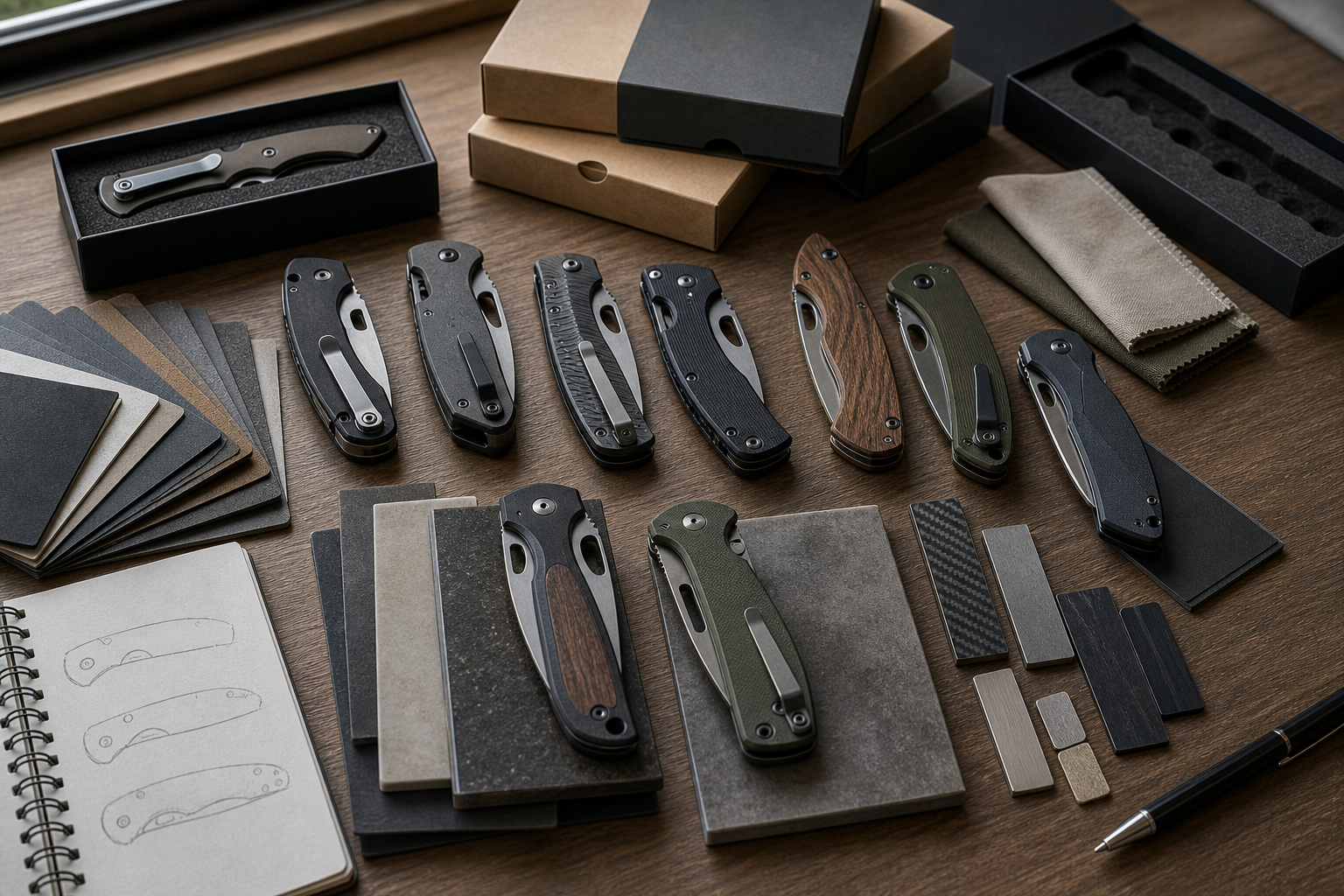
Handle materials also shape the category. G10 can support grip and color variety. Aluminum can make a modern lightweight folder. Stainless steel can reduce cost but add weight. Micarta can create an outdoor feel. Polymer can support cost control and volume orders. Finish choices such as stonewash, satin, bead blast, anodizing, coating, and laser marking should fit the market and packaging story.
| Material choice | Product signal | Production focus |
|---|---|---|
| Stainless blade steel | Corrosion resistance and broad EDC fit | Heat treatment and hardness control |
| D2 or tool steel option | Edge retention positioning | Corrosion care and grinding control |
| G10 or micarta handle | Grip and outdoor feel | Machining and color consistency |
| Aluminum or steel handle | Modern or cost-controlled look | Surface treatment and weight |
What QC Checks Matter for Different Pocket Knife Types?
A pocket knife has many moving relationships. A final visual check alone will not protect repeat orders.
Pocket knife QC should check blade centering, pivot action, lock engagement, blade play, detent or backspring feel, sharpness, hardness, handle fit, clip strength, screw security, finish, packaging, and approved-sample match.
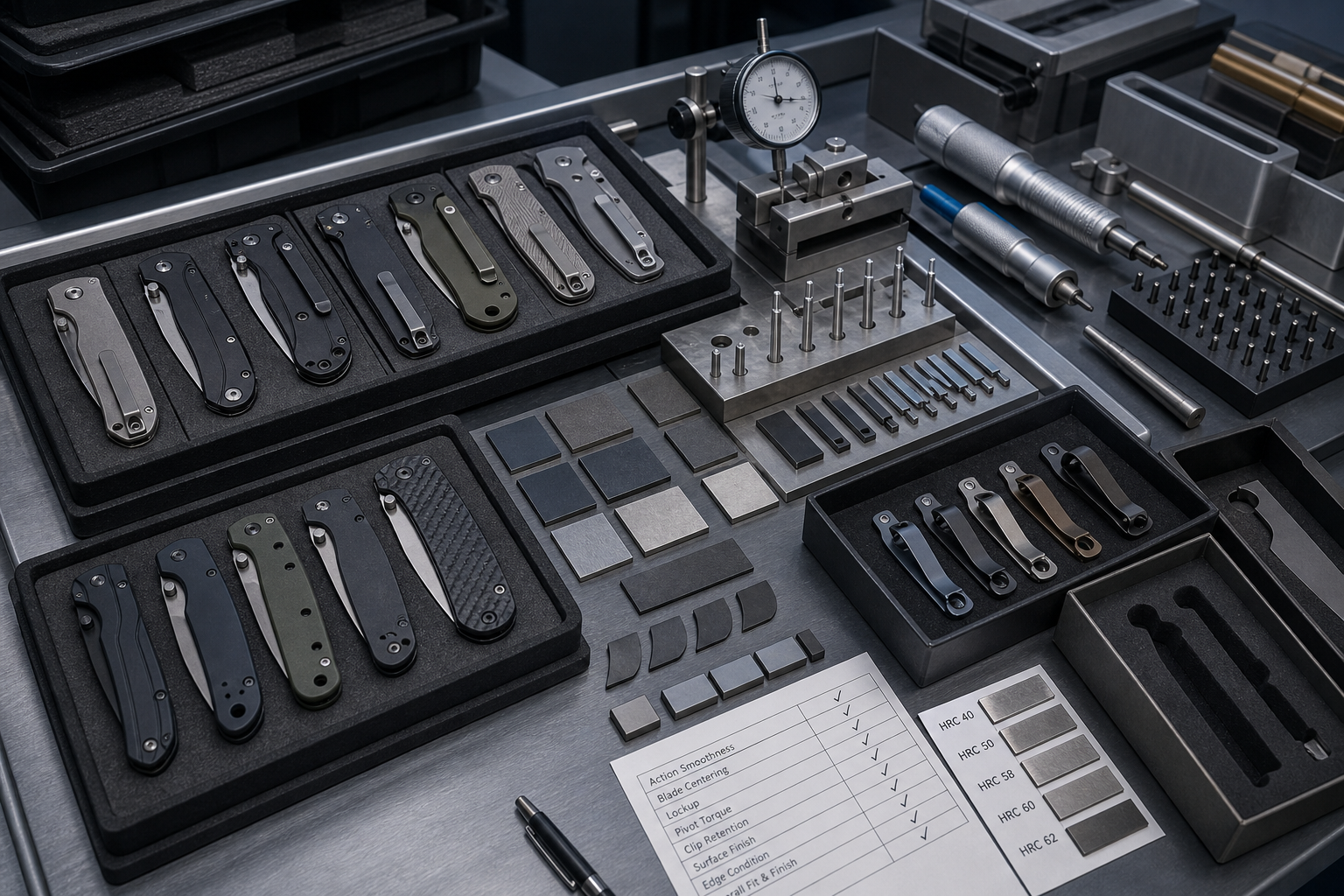
I Inspect the Product by Mechanism Type
QC should match the pocket knife type. A slip joint needs backspring tension, blade alignment, nail nick pull, and half-stop behavior if specified. A liner lock needs lockup position, side play, lock face contact, and release feel. A button lock needs plunger engagement and return force. A crossbar lock needs bar movement and spring return. A flipper needs detent and pivot tuning. A multi-blade traditional knife needs blade spacing and spring pressure balance.
The NIST guide to Rockwell hardness measurement supports the need for good practice in hardness measurement. If a buyer specifies blade hardness, the supplier should have a controlled way to verify it. The ISO page for ISO 9001 quality management supports the broader idea of managing customer requirements through a controlled process.
In practical production, I like a three-level inspection plan. Incoming checks cover steel, handle material, hardware, clips, and packaging. In-process checks cover blade profile, heat treatment, grind, pivot holes, liners, and lock parts. Final checks cover opening action, lock function, blade centering, sharpness, finish, screw security, clip fit, and packaging.
| QC area | What to check | Why it matters |
|---|---|---|
| Blade | Hardness, grind, edge, profile | Protects cutting performance |
| Mechanism | Pivot, lock, detent, spring, blade play | Controls user trust |
| Handle and clip | Scale fit, screws, clip strength | Protects daily carry experience |
| Packaging | Labels, insert, carton, approved sample | Protects sellable quality |
What Should Buyers Include in a Pocket Knife RFQ?
An RFQ that only says "pocket knife" creates confusion. The supplier needs product type, not only a category name.
A pocket knife RFQ should include blade profile, use case, opening mechanism, lock type, steel, hardness, handle material, clip, finish, size, packaging, target market, MOQ, target price, and QC requirements.
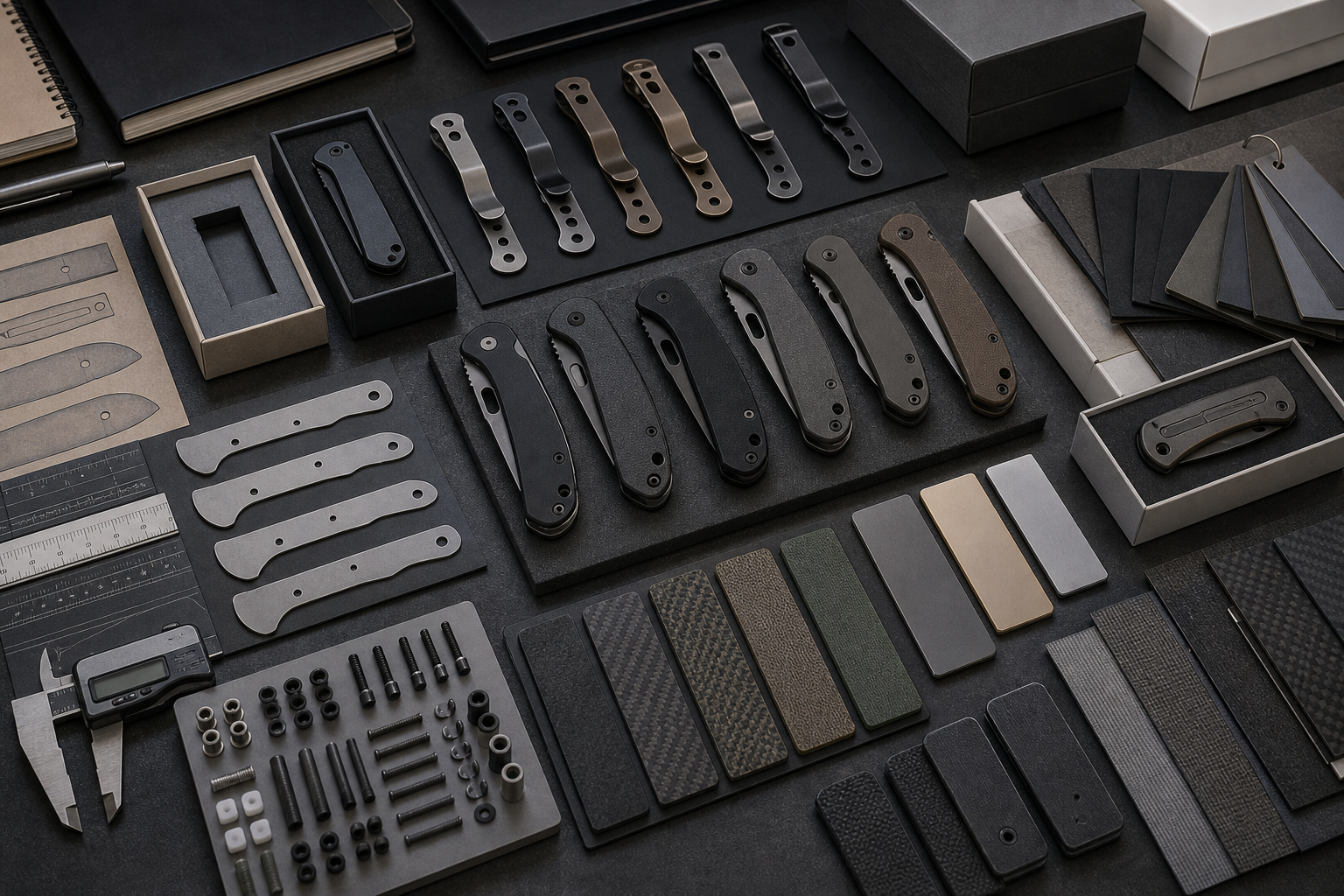
I Make the RFQ Easy to Quote and Easy to Inspect
For a pocket knife project, I want the RFQ to tell me the buyer's commercial goal first. Is this an entry EDC item, an outdoor brand product, a work knife, a traditional series, a rescue-style item, or a gift set? Then I want the technical details: blade profile, steel, hardness, grind, opener, lock type, handle material, liner material, clip position, screw type, surface finish, logo method, packaging, quantity, target price, and inspection standard.
If the buyer is not sure, I can help propose options. For example, a buyer may compare a manual liner lock with G10 handle against a back lock with stainless handle. Another buyer may compare a traditional slip joint against a modern button lock. The supplier can quote better when each option has its own specification.
The RFQ should also include market notes. If the buyer's market restricts automatic mechanisms, locking folders, blade length, or certain blade features, the buyer should tell the supplier before sampling. That avoids building a beautiful sample that cannot be sold through the intended channel.
| RFQ field | What to provide | Supplier response should cover |
|---|---|---|
| Category | EDC, outdoor, work, traditional, multi-function | Suggested structure and cost path |
| Mechanism | Opener and lock type | Feasibility, tolerance, and QC points |
| Materials | Steel, handle, liner, clip, hardware | Cost, finish, and performance tradeoff |
| QC | Blade, action, lock, clip, packaging | Inspection plan and sample standard |
Turn this article into a folding knife project.
Share your blade type, lock direction, steel preference, handle material, quantity, target market, and packaging needs. Vast State can prepare OEM/ODM options.
Conclusion
I specify pocket knife types by turning blade, use, mechanism, material, compliance, and QC choices into one clear OEM RFQ.
Source Notes
- AKTI approved knife definitions support mechanism and category language for automatic, gravity, bias toward closure, effective cutting edge, and switchblade terms.
- AKTI blade length protocol supports clear blade length measurement language.
- U.S. Code Title 15 Chapter 29 supports the need to review automatic, inertia, and gravity opening language.
- GOV.UK knife guidance supports the point that locking and non-locking folding pocketknives may be treated differently in some markets.
- Alleima 14C28N knife steel supports steel selection discussion.
- NIST Rockwell hardness guide supports controlled hardness measurement.
- ISO 9001 supports the process-control approach to QC and customer requirements.