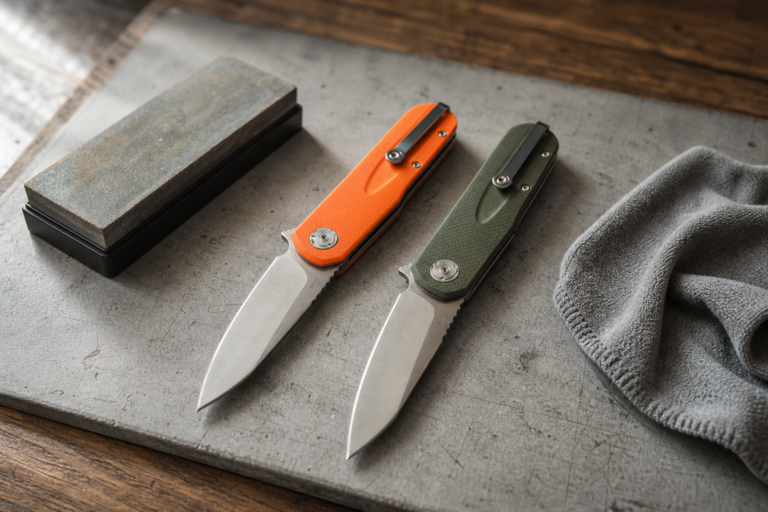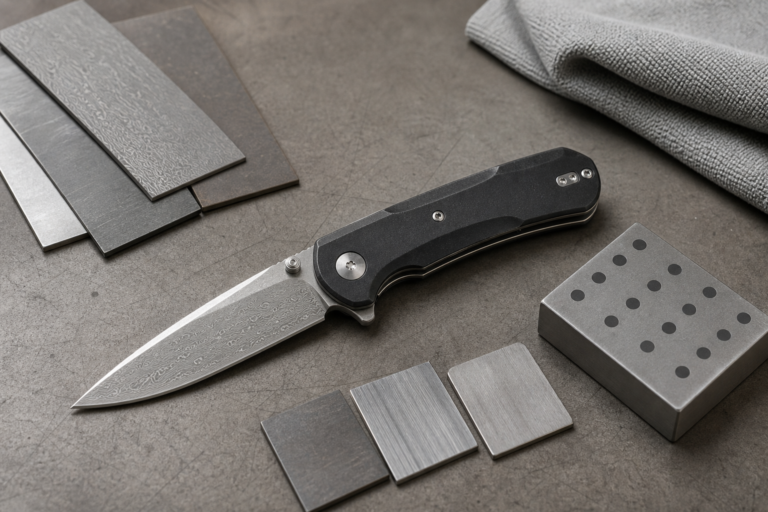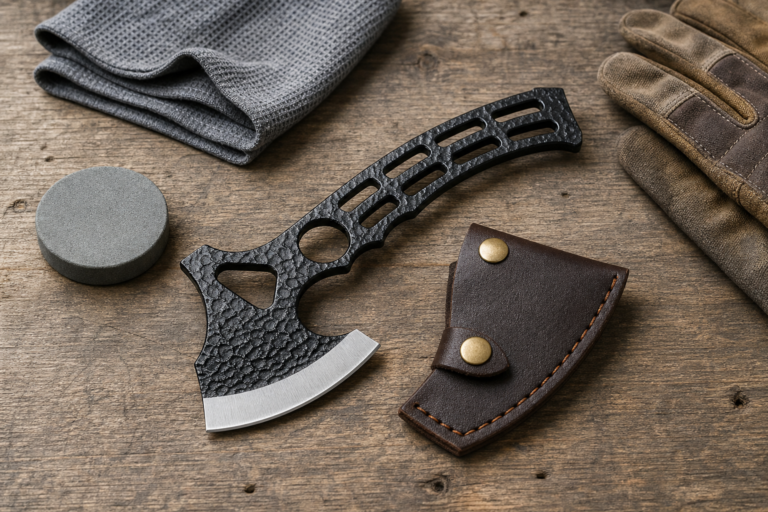
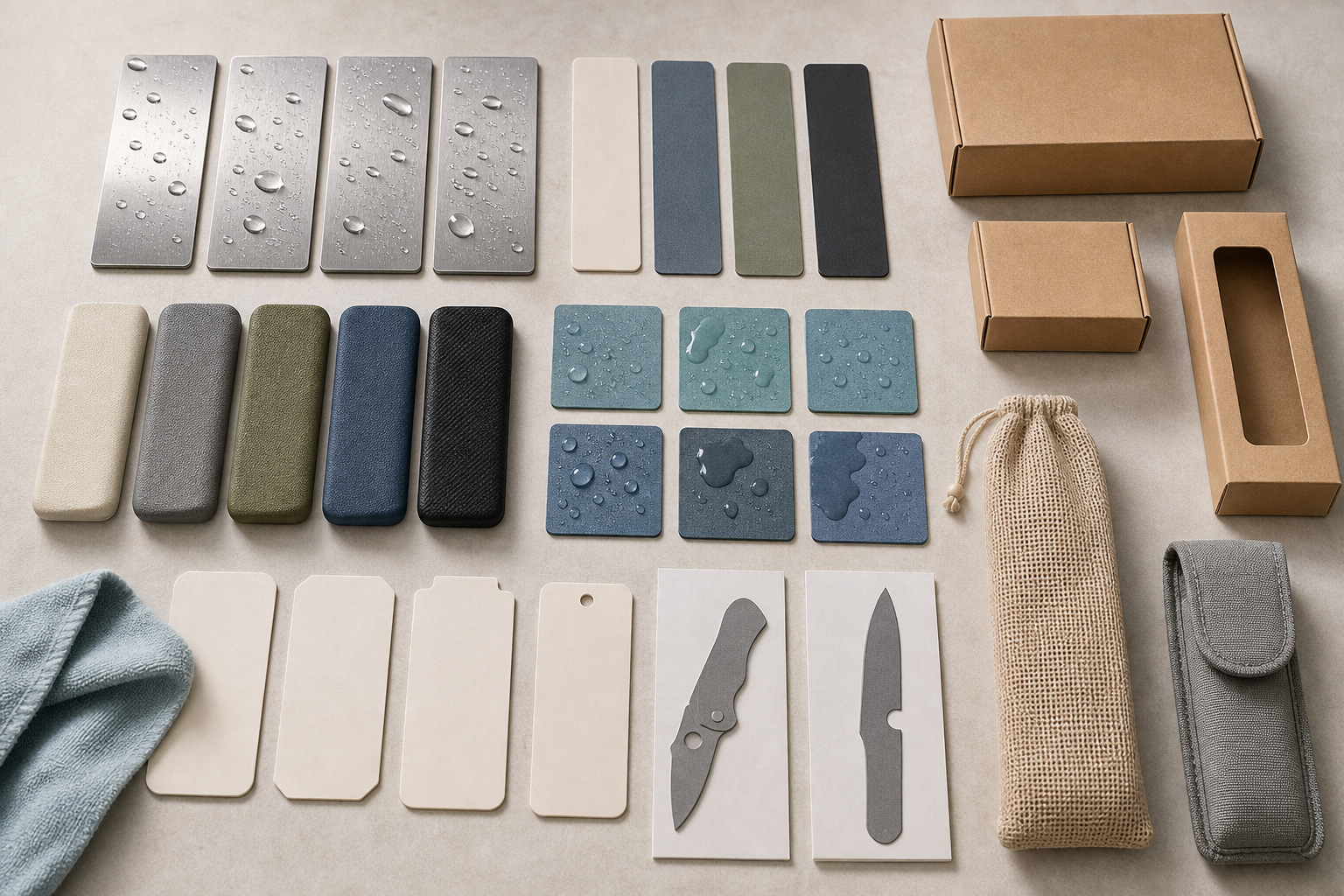
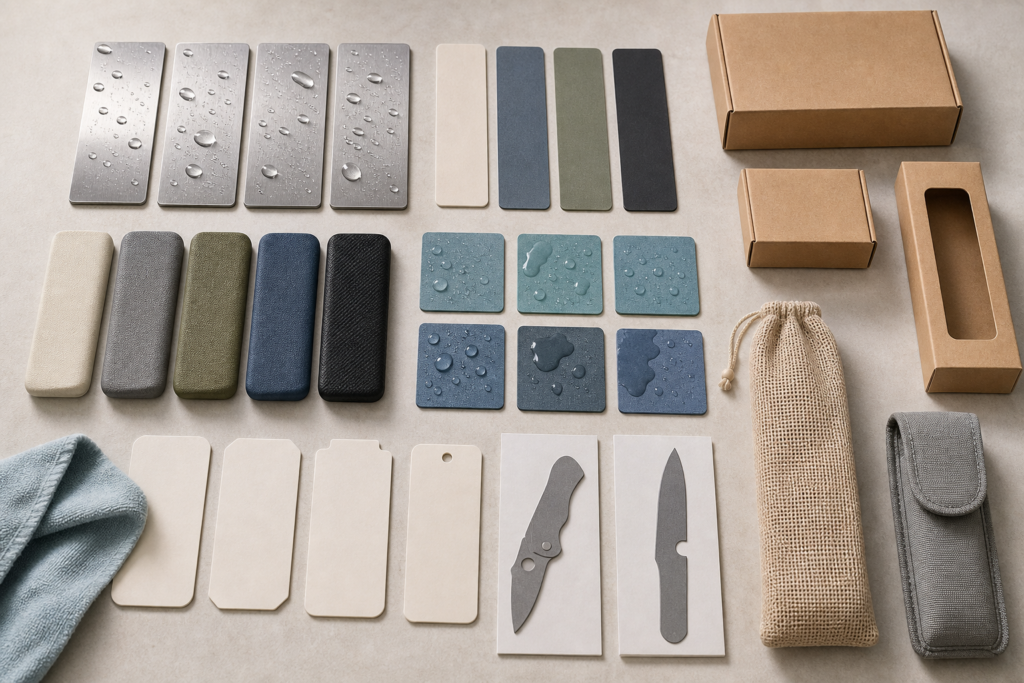
A long use list can sound helpful. But vague uses create vague knives, weak packaging claims, and confused RFQs. I group uses first.
Buyers should plan pocket knife use cases by grouping them into daily utility, outdoor, camping, fishing, food preparation, packaging, light work, and emergency support tasks. Each group should guide blade shape, steel, handle material, lock type, size, packaging, compliance wording, and inspection standards.
Quick buyer brief:
- Answer: Turn pocket knife uses into clear product requirements before sampling.
- Buyer context: This helps knife brands, outdoor brands, importers, wholesalers, distributors, and private label buyers brief OEM suppliers.
- Key checks: Use case group, blade length, blade shape, steel, hardness, handle grip, lock type, corrosion exposure, packaging claim, destination market, and QC plan.
Developing a folding knife line for your brand?
Vast State supports OEM/ODM folding knife projects, including blade steel, lock structure, handle material, finish, logo method, packaging, and quality inspection planning.
When a buyer asks for a pocket knife based on "many uses," I do not start by listing every possible task. I start by grouping the tasks. A pocket knife for opening cartons, trimming cord, and cutting tags does not need the same design as a camping knife for wet outdoor use. A fishing accessory does not need the same handle as a warehouse utility knife. For OEM and ODM work, use cases become product requirements.
Why Should Buyers Turn Pocket Knife Uses Into Product Requirements?
A use list can become marketing noise. A requirement list can become a better sample, better cost, and better repeat production.
Buyers should turn pocket knife uses into product requirements because each use affects blade shape, edge geometry, steel, corrosion resistance, handle texture, lock choice, clip, packaging, warnings, and QC checks.
I Do Not Treat Every Use as Equal
The original topic says "50 pocket knife uses." That can be useful for readers, but it is not enough for product development. If a buyer gives me 50 tasks without priorities, I still need to know which five tasks matter most. A knife that tries to do everything may become too large, too expensive, too complex, or too unclear for the market.
I usually separate uses into groups. Daily utility tasks may include opening packaging, cutting string, trimming tags, and preparing small materials. Outdoor tasks may include cutting cord, preparing camp items, and light trail support. Fishing and humid use cases may need better corrosion resistance. Food-related outdoor tasks need easy cleaning and careful packaging claims. Work tasks may need a stronger edge and a handle that feels secure. Emergency support tasks need careful product language and destination-market review.
The ISO 9001 supply chain guidance supports a simple but important idea: buyers must make their needs and expectations clear to suppliers. I see this every day. When buyers explain the real use case, I can recommend a more realistic knife.
| Use group | Product requirement | Why it matters |
|---|---|---|
| Daily utility | Compact blade, easy carry, simple edge | Supports broad EDC positioning |
| Outdoor camping | Stronger grip, corrosion review, useful belly | Supports field use expectations |
| Fishing or wet use | Stainless steel and cleanable handle | Reduces rust complaints |
| Packaging tasks | Straight edge control and safe storage | Supports warehouse and retail use |
OEM/ODM RFQ Checklist
Prepare these details to help Vast State review your project and provide a more accurate quotation.
| RFQ Field | What to Prepare |
|---|---|
| Project type | OEM from drawing / ODM private label / wholesale catalog |
| Product category | Folding knife / fixed blade / multi-tool / outdoor tool |
| Design status | Idea / sketch / 2D drawing / 3D CAD / physical sample |
| Target price | Ex-factory target price or retail price range |
| MOQ expectation | 500 / 1,000 / 3,000 / 5,000+ pcs |
| Logo method | Laser engraving / etching / printing / molded logo |
| Packaging | Standard packaging / custom retail box / Amazon-ready |
| Market | USA / EU / Japan / Korea / Middle East / other |
| Compliance needs | Buyer-specified testing / documentation / labeling |
| Timeline | Sample deadline / mass production deadline |
Which Daily Utility Uses Should Shape an EDC Pocket Knife?
Daily use sounds simple. But small tasks still affect blade size, opening feel, pocket clip, and packaging story.
Daily utility uses for an EDC pocket knife include opening cartons, cutting tape, trimming cord, slicing tags, preparing small materials, and handling routine outdoor or household tasks. These uses favor compact size, useful edge geometry, and stable carry.
I Use Daily Tasks to Control Size and Shape
For daily utility, I usually prefer a compact and understandable product. The buyer may not need an extreme blade profile or a very thick handle. The knife should be easy to carry, easy to describe, and easy to inspect. A drop point, sheepsfoot, or wharncliffe-style blade can work for many daily tasks, depending on the brand position. The handle should not be too slippery. The clip should not bend easily. The closed knife should protect the edge and feel secure.
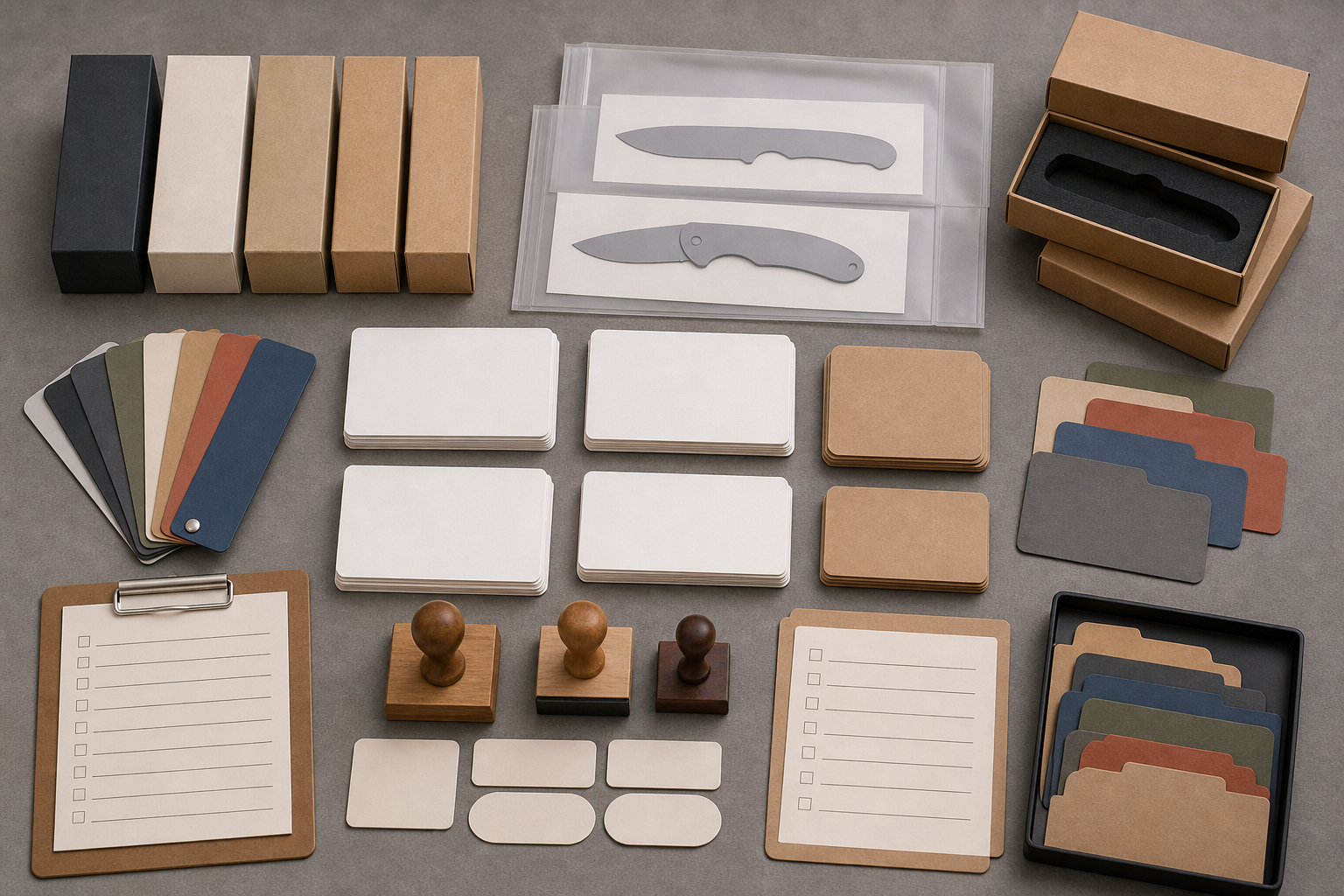
Daily utility use also affects packaging. A private label seller may want a clean box, a pouch, or a blister pack. The packaging should avoid exaggerated claims. The buyer should describe the knife as a practical cutting tool, not as something dramatic. If the product is sold online, the photos, bullet points, and category wording should match the target market and local rules.
The Missouri Department of Conservation notes that a pocketknife is a useful outdoor tool, but it also stresses careful use, keeping the knife closed when not in use, maintaining a safe work area, keeping the blade sharp, and keeping it clean. That safety framing is useful for sellers too. A practical product story should include responsible tool use.
| Daily use | Design implication | Seller note |
|---|---|---|
| Opening packaging | Controlled tip and easy edge access | Avoid overbuilding the blade |
| Cutting cord or string | Useful edge length | Check sharpness and edge geometry |
| Carrying in pocket | Slim handle and stable clip | Check clip strength and comfort |
| General EDC | Familiar shape and simple story | Keep claims practical |
Which Outdoor and Camping Uses Need Stronger Design Choices?
Outdoor use can make a weak knife feel worse quickly. Moisture, dirt, gloves, and thicker materials raise expectations.
Outdoor and camping uses may include cutting cord, preparing camp items, light food tasks, fishing support, and general kit use. These uses need better grip, corrosion review, edge stability, and packaging that matches outdoor expectations.
I Raise the Standard for Outdoor Lines
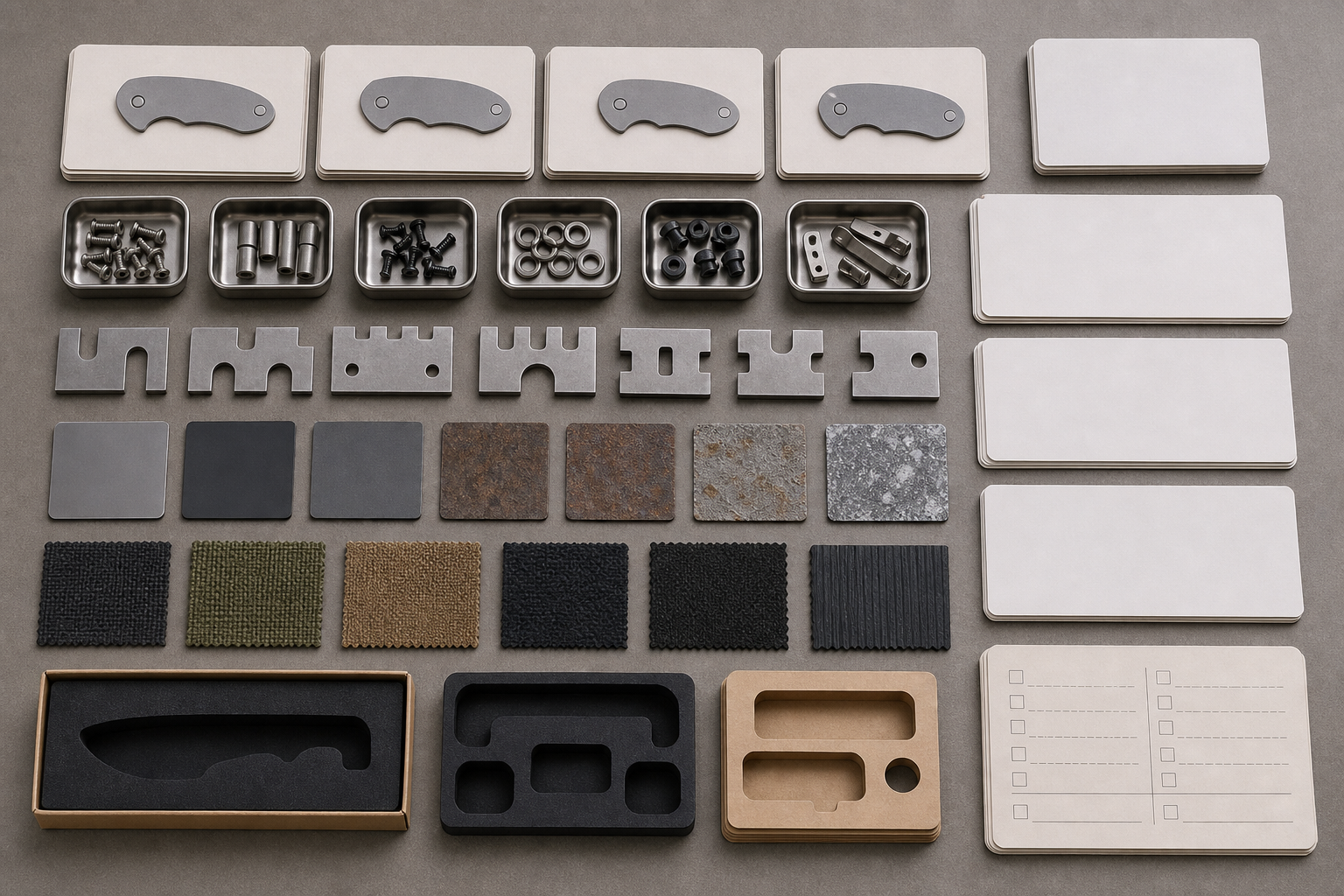
Outdoor and camping products need more than a nice blade shape. They need a product system. The blade steel should match corrosion exposure and edge needs. The handle should feel secure when hands are wet or cold. The lock or slip joint should match the target market and product level. The edge should be easy enough to maintain. The finish should resist visible wear at the price point. The packaging should explain the product as a practical outdoor tool.
Some buyers want one pocket knife for camping, hiking, fishing, and EDC. That can work if the knife is balanced. But if the buyer wants heavy outdoor use, I may suggest a fixed blade or a larger folding knife instead. The use case should drive the product type.
Steel selection matters here. Alleima 14C28N knife steel is described with edge performance, high hardness, corrosion resistance, re-sharpening, and use in pocket knives, hunting knives, and fishing knives. This is the kind of material language buyers should use when they compare steel options. The best steel is not a slogan. It is a match between use, budget, heat treatment, and production control.
| Outdoor use | Design concern | OEM recommendation |
|---|---|---|
| Cord and camp tasks | Edge stability and grip | Define steel and handle texture |
| Wet conditions | Corrosion resistance | Review stainless steel options |
| Gloves or cold hands | Handle shape and texture | Test sample grip and access |
| Outdoor retail | Product story and package value | Match packaging to target buyer |
How Do Packaging, Warehouse, and Work Uses Affect Blade Design?
Work tasks often look simple. Repeated cutting can expose weak edge geometry, poor handles, and loose clips.
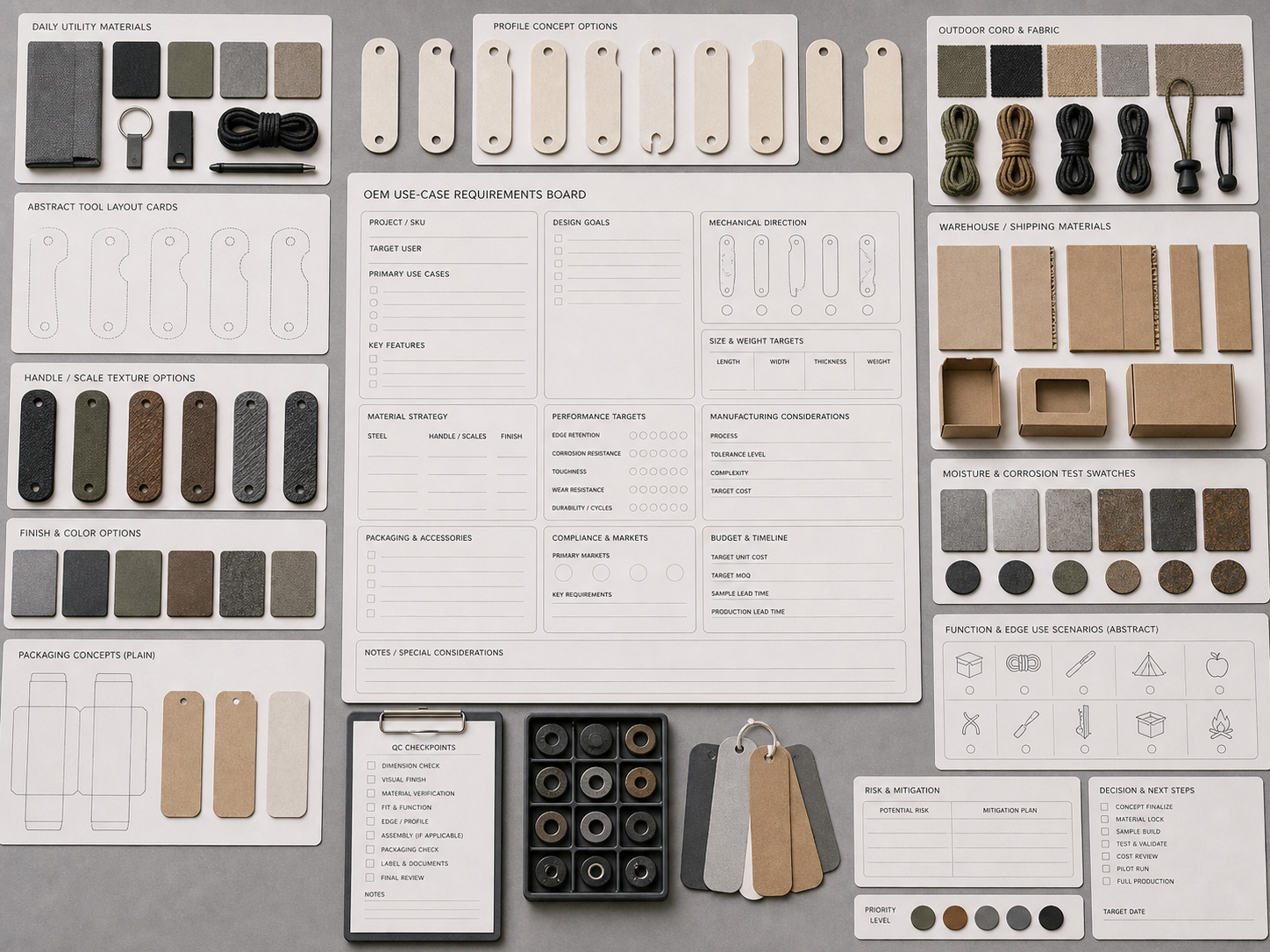
Packaging, warehouse, and work uses affect blade design by favoring controlled edges, durable tips, stable handles, practical clips, simple cleaning, and repeatable sharpness over decorative complexity.
I Separate Repeated Work From Occasional Use
A buyer who sells to warehouse, retail, farm, or utility channels should think about repeated cutting. A knife used once a week can have a different tolerance for comfort and edge wear than a knife used many times a day. Repeated packaging tasks may favor a straighter edge, easy control, and a strong but not overly fine tip. A deep belly may be nice for outdoor slicing, but it may not be ideal for straight carton work. A very sharp point may look useful, but it can increase damage to package contents if the user is not careful.
Handle design also matters. A smooth metal handle may look clean in photos, but it may not fit all work tasks. G10, textured polymer, rubberized materials, or shaped aluminum may fit better depending on the target price and brand. The clip should not bend easily. Screws should be secure. The blade should close safely into the handle. The product should be easy to clean if it is used around dust, tape residue, or packing material.
For OEM quotes, I ask whether the product is for light utility, repeated daily work, or outdoor retail. Those three answers lead to different blade profiles, edge thickness, lock choices, and QC points.
| Work use | Product issue | Practical check |
|---|---|---|
| Carton opening | Tip control and edge angle | Test on sample materials |
| Cutting tape | Residue and cleaning | Choose finish and handle carefully |
| Cord and strapping | Edge stability | Define sharpness and edge geometry |
| Frequent pocket carry | Clip strength | Check clip bend and screw security |
How Should Buyers Handle Food, Fishing, and Moisture-Related Uses?
Moisture and food contact can expose poor material choices. Rust, odor, and cleaning problems hurt repeat sales.
Food, fishing, and moisture-related uses require corrosion-resistant steel, cleanable handle materials, smooth finishing, careful packaging language, and user instructions that support responsible cleaning and storage.
I Treat Wet Use as a Material and Cleaning Problem
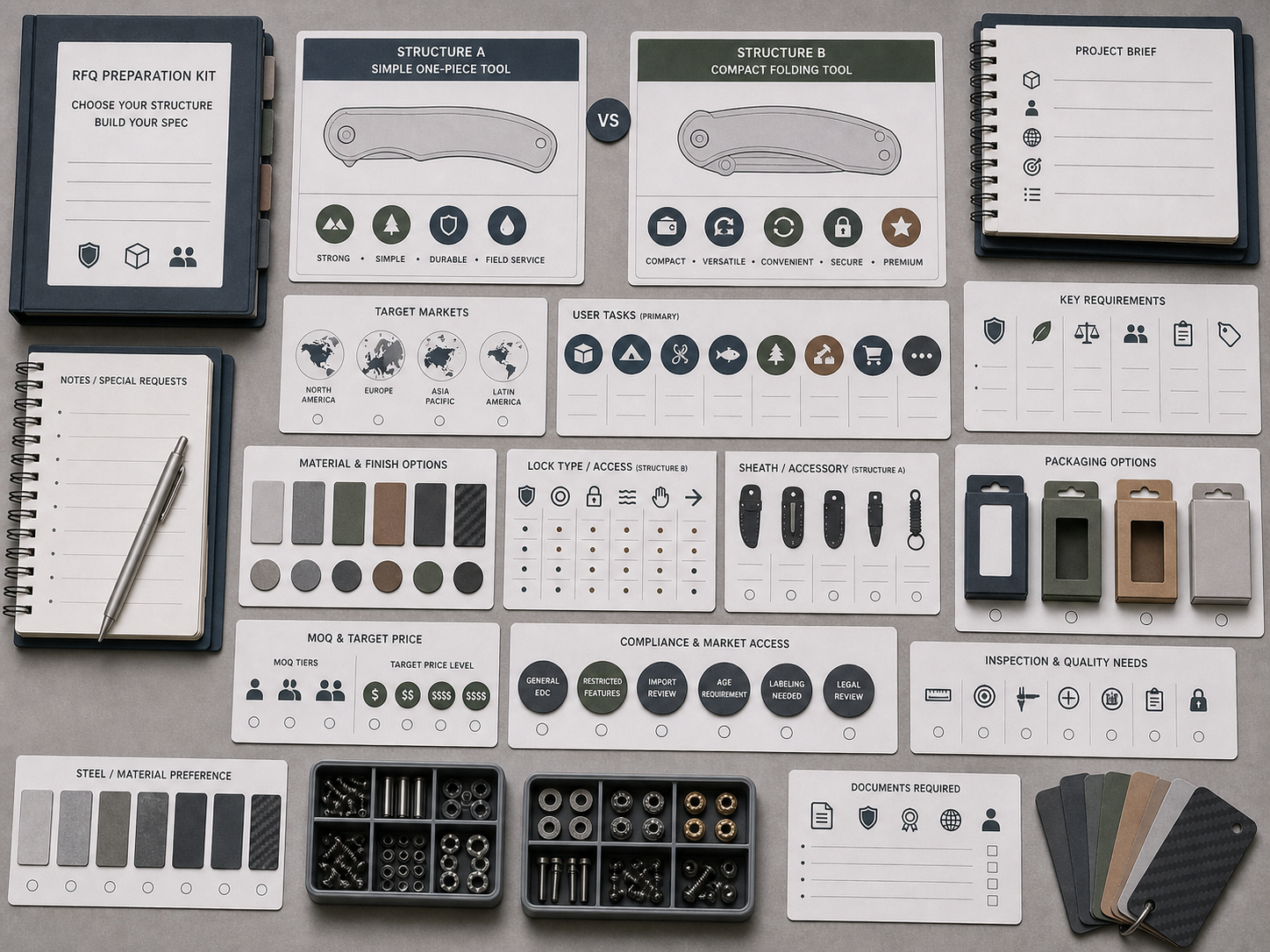
Fishing, food preparation, and humid outdoor use are not only marketing ideas. They create material and cleaning questions. The blade may face water, salt, food residue, plant material, or dirt. The handle may need to resist swelling, odor, and stains. The pivot and lock area may trap residue if the design is too closed or hard to clean. The finish may show rust spots if the steel and surface treatment do not match the use case.
For these products, I like clear steel and handle discussions. Stainless steel can be a better fit than high-carbon steel when corrosion complaints are likely. G10, certain plastics, stainless steel, and aluminum can be easier to clean than some natural materials, depending on finish and construction. Wood or bone may look attractive, but it should be chosen with the target market and care expectations in mind.
Food-related claims should be careful. A pocket knife is not the same as a kitchen knife. If a seller wants to mention outdoor food preparation, the wording should be practical. The Missouri Department of Conservation article also reminds users to clean the blade before preparing food and after use. That point matters because a product sold for outdoor food tasks should support cleaning, not only cutting.
| Moisture use | Material concern | Buyer action |
|---|---|---|
| Fishing line and wet gear | Corrosion resistance | Review stainless options and finish |
| Outdoor food prep | Cleanability | Avoid hard-to-clean design gaps |
| Humid storage | Rust and surface spotting | Add care instructions |
| Water exposure | Handle swelling or odor | Choose stable handle material |
What Use Claims Should Sellers Avoid in Pocket Knife Marketing?
Marketing can create risk when it promises the wrong use. Strong wording can turn a practical tool into a problem.
Sellers should avoid unsafe, aggressive, exaggerated, or unclear pocket knife claims. Marketing should focus on practical cutting tasks, responsible use, target market, material details, and verified product features.
I Keep the Product Story Practical
Pocket knife marketing should be useful and calm. A seller can talk about opening packaging, cutting cord, outdoor camp tasks, fishing support, compact carry, corrosion resistance, handle grip, pocket clip, and private label packaging. A seller should be much more careful with claims that imply misuse, illegal carry, unsafe behavior, or extreme performance that the product has not been tested to support.
The GOV.UK knife guidance is a useful reminder that laws and sales rules can treat knife categories, age, blade length, locking structure, and market behavior seriously. That page is UK-specific, but the broader sourcing lesson applies anywhere. A buyer should not write packaging claims first and check rules later.
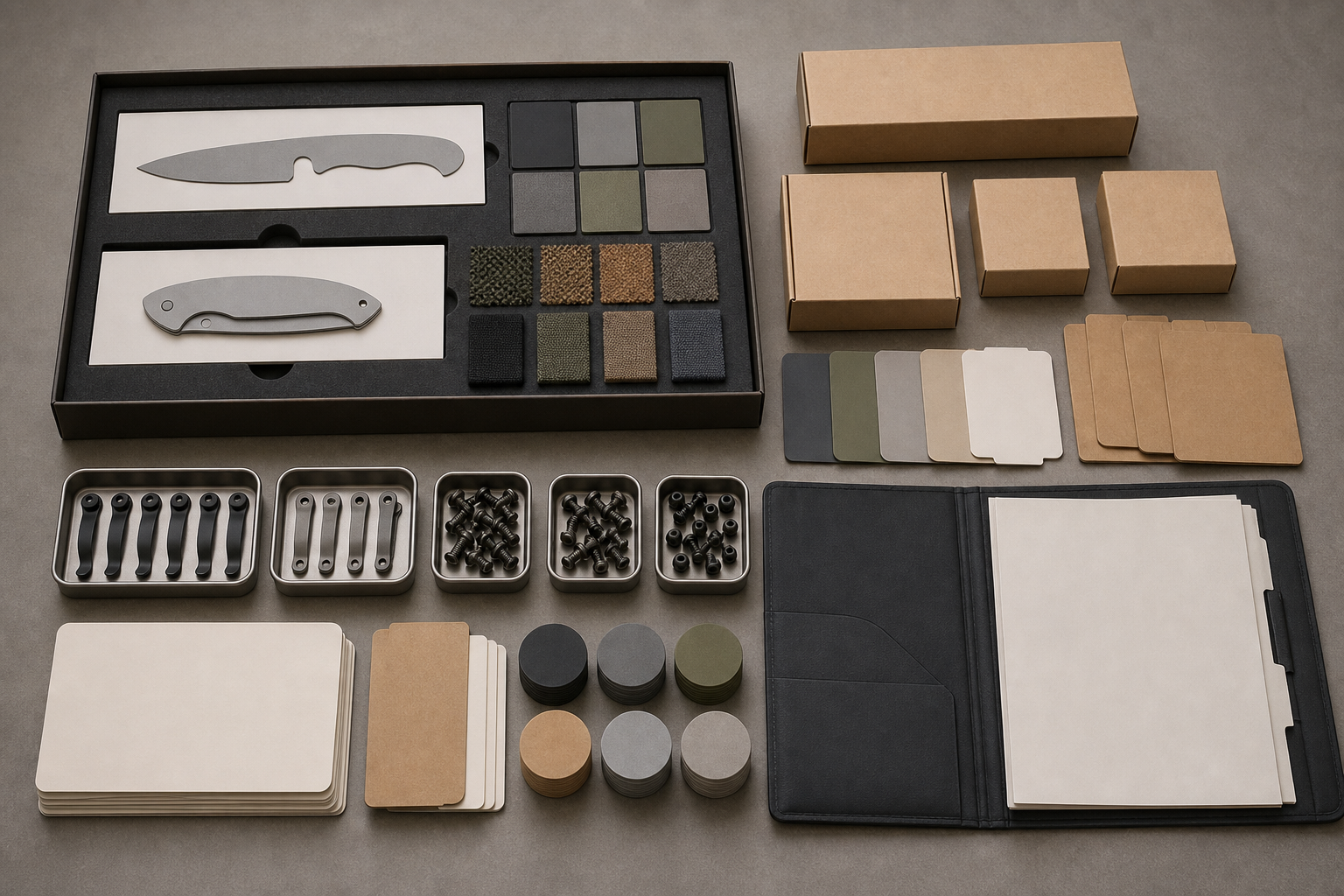
I usually ask buyers to provide planned package wording before production. This gives us time to review whether the product name, blade length, lock type, material claim, warning language, barcode area, and origin marking are all ready. The supplier cannot replace the buyer's legal adviser, but the supplier can help make sure the technical description is accurate.
| Claim type | Better direction | Why it helps |
|---|---|---|
| Vague all-purpose claim | List practical task groups | Creates clearer buyer expectation |
| Extreme performance claim | State material and structure facts | Avoids unsupported promises |
| Unclear legal wording | Confirm market language first | Reduces channel risk |
| Food or wet-use claim | Add care and cleaning context | Reduces complaint risk |
How Do Pocket Knife Use Cases Affect Quality Control?
A sample can pass basic appearance checks but fail real use expectations. QC must match the task group.
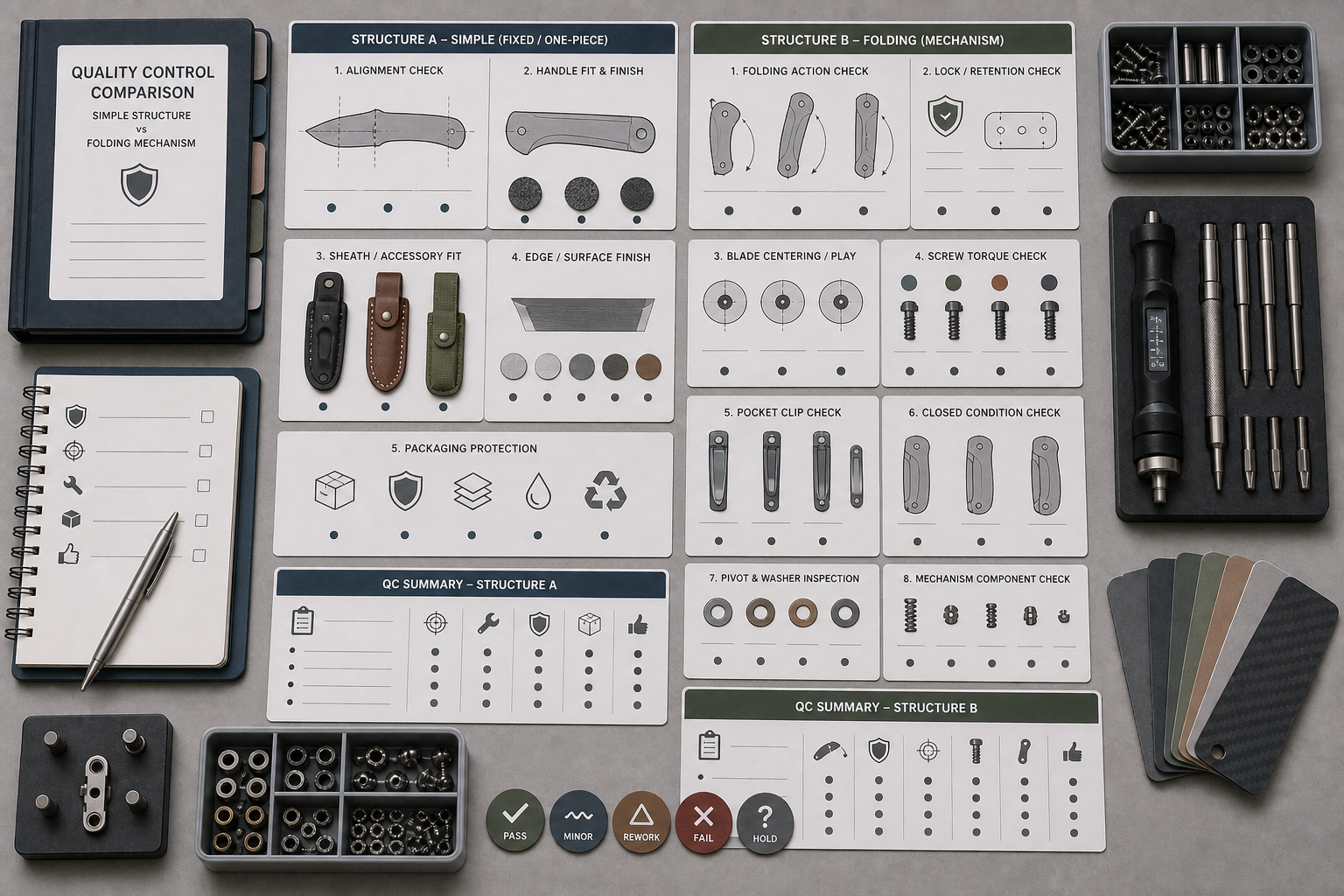
Pocket knife use cases affect QC by defining what to check: edge sharpness, bevel consistency, blade centering, lock function, blade play, screw torque, clip strength, corrosion exposure, handle grip, packaging protection, and final appearance.
I Turn Use Cases Into Inspection Points
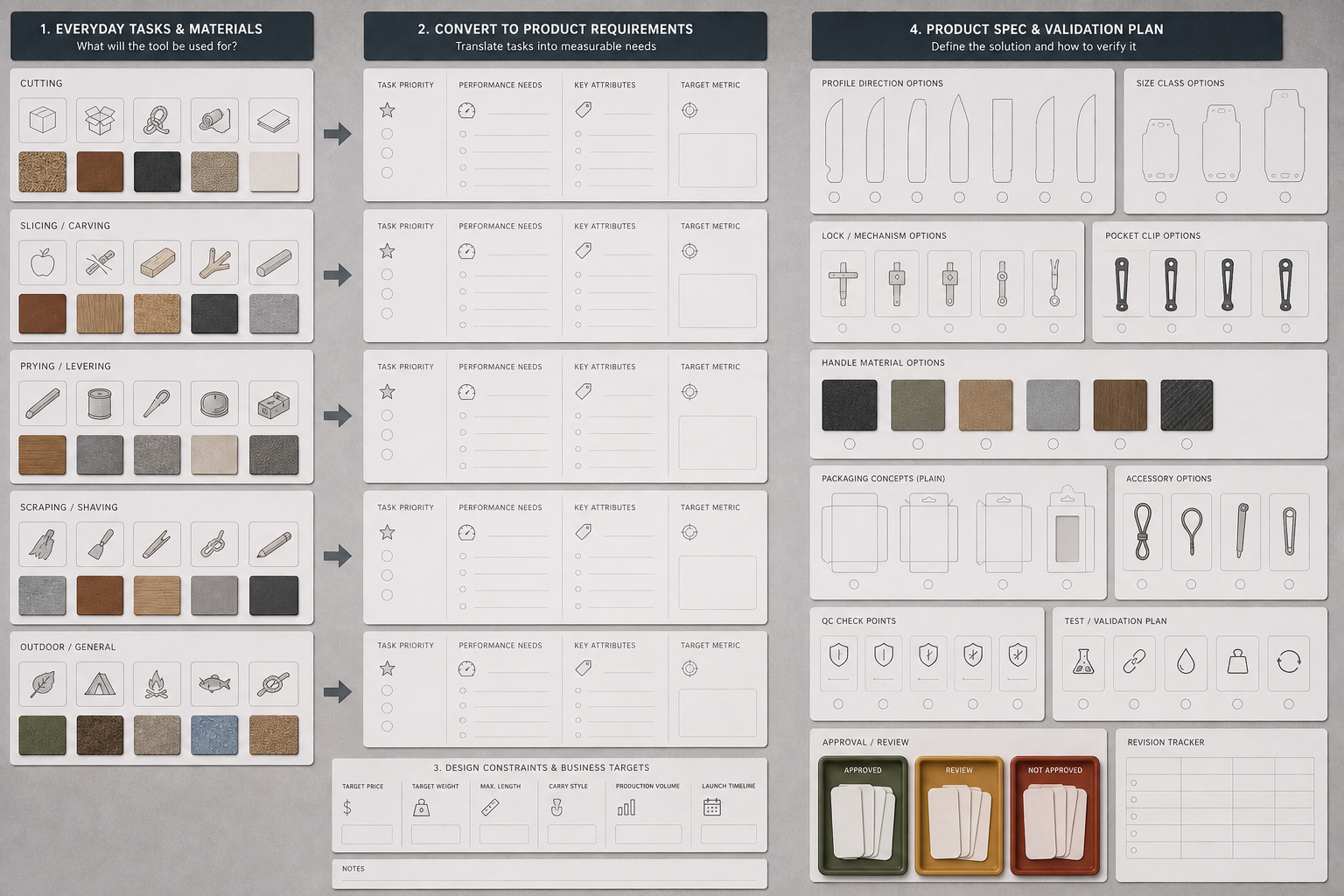
If the use case is daily utility, I check blade action, edge, clip, handle comfort, and packaging protection. If the use case is outdoor or camping, I add grip, corrosion exposure, finish, and edge stability. If the use case is fishing or moisture-related, I pay more attention to steel, surface treatment, cleaning, and packaging care language. If the use case is repeated work, I care more about edge geometry, screw security, and clip strength.
Hardness may also matter if the buyer specifies it. The NIST Rockwell hardness guide explains that good practice helps reduce measurement error in Rockwell hardness testing. For a B2B buyer, that means hardness should be a controlled inspection item, not a loose catalog promise.
I also want the approved sample to become a real standard. The supplier should keep clear records of blade finish, handle color, logo position, action feel, lock engagement, blade play, clip position, edge, packaging, and carton details. When the next order comes, those records help repeat the product.
| Use case group | QC focus | What it protects |
|---|---|---|
| Daily utility | Action, edge, clip, package | User convenience |
| Outdoor camping | Grip, finish, edge stability | Field expectations |
| Wet use | Corrosion and cleanability | Complaint reduction |
| Repeated work | Edge geometry and screw security | Repeat performance |
What Should Buyers Put in an RFQ for Pocket Knife Use Cases?
A vague RFQ says "many uses." A useful RFQ explains which uses drive the design.
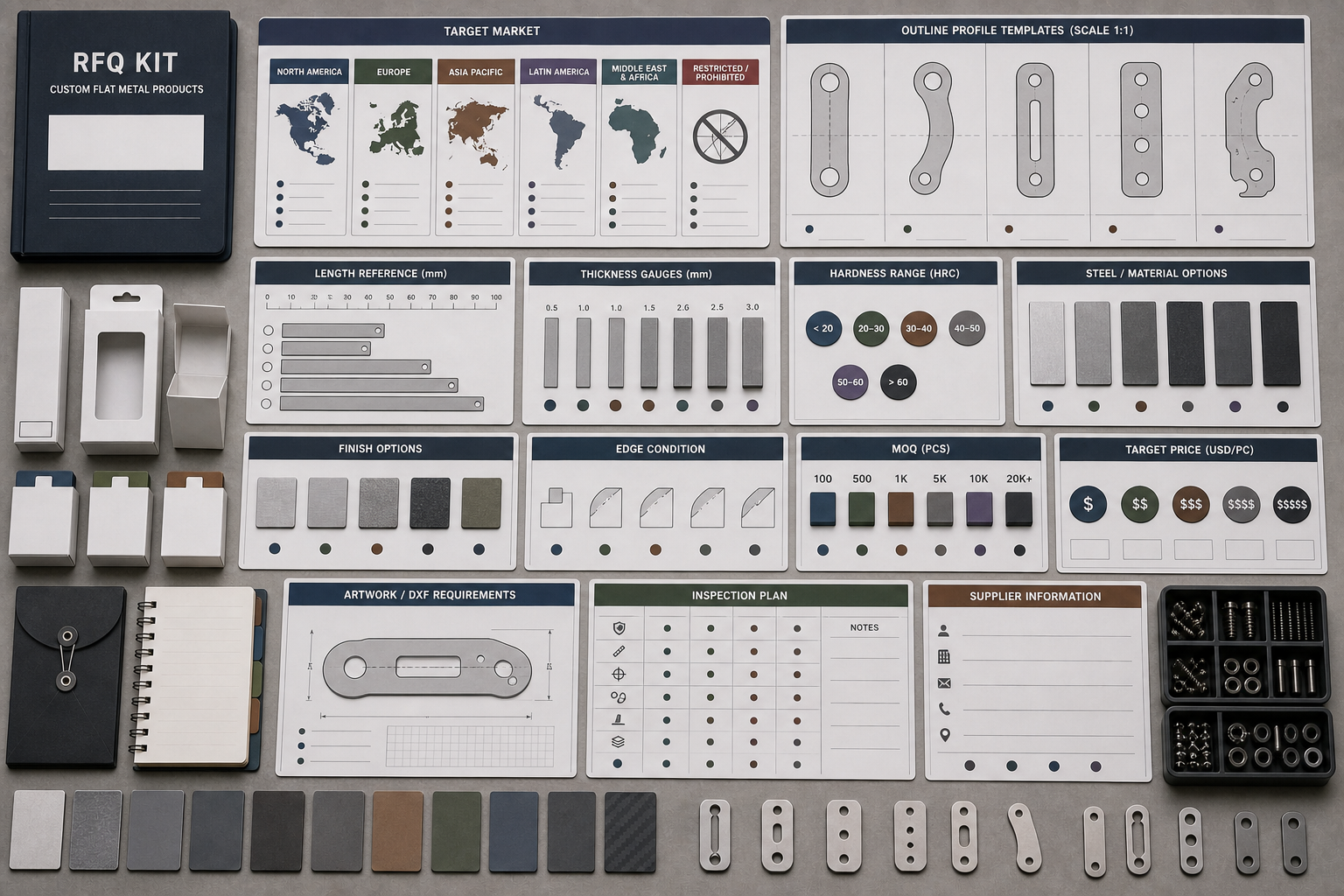
Buyers should include target use groups, sales market, blade length, blade shape, steel, hardness range, handle material, lock type, clip, finish, packaging, compliance market, target price, MOQ, and inspection requirements.
I Ask Buyers to Rank the Uses
The most helpful RFQ ranks use cases. It does not say "50 uses." It says the product is mainly for daily utility, outdoor camping, fishing support, warehouse packaging, or a private label EDC line. Then it gives target price, order quantity, blade length, steel preference, handle material, lock type, finish, packaging, and sales market. This gives the supplier enough context to make practical suggestions.
If the buyer has a finished design, I review whether the use case matches the structure. If the buyer has only an idea, I help turn the idea into a manufacturable product. Sometimes the best answer is a simple liner-lock folder. Sometimes it is a non-locking pocketknife for a specific market. Sometimes it is a multi-tool, rescue tool, or fixed blade instead. The use case should lead the product choice.
For Vast State, a good use-case RFQ lets us support concept review, prototype development, steel selection, lock and structure suggestions, packaging customization, sample improvement, and repeat production. It also helps us protect the buyer's target margin because we do not overbuild features that the market will not pay for.
| RFQ field | What to include | Why it helps |
|---|---|---|
| Primary use group | Daily, outdoor, wet use, work, retail | Guides product direction |
| Target market | Country, channel, user group | Supports compliance and packaging |
| Product structure | Blade, steel, handle, lock, clip | Controls sample accuracy |
| Packaging | Box, pouch, blister, warnings, barcode | Supports sales and shipment |
| QC plan | Action, lock, edge, finish, package | Supports repeat production |
Turn this article into a folding knife project.
Share your blade type, lock direction, steel preference, handle material, quantity, target market, and packaging needs. Vast State can prepare OEM/ODM options.
Conclusion
I turn pocket knife uses into product requirements so the buyer gets a clearer sample, safer claims, stronger QC, and better sourcing decisions.
Source Notes
- Missouri Department of Conservation pocketknife safety guide supports common practical uses and responsible safety framing.
- GOV.UK knife guidance supports the need to check market rules, age limits, blade length, lock type, and product wording.
- Alleima 14C28N knife steel supports steel tradeoff discussion for edge performance, hardness, corrosion resistance, and knife applications.
- NIST Rockwell hardness guide supports controlled hardness measurement when hardness is specified.
- ISO 9001 in the supply chain supports clear purchasing information, requirements, approvals, monitoring, and inspection expectations.