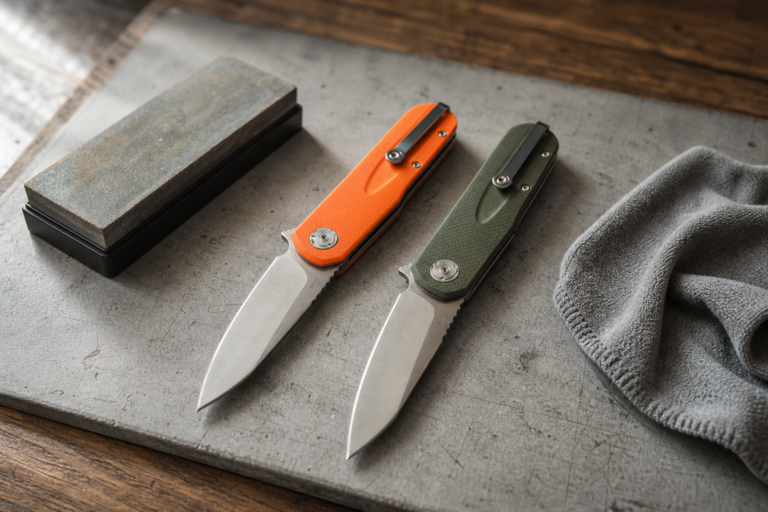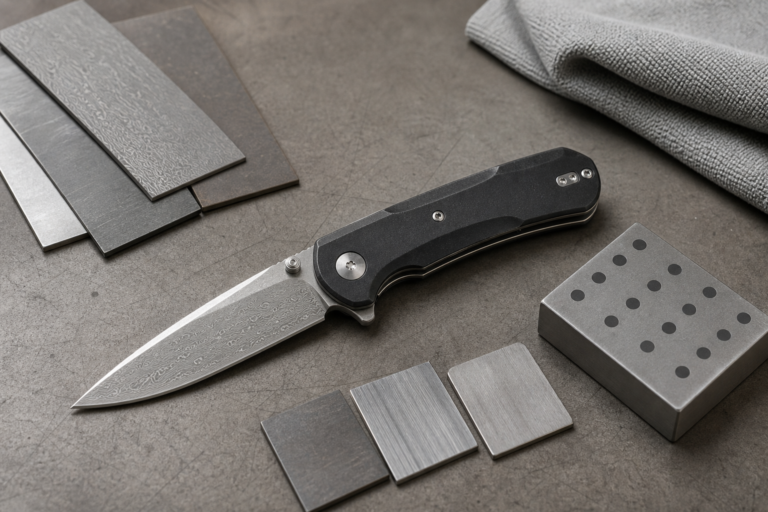
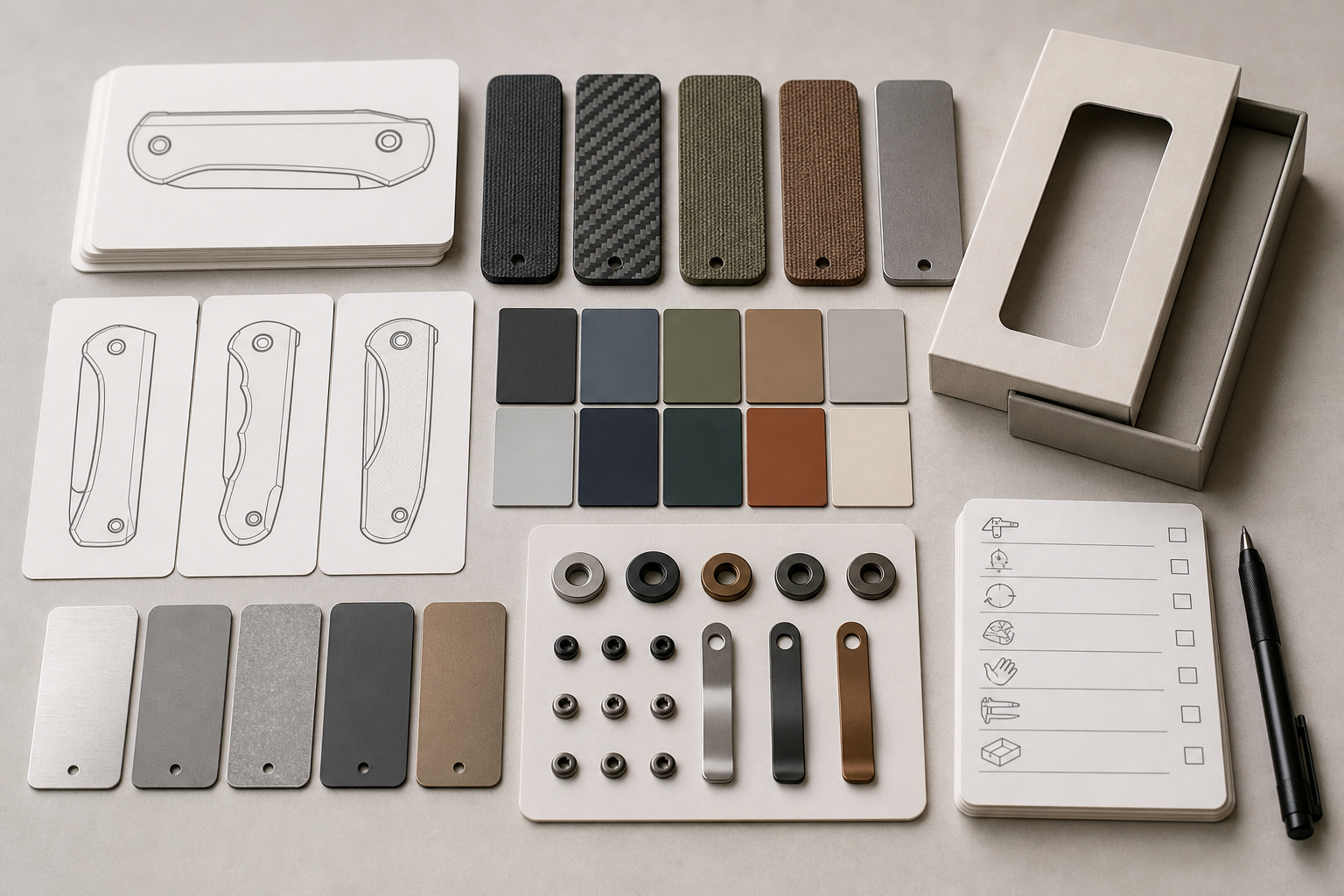
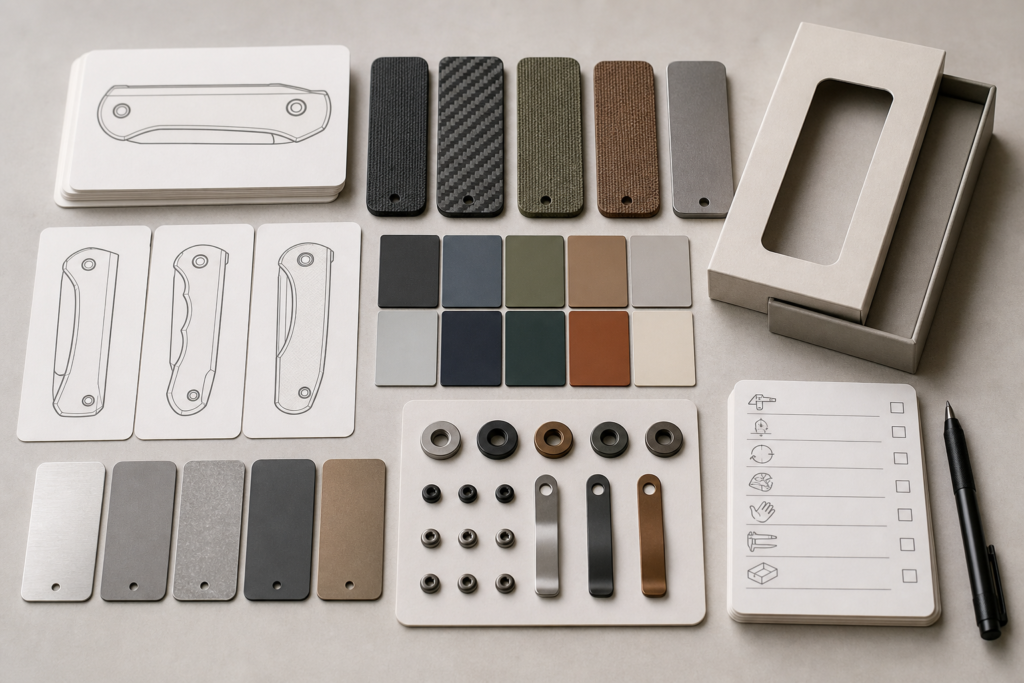
A stylish EDC knife can sell fast or fail quietly. Good looks are not enough. The design must also repeat well in production.
Buyers can develop stylish EDC folding knives by matching target users, blade steel, handle materials, lock structure, finish, packaging, quality checks, and price positioning before sampling. Style should support function, cost, repeat production, and brand identity.
Quick buyer brief:
- Answer: Turn style into clear product, material, structure, packaging, and QC decisions.
- Buyer context: This helps brands, importers, distributors, and private label buyers plan OEM/ODM EDC folders.
- Key checks: Target market, blade steel, handle material, lock type, finish, packaging, MOQ, target price, and inspection points.
Developing a folding knife line for your brand?
Vast State supports OEM/ODM folding knife projects, including blade steel, lock structure, handle material, finish, logo method, packaging, and quality inspection planning.
When I work on a stylish EDC folding knife project, I do not start by asking only what looks cool. I ask who will buy it, what price range it must hit, what channel will sell it, and what details must stay stable in mass production. A clean design can be simple, modern, outdoor-focused, work-focused, or collector-friendly. But for B2B buyers, style must be more than a photo. It must be a controlled product system. The blade steel, handle feel, lock action, finish, logo process, packaging, and QC plan all have to support the same brand direction.
Why Should Style Start With The Target Market?
Style without a buyer profile becomes decoration. It may look attractive, but it may miss the price, channel, or customer expectation.
Style should start with the target market because EDC buyers judge size, weight, color, finish, function, and packaging together. A good design fits a real selling position.
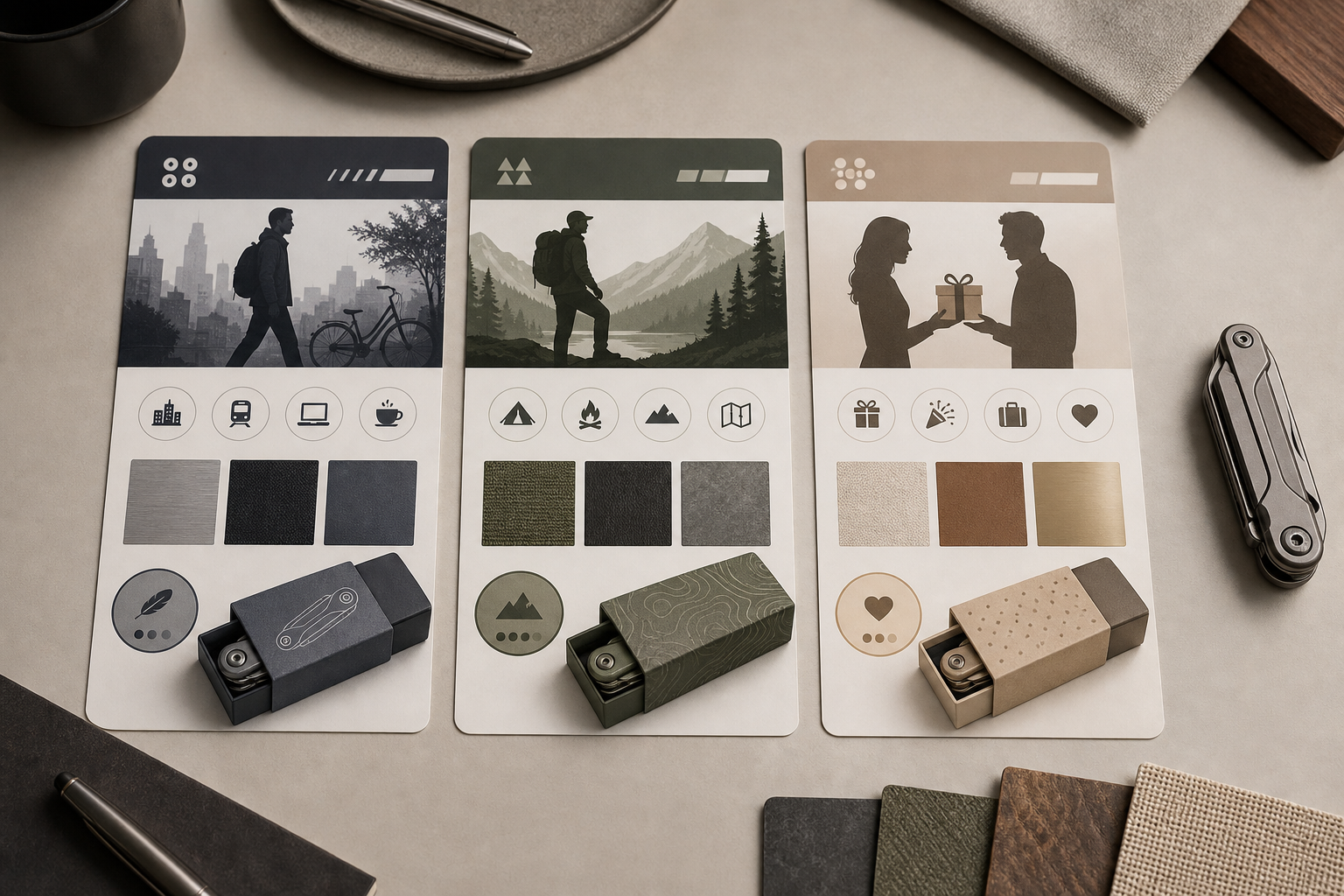
I Define The Buyer Before The Shape
In OEM and ODM projects, I have learned that style is not one universal language. A low-price private label EDC knife needs a different design path from a giftable outdoor folder or a higher-end brand project. A younger lifestyle brand may want bold color, light weight, and clean packaging. A work-focused distributor may want better grip, simple maintenance, and a finish that hides small wear marks. An outdoor brand may want corrosion resistance, practical texture, and packaging that feels ready for retail.
This is why I ask buyers to describe the market before approving the first drawing. I want to know the target country, retail channel, expected price range, MOQ, user profile, blade steel expectation, handle material preference, and packaging style. These details guide the design. If the buyer only says "make it stylish," the factory can produce a nice-looking sample that is too costly, too heavy, too hard to repeat, or not aligned with the brand. A better brief turns style into decisions.
| Target market factor | Design meaning | Buyer decision |
|---|---|---|
| Retail price | Controls steel, handle, finish, and packaging | Set target FOB and retail range |
| Sales channel | Changes packaging and visual style | Define online, retail, or distributor channel |
| User profile | Guides size, weight, and grip | Explain practical buyer expectation |
| Brand position | Shapes color and finish | Choose simple, outdoor, work, or gift style |
OEM/ODM RFQ Checklist
Prepare these details to help Vast State review your project and provide a more accurate quotation.
| RFQ Field | What to Prepare |
|---|---|
| Project type | OEM from drawing / ODM private label / wholesale catalog |
| Product category | Folding knife / fixed blade / multi-tool / outdoor tool |
| Design status | Idea / sketch / 2D drawing / 3D CAD / physical sample |
| Target price | Ex-factory target price or retail price range |
| MOQ expectation | 500 / 1,000 / 3,000 / 5,000+ pcs |
| Logo method | Laser engraving / etching / printing / molded logo |
| Packaging | Standard packaging / custom retail box / Amazon-ready |
| Market | USA / EU / Japan / Korea / Middle East / other |
| Compliance needs | Buyer-specified testing / documentation / labeling |
| Timeline | Sample deadline / mass production deadline |
How Should Blade Steel Support A Stylish EDC Project?
A beautiful handle cannot fix a weak blade choice. Poor steel matching can create complaints after the product reaches customers.
Blade steel should support the EDC knife's price, edge performance, corrosion resistance, heat treatment plan, and brand promise. Buyers should choose steel for the market, not for decoration.
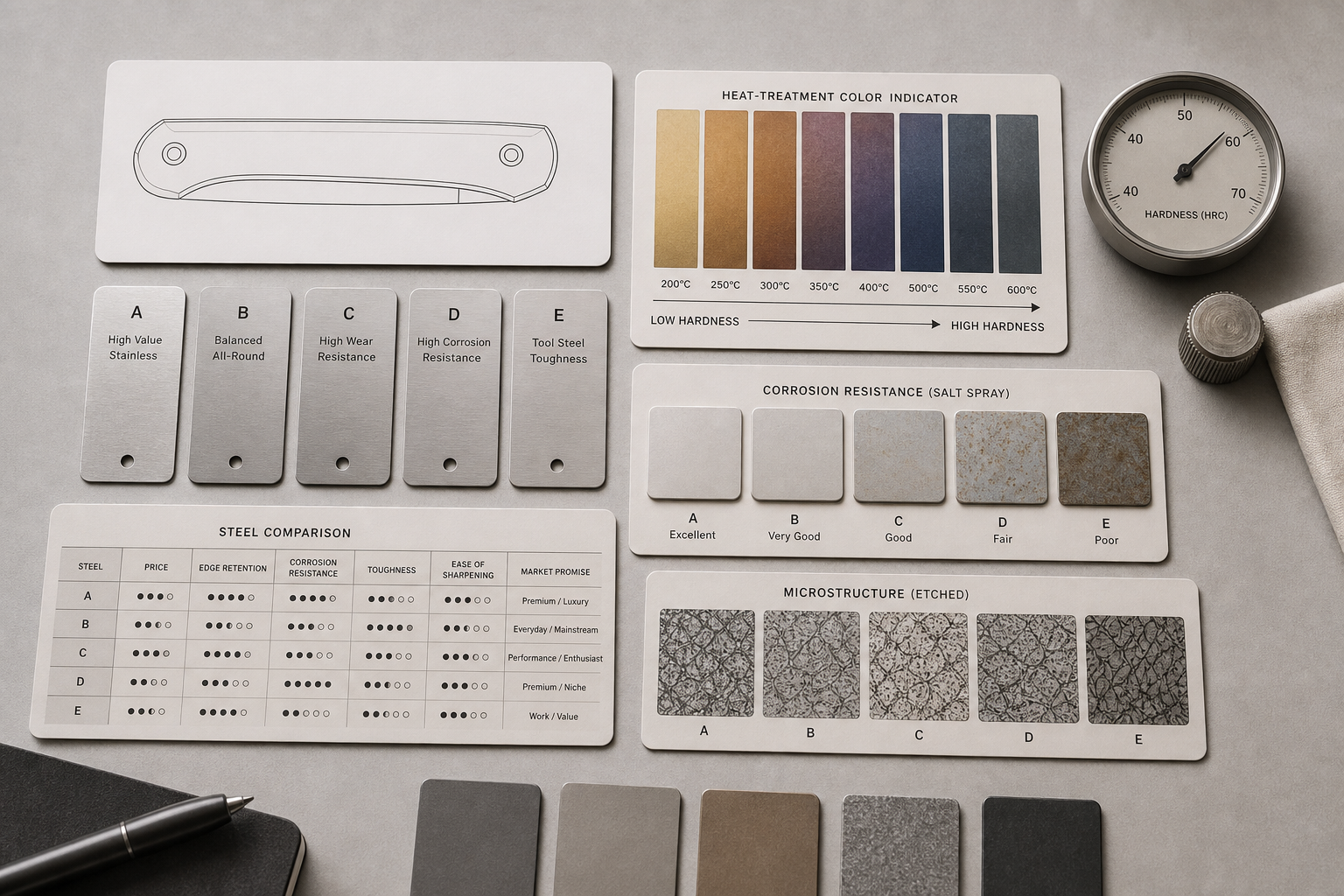
I Match Steel To The Brand Level
Blade steel is part of style because customers read it as a quality signal. But I do not suggest the most expensive steel by default. I look at the target price, order quantity, heat treatment stability, sharpening expectation, corrosion resistance, and product story. For example, Alleima 14C28N knife steel is described by its manufacturer as a knife steel with a useful balance of hardness, edge performance, and corrosion resistance, and it is often relevant for pocket knife applications. That kind of source helps buyers connect material choice with real performance needs.
For a stylish EDC folding knife, the steel should not only look good in a spec table. It should work with the blade thickness, grind, heat treatment, finish, and target price. D2 may fit one market. 8Cr or 9Cr may fit another. 14C28N may support a stronger performance story for some buyers. The key is to make the steel, hardness target, and inspection method clear in the RFQ. If the buyer wants a strong brand story, the steel choice needs evidence and production discipline behind it.
| Steel decision | Why it matters | Practical note |
|---|---|---|
| Steel grade | Sets performance and price position | Match grade to channel and target price |
| Heat treatment | Turns steel into a working blade | Confirm process and hardness target |
| Blade finish | Affects look and corrosion behavior | Choose finish with use environment in mind |
| Inspection | Protects repeat production | Record hardness and visual checks |
Which Handle Materials Shape The First Impression?
The handle is what buyers see first. If it feels cheap, slippery, or too heavy, the design loses trust.
Handle materials shape first impression through color, texture, weight, grip, machining quality, and perceived value. Buyers should choose materials that match both brand style and production reality.
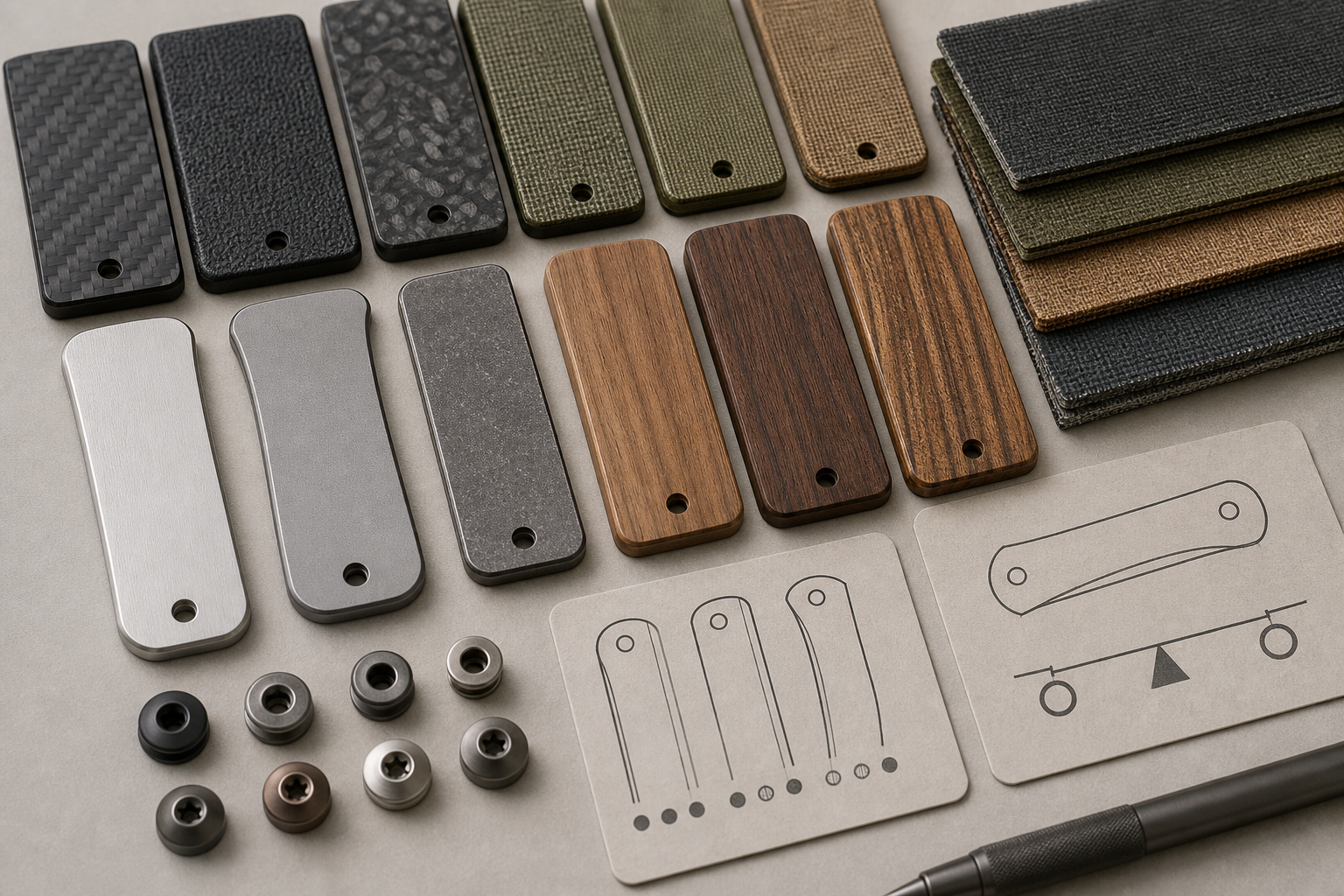
I Choose Texture And Weight Together
Handle material is one of the fastest ways to change a knife's style. G10 can feel practical and textured. Aluminum can feel light and modern. Stainless steel can feel solid but may add weight. Wood can feel warm, but it needs careful finishing. Micarta-style materials can create a handmade look, but color consistency needs attention. Polymer handles can support cost control, but mold texture and parting lines must be managed well.
Material choice also affects machining and assembly. A deep texture may improve grip, but it can collect dust during machining and need better cleaning. An aluminum handle may support anodized color, but color matching must be controlled between batches. A slim stainless handle may look clean, but it can make the knife heavier than the buyer expects. Material suppliers such as Curbell Plastics on G10/FR-4 describe G10/FR-4 as a glass fabric and epoxy composite known for strength and stiffness. That type of material background helps explain why a handle material is not only a color choice.
| Handle material | Style signal | Production focus |
|---|---|---|
| G10 | Practical, textured, outdoor-ready | Clean machining and edge finish |
| Aluminum | Light, modern, colorful | Anodizing consistency |
| Stainless steel | Solid, clean, simple | Weight and surface scratches |
| Wood or micarta-style | Warm, crafted, distinctive | Color variation and finishing |
How Should Lock And Opening Details Match The Design?
A stylish knife can still feel wrong. Rough action, loose parts, or weak centering will make the design feel unfinished.
Lock and opening details should match the knife's market level, safety expectation, assembly cost, and user feeling. A stable structure protects both function and perceived quality.
I Design The Feeling, Not Only The Look
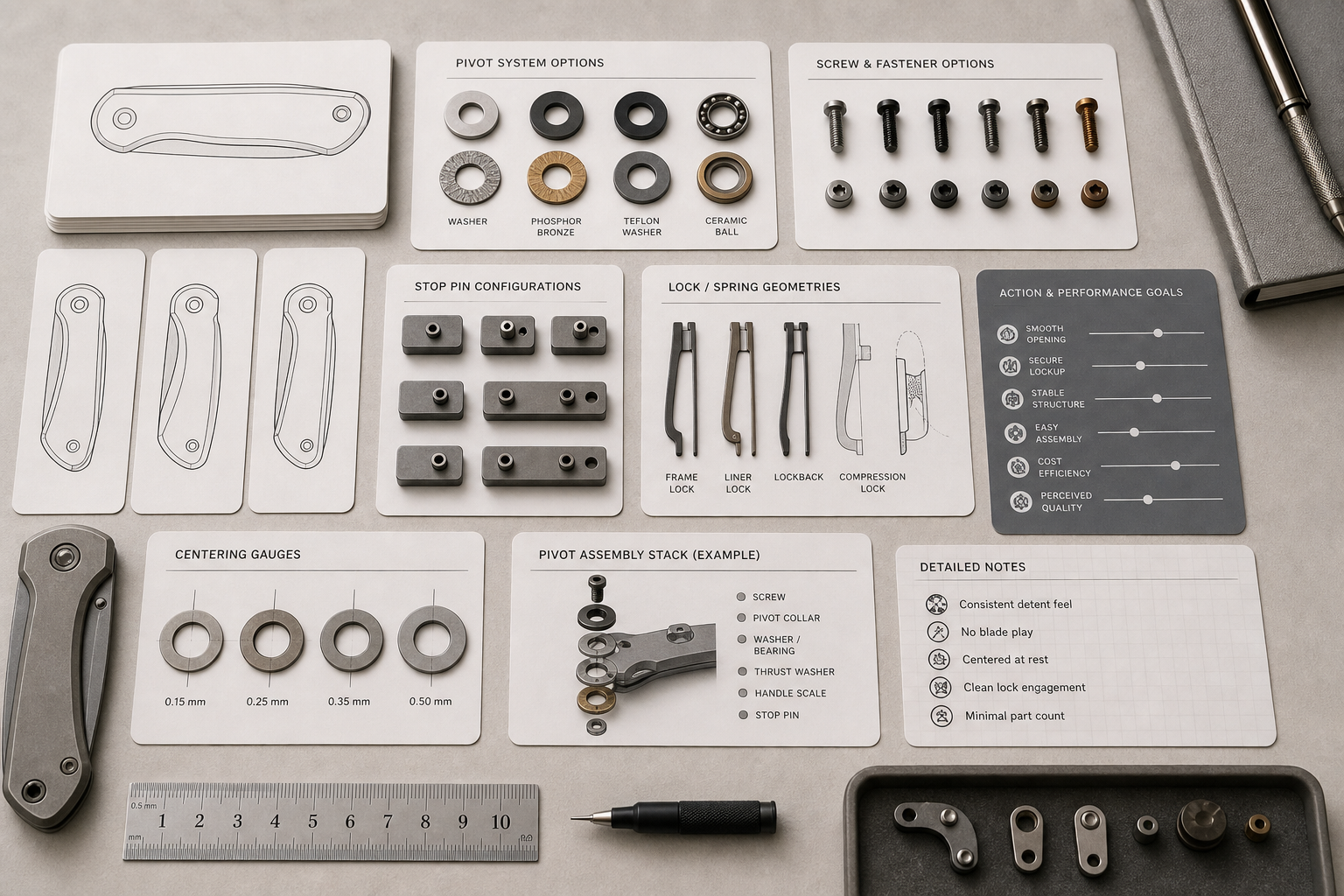
The lock and opening system are where customers feel the product. A clean handle design means little if the blade action feels rough or the lock is inconsistent. For B2B production, I review the pivot, washers or bearings, lock face, stop pin, screw length, handle scale fit, blade centering, and closing feel. These details decide whether the knife feels careful or rushed.
Different lock types also create different production needs. A liner lock can be cost-efficient and familiar. A back lock can fit a more traditional product style. A button lock or crossbar-style lock can feel modern, but it may need tighter part control and more assembly testing. A slip joint may fit some markets and product concepts, but it needs a different user expectation. I avoid choosing a lock only because it sounds trendy. I choose it because it matches the target buyer, factory capability, cost range, and repeat order plan. The best structure is the one that can be built consistently.
| Structure detail | User-facing result | Factory control point |
|---|---|---|
| Pivot fit | Smooth action | Hole tolerance and screw tension |
| Lock engagement | Stable function | Lock face and liner geometry |
| Blade centering | Better perceived quality | Handle symmetry and stop position |
| Hardware | Clean appearance | Screw size, finish, and torque |
What Finishes And Colors Strengthen Brand Positioning?
Color can attract buyers quickly. But poor finish control can create returns, inconsistency, and weak brand perception.
Finishes and colors strengthen brand positioning when they match the material, cost target, surface durability, logo method, and packaging story. Buyers should approve realistic production samples.
I Keep Finish Choices Practical
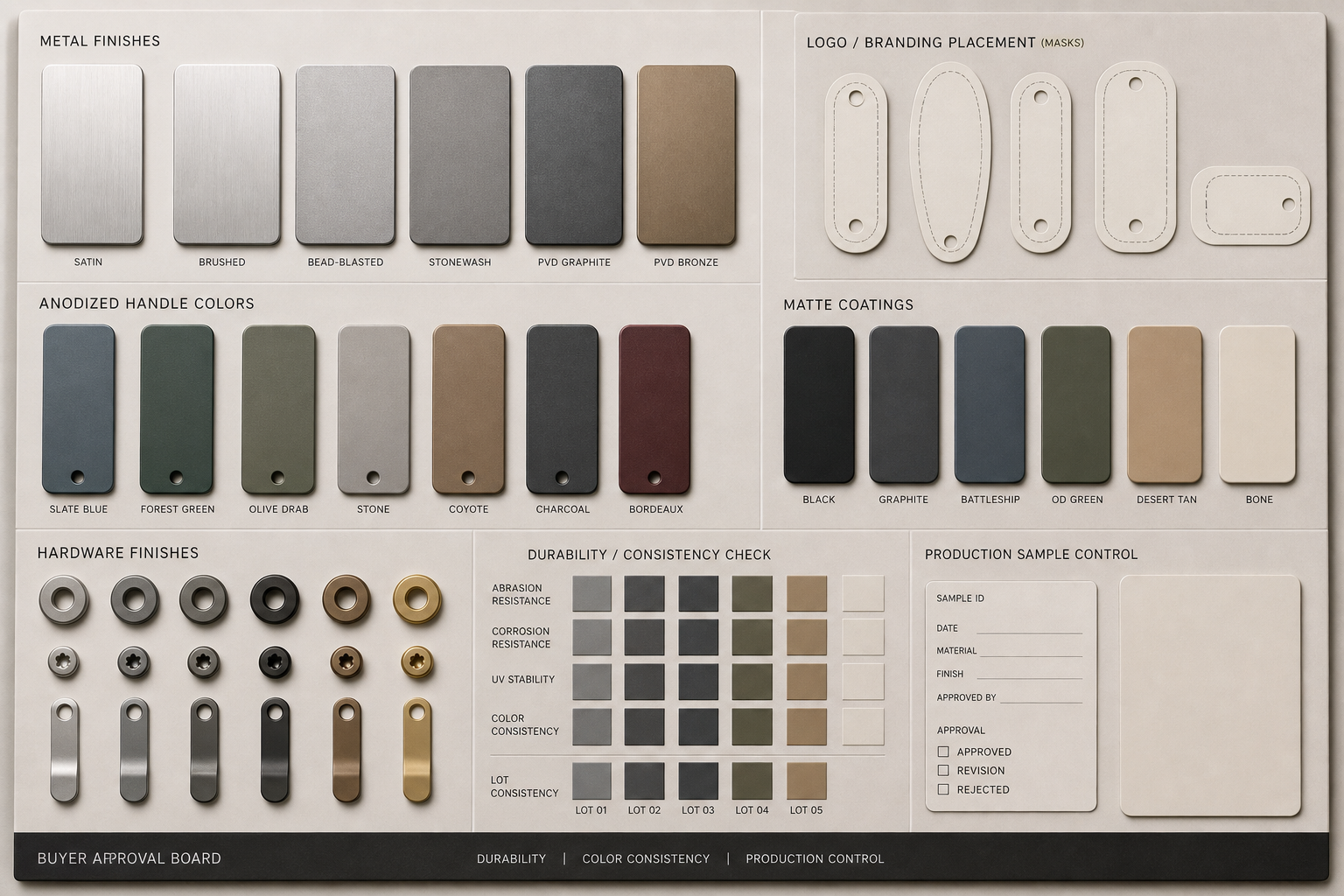
Finish is where style becomes visible at a glance. Satin can look clean and refined. Stonewash can hide small marks better. Bead blast can look soft and modern, but it needs corrosion planning on some steels. Coatings can create strong color identity, but they add process cost and require wear expectations. Anodized aluminum can support a lifestyle look, but color matching must be checked across parts and batches.
I ask buyers to approve finish samples under normal lighting, not only studio photos. A finish can look different in a factory, in retail, and on a website. Logo methods also matter. Laser marking, etching, printing, embossing, and metal badges all create different costs and visual effects. A stylish EDC knife should look intentional. The blade finish, handle color, screw color, clip finish, logo size, and package color should feel like one product. If each detail is chosen separately, the product can look busy and less mature.
| Finish choice | Brand effect | Production concern |
|---|---|---|
| Satin | Clean and precise | Scratch direction must stay even |
| Stonewash | Practical and relaxed | Batch appearance must be controlled |
| Coating | Strong color identity | Wear expectation and adhesion checks |
| Anodizing | Modern handle color | Color matching between batches |
How Should Packaging Turn Style Into A Retail Story?
Good styling can disappear in weak packaging. Buyers may never understand the product if the box says too little.
Packaging should turn style into a retail story by explaining function, material, brand position, care, and product value clearly. It should also protect the knife during transport.
I Make Packaging Part Of The Product
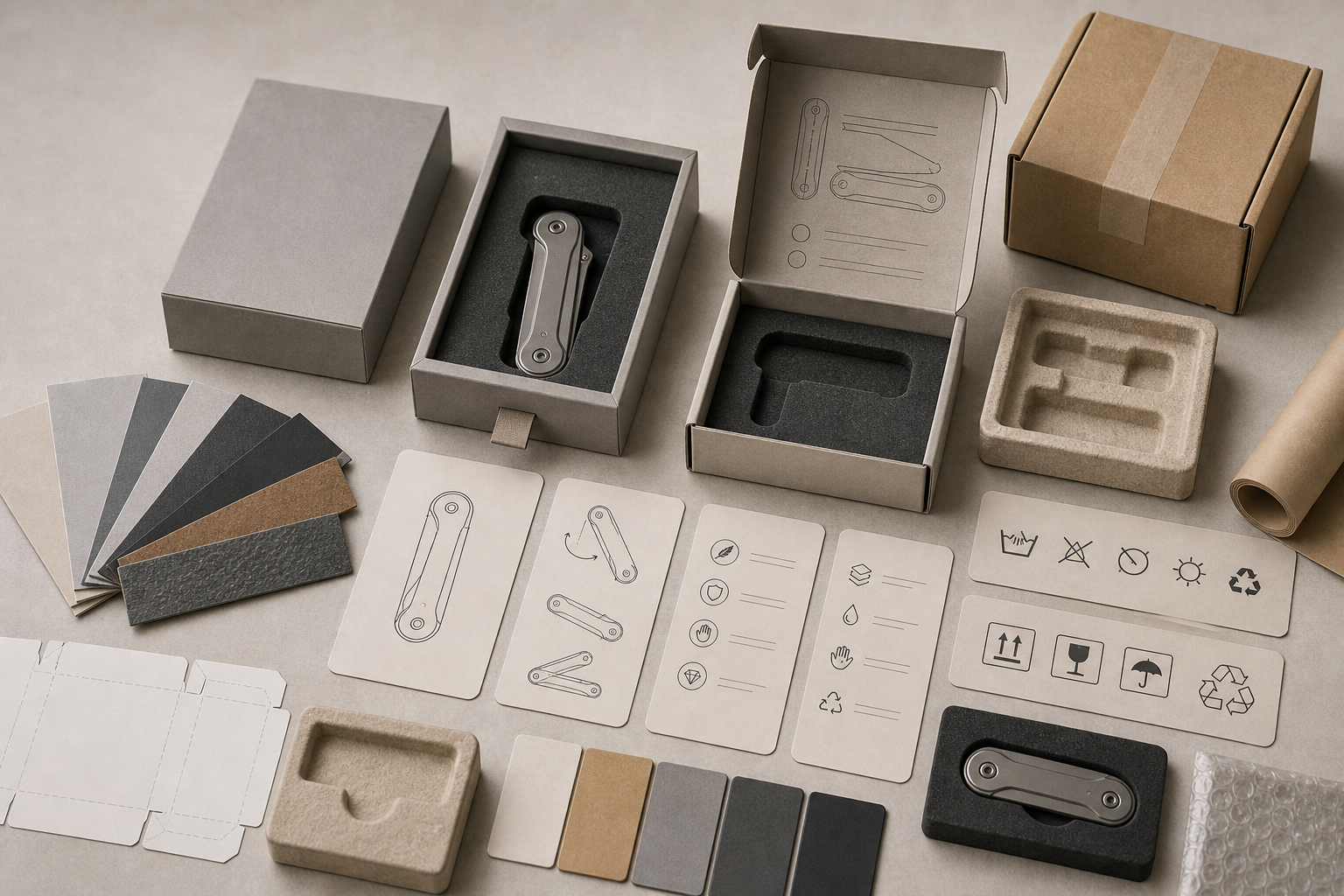
Packaging is not only a box. For private label buyers, it is often the first brand contact. A budget EDC folder may need a simple color box and clear barcode area. A gift-focused product may need a rigid box, foam or paper insert, and stronger visual story. A distributor product may need clean shelf information, importer data, and a practical instruction card. The packaging should support the same design language as the knife.
Transport also matters. A beautiful box is not useful if it arrives damaged. ISO publishes ISO 4180 for transport packages, which gives general rules for compiling performance test schedules for complete filled transport packages. I do not treat that as a magic solution for every order, but it supports the idea that packaging should be planned and tested. In practice, I check inner protection, carton strength, tray fit, movement inside the box, label placement, and carton packing method. Good packaging protects the product and helps buyers sell it.
| Packaging layer | Style role | Practical control |
|---|---|---|
| Inner tray | First unboxing feeling | Fit, movement, and material choice |
| Retail box | Brand and shelf impression | Color, structure, and durability |
| Instruction card | Product explanation | Clear care and material notes |
| Export carton | Transport protection | Carton strength and packing method |
What QC Checks Keep Stylish Knives Consistent?
Style is fragile in mass production. Small changes in color, centering, finish, and logo position can make a batch look uneven.
QC should check dimensions, blade hardness, action, lock function, centering, finish, color, logo, packaging, and sample consistency. Stylish products need visual and functional control.
I Inspect Both Function And Appearance
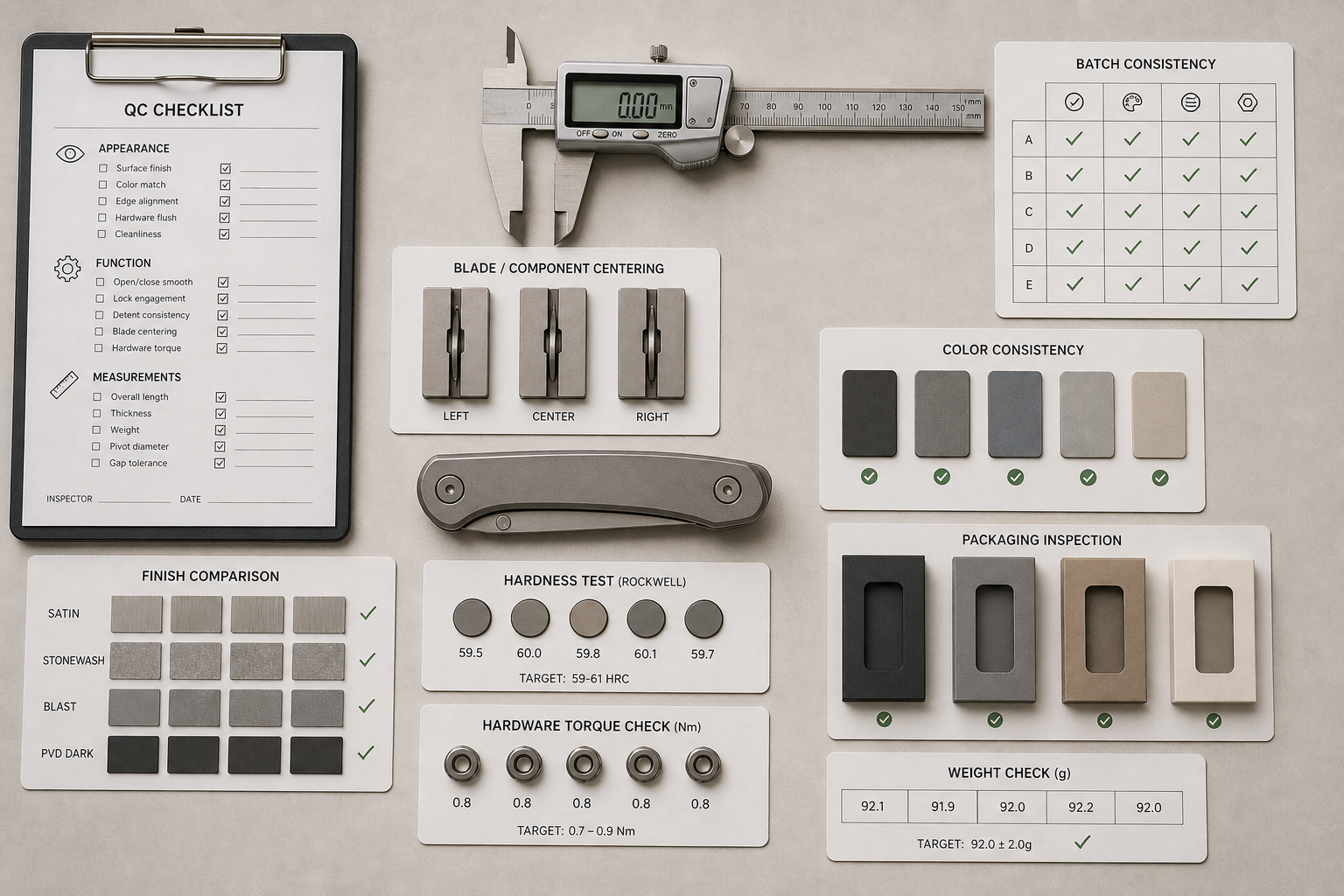
For stylish EDC folding knives, QC must protect the visual promise. I check function first because the knife must work correctly. Then I check the details that affect brand feeling. Blade centering, opening feel, lock engagement, screw finish, clip alignment, logo location, handle color, coating marks, and packaging version all matter. If the buyer approved a sample, the production batch should follow that sample.
Hardness testing is another control point when the buyer has a defined steel and heat treatment requirement. The NIST Rockwell hardness measurement guide is useful background because Rockwell hardness is a measurement process, not just a number on a spec sheet. For B2B production, I also connect QC to a quality management mindset. ISO 9001 describes quality management as a system for meeting customer requirements and improving performance. I apply that thinking by recording approved samples, inspection points, and version changes.
| QC area | What I check | Why it matters |
|---|---|---|
| Function | Action, lock, centering, screw tension | Protects user feeling |
| Material | Steel grade, handle material, hardness target | Protects product promise |
| Appearance | Finish, color, logo, clip alignment | Protects style consistency |
| Packaging | Box, insert, label, carton | Protects retail presentation |
What RFQ Details Help The Factory Build The Right Sample?
A vague RFQ creates a vague sample. The supplier may guess style, price, and structure instead of building the buyer's real product.
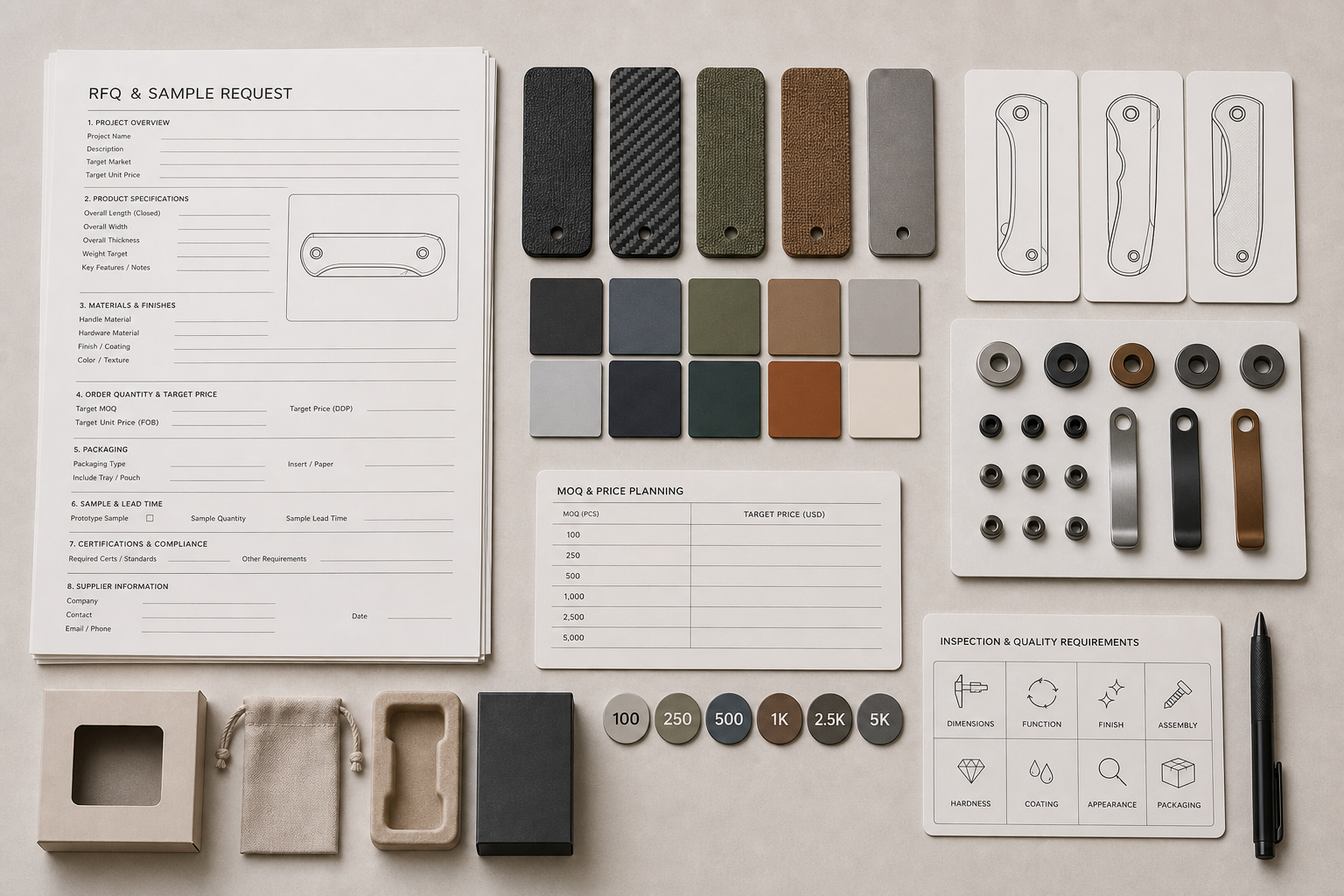
Buyers should include target market, retail position, design references, blade steel, handle material, lock type, finish, packaging, MOQ, target price, and inspection requirements in the RFQ.
I Turn The RFQ Into A Product Roadmap
The best RFQs help me understand the whole product, not only the blade shape. I want the buyer to share the target user, retail price level, expected order quantity, preferred materials, reference style, packaging goal, and inspection needs. If the buyer has compliance or channel restrictions in a target market, those should be stated early. If the buyer needs a simple cost-focused design, I can reduce unnecessary machining. If the buyer wants a stronger retail story, I can suggest better handle materials, finishes, packaging, and logo options.
I also ask buyers to separate must-have details from flexible details. The blade steel may be fixed, but the handle material may be open. The color may be fixed, but the coating type may need testing. The packaging style may be fixed, but the insert material can change for cost. This kind of RFQ saves time. It lets Vast State develop a sample that supports the buyer's brand, cost, and production plan.
| RFQ detail | Why it helps | Example buyer input |
|---|---|---|
| Target position | Guides design level | Budget, mid-range, or giftable line |
| Material preference | Controls cost and feel | 14C28N, G10, aluminum, or other option |
| Finish direction | Shapes the visual identity | Stonewash, satin, coating, or anodizing |
| Inspection need | Defines acceptance | Centering, finish, hardness, packaging |
Turn this article into a folding knife project.
Share your blade type, lock direction, steel preference, handle material, quantity, target market, and packaging needs. Vast State can prepare OEM/ODM options.
Conclusion
I develop stylish EDC folding knives by turning brand taste into practical material, structure, finish, packaging, and QC decisions.
Source Notes
- Alleima 14C28N knife steel supports the discussion of blade steel selection for pocket knife applications.
- Curbell Plastics G10/FR-4 provides material context for G10/FR-4 strength and stiffness.
- NIST Rockwell hardness guide supports the need to treat hardness as a measured quality point.
- ISO 4180 supports the idea of planned transport package performance testing.
- ISO 9001 supports the value of documented quality management and customer-requirement control.
- UNSD HS 8211 classification detail gives customs classification context for knives with cutting blades.