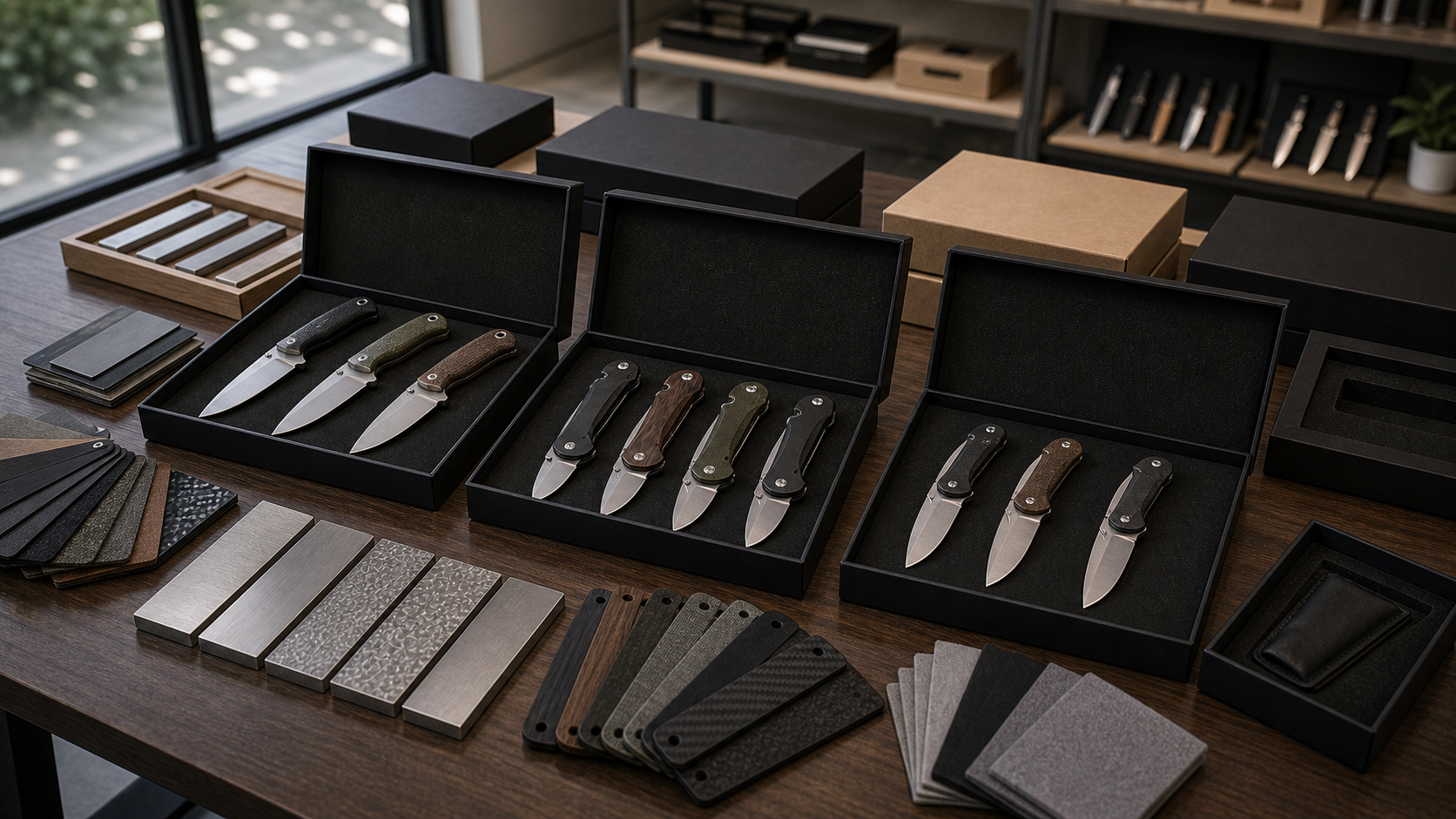
VG10 is familiar, so buyers may stop asking questions. That is dangerous. A common steel still needs the right product plan.
VG10 is a Japanese stainless blade steel from Takefu Special Steel. It offers a practical balance of corrosion resistance, sharpness, wear resistance, machinability, and sharpening ease. Buyers should use it for mid-to-premium kitchen knives, EDC knives, and general-purpose tools when the design supports that balance.
Quick buyer brief:
- Answer: VG10 is a balanced stainless knife steel, not a magic upgrade for every product.
- Buyer context: This helps knife brands, importers, and sourcing managers decide whether VG10 fits their price range and users.
- Key checks: Confirm genuine material source, target hardness, heat treatment, edge geometry, sharpening message, packaging claim, and QC plan.
Planning a knife project with this steel?
Send us your target market, MOQ, price range, and blade type. Vast State can help you choose the right steel, HRC range, finish, handle material, and QC requirements for OEM/ODM production.
When a buyer asks me about VG10, I usually see two opposite mistakes. Some buyers treat it as old and ordinary because newer steels get more attention. Other buyers treat it as a premium label that automatically makes a knife good. I prefer a calmer view. VG10 can be a very useful material when the product needs good stainless behavior, a fine edge, reasonable edge retention, and a known Japanese steel story. But the final knife still depends on design, heat treatment, grinding, sharpening, and quality control.
What Is VG10 Steel?
A famous steel name can hide basic facts. If buyers do not check the source, the steel claim may become weak.
VG10 is an original blade steel from Takefu Special Steel. Takefu lists VG10 with 1.00 percent carbon, 15.00 percent chromium, 1.00 percent molybdenum, 0.25 percent vanadium, 1.55 percent cobalt, and hardness of HRC60 or higher.
I Start With the Official Steel Profile
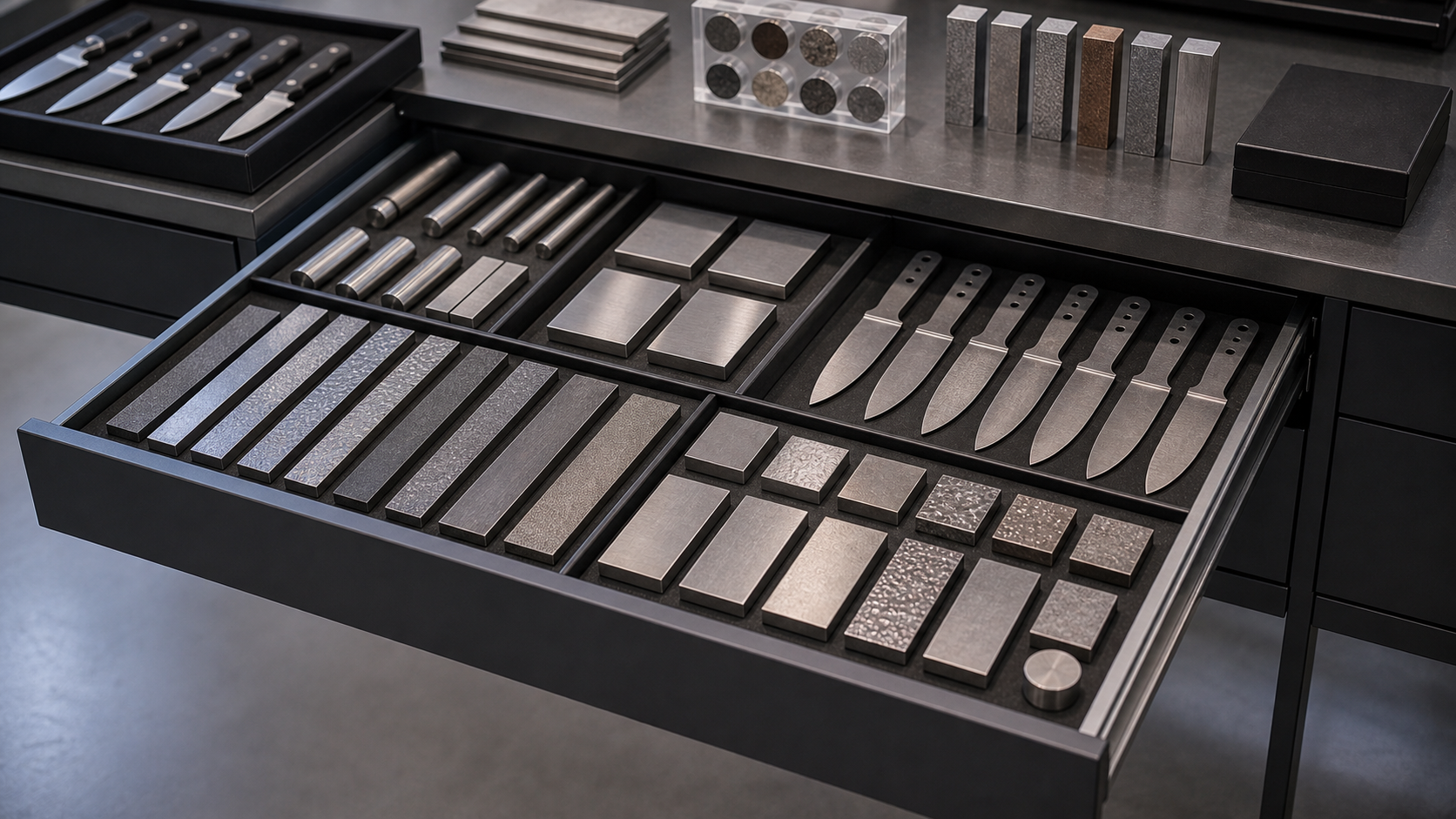
The best starting point is the Takefu Special Steel VG10 page. Takefu says VG10 has 15 percent chromium, 1 percent molybdenum, and 1.5 percent cobalt, which help strengthen the matrix, support high hardness, and maintain a long-lasting sharp edge. Takefu also says vanadium refines the microstructure, while chromium, molybdenum, and vanadium form hard carbides that improve wear resistance. The same page lists VG10 hardness as HRC60 or higher.
This is why VG10 became familiar in Japanese kitchen knives and also appears in general-purpose knives. It is not an extreme steel like ZDP-189. It is not a very low-cost utility steel either. It sits in a useful middle area for buyers who want a stainless blade with a recognizable steel name and practical performance.
For B2B buyers, I always separate the steel name from the product promise. VG10 can support a premium or mid-premium product, but only when the rest of the knife makes sense. The buyer still needs a suitable blade shape, edge angle, handle design, finish, packaging, and maintenance message. If these details are weak, the steel name will not protect the customer experience.
| VG10 identity point | What it means | Buyer takeaway |
|---|---|---|
| Takefu original steel | Known Japanese blade steel source | Confirm genuine material claim |
| 15 percent chromium | Supports stainless behavior | Still give care instructions |
| Cobalt and molybdenum | Support hardness and matrix strength | Useful for mid-premium positioning |
| HRC60 or higher | Suitable for fine cutting edges | Control heat treatment and testing |
Quote-ready RFQ Checklist for This Steel
To get an accurate OEM/ODM quote, prepare these details before contacting a knife manufacturer.
| RFQ Field | What to Prepare |
|---|---|
| Product type | Folding knife / fixed blade / multi-tool / kitchen knife |
| Target market | US / EU / outdoor retail / promotional / tactical / EDC |
| Steel option | 4116 / 14C28N / D2 / N690 / Nitro-V |
| Target HRC | Example: 55-57 HRC, 58-60 HRC |
| Blade finish | Satin / stonewash / black coating / bead blast |
| Handle material | G10 / micarta / aluminum / stainless steel / wood |
| Lock or structure | Liner lock / frame lock / slip joint / full tang |
| Estimated quantity | 500 / 1,000 / 3,000 / 5,000+ pcs |
| Packaging | White box / color box / blister / pouch / gift box |
| Required documents | Drawing / sample photo / logo file / packaging artwork |
What Performance Balance Does VG10 Offer?
Some buyers ask for the "best" steel. That question often creates the wrong product direction.
VG10 offers balanced performance: good corrosion resistance, good sharpness, useful edge retention, good machinability, and easier sharpening than many high-wear steels. It is strongest when balance matters.
I Treat VG10 as a Balanced Choice
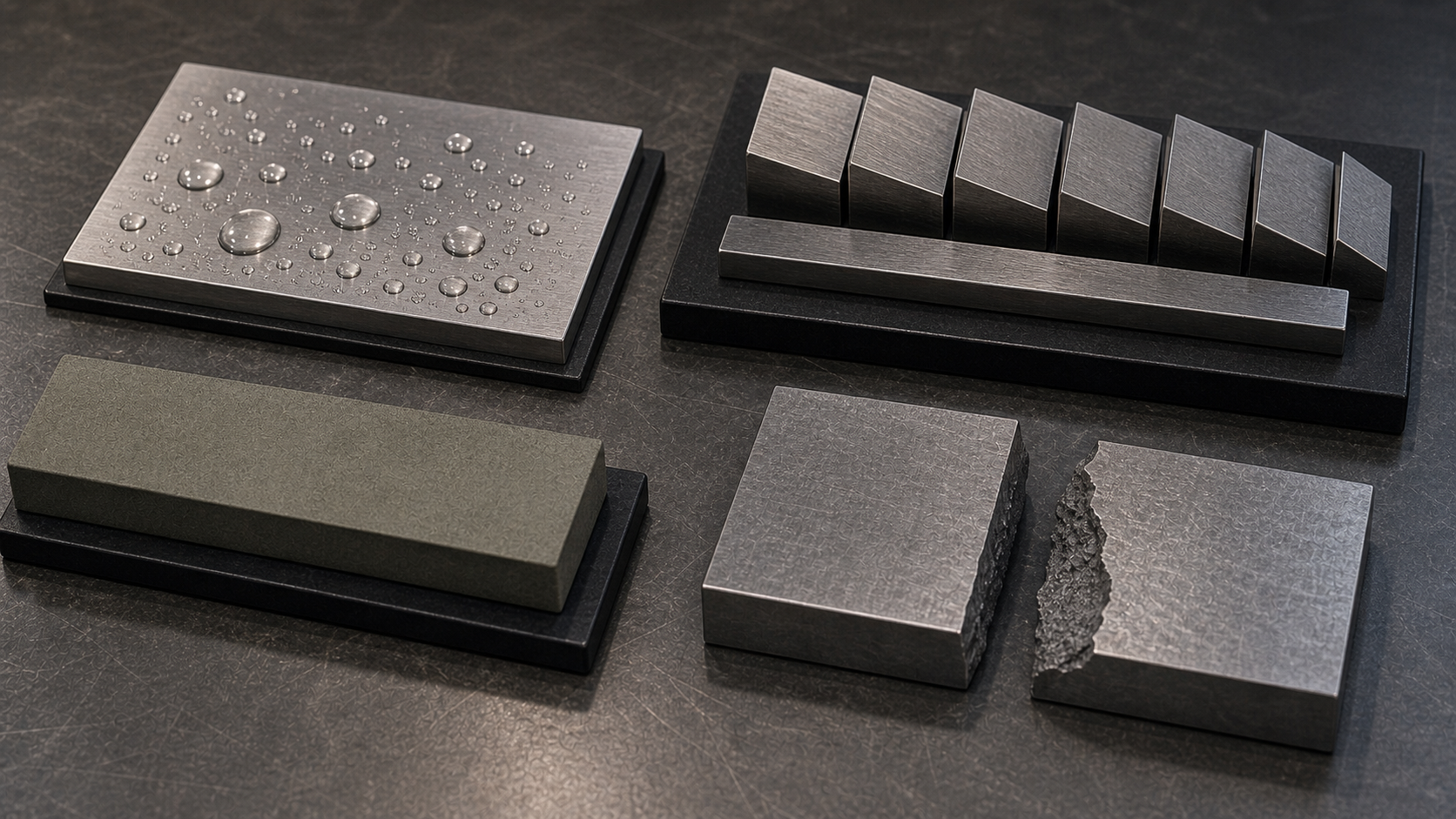
VG10 is valuable because it balances several properties instead of chasing only one. Takefu describes VG10 as having excellent corrosion resistance and sharpness. It also says VG10 has good machinability and is easy to sharpen. This combination is important for production and after-sale use. A steel with extreme wear resistance may impress enthusiasts, but it may raise grinding cost, sharpening difficulty, and user complaints. VG10 usually gives a more manageable balance.
Knife Steel Nerds makes a broader point that applies here. Its steel ratings article says there is no steel that is a 10 in both toughness and edge retention, and that heat treatment and edge geometry can mean more for knife performance than the steel name alone. This is why I do not present VG10 as better than every alternative. It is better for some projects because it gives enough of several things: stainless behavior, clean edge formation, reasonable toughness for the right knife size, and production familiarity.
For buyers, that balance can be commercially useful. A kitchen knife buyer may want a stainless Japanese steel story without moving into SG2 or ZDP-189 pricing. An EDC buyer may want a blade that sharpens more easily than very high-wear steels. A private label buyer may want a steel name customers recognize. VG10 can fit those needs when the design and price match.
| Performance area | VG10 behavior | Buyer meaning |
|---|---|---|
| Corrosion resistance | Strong stainless behavior | Good for kitchen and daily use |
| Sharpness | Takes a fine edge | Supports clean cutting feel |
| Sharpening | Easier than many higher-wear steels | Easier customer maintenance |
| Wear resistance | Useful, not extreme | Good balance for mid-premium products |
Which Knife Products Are a Good Fit for VG10?
A balanced steel can still be used badly. If the knife size or use case is wrong, the buyer may blame the steel.
VG10 fits kitchen knives, general-purpose knives, EDC folders, pocket knives, and mid-premium private label lines. It is less ideal for large chopping knives or rough outdoor tools that need maximum toughness.
I Match VG10 to Real User Habits
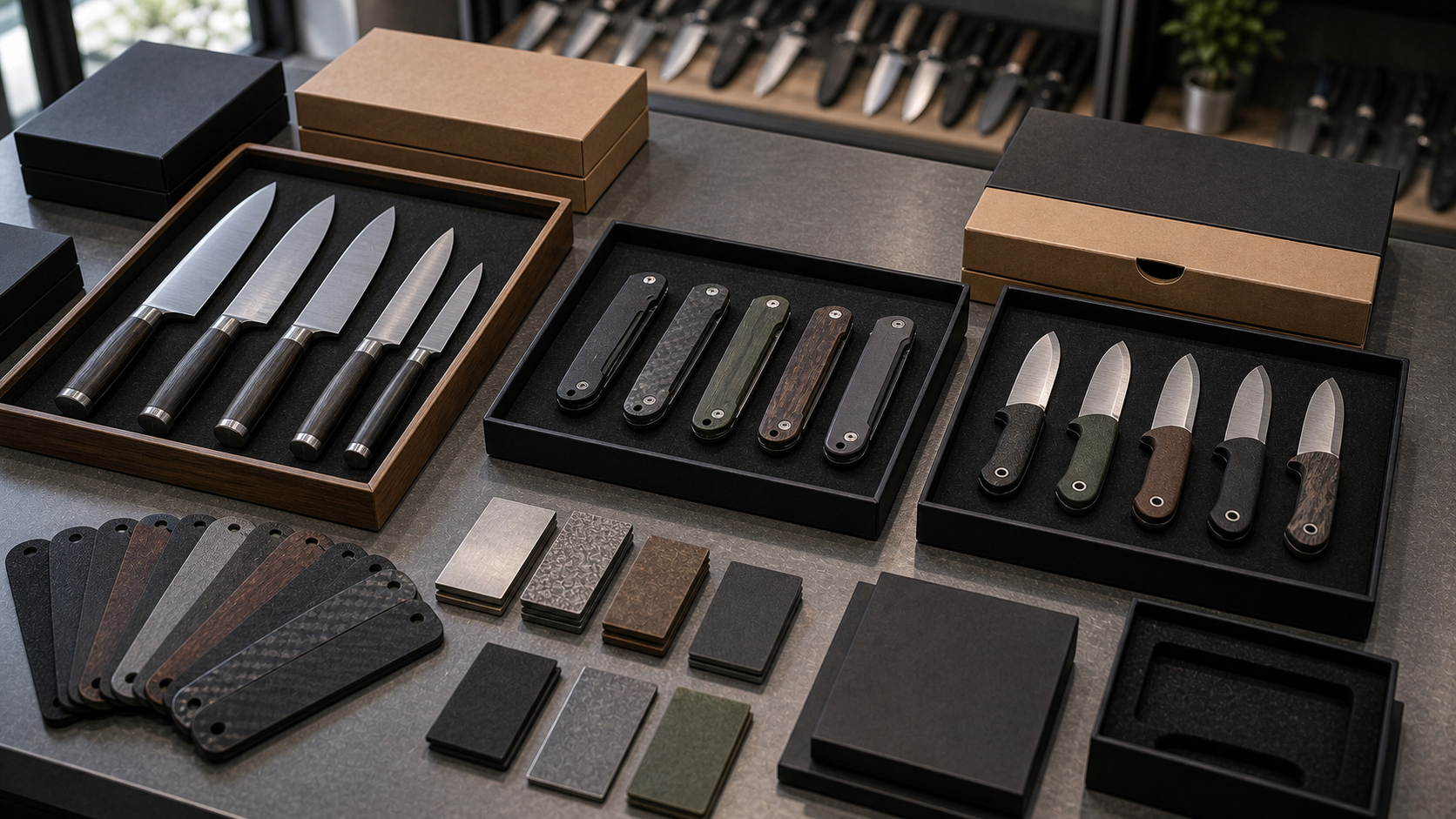
Takefu says VG10 performs well in a wide range of uses, including kitchen knives, general purpose knives, and machine blades. For the knife market, I see the strongest fit in kitchen knives, daily-carry folders, pocket knives, and private label products where the buyer wants a known stainless steel with a practical performance story. VG10 is also useful when the buyer wants to explain the material simply. It is easier to communicate than a very niche alloy.
However, I would not use VG10 as the first choice for every product. If the knife is a large survival knife, chopper, or hard-use field tool, toughness may matter more than stainless balance. A tougher steel may reduce edge damage if the customer chops, twists, or batons with the knife. If the product is a very low-cost promotional knife, VG10 may not match the target price. If the product is a high-end enthusiast knife where buyers demand extreme edge retention, another steel may create stronger differentiation.
For OEM and ODM projects, I ask about the sales channel first. A kitchenware importer may benefit from VG10 because customers understand it. An outdoor brand may use VG10 in a folding knife but choose another steel for a heavy fixed blade. A wholesaler may need a simpler stainless steel if price and availability matter more than steel story. The right answer depends on the buyer's product line.
| Product type | VG10 fit | Practical note |
|---|---|---|
| Kitchen knife | Strong fit | Good stainless and edge balance |
| EDC folding knife | Good fit | Works when geometry is controlled |
| Large outdoor knife | Mixed fit | Toughness may be more important |
| Value promotional knife | Weak fit | Cost may not match the channel |
What Trade-Offs Should Buyers Understand Before Choosing VG10?
VG10 is balanced, but it is not perfect. If buyers over-sell it, customer expectations can become unrealistic.
VG10 is not the highest edge-retention steel, not the toughest steel, and not immune to corrosion. Buyers should manage edge angle, maintenance instructions, pricing, and product claims carefully.
I Avoid Calling Any Steel a Universal Best
VG10 has a long useful history because it is balanced. But balance does not mean it wins every category. A powder metallurgy steel like SG2 may offer stronger wear resistance in some premium kitchen products. A high-toughness steel such as 14C28N or AEB-L may be more forgiving in thin edges or larger utility designs. A low-cost stainless steel may be better for a budget project. VG10 sits between these directions.
This is why product claims matter. If the product page says VG10 is "ultimate" without explaining the design, the buyer may create unrealistic expectations. I prefer to say that VG10 is a practical stainless steel for buyers who want a good mix of sharpness, corrosion resistance, edge holding, and sharpening serviceability. That message is easier to support.
Heat treatment and edge geometry are also important. Knife Steel Nerds explains that edge geometry can greatly affect edge retention and chipping resistance. A more acute edge may cut longer and feel sharper, but it can be less resistant to damage. A stronger edge may be more durable, but it may not feel as laser-like. The supplier and buyer should choose the edge style based on the actual user, not only the steel name.
For a B2B brand, the safest plan is to match the steel to the warranty promise. If the knife is sold to general users, the design should be forgiving. If the knife is sold to enthusiasts, the brand can explain sharper geometry and more careful use.
| Trade-off | What can go wrong | Safer buyer approach |
|---|---|---|
| Edge retention | Not as high as some newer steels | Position as balanced, not extreme |
| Toughness | Not ideal for abuse-heavy knives | Avoid prying and chopping claims |
| Corrosion | Stainless does not mean careless | Give cleaning and drying guidance |
| Pricing | Steel name may not justify cost alone | Support it with design and QC |
How Can Buyers Avoid Misleading VG10 Claims?
A famous steel attracts imitation. If the buyer cannot verify the material, the whole product story becomes risky.
Buyers should ask for material proof because Takefu warns about similar or counterfeit products advertised as VG10. Source verification, supplier records, and clear packaging language protect the brand.
I Verify the Claim Before It Goes on Packaging
This point is important for OEM and ODM buyers. Takefu's VG10 page includes an announcement warning about similar or counterfeit products sold with claims that their original blade steel "VG10" or related names are used as the material. Takefu urges buyers to make sure what they purchase uses genuine VG10 steel. The warning matters because VG10 is valuable partly because of its source and reputation. If a product only says "VG10 style" or uses a similar composition without clear sourcing, the marketing claim may mislead customers.
This does not mean every alternative steel is bad. Some steels may perform similarly or fit a different budget. But the label should be honest. If the buyer wants genuine Takefu VG10, the RFQ should say so. The supplier should know whether the project requires Takefu-origin VG10 or whether an equivalent stainless steel is acceptable. Those are two different sourcing paths.
In our work, I prefer to clarify the claim before artwork approval. Will the package say VG10? Will the product page say Japanese steel? Will the buyer need material documentation? Will the marketplace or distributor ask for proof? These questions should be answered before production. It is easier to adjust the material or the label early than to explain a weak claim after products arrive.
| Verification point | Why it matters | What to request |
|---|---|---|
| Steel origin | Supports genuine VG10 claim | Supplier material proof |
| Claim wording | Prevents misleading packaging | Approved product copy |
| Equivalent steel option | Controls cost and availability | Written buyer approval |
| Batch record | Supports repeat production | PO, lot, and inspection file |
How Should Heat Treatment and QC Be Controlled for VG10?
Good steel can fail through weak processing. VG10 still needs disciplined heat treatment, grinding, and inspection.
Buyers should control VG10 through heat treatment targets, HRC checks, edge inspection, grinding temperature control, corrosion-care review, and repeat-batch records.
I Put VG10 Performance Into the Specification
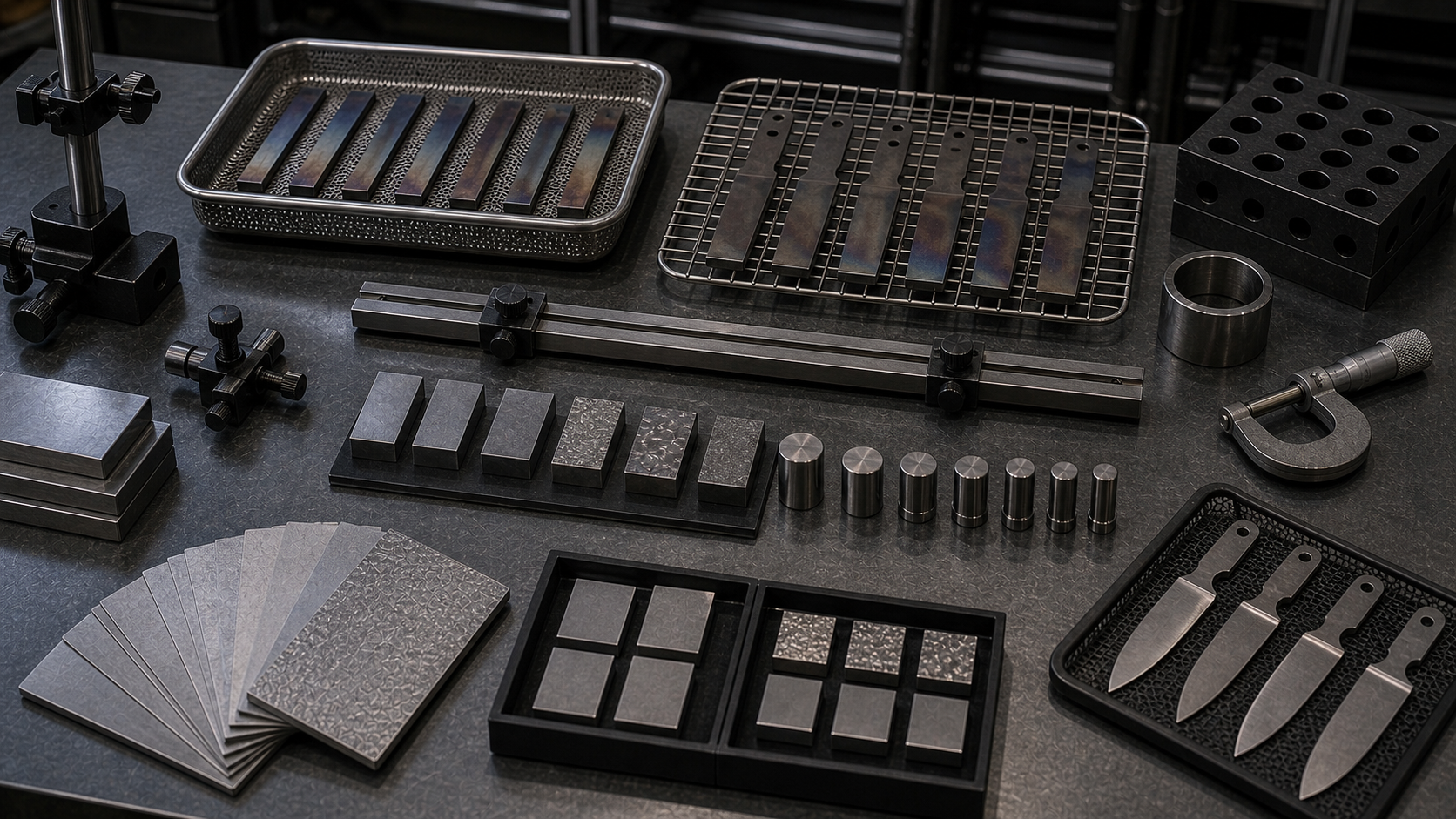
Takefu lists VG10 hardness as HRC60 or higher, but a buyer should still define a practical range for the product. A thin kitchen knife may use a different target than a folding knife intended for daily utility. The supplier should know the expected hardness, edge angle, blade thickness behind the edge, finish, sharpening standard, and acceptable inspection criteria.
Hardness testing should also be handled carefully. The NIST guide to Rockwell hardness measurement explains that good practice helps reduce measurement errors in Rockwell hardness testing. In knife production, this matters because a hardness claim is only useful if the measurement is controlled. Test location, surface preparation, tester condition, calibration, and sample condition all matter.
I also connect VG10 QC with grinding and finishing. A good heat treatment can still be damaged by careless grinding heat. A nice steel can still disappoint if the edge is uneven or if the tip is weak. For folding knives, I also check pivot action, lock engagement, blade centering, screw torque, surface finish, and packaging protection. For kitchen knives, I focus on blade straightness, spine comfort, edge consistency, handle fit, and corrosion-care instructions.
The steel is one part of the product. QC turns the steel into a sellable knife.
| QC point | What it protects | Practical check |
|---|---|---|
| Hardness | Confirms heat treatment | HRC readings and records |
| Grinding | Protects edge condition | Heat marks and bevel symmetry |
| Edge finish | Controls cutting feel | Sharpness and burr removal |
| Packaging | Protects product and claim | Artwork and care instruction review |
How Should OEM and ODM Buyers Specify VG10 in an RFQ?
A vague VG10 request slows sampling. The supplier needs the product goal, not only the steel name.
A VG10 RFQ should include knife type, genuine or equivalent steel requirement, target hardness, edge geometry, handle material, finish, packaging, target market, quantity, target price, and inspection needs.
I Ask Buyers to Define the Whole Knife
When a buyer sends an RFQ that only says "VG10 blade," I still need the full product picture. Is the knife a chef knife, petty knife, EDC folder, rescue tool, or pocket knife? What is the expected retail level? Is the buyer asking for genuine Takefu VG10, a VG10-clad construction, or a similar stainless steel? What handle material does the buyer want? What finish will the blade use? What packaging claim will be printed?
This is where Vast State can support the buyer. We can help compare the steel choice with the target price, MOQ, blade geometry, handle material, lock structure, finish, packaging, and inspection plan. If the buyer wants a kitchen knife, we can talk about edge angle, blade thickness, spine comfort, handle fit, and care instructions. If the buyer wants a folding knife, we can talk about pivot, washer or bearing system, lockup, blade centering, clip position, and user maintenance.
I also recommend that buyers define acceptable alternatives early. Sometimes genuine VG10 is the right choice. Sometimes AUS-10, 14C28N, 10Cr15CoMoV, 440C, or another stainless steel may fit the target price better. The supplier can only give useful advice when the buyer explains the market, price, and brand goal.
| RFQ field | Why it matters | Example buyer note |
|---|---|---|
| Steel requirement | Controls claim and cost | Genuine VG10 or approved equivalent |
| Knife type | Guides geometry and QC | Kitchen knife, EDC folder, pocket knife |
| Target hardness | Defines heat treatment goal | HRC range agreed before sampling |
| Packaging claim | Prevents later confusion | Material wording approved by buyer |
Ready to use this material in your next knife line?
Vast State can help you compare blade steels, heat treatment ranges, handle materials, finishes, packaging options, and QC requirements based on your target market and quantity.
Conclusion
VG10 is a strong balanced choice when buyers verify the source, match the product use, control heat treatment, and avoid over-selling the steel name.
Source Notes
- Takefu VG10 page supports VG10 chemistry, hardness, sharpening, corrosion resistance, broad use, and counterfeit-warning points.
- Takefu original blade steel page supports the representative composition table across Takefu original knife steels.
- Knife Steel Nerds steel ratings article supports the general trade-off point that steel, heat treatment, and edge geometry must be selected for the knife and use.
- NIST Rockwell hardness guide supports the need for careful hardness measurement practice.
- ISO 9001 explained supports the general quality-system mindset used in repeat production control.