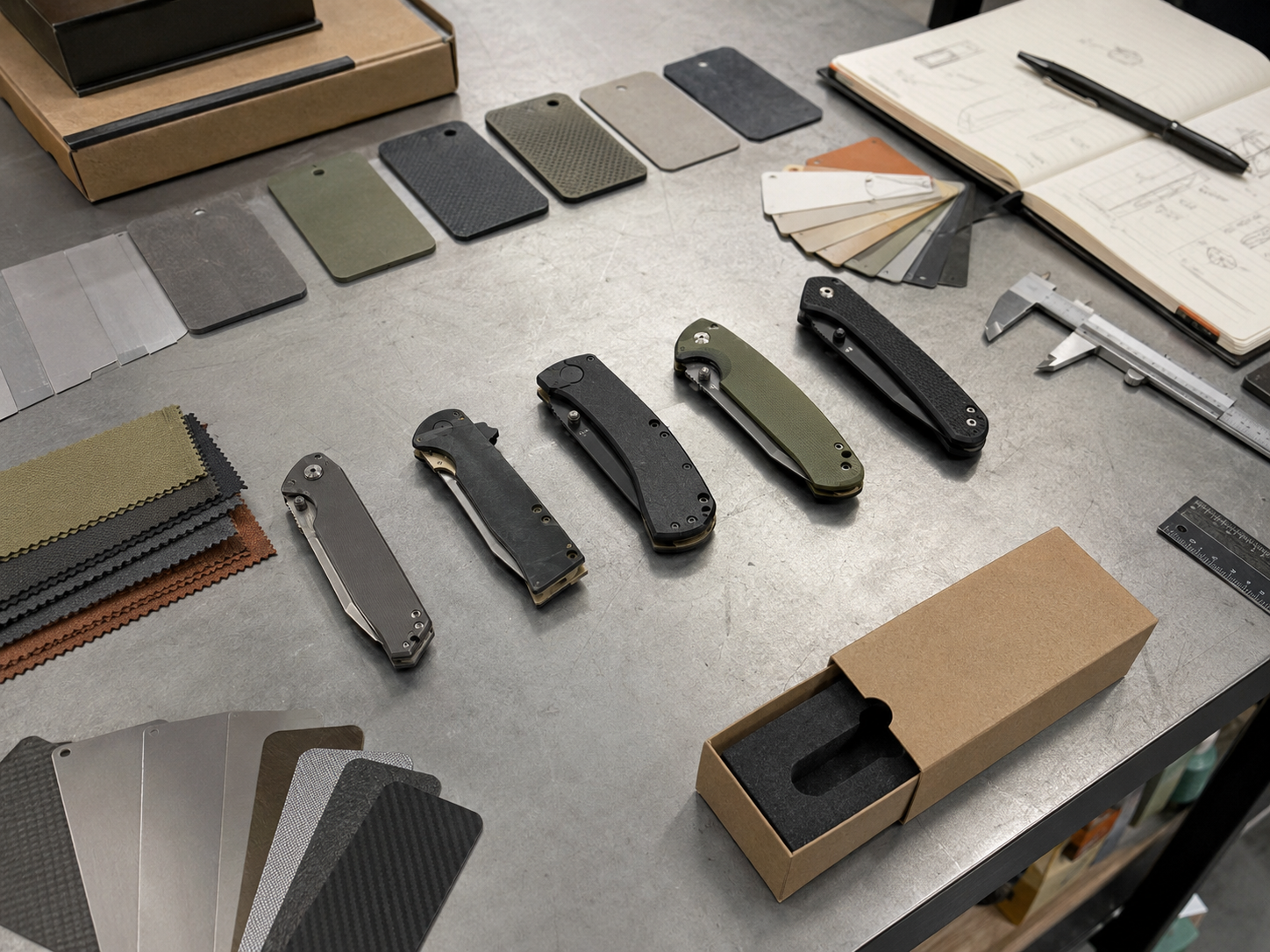
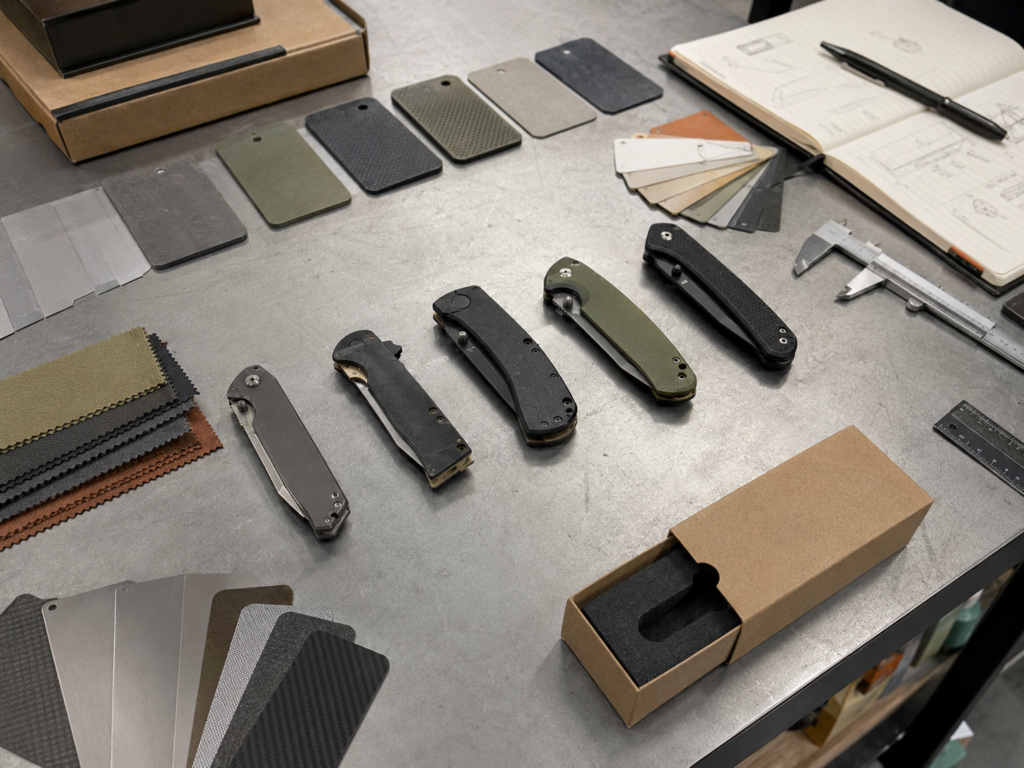
A buyer can chase famous knife brands and still miss the market. The real value is knowing what each brand teaches.
B2B buyers should benchmark domestic Chinese and international folding knife brands by positioning, material choices, lock systems, price tiers, distribution, warranty language, and product update speed. This helps buyers turn competitor research into clearer OEM/ODM product briefs.
Quick buyer brief:
- Answer: Study brands as market references, not copy targets.
- Buyer context: Useful for knife brands, importers, wholesalers, distributors, and private label buyers.
- Key checks: Compare steel, handle material, lock type, finish, packaging, channel, and user expectations.
Developing a folding knife line for your brand?
Vast State supports OEM/ODM folding knife projects, including blade steel, lock structure, handle material, finish, logo method, packaging, and quality inspection planning.
When I look at competitor brands, I do not only ask which names are popular. I ask what each brand proves in the market. Some brands prove trust. Some prove design identity. Some prove value. Some prove machining capability. Some prove fast EDC trend response. For Vast State customers, the goal is not to imitate a competitor. The goal is to understand the customer’s target market, then build a folding knife that fits that market, price range, and production reality.
Why Should Buyers Benchmark Folding Knife Brands Before OEM/ODM Development?
A product idea can look strong in isolation. But once it enters the market, buyers compare it with many existing knives.
Brand benchmarking helps buyers define the target user, price level, materials, lock system, finish, packaging, and RFQ details before development starts.
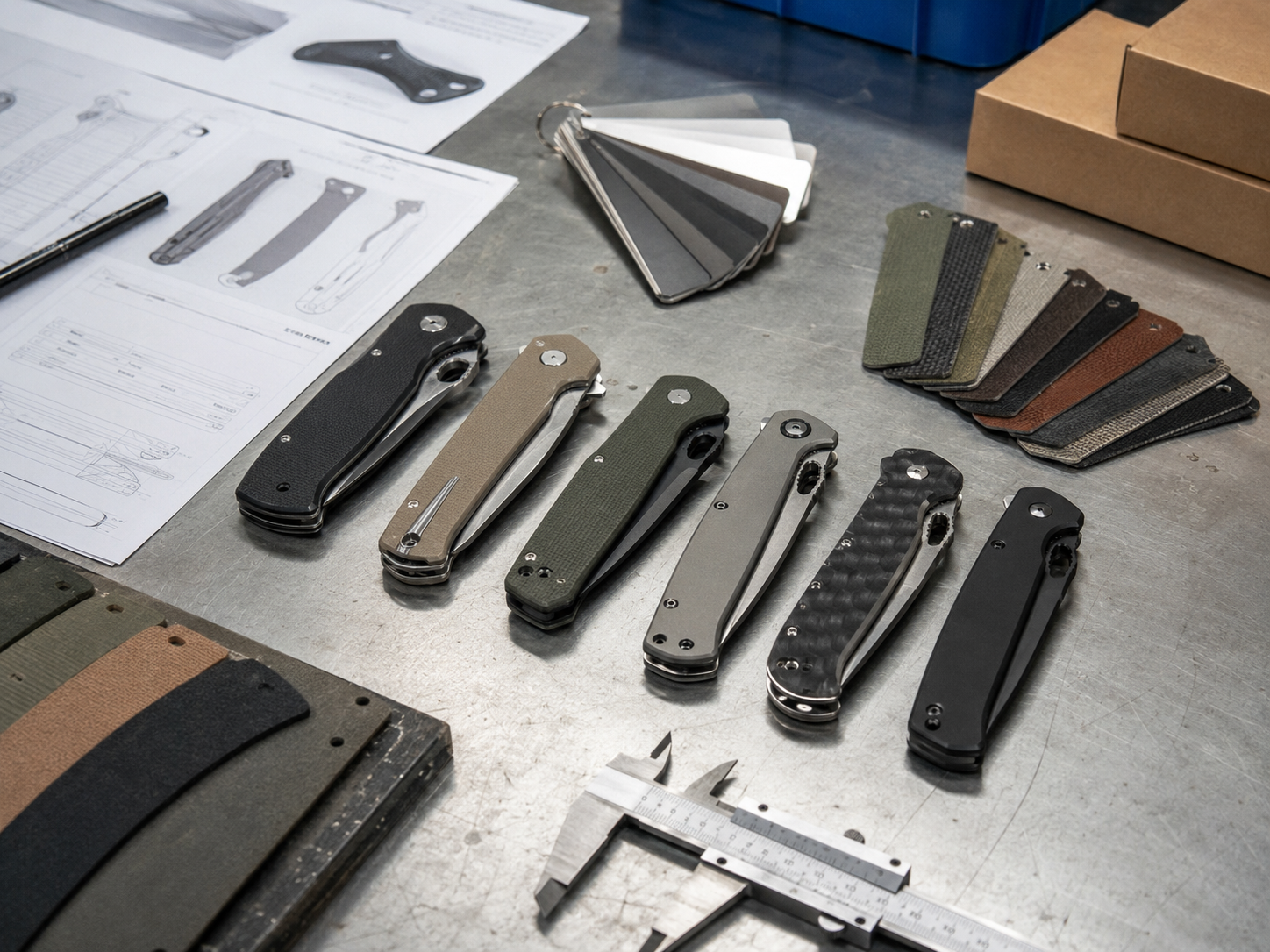
I Treat Competitors as Product Signals
When a buyer sends me a folding knife concept, I often ask for reference brands or reference market segments. This does not mean we should copy a shape. Copying creates legal, quality, and brand risks. It also makes the final product easy to replace. A useful benchmark should answer a better question: what does the target customer already expect?
For example, a buyer who wants a premium EDC folder needs a different plan from a buyer who wants a value outdoor folder. Premium users may expect tighter blade centering, smoother action, better steel, refined finishing, and stronger packaging. Value buyers may care more about stable lockup, practical steel, clean sharpening, reasonable MOQ, and repeatable cost.
A benchmark also helps the RFQ. Instead of asking for “a good folding knife,” a buyer can provide a target price, target market, steel preference, handle material, lock type, finish, packaging style, and reference price tier. This makes quoting faster and reduces development waste.
| Benchmark area | What I check | Why it matters |
|---|---|---|
| Price tier | Budget, mid-range, premium, collector | Sets realistic material and process choices |
| Blade steel | D2, 14C28N, Nitro-V, S35VN, M390 | Affects cost, edge performance, and heat treatment |
| Lock system | Liner, frame, button, crossbar, back lock | Affects safety, feel, and assembly time |
| Handle material | G10, micarta, aluminum, titanium, FRN | Affects grip, weight, machining, and price |
| Packaging | Box, pouch, insert, private label pack | Affects brand feeling and total cost |
OEM/ODM RFQ Checklist
Prepare these details to help Vast State review your project and provide a more accurate quotation.
| RFQ Field | What to Prepare |
|---|---|
| Project type | OEM from drawing / ODM private label / wholesale catalog |
| Product category | Folding knife / fixed blade / multi-tool / outdoor tool |
| Design status | Idea / sketch / 2D drawing / 3D CAD / physical sample |
| Target price | Ex-factory target price or retail price range |
| MOQ expectation | 500 / 1,000 / 3,000 / 5,000+ pcs |
| Logo method | Laser engraving / etching / printing / molded logo |
| Packaging | Standard packaging / custom retail box / Amazon-ready |
| Market | USA / EU / Japan / Korea / Middle East / other |
| Compliance needs | Buyer-specified testing / documentation / labeling |
| Timeline | Sample deadline / mass production deadline |
Which International Folding Knife Brands Should Buyers Watch in 2026?
Famous brands are not useful just because they are famous. They are useful because each one teaches a different market lesson.
Buyers should watch international brands such as Benchmade, Spyderco, Kershaw, Buck, CRKT, Zero Tolerance, Gerber, and Leatherman for lessons in trust, innovation, value, heritage, premium fit, outdoor utility, and multi-tool positioning.
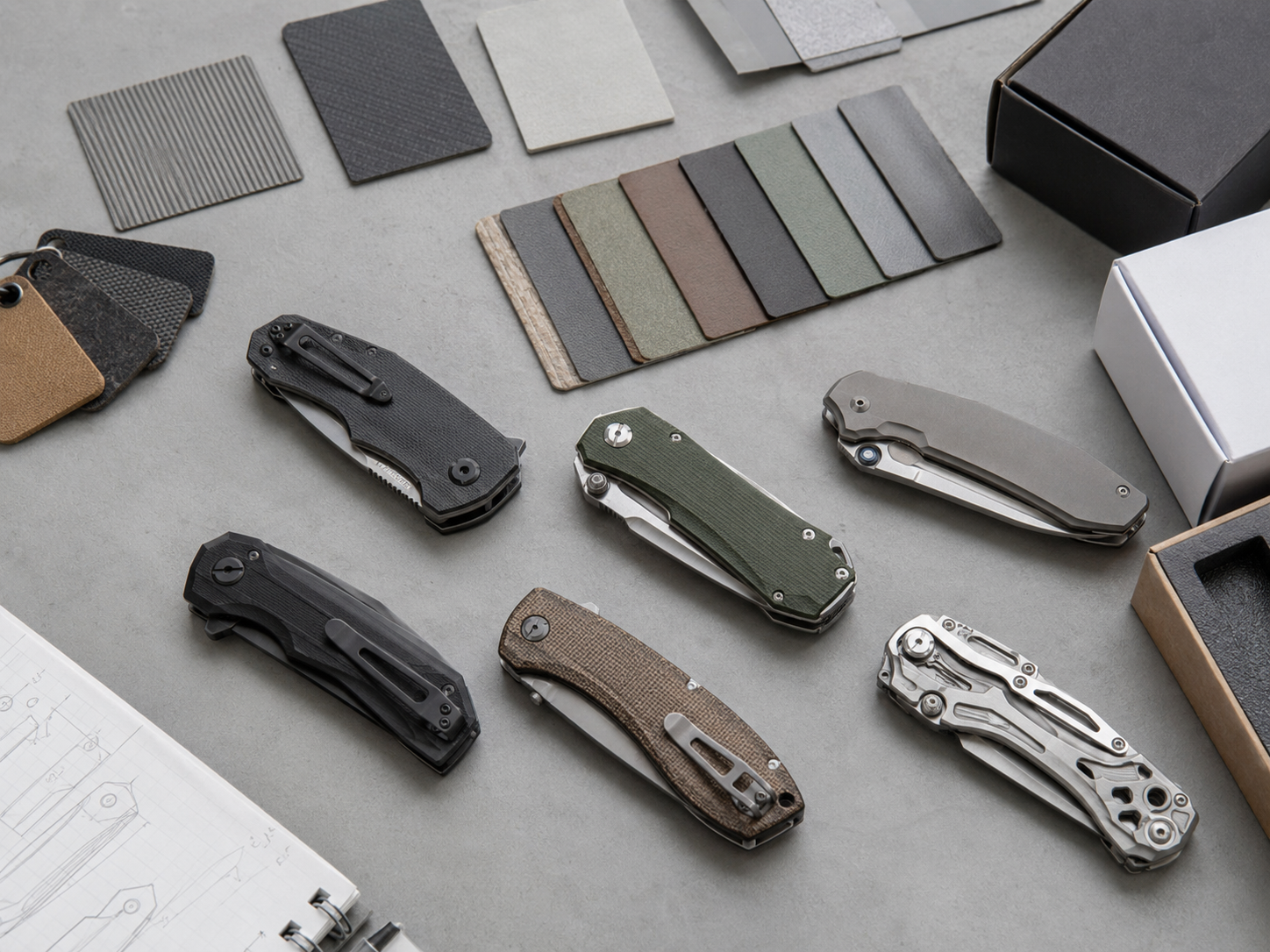
I Read International Brands by Positioning
Benchmade is useful for buyers who want to study premium U.S. positioning, factory story, customization, and long-term brand trust. Its public messaging connects precision, innovation, materials, and Oregon City production. That tells buyers something important. The product is not sold only as a cutting tool. It is sold as a durable branded object.
Spyderco is different. It is one of the clearest examples of design identity. Its official history highlights the round opening hole, pocket clip, serrated edge option, and broad manufacturing network. For buyers, the lesson is that a folding knife can build recognition through useful structure, not only through decoration.
Kershaw is a good reference for value EDC. It shows how practical materials, accessible pricing, warranty language, and broad product categories can support repeat consumer demand. Buck Knives gives a heritage and heat-treatment lesson. CRKT is useful for design collaboration and mechanism storytelling. Zero Tolerance, through Kai USA, is useful for premium hard-use positioning. Gerber and Leatherman are useful when buyers sell knives and multi-tools together.
| Brand | Main lesson | Buyer takeaway |
|---|---|---|
| Benchmade | Premium trust and factory story | Build value beyond appearance |
| Spyderco | Functional design identity | Make structure recognizable |
| Kershaw | Value EDC positioning | Balance price and function |
| Buck | Heritage and heat treatment | Explain blade performance clearly |
| CRKT | Designer collaboration | Use innovation as a product story |
| Zero Tolerance | Premium hard-use folders | Control fit, finish, and materials |
| Gerber | Outdoor and utility tools | Connect knives with broader use cases |
| Leatherman | Multi-tool leadership | Study tool layout and warranty trust |
Which Domestic Chinese Folding Knife Brands Should Buyers Track in 2026?
Some buyers still think Chinese folding knife brands compete only on price. That view is too simple now.
Buyers should track Chinese brands such as WE Knife, CIVIVI, Reate, Kizer, Bestech, QSP, Maxace, and Vosteed because they show China’s movement from OEM capability to brand-led product development.
I Separate Domestic Brand Value From Factory Capacity
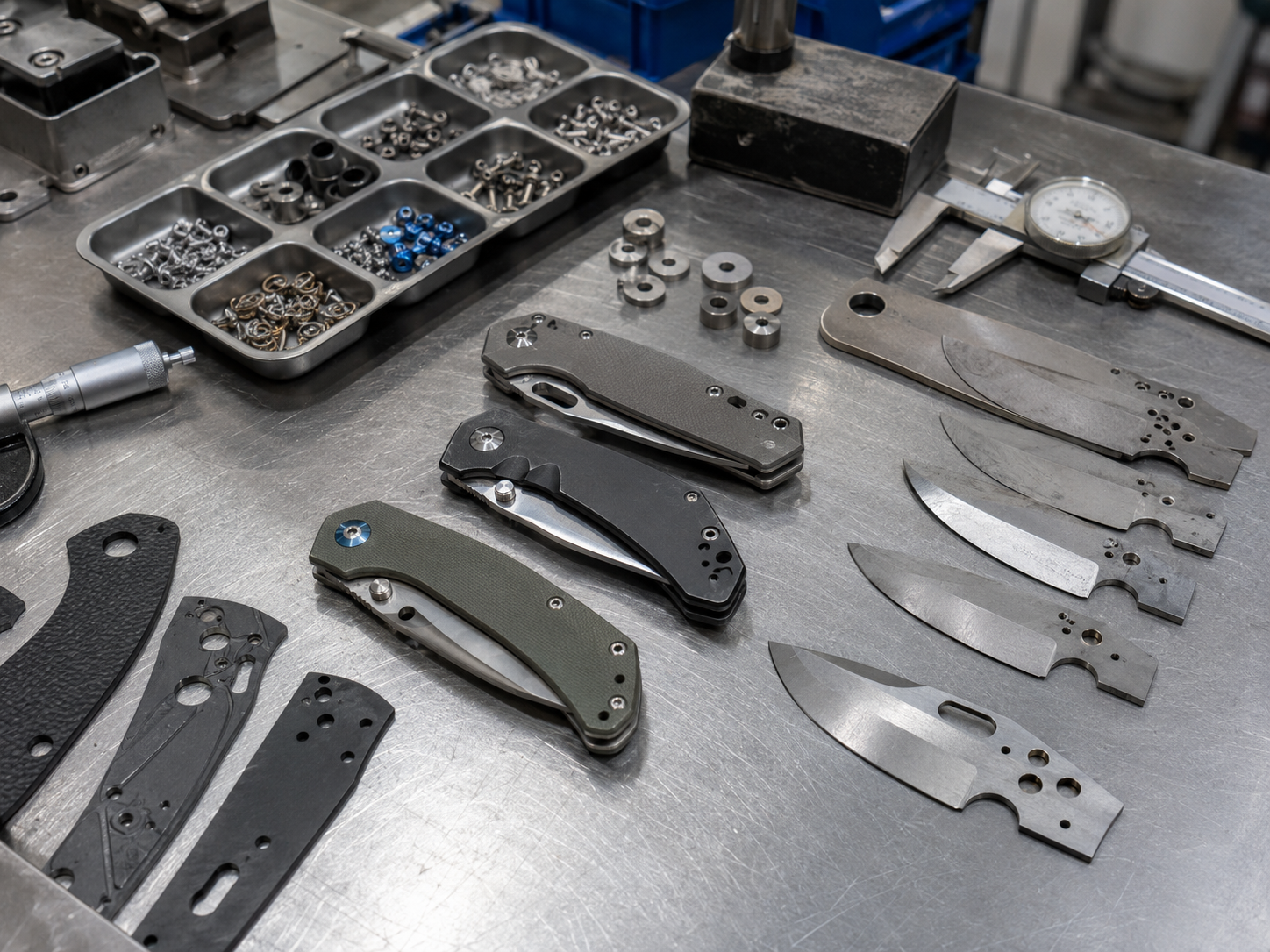
For a China-based OEM/ODM supplier, domestic brand research is very useful. These brands show how manufacturing knowledge can become product identity.
WE Knife says it was founded in 2000 to provide OEM manufacturing services and later launched its own brand in 2016. That is a strong lesson for buyers. Factory experience can support brand development when design, materials, technology, and quality control are aligned.
CIVIVI is useful for studying affordable EDC. It was introduced by WE in 2018 to focus on functional, utilitarian EDC products at more affordable prices. Its material range also shows how buyers can use steel and handle combinations to create different product levels.
Reate Knives is useful for premium OEM and R&D positioning. Its official page discusses OEM work, R&D support, Wire EDM, CNC engraving, laser engraving, milling, CNC grinding, tempering equipment, and hand finishing. Bestech Knives also gives buyers a good manufacturing reference because it describes OEM service, designer cooperation, CNC grinding, carving, stamping, wire cutting, laser cutting, coating, and sandbelt processes.
Kizer, QSP, Maxace, and Vosteed show other lessons. Some focus on design families. Some focus on value. Some focus on enthusiast products. Some focus on community feedback and fast product rhythm.
| Chinese brand | What buyers can study | Practical sourcing lesson |
|---|---|---|
| WE Knife | OEM roots and premium brand launch | Factory experience can support brand value |
| CIVIVI | Affordable EDC and material variety | Price-performance can still feel designed |
| Reate | High-end OEM and R&D capability | Machining and finishing can define a segment |
| Kizer | Broad EDC families and global reach | Product families help repeat sales |
| Bestech | OEM plus own-brand development | Equipment and process language matter |
| QSP | Value and outdoor EDC language | Simple product promise can work |
| Maxace | Enthusiast and higher-level folders | Detail and design can drive niche demand |
| Vosteed | Community-led modern EDC | Feedback and fast launches can shape products |
How Should Buyers Compare Competitors Without Copying Their Designs?
Copying may look fast, but it usually creates a weak brand. It can also create avoidable design and legal problems.
Buyers should compare competitor brands by product direction, not by copying shape. The useful comparison points are function, price tier, material, lock type, finish, packaging, channel, and user pain points.
I Build a Benchmark Matrix Before Sampling
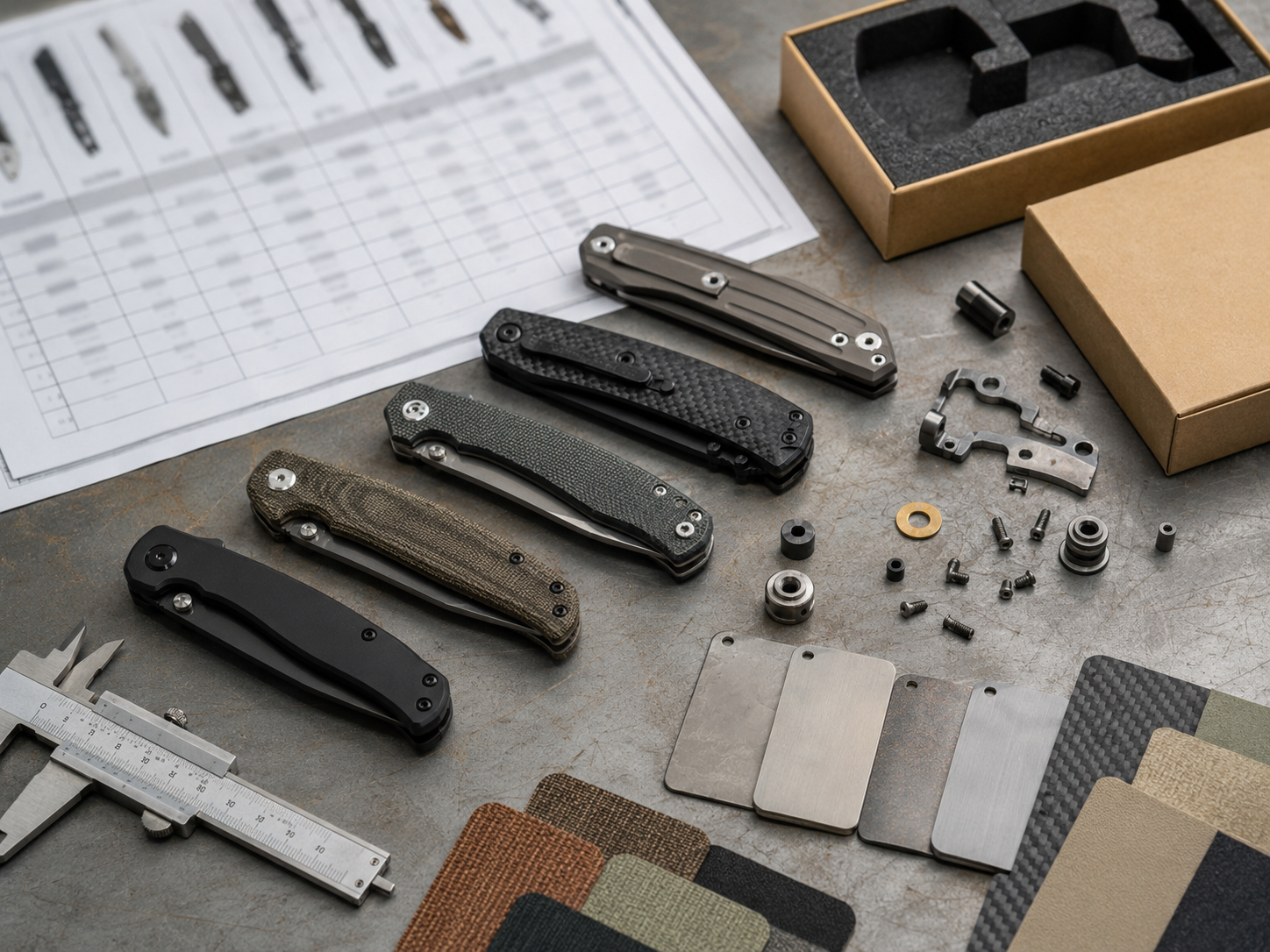
A good competitor study should become a matrix. I like to list the target brand, product segment, blade length range, steel, handle material, lock type, finish, retail price band, packaging, and user complaints. Then I ask what the buyer’s product should improve.
This method makes the project more practical. If many competitor knives in one segment use D2 and G10, the buyer may decide to use 14C28N for better corrosion resistance, or use a simpler handle shape to improve cost stability. If many competitors use button locks, we need to ask whether the target price can support the required tolerance, assembly work, and inspection. If the buyer wants titanium handles, we need to check machining time, surface finish, screw fit, and reject risk.
The point is not to make a copy. The point is to identify what customers already understand and where a new product can be clearer, easier to produce, or better matched to the channel.
| Comparison item | Buyer question | Manufacturing impact |
|---|---|---|
| Blade shape | What tasks should the knife handle? | Grinding, edge geometry, safety |
| Steel | What performance does the buyer need? | Heat treatment, cost, sharpening |
| Lock | What action and safety feel are expected? | Tolerance, parts, assembly time |
| Handle | What grip, weight, and look are needed? | CNC time, finish, material waste |
| Packaging | What does the sales channel expect? | Branding, MOQ, carton size, cost |
What Can OEM/ODM Buyers Learn From Brand Positioning in 2026?
A folding knife brand is not only a logo. It is a promise that must match product, price, and supplier capability.
OEM/ODM buyers can learn from competitor positioning by matching product promise with material choice, structure, finish, packaging, quality control, and target sales channel.
I Connect Positioning With Production Reality
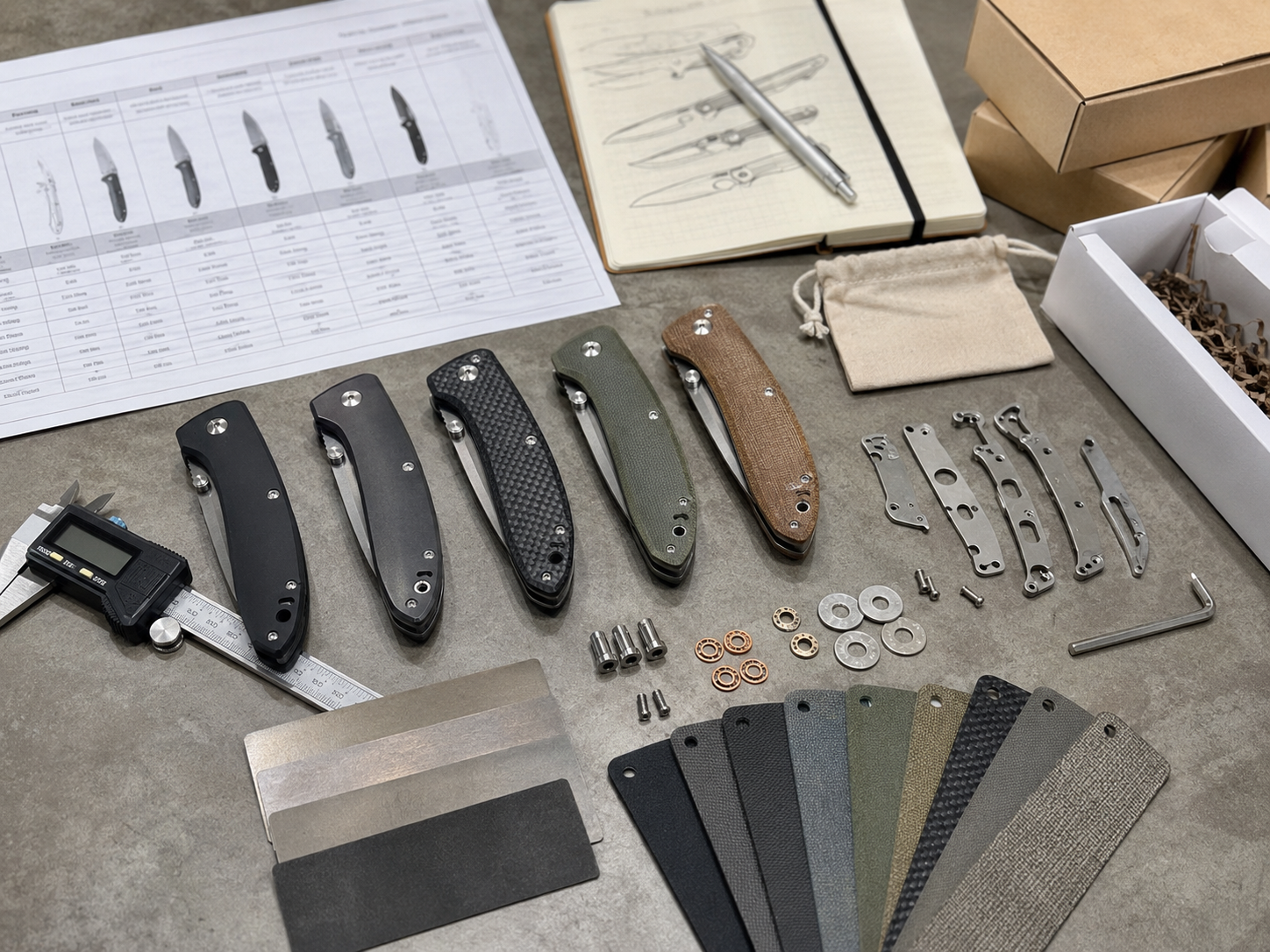
In 2026, buyers face a crowded market. Many brands use good steels. Many brands offer button locks, crossbar-style locks, bearings, micarta, titanium, premium coatings, and clean packaging. This means a new product must have a clear reason to exist.
If a buyer wants a budget EDC knife, I focus on safe lockup, stable cost, easy assembly, clean sharpening, and low defect risk. If the buyer wants a mid-range outdoor folder, I pay more attention to grip texture, corrosion resistance, screw security, and packaging strength. If the buyer wants a premium enthusiast folder, then machining accuracy, detent feel, blade centering, finish control, and inspection records become more important.
This is why I always connect competitor research with the RFQ. A buyer should prepare the target market, target price, expected quantity, blade steel, handle material, lock type, finish, packaging, and inspection requirements. Once these points are clear, we can decide whether the project should be OEM, ODM, or a more custom development path.
| Buyer goal | Competitor signal to study | OEM/ODM response |
|---|---|---|
| Budget EDC | Value brands and simple structures | Control cost and repeatability |
| Mid-range outdoor | Grip, corrosion resistance, warranty | Balance material and function |
| Premium EDC | Smooth action and refined finish | Improve machining and QC |
| Multi-tool expansion | Leatherman and Gerber categories | Study tool layout and assembly |
| Private label launch | Packaging and price tier | Build a realistic product brief |
How Can Vast State Help Buyers Turn Competitor Research Into a Product Brief?
Research alone does not make a better knife. It must become clear product decisions and controlled production steps.
Vast State helps buyers turn competitor research into OEM/ODM folding knife briefs through concept review, material selection, lock and structure suggestions, prototyping, packaging support, and production follow-up.
I Use Brand Research to Reduce Development Risk
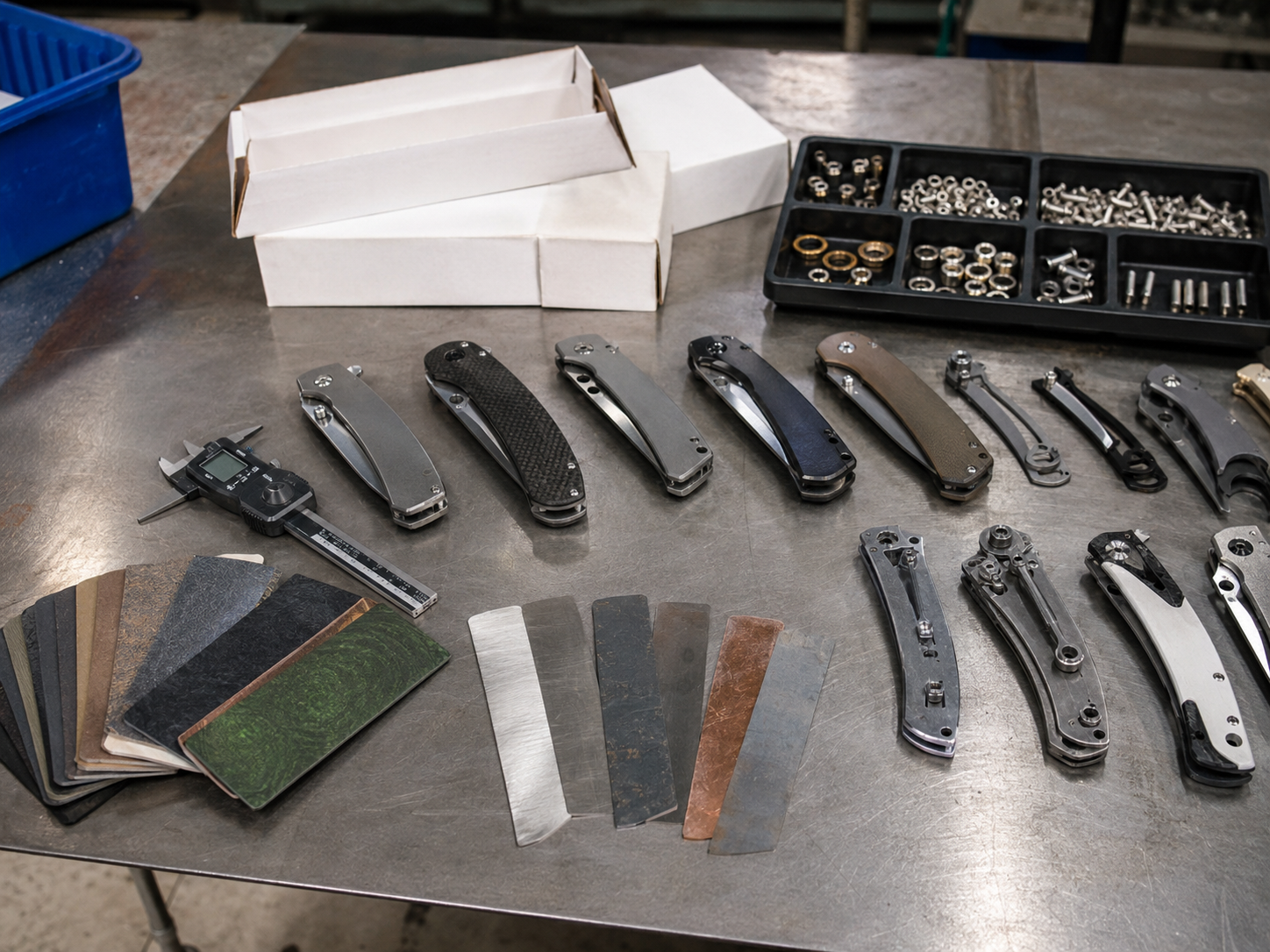
At Vast State, I want competitor research to become a practical brief. I ask the buyer what market they want to enter, what price range they need, what brands they admire, and what problems they want to avoid. Then I translate that into production questions.
Can this lock be made stable at the target cost? Does the steel fit the user environment? Will the handle material support the finish the buyer wants? Does the packaging match the channel? Can the design repeat well in mass production? These questions matter more than a beautiful render.
For some customers, the best path is OEM production based on a finished design. For others, ODM development is better because they only have a rough concept, target price, or reference market. In both cases, competitor research gives us a starting point. The real work is turning that starting point into a manufacturable, sellable, and repeatable product.
| Vast State support | Buyer input | Output |
|---|---|---|
| Concept review | Reference brands and target market | Clear product direction |
| Material selection | Steel and handle preferences | Cost and performance balance |
| Structure suggestion | Lock and action expectation | Safer manufacturable design |
| Prototype support | Drawing or rough idea | Functional sample path |
| Packaging support | Channel and brand needs | Private label presentation |
| Production follow-up | Quantity and delivery plan | More stable repeat orders |
Turn this article into a folding knife project.
Share your blade type, lock direction, steel preference, handle material, quantity, target market, and packaging needs. Vast State can prepare OEM/ODM options.
Conclusion
I benchmark brands to help buyers build folding knives that are clearer, safer, more manufacturable, and better matched to their market.
Source Notes
- Benchmade supports the discussion of premium U.S. positioning, Oregon City factory messaging, customization, and brand trust language.
- Spyderco supports the discussion of design identity, round opening hole history, pocket clip history, and steel variety.
- Kershaw supports the discussion of value EDC positioning, broad product categories, and lifetime warranty messaging.
- Buck Knives supports the discussion of heritage, stainless steel, heat treatment, and custom shop positioning.
- WE Knife and CIVIVI support the discussion of China-based OEM roots, brand development, and affordable EDC positioning.
- Reate Knives supports the discussion of high-end OEM/R&D manufacturing, CNC, EDM, grinding, and premium material capability.
- Bestech Knives supports the discussion of OEM manufacturing, designer cooperation, and controlled CNC-based production.
- Vosteed provides partial context for community-led modern EDC branding and recent Chinese brand development.