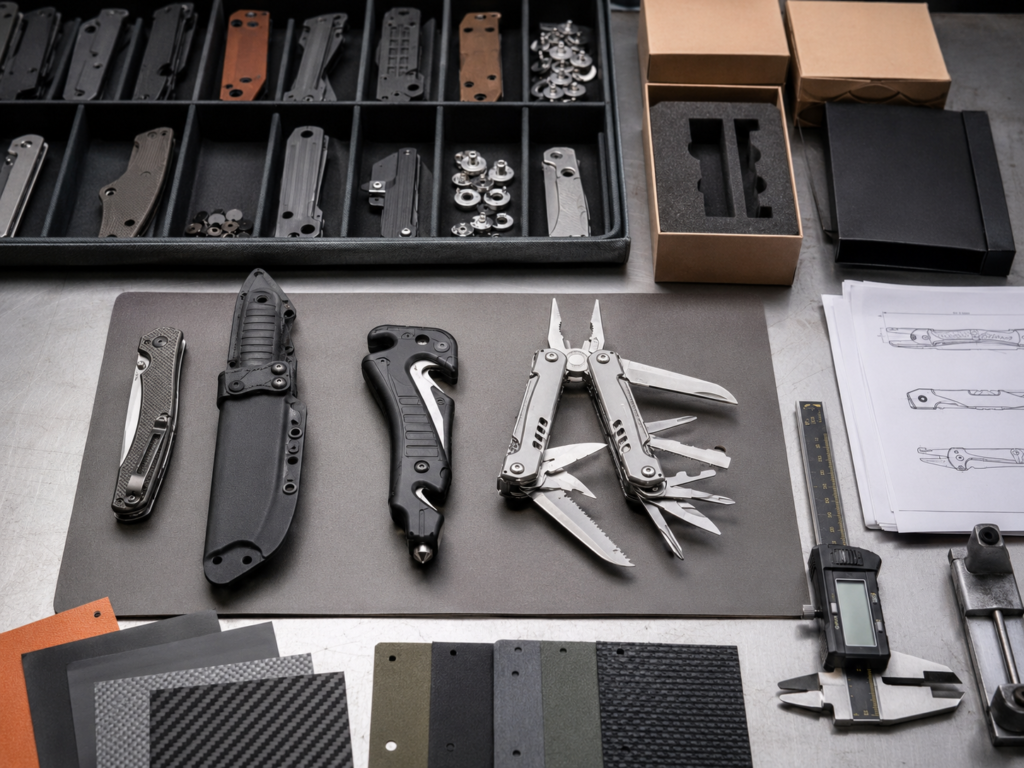
A knife can look versatile but fail in the wrong setting. Buyers need application clarity before choosing structure, materials, and packaging.
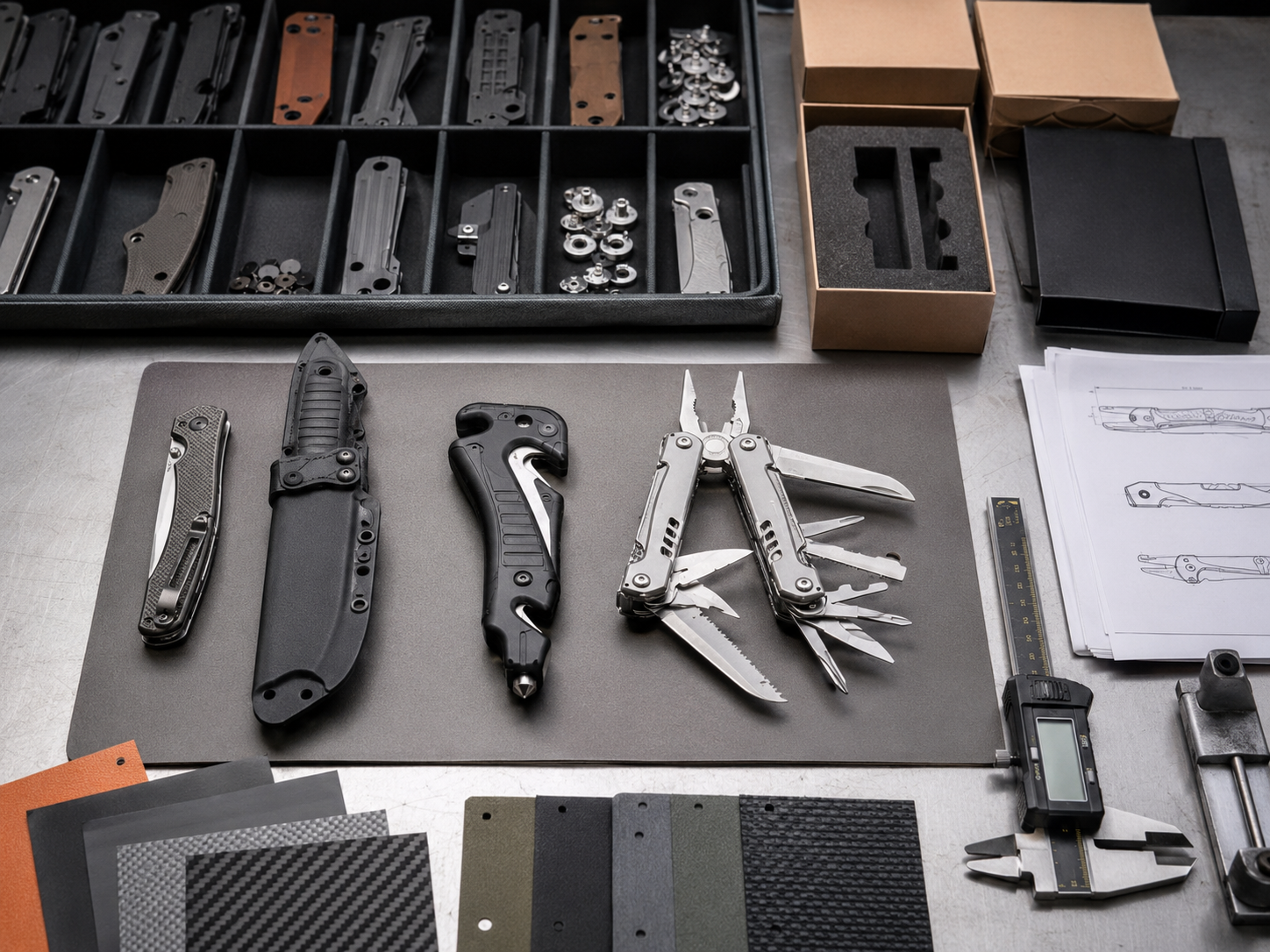
EDC, tactical-style, outdoor, and specialty knives serve different practical applications. EDC knives support daily utility. Tactical-style knives support controlled professional and emergency use. Outdoor knives support camping and field tasks. Specialty knives solve focused jobs such as rescue cutting, marine use, warehouse work, or emergency kits.
Quick buyer brief:
- Answer: Match the knife category to the real use environment.
- Buyer context: Useful for knife brands, importers, wholesalers, distributors, and private label buyers.
- Key checks: Confirm blade shape, steel, handle grip, lock type, carry method, safety notes, and target-market compliance.
Have a knife or multi-tool project in mind?
Send your sketch, CAD file, sample photo, or product idea. Vast State can review manufacturability, suggest materials, estimate MOQ, and prepare a quote for your OEM/ODM project.
When I work on an OEM/ODM knife project, I do not begin with the blade shape only. I begin with the application. A pocket knife for daily packages is different from a camping knife, rescue cutter, marine knife, warehouse tool, or multi-tool. The use case decides steel, handle material, lock type, carry method, finish, packaging, and inspection points. This is why I always ask buyers to define the main task before we discuss appearance.
What Are Everyday Carry Knives Usually Used For?
An EDC knife can be simple, but bad details make it annoying. Daily tools must feel safe, light, and easy.
EDC knives are usually used for light daily tasks such as opening packages, cutting cord, trimming tags, preparing simple materials, and handling small repairs. They should be compact, safe, comfortable, and suitable for the target market’s rules.
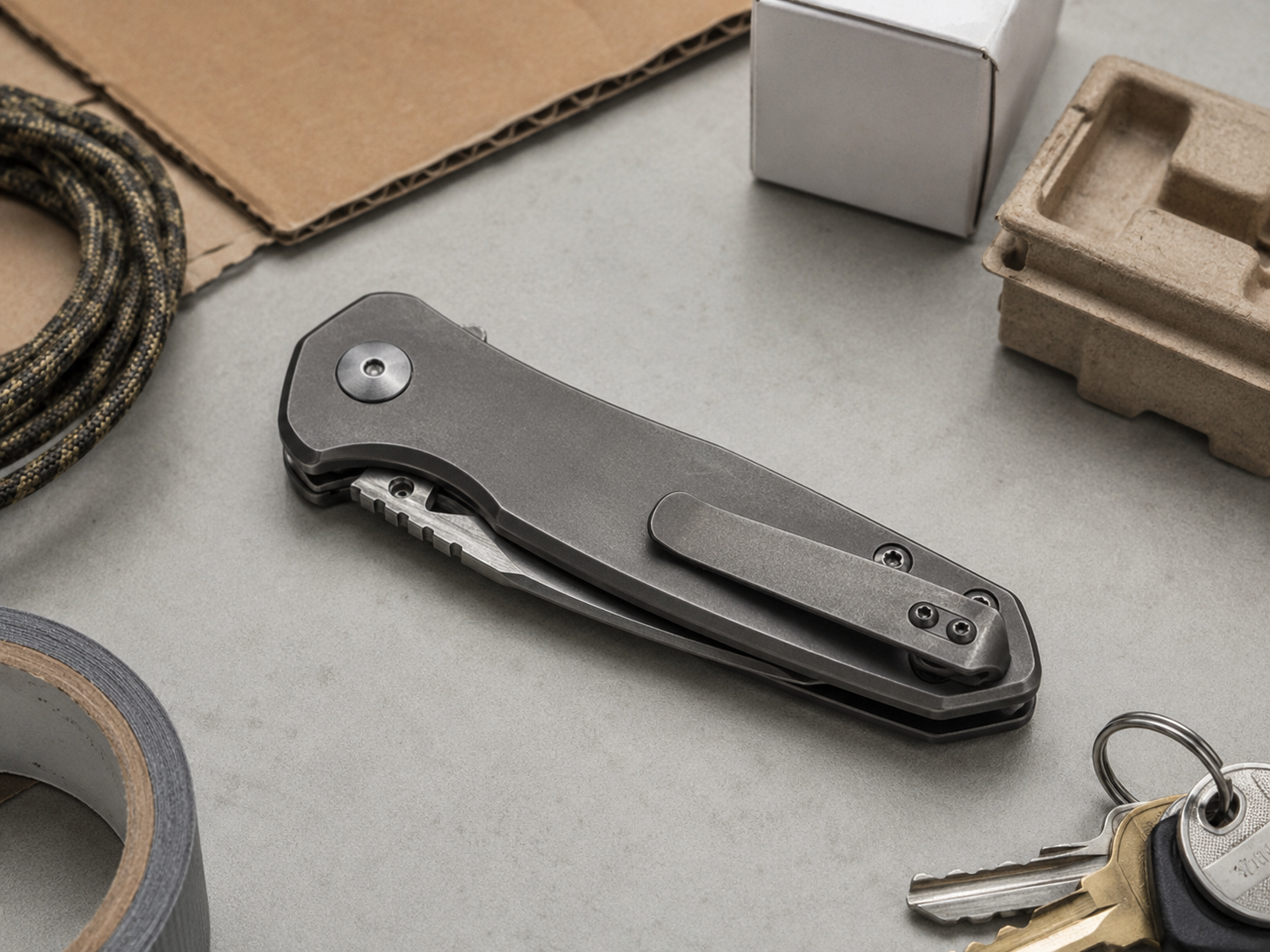
I Design EDC Around Convenience First
For EDC knives, I pay close attention to pocket comfort, closed size, clip position, opening feel, and safe closing. Many buyers want the knife to feel strong. That is reasonable. But if the knife is too heavy, too thick, or too aggressive, it may not fit daily carry habits.
Blade shape matters. A drop point, sheepsfoot, or simple utility profile can work well for common daily cutting. A fine tip helps with detail work, but it can be easier to damage. A thicker tip is stronger, but it may feel less precise. Handle material also changes the product position. G10 can feel stable and grippy. Aluminum can feel light and modern. Stainless steel can feel solid but may add weight. Micarta can create a warmer hand feel.
Buyers also need to consider travel and carry education. The TSA knife guidance says knives are not allowed in U.S. carry-on bags, except limited rounded or plastic utensils. That does not define every market, but it shows why product instructions and target-market compliance checks matter.
| EDC feature | Practical use | Buyer decision |
|---|---|---|
| Compact size | Pocket carry and daily access | Control closed length and weight |
| Simple blade profile | Packages, cord, tags, light materials | Avoid over-specialized geometry |
| Reliable lock | Safer daily operation | Match lock type to price tier |
| Pocket clip | Carry convenience | Check clip tension and screw strength |
OEM/ODM RFQ Checklist
Prepare these details to help Vast State review your project and provide a more accurate quotation.
| RFQ Field | What to Prepare |
|---|---|
| Project type | OEM from drawing / ODM private label / wholesale catalog |
| Product category | Folding knife / fixed blade / multi-tool / outdoor tool |
| Design status | Idea / sketch / 2D drawing / 3D CAD / physical sample |
| Target price | Ex-factory target price or retail price range |
| MOQ expectation | 500 / 1,000 / 3,000 / 5,000+ pcs |
| Logo method | Laser engraving / etching / printing / molded logo |
| Packaging | Standard packaging / custom retail box / Amazon-ready |
| Market | USA / EU / Japan / Korea / Middle East / other |
| Compliance needs | Buyer-specified testing / documentation / labeling |
| Timeline | Sample deadline / mass production deadline |
How Are Tactical-Style Knives Used Without Overbuilding the Product?
A tactical look can sell attention, but it can also add weight, cost, and risk. The purpose must stay clear.
Tactical-style knives are best treated as controlled professional, duty, field, rescue, or emergency utility tools. Buyers should focus on grip, glove use, lock security, corrosion resistance, carry access, and practical safety.
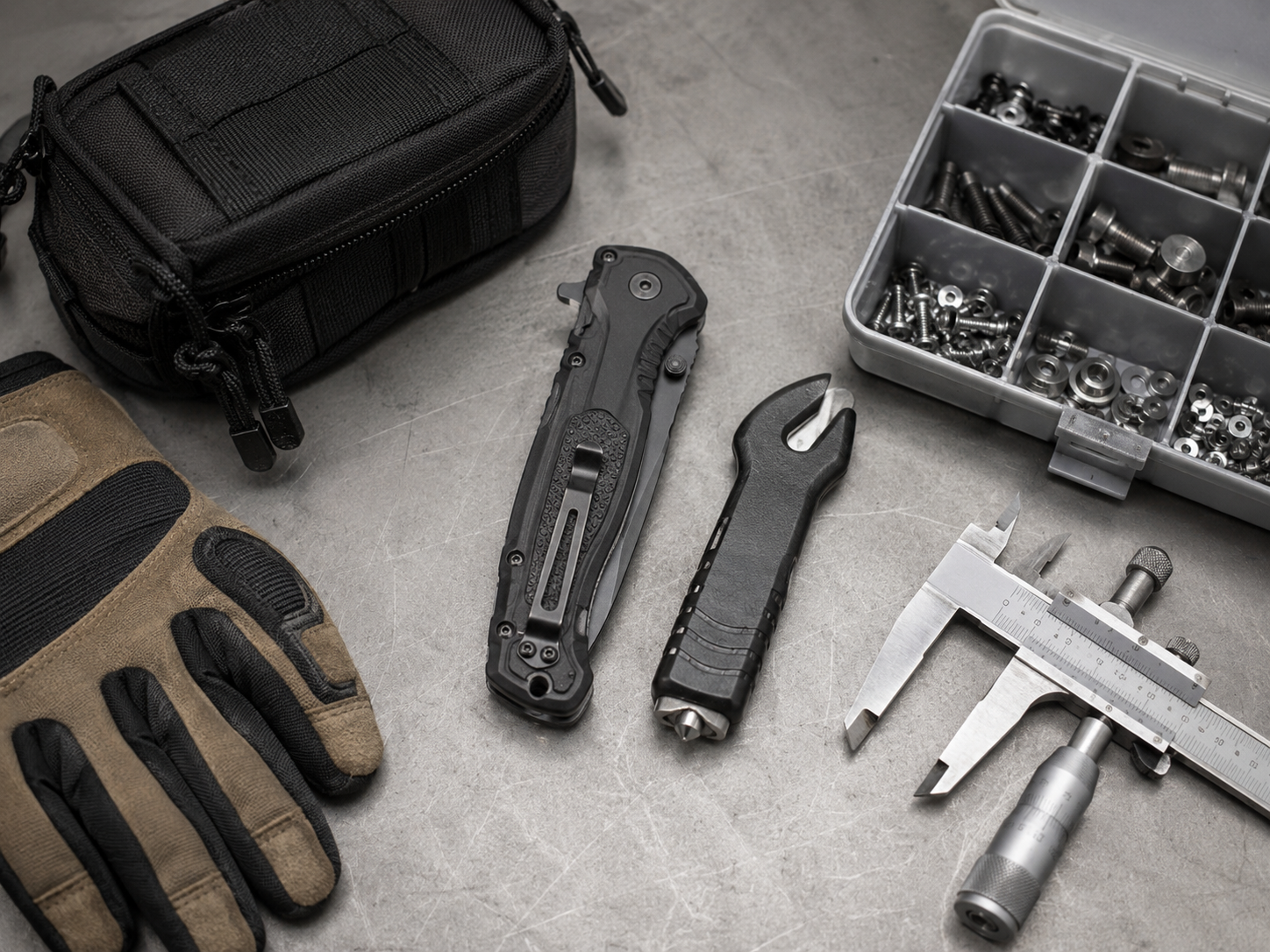
I Translate Tactical Into Measurable Product Needs
When a buyer says “tactical,” I slow the project down and ask what that word means. Some buyers mean field durability. Some mean black coating and textured grip. Some mean rescue features. Some mean glove-friendly access. These are different product directions.
For responsible B2B development, I prefer measurable needs. Does the user wear gloves? Is wet grip important? Does the knife need a strap cutter, glass breaker, or pouch? Does the blade need better corrosion resistance? Does the product need one-hand access? Does the lock need extra strength? These questions are more useful than simply making the knife look more aggressive.
The handle is often the most important part. Texture, contour, guard shape, clip position, and hardware strength all affect user confidence. Finish also matters. Coatings can support visual identity and reduce glare, but they must be stable in production. Buyers should avoid adding too many features unless the market clearly needs them.
| Tactical-style need | Product detail | Production concern |
|---|---|---|
| Glove use | Larger opening access and textured handle | Ergonomic testing and tolerance |
| Rescue utility | Strap cutter or glass breaker option | Assembly and safety checks |
| Wet grip | G10, rubber texture, or deeper pattern | Surface consistency |
| Field carry | Clip, pouch, or sheath | Accessory fit and packaging |
What Do Outdoor and Camping Knives Need to Handle?
Outdoor buyers often ask for one knife that does everything. That can create a tool that does nothing especially well.
Outdoor and camping knives are used for food prep, cord cutting, feather sticks, camp setup, fishing tasks, light wood work, and gear repair. They need corrosion resistance, grip, safe carry, easy cleaning, and enough strength for field use.
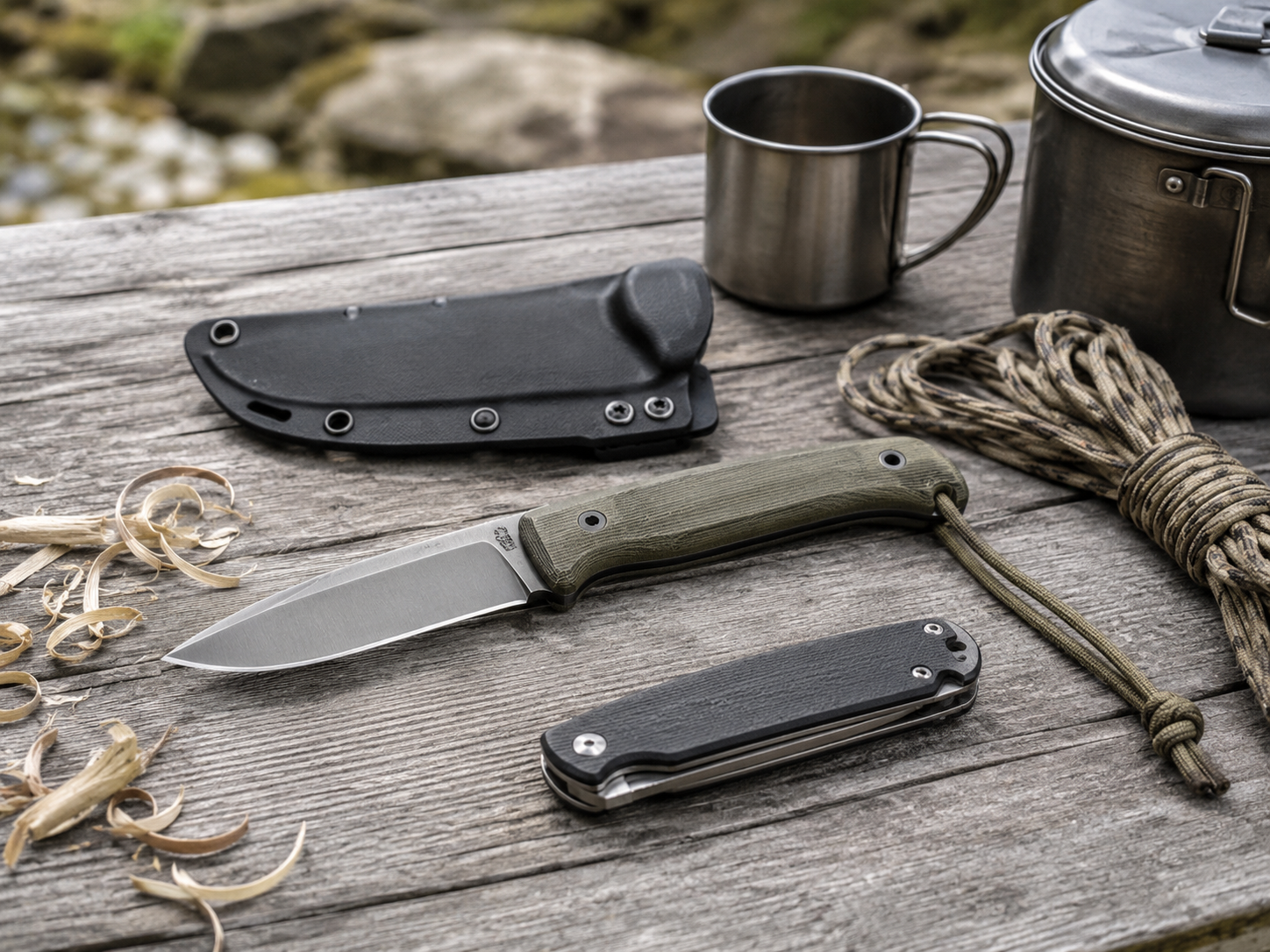
I Match Outdoor Knives to the Environment
Outdoor knives need a clear environment definition. A weekend camping knife is different from a fishing knife, hiking utility folder, bushcraft-style fixed blade, or emergency outdoor tool. Each product should be designed around the top tasks.
Steel choice is important. Some users need edge retention. Some need toughness. Some need corrosion resistance because the knife may meet rain, sweat, food, fish, or salt air. Handle material also matters. Wood can fit a gift-style outdoor knife, but textured synthetic material is often easier to control for wet use. Micarta can feel warm and grippy. G10 can be stable and practical.
Outdoor products also benefit from responsible use education. The National Park Service explains Leave No Trace principles, including planning ahead, disposing of waste properly, and minimizing impact. A knife cannot make a user responsible by itself, but packaging and instructions can support safer outdoor habits.
| Outdoor task | Knife requirement | Buyer note |
|---|---|---|
| Food prep | Cleanable blade and corrosion resistance | Avoid hard-to-clean structures |
| Cord cutting | Useful edge geometry | Test with rope or paracord |
| Camp setup | Comfortable handle and stable lock | Check hand fatigue |
| Light wood work | Tougher tip and thicker blade | Avoid fragile geometry |
| Wet use | Grip and rust resistance | Match steel and handle material |
How Do Specialty Knives Solve Narrow User Problems?
A specialty knife can look too narrow to general buyers. But for the right user, focus creates value.
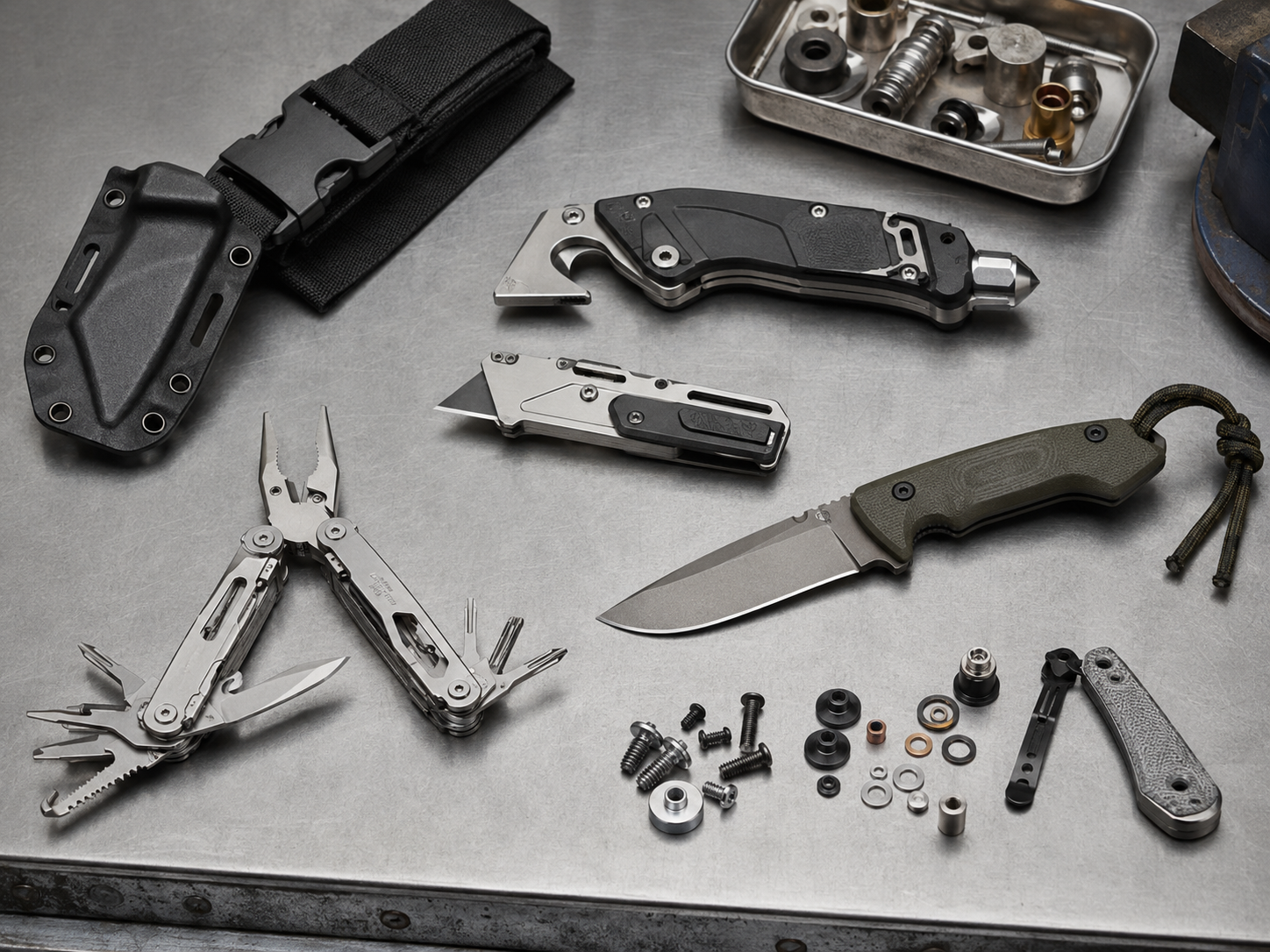
Specialty knives solve specific tasks such as rescue cutting, electrician work, marine use, warehouse cutting, hunting processing, food preparation, and emergency kits. The design should follow the task, not general knife trends.
I Let the Job Control the Knife
Specialty knife development starts with the job. A rescue cutter may need a blunt safety tip, strap cutter, bright handle, and glove-friendly grip. A marine knife may need corrosion resistance and easy cleaning. A warehouse cutting tool may need a replaceable blade or controlled edge. A hunting knife may need a different blade curve and handle angle. A food-prep folding tool must be easier to clean than a heavy tactical-style folder.
Emergency preparedness is another useful market context. Ready.gov’s Build a Kit page explains that emergency supplies should be stocked for the right needs. Ready.gov’s food preparedness guidance also reminds households to include a manual can opener and eating utensils when storing canned foods. That does not mean every emergency kit needs a knife, but it supports the idea that practical compact tools matter.
For buyers, specialty knives work best when the top three tasks are clear. If a knife tries to serve every market, it becomes confusing. I prefer to define the user first, then remove features that do not help that user.
| Specialty category | Typical task | Design focus |
|---|---|---|
| Rescue tool | Strap cutting and emergency access | Safety tip, bright handle, fast access |
| Marine knife | Wet and salty environments | Corrosion resistance and grip |
| Utility knife | Repeated material cutting | Replaceable blade or easy sharpening |
| Food/camp tool | Simple preparation tasks | Cleanability and safe carry |
| Trade tool | Job-specific cutting | Ergonomics and durability |
Why Do Multi-Tools and Hybrid Knives Matter for Modern Buyers?
A blade alone is useful, but many customers want more compact functions. This creates opportunity and complexity.
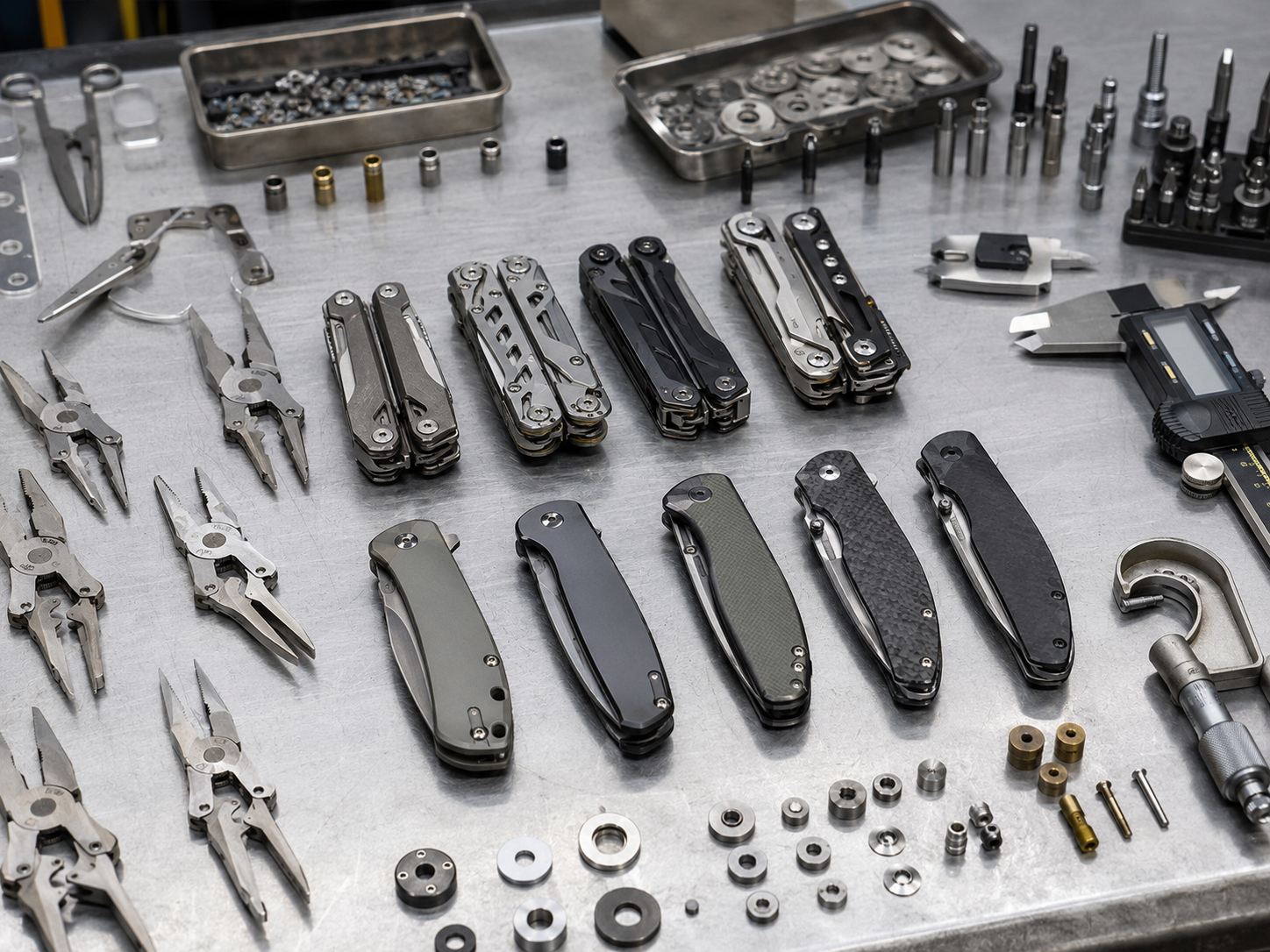
Multi-tools and hybrid knives combine blades with pliers, scissors, screwdrivers, openers, saws, files, or rescue functions. They can serve EDC, outdoor, emergency, and trade markets, but they need careful structure, assembly, and quality control.
I Check Function Order and Assembly Risk
Multi-tools are attractive because they increase perceived value. A buyer can offer one compact product for small repairs, camping, emergency bags, vehicle kits, or household use. But every added function adds complexity. More parts mean more tolerance control. More pivots mean more assembly checks. More tools mean more chances for loose movement, poor access, or uncomfortable handling.
Travel education is also important. The TSA multi-tool guidance says multi-tools with knives are prohibited in U.S. carry-on bags. It also notes that certain small scissors may be allowed in carry-on bags. This is a travel-screening context, not a global law, but it shows why product instructions should be clear.
From a manufacturing point of view, I want to know which tools are essential. Pliers, scissors, bottle openers, screwdrivers, files, saws, and can openers all have different thickness, hardness, access, and finishing needs. A simple tool that works smoothly is better than a crowded tool that feels cheap.
| Multi-tool function | User value | Production risk |
|---|---|---|
| Pliers | Repairs and gripping | Pivot strength and alignment |
| Scissors | Light cutting and kits | Edge fit and spring feel |
| Screwdrivers | Small repairs | Tip hardness and access angle |
| Openers | Camping and household use | Shape accuracy |
| Blade | Cutting function | Lock safety and edge control |
How Should Buyers Turn Knife Applications Into Product Specifications?
Many projects fail because the buyer chooses a style before defining use. A strong RFQ starts with real tasks.
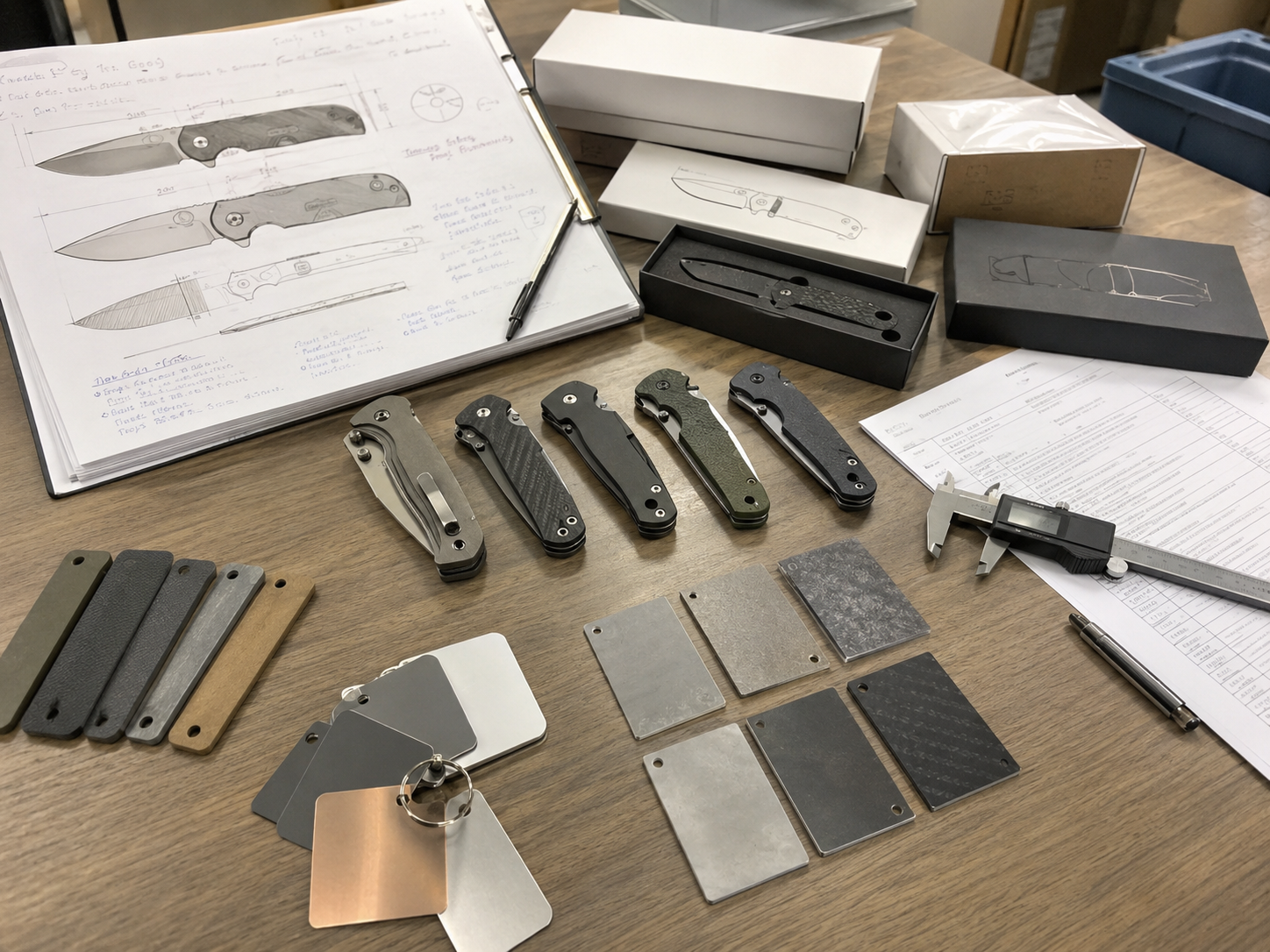
Buyers should turn knife applications into clear specifications for target user, main tasks, blade steel, handle material, lock type, carry method, finish, packaging, compliance notes, and inspection standards.
I Build the Product Brief From the Use Case
At Vast State, I prefer to turn application into a product brief before sampling. If the buyer says EDC, I ask about carry comfort, pocket size, weight, opening method, lock style, and retail price. If the buyer says outdoor, I ask about wet use, food prep, camp tasks, sheath needs, and corrosion resistance. If the buyer says rescue, I ask about gloves, handle color, strap material, safety tip, and packaging instructions.
This approach saves time. It also helps avoid overbuilding. A low-cost EDC knife does not need every premium detail. A rescue tool should not sacrifice access and safety for decoration. A camping knife should not be hard to clean. A tactical-style folder should not become too heavy for real carry.
Workplace safety guidance also supports a careful design mindset. OSHA’s hand and power tools overview explains that hand and power tools are common across industries but can cause serious injuries when used or maintained improperly. For B2B buyers, this supports clear warnings, stable construction, and practical quality checks.
| Specification item | Question to answer | OEM/ODM output |
|---|---|---|
| Target user | Who will use it? | Product level and channel |
| Main tasks | What will it cut or support? | Blade shape and thickness |
| Environment | Wet, dusty, cold, daily, emergency? | Steel, finish, and handle choice |
| Carry method | Pocket, sheath, pouch, kit? | Clip, sheath, or packaging |
| Quality checks | What must be stable? | Lockup, edge, screws, finish |
Turn your idea into a quote-ready knife project.
Share your drawing, sample photo, target quantity, market, and packaging needs. Vast State will review manufacturability and prepare OEM/ODM options.
Conclusion
A useful knife starts with the application. I build better OEM/ODM projects by turning real use cases into clear specifications.
Source Notes
- TSA knife guidance supports the travel-compliance reminder that knives are generally not allowed in U.S. carry-on bags.
- TSA multi-tool guidance supports the point that multi-tools with knife blades need clear travel-use education.
- OSHA hand and power tools guidance supports the safety point that hand tools can be hazardous if used or maintained improperly.
- National Park Service Leave No Trace guidance provides outdoor-use context for responsible camping and minimizing impact.
- Ready.gov Build a Kit and Ready.gov Food provide emergency-preparedness context for practical household tools and manual can openers.