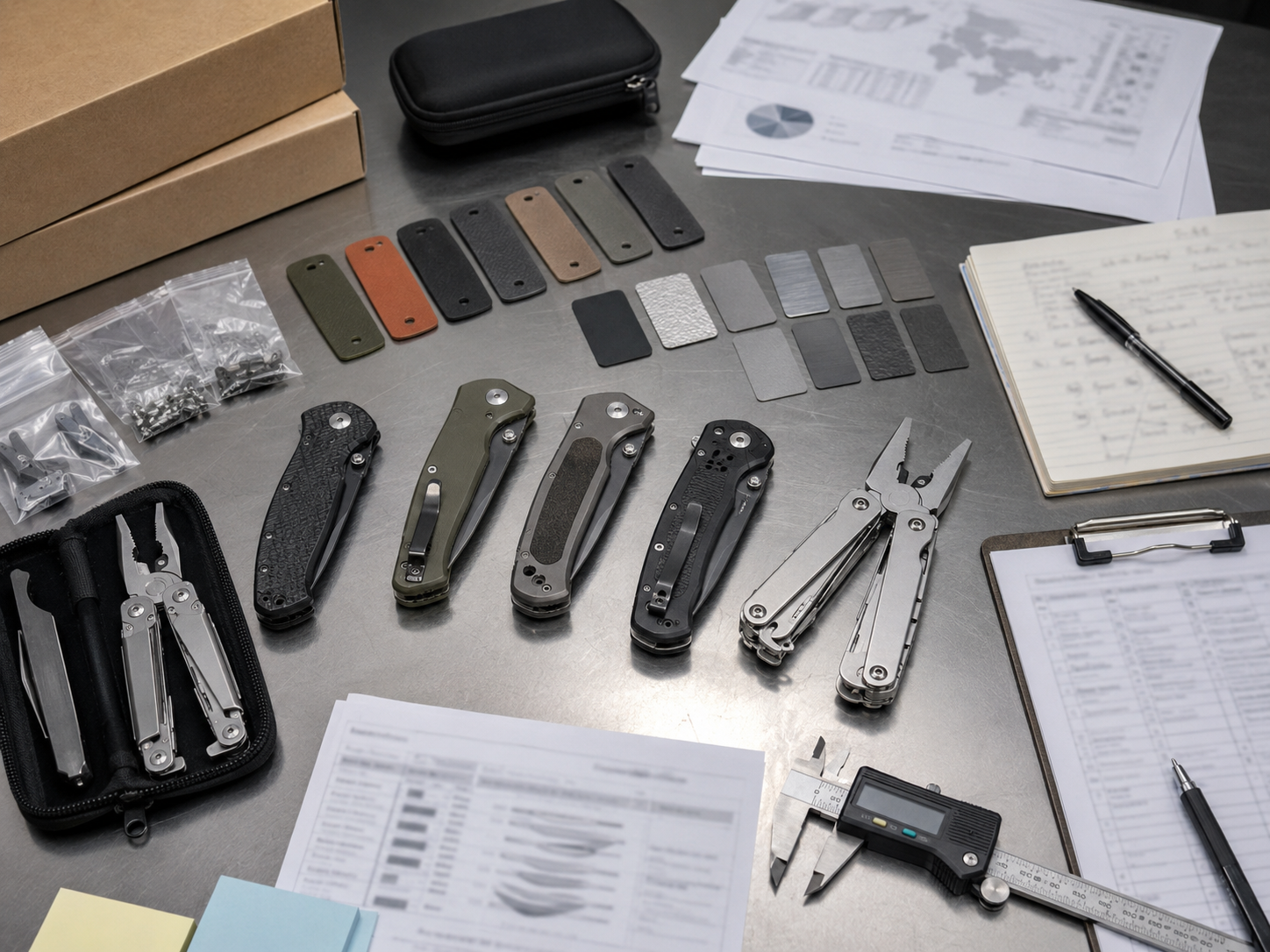
An outdoor tool can sell well in one country and fail in another. The gap often comes from weak country analysis, not weak production.
B2B buyers should analyze each outdoor market by demand, product use, legal restrictions, retail channel, price range, logistics, and documentation needs. For knives and multi-tools, country analysis must connect market opportunity with manufacturable design and import compliance before RFQ.
Quick buyer brief:
- Answer: Compare countries by demand, compliance, channel, price, logistics, and product fit.
- Buyer context: This helps knife brands, outdoor brands, importers, wholesalers, and sourcing managers.
- Key checks: End use, blade type, lock mechanism, packaging, import rules, target price, and inspection needs.
Have a knife or multi-tool project in mind?
Send your sketch, CAD file, sample photo, or product idea. Vast State can review manufacturability, suggest materials, estimate MOQ, and prepare a quote for your OEM/ODM project.
When I review an outdoor market by country, I do not start with a simple question like “which country is biggest?” I start with a more useful question: what kind of product can sell there safely, consistently, and profitably? A folding knife for the United States, a compact tool for the European Union, and an import-sensitive item for Canada or New Zealand may need different structures, packaging, wording, and documentation. This is why country analysis should become part of product development, not only part of sales planning.
What Should a Country Analysis Measure Before Product Development?
A country list can look useful but still mislead buyers. Without product-level checks, it becomes a market report that cannot guide production.
Country analysis should measure user demand, common outdoor activities, legal limits, retail channels, target price, logistics reliability, and required documentation before the buyer confirms the product specification.
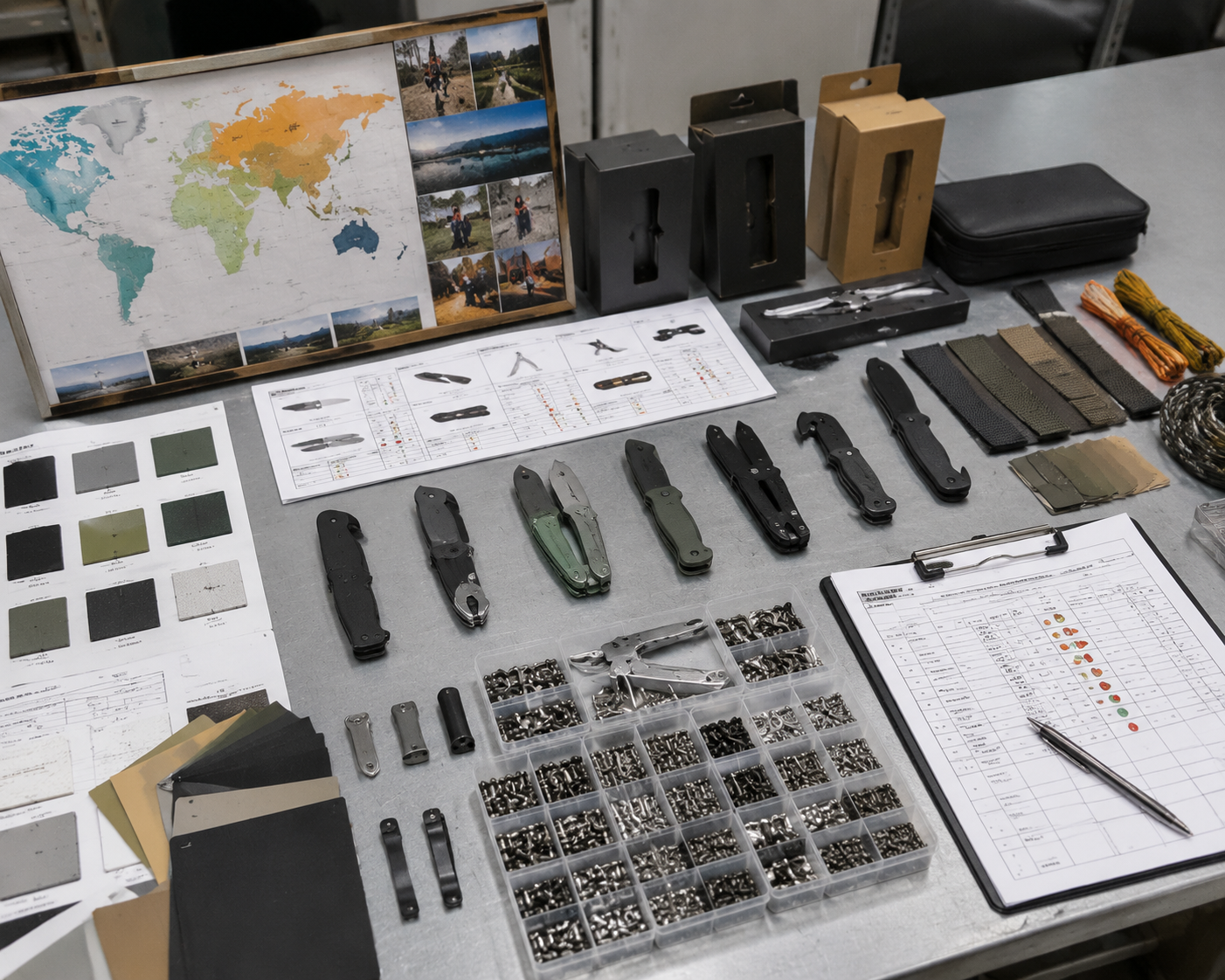
I Turn Market Research Into Product Decisions
I like to treat country analysis as a product brief. A buyer may say a market needs outdoor knives, but that sentence is still too wide. I need to know whether the product is for camping, fishing, hiking, EDC, rescue, workwear, farm supply, outdoor retail, or private label promotion. Each use case changes the design.
For example, a camping-focused market may value corrosion resistance, easy cleaning, secure grip, and practical packaging. An EDC market may care more about pocket size, weight, opening feel, and retail appearance. A wholesale or distributor market may care about stable cost and repeat supply more than rare materials. A country with stricter knife rules may need a conservative blade shape, non-aggressive packaging, and clear product descriptions.
I also check logistics. The World Bank Logistics Performance Index compares countries by customs, infrastructure, shipments, logistics service quality, tracking, and timeliness. I do not use it as a knife-specific answer, but it reminds me that delivery risk is part of country planning. Good product design cannot fix unclear import preparation.
| Analysis point | What I check | Product impact |
|---|---|---|
| Outdoor activity | Camping, fishing, hiking, work, EDC | Blade shape, handle grip, tool set |
| Sales channel | Retail, distributor, Amazon-style, private label | Packaging, barcode, content, MOQ |
| Compliance risk | Import limits, age rules, product safety | Structure, description, documents |
| Logistics | Customs, tracking, delivery stability | Lead time buffer and carton planning |
OEM/ODM RFQ Checklist
Prepare these details to help Vast State review your project and provide a more accurate quotation.
| RFQ Field | What to Prepare |
|---|---|
| Project type | OEM from drawing / ODM private label / wholesale catalog |
| Product category | Folding knife / fixed blade / multi-tool / outdoor tool |
| Design status | Idea / sketch / 2D drawing / 3D CAD / physical sample |
| Target price | Ex-factory target price or retail price range |
| MOQ expectation | 500 / 1,000 / 3,000 / 5,000+ pcs |
| Logo method | Laser engraving / etching / printing / molded logo |
| Packaging | Standard packaging / custom retail box / Amazon-ready |
| Market | USA / EU / Japan / Korea / Middle East / other |
| Compliance needs | Buyer-specified testing / documentation / labeling |
| Timeline | Sample deadline / mass production deadline |
Why Does the United States Need a Broad Outdoor Product Ladder?
The U.S. market looks attractive, but it is not one simple market. A single knife model rarely fits every outdoor buyer.
The United States needs a broad product ladder because outdoor recreation covers many activities, channels, price levels, and user groups. Buyers should separate EDC, camping, fishing, hunting, utility, and multi-tool lines.
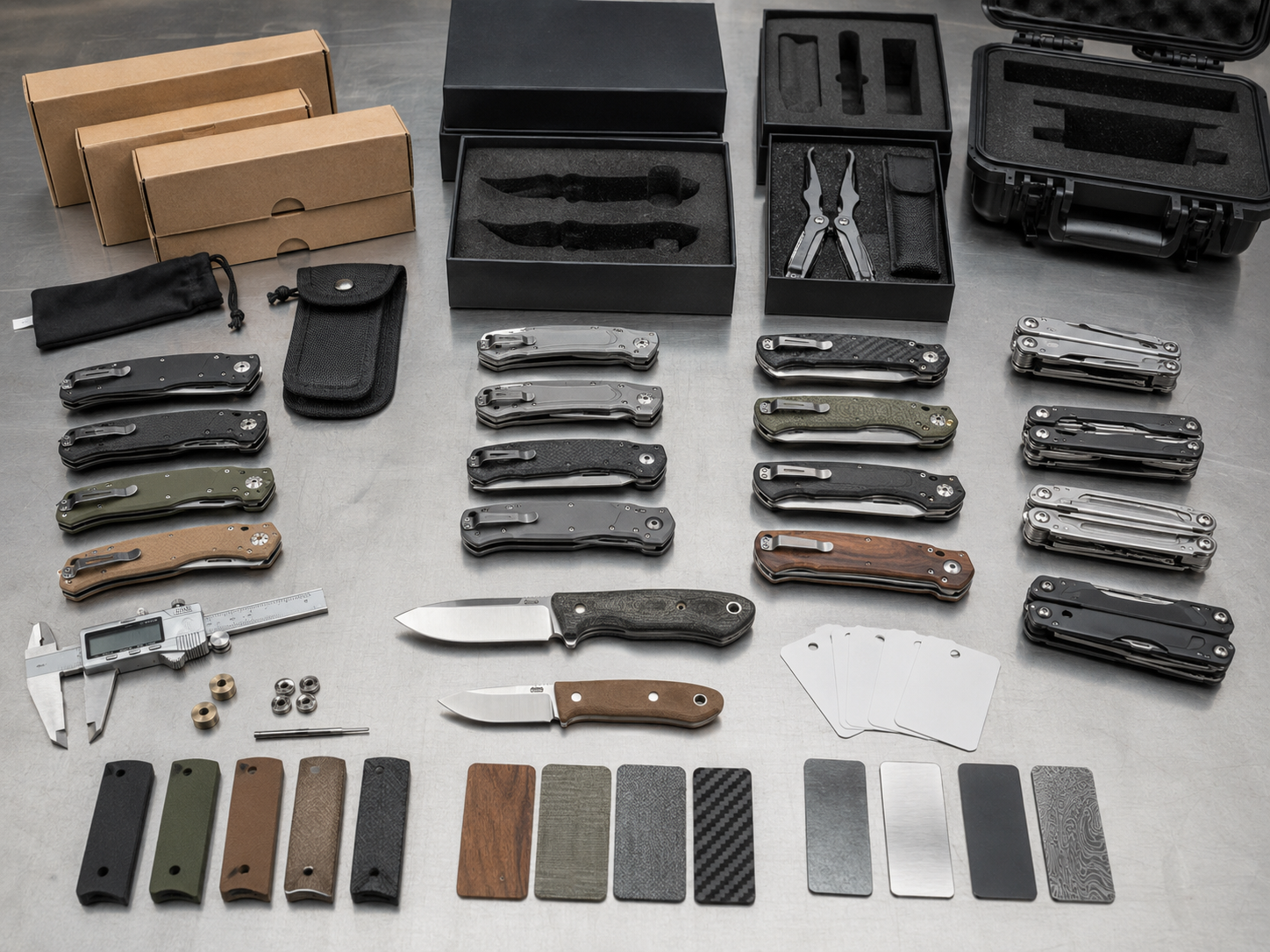
I Do Not Treat the U.S. as One Buyer Type
The United States is often important for outdoor products because the outdoor economy is broad. The U.S. Bureau of Economic Analysis reported that the U.S. outdoor recreation economy accounted for 2.4 percent of current-dollar GDP in 2024. BEA also separates outdoor recreation into activities such as boating, fishing, hiking, hunting, travel, tourism, and retail-related activity. This does not prove demand for one knife model, but it shows why the market has many use cases.
For sourcing, I usually divide U.S.-oriented products into several layers. Entry-level outdoor tools need stable cost, simple structure, and strong packaging value. Mid-range EDC or camping knives need better handle materials, smoother action, and cleaner finishing. Higher-positioned products may need more careful steel selection, better heat treatment control, and a stronger brand story.
I also remind buyers to avoid overbuilding. A knife with expensive steel, complex lock parts, and high finishing cost may look attractive, but it may miss the target margin. A good U.S. product plan should offer clear choices by retail price, not only by appearance.
| Product layer | Typical buyer need | Manufacturing focus |
|---|---|---|
| Entry outdoor tool | Cost control and repeat supply | Simple structure, stable assembly |
| Mid-range EDC | Better feel and visual value | Lock fit, finish, packaging |
| Camping and fishing | Practical use and corrosion resistance | Steel choice, grip, cleaning |
| Premium private label | Differentiated brand position | Material story, tighter QC |
How Should Buyers Read Europe and the United Kingdom Before Sourcing?
Europe and the UK can reward careful brands, but vague compliance planning can slow sales and create avoidable redesign work.
Buyers should read Europe and the UK through product safety, documentation, retail expectations, and knife-specific restrictions. Conservative design, clean packaging, and clear importer responsibility matter.
I Separate General Product Safety From Knife-Specific Risk
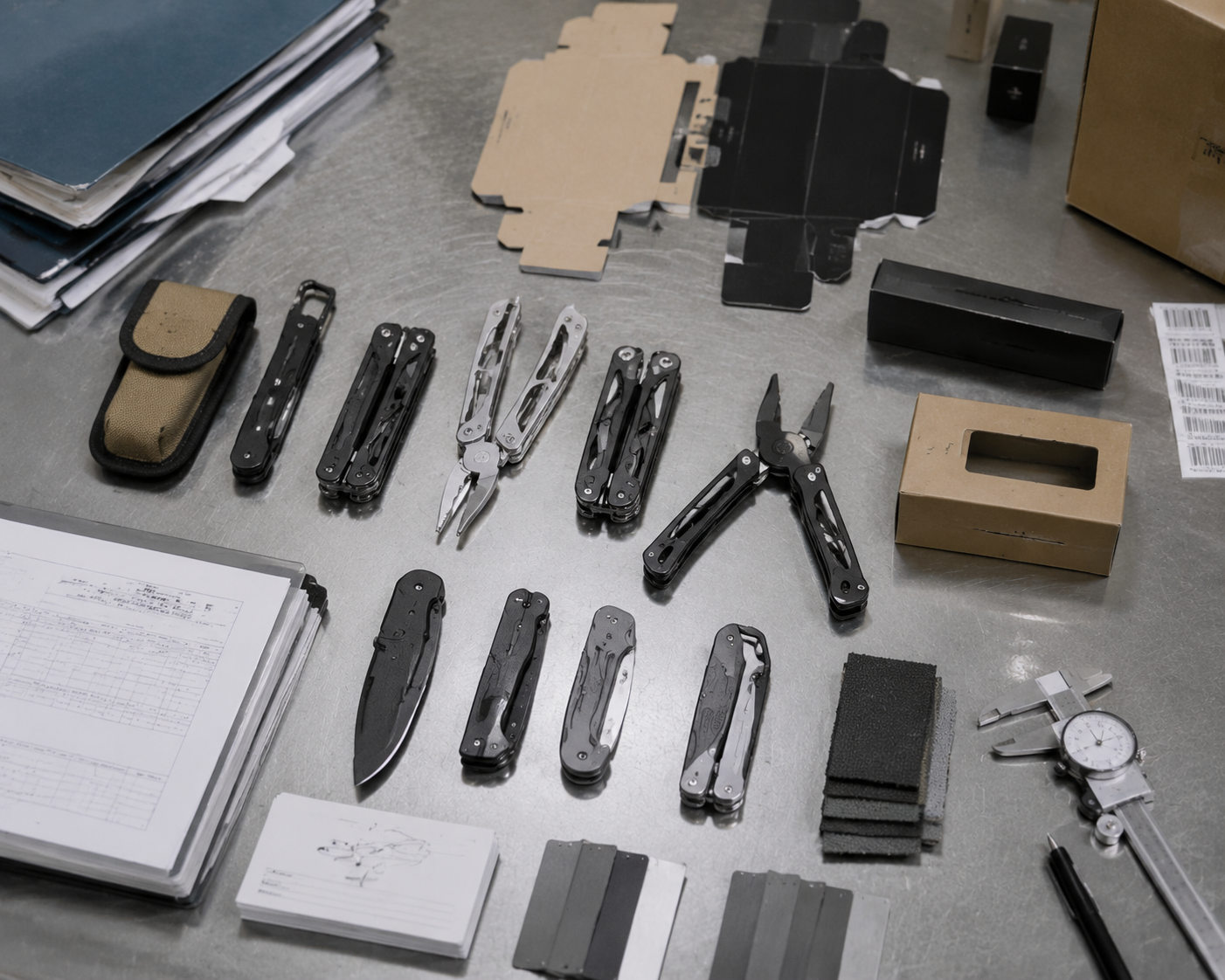
For Europe, product safety and documentation should be part of the sourcing conversation from the beginning. The European Commission lists Regulation (EU) 2023/988 on general product safety, and related standards references apply from December 13, 2024 onward. I do not treat this as a simple label issue. I treat it as a reminder that product traceability, safe use, documentation, importer information, and risk review may matter for consumer products.
The UK also needs close checking. GOV.UK guidance on import controls for knives and offensive weapons explains that certain specified knives and blades are banned or restricted for import. That means a buyer should not send a dramatic design and ask the factory to “make it market-ready” later. The shape, opening method, product name, packaging image, and marketing words should all be reviewed before sampling.
For Vast State projects, I prefer practical designs for these markets. I would rather adjust the lock, blade length, point style, handle shape, or packaging tone early than remake samples after the buyer discovers a channel problem.
| Market factor | What to review | Practical sourcing action |
|---|---|---|
| EU product safety | Risk, traceability, instructions | Prepare product file and packaging info |
| UK import control | Banned or restricted knife types | Avoid risky opening styles and shapes |
| Retail channel | Marketplace and distributor checks | Use clean descriptions and documents |
| Packaging | User information and brand tone | Avoid aggressive visual positioning |
Why Do Canada, Australia, and New Zealand Need Extra Import Checks?
Some markets look similar to other outdoor countries, but import rules can be much more sensitive for knives and certain tool structures.
Canada, Australia, and New Zealand need extra import checks because certain automatic, centrifugal, gravity, butterfly, disguised, or restricted weapons may be prohibited or require permission.
I Check Mechanism Risk Before I Quote the Order
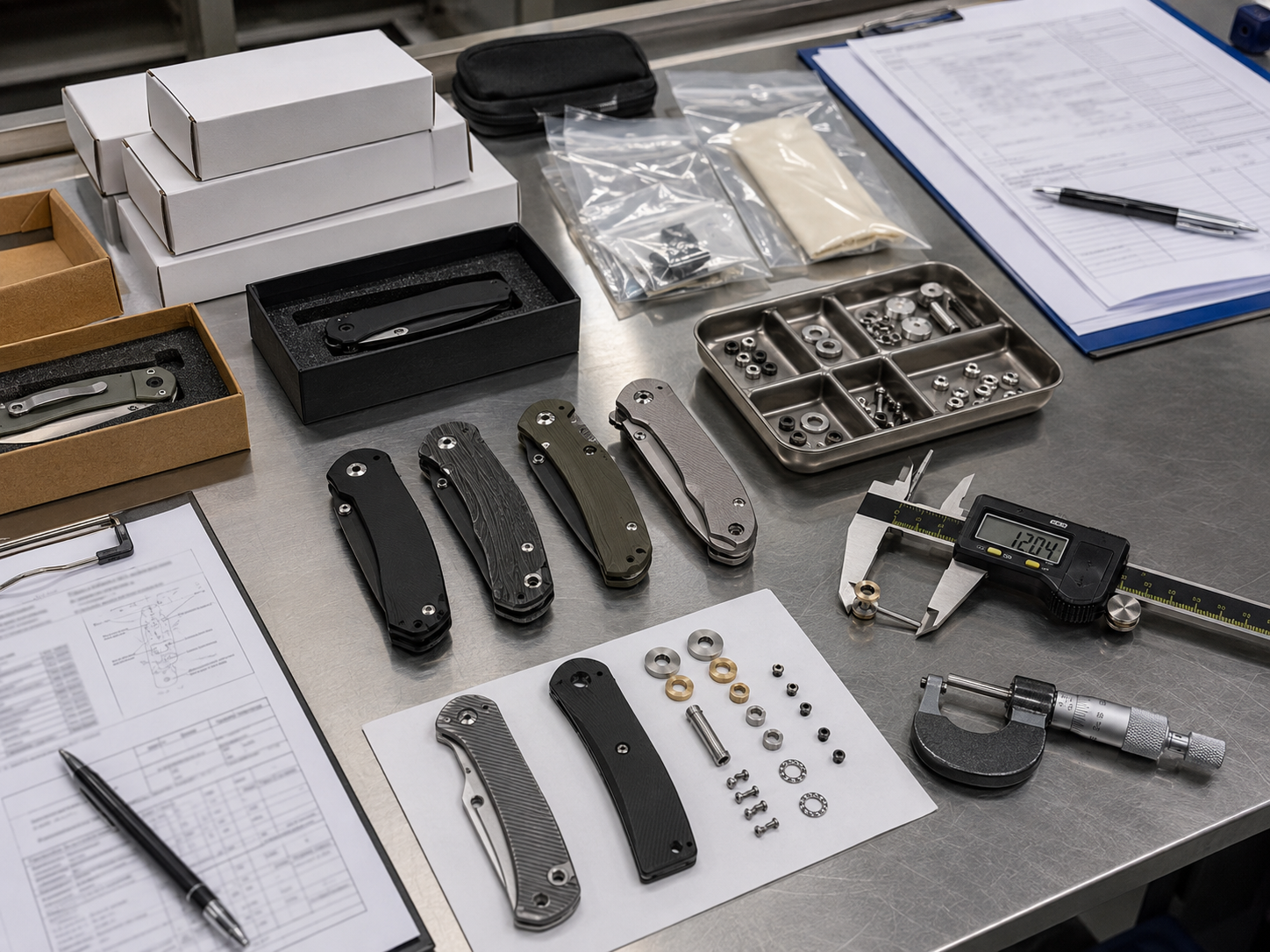
Canada is one market where I would be very careful with folding knife mechanisms. The Canada Border Services Agency memorandum on importing and exporting firearms, weapons and devices discusses prohibited knives that open automatically by gravity, centrifugal force, or pressure applied to a button, spring, or device in the handle. For a B2B buyer, this means the opening feel is not only a user-experience detail. It can become an import classification issue.
Australia also needs caution. The Australian Border Force states that some prohibited goods may be imported only with written permission and that importers are responsible for meeting Australian law. This is general guidance, but it matters because outdoor tools can cross into controlled categories depending on the exact item. New Zealand Customs gives more knife-specific warnings. Its firearms and weapons page says offensive weapons are prohibited imports without Police consent, and it lists automatic opening knives, gravity or butterfly knives, swordsticks, and knuckle-dusters as examples.
My practical advice is simple. Before tooling or mass production, buyers should send the exact mechanism, blade style, closed length, opening method, and intended market to their local compliance adviser or importer. I can help with structure suggestions, but the importer must confirm local legality.
| Country or region | Main risk to check | Buyer action before RFQ |
|---|---|---|
| Canada | Automatic, centrifugal, gravity opening risk | Review mechanism and opening behavior |
| Australia | Prohibited or restricted goods permission | Confirm import category with local party |
| New Zealand | Offensive weapon import consent | Avoid prohibited styles and get advice |
| All three | Product description and packaging tone | Use practical outdoor utility positioning |
How Should Emerging Outdoor Markets Shape Product, Price, and RFQ Details?
Emerging markets can look exciting, but a copied U.S. or European product may miss the local price, channel, or import reality.
Emerging outdoor markets should shape the RFQ around price level, climate, retail channel, packaging language, logistics, MOQ, and practical function instead of copying mature-market products.
I Build the RFQ Around the Country Plan
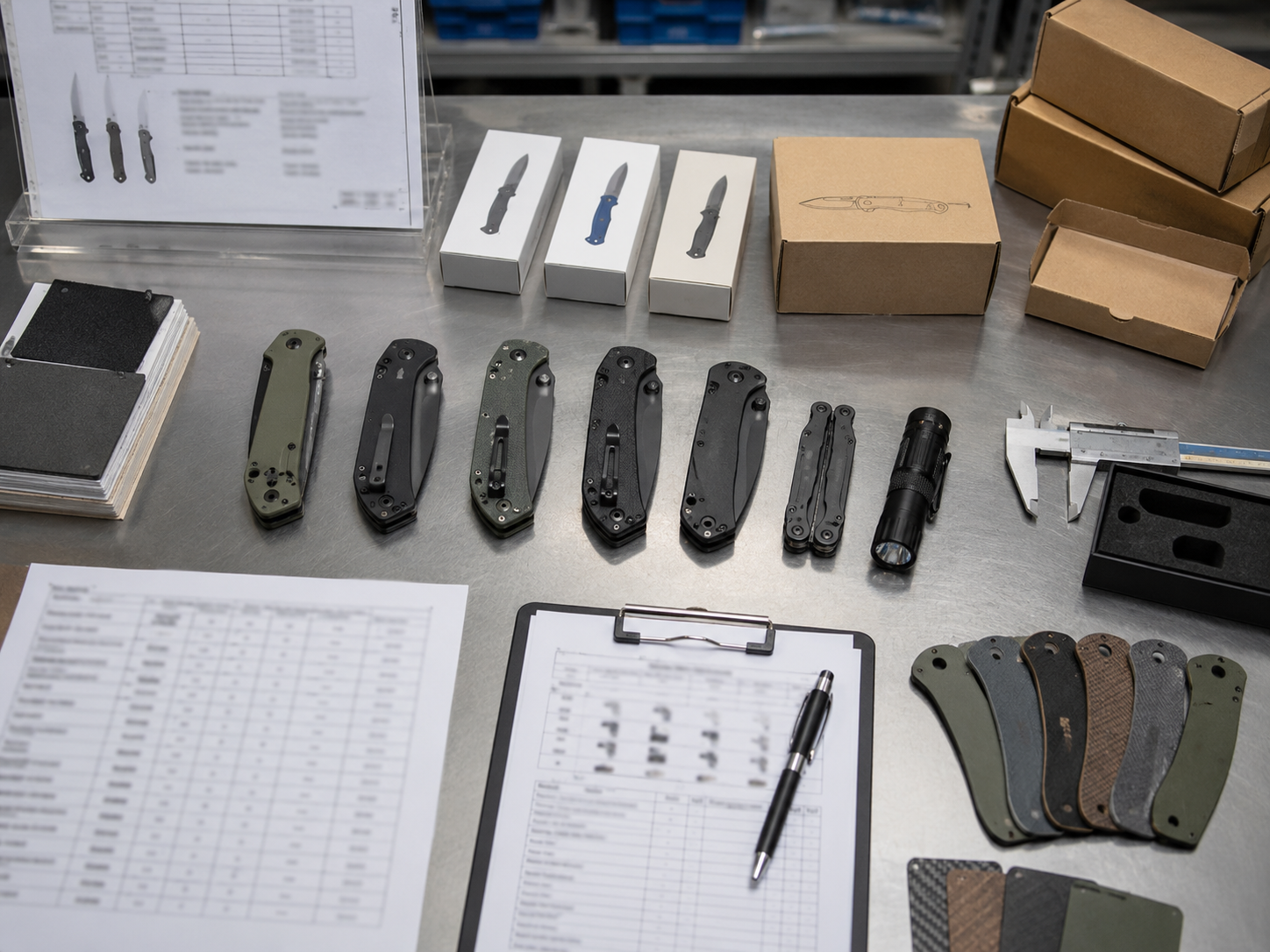
For emerging outdoor markets, I usually ask buyers to be very clear about the real channel. A product for a modern outdoor retailer is different from a product for wholesale distribution, hardware stores, promotional kits, or online marketplaces. The price range can also be more sensitive. A buyer may want a strong-looking knife, but the market may need a simpler structure, easier maintenance, lower MOQ, or more flexible packaging.
Climate can also affect product decisions. Coastal or humid markets may need better corrosion resistance. Hot markets may need handle materials that feel stable and do not look cheap after transport and storage. Markets with mixed retail education may need simple packaging and clear use positioning. I avoid legal claims in packaging. I prefer practical wording around camping, utility, maintenance, and outdoor preparation.
A good RFQ after country analysis should include target country, product type, target price, expected order quantity, blade steel preference, handle material, lock type, opening method, finish, packaging style, compliance concerns, inspection requirements, and shipping term. For OEM/ODM work, this lets me suggest a product that fits the market instead of only quoting a drawing.
| RFQ item | Why it matters | What I can help adjust |
|---|---|---|
| Target country | Rules and buyer habits differ | Structure and packaging direction |
| Target price | Controls material and process choices | Steel, handle, finish, assembly method |
| Sales channel | Retail and wholesale need different value | Packaging, MOQ, product mix |
| Compliance concern | Prevents late redesign | Mechanism, blade style, documentation |
Turn your idea into a quote-ready knife project.
Share your drawing, sample photo, target quantity, market, and packaging needs. Vast State will review manufacturability and prepare OEM/ODM options.
Conclusion
I use country analysis to connect outdoor demand with practical product design, import checks, pricing, packaging, and repeatable OEM/ODM production.
Source Notes
- BEA supports the point that U.S. outdoor recreation is broad and economically significant.
- European Commission supports the need to consider EU general product safety requirements.
- GOV.UK supports the point that UK knife import controls require product-level checking.
- CBSA supports the need to review folding knife opening mechanisms for Canada.
- Australian Border Force supports the general point that prohibited goods may require permission.
- New Zealand Customs supports the warning that some offensive weapons and knives need consent before import.
- World Bank LPI supports the logistics checklist used in country analysis.