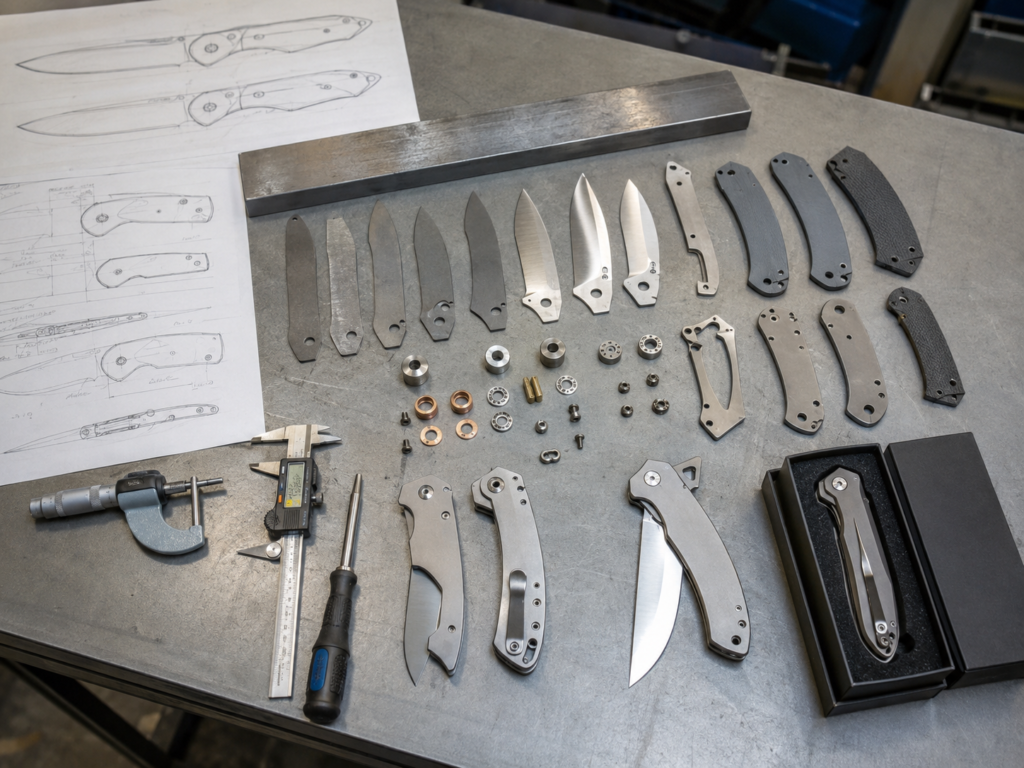
A folding knife can look finished but still fail. Small process mistakes can create poor action, weak lockup, uneven sharpness, or unstable repeat production.
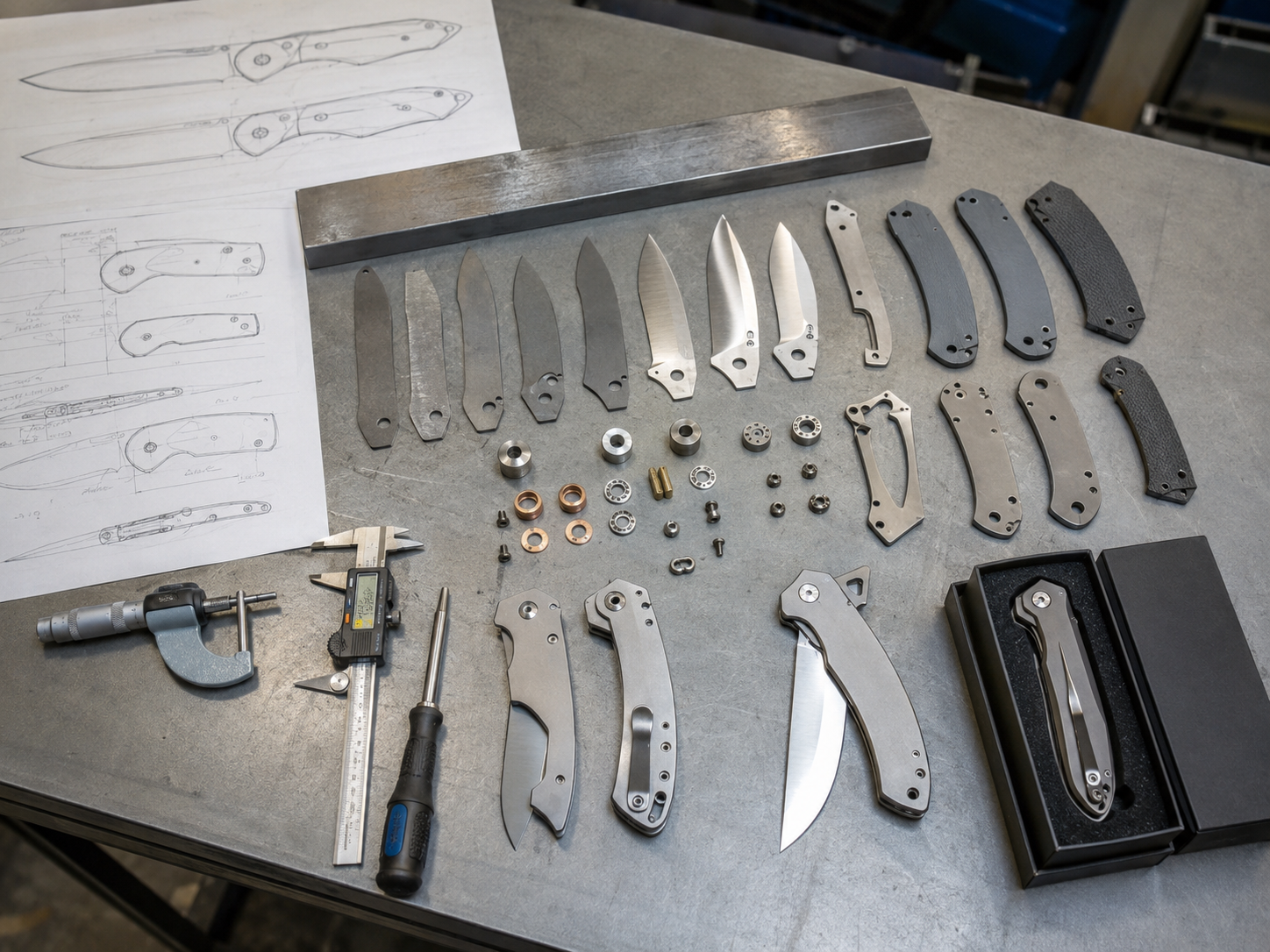
A folding knife is made through concept review, material selection, blade cutting, machining, grinding, heat treatment, handle and lock fitting, assembly, sharpening, surface finishing, quality inspection, and packaging. Each stage must control safety, function, cost, consistency, and market fit.
Quick buyer brief:
- Answer: A folding knife is built through controlled product development, precision blade work, heat treatment, assembly, finishing, and inspection.
- Buyer context: This helps knife brands, importers, wholesalers, and private label buyers understand what to check before RFQ.
- Key checks: Target market, blade steel, handle material, lock type, heat treatment, blade centering, sharpness, packaging, and final QC.
When I work on a folding knife project, I do not see one simple product. I see a chain of choices. The target market affects the blade shape. The blade steel affects heat treatment. The heat treatment affects grinding and sharpening. The lock type affects safety and assembly time. The packaging affects the buyer’s first impression. For B2B customers, the real goal is not only to make a good sample. The goal is to make a product that can be repeated in production.
Why Does the Concept Stage Decide the Whole Folding Knife Project?
A vague idea can waste time fast. The knife may look attractive, but the structure, cost, or target market may not match.
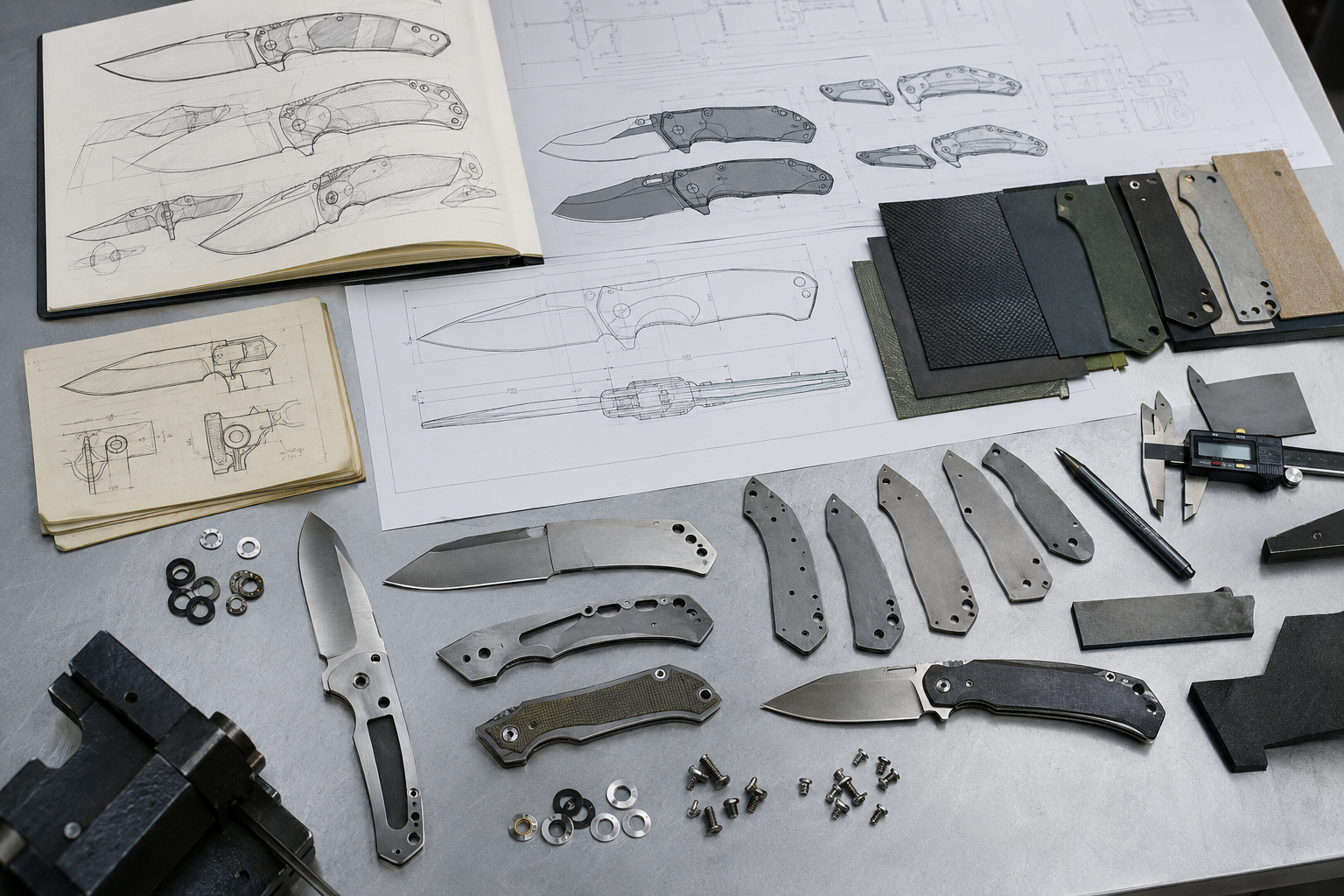
The concept stage turns a folding knife idea into a workable product direction. I check target user, price level, blade style, lock type, handle material, finish, packaging, and manufacturability before sampling.
I Start With Use, Price, and Production Reality
When a buyer sends me a folding knife idea, I first ask what the knife needs to do. A compact EDC folder, a camping knife, a fishing knife, and a rescue-style tool should not follow the same design path. The intended use affects blade shape, edge geometry, handle grip, opening method, lock strength, and packaging language. The target price also matters. A design can look strong on paper but become too expensive when we add special steel, complicated handle machining, a difficult lock, or a time-consuming finish.
I also look at the buyer’s sales channel. A private label product for retail packaging needs different visual planning from a bulk wholesale item. Some buyers already have finished drawings. Some only have a rough idea and target price. In both cases, I try to catch problems before tooling and sampling. This is where practical OEM/ODM support creates value. A clear concept stage helps us avoid a beautiful sample that cannot meet cost, MOQ, delivery, or repeat production needs.
| Concept factor | What I check | Why it matters |
|---|---|---|
| Target user | EDC, outdoor, camping, fishing, utility | It guides size, blade shape, and grip |
| Target price | Buyer margin and market position | It controls material and process choices |
| Structure | Lock type, pivot, stop pin, handle layers | It affects safety and assembly stability |
| Customization | Logo, color, finish, packaging | It supports private label positioning |
How Are Blade Steel and Handle Materials Selected?
A wrong material choice can make a knife too costly, hard to produce, or weak in real use. Material decisions must be practical.
Blade steel and handle materials are selected by balancing edge performance, corrosion resistance, toughness, weight, grip, machining time, cost, finish options, and the buyer’s target market.
I Balance Performance With the Buyer’s Market
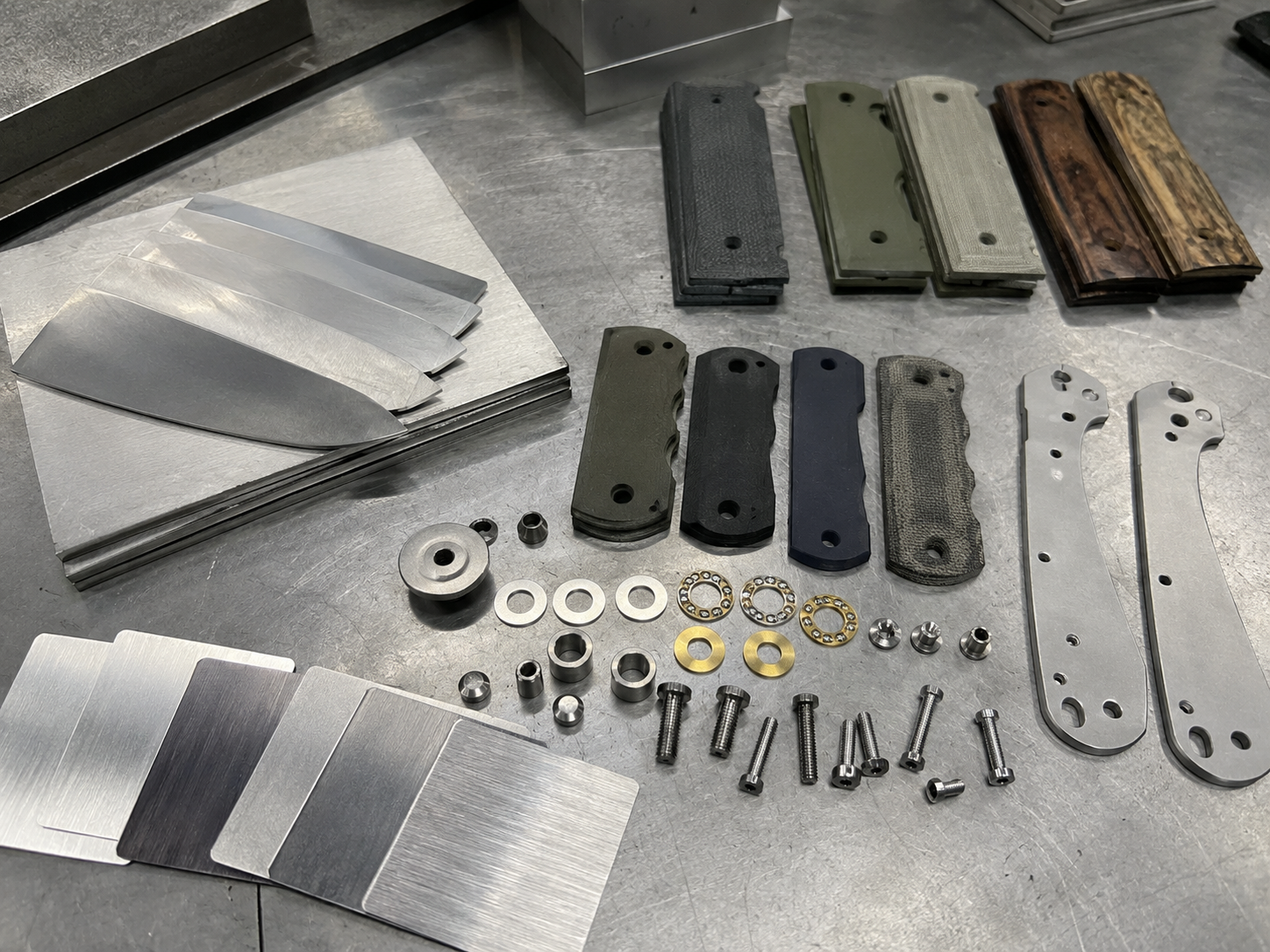
Blade steel is one of the first topics many buyers ask about. Some buyers want hardness. Some want corrosion resistance. Some want easy sharpening. Some need a lower-cost steel for a large private label order. I usually explain that steel selection should match the product’s use and price point. For example, Alleima 14C28N knife steel is described by the manufacturer as a knife steel with edge performance, hardness, and corrosion resistance, and it is used for applications such as pocket, hunting, and fishing knives. That makes it a useful reference when discussing balanced performance, but it is not the only possible choice.
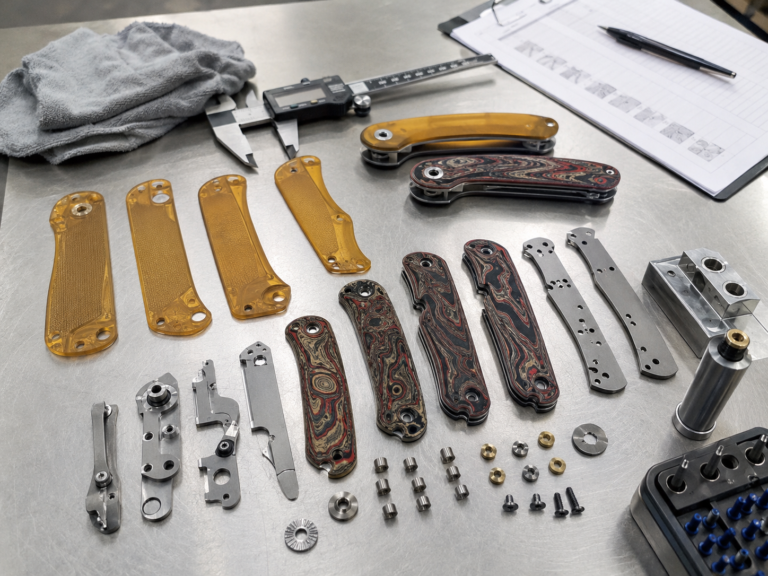
Handle material needs the same practical thinking. G10 gives grip and stable feel. Aluminum can reduce weight and give a modern look. Stainless steel can feel solid but may add weight. Wood and micarta can support a warmer style, but they need careful finishing and consistency control. Plastic or nylon-based handles can help cost-sensitive projects. I do not push the most expensive material by default. I prefer the material that fits the market, price, production method, and user expectation.
| Material choice | Main benefit | Production concern |
|---|---|---|
| Stainless blade steel | Corrosion resistance and stable use | Heat treatment must match the steel |
| Higher hardness steel | Better edge potential | Grinding and brittleness need control |
| G10 handle | Grip and strong product feel | Machining dust and edge finish matter |
| Aluminum handle | Light and clean appearance | Surface treatment must be consistent |
How Are Blade Blanks Machined, Ground, and Heat Treated?
A blade is more than a cut shape. A small error in the pivot, tang, bevel, or heat treatment can affect the whole knife.
Blade production includes profile cutting, hole processing, CNC machining, bevel grinding, heat treatment, tempering, hardness checking, and surface preparation. These steps turn steel into a working blade.
I Treat the Blade as a Precision Moving Part
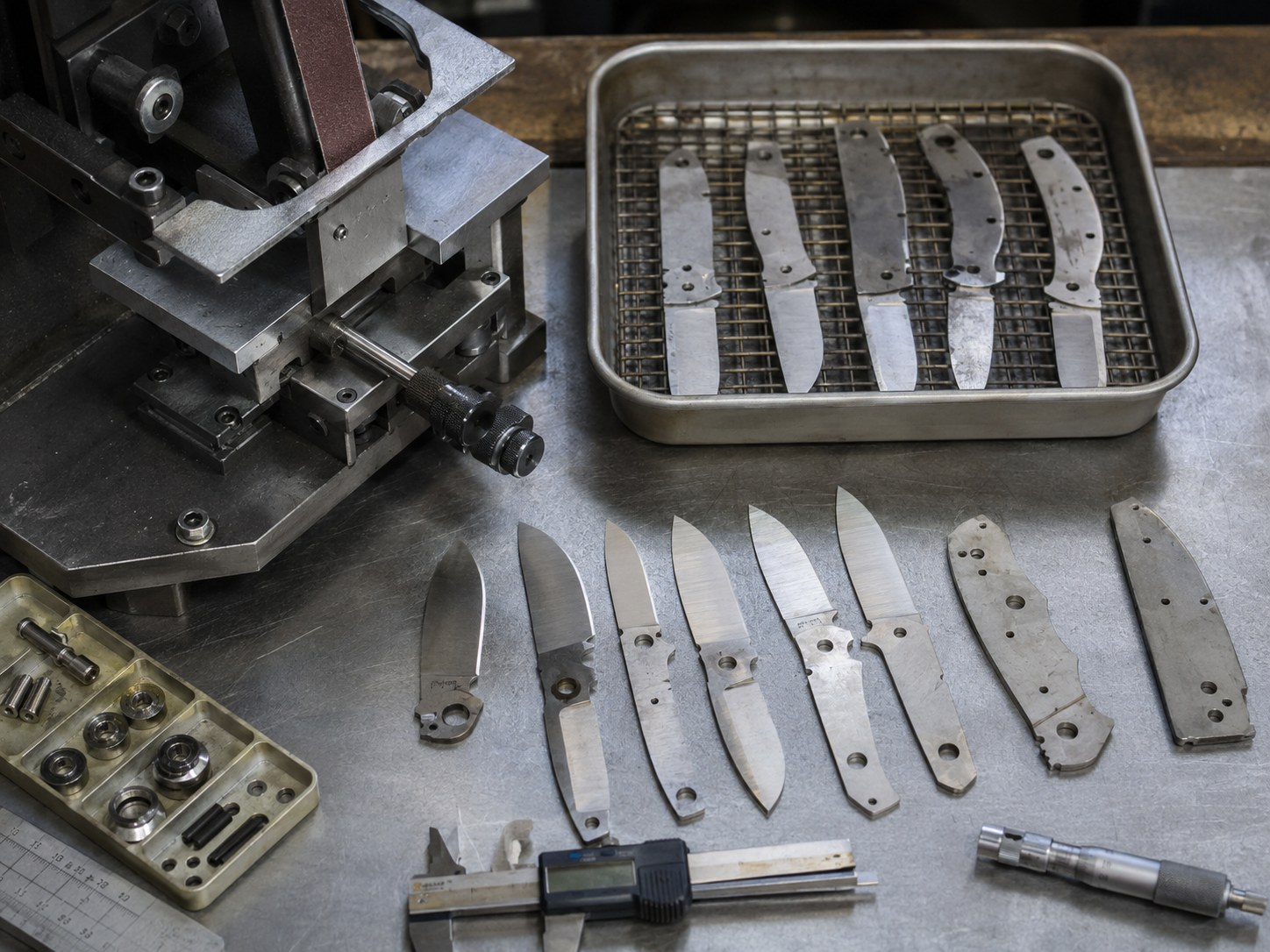
A folding knife blade must cut, but it must also rotate, stop, lock, and close safely. That is why blade processing needs tighter thinking than a simple fixed shape. The pivot hole must be accurate. The tang must match the lock face. The stop area must be controlled. The blade spine and tip must sit safely inside the handle when closed. If these details drift, the final knife may have blade play, poor centering, rough opening, or weak lock engagement.
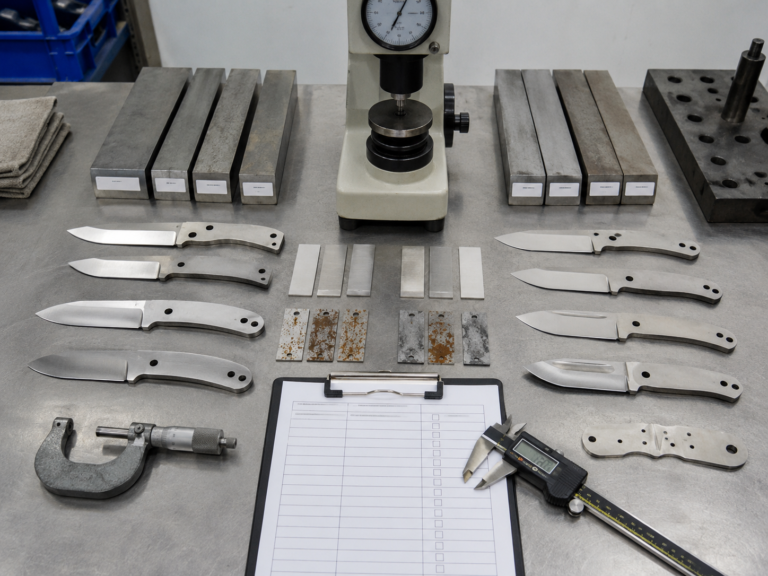
After cutting and machining, bevel grinding shapes the cutting geometry. Grinding should be even, clean, and controlled. Too much heat during grinding can damage the edge area or affect appearance. Heat treatment is another key stage. Alleima explains that hardening and tempering help balance hardness, toughness, corrosion resistance, grindability, and sharpness retention in knife steel. In production, I treat heat treatment as a process that must be matched to the steel grade, blade thickness, and target use. After heat treatment, hardness checking helps confirm that the blade is within the planned range. A hardness number alone is not the whole knife, but it is an important process signal.
| Blade process | Purpose | Key control point |
|---|---|---|
| Profile cutting | Creates the blade outline | Shape accuracy and clean edges |
| Hole machining | Prepares pivot and hardware points | Position, diameter, and tolerance |
| Bevel grinding | Forms cutting geometry | Symmetry and heat control |
| Heat treatment | Builds working blade properties | Steel grade, temperature, tempering |
How Are the Lock, Pivot, Handle, and Assembly Fitted?
Good materials cannot save a poor mechanism. If the lock, pivot, or handle fit is wrong, the user feels it immediately.
Lock fitting and assembly control blade centering, opening smoothness, lockup, closing feel, side play, screw stability, and the overall user experience of the folding knife.
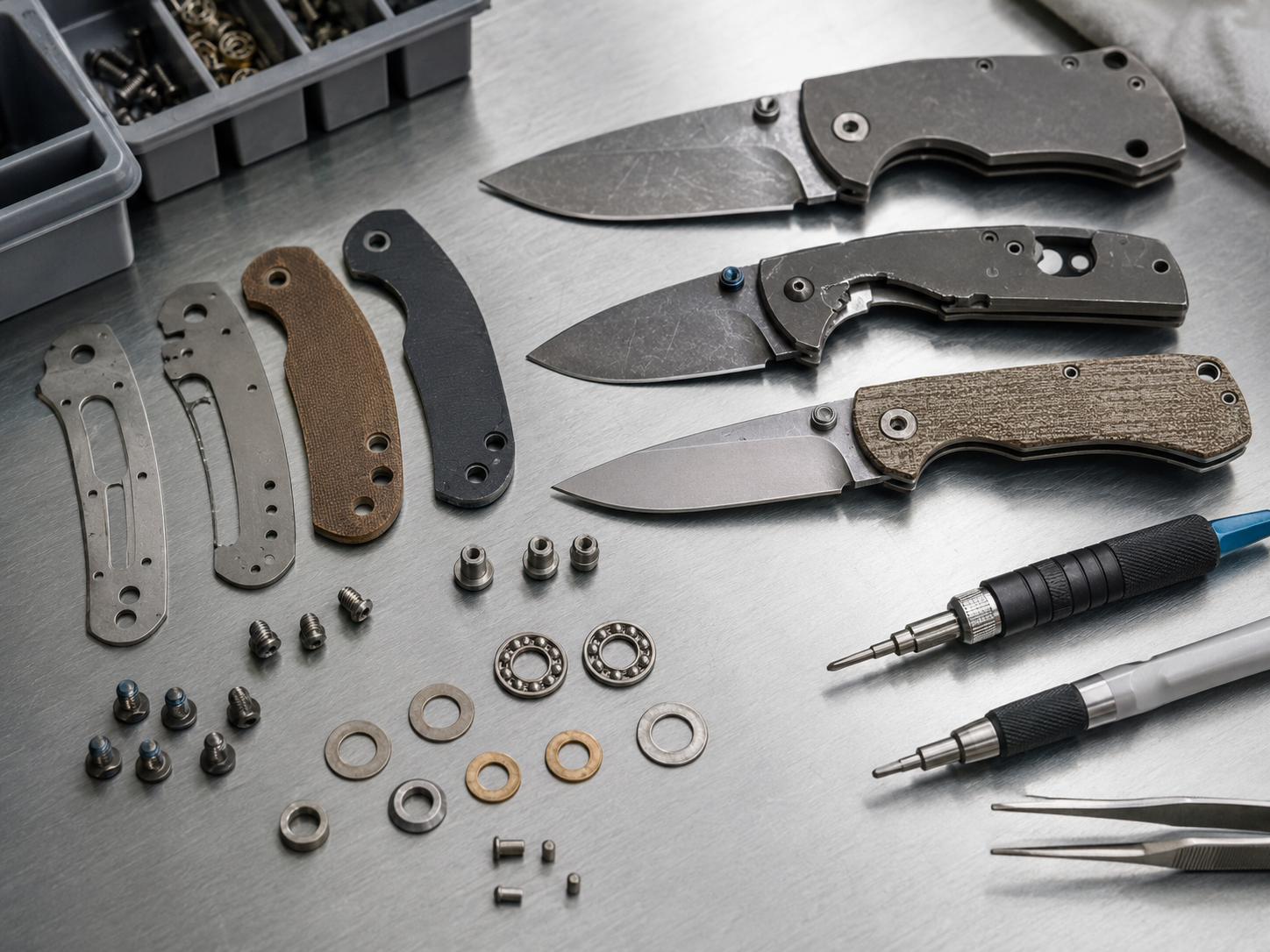
I Build the Knife Around Controlled Movement
The folding mechanism is where many hidden production problems appear. A buyer may notice the steel and handle first, but the user will judge the knife by how it opens, locks, closes, and carries. The pivot screw, washer or bearing, liner, handle scale, stop pin, blade tang, and lock surface must all work together. If one part is not controlled, the final knife may feel loose, stiff, off-center, or unsafe.
Different lock types also need different production attention. A liner lock, frame lock, back lock, button lock, or crossbar-style lock has its own geometry and assembly method. I check lock engagement, release feeling, blade centering, side play, and closing safety. I also think about production repeatability. A mechanism that needs too much hand adjustment may be risky for larger orders. It can slow assembly, raise cost, and create inconsistent user feel.
For B2B buyers, I suggest confirming the mechanism early in the RFQ. The buyer should provide the target market, lock preference, opening method, blade size, handle material, finish, and expected quality level. That lets the factory suggest a structure that can be produced steadily.
| Assembly detail | User-facing result | Production focus |
|---|---|---|
| Pivot fit | Smooth opening and closing | Tension, alignment, washer or bearing fit |
| Lock contact | Safe lockup | Stable lock face and engagement |
| Blade centering | Better perceived quality | Balanced handle and blade geometry |
| Screw assembly | Long-term stability | Thread quality and torque control |
How Do Sharpening, Finishing, Inspection, and Packaging Protect the Order?
A knife can pass assembly but still disappoint buyers. Uneven edges, scratches, loose screws, and weak packaging can damage repeat orders.
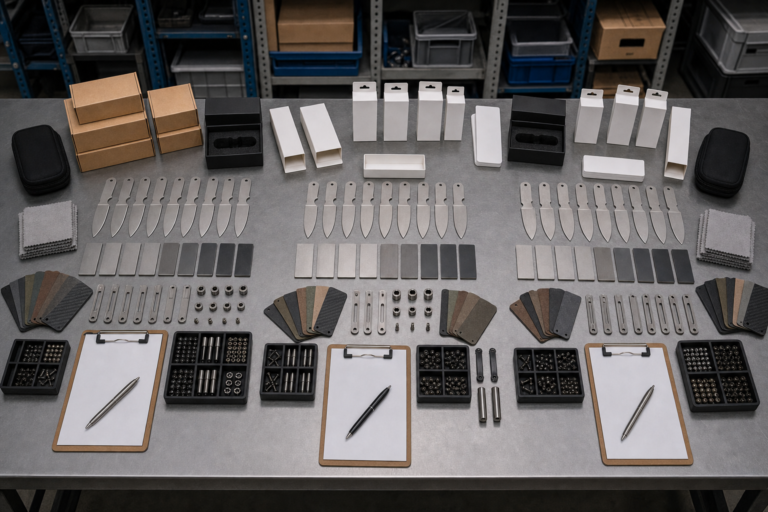
Sharpening, finishing, inspection, and packaging confirm that the folding knife is sellable. I check edge quality, appearance, action, lockup, blade centering, hardware, branding, and carton protection.
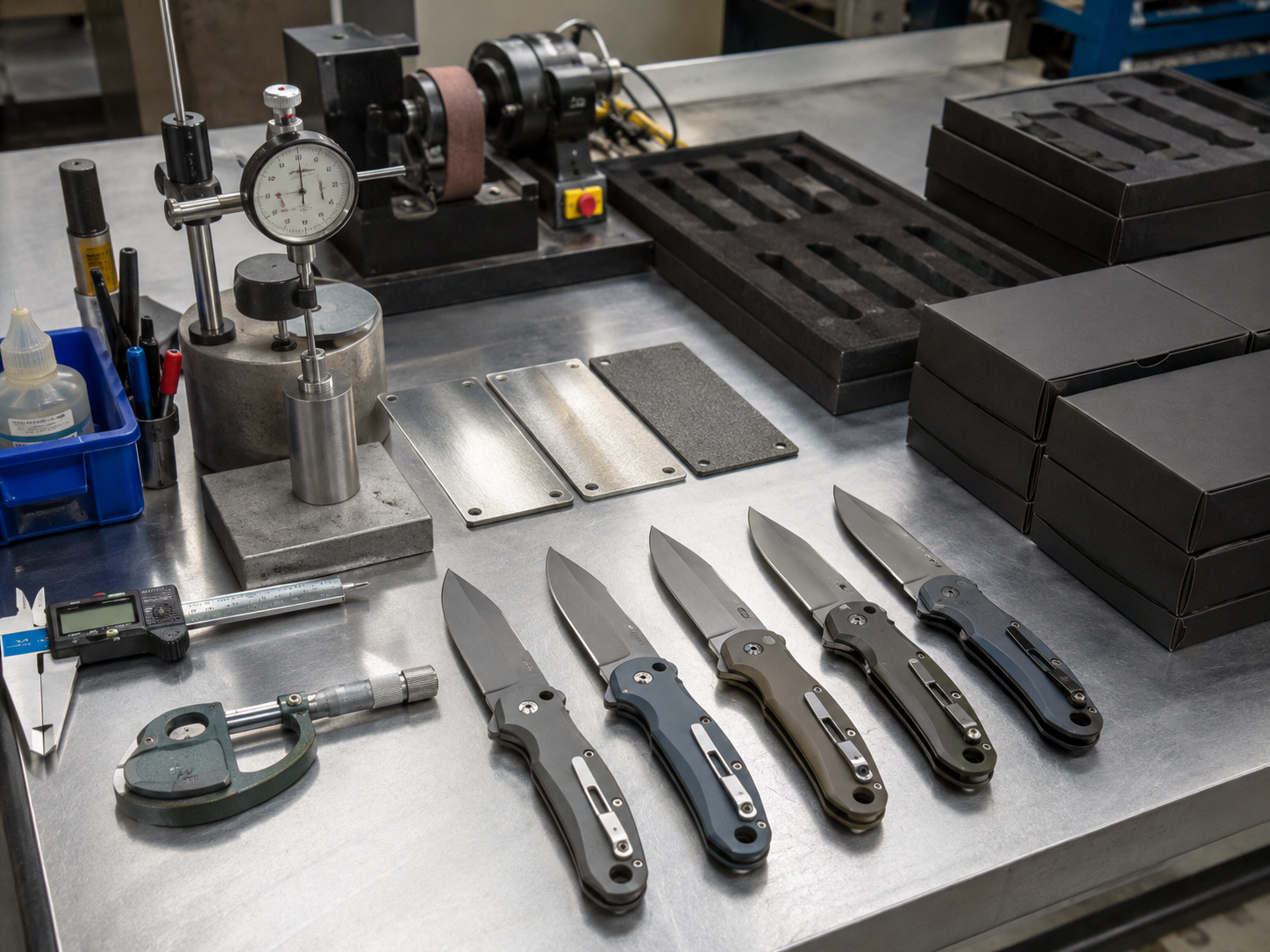
I See Final QC as Customer Protection
The last stage is where the product must prove itself. Sharpening should be even and suitable for the product’s use. Surface finishing should match the approved sample. Satin, stonewash, bead blast, coating, anodizing, and polishing all need visual consistency. The handle should feel clean. The screws should sit properly. The blade should open and close correctly. The lock should engage safely. The blade should center well enough for the product level. The packaging should protect the knife and match the buyer’s branding plan.
I also believe final inspection should not be the only quality step. A good factory checks incoming material, blade processing, heat treatment, assembly, finishing, and packing. The NIST Rockwell hardness guide explains why good measurement practice matters for reducing hardness testing errors. The ISO 9001:2015 page also shows why quality management should focus on processes, customer expectations, and continual improvement. I do not use these references as decoration. I use them to remind buyers that stable quality comes from controlled steps, not only from a final look.
| Quality stage | What I check | Why it protects buyers |
|---|---|---|
| Incoming inspection | Steel, handle material, screws, packaging | Prevents weak inputs |
| In-process inspection | Machining, hardness, fit, finish | Finds problems earlier |
| Functional inspection | Opening, closing, lockup, blade play | Protects safety and user feel |
| Final packaging check | Branding, inserts, carton protection | Supports sellable delivery |
Conclusion
A folding knife becomes reliable when every stage is controlled, from concept and steel choice to heat treatment, assembly, inspection, and packaging.
Source Notes
- Alleima 14C28N supports the material discussion about knife steel performance, hardness, and corrosion resistance.
- Alleima hardening and tempering supports the heat treatment explanation.
- NIST Rockwell hardness guide supports the point that hardness testing needs good measurement practice.
- ISO 9001:2015 supports the process-based quality management discussion.