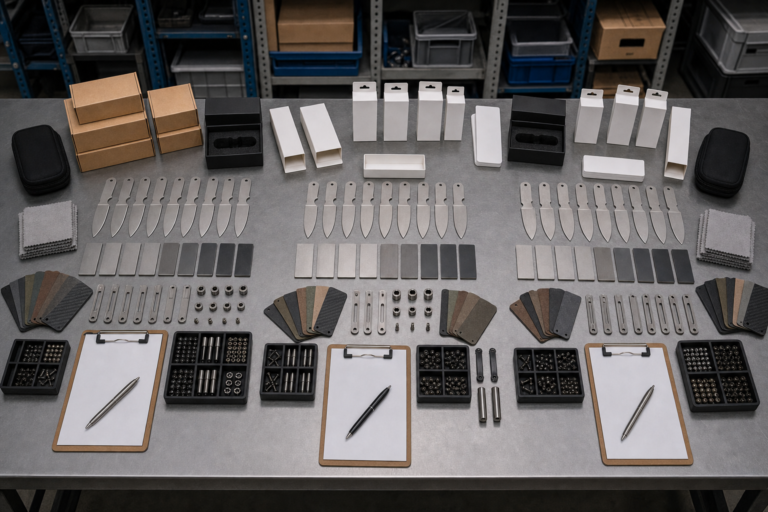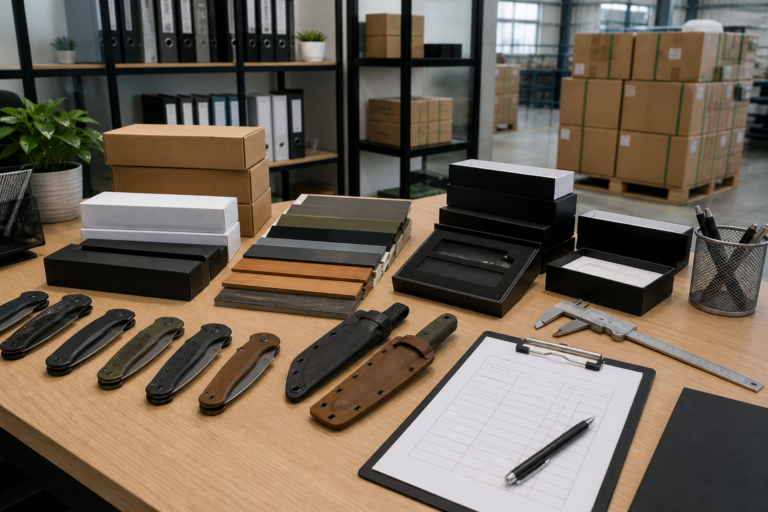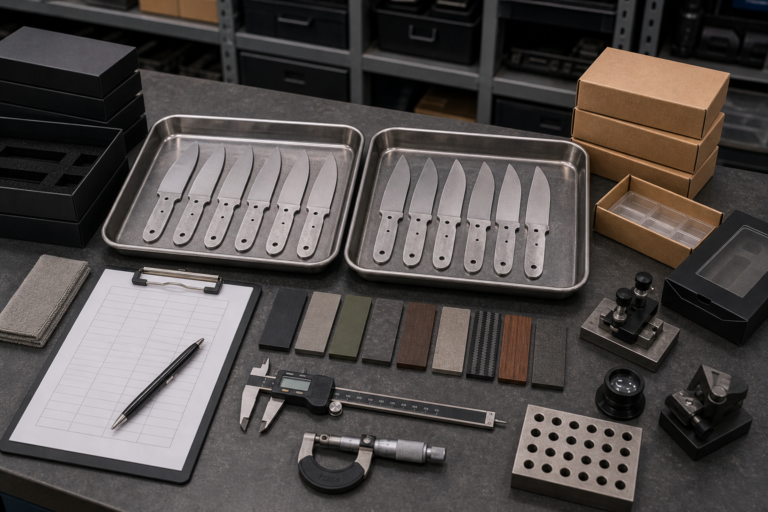
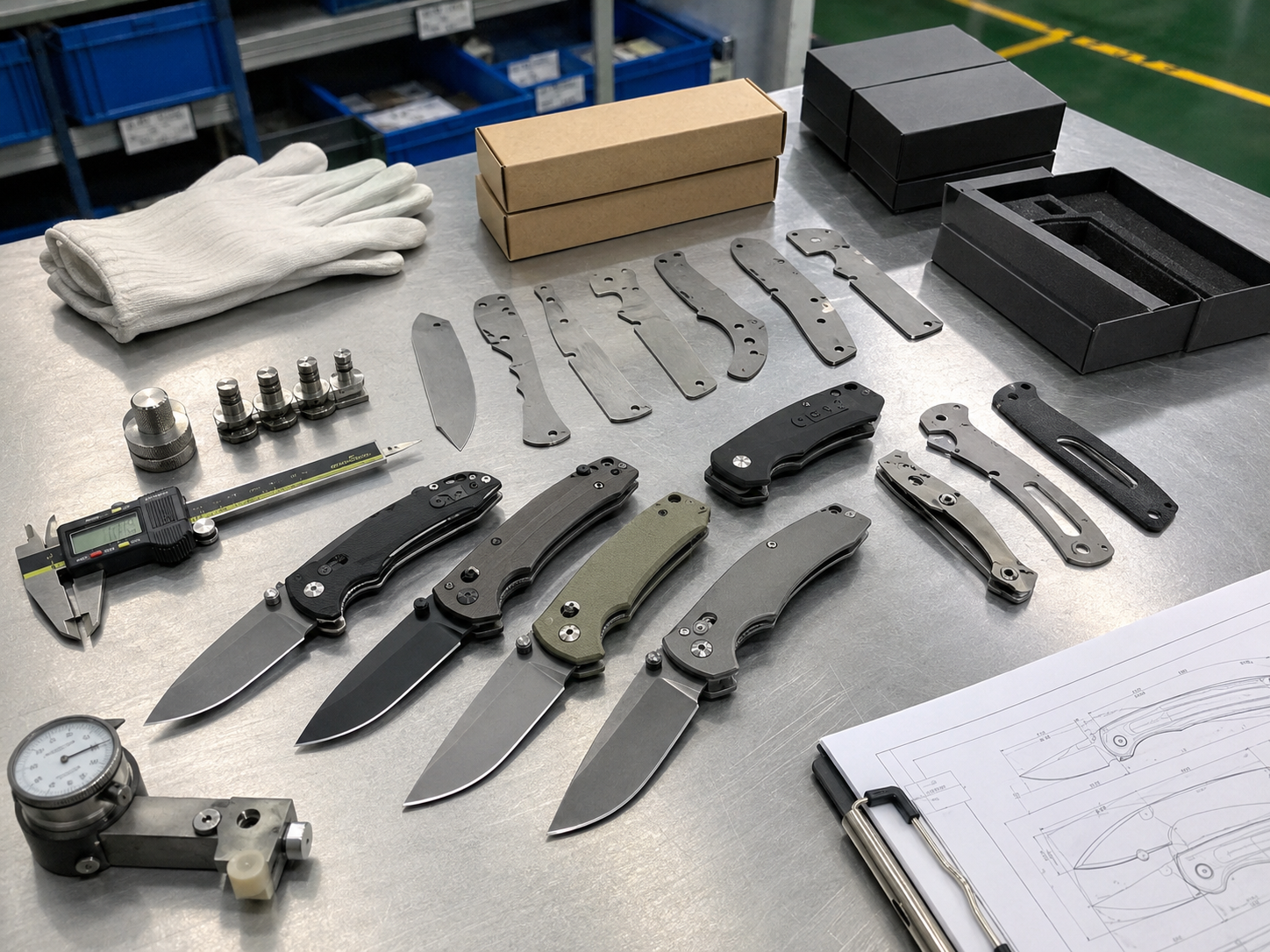
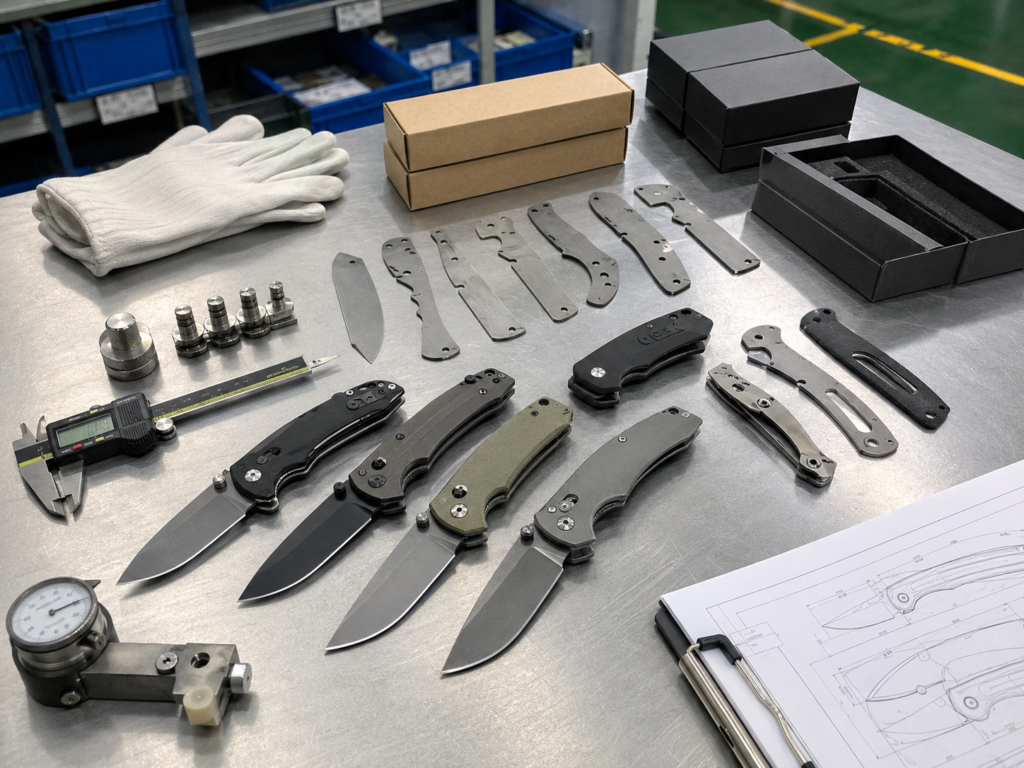
A folding knife may look good in photos. But hidden defects can hurt safety, function, and repeat orders. I check problems before shipment.
Developing a folding knife line for your brand?
Vast State supports OEM/ODM folding knife projects, including blade steel, lock structure, handle material, finish, logo method, packaging, and quality inspection planning.
Common folding knife deficiencies include blade play, poor centering, weak lockup, rough opening, uneven grinding, poor heat treatment, dull edges, loose screws, finish defects, and packaging problems. Buyers can reduce them with clear specifications, sample approval, in-process checks, and final inspection.
When I review folding knife quality, I do not only look at the surface. I check how the knife moves, locks, cuts, feels, and repeats across the order. For B2B buyers, small defects can become big problems after the product reaches the market. This is why I treat deficiency control as part of product development, not only final inspection.
Which Structural Defects Affect Folding Knife Function?
A folding knife is a moving tool. If the structure is not controlled, the user can feel the problem immediately.
Structural deficiencies include blade play, poor centering, weak lockup, lock stick, rough opening, unsafe closing, and uneven pivot tension.
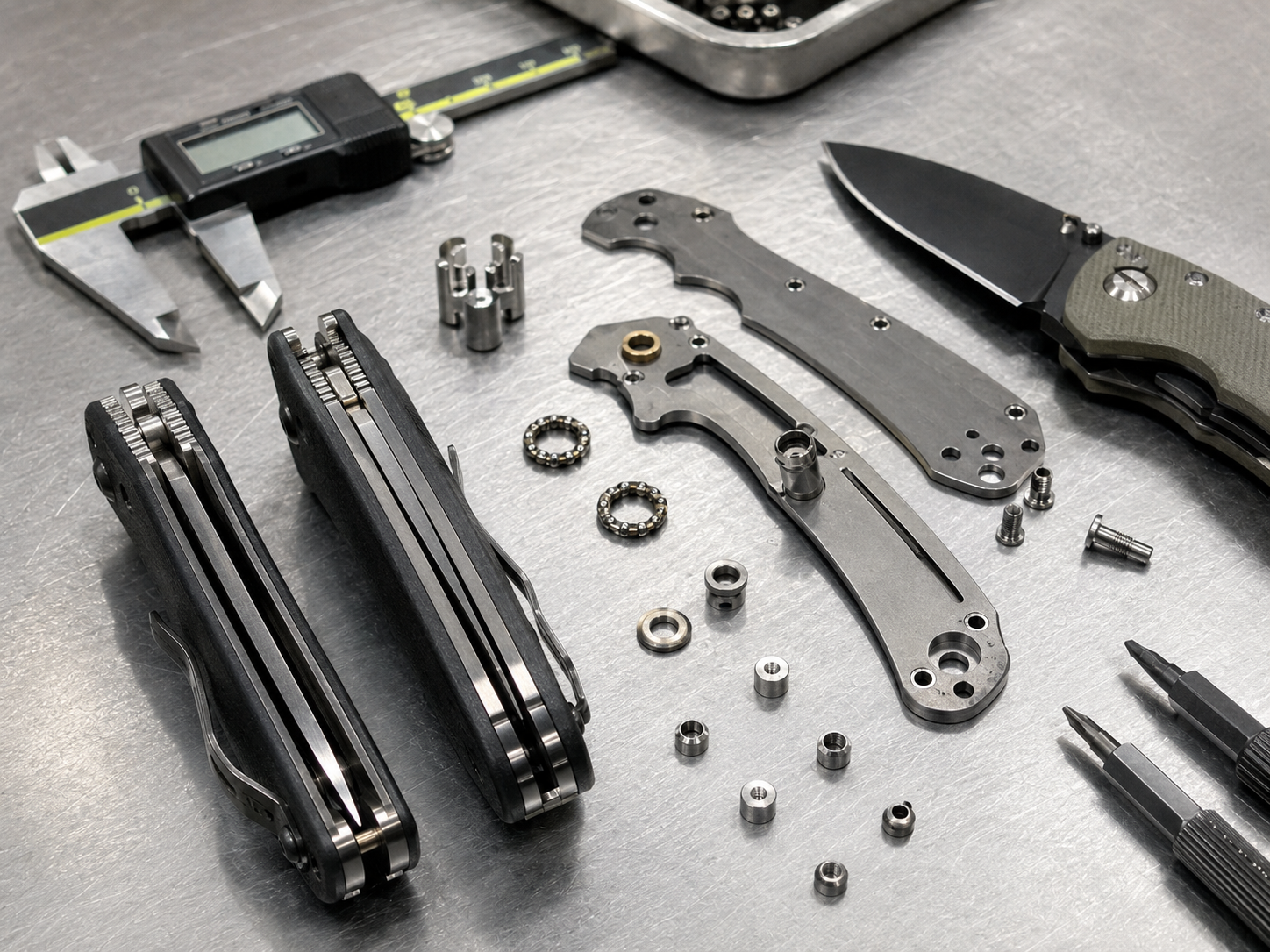
I Check Movement Before Appearance
A folding knife can have a nice finish and still feel poor in the hand. The most common structural problems often appear during opening and closing. Blade play is one of them. It happens when the blade moves side to side or up and down after assembly. Poor centering is another common issue. The blade may sit too close to one handle scale when closed.
Lockup also matters. If the lock does not engage firmly, the product feels unsafe. If the lock sticks too much, the user may find it hard to close. If the pivot tension is too tight, the opening action feels rough. If it is too loose, the blade may shake. These problems are usually linked to tolerance, part fit, screw tension, and assembly control.
At Vast State, I prefer to catch these problems before mass production. A sample may pass visually, but a production order needs repeatable function. That means the structure must be easy enough to assemble and stable enough to repeat.
| Deficiency | What the user feels | Common cause |
|---|---|---|
| Blade play | Loose or unstable blade | Pivot fit, washer, liner, or tolerance issue |
| Poor centering | Blade leans when closed | Uneven handle or pivot alignment |
| Weak lockup | Low confidence in use | Lock geometry or contact surface issue |
| Rough opening | Poor user experience | Pivot tension, burrs, or dirty assembly |
OEM/ODM RFQ Checklist
Prepare these details to help Vast State review your project and provide a more accurate quotation.
| RFQ Field | What to Prepare |
|---|---|
| Project type | OEM from drawing / ODM private label / wholesale catalog |
| Product category | Folding knife / fixed blade / multi-tool / outdoor tool |
| Design status | Idea / sketch / 2D drawing / 3D CAD / physical sample |
| Target price | Ex-factory target price or retail price range |
| MOQ expectation | 500 / 1,000 / 3,000 / 5,000+ pcs |
| Logo method | Laser engraving / etching / printing / molded logo |
| Packaging | Standard packaging / custom retail box / Amazon-ready |
| Market | USA / EU / Japan / Korea / Middle East / other |
| Compliance needs | Buyer-specified testing / documentation / labeling |
| Timeline | Sample deadline / mass production deadline |
Why Do Blade and Heat Treatment Problems Matter?
A blade can look sharp but still perform poorly. Weak steel control can create dull edges, chips, warping, or unstable hardness.
Blade-related deficiencies include poor grinding, uneven bevels, burrs, weak tips, poor hardness control, warping, and edge damage after finishing.
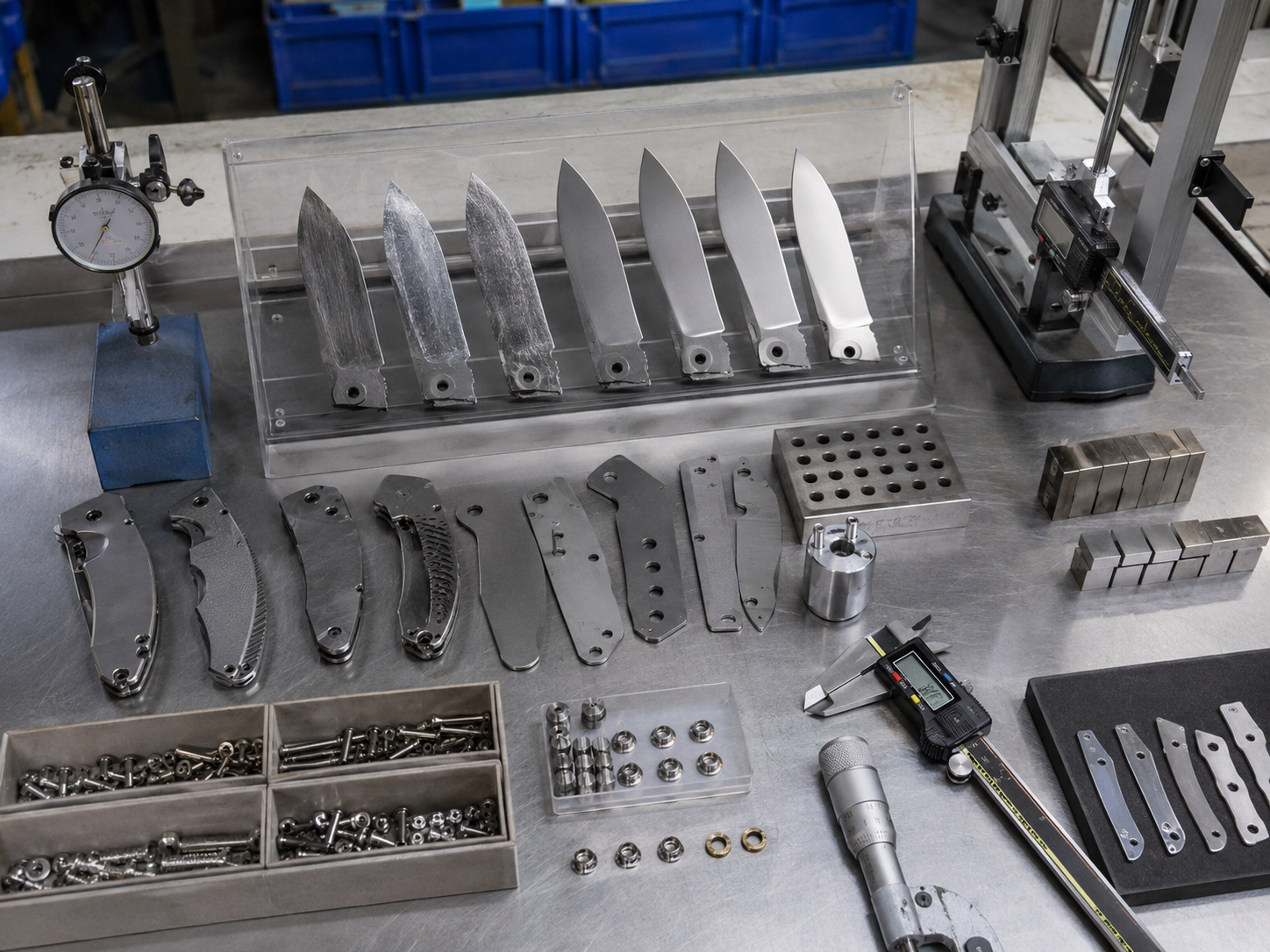
I Treat the Blade as the Core of the Product
The blade is where many buyers focus first, and for good reason. A folding knife with poor blade quality can damage the product’s reputation quickly. Common blade deficiencies include uneven bevels, thick edges, burrs, poor tip finish, visible grinding marks, and surface scratches. Some issues affect appearance. Others affect cutting performance.
Heat treatment is more hidden, but it is just as important. If hardness is too low, the edge may wear too quickly. If hardness is too high without enough toughness, the edge may chip more easily. Alleima explains the purpose of hardening and tempering knife steel as a balance between hardness, toughness, and corrosion resistance. That balance is exactly what I watch in production.
Hardness testing also needs good practice. The NIST guide to Rockwell hardness measurement explains why measurement errors can happen. For B2B orders, stable hardness matters because one good sample is not enough. The full batch must stay consistent.
| Blade issue | Why it matters | What I check |
|---|---|---|
| Uneven bevel | Poor cutting feel and appearance | Grinding angle and symmetry |
| Burrs | Rough edge and lower perceived quality | Edge finishing and sharpening |
| Warping | Poor fit and blade centering problems | Heat treatment and straightening |
| Hardness variation | Unstable performance | Heat treatment records and testing |
How Do Handle, Hardware, and Assembly Defects Appear?
Small parts can create big problems. A loose screw or uneven handle gap can make the whole knife feel cheap.
Handle and hardware deficiencies include loose screws, stripped threads, sharp handle edges, uneven gaps, mismatched parts, poor clip fit, and weak assembly control.
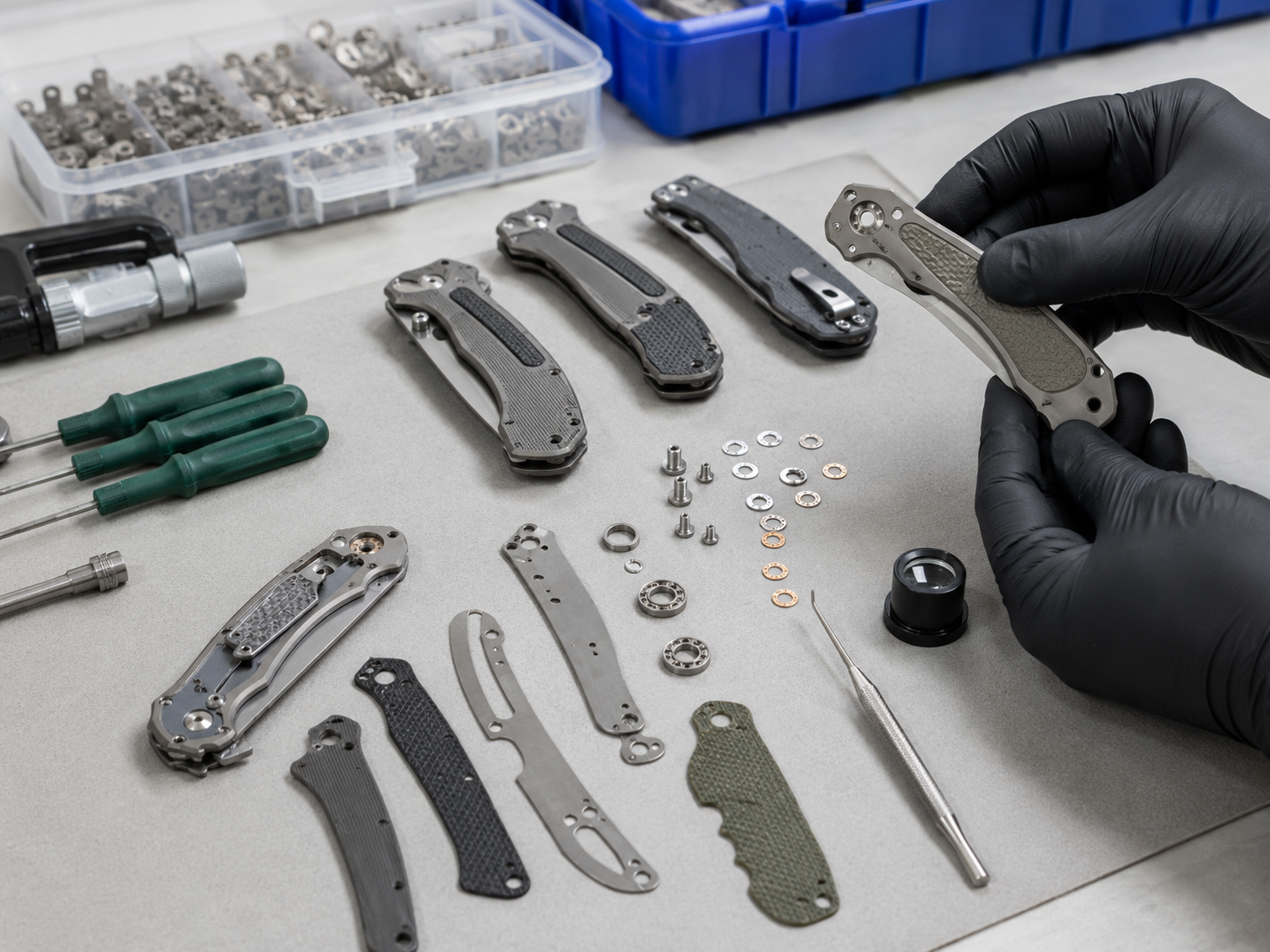
I Look at the Small Parts That Buyers Often Miss
A folding knife depends on many small components. The handle scales, liners, screws, clips, washers, bearings, and spacers all need to work together. If one part is not controlled, the user may feel the problem before noticing it visually.
Loose screws are common when torque control is weak. Stripped threads can happen when hardware quality or assembly method is poor. Sharp handle edges can make the knife uncomfortable. Uneven gaps can make the product look low quality. A poorly fitted pocket clip can reduce user satisfaction, especially for EDC products.
I also check the match between material and structure. For example, aluminum handles need stable surface treatment. G10 handles need clean machining. Stainless liners need accurate alignment. If a customer wants custom colors, coatings, or logo work, I check how those choices affect assembly and finish.
For private label buyers, these small details matter. Their customer may not know the technical reason behind a defect. But they will know the product does not feel right.
| Assembly detail | Common defect | Practical control |
|---|---|---|
| Screws | Loose or stripped | Torque control and hardware check |
| Handle scales | Uneven gaps or sharp edges | Machining and finishing control |
| Pocket clip | Poor fit or weak tension | Clip shape and screw fit check |
| Washers or bearings | Rough action | Clean assembly and correct fit |
What Finishing and Packaging Defects Hurt Product Value?
A knife can function well but still fail the buyer’s expectations. Scratches, color variation, and poor packaging hurt perceived value.
Finishing and packaging deficiencies include scratches, coating defects, uneven colors, dirty parts, poor logo placement, weak boxes, and inconsistent packing.
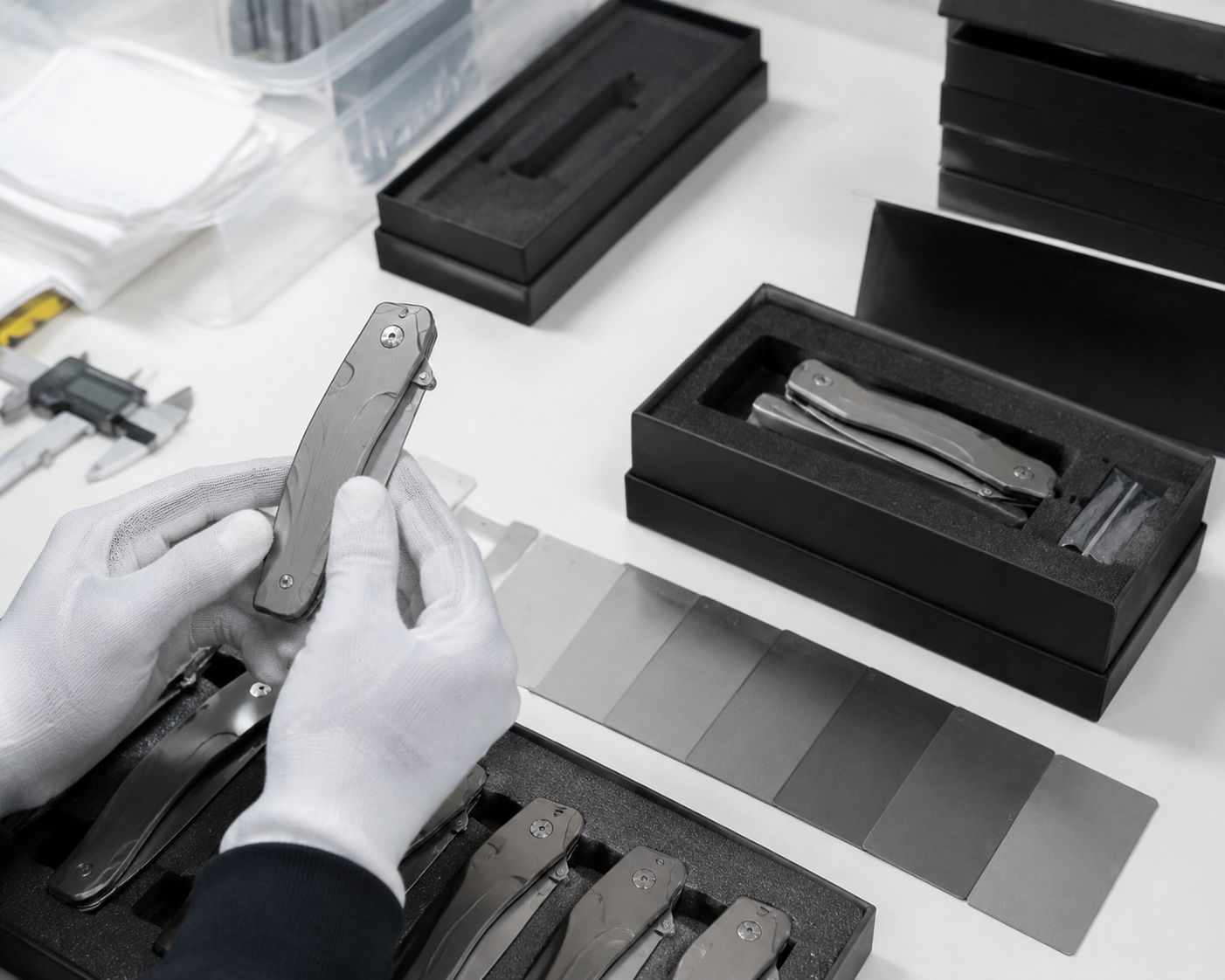
I Treat Appearance as Part of Quality
Some buyers focus mainly on function. I understand that. But for retail and brand products, appearance is also quality. A scratch on the blade, uneven coating, color difference on handles, dirty oil marks, or poor logo position can make the knife feel less valuable.
Surface finish must match the approved sample. Stonewash, satin, bead blast, coating, anodizing, and polishing all need process control. If the finish is too different from the sample, the buyer may face complaints even if the knife works well. This is especially important for brand owners and private label buyers.
Packaging also matters. A weak box may be damaged during shipping. A loose insert may let the knife move inside the package. Poor packing can create scratches before the buyer even receives the goods. For importers, wholesalers, and distributors, packaging defects can create extra sorting work and delay delivery.
I prefer to check finishing and packaging before shipment. It is easier to correct problems at the factory than after the goods arrive overseas.
| Area | Common deficiency | Why buyers care |
|---|---|---|
| Blade finish | Scratches, stains, uneven surface | It affects shelf appeal |
| Handle finish | Color difference or rough edges | It affects perceived quality |
| Logo work | Wrong position or unclear mark | It affects branding |
| Packaging | Weak box or poor protection | It affects delivery condition |
How Can B2B Buyers Prevent Folding Knife Deficiencies?
Defects are easier to prevent than repair. If buyers only inspect at the end, many problems are already expensive.
Buyers can prevent folding knife deficiencies with clear specifications, approved samples, incoming checks, in-process control, functional tests, AQL inspection, and stable supplier communication.
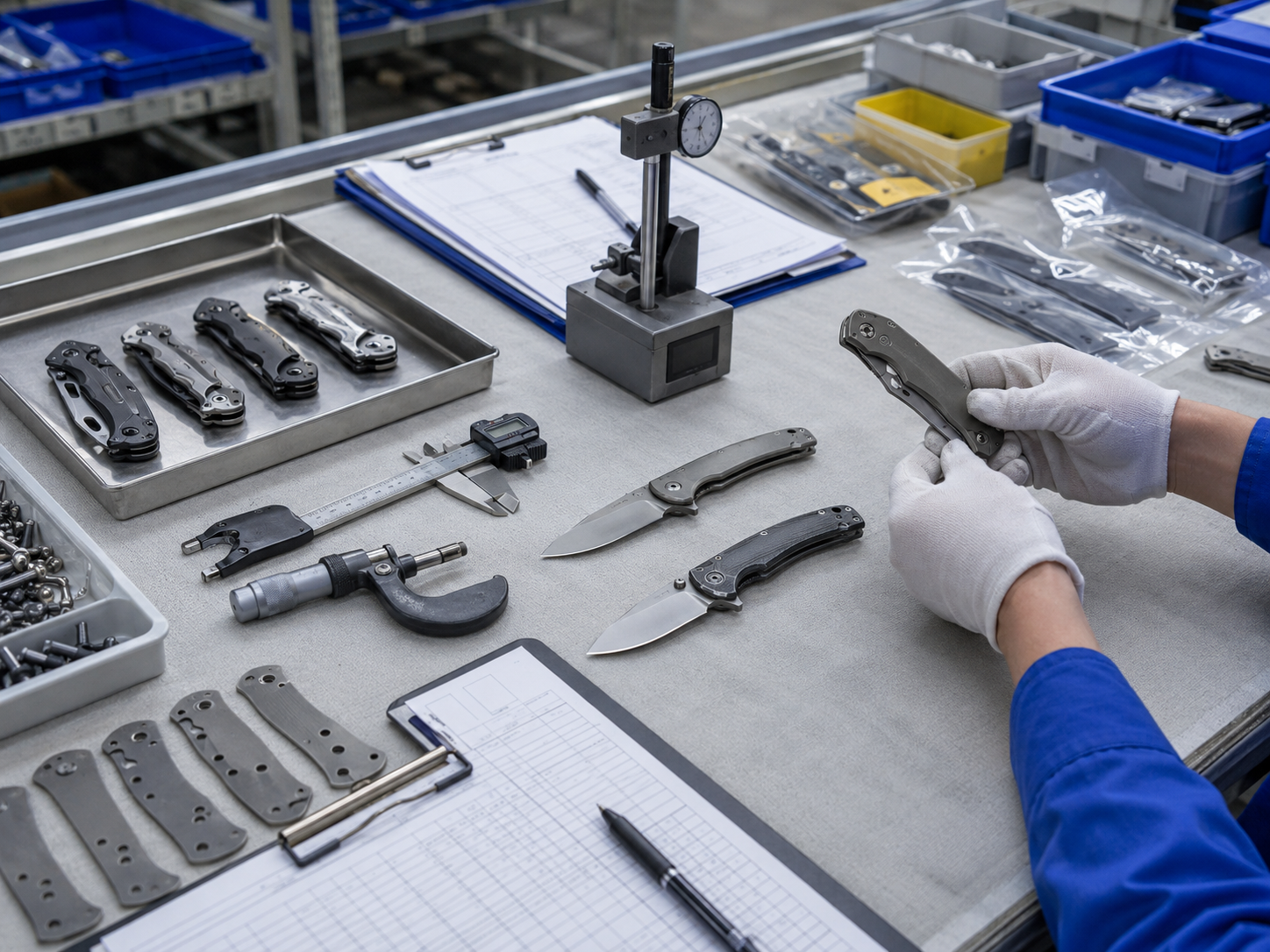
I Build Defect Prevention Into the Process
The best way to reduce deficiencies is to control the process early. I start with a clear specification. The buyer and supplier should agree on steel, hardness target, handle material, finish, lock type, logo, packaging, function tests, and acceptable appearance level. The approved sample should become the reference for production.
Then the factory needs checks at different stages. Incoming inspection checks steel, handle materials, screws, and packaging. In-process inspection checks machining, heat treatment, grinding, finish, and assembly. Final inspection checks function, appearance, sharpness, packaging, and order consistency.
For batch inspection, buyers may use references such as ISO 2859-1 sampling procedures. For factory management, ISO 9001 quality management is useful because it focuses on stable processes, customer requirements, and continual improvement.
I also believe communication is part of quality control. If a supplier can explain problems early, suggest practical solutions, and follow up during production, the buyer faces fewer surprises. For long-term B2B cooperation, this is often more valuable than only a low price.
| Prevention step | What it controls | Buyer benefit |
|---|---|---|
| Clear specification | Materials, structure, finish, packaging | Fewer misunderstandings |
| Approved sample | Final reference standard | Better production alignment |
| In-process checks | Problems before final assembly | Lower rework risk |
| Final inspection | Function, appearance, packing | Better shipment confidence |
Turn this article into a folding knife project.
Share your blade type, lock direction, steel preference, handle material, quantity, target market, and packaging needs. Vast State can prepare OEM/ODM options.
Conclusion
I prevent folding knife deficiencies by controlling structure, blade quality, assembly, finishing, packaging, and inspection before the product reaches the buyer.