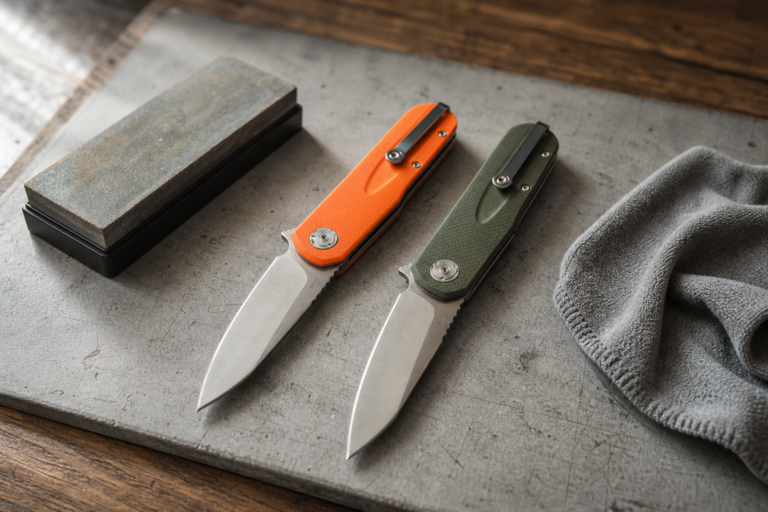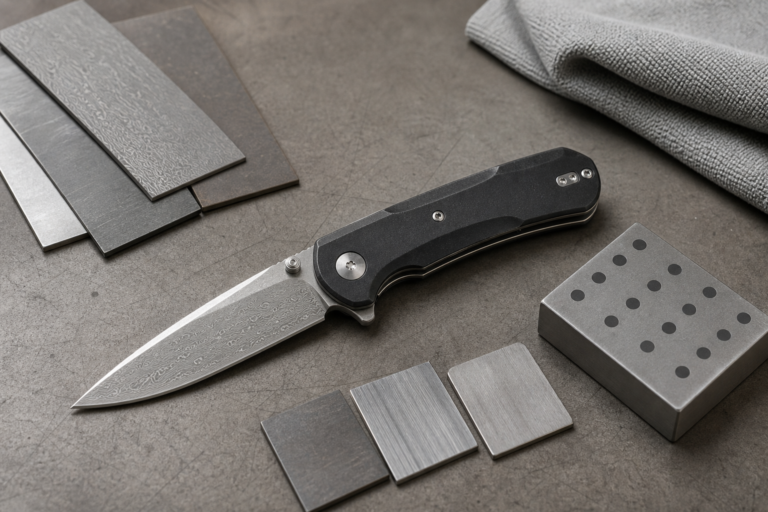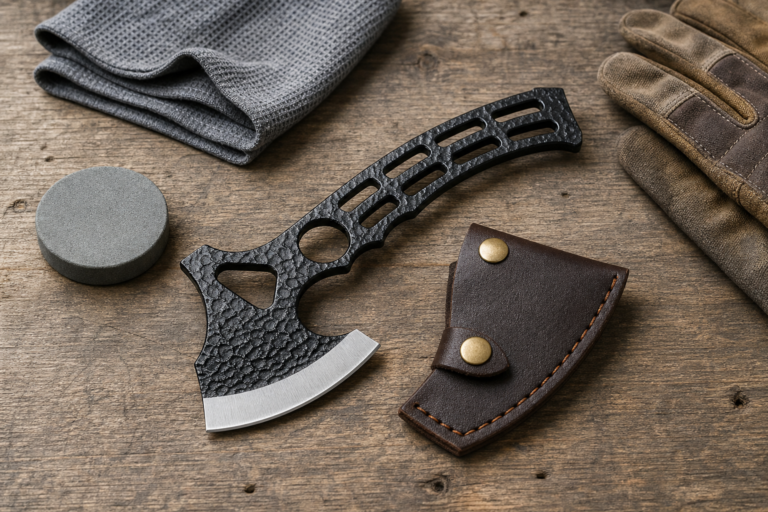
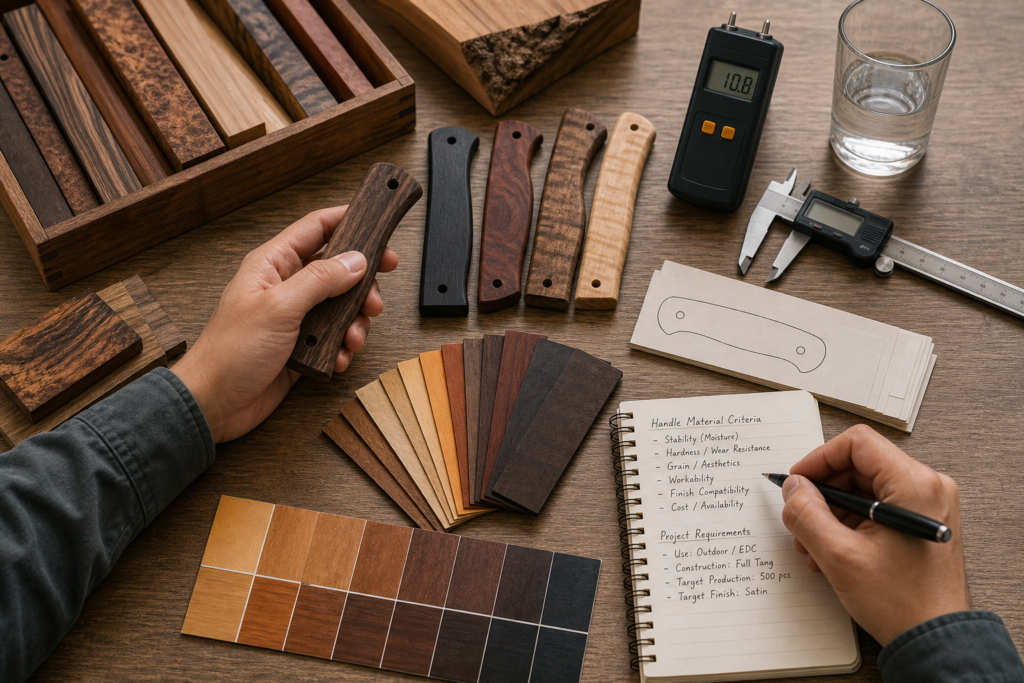
Wood handles look warm and valuable, but poor selection creates cracks, color claims, and unstable repeat orders. Buyers need a practical material plan.
B2B buyers should choose wood knife handle materials by matching species, moisture control, density, grain, finish, sourcing documents, cost, and target market. The right choice is not one universal wood. It is the wood that fits the knife design, buyer margin, production process, and sales channel.
Quick buyer brief:
- Answer: Compare wood by stability, workability, appearance, sourcing risk, finish, and QC.
- Buyer context: This helps knife brands, outdoor brands, importers, wholesalers, and private label buyers.
- Key checks: Confirm species, moisture condition, defect limits, finish sample, handle structure, compliance documents, and inspection plan.
Have a knife or multi-tool project in mind?
Send your sketch, CAD file, sample photo, or product idea. Vast State can review manufacturability, suggest materials, estimate MOQ, and prepare a quote for your OEM/ODM project.
When I help a buyer choose wood for a knife handle, I do not begin with a simple ranking. A beautiful wood can be wrong for a low-price EDC line. A hard exotic wood can create compliance questions. A stable engineered option may fit repeat production better than a rare natural piece. For OEM/ODM work, I look at the full path from sample to repeat order. The handle must support the brand story, but it must also survive machining, finishing, assembly, packaging, export, and customer inspection.
Why Should Buyers Avoid Choosing Wood Handles By Appearance Alone?
A beautiful handle can still cause trouble. If the wood moves, cracks, stains, or varies too much, the product becomes hard to control.
Buyers should not choose wood handles by appearance alone because wood is a natural material. Species, moisture, grain, defects, finish, and sourcing documents all affect production risk and repeat order stability.
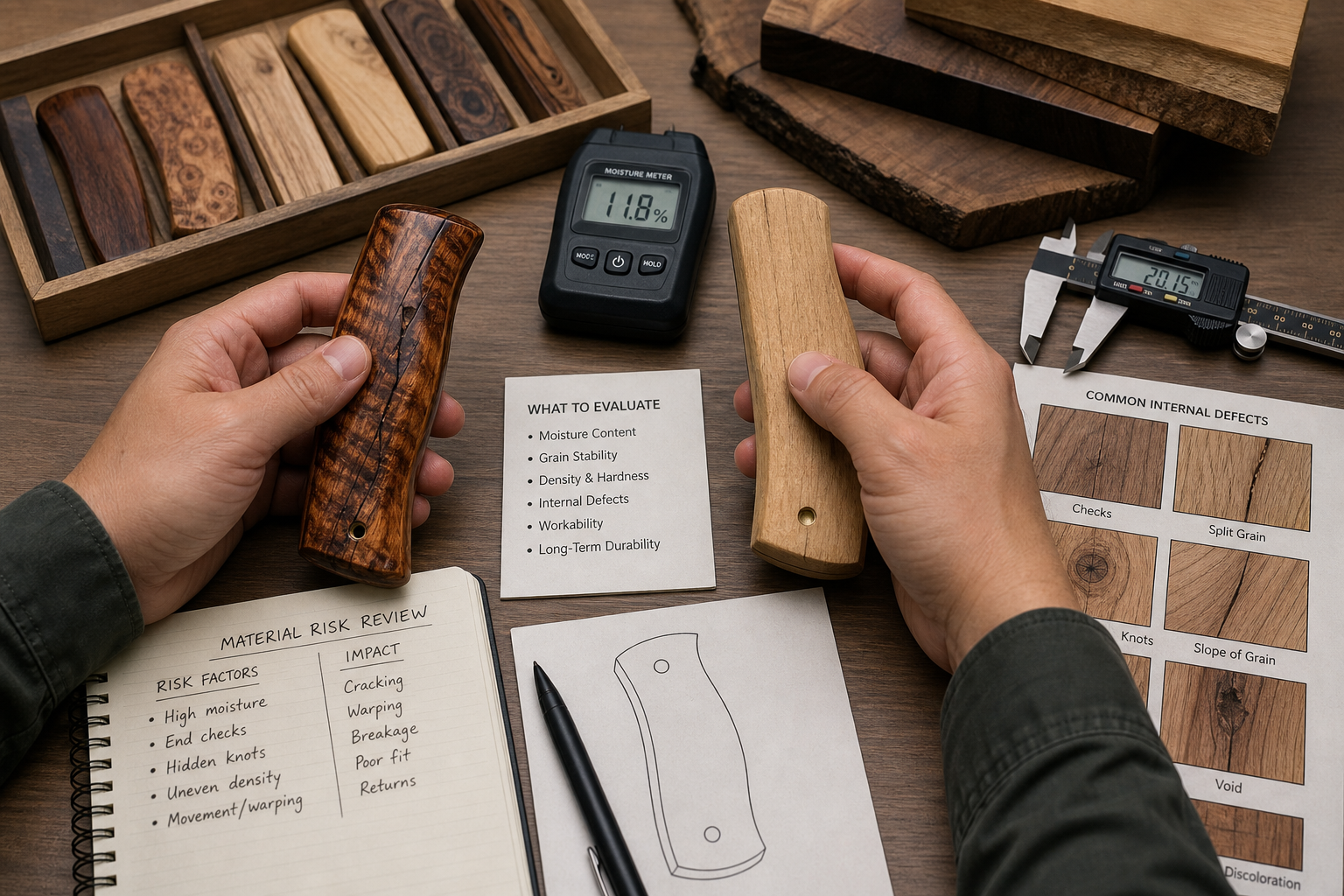
I Separate Shelf Appeal From Production Risk
Wood is attractive because every piece has a natural pattern. That is also why it needs clear control. A buyer may love dark streaks, figure, and color contrast. But in a real order, the factory must decide which pieces are acceptable and which pieces are defects. If this is not agreed early, the same wood grain can become a quality argument later.
The USDA Forest Products Laboratory's Wood Handbook describes wood as an engineering material. I like that framing because a knife handle is not only decoration. It is a small structural part that must be machined, drilled, fitted, finished, packed, and handled in use. The buyer should ask for a material standard, not only a nice sample photo.
In practice, I define three layers. The first layer is market fit. Does the wood support the price and brand? The second layer is production fit. Can it be cut, sanded, finished, and assembled consistently? The third layer is export fit. Can the material be sourced and documented clearly? When these three layers match, the wood choice becomes safer.
| Decision layer | What buyers may notice first | What I check before production |
|---|---|---|
| Market fit | Color, grain, and perceived value | Price level, customer expectation, and product line |
| Production fit | Shape and surface quality | Moisture, defects, workability, and finish |
| Export fit | Material name and claim | Scientific name, sourcing record, and restrictions |
| Repeat order fit | Similar look across batches | Approved range and inspection criteria |
OEM/ODM RFQ Checklist
Prepare these details to help Vast State review your project and provide a more accurate quotation.
| RFQ Field | What to Prepare |
|---|---|
| Project type | OEM from drawing / ODM private label / wholesale catalog |
| Product category | Folding knife / fixed blade / multi-tool / outdoor tool |
| Design status | Idea / sketch / 2D drawing / 3D CAD / physical sample |
| Target price | Ex-factory target price or retail price range |
| MOQ expectation | 500 / 1,000 / 3,000 / 5,000+ pcs |
| Logo method | Laser engraving / etching / printing / molded logo |
| Packaging | Standard packaging / custom retail box / Amazon-ready |
| Market | USA / EU / Japan / Korea / Middle East / other |
| Compliance needs | Buyer-specified testing / documentation / labeling |
| Timeline | Sample deadline / mass production deadline |
Which Wood Properties Matter Most For Knife Handle Production?
Wood names can be misleading. Two pieces from the same species can still differ in grain, defects, density, and moisture condition.
The most important wood properties for knife handles are density, hardness, grain direction, moisture behavior, dimensional stability, defect level, color range, workability, and finish compatibility.
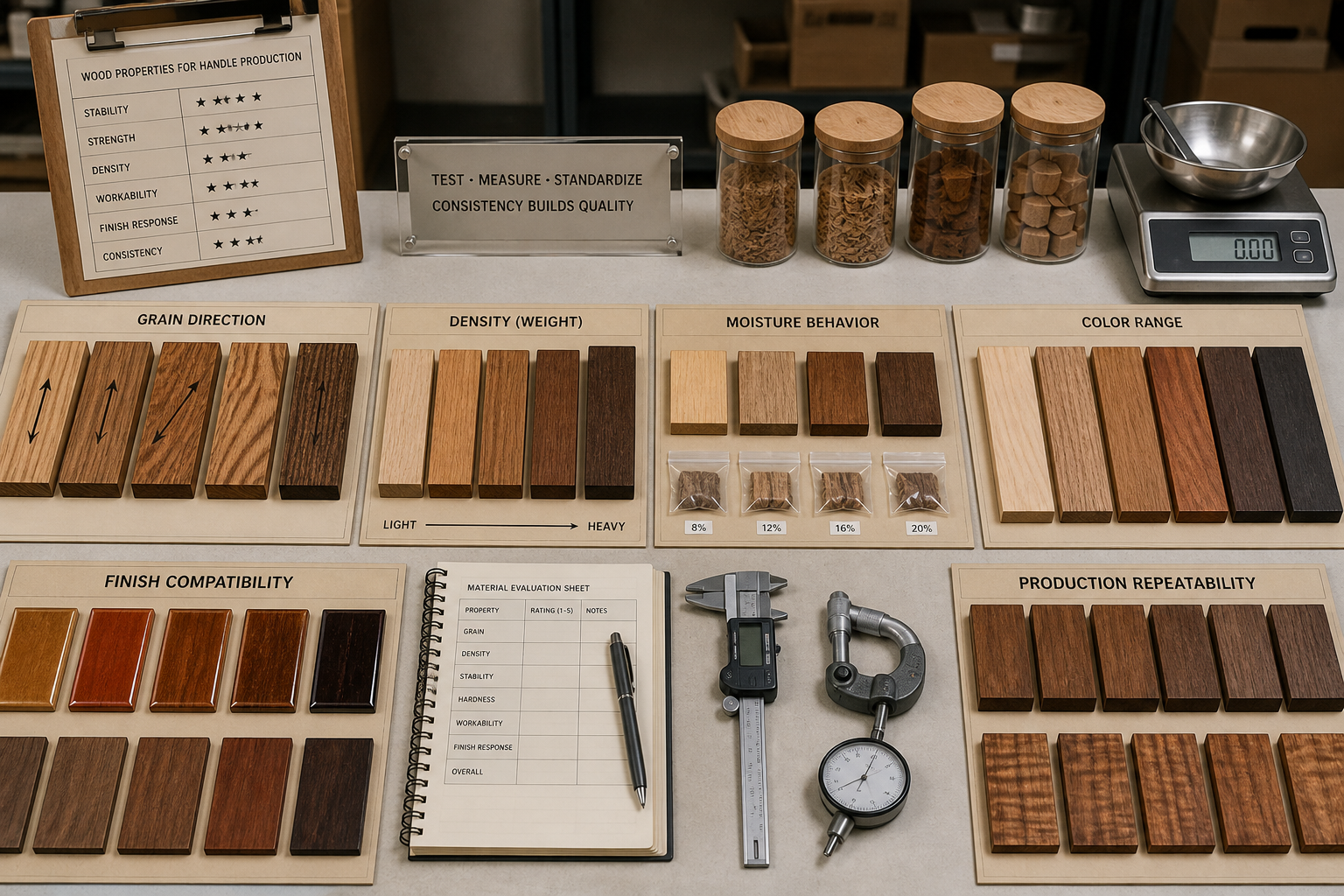
I Look For Stable Behavior, Not A Famous Name
The USDA Forest Products Laboratory's chapter on commercially important woods explains that wood properties come from cellular structure and material composition. It also notes that species selection can help, but specific physical properties still matter. This is exactly what I see in knife handle production.
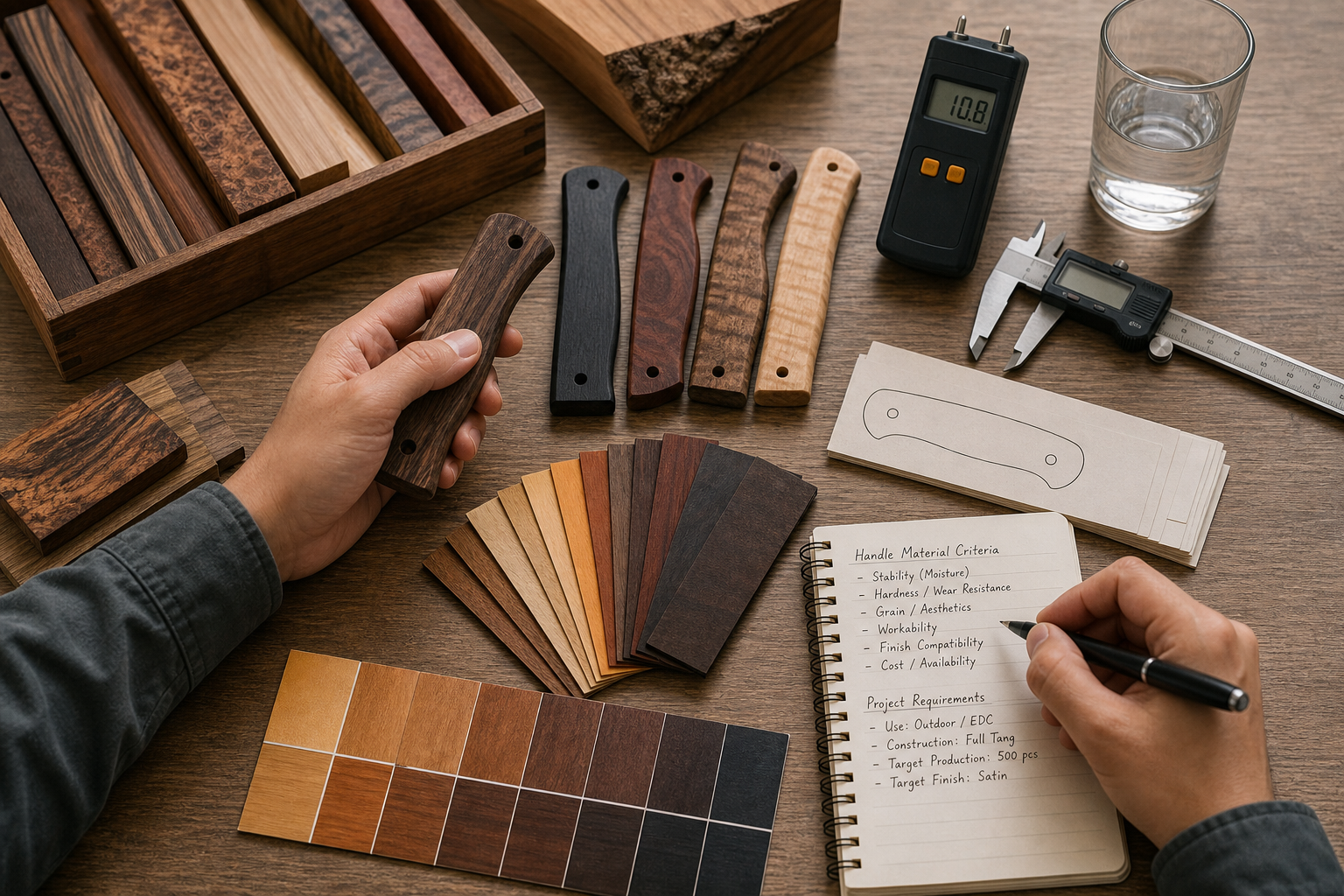
Density affects weight, machining feel, screw support, and perceived value. Hardness affects dent resistance, but hardness alone does not tell the whole story. Grain direction affects cracking risk and surface appearance. Moisture behavior affects swelling and shrinkage after the handle is assembled. Workability affects CNC time, sanding effort, tool wear, and reject rate.
The chapter on mechanical properties of wood also explains that variability is common because wood is natural. This is important for buyers. A sample handle may look excellent, but the bulk order must allow a realistic color and grain range. If the buyer expects every handle scale to look identical, natural wood may be the wrong material. In that case, stabilized wood, laminated wood, or synthetic handle material may be better.
| Wood property | Why it matters | Buyer takeaway |
|---|---|---|
| Density | Affects weight and perceived solidity | Match it to product size and target price |
| Grain direction | Affects cracking and appearance | Define acceptable grain and defect range |
| Moisture behavior | Affects shrinkage and swelling | Ask for moisture control before machining |
| Workability | Affects cost and reject rate | Test cutting, drilling, sanding, and finishing |
Which Nine Wood Options Are Worth Comparing For Knife Handles?
Buyers often ask for a short list. A list helps, but only if each wood is connected to market use and production risk.
Nine wood options worth comparing are walnut, maple, birch, beech, oak, olive wood, ebony-type dark hardwood, rosewood-type hardwood, and stabilized figured wood. Each option needs a cost, supply, finish, and compliance review.
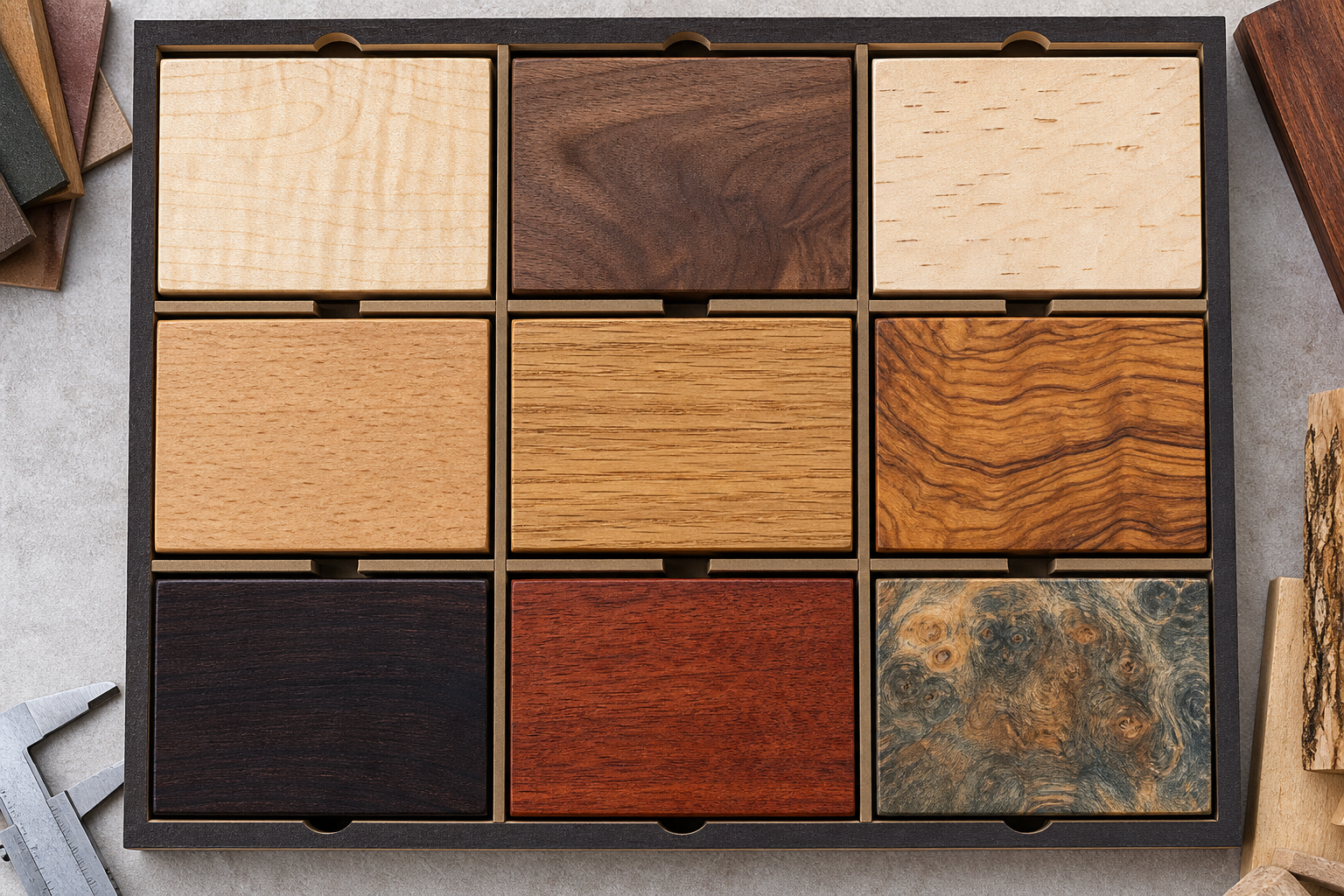
I Use A Shortlist As A Starting Point
I treat a wood shortlist as a conversation tool, not a fixed rule. Walnut often fits warm, classic handles. Maple can give a cleaner and lighter look. Birch can work well when laminated or stabilized. Beech and oak may support cost-sensitive or traditional designs, but they need finish and grain review. Olive wood can create a natural Mediterranean look, but color variation must be accepted. Dark hardwoods can create a premium visual effect, but sourcing and cost need attention. Rosewood-type woods can be attractive, but compliance checks are essential. Stabilized figured wood can help buyers get dramatic appearance with better stability, though cost is higher.
I avoid promising that one wood is always better. A small folding knife, fixed blade knife, pocket knife, kitchen-style utility item, and gift set may need different choices. The buyer should also consider whether the handle will use full wood scales, inlays, overlays, or combined material construction. Thin scales need more stable material than thick handle blocks. Highly figured wood needs more careful inspection.
For B2B buyers, the better question is not "Which wood is best?" The better question is "Which wood can my target customers accept, and can my supplier repeat it?"
| Wood option | Good fit | Main caution |
|---|---|---|
| Walnut | Classic outdoor or heritage style | Color range and supply consistency |
| Maple | Clean light handle appearance | Stain control and surface finish |
| Birch | Laminated or stabilized handle programs | Specify construction, not only species |
| Beech | Practical cost-sensitive projects | Grain and finish acceptance |
| Oak | Traditional visible grain look | Open grain and moisture control |
| Olive wood | Natural premium visual story | Color variation and sourcing |
| Ebony-type dark hardwood | Strong dark appearance | Cost, sourcing, and cracking risk |
| Rosewood-type hardwood | Rich color and figure | CITES and documentation review |
| Stabilized figured wood | Strong visual impact and better stability | Higher cost and batch matching |
When Should Buyers Choose Natural Wood, Stabilized Wood, Or Laminated Wood?
Natural wood is not always the safest choice. Some projects need better stability, clearer color control, or stronger repeatability.
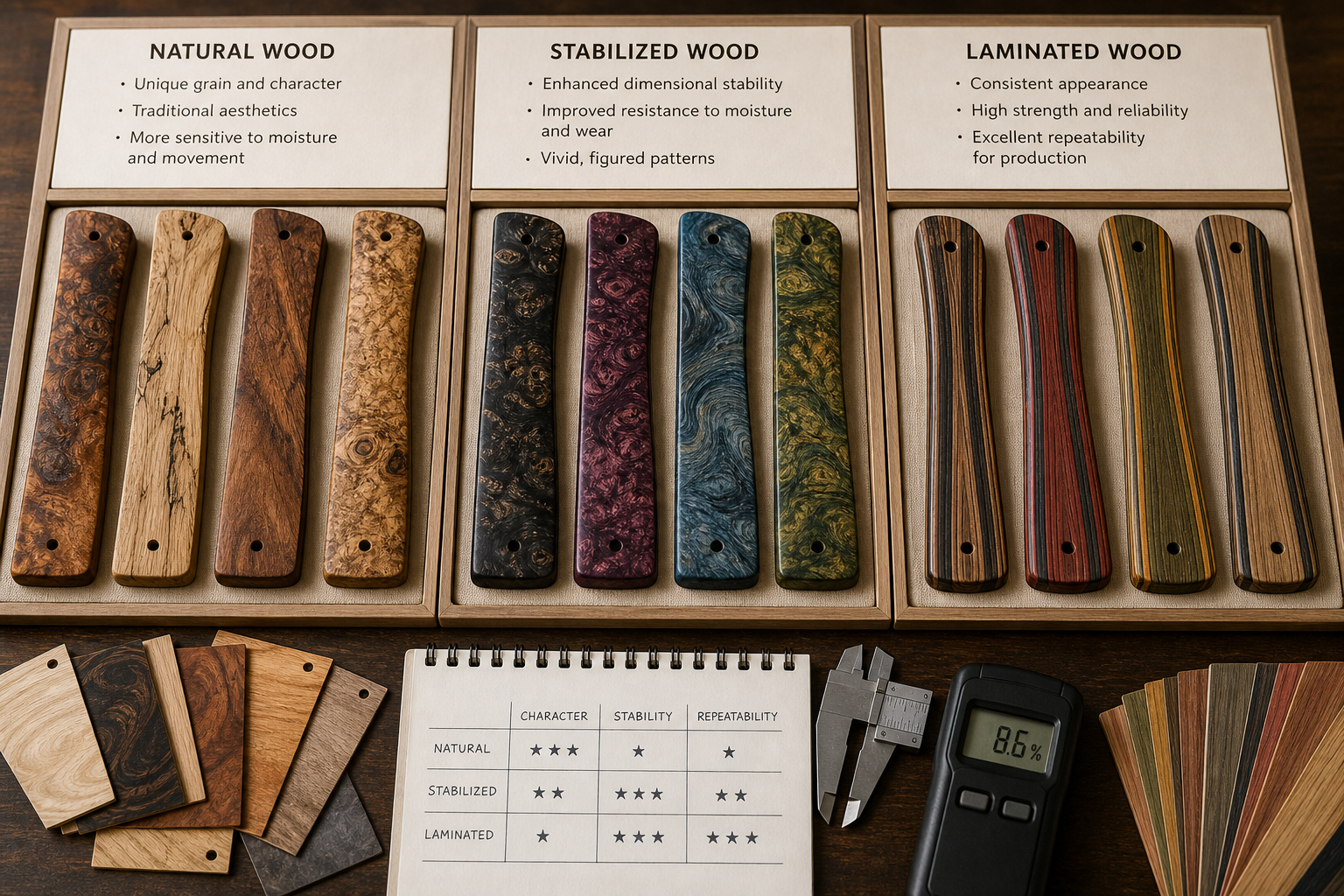
Buyers should choose natural wood for authentic character, stabilized wood for better dimensional control and dramatic figure, and laminated wood when color consistency, strength, and repeat production matter more than natural variation.
I Match Construction To Order Risk
Natural solid wood has a real charm. It feels honest and warm. It can support a traditional or outdoor brand story. But natural wood also brings variation. If the buyer wants every piece to look nearly the same, natural wood may create too many disputes. I usually ask the buyer whether variation is a feature or a problem.
Stabilized wood can help when the buyer wants natural figure with improved stability. The process fills the wood structure with resin or similar stabilizing material. This can reduce movement and improve machining behavior, but it also changes price, feel, and finish. It is useful for higher-value programs or limited editions where visual character matters.
Laminated wood gives another route. It can create color layers, improved consistency, and better repeat production. It is common when a buyer needs stronger visual control or wants a practical alternative to rare solid wood. However, the buyer must approve color, glue line appearance, layer quality, and machining behavior. I also check whether the construction fits the knife structure, screw positions, and edge chamfer.
| Construction type | Best use | Buyer should define |
|---|---|---|
| Natural solid wood | Authentic grain and warmer story | Species, moisture, defect range, and finish |
| Stabilized wood | Figured appearance with better control | Stabilization quality, color range, and cost |
| Laminated wood | Repeatable color and layer strength | Layer direction, glue line, and machining standard |
| Wood inlay | Decorative value without full wood scale risk | Inlay thickness, bonding, and edge fit |
How Does Moisture Control Affect Wood Handle Stability?
A wood handle can look perfect during approval and change later. Moisture movement can create gaps, cracks, and finish problems.
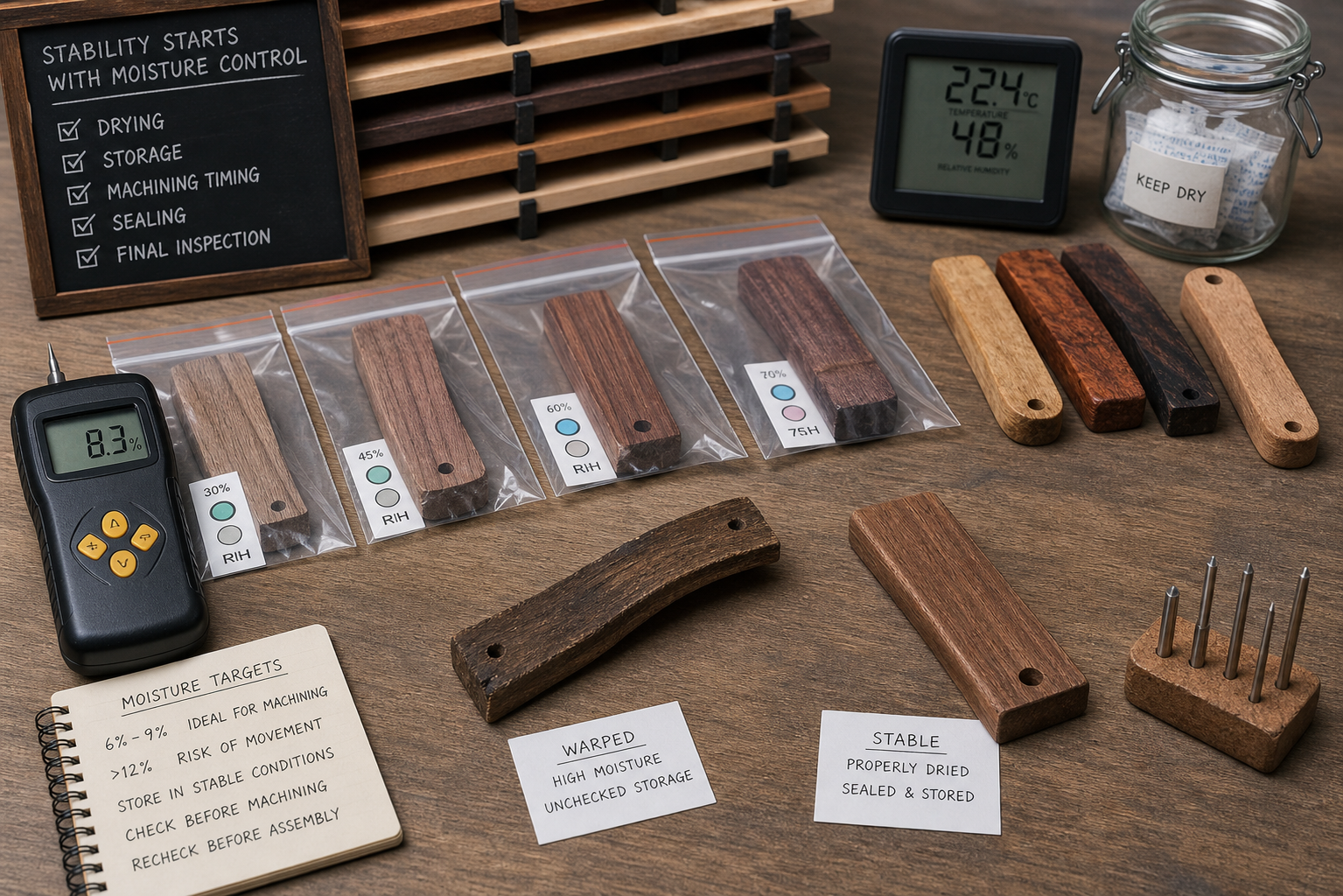
Moisture control affects wood handle stability because wood gains and loses moisture from the surrounding air. Buyers should confirm drying, storage, machining timing, sealing, and final inspection conditions.
I Treat Moisture As A Production Variable
The USDA chapter on moisture relations and physical properties of wood explains that wood is hygroscopic. It takes on moisture from its environment, and moisture affects wood properties and performance. This is one of the most important points for knife handle buyers.
A handle scale is small, but it can still move. If the wood is not properly dried or stored, it may shrink after assembly. This can create gaps around liners, pins, screws, bolsters, or tang areas. If it gains moisture, it can swell and affect fit. If the surface is finished before the wood condition is stable, the finish may not behave as expected.
In production, I like to control the material path. Wood should be stored correctly before machining. Machined scales should not sit too long in uncontrolled conditions. Sealing and finishing should be planned for the material. Packaging should also consider moisture, especially for long export routes or humid markets. If the buyer sells into dry, cold, coastal, or tropical regions, I consider that early. A handle that survives one climate may not behave the same in another.
| Moisture control point | What can go wrong | Practical control |
|---|---|---|
| Incoming wood condition | Hidden shrinkage or swelling risk | Check moisture and supplier records |
| Storage | Material changes before machining | Keep wood in controlled storage |
| Assembly timing | Gaps after assembly | Machine and assemble within a stable window |
| Finish and sealing | Stains, roughness, or uneven coating | Test finish on actual material batch |
What Ergonomic And Structural Details Should Buyers Check?
A wood handle can look good in photos but feel wrong in the hand. Poor shaping also affects assembly and perceived value.
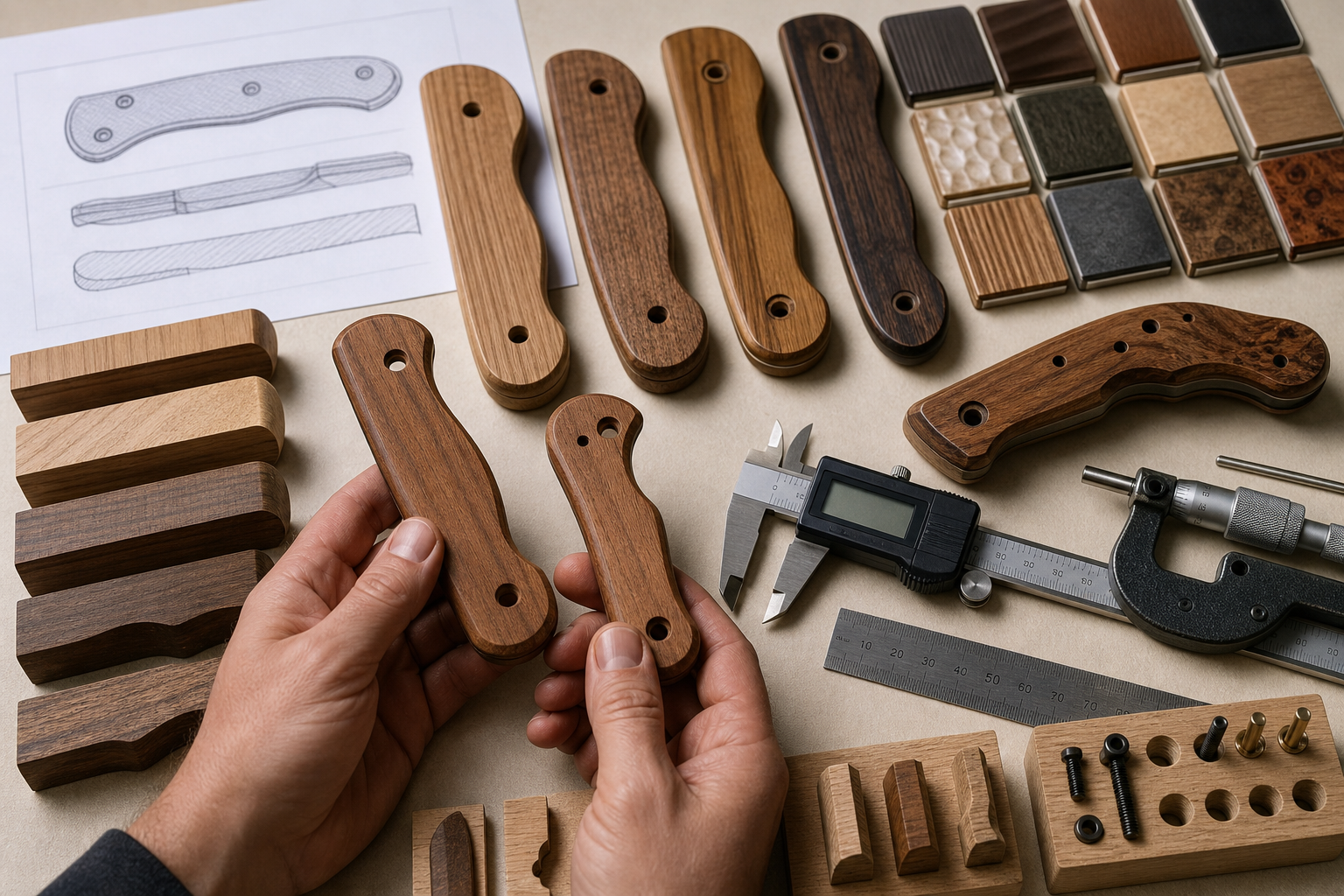
Buyers should check handle thickness, radius, chamfer, contour, screw position, pin position, tang fit, surface texture, and finish feel. Wood choice must support both comfort and structure.
I Design The Handle Around Fit, Not Only Material
The handle is where the user feels the product quality first. Wood can help with warmth and visual value, but shape still matters. A flat scale may be cheaper to produce. A contoured handle may feel better, but it needs more machining and sanding time. A sharp chamfer can feel uncomfortable. A large radius can reduce the visible wood surface. Each choice affects cost and user feeling.
The NIOSH guide on selecting non-powered hand tools explains power grip, pinch grip, handle diameter, and the need to fit the tool to the job and reduce unnecessary force. I use that as a general reference. I do not claim one handle dimension fits every knife. Instead, I check whether the handle shape matches product size, likely use context, and target buyer expectations.
Structurally, wood needs support around screw holes, pins, and edges. Thin areas can chip during assembly. Highly figured grain can be attractive, but it may need careful orientation. If the knife uses liners or a full tang, the wood scale must match the metal part closely. A small mismatch can make the whole product feel cheap. This is why I review handle drawings, not only material swatches.
| Handle detail | Why it matters | Buyer check |
|---|---|---|
| Thickness | Affects grip feel and weight | Approve sample in hand, not only by photo |
| Edge radius | Affects comfort and appearance | Define chamfer or contour standard |
| Screw or pin area | Affects assembly strength | Check hole position and edge distance |
| Surface texture | Affects grip and finish feel | Approve sanding and coating sample |
What Sourcing And Compliance Questions Apply To Exotic Woods?
Exotic wood names can be attractive, but they can also create import problems. Buyers need documents before they approve a material.
Buyers should confirm the scientific name, source, trade documents, CITES status, FSC or other sourcing claims, and destination market requirements before using rosewood-type, ebony-type, or other regulated woods.

I Ask For The Scientific Name Early
Trade names can be confusing. One supplier may call a material rosewood, ebony, ironwood, or sandalwood, while the real species may be different. For export projects, that is risky. I ask for the scientific name early. I also ask whether the material has any trade restriction, documentation requirement, or customer market concern.
The APHIS CITES timber manual lists Brazilian rosewood as a CITES Appendix I species and notes that the genus Dalbergia is generally Appendix II except Brazilian rosewood. It also lists ebonies and other timber taxa. This does not mean every wood handle order has the same restriction, and it is not legal advice. It does mean buyers should not approve exotic wood by common name only.
FSC chain of custody certification is another useful sourcing topic. FSC says chain of custody verifies that forest-based materials are tracked from sourcing to finished goods and that records are kept. If a buyer wants FSC claims, the supplier chain and documents must support that claim. A factory cannot simply add a sustainability claim because the wood looks natural.
| Sourcing question | Why it matters | Buyer action |
|---|---|---|
| Scientific name | Trade names may be unclear | Request genus and species where needed |
| CITES status | Some woods are regulated | Check before sample approval |
| FSC or sourcing claim | Claims need chain records | Confirm documentation path |
| Destination market | Rules may differ by country | Ask importer or compliance advisor |
What QC And RFQ Details Should Buyers Request Before Bulk Orders?
A sample can pass, but bulk wood can vary. Buyers need clear RFQ details and inspection rules before the order starts.
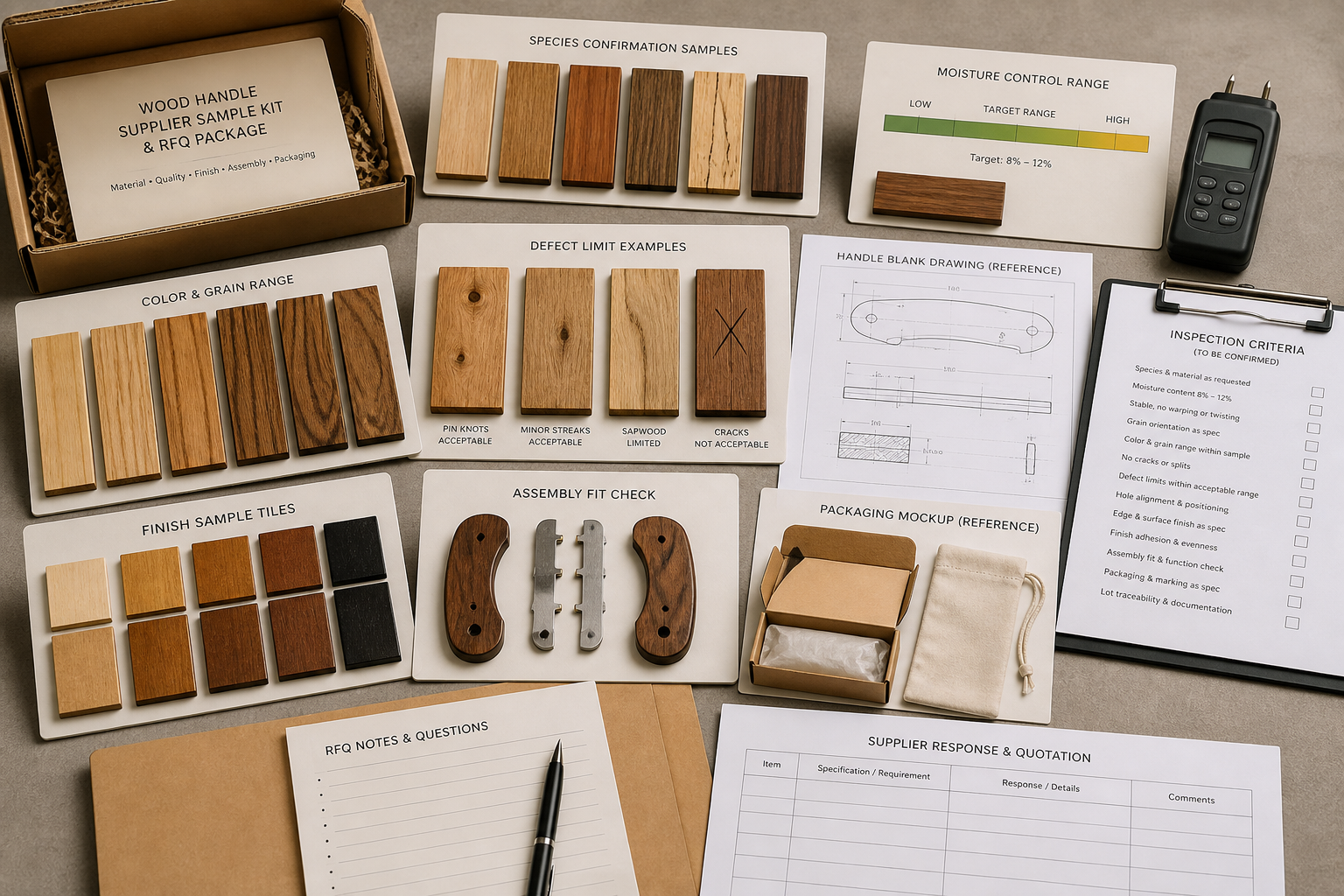
Buyers should request species confirmation, moisture control, color and grain range, defect limits, handle drawing, finish sample, assembly checks, packaging plan, and AQL or inspection criteria before bulk production.
I Put Wood Standards Into The RFQ
Wood handle problems often begin because the RFQ is too simple. A buyer may write "walnut handle" or "rosewood handle" and expect the factory to understand the exact look, cost, and quality level. That is not enough for stable production. I prefer a more complete RFQ.
The RFQ should include the knife type, handle structure, target market, target price, expected order quantity, preferred wood, acceptable alternatives, finish, logo method, packaging, and inspection needs. If the buyer wants natural wood, the RFQ should include color range, grain range, knot policy, crack policy, repair policy, moisture condition, and approved sample rule. If the buyer wants exotic wood, the RFQ should include sourcing documents and destination market concerns.
For quality planning, ISO 9001 provides a useful quality management framework, and ISO 2859-1 provides acceptance sampling language for inspection by attributes. I use those as references, not as automatic promises. The real inspection checklist still needs product-specific defect definitions. For wood handles, I usually separate defects into material defects, machining defects, finish defects, assembly defects, and packaging defects. This makes the order easier to inspect and easier to reorder.
| RFQ item | Why it matters | Example buyer request |
|---|---|---|
| Wood species and alternative | Controls cost and supply risk | Walnut preferred, maple alternative |
| Color and grain range | Prevents appearance disputes | Approve a range board before production |
| Moisture and defect limits | Reduces cracking and gaps | Check incoming wood and finished handles |
| Finish and packaging | Protects sellable appearance | Match insert material to finish sensitivity |
Turn your idea into a quote-ready knife project.
Share your drawing, sample photo, target quantity, market, and packaging needs. Vast State will review manufacturability and prepare OEM/ODM options.
Conclusion
I choose wood knife handles by matching beauty with stability, sourcing, finish, assembly, cost, QC, and the buyer's target market.
Source Notes
- USDA Wood Handbook supports treating wood as an engineering material, not only a decorative material.
- USDA chapters on commercially important woods, moisture relations, and mechanical properties support the wood property, moisture, and variability guidance.
- NIOSH hand tool guidance supports the ergonomic discussion for handle shape and grip fit.
- APHIS CITES timber manual and FSC chain of custody support the sourcing and documentation discussion.
- ISO 9001 and ISO 2859-1 support the quality system and sampling inspection discussion.