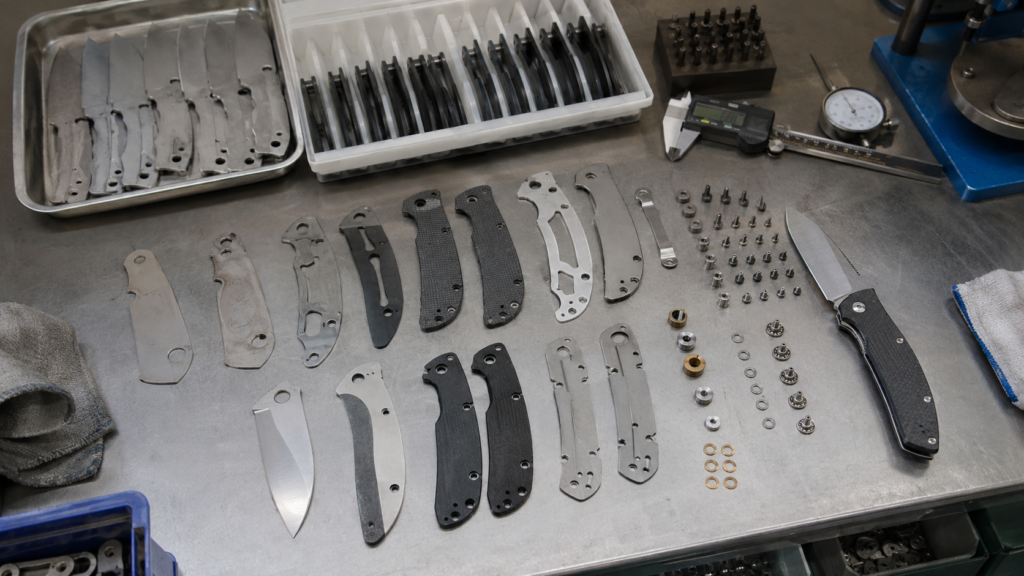
A folding knife can look good but still fail in real use. One weak process step can damage the whole order. Control prevents that.
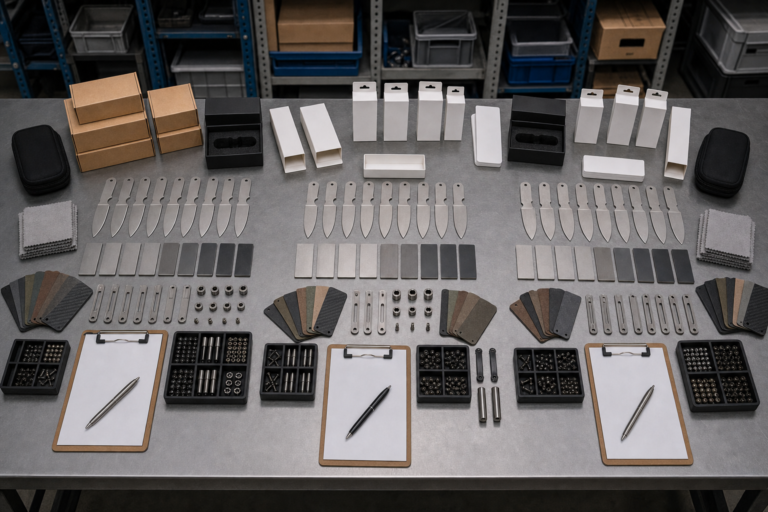
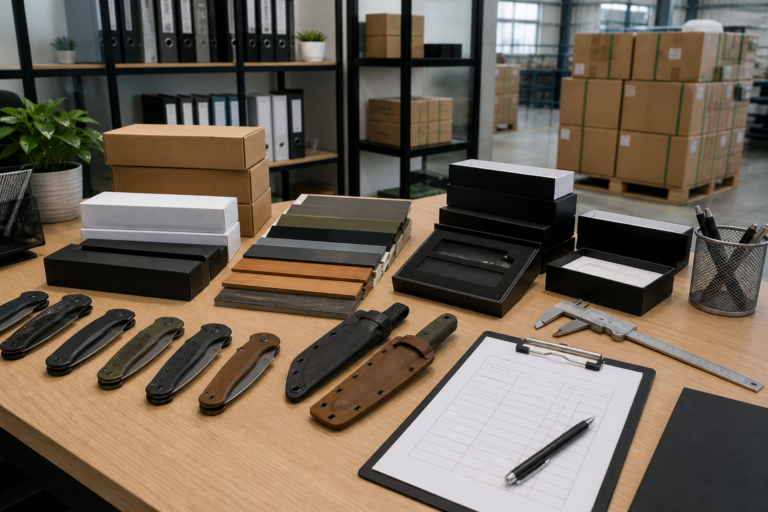
A reliable folding knife is built through design review, material selection, blade processing, heat treatment, lock fitting, assembly, sharpening, finishing, and final inspection. Each step must control safety, function, cost, consistency, and the final user experience.
When I develop a folding knife project, I do not only look at the final appearance. I look at the whole path behind it. A blade profile affects grinding. The steel affects heat treatment. The lock structure affects safety. The handle material affects cost and user feeling. For B2B customers, a good folding knife must be attractive, practical, and repeatable in production.
Why Does Folding Knife Production Start With Product Planning?
A vague knife idea can slow the project down. The sample may look fine, but the cost or structure may not fit the market.
Product planning defines the target user, price range, blade style, lock type, handle material, packaging, and production risk before sampling starts.
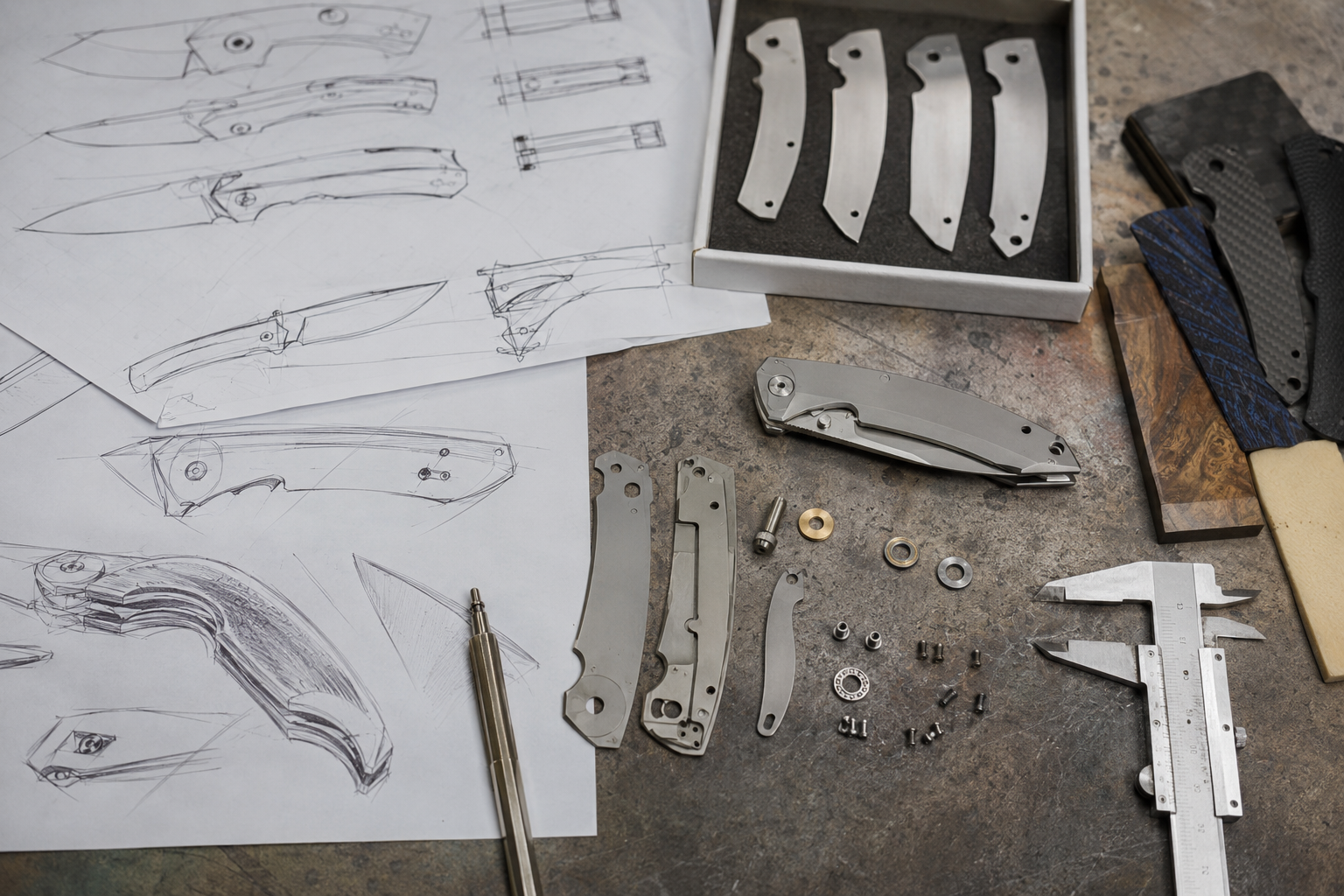
I Start With the Market Before the Knife
When a customer asks me to develop a folding knife, I first ask where the product will be sold. A budget EDC knife, a camping folder, and a premium outdoor knife should not follow the same development plan. The market decides many details before the first sample is made.
I check the target price, expected user, sales channel, packaging need, and customization level. If the buyer already has a finished design, I review whether it can be produced smoothly. If the buyer only has a rough idea, I help turn it into a practical product direction.
This step saves time. It also prevents the common problem of making a beautiful sample that becomes too expensive in mass production. For private label and ODM buyers, the best design is not only creative. It must match the buyer’s brand position, price range, MOQ, and delivery plan.
| Planning point | What I check | Why it matters |
|---|---|---|
| Target market | EDC, outdoor, camping, utility, rescue | It guides size, function, and structure |
| Target price | Cost range and margin goal | It keeps the project realistic |
| Product level | Entry, mid-range, premium | It affects steel, handle, and finish |
| Customization | Logo, color, coating, packaging | It supports the buyer’s brand position |
How Do Blade Steel and Handle Materials Affect the Final Knife?
A wrong material choice can create hidden problems. The knife may become too costly, too heavy, too soft, or too hard to produce.
Blade steel and handle materials affect cutting performance, corrosion resistance, weight, grip, machining time, finish options, and final product positioning.
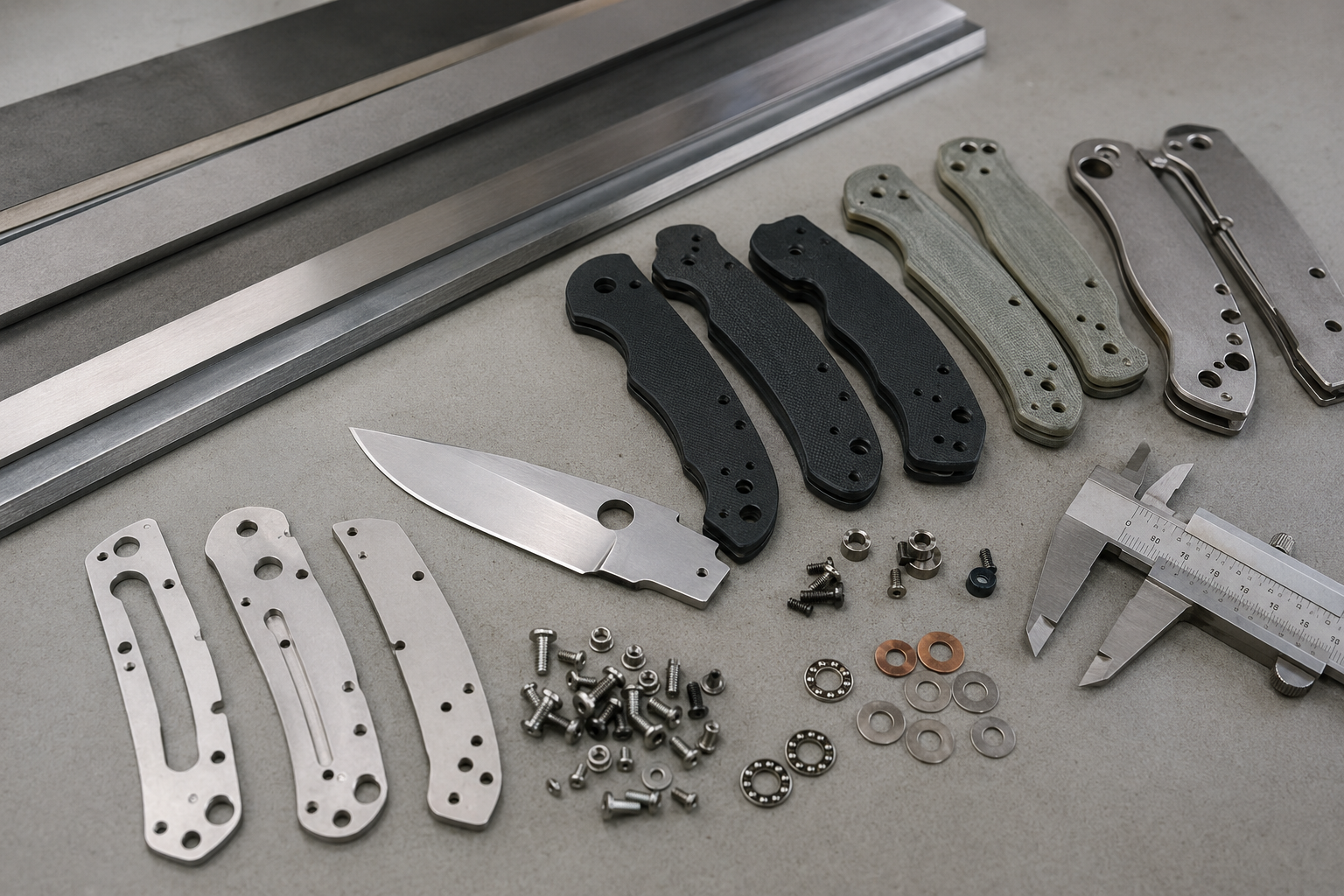
I Balance Performance With Commercial Needs
Material selection is one of the first serious decisions in folding knife production. Many customers ask for better steel, better handle materials, and better finishing. I understand this. But I also explain that every upgrade changes cost, production time, and quality control.
For blade steel, I look at the product use first. Some markets need better corrosion resistance. Some need easier sharpening. Some need a stronger edge. Some need a price that works for wholesale. A steel such as Alleima 14C28N knife steel is often discussed because it is designed for knife applications and offers a useful mix of edge performance, hardness, and corrosion resistance.
Handle materials also shape the product. G10 can offer stable grip. Aluminum can reduce weight and create a cleaner look. Stainless steel can feel solid but may increase weight. Plastic can support cost-sensitive products. Wood or micarta can create a warmer style, but finish control matters.
For B2B customers, the best material is the one that supports function, cost, repeat production, and the buyer’s market.
| Material decision | Main benefit | Production concern |
|---|---|---|
| Stainless blade steel | Better corrosion resistance | Heat treatment must match the grade |
| G10 handle | Good grip and stable feel | Machining and edge finish need control |
| Aluminum handle | Light and modern look | Surface treatment must stay consistent |
| Stainless handle | Strong and solid feeling | Weight and machining time may increase |
Why Is Blade Processing More Than Cutting a Shape?
A blade blank may look simple. But a small error in the pivot hole or tang can affect the whole knife.
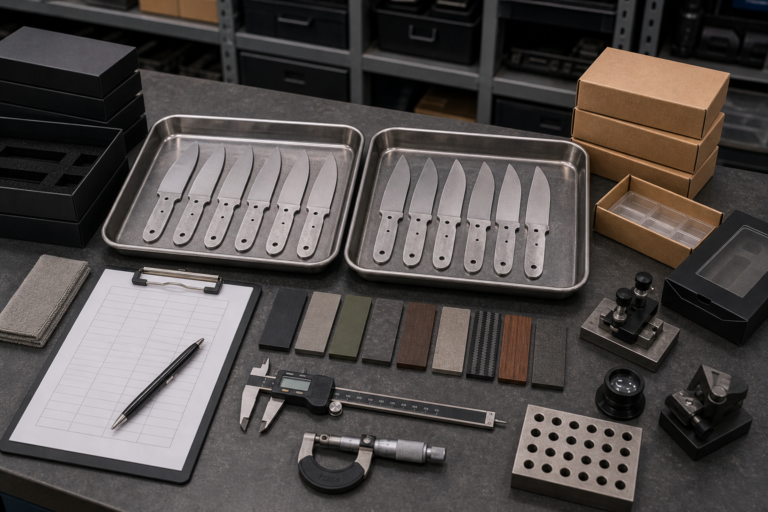
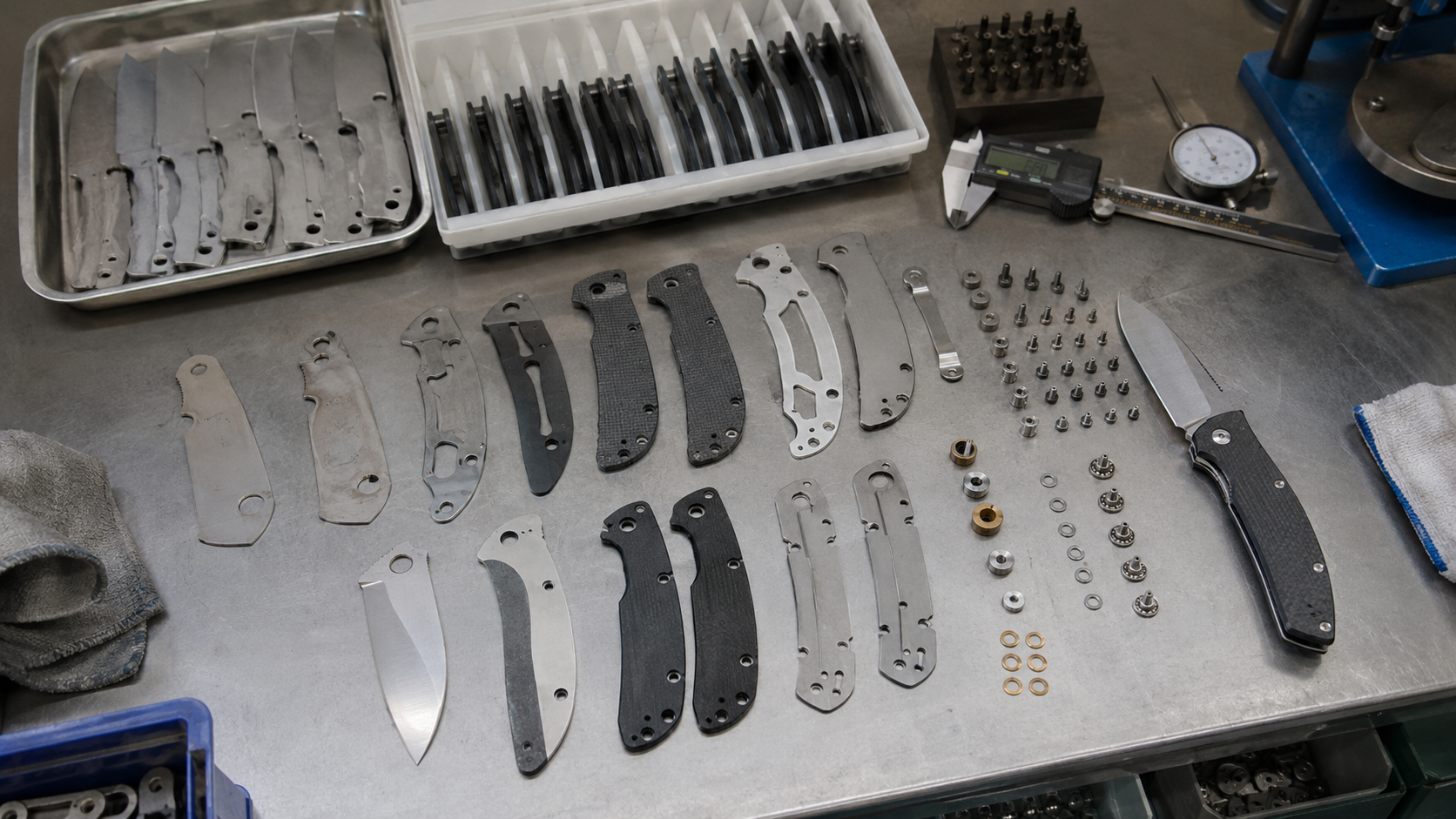
Blade processing includes profiling, drilling, machining, bevel grinding, surface preparation, and tolerance control for the pivot, lock, stop pin, and cutting edge.
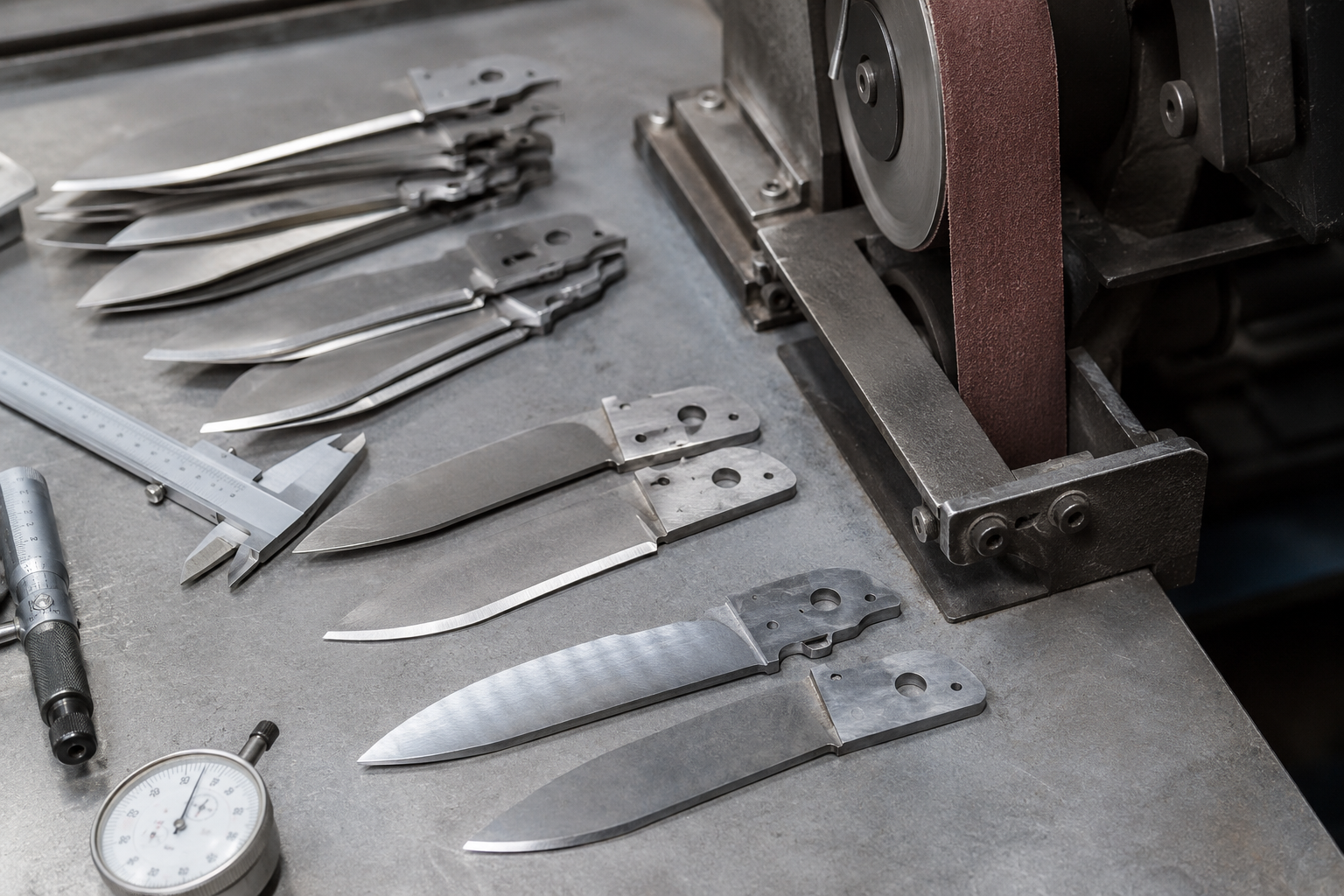
I Treat the Blade as a Moving Part
A folding knife blade is not only a cutting edge. It is also a moving part inside a compact mechanism. The pivot hole must be accurate. The tang must match the lock surface. The stop pin area must be stable. The blade must close safely into the handle.
If these details are wrong, the final knife may have blade play, poor centering, rough opening action, or weak lockup. These problems are not easy to hide. The user can feel them immediately.
Different processing methods can be used. Some orders use laser cutting. Some use stamping. Some need CNC machining. The choice depends on quantity, steel thickness, tolerance need, and cost target. After the profile is ready, bevel grinding becomes important. The bevel affects cutting performance and appearance.
I also watch heat during grinding. Too much heat can damage the edge area. This is why I see blade processing as precision work. It is not only about making a shape. It prepares the knife for smooth assembly and safe function.
| Blade process | Purpose | Key control point |
|---|---|---|
| Profile cutting | Creates the blade outline | Shape accuracy and clean edges |
| Hole processing | Prepares pivot and hardware points | Position and diameter tolerance |
| Tang machining | Supports lock and stop contact | Correct geometry and repeatability |
| Bevel grinding | Forms cutting geometry | Symmetry and heat control |
How Does Heat Treatment Turn Steel Into a Working Blade?
A blade can look finished before heat treatment. But it may still be too soft, too brittle, or unstable in use.
Heat treatment changes the steel structure so the blade can hold an edge while keeping enough toughness for its intended use.
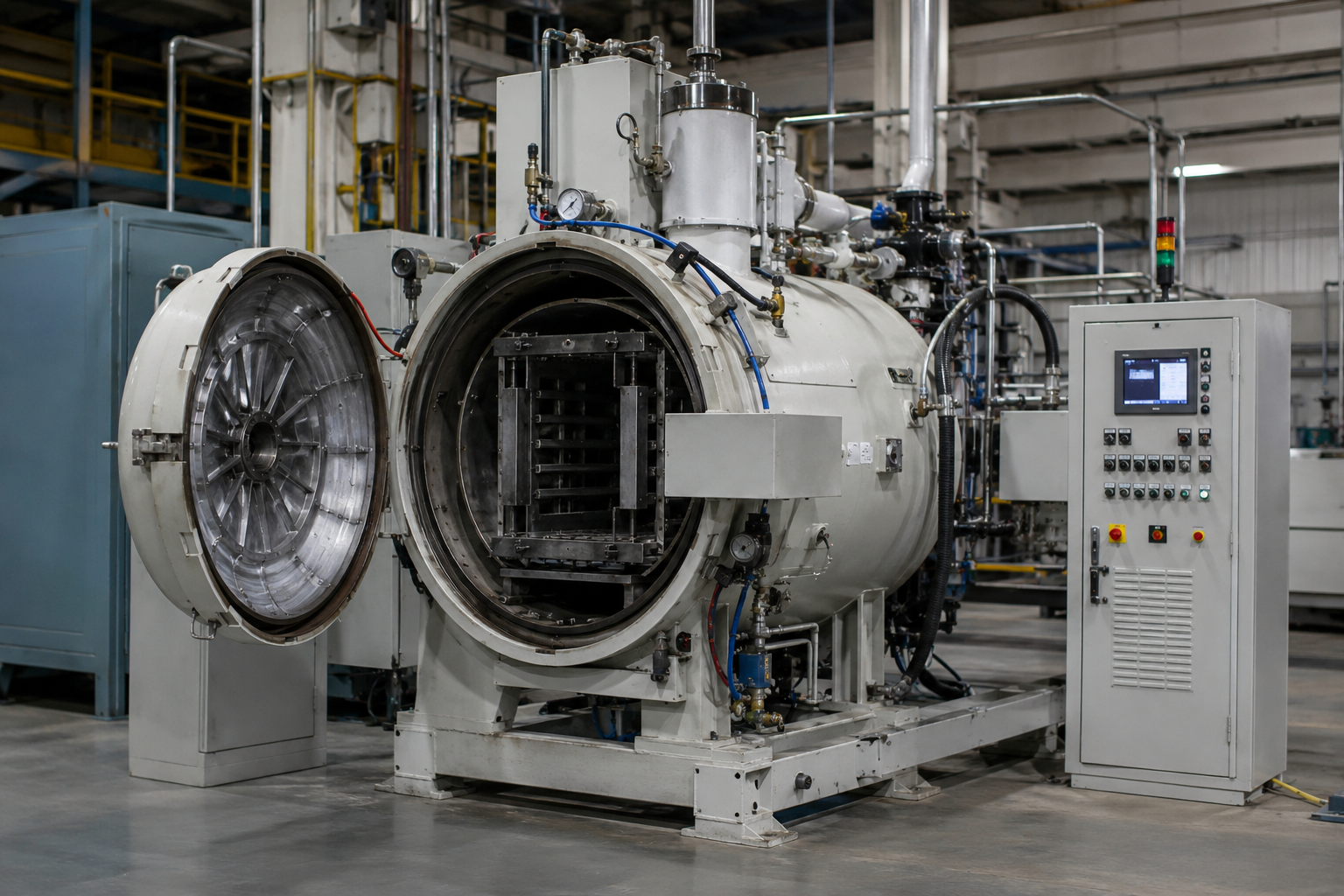
Image prompt:
Use ChatGPT Image 2. Avoid AI-looking knife shapes, fantasy blades, fake mechanisms, impossible screws, distorted multi-tools, and overly perfect 3D-rendered surfaces. Realistic professional factory photo of folding knife blade heat treatment preparation, showing clean blade blanks on heat-resistant trays, controlled furnace area, hardness testing tools, and inspection gloves nearby, safe industrial environment, no text, no logo, no watermark, no violence, no blood.
I See Heat Treatment as the Core of Blade Performance
Heat treatment is one of the most important stages in folding knife production. Before heat treatment, the blade is shaped steel. After heat treatment, it becomes a working blade. The process must match the steel grade, blade thickness, and intended use.
Hardening makes knife steel harder, but it can also make it more brittle. Tempering helps reduce brittleness and balance performance. Alleima explains the purpose of hardening and tempering knife steel in a practical way. This matches what I see in production. A blade needs both hardness and toughness.
Hardness testing is also important. A blade that is too soft may lose its edge quickly. A blade that is too hard may chip more easily. The NIST guide to Rockwell hardness measurement is a useful reference because hardness measurement can vary if the method is not controlled.
For B2B orders, stable heat treatment protects consistency. Buyers do not only need one good sample. They need stable results across the full batch.
| Heat treatment step | What it does | What I watch |
|---|---|---|
| Hardening | Raises blade hardness | Steel grade and temperature match |
| Quenching | Cools the blade quickly | Warping, cracking, and distortion |
| Tempering | Reduces brittleness | Final balance of hardness and toughness |
| Hardness testing | Checks process result | Stable readings across the batch |
Why Do Lock Fitting and Assembly Decide the Folding Knife Experience?
Good materials cannot fix poor assembly. Rough action, blade play, and weak lockup can damage user trust quickly.
Lock fitting and assembly control smooth opening, blade centering, lock engagement, closing safety, screw tension, and long-term reliability.
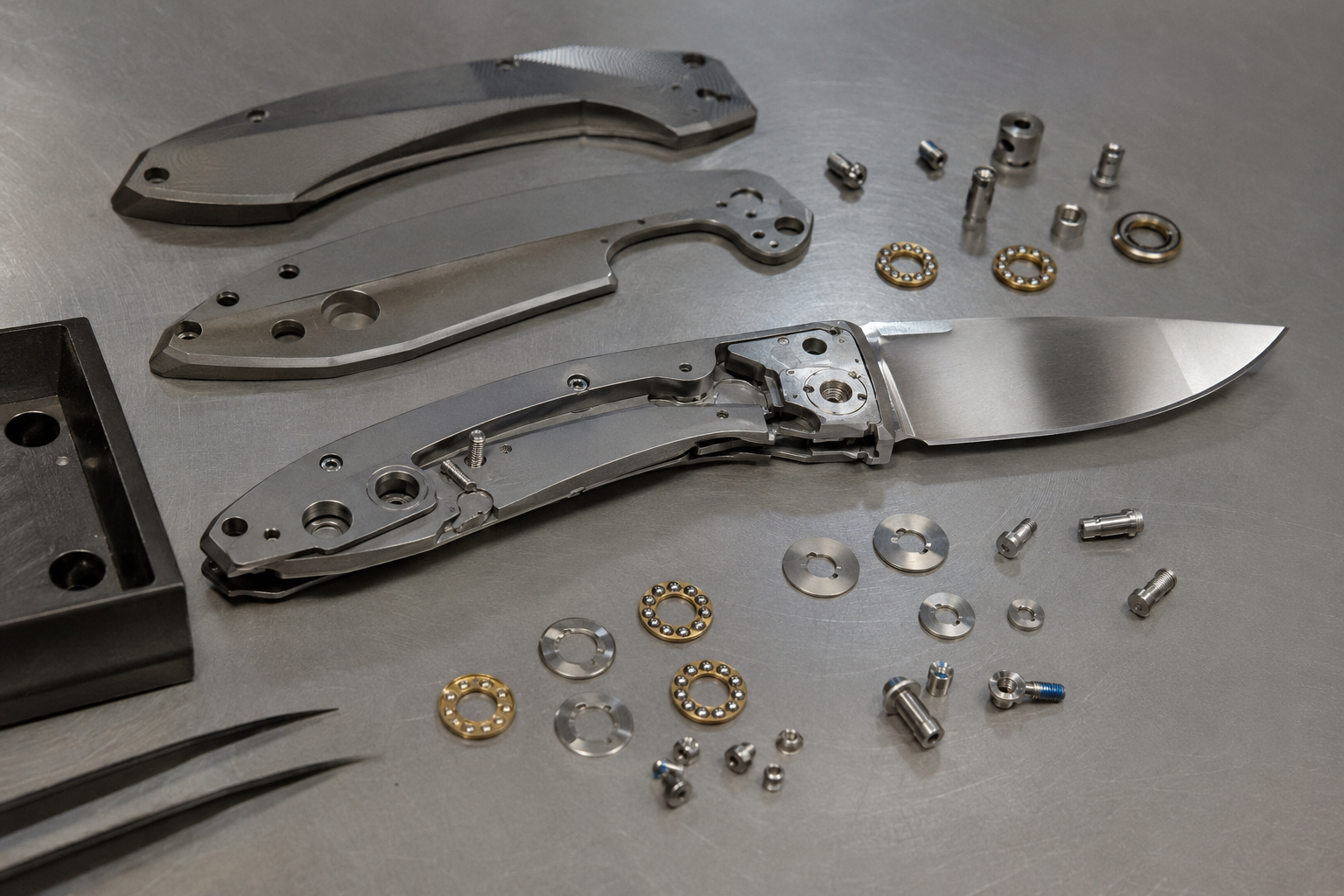
I Build the Knife Around Controlled Movement
The folding mechanism is what makes this product different from a fixed blade knife. It must open smoothly, lock securely, close correctly, and stay stable after repeated use. This depends on many small parts working together.
I check the pivot, washers or bearings, liners, handle scales, stop pin, screws, and lock surface. If one detail is off, the user can feel it. The blade may lean to one side. The lock may feel weak. The opening may feel rough. The screw tension may change after use.
Different lock types also create different production needs. A liner lock, frame lock, back lock, button lock, or crossbar-style lock has its own geometry. I need to check engagement, release feeling, blade centering, side play, and closing safety.
For OEM and ODM customers, I also think about production efficiency. A design that needs too much hand adjustment can become risky for larger orders. A good folding knife should feel controlled, not forced.
| Assembly detail | User-facing result | Production focus |
|---|---|---|
| Pivot fit | Smooth opening | Correct tension and alignment |
| Lock contact | Safe lockup | Stable engagement surface |
| Blade centering | Better perceived quality | Balanced blade and handle geometry |
| Screw assembly | Long-term stability | Correct torque and thread control |
How Do Finishing, Sharpening, and Quality Control Protect the Order?
A knife can pass assembly but still disappoint buyers. Scratches, uneven edges, loose screws, or poor packaging can hurt repeat orders.
Finishing, sharpening, and quality control confirm that the folding knife is ready for sale, use, packaging, and shipment.
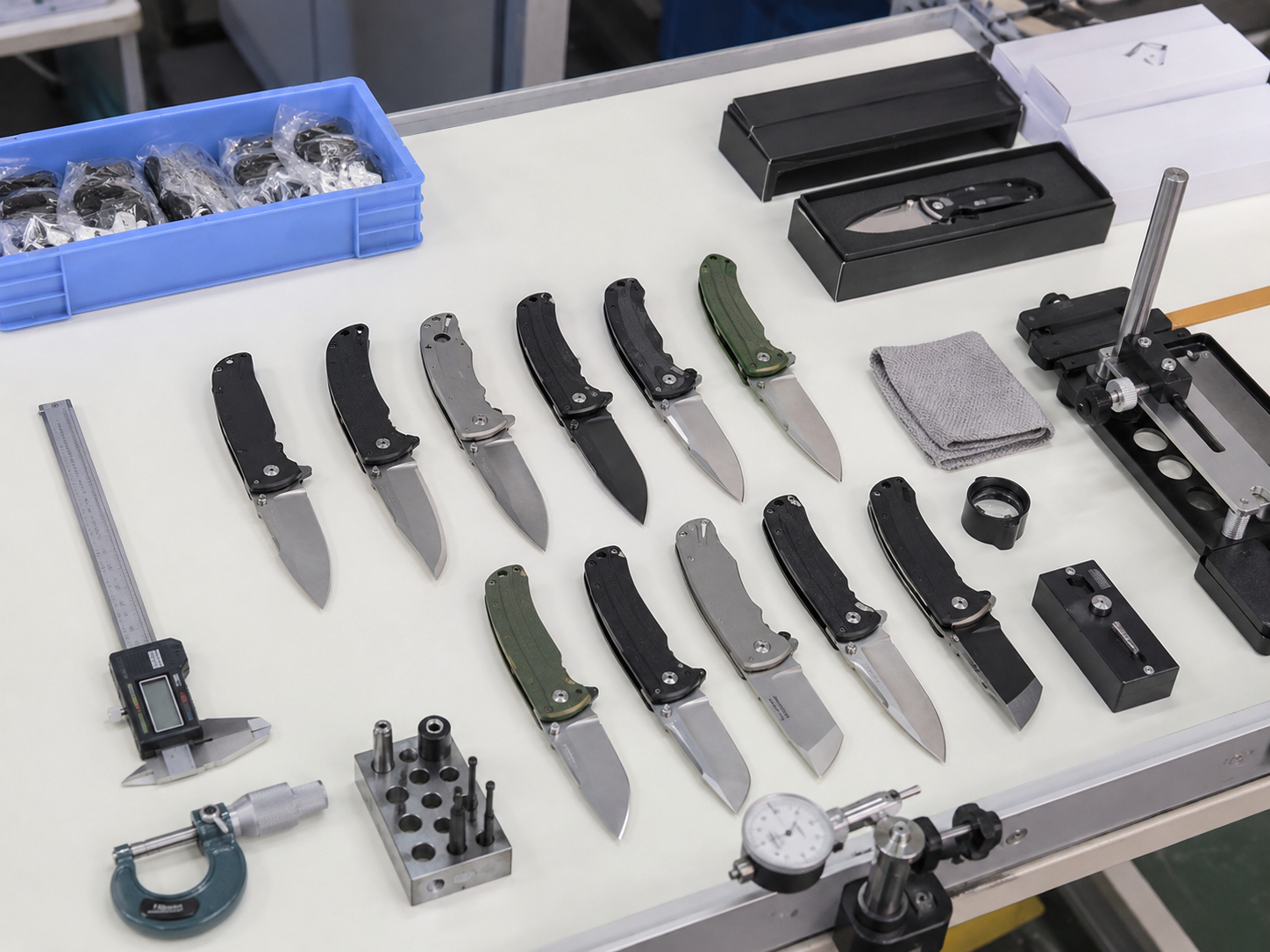
The final stage is where the product must prove itself. The finish should match the approved sample. Stonewash, satin, bead blast, coating, anodizing, and polishing all need consistency. The edge should be even. The point should be clean. The handle should feel comfortable. The knife should open and close correctly. The lock should engage safely. The screws should stay secure.
I also check packaging. For B2B customers, packaging is part of the product. A private label buyer may need a simple box, a branded color box, a pouch, a blister card, or export carton planning. These details affect the buyer’s first impression and shipping safety.
Quality control should not wait until the last day. It should happen through incoming inspection, in-process checks, assembly checks, and final inspection. A process-based quality mindset, such as the one described in ISO 9001 quality management, helps factories focus on stable processes and customer requirements.
For knife brands, outdoor brands, importers, wholesalers, and distributors, this matters. They need a supplier who can control details, communicate clearly, and support repeat production.
| Quality stage | What I check | Why it matters |
|---|---|---|
| Incoming inspection | Steel, handle material, hardware | It prevents weak inputs |
| In-process inspection | Size, finish, hardness, fit | It finds problems early |
| Functional inspection | Opening, closing, lockup, blade play | It protects safety and user feeling |
| Final inspection | Sharpness, appearance, packaging | It supports sellable quality |
Conclusion
I build better folding knives by controlling each step, from planning and materials to heat treatment, assembly, finishing, and final inspection.