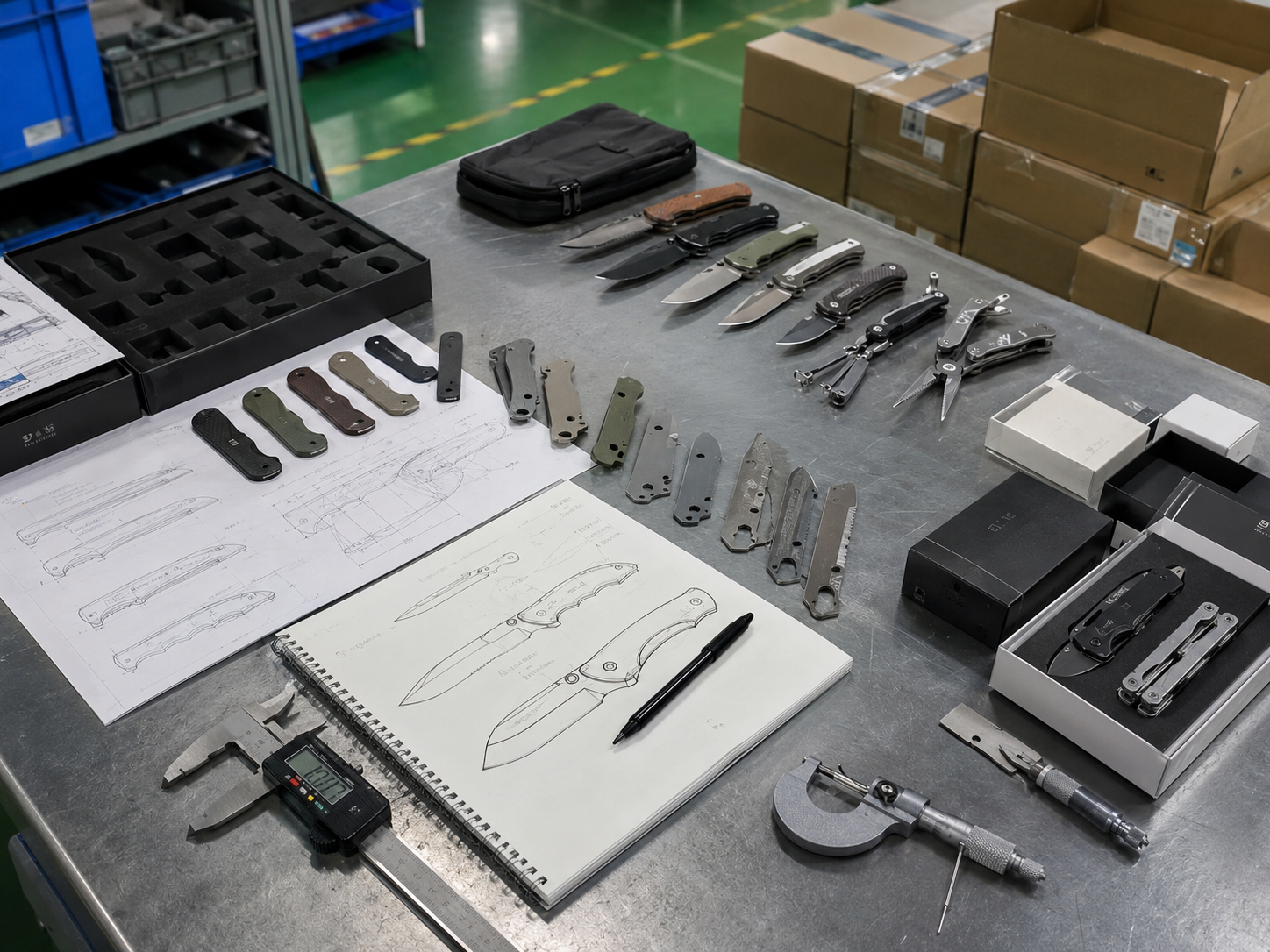
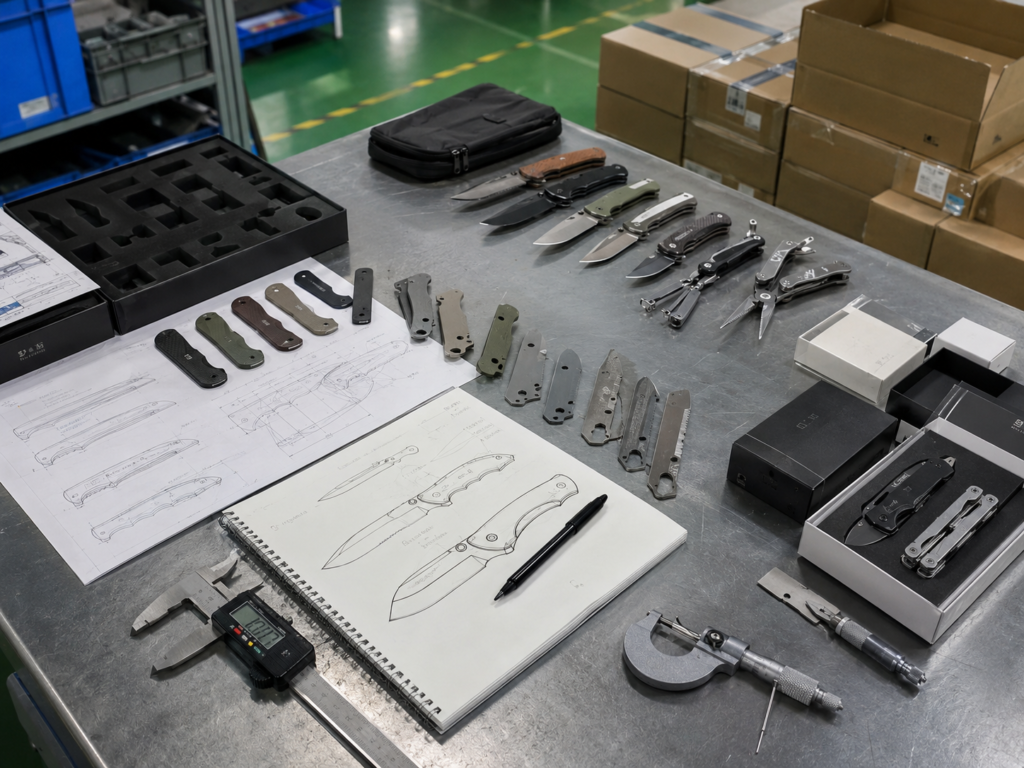
ODM procurement can look simple at first. But unclear demand quickly creates wrong samples, cost drift, and delivery pressure. A clear process keeps control.
Have a knife or multi-tool project in mind?
Send your sketch, CAD file, sample photo, or product idea. Vast State can review manufacturability, suggest materials, estimate MOQ, and prepare a quote for your OEM/ODM project.
Buyers should manage ODM knife and tool procurement by defining product demand, confirming design direction, selecting practical materials, approving samples, controlling production, inspecting quality, and planning delivery before mass production.
When I work with ODM knife and tool buyers, I do not see procurement as a simple buying action. I see it as a development path. The buyer brings a market need. The factory turns that need into a practical product. Each step must protect cost, function, quality, lead time, and repeat production.
Why Should ODM Procurement Start With Clear Product Demand?
Many ODM projects slow down at the first step. The buyer wants a product, but the real market need is still unclear.
Clear product demand helps define the target user, price range, product function, material level, packaging style, customization scope, and production direction.
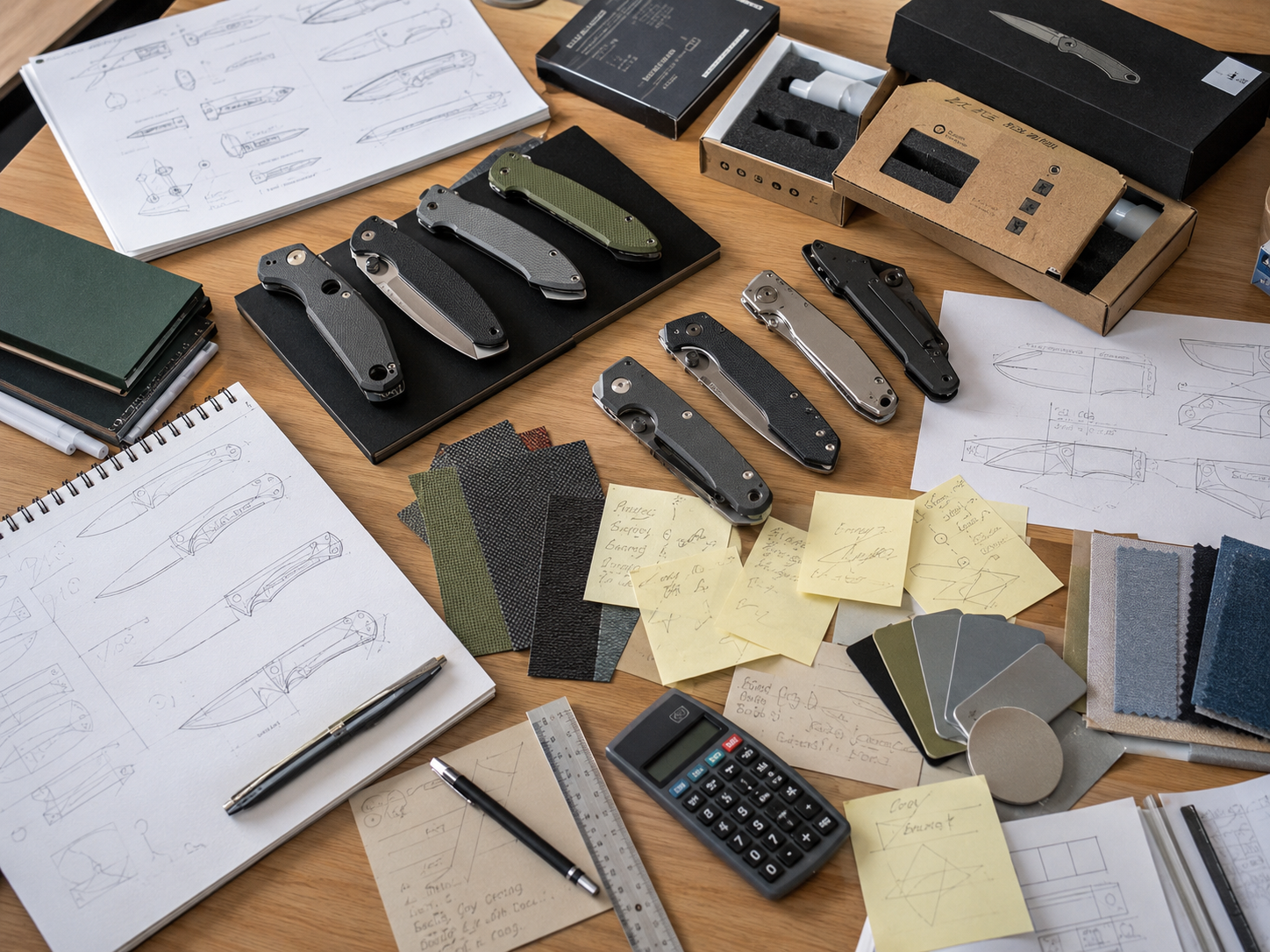
I Define the Market Before I Define the Product
When a customer asks me to support an ODM knife or tool project, I first ask about the market. A folding knife for daily carry, a camping tool for outdoor retail, and a rescue tool for a private label buyer need different decisions. The blade shape, lock type, handle material, finish, and packaging should match the target user.
I also ask about the target price. This is not only a cost question. It decides how much room we have for steel choice, structure, surface treatment, packaging, and inspection level. If the product direction is not clear, the sample may look attractive but miss the buyer’s margin or sales channel.
For ODM work, I prefer to clarify demand before sampling. This helps both sides avoid repeated changes. It also helps me suggest practical options instead of only attractive ideas.
| Demand point | What I clarify | Why it matters |
|---|---|---|
| Target user | EDC, outdoor, camping, rescue, utility | It guides product structure |
| Target price | Cost range and margin goal | It keeps the project realistic |
| Sales channel | Brand, importer, wholesaler, distributor | It affects packaging and positioning |
| Customization | Logo, color, finish, structure, box | It defines the ODM development scope |
OEM/ODM RFQ Checklist
Prepare these details to help Vast State review your project and provide a more accurate quotation.
| RFQ Field | What to Prepare |
|---|---|
| Project type | OEM from drawing / ODM private label / wholesale catalog |
| Product category | Folding knife / fixed blade / multi-tool / outdoor tool |
| Design status | Idea / sketch / 2D drawing / 3D CAD / physical sample |
| Target price | Ex-factory target price or retail price range |
| MOQ expectation | 500 / 1,000 / 3,000 / 5,000+ pcs |
| Logo method | Laser engraving / etching / printing / molded logo |
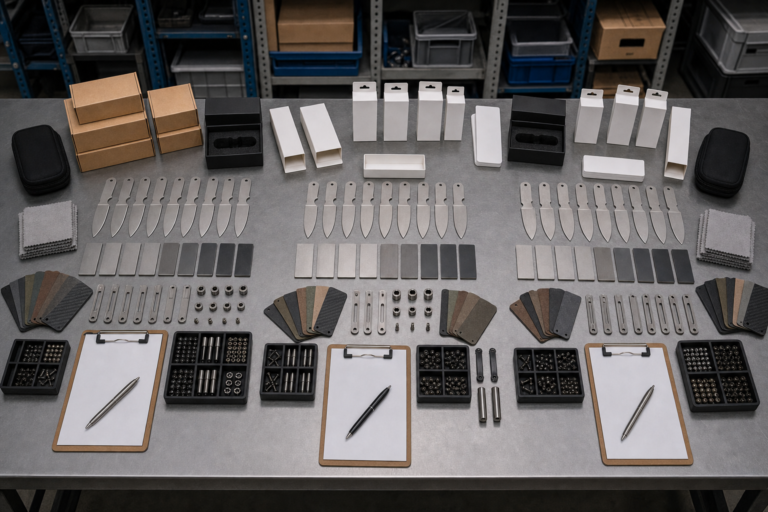
| Packaging | Standard packaging / custom retail box / Amazon-ready |
| Market | USA / EU / Japan / Korea / Middle East / other |
| Compliance needs | Buyer-specified testing / documentation / labeling |
| Timeline | Sample deadline / mass production deadline |
How Do Buyers Turn an ODM Idea Into a Manufacturable Knife or Tool?
A good idea can still fail in production. Some designs look strong on paper but become unstable or too costly in mass production.
Buyers turn an ODM idea into a manufacturable product by checking structure, materials, tolerances, assembly method, tooling needs, packaging, and production risks before sampling.
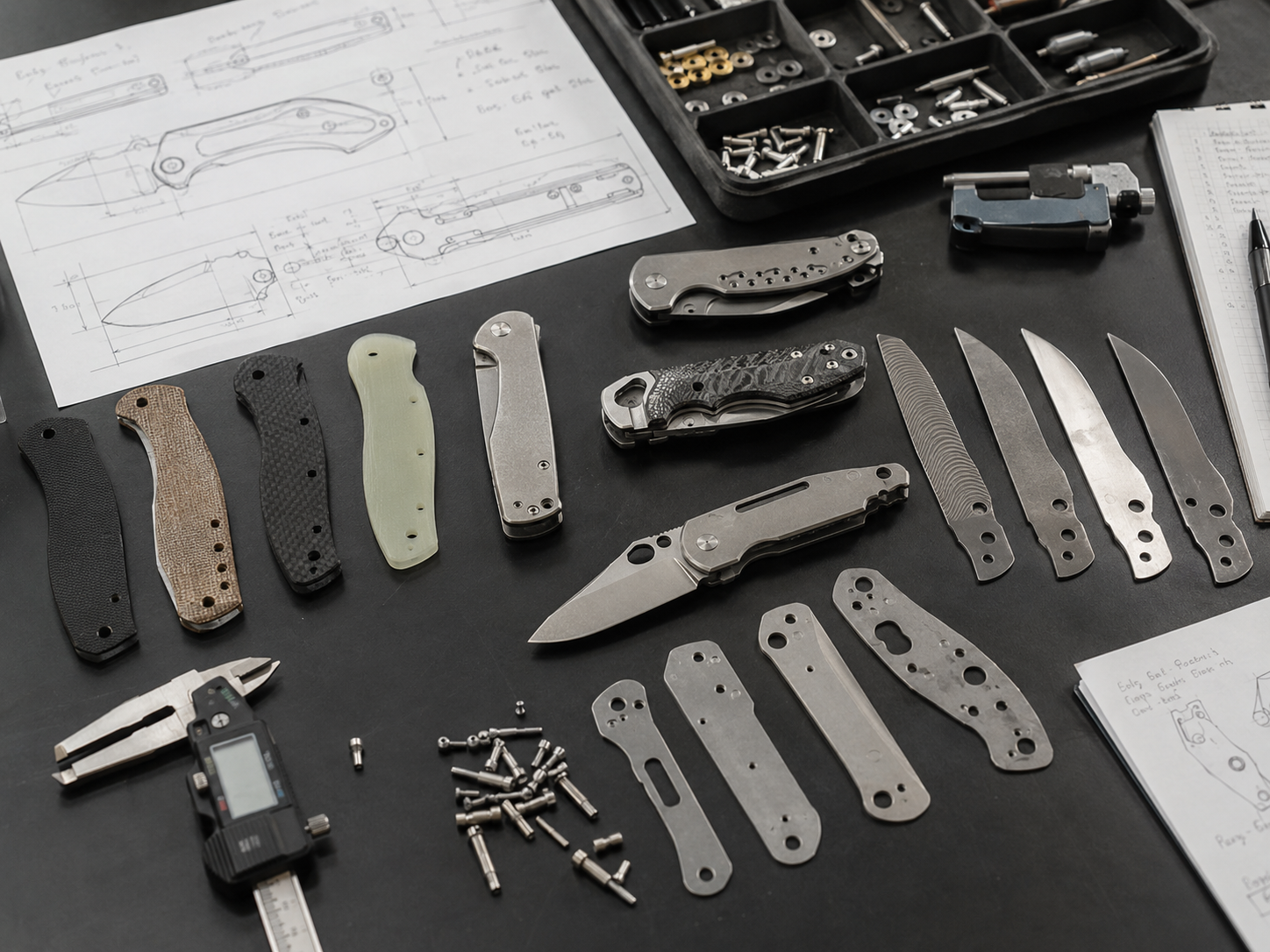
I Check the Structure Before I Make the Sample
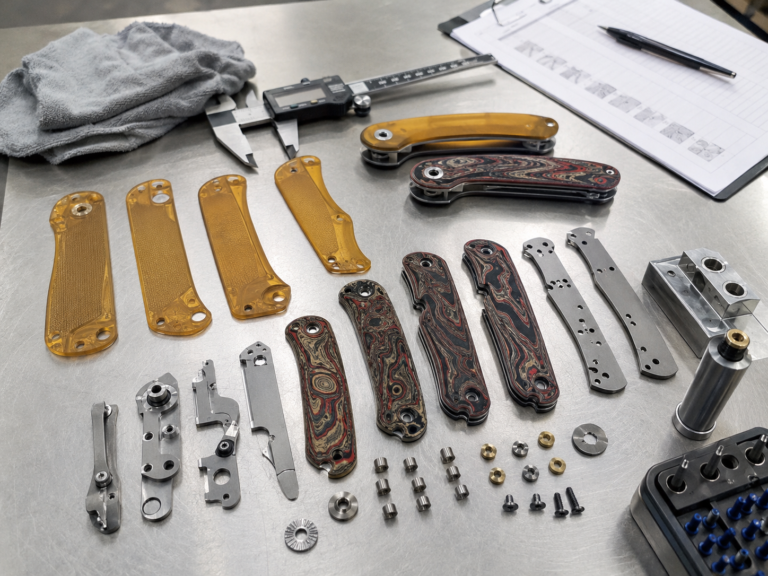
In ODM procurement, the first sample should not be a blind test. It should come from a practical design review. For a folding knife, I check the pivot, liner, lock surface, stop pin, blade centering, screw position, handle thickness, and closing safety. For a multi-tool or camping tool, I check how each part moves, fits, and supports the user’s main task.
This review often saves money. If a design needs too much hand adjustment, it may become slow and expensive in mass production. If a handle shape looks good but is hard to machine, the buyer may face higher cost. If a lock structure is too sensitive, the product may feel different from piece to piece.
I help customers turn an idea into a manufacturable direction. Sometimes I suggest a simpler structure. Sometimes I suggest changing blade thickness or handle material. The goal is not to reduce the product’s value. The goal is to make the value repeatable.
| Design factor | What I review | Procurement impact |
|---|---|---|
| Product structure | Lock, pivot, handle, moving parts | It affects function and safety |
| Tolerance | Holes, gaps, alignment, fit | It affects consistency |
| Tooling need | Mold, fixture, CNC program, die | It affects cost and lead time |
| Assembly method | Screws, washers, bearings, liners | It affects production stability |
How Should Materials, Functions, and Target Price Be Balanced?
Material choices can look exciting. But the wrong upgrade can create cost pressure, long lead time, or difficult quality control.
Materials, functions, and target price should be balanced around real product use, buyer margin, production stability, and the expectations of the final market.
I Match Material Choices to the Business Goal
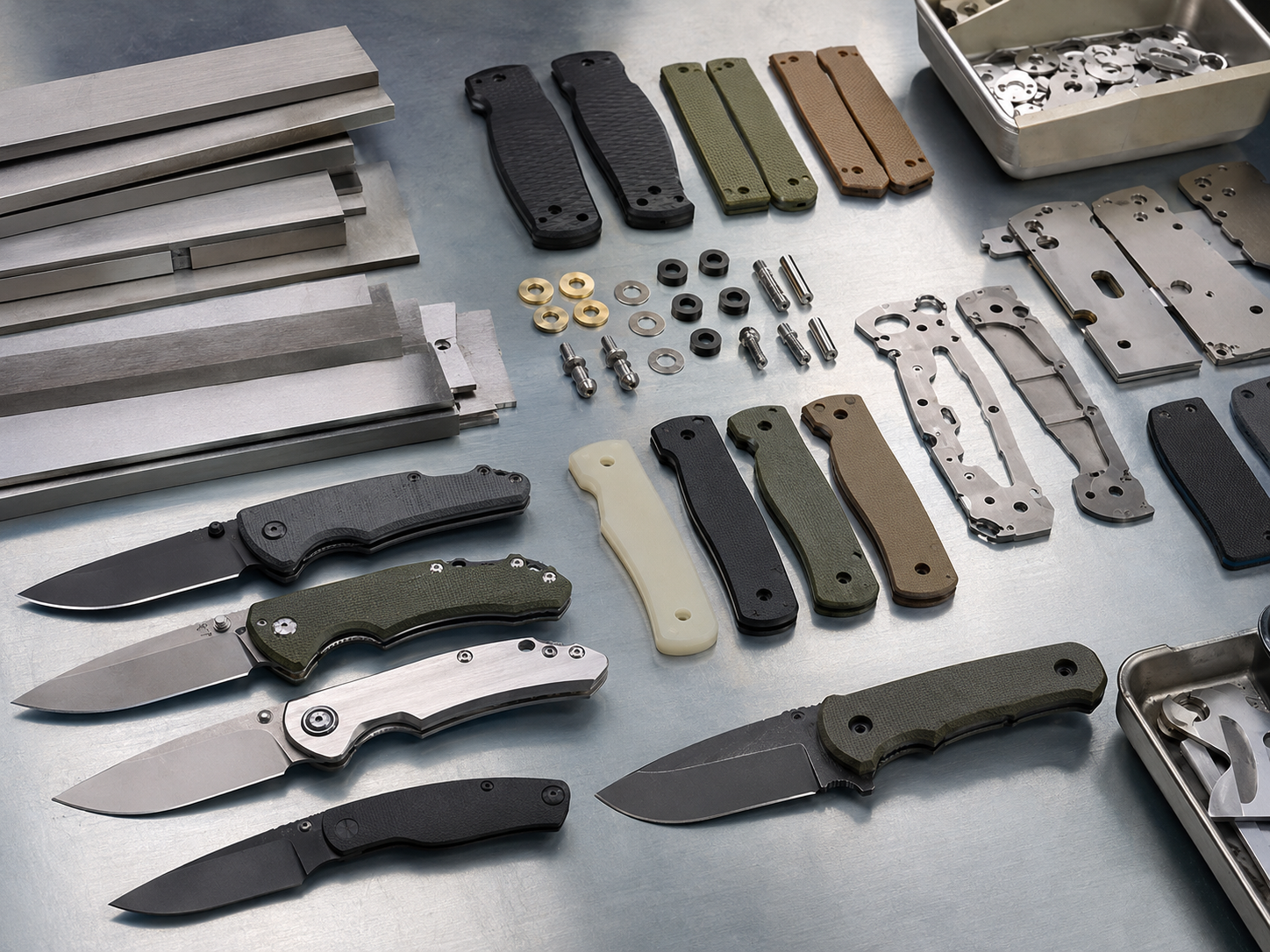
Many buyers ask for better steel, stronger handles, more tools, and more special finishes. These requests are normal. But I always connect each choice to the buyer’s real market. A higher grade steel may improve product positioning, but it may also increase heat treatment control and cost. A complex multi-function structure may increase value, but it can also increase assembly time.
For blade steel, I prefer to discuss performance in a practical way. Corrosion resistance, edge holding, toughness, sharpening, and cost should all be considered. A technical source such as the Alleima knife steel material selection table is useful because it shows that different knife applications need different steel choices.
Handle materials also change the product. G10 can give grip and stability. Aluminum can reduce weight. Stainless steel can feel solid but add weight. Plastic can support cost-sensitive programs. For B2B procurement, the best choice is not always the most expensive one. It is the choice that fits the buyer’s function, price range, and repeat order plan.
| Decision area | Possible benefit | Possible trade-off |
|---|---|---|
| Blade steel | Edge performance and corrosion resistance | Cost and heat treatment control |
| Handle material | Grip, weight, and appearance | Machining time and finish consistency |
| Extra functions | Higher user value | More assembly complexity |
| Surface finish | Better shelf appeal | More defect control work |
Why Are Sampling and Quality Control Important Before Mass Production?
A good-looking sample can create false confidence. Mass production may still fail if the inspection points are not clear.
Sampling and quality control confirm appearance, function, material, packaging, and repeatability before the buyer approves mass production.
I Treat the Sample as a Production Test
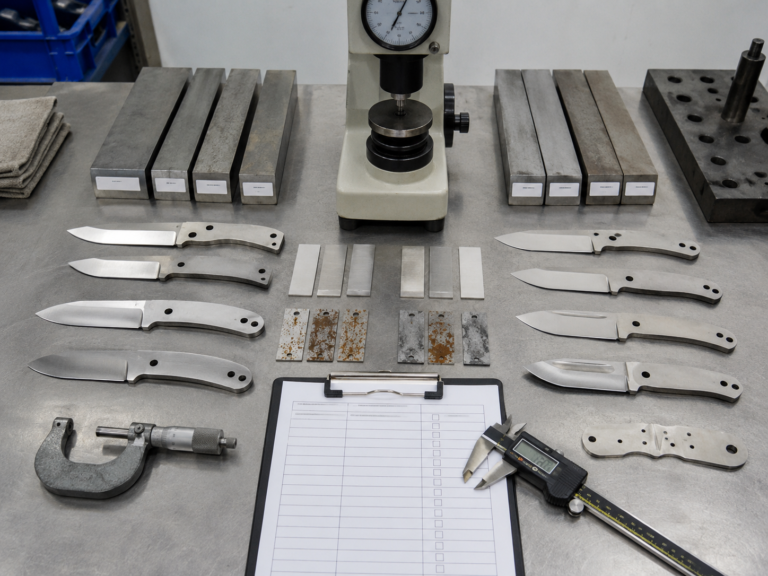
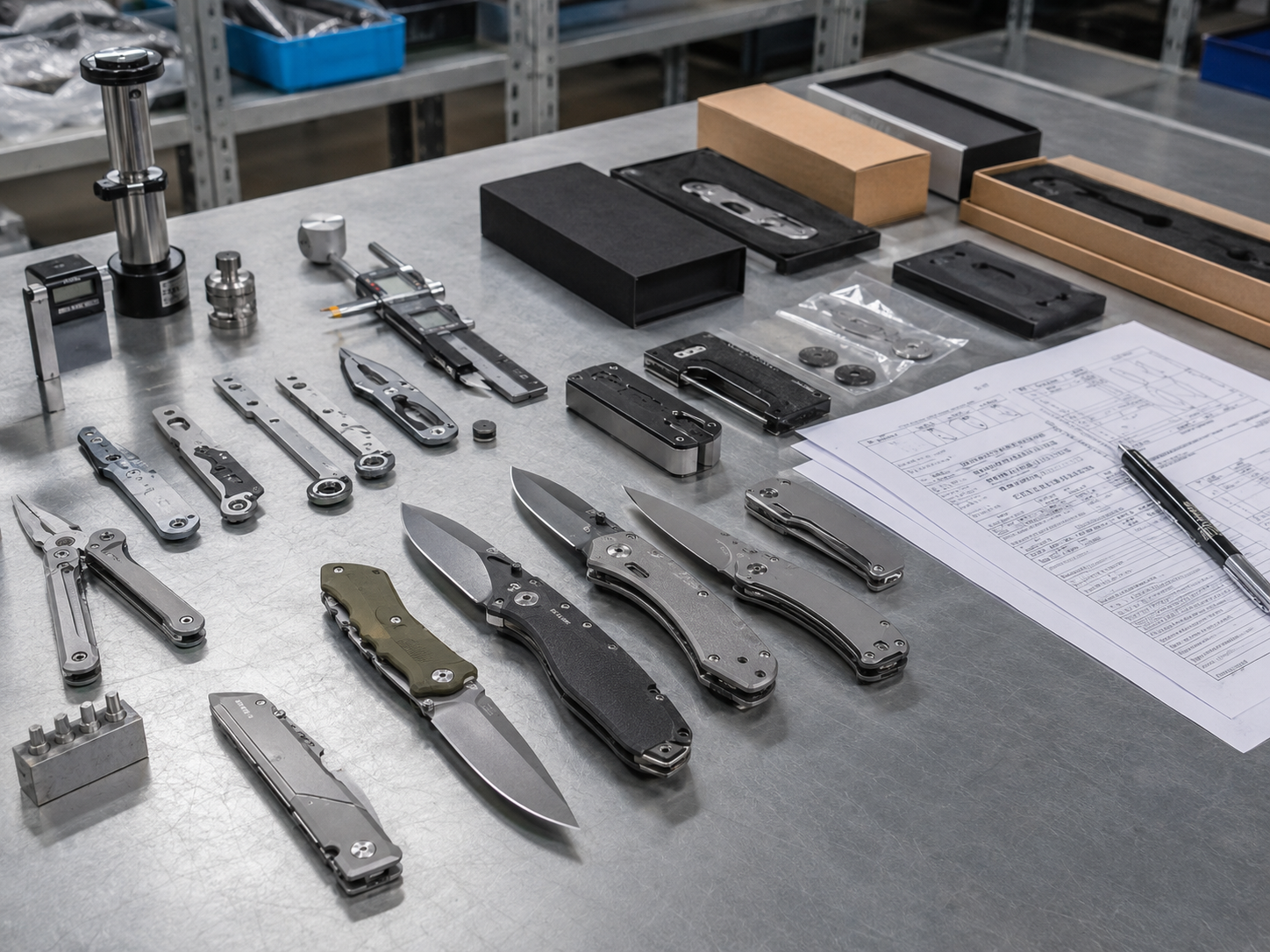
I do not treat a sample as only a photo item. I treat it as a working test. I check whether the product opens smoothly, locks safely, feels balanced, matches the target finish, and can be repeated in production. I also check whether the packaging protects the product and supports the buyer’s brand position.
Before mass production, both sides should agree on the approved sample and key inspection points. For knives and tools, I watch blade sharpness, blade play, lock fit, screw tightness, handle gaps, coating defects, logo position, surface scratches, and packaging details.
For larger orders, buyers often use sampling inspection methods. The latest official ISO page for ISO 2859-1 sampling procedures describes AQL-based lot-by-lot inspection. A quality system reference such as ISO 9001 quality management is also useful because it focuses on stable processes and customer requirements.
Good quality control protects more than one shipment. It protects the buyer’s brand and future repeat orders.
| Sampling stage | What I confirm | Why it matters |
|---|---|---|
| First sample | Basic design, function, size, appearance | It checks product direction |
| Revised sample | Changes after buyer feedback | It prevents repeated mistakes |
| Pre-production sample | Final approved version | It guides mass production |
| Inspection plan | Defects, function, packaging, acceptance | It protects order consistency |
How Do Communication, Compliance, and Delivery Planning Reduce Procurement Risk?
A product can be well made but still create problems. Weak updates, unclear documents, or poor delivery planning can hurt the order.
Communication, compliance review, and delivery planning reduce ODM procurement risk by aligning production status, buyer requirements, documents, packaging, and shipment responsibility.
I Keep the Project Visible Until Shipment
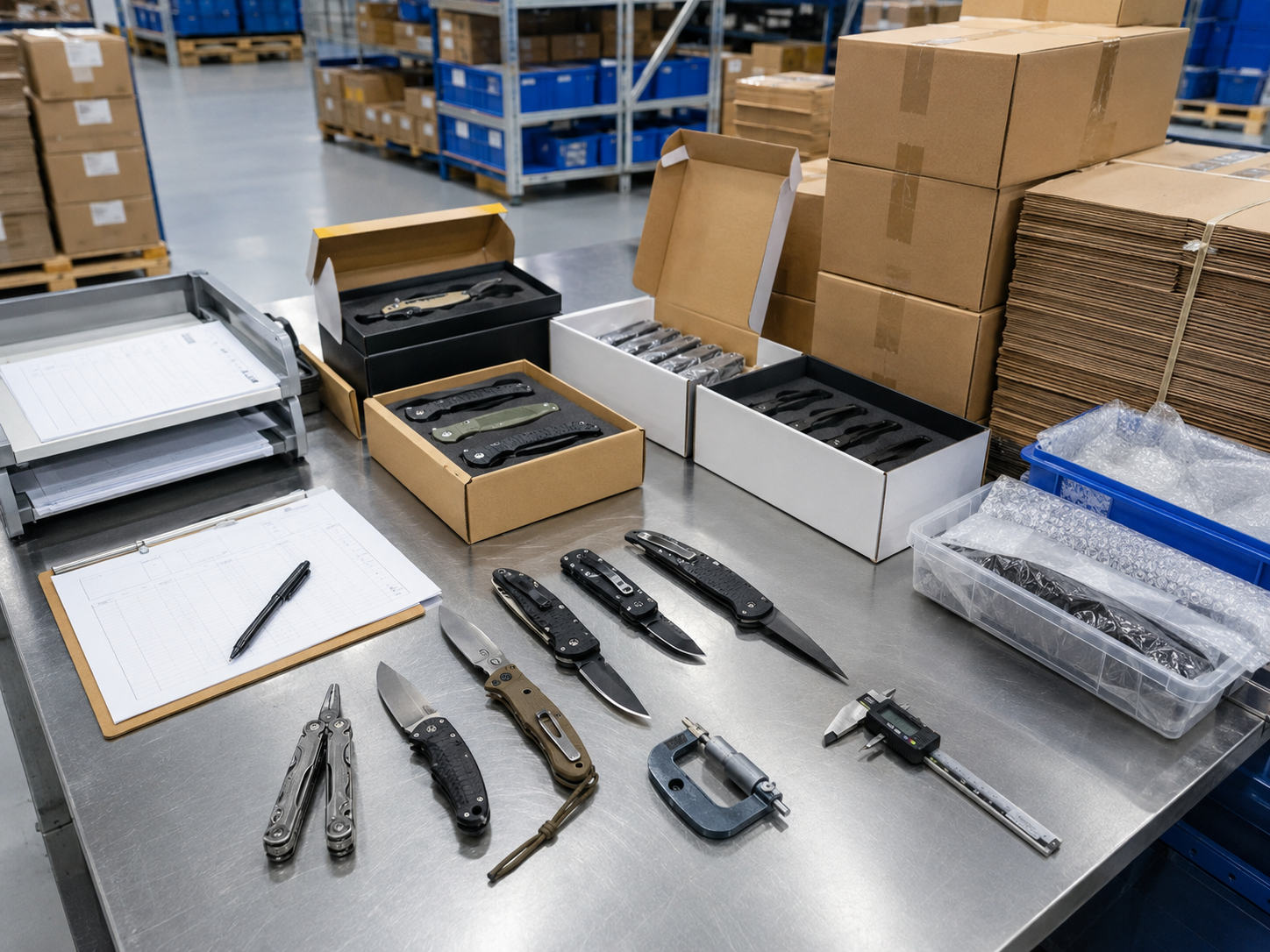
Clear communication matters in ODM procurement. I believe buyers should know where the project stands. They should know when the design is confirmed, when the sample is ready, when materials are prepared, when mass production starts, when inspection happens, and when goods are ready for shipment. This helps buyers plan sales, inventory, and marketing.
Compliance also needs attention. Knife and tool requirements can vary by product type, sales channel, and target market. I do not replace the buyer’s legal or import review. But I remind buyers to check their local rules. For example, U.S. importers can review CBP basic importing and exporting guidance, while buyers selling in Europe can review the European Commission page on product safety.
Delivery terms should also be clear. The ICC Incoterms rules help buyers and sellers define tasks, costs, and risks in international trade. When these points are clear, procurement becomes more predictable.
| Risk area | What I clarify | Practical benefit |
|---|---|---|
| Communication | Timeline, sample status, production updates | Fewer surprises |
| Compliance | Buyer’s target market requirements | Lower import and sales risk |
| Documents | Invoice, packing list, product details | Smoother shipment handling |
| Delivery terms | Freight method and responsibility split | Clearer cost and risk planning |
Turn your idea into a quote-ready knife project.
Share your drawing, sample photo, target quantity, market, and packaging needs. Vast State will review manufacturability and prepare OEM/ODM options.
Conclusion
I manage ODM knife and tool procurement by turning clear demand into practical products, then controlling samples, production, quality, communication, and delivery.